Interview: Jessica Ellis
My conversation with the writer-director of the new indie film What Lies West.
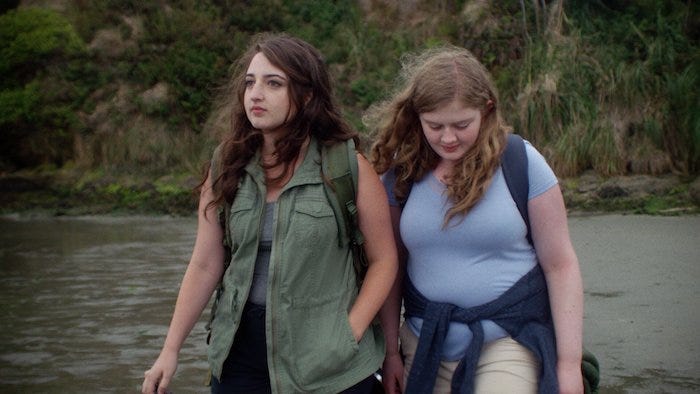
My conversation with the writer-director of the new indie film What Lies West.
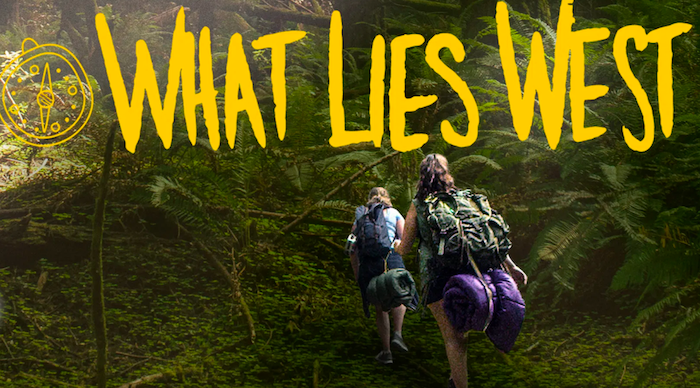
Recently, I screened a new indie feature on VOD. The movie is titled What Lies West and I thoroughly enjoyed it. An extra treat for me is I know the writer-director Jessica Ellis. So I reached out to see if Jessica would be up for an interview. Here it is in its entirety.
Scott Myers: Jessica, I went back and looked. We met in February 2018. You were one of the participants for the very first Black List / Women in Film Feature Writers Lab. I remember that project you wrote, Operation Cheesecake, right?
Jessica Ellis: Yeah, Operation Cheesecake.
Scott: What’s going on with that project?
Jessica: It’s in our package of samples that we send out. The concept, which is that during World War II, the Rockettes are actually a secret Nazi fighting unit, is catchy to people, but it’s a full‑scale war/dance movie. That tends to scare off production companies.
It’s still out there. We still send it to people. I loved that project, and I had so much fun working on it at the Black List Lab. That was a blast.
Scott: It’s maybe one of those things that after you get a few movies under your belt, at some point they’ll say, “Oh, yeah, do that one.”
How did you evolve to What Lies West, which is a small indie drama?
Jessica: I was in the middle of shooting when we did the Black List Lab. I think I was two weeks away from our second half of shooting, which had got delayed because I had had to have surgery.
Typically, as a writer, when I’m writing on spec, I love writing big genre, flashy pieces. I work in a lot of genres, but I love stuff like Operation Cheesecake. That gives me a fun world to play in and is flashy.
I knew with What Lies West, I had a very tiny budget and a very, very short shooting window. It was the first time I had to pare down my writing to a very, very small scale. Even What Lies West had something like forty locations. I mistakenly thought the outside counted as one, and that did not work out quite that way. [laughs]
Scott: It’s set in Santa Rosa, that area, right?
Jessica: Yeah. I grew up there. My whole family is still there.
Scott: In a way, the movie’s like a love letter to Northern California. There’s so many beautiful shots, I got very nostalgic watching it, seeing as I’ve lived in California over half of my life.
Let’s talk about What Lies West. Here’s the plot summary. “When new college student Nicolette takes a summer job babysitting the sheltered teen Chloe, the two must overcome a wide personality gap to take on a daring summer adventure that could fulfill both of their biggest dreams.” Last time I checked Rotten Tomatoes, it’s at 100%.
Jessica: It is against all odds.
Scott: You got some nice reviews including rogerebert.com. I’m sure you saw the Matt Zoller Seitz review.
Jessica: Yeah. You know that scene in That Thing You Do where they all go running down the block screaming because their song’s on the radio? That was how we felt when we saw we were on rogerebert.com.
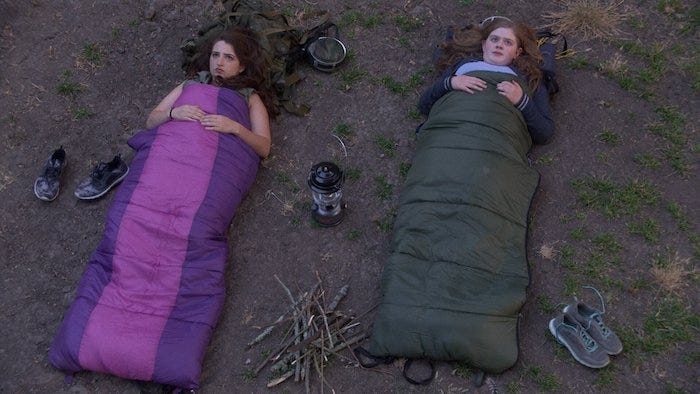
Scott: Seitz said in his review, “Ellis has cleared out a space where almost nothing but the central friendships matter.” These two central characters, let’s talk about them. Nicolette, the protagonist, how would you describe her and what was the inspiration for that character?
Jessica: Nicolette is just out of college. She’s in that period of her life post-college when you’re a bit lost, trying to transition into the adult world. I wanted to craft a character that was very good at fitting in, very good at pleasing people, was able to chameleon to get along in whatever situation she needed to be.
It’s funny. A lot of the reviews have said, “She must have been writing this about herself.” Nicolette is nothing like me at all. I always laugh when I see that comparison. I wanted someone who is adaptable to the point of being very passive in what they want and afraid to go after what they want or unsure if they deserve to be who they are.
Scott: It’s reminiscent of The Graduate when we first meet Benjamin, a recent college graduate, he’s adrift. Nicolette has something she wants to do, but as you said, she’s afraid to do it. Maybe you could describe what it is, her dream or her goal.
Jessica: She wants to go to Hollywood. She wants to be an actress but she’s plagued with insecurity about whether she looks right for it, about whether she’ll be able to make herself heard over all the noise, all the other people. She doesn’t see herself as someone anyone would choose in a crowd.
Scott: At one point, further into the movie, she says something like, “I’m not pretty enough to be an actress.”
Jessica: That part was a thing that rang true to me. When I started out, I was an actor. When I came to LA and auditioned to go to UCLA, I had the option of auditioning as an actor or a playwright, and I was like, “They’re not taking me in the acting program. I’m not going to be an actor in Hollywood. That’s not happening.” So, I went into writing. That part I related to a lot.
That’s a fear that all female actresses, and probably most male actors, struggle with that, how they look, if it’s not a very specific type, none of their talent will matter, none of their ability will matter, nothing they can do will matter. They don’t fit the mold.
Scott: She has this image consultant she talked with. Oh my God, that person is a hoot.
[laughter]
Jessica: We’ve all met that person in LA.
Scott: Exactly. Nicolette’s trying to basically redefine herself or shape herself on social media, thinking somehow that’s going buttress her attempts to stand out in Hollywood.
Jessica: Absolutely. As somebody that is very involved in the social media world as Nicolette is, you never see her without her phone out of her hand. Never. That makes sense. Her image crafting is, she thinks, her sneaky way in. Is if she can fake people into believing she’s cooler, she’ll have an easier time.
Scott: What’s interesting about that is the very concept of shaping your image is about external validation.
Jessica: Exactly. It’s so important now. It’s critical to kids now.

Scott: This journey that she goes on, that’s like what Joseph Campbell says, the external journey really is an internal journey. She’s discovering something about herself that’s more authentic and that’s going to help her move on.
So it’s summer, post-college, and Nicolette needs a gig to make money to move to LA. She lands a unique opportunity with an adolescent girl named Chloe.
Jessica: You can’t really babysit a sixteen‑year‑old, so she has to try to forge some kind of a relationship with her as they’re going to be stuck together all summer.
Scott: How would you describe Chloe’s character?
Jessica: Chloe is a very determined but very sheltered person. She has ambitions far beyond the scope of the life she’s been able to lead so far. Very defensive, she’s a person with a lot of walls up.
Scott: Part of that, or maybe even a major part of it is her mom, Ann, who is super overprotective.
Jessica: Yeah. Ann is someone I wrote who has an out‑of‑control anxiety disorder. Which is something I have witnessed and been around and seen how oppressive that atmosphere can be to live in, and the effect that an anxious person who is not treating their anxiety can have on their kids.
The generational anxiety that they can instill. That was something I was interested in exploring. It definitely tells you a lot about Chloe and why she is the way she is.
Scott: I noticed something interesting. The actors first names are the names of the characters. Did you know these actors before? Is it just something that you said, “Are we going to write for them?”
Jessica: It was written for them. They’re both my nieces.
Scott: Oh, wow.
Jessica: They’re both theater actors. When you’re making a film this small, you have to use the advantages you get. I wasn’t going to be able to cast Zendaya in this or anything, but I had these two people that nobody had seen that I knew were going to be compelling as hell on screen together. I thought of the two of them being my little secret weapons throughout the whole process.
Scott: Are they from LA or Northern California?
Jessica: No, they’re both from Northern California. Nicolette is in New York now because she wants to go the Broadway route. That’s what she’s trained for. Chloe is still going to college and is, unfortunately, parked doing Zoom classes in Santa Rosa.
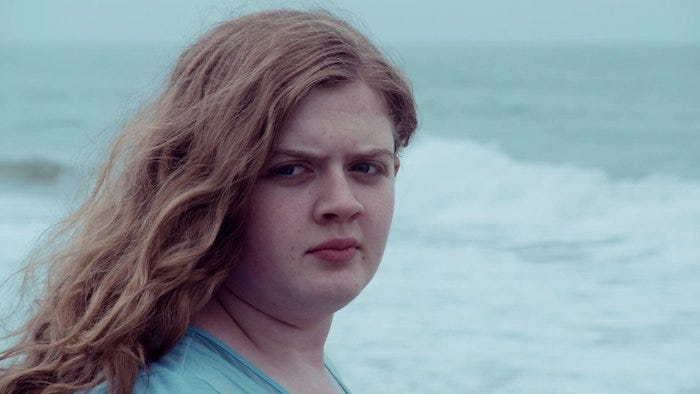
Scott: I don’t want to give away too much about the plot. I mean, it’s simple. I tell my students, my favorite movie’s simple plot, complex characters, and I think that this works for your movie.
It’s a road picture. What was the original inspiration? Was it the journey or was it these characters?
Jessica: It was two things. It was knowing I had these two actors, so I started immediately formulating what their relationship could be. Also, it was I badly wanted to make this movie in Sonoma County. So many films have shot there, from Hitchcock on, it’s a popular shooting, but almost none of them have been made by locals.
I wanted to highlight the county as I knew it and the way of life out there that is so connected to the outdoors that you are always out. That’s what you do. You go hiking every weekend, you go out, you’re out there. I wanted to show people the places that I went and that I love, and the people that live there get to have as their eco system. It was getting to showcase their environment out there.
Scott: Chloe was the motivator there. She has a goal. She wants to hike to the ocean. I think it’s eighty miles, if I remember correctly.
Jessica: Round trip, yeah, it’s eighty miles.
Scott: It’s interesting because if you put on your conventional Hollywood development executive hat, you’d say, “They’re going to hit out on the road by a minute twenty-five,” but that’s not the case. They don’t set out until you’re almost halfway the movie or something. Is that an intentional thing or was that an organic thing, just the way the story played out?
Jessica: It was definitely something that plagued me during the writing process is, am I taking too long before I get them out the door? There are certainly people that think that it is.
For me, oddly, the screenplay where it does take a while to get the plot going was the first Captain America movie, where you don’t go to war until an hour into the film.
That first hour is the reason why Chris Evans is Chris Evans to us. Why that character became so valuable. What Lies West is a story about a hike, but more than that, it’s a story about a relationship. I wanted to give them a long time to build into a tension simmer and develop before I sent them into an incredibly stressful and potentially catastrophic environment together.
Scott: We’ve talked about fear, that’s possibly a theme in your movie. What do you see as the story’s central theme?
Jessica: The central theme for me is capacity, is how I would describe it. What you’re capable of doing and how you expand or contract what you’re capable of doing. You have Nicolette who’s very afraid to take the next step in her life. You have Chloe who cannot wait to take the next step in her life and needs a way to do it.
You have Anne, Chloe’s mother, who’s frozen where she is. Then later you run into, for one scene, a character that they meet on the road who has totally regressed and has no capacity and literally can’t leave her house.
I wanted to talk about how healthy relationships and friendships help you. They give you the thing you need to expand your capacity. They are the things that give you a support net to push your limits a little bit. That was the key theme to me, was capacity.
Scott: From the point of what you have the idea, you got these two nieces, you want to set it up in Santa Rosa, Sonoma County, to the point where you were done with a script and ready to get it out there and trying to get financing, how long did it take to write the script.
Jessica: About two and a half months. It was all simultaneous. I came up with the idea, started raising money, and started writing the script in the same week. Then we were shooting three months later, but because of the way filming was set up, we shot all of the exteriors, all the hiking stuff, in the summer.
Then we were supposed to have a two‑month break that became a much longer break, and I was rewriting that whole time. Especially being able to see the footage I had got and what I was able to capture and what I was getting from the girls, I was able to continue to refine the script as we went.
The draft we were sending to people, the draft we were working on, was less than two months, I would say, two to two‑and‑a‑half months.
Scott: You used Seed and Spark to crowdfund?
Jessica: Yeah, we did two Seed and Spark campaigns.
Scott: I saw Eric Heisserer’s name there [Heisserer wrote Arrival], so evidently he contributed.
Jessica: Very kindly. There were a few people that gave us huge funding boosts. You can’t even describe the gratitude for that kind of kindness and investment in a totally untested group of people trying to do something. That was amazing. Eric was wonderful.
Scott: You’re very active on Twitter (@baddestmamajama). I think you’ve got fifty thousand followers, one of them being me. Was that helpful for you in terms of fundraising and getting support for the film?
Jessica: That was the key. At that time, so this was going back a few years, I had around twenty to twenty-five thousand followers at the time. This is a movie born almost entirely off Twitter in terms of the funding we raised. It is such a useful platform for filmmakers, especially because there’s such a big film community on there.
These are the people who would give money to independent productions, to begin with, and you have a huge microphone to talk to them every day and exhaustively. Our Seed and Spark funding, I would say maybe eighty to eight-five percent of it was driven by Twitter.
Scott: Let’s talk about making the movie. Had you directed any short films at this point?
Jessica: I had not directed any shorts. I directed a bit of theater, but no, this was my first time behind the camera.
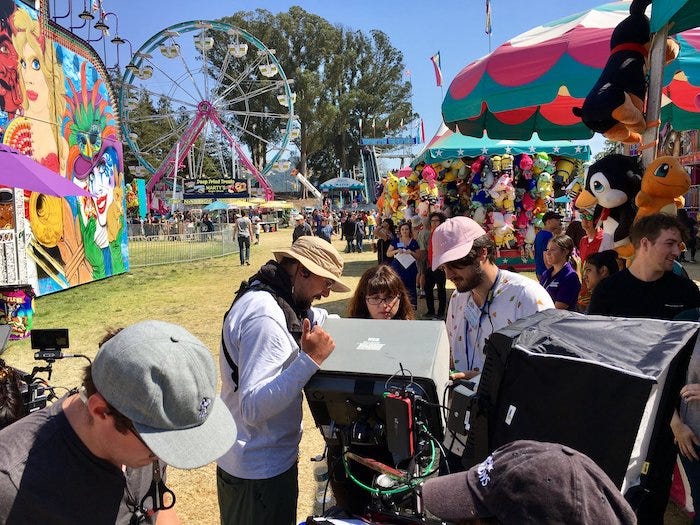
Scott: What about production?
Jessica: Production was a blast. I have never loved seventeen days more in my life than production. We had an amazing line producer, Jennifer Milliman. We had a great cinematographer team. On a film this small, we paid everybody but you’re paying everybody so little that you’re pulling in everyone who has ever owed you a favor in your life.
It was an amazing little tight crew that kept coming back for segment after segment. Let’s see. My favorite on‑set anecdote was the day we were shooting at the beach. We were setting up for a shot. I had a little hand‑held monitor. I asked my grip, “Hey, do you know where the monitor is?” He just said, “It caught fire. Don’t worry about it.”
[laughter]
It’s like, “Cool. OK.” That’s what I loved about set. It reminded me so much of doing live theater in that chaos constantly ensues and you can’t do the shot tomorrow. You’re in a different place tomorrow, so like, “Cool. I’m not going to be able to see what we’re shooting. Let’s go now.”
It’s beautiful to be in the center of that kind of chaos and not freak out about it, to be able to be like, “Cool. We’re rolling this now.” It reminded me so much of doing improv and doing theater when things would go very badly wrong on stage.
Scott: I was going to ask, did you do much improv with the actors after you, say, got the scene? You said, “Let’s try it this way.”
Jessica: When we had time, which was very rarely. There were times that it was more a thing of try a different wording of that line. Say it in your own way. We didn’t get to do a lot where they got to explore the dynamic without the script attached to them.
It would have been fun to play in that arena. I had a lot of scenes, so not a lot of time for screwing around.
Scott: Because you are a writer, let me ask: Did screenwriter Jessica learn something by directing Jessica’s movie?
Jessica: I would say so. It’s interesting. I’ve been thinking about that a lot. I definitely learned to be more flexible with my language. I lost all preciousness with the lines in most cases, because there’s something is not coming out of an actor’s mouth throw it out, find something else that the sentiment behind it is so much more important than the actual words. I got much less precious about my words.
Also, because I knew I was writing to direct and was writing the script for two actors who had not done film. I was writing from the beginning in a totally different style to the way I normally write. I was doing much more to give cues as to what are they feeling at this moment? What is the emotional dynamic just so that my actors would have to do less work on their own?
It was a neat way to flex the writing muscle in a totally different style. I learned a lot about how to craft things, so actors will understand it, which is not necessarily the same thing as a script you’re trying to sell to a production company.
Scott: Has this experience inspired you to do more indie filmmaking or are you focusing mostly on the writing?
Jessica: Well, I mean, I would love to. I would get on set tomorrow if I could. I fell in love with directing. I didn’t think I was going to like it at all. It was only a desperation choice to have me direct to begin with and I loved it. I hope to God someone will see the 100% on Rotten Tomatoes and say, “Hey, let’s have her into direct this excellent movie.” Then I will be there.
Scott: What are you working on now?
Jessica: Right now, my writing partner and I just signed with new management. We’re getting ready to do the “water bottle tour.” We’re doing it from home, which is a little sad, but we’re doing a bunch of generals right now and finishing two more scripts to send out.
It’s very productive on the writing front. It’s interesting. I have to divide my life into, here’s the screenwriting side and here’s the writer directing side just because my style is so different in those two. I’m living a bit of a split personality right now.
Scott: Are you writing big, mainstream, commercial, major studio movies?
Jessica: We’re certainly trying to, yeah. Our big sample was a western called High Iron. It was a Nicholl top-fifty script a couple of years ago. We’re out with a sci‑fi thriller as well, a mid‑budget, sci‑fi thriller. We’re definitely aiming commercial. We’d love to make money some day. That seems like the smart thing to aim for. Hopefully, something will come.
Scott: The spec market appears to be rebounding a bit this year. The last two weeks there have been three major sales in the seven‑figure or high-six figure range, so who knows?
Jessica: Originals or not?
Scott: Originals, three originals, a lot about action. One’s action adventure, family four‑quadrant. Two are action.
Jessica: Every meeting we’re taking, we’re hearing, “What do you have that’s mid‑budget action? Action? Any action anywhere? You guys want to write action?” We’re like, we know what we’re writing next.
Scott: Then a romantic comedy will sell for a lot of money, and everybody will be jumping on that.
I enjoyed What Lies West so much, and I’m looking forward to promoting it. Do you have any advice for people such as yourself out there who’ve got a vision for a film that they want to do on a local level or an indie film?
Jessica: Gosh, it feels so arrogant to give anybody advice after only doing this once. I would say you have to have a team that’s not going to give up on you when things get hard, because things will definitely get hard.
Make sure you’re partnering with people who you are not going to kill halfway through the process or who will not abandon you. That’s the only way it’s going to get done. You can’t do it all yourself.
Here is a trailer for What Lies West:
You may rent or buy the movie here.
Twitter: @baddestmamajama, @WhatLiesWest.
You may read about Jessica’s experience at the 1st Black List / Women In Film Feature Writers Lab here.
For 100s more Go Into The Story interviews with screenwriters, filmmakers, and industry insiders, go here.