Interview: Grant Rosenmeyer
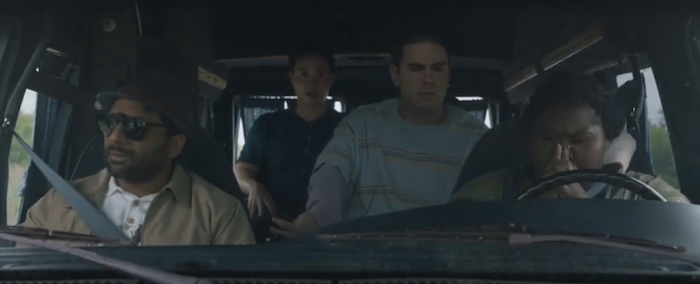
A conversation with an actor-producer of the upcoming comedic road movie Come As You Are.
A conversation with an actor-producer of the upcoming comedic road movie Come As You Are.
In the past, I have championed small independent movies I felt deserved whatever little boost my blog could give them including interviews with Destin Daniel Cretton for his movie Short Term 12, Matt Manfredi and Phil Hay for the movie they wrote The Invitation, and Rob Meyer and Luke Matheny for their movie A Birder’s Guide to Everything.
This week, I am featuring a series of interviews with some of the filmmakers behind a wonderful indie comedy Come As You Are which opens February 14.
Plot Summary: Three young men with disabilities hit the road with a jaded nurse driver to a brothel in Montreal catering to people with special needs. Remake of the acclaimed Belgian film Hasta La Vista.
Here is my interview with the movie’s actor-producer Grant Rosenmeyer.
Scott Myers: Congratulations on Come as You Are. On my blog Go Into The Story, I like to champion small worthy indie films like The Florida Project and Short Term 12. And Come As You Are is right up that alley.
Grant Rosenmeyer: I got goosebumps when you said that. Those are two great movies, especially Short Term 12.
In terms of the scope, when we were pitching it to people, it was like, “Look. It’s going to be kind of like those old comedies from the 2000s that you really liked, but in the vein of…We’re going to do it down and dirty like Short Term 12.”
Thank you. That’s wonderful company to be affiliated with.
Scott: I interviewed Short Term 12 writer-director Destin Daniel Cretton when that movie came out. At the time, he was still working as a school teacher, literally he had to cut the interview short because he had to go back and take care of some class or something.
Grant: Oh, wow.
Scott: The realities of indie filmmaking!
Grant: That’s great.
Scott: Let’s jump in on this. How did you intersect with Come as You Are as a film project?
Grant: I would say, back in 2013. I was involved from afar. I knew the writer, Erik Linthorst, from a writer’s workshop. He asked me to read the role of Scotty as he was writing the script on assignment for these producers who had gotten the rights to the 2011 Belgian film.
There film was called Hasta La Vista, which was, in turn, inspired by the true story of Asta Philpot, who was a young man in England, a quadriplegic, who actually did this road trip in 2004 and then again in 2006.
It’s an incredible story and a very strange, unique…You’ve seen it. It’s pretty wild, the fact that somebody did this. Asta, if you get to know him, he’s such a hilarious guy. Truly one of a kind.
In terms of me getting involved, I basically just read the role of Scotty in this writer’s workshop here in LA. It got to the point where Erik wouldn’t bring in new pages unless I was coming in the following week to play Scotty.
That’s was the genesis of it for me, watching from afar as this great script was being written and getting the privilege of performing this material week after week for about three months.
Then, at the end of the three months, Erik had a full script. He said, “Thank you for all of your contributions to the project.” I said, “Of course. How about putting in a good word for me for Scotty.” He was like, “Ha! That’s hilarious. We just attached Emile Hirsch.” I was like, “Oh, dude. Congratulations. That’s incredible.”
Then just the way that it seems to happen only for good movies in Hollywood, it came together, and fell apart, and came together, and fell apart, and could not catch a break.
Basically, every six months I would harass Erik about his movie. I’d be like, “Dude, what’s going on with Come As You Are? What’s going on with Come As You Are?” He would tell me the updates.
There was an All Is Lost moment where they threw him off the project, back in 2015, really the midpoint in our journey here, where they threw him off and set the project up in the UK. It was really gone. There was no way to get to this. It was a complete impossibility.
I had a director in mind who I had made another small movie called Temps with. I sent him the script and he really wanted to do it. Another buddy of mine wanted to play the Mo character.
We, as a collective, went to the Belgians who controlled the rights. We were like, “Look, we know you have this set up, but is there any world where we can maybe do it, or come aboard?”
They were very graciously like, “Thank you for your interest but it’s not going to happen. We have it with these other people. We’ll let you know if anything changes.”
Then, about a year later, everything changed. The rights reverted back to the Belgians. They reached out and they said, “OK, we’d love to hear your take.”
We were like, “Holy crap. We have a shot.” The director ultimately ended up having to move on to different project, but he recommended Richard Wong, who I had actually worked with on a show called Oliver Beene back in 2003‑2004.
I knew him. He was the DIT (Digital Imaging Technician) on that, then went off to have his own really successful career. Then, it just kind of came…We just caught all the right breaks.
We only had six months to make the movie, because I basically said to these Belgians, “I’m not a producer. I’m an actor. I have no idea what I’m doing. I don’t know how to finance a movie. I’m not going to waste your time. Also, I’m broke. I can’t pay you. If there’s a way you could maybe just give me the rights for six months, I’ll have a pretty good idea of whether or not this thing can happen or if there’s any interest in this movie at all here. If not, no harm done. It’s only been six months. You’ve barely wasted your time.” Essentially, they said, “We love your spirit. OK, go for it.”
It was pretty much six months to the day that the financing went into the account and we got everybody. It was wild, Scott. We caught miracle after miracle, but it had to happen that fast. That’s how I came to it.
Scott: That’s an amazing story, starting with a writing workshop, and then the connections you had. You knew Erik. You knew Rich. Gosh, that’s amazing.
What appealed to you about playing the role of Scotty?
Grant: Oh, man. What didn’t appeal to me about it? First of all, as an actor, I endeavor to play the furthest things from myself as humanly possible. That’s the acting that I’ve always gravitated towards. I love being terrified. I love a challenge. I love characters who are, for lack of a better term, assholes. I love them because they’re always hiding something. They’re always overcompensating for something. There’s so much more inside that onion. Scotty was a perfect example of that.
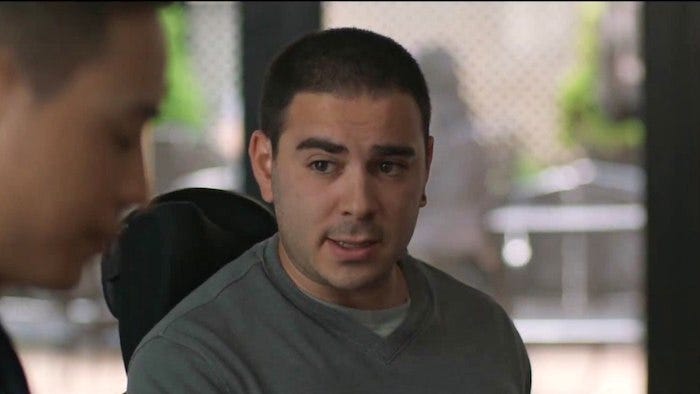
He’s very abrasive, but the first time we see him in the movie, he’s got morning wood and he can’t do anything about it. His mom [Janeane Garofalo] has to give him a bath. He’s like, “Can you please just go around, just for today?” She’s like, “I’ve got to get you clean.” From the get go, you see…If that doesn’t get you immediately on this guy’s side, I don’t know what does, even when he’s so mean to everybody in the next hour after that.
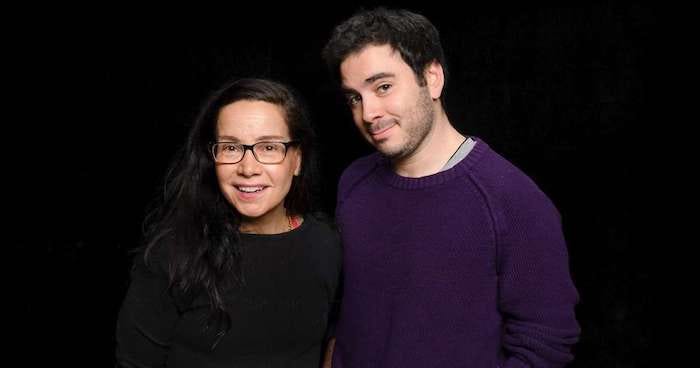
I got him. The words felt so good coming out of my mouth in the workshop. I knew that this character was my character, man. I could not get it out of my head for years. I kept coming back to it. It was like the girl of my dreams. This movie, this character, this film was… it was like the love of my life from my 20s. I had to basically stand by and watch other people come and go. She was in a relationship with all these other guys. I was like, “Maybe one day we’ll be ready for each other.” And here we are.
Also, the rapping was huge. I’m the whitest dude I know. Rapping is not really something that I was comfortable with. In fact, I did a table read with the whole cast. The rapping part came around and I was so not prepared for it.
Gabourey [Sidibe] looked at me in the table read and in perfect Gabourey fashion, she goes, “It’s like you’ve never heard a rap song before.”
I was like, “This is a nightmare.” I was waiting for her to drop off the movie because I couldn’t do it.
Between that and also just the physicality to inhabit somebody who, one, was a real person and, two, was in this specific condition. I knew that if I could pull this off, then I would feel like I could do anything. That’s what drew me to it.
Scott: That leads to my next question, which is the research that you did in terms of the physicality. How did you go about preparing yourself to play a quadriplegic?
Grant: I was very lucky in that I had the real guy. I had Asta with me pretty much the whole time. Well, not with me. He was in England where he lives, but we would talk on Skype for hours every day in preproduction. He coached me.
I’d be like, “Show me how you do this.” I would do it. He would drill me and be like, “No, again. Again. Again.” That was really it. It was the best coach I could possibly ask for.
There was that. There was the physicality, but then there was also the emotional aspect and the psychological aspect to it, of, what does it feel like to be you? His emotional availability and honestly in that was so vital.
He understood the importance. He understood how important it was, not just to me, but to the whole team, and how important it was for him that we don’t fuck this up. He was like, “Just don’t fuck it up because this is my life.”
I was lucky in that I had that. I know the other actors did their own research and their own connections with disability that they were able to bring to their roles.
Scott: I talked to Erik [Linthorst] yesterday. We discussed the irony of how the goal of the story, the whole reason for the journey, is that these three guys are going to go to Montreal to get laid. Really kind of a McGuffin, but the real point of the journey is what they learn about themselves as individuals and friends.
Grant: 100 percent. By the way, I’m so glad that you got a chance to talk to Erik because his ride with this has been way longer than mine. The blood, sweat, and tears that he poured into this as a screenwriter was… it’s so obvious that he loved this and that this script meant everything to him.
I completely agree with that. It should be the McGuffin. If you look at those…Wedding Crashers is not about guys who go to weddings to get laid. It’s about two friends who have this thing that they do together. They’re growing up, just the same way that Superbad is not about getting laid. It’s about the Seth and Evan relationship.
It should always be the McGuffin. If it’s about what’s at the end of the road, then, no matter what, it’s going to be pretty unsatisfying. You do have to earn that arc. I think Erik nailed it.
Scott: What’s your take on what Scotty learned?
Grant: My take on what Scotty learned? That’s a great question. I think he learned that it’s OK to be vulnerable. It’s OK to let people in and not be afraid to make the first move, really make the first move, without spoiling anything for anyone.
Scott: Yeah, because he uses anger as… the best defense is a good offense, right?
Grant: Mm‑hmm, yeah. He’s a real prickly pear.
Scott: Do you have a favorite anecdote or experience from the production of the movie?
Grant: Oh, man. I have so many. God.
From the actual filming, I’m trying to remember. I remember vividly filming the motel getaway and knowing that if we pulled that off, we just created a brilliant piece of cinema. Then, I remember Rich showing me the first cut. I’m like, “Yup, got it.”
Then, there’s a confrontation at a certain point in the film with the parents. That whole scene was, again…We had all these great actors there. Erik was actually there on set that day.
Generally, when you have a scene with, I believe it’s six people. It’s an argument scene. There’s a lot of coverage. It’s very emotionally fraught. It’s got so many movements to it. You know the scene I’m talking about?
Scott: Yep, yep.
Grant: That scene, I’ve been on sets where or on productions where that scene, you’ll shoot that over three days. We got that whole scene in about two hours. That was really a tribute to not only Richard’s preparedness as a director and a cinematographer, and also Derek Fisher, our B cam operator.
Then, all these actors who came ready to work and get it. It was complete trust in everybody. That, to me, was one of the proudest days of my career because, again, it was like if we really pulled this off in two hours that changes the game for how I will think of this type of scene for the rest of my career.
Again, I thought that when I saw Rich cut that together I was like, “Yeah. Like butter, we got it.” There was so many. I turned 27 the day that we shot the rapping scene. I can’t remember if I requested that that be my birthday, that we shoot on my birthday, or if it just happened that way. That was when we could get the church.
Shooting that scene, I had to do that rap 50 times. I had got to a place where I felt really good. I had done the preparation for it. Gabby’s words were rattling around in my head. “It’s like you’ve never heard a rap song before.”
Then, Janeane Garofolo came out at lunch and lit my birthday candles. Janeane Garofolo brought out my birthday cake. I’m there with all these people, this new family that I love.
I have so many, man. Oh, God. I don’t know. What’s going to happen is I’m going to hang up and I’m going to think of seven more.
Scott: What an experience for you. I’m not an actor. I’m a screenwriter by trade, but it seems like this is not your typical sort of thing. You hooked into this project pretty early on. You were persistent. You’re a producer on the project, too. This is not just an acting gig. This is something that you obviously felt some passion for.
Grant: Yeah. It’s funny. Somebody asked me, “Do you like watching yourself on screen? Is it hard for you to watch yourself?”
The answer is probably, usually yes. I’m so myopic about the performance. On this one, I didn’t have the luxury of that because the acting, for me, was so…
I played Scotty for 19 days. I’ve been living with this movie for going on three years. In the editing… Richard was also the editor. He directed. He edited. He shot. The only other set of eyes that he could trust creatively were mine when he was editing.
He would be sending me builds of the scenes every day. I’m the only other person, so I had to remove… I didn’t have the luxury of watching the movie as an actor. I was thinking, “Man, how crazy would it have been to just be an actor in this movie and just focus?”
Then I wonder, “Would that have been enough for me, just 19 days of playing Scotty and then I just wait for it to come out?” The fact that it did happen this way and that I got to help build this thing from script to screen to distribution to screens. It’s coming out next weekend in theaters and on people’s TVs.
It’s been the joy of my life. It’s been the joy of my 20s. I don’t think acting will ever just be enough for me anymore. Does that make sense? Once you have that experience of producing something, of building something from the ground up.
Now, I’m doing it again, three times. I have three more things that I’m looking into as both a producer and an actor. That’s a privilege.
Scott: Come As You Are is such a humanistic story. I was moved by it. I think it, just tone‑wise, was right on the mark. It could have so easily gone into melodrama. It could have so easily gone into camp comedy, but it hit right in the middle of that. You’re to be commended for your involvement in it.
Grant: Thank you, Scott. It’s nice to hear. It’s nice to hear that, especially from industry insiders. It’s nice. We’ve been able to take the movie on the road for the last year, but listen. Nobody in Hollywood, nobody in the industry wanted to make this movie. It had been everywhere. It had been to over a hundred production companies. We heard “no” from all of them.
Kelly and the Chicago Media Angels, they were the only people who put their hands up and said, “Yes, we believe in this story. We believe in the value. We believe in the tone that you guys are going for. We believe that not just America, but this is a story that the world will rally behind.”
By the way, The Black List did come in. They came in. They were the only company in Hollywood, but even they were like, “How did we not know about this project?” They came in and saved us with post.
That was so validating. It’s always nice to hear it from people in the industry being like, “No, this is really good. We get this. We see you. We see this movie. I hope that other people will, too.”
Here is a trailer for Come As You Are:
Los Angeles
Laemmle Glendale
New York
Cinema Village
Boston
Apple Cinemas
Chicago
Gene Siskel
Cleveland
Tower City Cinema
Columbus
Gateway Film Center
Dallas
Harkins Southlake
Denver
Harkins Northfield
Fort Wayne
Fort Wayne Cinema Center
Kansas City
Screenland Tapcade
Napa Valley
Cameo Cinema
Oklahoma
City Rodeo
Phoenix
Harkins Arizona Mills
San Francisco
Roxie Theater
The Villages, Florida
Old Mill Playhouse
The movie will also be available on digital platforms on February 14:
iTunes/AppleTV
FandangoNow
Goldwyn
Do me a favor: Spread the world about this funny, heartfelt movie. Then do yourself a favor: Watch Come As You Are to be entertained and moved.
To read my interview with screenwriter Erik Linthorst, go here.
To read my interview with director Rich Wong, go here.