Interview: Deborah Davis & Tony McNamara
A conversation with the screenwriters of The Favourite.
Interview: Deborah Davis and Tony McNamara
A conversation with the screenwriters of The Favourite.
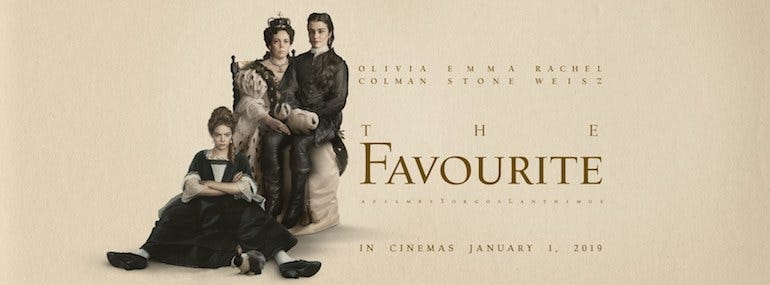
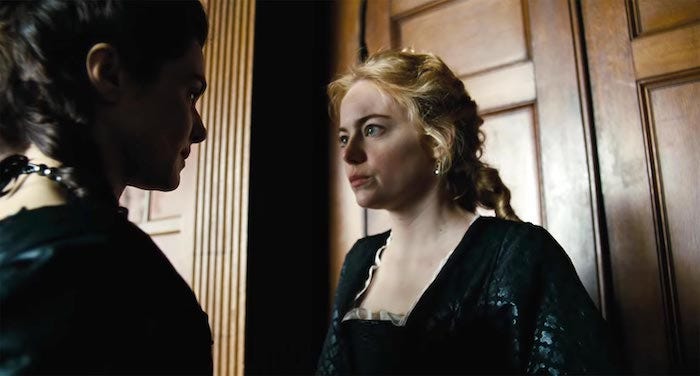
Directed by Yorgos Lanthimos and starring Olivia Colman, Emma Stone, and Rachel Weisz, The Favourite is a strong contender for this year’s Best Original Screenplay Oscar. And yet, the script had its origins twenty years ago. In this Deadline interview with Matt Grobar, co-writers Deborah Davis and Tony McNamara delve into the complex history of the project.
Deborah, your connection to this film goes back about 20 years. How did you originally discover the piece of history that would become The Favourite?
Deborah Davis: I read an article in a local London newspaper, and the writer said something along the lines of, “Everyone knows Queen Anne was having an affair with Sarah, Duchess of Marlborough.” I studied history at university, and knew all about my kings and queens of England, but I didn’t know anything about this event, or anything about Queen Anne. So, I started researching, and stumbled on an extraordinary story of women in power, running the country from [their] royal bedchamber, and a female triangle that was pretty toxic.
At the point when you stumbled on this story, you’d never written a screenplay before.
Davis: That is absolutely correct. I just had it in my mind that this must be a film, so I sent myself to evening class at our local college. We had a wonderful teacher, actually, and the first thing he taught us was, “Drama is conflict.” So, I thought to myself, I’ve got the right story for this film. I showed the first draft to Ceci Dempsey, the producer of this movie, in 1998, and at that stage, she was not ready to take it on. But I was accepted to go to the University of East Anglia to do an MA in scriptwriting, pretty much on the basis of that first draft. So, I went there, and spent two years learning the craft of scriptwriting. I came back to her in about 2002, 2003, and said, “I’ve carried on working on this script, and I’m interested to know whether you’d like to become involved.” And at that stage, she did. It went into formal development with, I believe, the [UK] Film Council, and it stayed in development right the way through. My script was optioned from then on until it got made.
Tony, how did you come to work on the film? What about the opportunity, and this story, was compelling to you?
Tony McNamara: Yorgos had Deborah’s script, and basically was looking for a writer to come in and re-engineer it, to make it a very complex story, but make it feel fresh and contemporary at the same time. He’d read stuff that made him think I could do that, and I watched Dogtooth and Alps, and really loved them, and felt like our sensibilities were very similar. So, we just talked about it for a while, and then started working on it. I was in Australia and he was in London, so we’d work by Skype, and meet in various places over the five or six years it took us to do it.
Can you flesh out a sense of your early meetings with Lanthimos, and what the focus of your conversations was?
McNamara: We talked about what we wanted to do with the characters, making them very complicated and very human, and letting them behave badly, as well. As long as we understood them, we felt like we could do anything with them. We had a big, long conversation about tone, and that was a sort of comic tone that had a contemporary hybridization of language. We knew the end was tragic, but the first two thirds were comedy, so we worked a lot on how that structure would work, and how we would make that work.
We also talked about the history. Deborah’s a historian, so it was a very historical document, the original material, but we were just taking bits of story. We felt like there was a fundamental truth to [Queen Anne and Sarah’s] relationship, and that was what we wanted to tell. But we weren’t really interested in the historical detail of it, if that got in the way of a great film — and particularly, if it got in the way of great characters. We wanted to tell this story about these three women, a personal story that affected a country politically in a massive way, but beyond that, we didn’t really stick to the history slavishly on any level. You know, [Lanthimos] would say, “If people are coming to this movie for a history lesson, they’re coming to the wrong movie.” We used historical details if it suited us, and we felt like it told the story and helped the tone. For example, the way Nicholas Hoult’s character and the people on his side of politics dressed was real; they did dress like that, and we liked the idea of that. But Yorgos, of course, in his way, took it further than the truth.
Here is a trailer for the movie:
For the rest of the interview, go here.
For 100s more interviews with screenwriters and filmmakers, go here.