Interview: Daniel Stiepleman
An interview with the screenwriter of On the Basis of Sex.
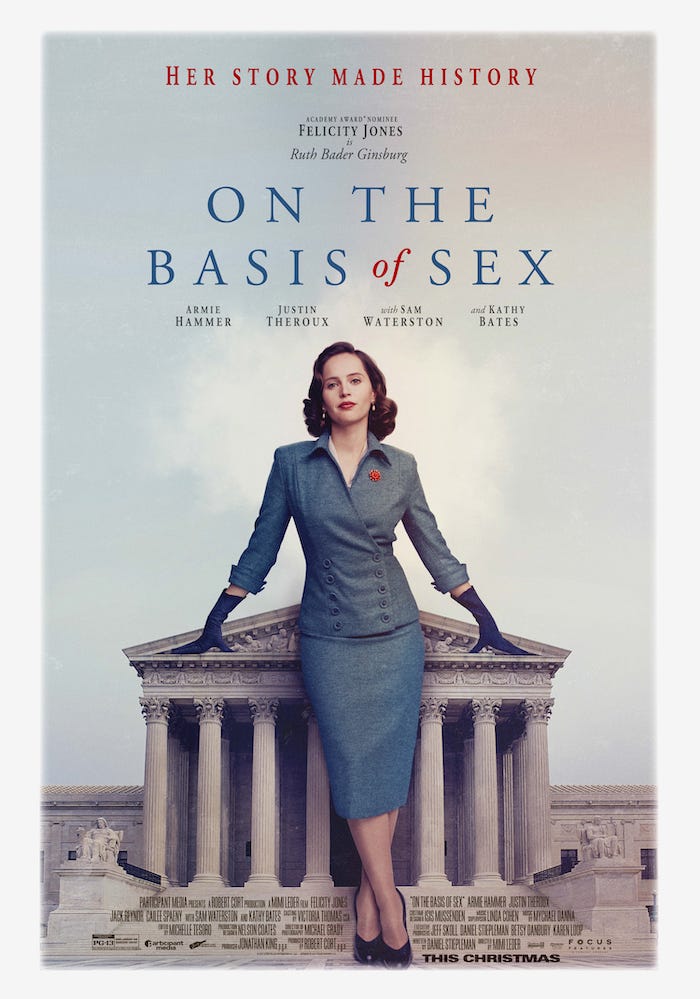
An interview with the screenwriter of On the Basis of Sex.
A /film interview with Daniel Stiepleman, who is not only the screenwriter of the movie On the Basis of Sex, he’s also the nephew of the film’s central character Supreme Court Justice Ruth Bader Ginsberg.
How did you center on the Moritz case as the main issue of the script?
Ruth asked me the same question. When I called her and said I wanted to write this movie, she said, “Why that case? I argued bigger cases, more important cases, cases in front of the Supreme Court.” And I said, “Yeah, but it’s the only one you and Uncle Martin ever argued together.” That’s what the movie’s about, right? It’s not just about a landmark case. It’s about the fact that they together are trying to figure out how to live at home what they’re also fighting for in court which is true equality. For me, Ruth in the movie is the same age I am now. So for me it was an exploration of figuring out how she went from being my age, a young professional, I have to consider myself young, I have two young kids at home. And to become the woman who accomplished so much on behalf of so many. So for me, this case embodied all that. You can’t separate what she accomplished from her marriage to Uncle Martin. They were such a pair and such a team, and I hope the film depicts that. I think it does, where neither of them is really perfect. It’s just that together they become a perfect unit.
Is it telling that sexism didn’t begin to change until it affected a man?
I think it’s absolutely telling, but I’m not sure that I would totally agree that sexism didn’t begin to change. If there’s one thing I learned from writing this movie and talking to Aunt Ruth it’s that sustainable change means you have to change the culture, and you also have to change the laws and the institution. By the time we’re looking at the ’70s, sexism in the culture was starting to change and that people were becoming more aware of it. Women were becoming more vocal about it and what Ruth did that was so revolutionary was that she taught the judges and legislatures that the law and institutions and to catch up with the culture.
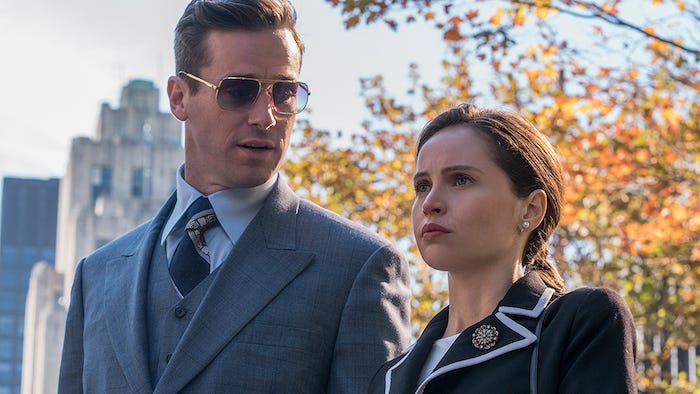
People have pointed out with no sense of irony that Marty doesn’t have as much to do in the movie as Ruth. Isn’t that the plight of most women in biographies of men?
Yes, it is. It’s fascinating. People are like, “You made this choice to turn Marty into the typical female wife role in a biography.” To some degree I made that choice but I didn’t really have a choice because Uncle Martin did the cooking and Uncle Martin brought her the case. To the very end of his life, literally the last days of his life, he said the most important thing he ever did was hand Ruth that Tax Court Advantage sheet because it allowed her to do the things that he did. That’s just the kind of guy he was. That was the kind of marriage that they built. And I can tell you as a guy, the bar is incredibly low to be considered a good husband and a good father. It’s really easy to pat yourself on the back and be like, “Everyone’s complimenting me because I took my kid to school one day. I’m a great father.” But statistically we know that even in two income cities, in liberal elitist places that women are statistically doing much more of the housework and the childbearing than their husbands. That tells us that a lot of men are clearly taking the pat on the back and not actually living up to the ideal. What’s hard about Uncle Martin is he lived that ideal. He believed in it. When I got married, my wife and I looked to Ruth and Marty as our role models for how a marriage is supposed to work. It was a challenge to live up to that ideal and to feel confident in that role, but I became a better husband and a better father and a better man and a better writer because I did it. Part of the motivation for writing the movie was that I hoped that Ruth and Marty — we were lucky, we had them as role models to show us the way and I hope now more people, a big broad audience of people will have them as role models as well. I think the beauty of Armie’s portrayal of Uncle Martin is he never treats it as a burden. He was never the type of guy who’s like, “Fine, I’ll cook again.” He loved it. It was part of the joy of sharing his life with Ruth was taking care of the kids and doing the cooking. The beauty of Armie’s portrayal is he does it with such confidence and sexiness and charisma and charm that you never once for a second think that he’s some sort of beta male who is under Ruth’s thumb. That just wasn’t the nature of their relationship. They were just equals.
Here is a trailer for On the Basis of Sex:
A short interview with Stiepleman:
For the rest of the /film interview, go here.
For 100s more interviews with screenwriters and filmmakers, go here.