Interview: Dana Coen
A conversation about the award-winning screenplay Sleeping Upright written by the former co-executive producer of the CBS series JAG.
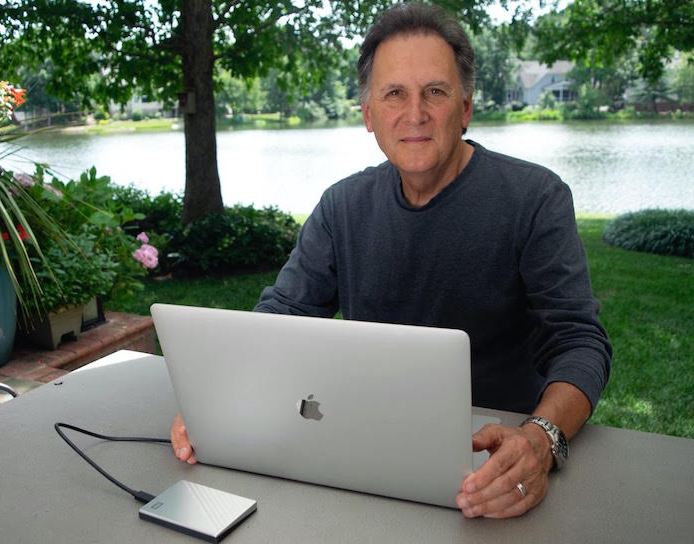
A conversation about the award-winning screenplay Sleeping Upright written by the former co-executive producer of the CBS series JAG.
For eight years, I had the pleasure of working with Dana Coen as a colleague through the Writing for Screen and Stage program at the University of North Carolina at Chapel Hill, a dramatic writing minor for which Dana is the director.
Dana has an extensive background in television, penning episodes for The Wonder Years and NCIS, as well as eight seasons on the CBS series JAG [co-executive producer] and the Fox series Bones [co-executive producer].
Dana is also a produced playwright and screenwriter. Dana’s original feature length screenplay Sleeping Upright recently won the Silver Bullet Competition sponsored by AIM (Age Inclusion in Media). It’s an excellent script, so I reached out to Dana to discuss the project.
Scott Myers: Congratulations are in order. Your original feature-length screenplay, Sleeping Upright, recently won the inaugural Silver Bullet Contest. After a long career as an actor and a playwright, and a Hollywood television writer and producer, what attracted you to submit your script to this specific contest?
Dana Coen: I’d been looking for a way to stimulate interest in my screenplays, but I didn’t have a feature agent and writers with professional credits aren’t generally allowed to compete in screenwriting competitions. The Silver Bullet contest, however, was designed for writers over forty or those who had scripts with older protagonists. I had some hubris about paying the fee and dragged my feet, which caused me to miss the deadline. But, a few weeks later they announced an opportunity for inclusion by sending in a logline, which I did. They chose it and the script made its way through the process.
Scott: This organization is called Age Inclusion in Media, AIM, and they were founded in 2013 with a mission to fight age discrimination in the film and television business. Again, you’ve had a very lengthy career in Hollywood. What are your thoughts about that particular issue as it relates to the Hollywood entertainment business?
Dana: Older writers tend to be perceived as being out of step with the moment. It’s as if observing the world behave is not as good as behaving in the world. You would think having perspective would count for something, but it’s assumed you have to be in it to know it. Some older writers do work, but they’re generally A-listers. I believe there’s enough revenue-generating room for writers of all ages and perspectives, particularly in the light of the streaming phenomenon, which indicates that there’s a substantial audience out there that responds to off-target material.
Scott: Are there any initiatives you can think of, apart from organizations like this, promoting work by people who are of an age, to respond to ageism? Anything institutionally that can be done out in Hollywood?
Dana: I don’t know. Everything these days seems to be event driven. Both Me Too and Oscar So White had organizational support but they were ultimately pushed forward by events that caught the attention of the press. I’m hoping for a public conversation about industry inclusion that doesn’t exclude older talent, but ageism hasn’t found its media moment yet despite an expanding over 50-audience. Even 73-year-old David Seidler winning best screenplay for The King’s Speech didn’t change anything. It was considered a fluke.
Scott: Your award-winning screenplay, Sleeping Upright… the logline for it, “A failed writer awakens from a six-year coma to discover that the novel he had been struggling to finish has been published, and now he’s famous.” What was the inspiration for this story?
Dana: The concept of a someone coming out of a coma was intriguing to me…just the simple fact that he’s missed a major chunk of his life. It’s such a unique problem. And it matches well with my interest in characters who are on a journey of self-awareness…the internal struggle of someone looking for a better understanding of themselves and their world. It shows up in most of my work. In this case, the protagonist has trouble squaring who he was before with who he is now. I actually pitched it originally as a television series to a major pay cable network. When they passed I developed it as a feature project and focused on the idea that this character has not just lost time, but his sense of his own identity.
Scott: That’s interesting you say that. I have this theory that stories basically pose that question to the protagonist, like, “Who are you,” or “Who am I?” That stories are fundamentally about characters in a journey of self-identity. Like your protagonist character, Sean, who wakes up from the coma and is roped into writing a memoir about the experience but struggles. He has this quote. He says, “I’m writing about myself. How can I not know who I am?”
Dana: Right.
Scott: It’s exactly what you were saying. There’s a conversation later on he has with the bartender, where she says, “Sorry, I’m trying to figure out who you are.” Sean says, “Good to know there are two of us on the case. This was the thing that you were zooming in on, this struggle with self-awareness, right?
Dana: Absolutely. To me, it’s a very compelling problem. Your average screen character has a physical goal. He/she needs to get someplace or acquire something. But internal, emotional goals are richer, I believe. The idea of reaching for something without having a good sense of who you are is familiar to many of us, I think…this question of who am I in the world? What is my purpose? Probably the most influential book I’ve ever read, is called “Man’s Search for Meaning” by Viktor Frankl. Are you familiar with it?
Scott: Yes.
Dana: It had a great effect on me and on some level I think promoted my interest in telling stories of this sort. Frankl survived years in a concentration camp and then spent the rest of his life developing the idea that survival should not be one’s central objective in life. Rather it’s the pursuit of purpose, that we are here for a reason and need to find a way to belong.
Scott: Because it’s a movie, you put your protagonist in a rather dynamic state at the beginning. I’m looking at what I call these disunity elements, that make him disconnected from himself. You’ve got the car crash that led to the coma. He missed out on those six years. You’ve got the mystery of what he was doing when he was driving that night. He’s also unaware of his rise to fame when he wakes up. He didn’t even know that the book had been published. He’s lost his mother. She died in the interim. He also lost his longtime girlfriend, who’s now dating some conservative pundit. All these things are where we start the story. You literally just drop us into this when he wakes up. It is this heightened hyperreality that puts a laser focus on this question of self-identity.
Dana: The intention there is to give the reader or audience a similar sense of disorientation.
Scott: Interestingly enough, there’s this thing in Hollywood, they always talk about… a proactive protagonist with the physical goal, that you mentioned earlier. Sean goes from thing to thing. It’s like he’s reacting more in some respects, but it is more of an internal journey, right?
Dana: Well, he’s active in the sense that he wants to regain what he lost, particularly his long-time girlfriend. I was very conscious of avoiding reactive scenarios. The obstacles are there not to push him around but to force him to find other ways of moving forward. He’s always making choices about how to reconnoiter and to rebalance himself. In that sense it’s an internal journey. The problem is that he does this to the degree that his objectives become confused and warped and he loses momentum.
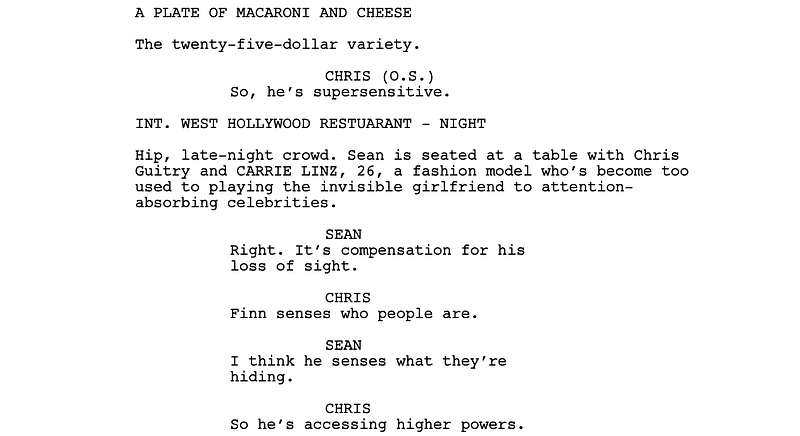
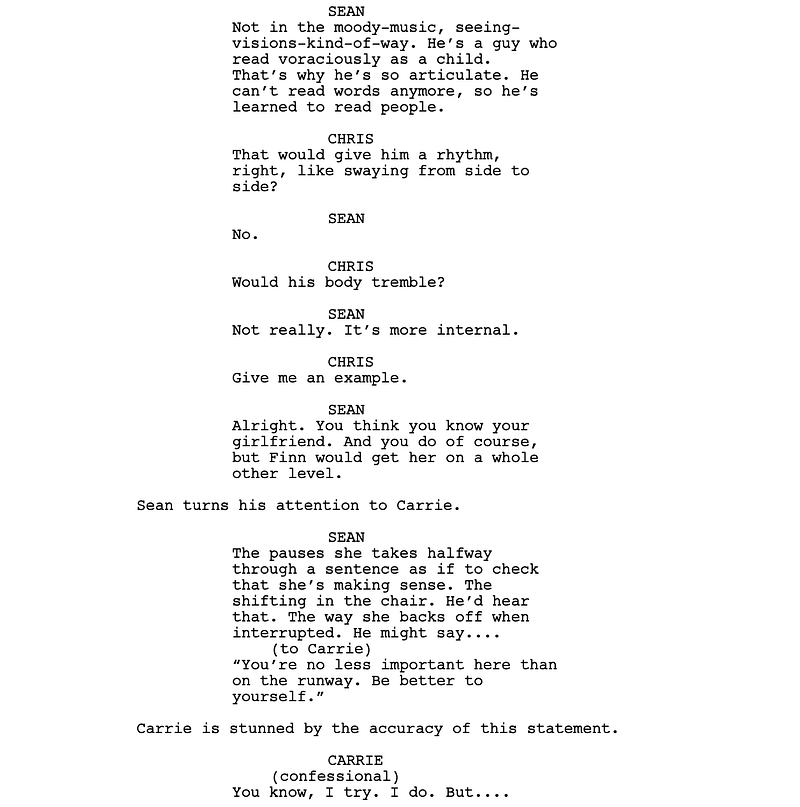
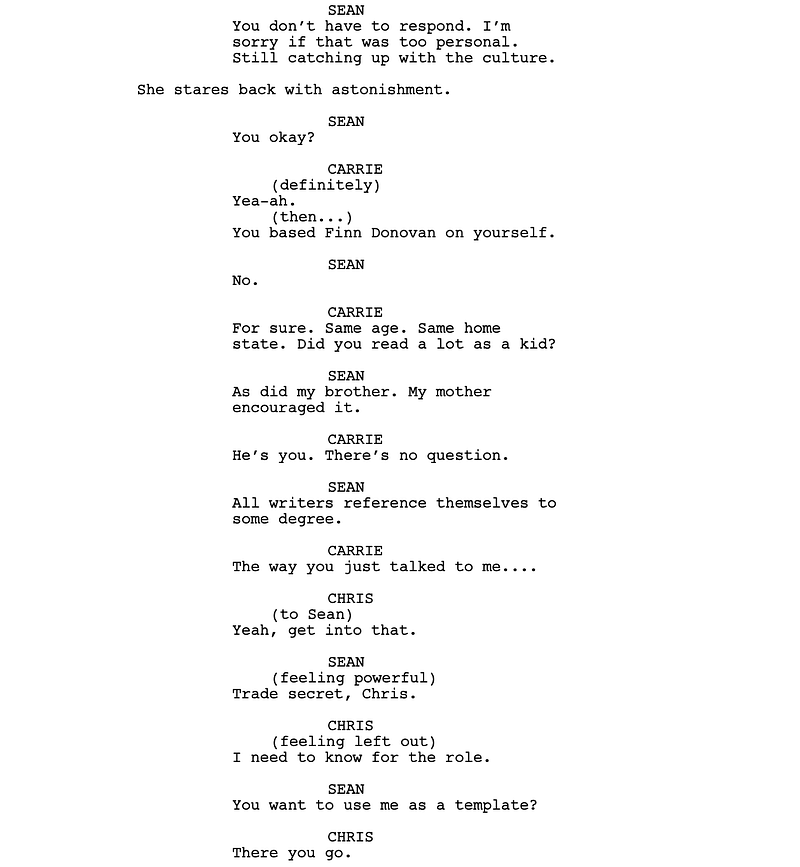
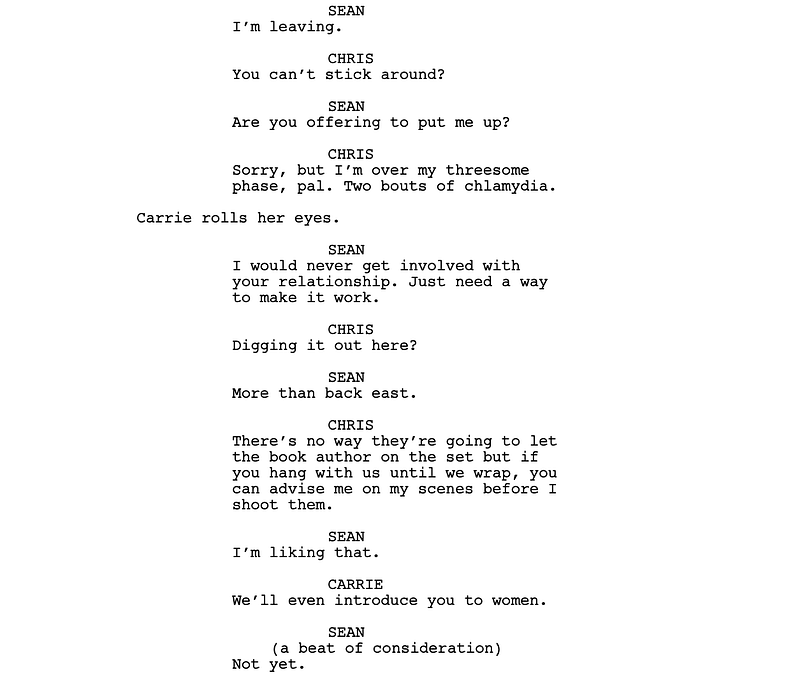
Scott: Let’s talk about some of the characters that are around him. You mentioned his ex-girlfriend. Her name’s Miranda. They’ve been together for a long time, never married. What was your thinking there? How would you describe that character and her place in his life?
Dana: I wanted to give my protagonist a central objective, something to focus on at the beginning and to work towards She represents life as he remembers it, which is important to his sense of equilibrium. His quest to get her back is what drives him forward.
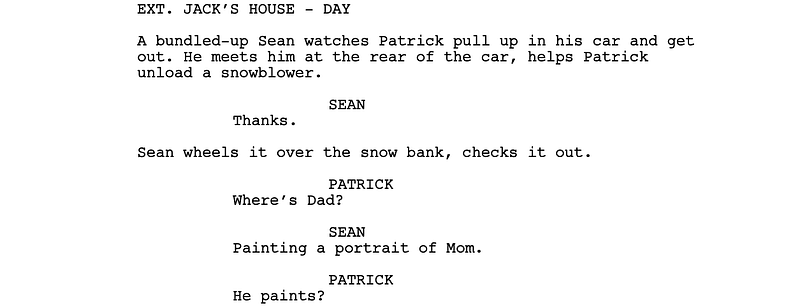
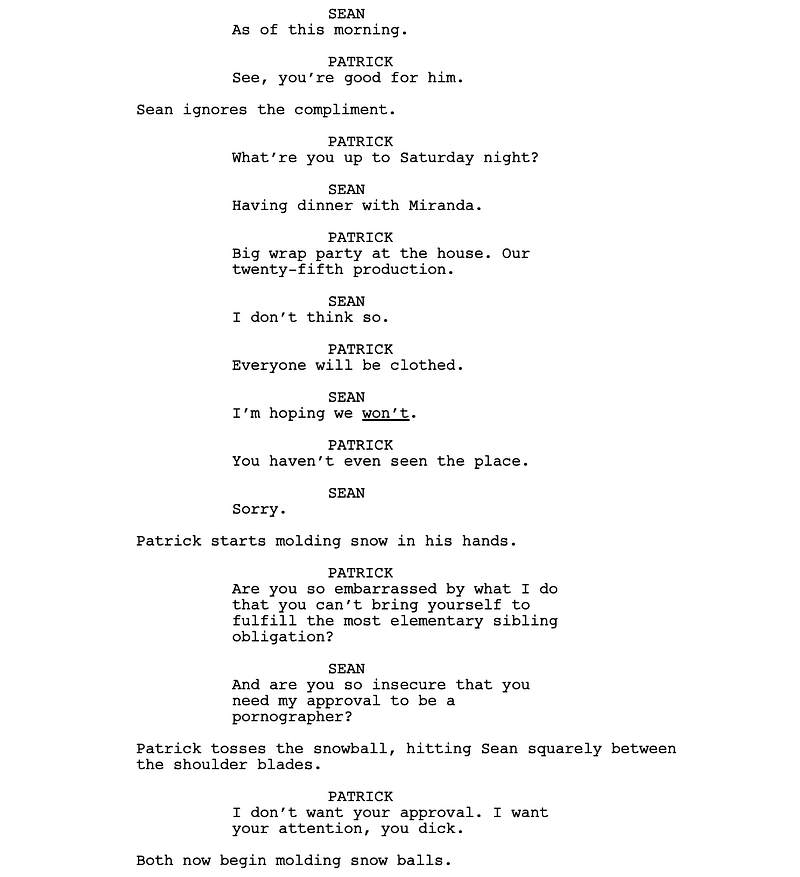
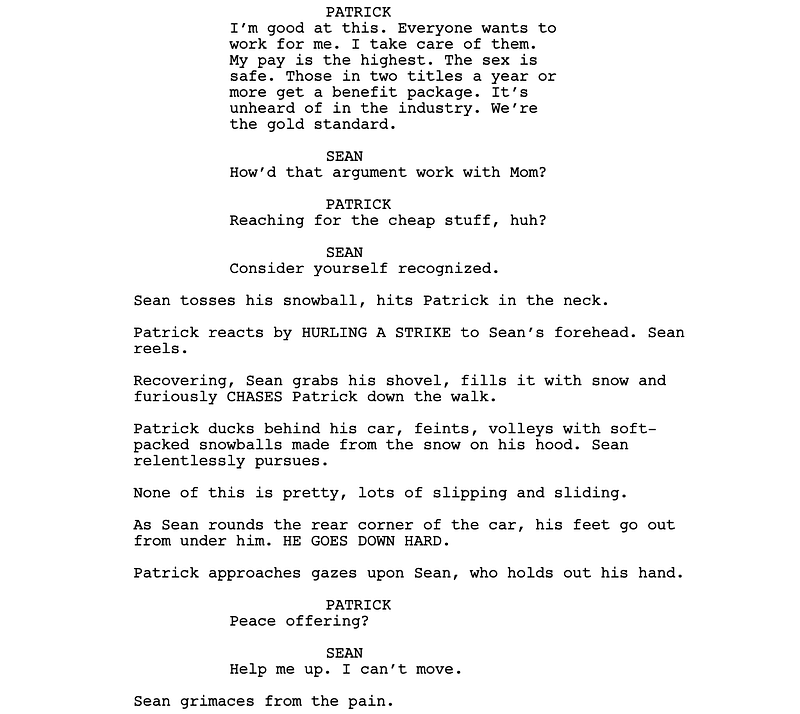
Scott: Another character who’s pretty important is the brother, Patrick. Considerably different personality than Sean. What was your thinking there as a writer, why this character is in the story?
Dana: I have twin daughters so the idea of creating twin brothers who are alter egos, was a natural place for me to go. Sean and Patrick are fraternal twins, and have a different view of the world, but in the end they complete each other in this unexpected way. In that sense, Patrick is the most important male character in the story outside of Sean.
Scott: So, this idea of twins finding complimentary journeys. How did you come up with that approach?
Dana: It was a process. My original idea for the ending was different than what I ended up with. Sean was going to discover that he was responsible for the accident that put him in a coma. It was a strong, dramatic twist…this revelation that he wasn’t the victim but the perpetrator. But, I had also laid in this whole subplot about the book being turned into a movie, which is turned into a musical, then a musical movie. That’s something that’s always amused me in Hollywood, the idea of remaking something over and over. The point is with every remake, it loses a bit of itself until it no longer resembles the original. It works well for the protagonist’s struggle because each remake obscures Sean’s sense of what he has created and obstructs his path forward. The problem was I couldn’t figure out how to put those two ideas together in a way that constructively and tonally made sense. When I finally came up with the idea of Patrick representing the twist, I thought, “That’s my story.” It’s about how others can find themselves in one man’s journey, which is actually a line from the script.
Scott: Let’s talk about that novel “The Third Eye.” I’m curious, how did that relate thematically to the story that Sean’s going through? Maybe you can even describe a little bit about what the plot of “The Third Eye” is?
Dana: I wanted a story about a spiritual guru with special insight who influences others, but eventually loses his way. That’s because it mirrors Sean’s journey. Turns out that Sean has created Finn but doesn’t actually understand him.
Scott: The main character in the novel is blind, correct?
Dana: Yes.
Scott: Who has a special sight.
Dana: Right. He sees the truth without seeing. That’s something Sean is unable to do.
Scott: That’s the irony there. The character who probably sees things the best in this entire universe is this therapist named Carla. Is that a fair assessment?
Dana: Yeah. She’s Sean’s physical therapist, who he comes to realize is the only person in his life who hasn’t been hiding the truth from him. Turns out he’s been struggling because he’s been working with incomplete information. She’s up front with him from the beginning, but he rejects her because of her bluntness. Ultimately, he realizes that she has been seeing things he’s been missing all along.
Scott: That’s done deftly and very nicely. I want to ask you a question because there is this conventional wisdom in Hollywood, which is often more about convention than actual wisdom, in the development circles like voiceover narration. If you remember that adaptation of the Robert McKee character, “It’s flaccid writing,” and all of that. You use voiceover narration. Not a lot, but you use it in the script. I’m curious what was your thinking behind that?
Dana: I don’t believe in absolutes. Some of my favorite films are narrated. Any narrative device can be employed effectively… or poorly. In this case it’s a perfect setup for the ending because, without giving it away, the revelation of the narrator is a major plot point.
Scott: You had a lengthy career writing TV. You were with JAG for eight years, and at some points, co-executive producer on it. What about writing this feature-length screenplay was similar and different from your experience pounding out episodes or overseeing episodes being written?
Dana: Writing on a staff is very different than writing features by yourself. You’re beholden to so many people and levels of expectation. And you’re writing fast. In my case, the deadline was generally two weeks. Sleeping Upright took about three months. It felt like a more leisurely process. I gave myself time to reflect and work through the story issues. It’s how I prefer to write, which is not to settle but to wait until I feel I have something compelling to say. Once I construct it, it eventually takes on a life of its own, I get excited, and then push to the end. With television, particularly one-hour episodes, there’s little time to reflect. You have to start with structure. I would develop the idea and then create the four act breaks, trusting that I would be able to figure out later how to get from one to the other. It was the only way to get a story approved quickly and prevent the possibility of writing myself into a corner.
Scott: With Sleeping Upright, you certainly wrote a compelling story. Here’s what the jury of the Silver Bullet Contest had to say about your script: “This is a story of a man’s literal reawakening to who he is and what he wants out of life. Our judges thought the concept was great and that Dana delivered on the premise with writing that caught their attention through its wry sense of humor and with authentic characters who popped off the page.” What’s your response to getting such stellar feedback from judges who are themselves Hollywood professionals?
Dana: I was flattered, of course. Not only was I being judged by professionals, but I was competing against them, Emmy and Oscar winners so I’m told. The thing is this screenplay has always received good feedback. I’ve never doubted its value. The problem was figuring out how to move the needle beyond, “I like it.” I write movies I’d like to see and sometimes that means ignoring the trends and paying the consequences.
Scott: That’s oftentimes the message that the professional writers give to novice writers, is write what you what you want to see. Yet at the same time, right now on the feature side of things in particular, the studios and most of the production companies are so obsessed, addicted to pre-existing content. Remakes, reboots, sequels, shequels, prequels. It’s difficult for original stories to get made. That said, though, all it takes is one person. I was thinking, get this to a director, get this to an actor of substance that would want to play this. Any luck there?
Dana: Funny you ask that. I’ve always felt that putting this and other scripts of mine into the hands of actors and directors would push it to the next level. But it’s not easy getting past the gatekeepers. As it turns out, one of the Silver Bullet prizes was an introduction to the story editor at one of the major agencies. He curates scripts for their A-list talent. We had a long conversation and I’ll be sending him the script soon. We’ll see if he responds well and if he’s willing to pass the script along.
Scott: Fingers crossed on that. I’d like to talk to you about the fact that for the last… It’s actually longer than a decade. It’s maybe 12, 13 years, you’ve been the director of the Writing for the Screening and Stage program at the University of North Carolina Chapel Hill and brought that program to a level of prominence that is quite wonderful. What is it about teaching that attracted you to say, “I’m going to want to make that switch from being a TV writer-producer”?
Dana: Teaching is something I had always planned to do. I taught a little when I was an actor and thought I had the skills for it. While I was making the jump in television from half-hour comedy to one hour drama, I prepared by obtaining an MFA in playwriting from the UCLA School of Theater. Once I left “Bones” I was ready to move on. Fortunately, I had the perfect resume for the program and my current position of director. We teach dramatic writing in a holistic manner. Students learn to write for film, television and the theatre. I feel that the shift to teaching later in life allowed me to accrue more knowledge and experience before I started passing it on.
Scott: What are some of the things you pass on? Maybe a key thing to your students who graduate that go to New York or to LA to pursue their career? Do you have some sage words of advice for those type of folks?
Dana: I actually have a list of practices and attitudes that have served me and my career. I send it out to the graduating members of the program each year. It’s long but I’ll read the ones I think are particularly useful.
Be present.
Write, be productive, but don’t turn on your computer until you have something to say.
Good writers are good observers. Pay less attention to your phone and more to the world around you. Listen. Encourage others to talk about themselves.
Find yourself a mentor and/or a responsible critic.
Avoid using film, television, plays, and novels as templates as it’s likely to homogenize your voice. Let them influence you, but don’t let them change you.
Don’t be afraid to be different. Recognition is half the battle.
Moving forward requires only that you put one foot in front of the other.
It only takes one yes to neutralize a hundred no’s. This is one I state often.
Do not allow bad news to infect your attitude. Consider it a learning opportunity.
Everyone gets his or her shot, but not everyone’s ready for it. Don’t allow yourself to become bitter or cynical and fall into a state where you can’t take advantage of the moment.
Do not allow anyone to make you feel inferior. Move on to an environment where you’re appreciated.
Be collaborative, but maintain the awareness that actors, producers, and directors are interpreters. Unless you are adapting, you are the only one that can produce something from nothing.
Finally, work your career, but live your life. It’ll also make you better writer..
Scott: That circles back to where we started because I’d like to end, if you don’t mind thinking about it again. People who are at this age, who have lived full lives. Do you have anything now, having gone through this experience, anything that you would give as words of wisdom to those who are 50 and older who are trying to find their mark as a film writer?
Dana: Well, I broke into the business at forty-two. It would be the same advice I gave to myself. You may think you’re old, but you’re new to them. Good writing jumps off the pile. They don’t have to see you to like what you’ve created. But you should be honest about your competitiveness as a writer. Ask yourself the hard questions. “ Can I compete with the talent out there? Am I as good or better than those who are working?” If you believe you are, there’s no good reason to stop trying.
Here is an interview with Dana where he learned he had won the Silver Bullet Screenplay Competition.
Dana Coen University of North Carolina, Chapel Hill
For 100s more Go Into The Story interviews with screenwriters, filmmakers, and industry insiders, go here.