Interview: Craig Mazin
A conversation with the co-creator of the hit HBO TV series The Last of Us.
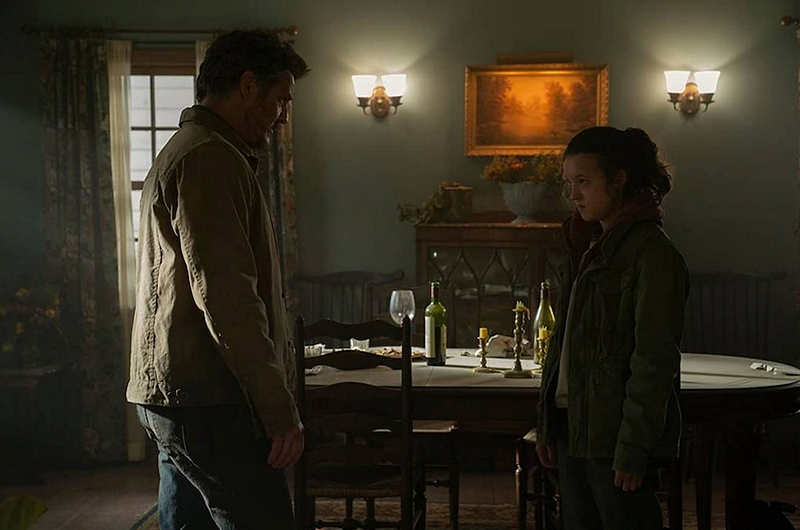
A conversation with the co-creator of the hit HBO TV series The Last of Us.
The Last of Us has hit the midway point of its Season One run (HBO recently announced it was renewing the series for another season), so it seems like a good time to check in with Craig Mazin. He along Neil Druckman are co-creators of the TV adaptation based on the popular PlayStation Studios videogame written by Druckman.
Mazin spent many years writing comedy features including Superhero Movie, Identity Thief, and two The Hangover sequels before writing the award-winning HBO series Chernobyl. In this interview with Esquire Middle East, Mazin talks about a thematic touchstone for the writing of the series.
You’ve said the show being is that it’s a love story, and that’s not a good thing. Can you walk me through that what exactly that means to you, and how that fueled the way that you wanted to change certain things or focus certain things as you got further and deeper past this first episode?
CRAIG MAZIN: I think it was just a function of how I felt when I played the game. I remember feeling both thrilled and awful. By the time I got to the end, I was torn. I was really torn. And that’s something that Neil does extraordinarily well, something Naughty Dog does really well. They don’t give you an easy rooting interest. They challenge you the whole way through.
There’s a moment on The Sopranos that I always think about, when Carmela goes to her own therapist, to tell this guy, look, it’s not going well with my husband, who is in fact, a mobster and kills people and I don’t know what to do. He’s being a dick. And, and the guy listens, patiently, and then says, ‘leave, he’s a murderer. If you stay with him, you’re complicit. You’re taking blood money. You have to leave.’ His moral clarity is so stark.
I think that’s one of those things that happens when you’re playing these games. You start to lose your own moral clarity in a really provocative way. I wanted, as we adapted this material, to return to that theme over and over and ask ourselves, what do you do? Who do you root for? Is this one right? Is this one wrong? And to always connect people’s behavior to love, because that’s what I think drives people more than anything, not greed. But love, even religion, ultimately, is connected back to love — love your tribe, love of your group. Love of the people who share your faith, love is what gets us both in and out of trouble. And that is provocative, and it’s exciting to write.
Before watching the series, I had no knowledge of the videogame, nor am I that much a fan of zombie stories, but what Mazin and Druckman have done is instructive for all screenwriters: They make us care about the characters. That love Mazin talks about is not only present among the characters, you can feel it in the way the writers have handled them in adapting the videogame.
As a result, amidst all of spectacle, horror, and gore, each episode keeps making us care by spending time with the characters. It’s those intimate moments of interaction which grab me. By doing that, they make the action meaningful because it’s happening to or created by characters in whom I am emotionally invested.
Clearly, there are a lot of viewers who share those feelings. The Last of Us currently has 97% critics rating and a 91% audience rating on Rotten Tomatoes.
Then, of course, there is Episode Three.
For the rest of the interview with Craig Mazin, go here.
For 100s of interviews with screenwriters and filmmakers, go here.