Interview: Cord Jefferson
Conversations with the writer-director of American Fiction.
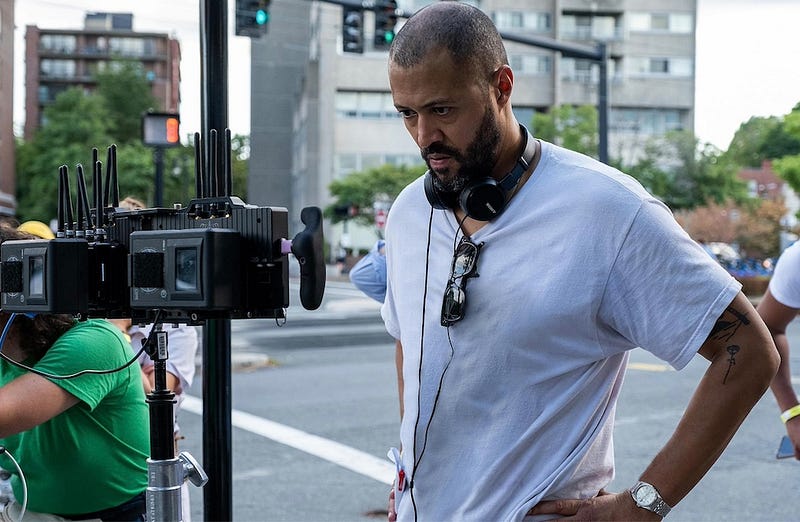
Conversations with the writer-director of American Fiction.
Two interviews with Cord Jefferson (The Good Place, Master of None, Watchmen) who makes his directing debut with the movie American Fiction. Starring Jeffrey Wright, Issa Rae, Tracee Ellis Ross, and Sterling K. Brown, Jefferson adapted the novel “Erasure” written by Percival Everett.
Here is an excerpt from a New York Times interview.
What was it about the book that spoke to you?
There was so much. The most obvious is just the conversation that it’s having about the expectations of a Black artist in this country, what people want or think that Black art should be. That was a huge part of my life when I was still working in journalism. I wrote this article called “The Racism Beat,” which is very much about the expectation that Black journalists are just there to write about the bad things that happen to Black people and racism and violence.
But besides that, there are three siblings in the book, and I have two older siblings. And there’s an ailing parent in the book, and my mother passed of cancer in 2016, after two years of struggling. One of the siblings in the book is charged with caring for the parent because the other two are off doing their own thing, and that was the dynamic with us. My oldest brother shouldered that responsibility. He went about it stoically and never complained or anything, but I had this residual guilt over not being there.
From big things to small things, there was just all of this stuff that felt like it was speaking to me directly. I went to a college in Virginia called William & Mary, and there’s a reference to William & Mary in the novel. Nobody ever talks about William & Mary in pop culture! It just felt like somebody had written a gift specifically for me, like, “I made this for you.”
Here is an excerpt from a Hollywood Reporter interview.
Two lines in the film stood out: “There’s a lot of fakes in Hollywood” and “I haven’t been myself lately.” Through this film, you can see how creative industries would make a person feel outside of themselves. Have there been moments where surviving in a space where everybody wants something, but how you get it can feel questionable, affected you? Have you ever not felt like yourself?
Of course. I think if you live life, especially if you live a creative life, the number one quality is resilience — the ability to withstand rejection, heartache, suffering, and get up and do it again. I think this industry in particular is brutal. It’s brutalizing. I could be dispirited after a while. In the lexicon of the film, I have a Black friend who is a screenwriter, and he told me that the movie was really difficult for him to watch because he said, “I’ve writen those scripts because I knew that’s what people wanted and that’s how I could make my way.”
One of the most gratifying things that anybody said about the film that really meant a lot to me happened when we were your auditioning actors for Agnes. There was this women in her 70s who said before the audition when they asked: Do you have any questions for Cord? She said, “I don’t have a question, but I just want to tell you that I can’t believe they’re letting you make this movie.” I said, “What do you mean?” She said, I’ve been working here for half a century and you’re talking about things that we’ve been talking about for just as long, if not longer.” To me it was this really lovely reminder that that woman is why I’m allowed to be here.
Movies like Bamboozled and Hollywood Shuffle — the latter is very much a spiritual predecessor to this film. I saw that movie when I was about 7 or 8, and it just blew my mind. It’s having the same conversations I was having. That movie was written by Robert Townsend and Keenan Ivory Wayans starring and directed by Townsend. I think that movie took them a year and a half or two years to film, because they would film on a Saturday and Sunday, then they’d go work to make more money. That’s how they made that movie — whenever they had money that they could scrape together. It was all on Robert Townsend credit cards. He maxed out 12 or 13 to do it. That movie that I loved so much when I was a kid was such a painstaking process for these guys who really believed in it.
That woman had been working for 50 years, probably getting called all the time to play slave roles or unwed mothers. Moments like that really solidify for me the thing I’m trying to remember in this entire process and that I can’t forget ever: Those people were resilient. They faced the same obstacles that I faced — them a little more because things have gotten a bit better. I’m just trying to be resilient so that hopefully, 40 years from now, somebody else can make a story that they wouldn’t be able to make in the year 2023.
Hopefully, what this film does is crack the door open just a little bit more for somebody who is struggling, who want to make and say what they want to say, and haven’t been able to. We made progress in that I didn’t shoot this film during the weekends over the course of a year and a half because there was finally people who were like: This is a conversation that we want to have, so we’re going to give you the money to make it. I’m here because that woman started 50 years ago was having these conversations and saying to people: “You shouldn’t be doing this. Why are you doing this?” That’s the real reason I’m here, and hopefully what the movie can accomplish.
Plot summary for American Fiction: A novelist who’s fed up with the establishment profiting from “Black” entertainment uses a pen name to write a book that propels him to the heart of hypocrisy and the madness he claims to disdain.
Satires are hard to pull off. This movie does it really well. It’s funny as hell.
For the rest of the New York Times interview, go here.
For the rest of The Hollywood Reporter interview, go here.
For 100s more interviews with screenwriters and filmmakers, go here.