Interview: Celine Song
Conversation with the writer-director of the wonderful film Past Lives.
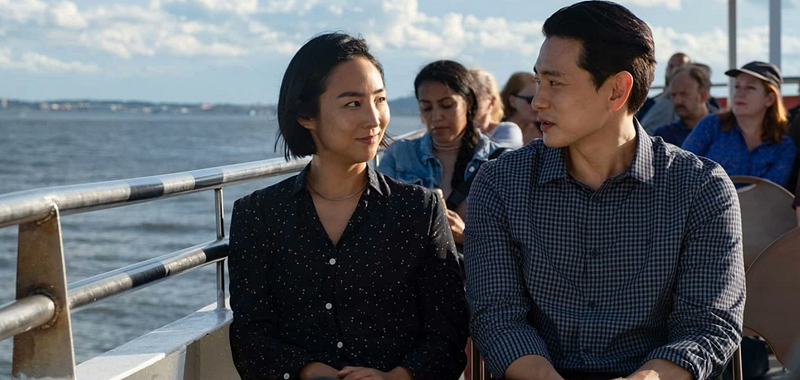
Conversation with the writer-director of the wonderful film Past Lives.
The movie Past Lives was a breakout favorite at this year’s Sundance Film Festival, “one of the best debuts Sundance has seen in years.” Written and directed by Celine Song, it is everything I want in a movie: Simple plot. Complex characters. Authentic emotions. Mature directing. Beautiful cinematography.
Plot summary from the movie’s website: Nora and Hae Sung, two deeply connected childhood friends, are wrest apart after Nora’s family emigrates from South Korea. Two decades later, they are reunited in New York for one fateful week as they confront notions of destiny, love, and the choices that make a life, in this heartrending modern romance.
Here are some excerpts from a RogerEbert.com interview with Celine Song in which she talks about directing her first feature length film and the importance of the Korean concept of In-Yun.
Obviously, the idea of In-Yun is central to the story. I’d never heard of it before this film. You mentioned in last night’s Q&A that the film was inspired by a meeting between your actual childhood sweetheart and your husband. Was In-Yun part of your concept from that initial spark? When did that come into the process of the script writing?
I think the concept of In-Yun is a pretty commonplace phrase in Korea. So it’s true what Nora says when she says it’s like just something Koreans say as a pick-up line. It’s just a way to feel connected to someone, even if you just met them or you just met them a couple times. They will say, “Oh, hey, we must be In-Yun.” That’s something people say. So to me, it is the first thought that sort of popped into my mind of like, oh, that’s what this is.
But this In-Yun is so different with these two guys, too. Because I think it’s easy to think about In-Yun as something you can only have in a special destiny with somebody else. That, to me, is a very Western way of thinking. In the Eastern way of thinking, so much about In-Yun is something that comes to you. Destiny is something that comes to you, and you can’t really stop it. It is something that you have to learn to accept.
What was going on with In-Yun to me? I was like, well, the person who gives you a cup of water when you’re thirsty, even that person is In-Yun, even if you never see that person again. But also your mother is In-Yun as well. I would say that your mother and yourself are much, much deeper In-Yun, probably one of the deepest In-Yuns you can have. But it doesn’t mean that the person who brought you a cup of water when you needed it is not In-Yun. So it is something that I think can be a part of everybody’s life and the way we think about everyone.
I think part of that is that it makes every relationship we have, or even every encounter we have, have weight and have meaning and depth. Because if you can think of the person who gave you a cup of water as a person that you have In-Yun with, yeah, then I think that the way you think about that person, the way you treat that person, and the way you care for that person changes. I think In-Yun can be a pretty amazing thing that one can have.

That would be a much better way to go about exactly thinking about the world.
I want you to just live your life and just be able to say I think that person is In-Yun. We are really special In-Yun.
Past Lives poses a “what if” that is universal to the human experience: What if I had ended up with that person instead of this person? The concept of In-Yun, how providence or fates is at work in our lives, is something we all feel. Hence, the universality of the emotional life of the movie through the specificity of its central characters.
Here is a trailer for Past Lives.
Here is a short interview with Celine Song:
For the rest of the RogerEbert.com interview, go here.
For 100s more interviews with screenwriters and filmmakers, go here.