Interview: Brad Riddell and Sandy Sternshein
A Go Into The Story Q&A with the co-writers and co-directors of the new indie comedy Later Days.
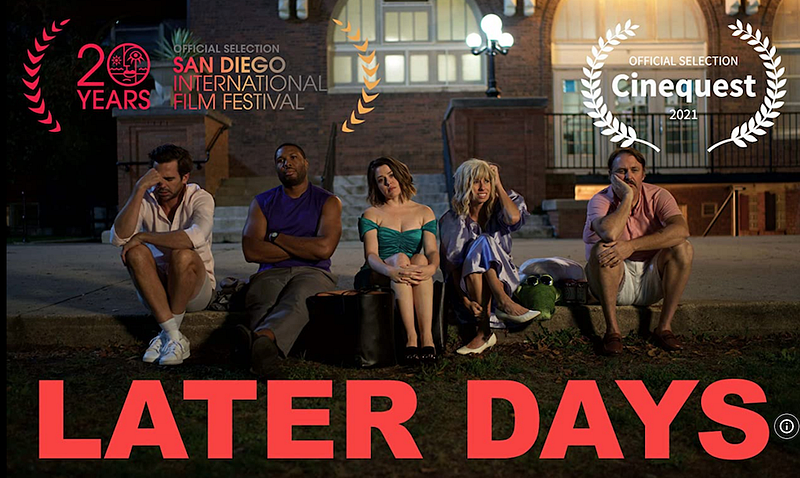
A Go Into The Story Q&A with the co-writers and co-directors of the new indie comedy Later Days.
Contemporary culture is awash in nostalgia which is the perfect backdrop for a new indie comedy Later Days. Co-written, directed, and produced by one of my DePaul University colleagues Brad Riddell and his creative partner Sandy Sternshein, the movie has been getting some good reviews:
- Chicago Sun: “Likable grown-ups relive high school in a clever Chicago comedy”
- Film Threat: “Writers/directors Riddell and Sternshein find ways to make their version of the high school reunion story feel both fresh and familiar at the same time.”
Here is my Q&A with filmmakers Brad Riddell and Sandy Sternshein.
Story summary: Real-life married couple in a coming-of-middle-age comedy in the vein of Office Christmas Party and Game Night, about the reckoning between who we are now, who we once were, and who we still aspire to be. What was the inspiration for Later Days?
We had two story ideas going at once and couldn’t crack either of them until we realized they belonged together. One was the story of a group of friends with a long-running text chain that mistakenly gets released to the public and leads to big trouble for all of them, and the other story was based on true events — Sandy actually threw an 80s Prom Party for his wife’s 40th birthday. It was also a reunion of sorts as lots of people from the various corners of their life came together, and it was interesting to see how people changed, how they’d stayed the same, and what kind of baggage, grudges, and crushes folks carry into an event like that. It’s the perfect venue to either start or resolve a midlife crisis. Once we merged the two stories, we were able to get some traction.
LATER DAYS is a nostalgic love letter to 80s movies, and to the soundtrack of Generation X. Nostalgia is huge in today’s world of entertainment. What was your personal connection to this story which drove you to look back at that time in your own lives (the 80s)?
We’re both Gen-Xers who graduated high school at the tail end of the 80s. We also grew up as big John Hughes fans. Brad actually teaches a John Hughes class at DePaul, along with Ron Eltanal, where they dive into this very question of nostalgia. Much of Hughes’ work is problematic, and yet it still resonates with people. Especially young people, who, by and large (and to our great surprise) are able to see the problems very clearly, but also appreciate a filmmaker who captured the voice of a generation. So we definitely wanted Later Days to feel like a Hughes film. Given who we are and where we are in our lives, we knew we couldn’t pull off a bunch of modern 18 year-olds holding an 80s prom party, but it occurred to us that we could comment on high school and infuse a bunch of nostalgia into a story by putting adults back in the lunch room together many years after graduation. Or, said another way, what if the characters from The Breakfast Club got together twenty years later? It was important to us for the audience to see adults in adolescent situations, and ask — do we ever really grow up? Or, who grows up and who doesn’t? And it was our hope that the scenario plus the soundtrack would draw in people our age who want to reconnect with their past, hear some great music, and laugh at regular people not too different than they are. The film is steeped in true stories, characters, and situations from our lives, so in many ways, it is very personal.
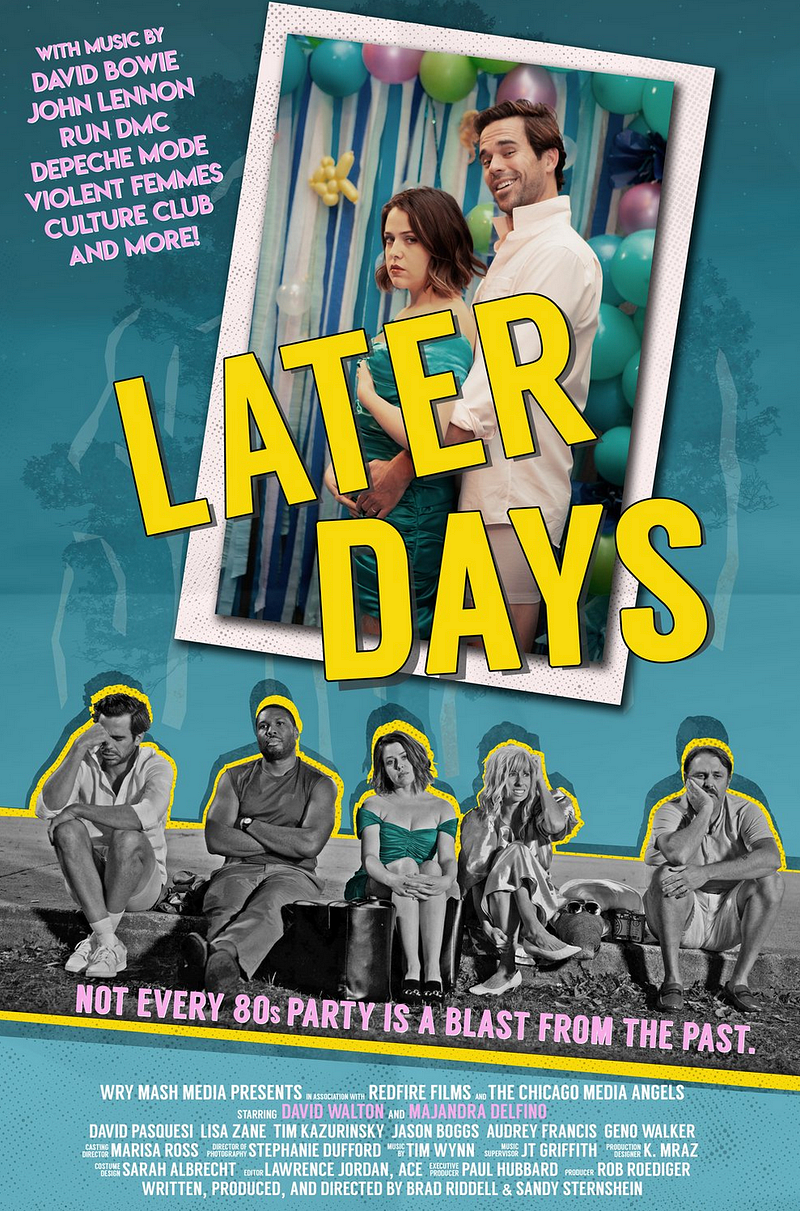
You both have backgrounds as screenwriters. This is a project you co-directed. When you developed and wrote the screenplay, did you go about that process with the idea that you would direct the film? How did that influence your writing process?
This was always intended as a vehicle for our first feature as directors. So, we wanted to stay within what we felt was a comfortable wheelhouse for us. Now, we thought we were smart as indie filmmakers to limit the story to one major location in act two — but where were not smart was writing an ensemble cast with fifteen major speaking parts and the need for a lot of extras! But, knowing we would be responsible for directing this film made us focus more than I think we ever did on visual storytelling. I mean, we’ve been writing professionally for twenty years, and we both teach screenwriting, so we thought we were good at visualization and externalization, but directing takes that to a whole new level. Fortunately, we’ve both worked with strong directors, and we sought advice and script reads from directors we trust, so our goal was to arrive to set, wherever that would ultimately be, ready to see the story through the camera. What was maybe a little new to us was dealing with character questions from actors. We’ve always been cut out of that process as writers, so when there was something confusing, or not clear about a character’s dialogue or decisions, we worked with the cast to resolve those issues, which was very rewarding. It was a great reminder of what actors need on the page in order to pull off a strong performance, and how as writers, we need to constantly be mindful of that.
You write the script, then you need to obtain funding to produce it. Could you describe what that process was like?
Like almost everything involved with making this film, fundraising was completely new to us. And it was very hard. Our first break came when Sandy was talking to a family friend, Paul Hubbard, about how as teachers, we were not practicing what we’ve been preaching to students, and how inauthentic that felt. We were both telling our students the importance of controlling your own content and making your own stuff, but we were just sitting there waiting for Hollywood to say yes. But no one was going to call and offer us a directing gig out of the blue. So Paul, having built his own business, remembered a time when he was struggling to get seed money for his dream, and on the spot, right there in a hot tub, offered to support the film. And it’s been our experience, at least in the indie world, that people are investing in you and the promise of your career as much, if not more than the project itself. After we had first money, we cast our net far and wide, and were rejected much more than we were accepted. But the folks who did end up backing us were friends and family who wanted to be part of making this dream come true. We were brought to tears more than once when we received a “we’re in” phone call. Not so much because we were closer to making our budget, but because people we care about were investing in us and believing in us and our story. Paul, Jim Gray, Laurie Perdue, Gary Okano, Jennifer Sternshein, and Keely and Dave Wise were there for us and this project. They didn’t know each other before, but now they are the family that made the movie happen out of love and trust and belief, and we’ll never ever forget that.
The Chicago Media Angels are one of the film’s producing entities. What was their involvement in the movie going from script to screen?
The Angels were on our radar early in the fundraising process. Frankly, if you are trying to make an independent film in Chicago (or anywhere), and they are not on your radar, you’re doing it wrong! So first, we applied for consideration through their website, then we were invited to make a pitch to the entire group. This was the biggest pitch, in terms of the number of attendees, that Sandy and I had ever made. And we worked hard on it. For months. And fortunately, with the help of Kelly Waller, Ted Reilly, Mark Glasgow, and Dorothy Marks, we were able to gather enough investment from the group of Angels to partner with them on the making of the film. One event that really helped, too, was the SAG / IFA At the Table script read we participate in a few days after our pitch. We applied for that program and were accepted, and the investors were able to hear professional actors whom we had directed perform the script (the timing was just sheer luck), and I think that also helped us solidify their support. CMA is a great resource for investment, but also dealing with Illinois tax credits, so filmmakers should definitely seek them out.
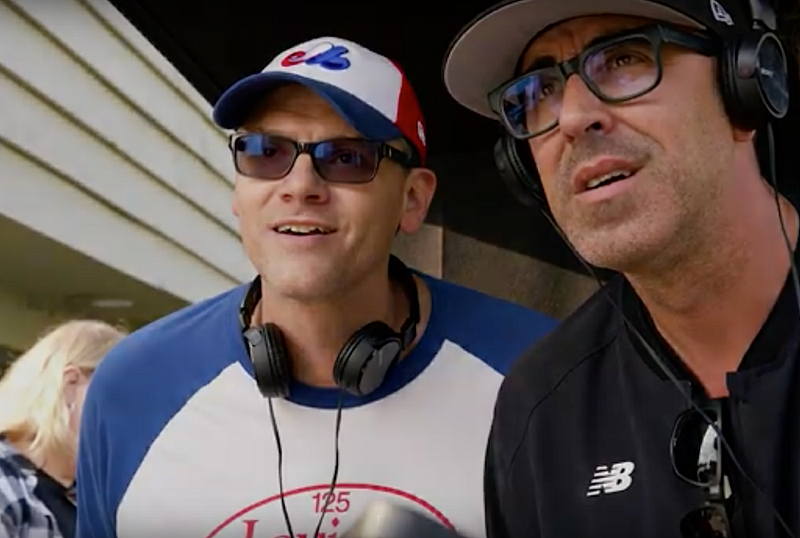
How long was the production process? Did you have to make changes to the script to fit that into your production schedule and if so, how?
We shot for 19 days. We needed 25, but that’s the indie life! We ended up removing a few characters, consolidating a couple locations, and in general, tried to be judicious about going into production as lean as possible. Once we got working with the actors, we did a few overnight rewrites to match voices, bring a character forward, or handle story or production issues we had not foreseen. But the script we ended production with was probably 98% of the one we started with. We did a good deal of improvisation on set given the talent of our cast, and we will gladly take credit for their genius! But truthfully, a few of our favorite moments were 100% improvised.
How did you manage the process of co-directing, i.e., who did what?
Except for a few specific moments, Sandy handled most of the work with the DP, as he has more experience in that regard. Brad probably monitored story a little more, and we were both very attentive to performance. There were scenes where one of us had a clearer vision, so that person would take the lead for that scene and the other would advise and support. And only one of us at a time would approach an actor with a note. We would confer first, then make a decision, then one of us would go talk to them after a take to avoid a bum rush of noise and confusion. We definitely learned how we could do it even better next time, but we enjoyed the process, we feel it made the film better, and we’ll definitely do it again.
You shot this movie in the Chicago area and used local acting talent. Could you speak to the level of acting talent in Chicago.
David Walton and Majandra Delfino, our two stars, came to Chicago not knowing who or what to expect from the group of people that would surround them. I think they were understandably a little nervous. Once we got to work, more than once they said to us — “These people are amazing.” Chicago is widely known as the funniest city in America due to its improvisation and standup roots, and our theater scene is top-tier. There is a reason why so many movies and shows are coming here now — we have the crew and equipment and the facilities — but we also have the talent. The acting reservoir here is deep and broad, and because we’ve been able to draw from it on a number of projects now, it’s become clear that we want to work here as often as we can. Our casting director, Marisa Ross, says Later Days is a who’s who of Chicago talent, and that’s exactly what we wanted. To get the funniest people we could together to represent this city and tell our story.
Any particular anecdotes from the production process which cry out to be shared with the public like, “You cannot believe what we had to do” kind of thing?
On the very first day, we scheduled a scene with twenty first-graders playing baseball. Not only was that hard, but a key extra did not show up, it rained, and Sandy tore his MCL directing our big “all in one shot” baseball scene. David Walton, our lead, showed so much grace and support that day, but we were worried he wouldn’t come back! The footage from that day turned out great, but man, it was a rough start.
You go through production. What was the post-production process like, especially in that it took place during the height of the COVID pandemic?
We were really on a roll in March of 2020. Sandy and our editor Larry Jordan had finished a first cut. Our music supervisor, JT Griffith, was already getting approvals on songs we never thought we could get. Then — LOCKDOWN. We had to do the remaining editorial passes on Zoom, and by looking at exported cuts and conferring together. Color correction was done remotely on specially tuned iPads from our home. ADR was done over Zoom. This is NOT how one envisions finishing one’s first feature film! Test screenings were impossible, and for a comedy, that’s not ideal. Fortunately, Brad was able to attend sound mix sessions at Periscope in Chicago, but for the most part, we weren’t able to be together in a room with movie from the first cut to the final output. We were accepted into a couple of prominent film festivals, but we didn’t get to have that classic festival premiere experience as they were both unfortunately online. As of this writing, Brad still has not seen the movie on a big screen with an audience, and that is kind of a bummer. But we’re proud that we survived and made it to market despite all of those challenges.
It’s one thing to make a movie. It’s quite another to find distribution. What was that process like?
Also a little harder due to COVID. With comedies, buyers like to sit in a festival theater with an audience and see if people laugh. So, for us, we had to go distributors on the hopes that someone watching the film on their laptop in their home office while managing their kids’ home school and the family Grubhub order was gonna laugh at our movie! Fortunately, I guess some of them did. We hired a producer’s rep, Glen Reynolds, and he got the film out to people and advocated for it, and fortunately, we got offers from five distributors. Once we signed, there was a whole new world of work and pain we had never experienced called…Delivery. And even with the movie out on VOD and in theaters right now, the delivery process is still ongoing as we settle things with our foreign distribution.
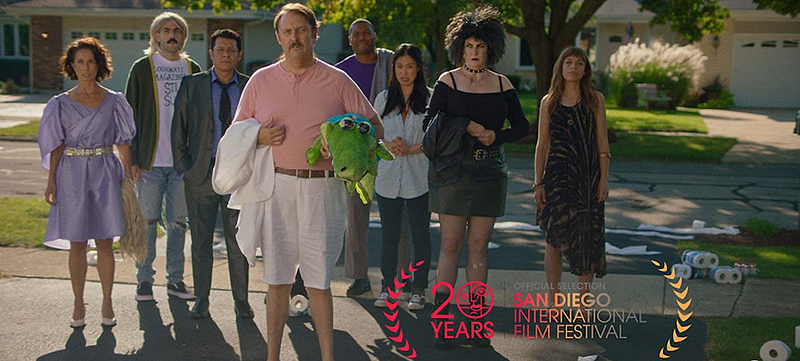
As screenwriters, what did you both learn from this entire process which you will bring to bear on your screenwriting going forward?
I think going through the process of making a feature and getting it into the world has taught us that it is possible to create and control your own content, and now that we’ve done it, we’re trying to figure out how to help other people do it more effectively. Our company, Wry Mash Media, is keenly interested in finding stories about ordinary people in extraordinary circumstances and partnering with content creators to bring them to market. We feel the industry is losing touch with the power of that kind of storytelling. As writers, I think we are even more committed to telling the stories that matter to us right now, and expanding into other genres and formats.
Finally, Later Days is being released both digitally and theatrically. How are you feeling after your experience in conceiving, developing, writing, directing, and producing the movie?
Like with most significant achievements (and regardless of how the film performs we believe it is one), we’re ecstatic that we made it this far, that it’s out in the world now, and that we’re getting good reviews. There were a number of crises which we weren’t sure we’d survive, so it is a tremendous relief. But we’re also eager to get back to work on other things. We’re writing the skateboard comedy Back to the Grind for Branded Pictures Entertainment and Tony Hawk, and we’re about to go out with an adaptation of Katrina Kittle’s novel, The Kindness of Strangers, written by Anna Maria Hozian, and to be directed by Domenica Cameron-Scorsese.
Here is a trailer for the movie Later Days:
Check out Later Days! It’s a ton of fun.
For 100s more interviews with screenwriters and filmmakers, go here.