“If we tear this thing down to the studs…”
Steven Soderbergh weighs in on the streamers’ lack of transparency when it comes to the performance of their movies and TV series.
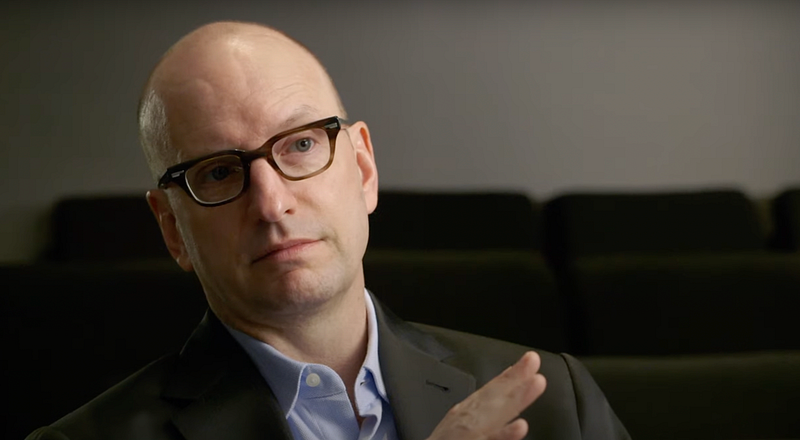
Steven Soderbergh weighs in on the streamers’ lack of transparency when it comes to the performance of their movies and TV series.
In a lengthy interview with Defector to promote his new web series Command Z, Steven Soderbergh has some thoughts about how the streaming services lack of data transparency.
With the strikes going on, AI has become a concern. Replacing actors, but also for the writers, having a studio hand them an AI-generated treatment or script to edit. The WGA has been pretty adamant about wanting the right to at least refuse to work on a script like that. It raises issues of ownership and pay.
I just think overall, it nets out, in the sense that there’s just as much chance that the creative community is going to abuse AI as there is that the studios are going to abuse AI. People are people. It is my impression of the executives that I’m working with, or was working with, that they don’t need any more work. That they are overwhelmed. And the idea of riding herd over a department that’s going to generate new material, based on their ideas through AI, that will then have to be curated and made better by humans? I wouldn’t do it. I just don’t think we can be replaced like that. I just don’t. There are other very serious issues that need to be addressed. This is a serious issue. It’s just not the one that keeps me up at night. Data transparency is the one that keeps me up at night.
I was going to ask you about that. You had mentioned it in your Reddit AMA as well. If I recall correctly you were experimenting with stuff related to data transparency on Logan Lucky?
On Logan Lucky and Unsane we were experimenting with some distribution models to see if you could put a movie into wide release without spending $30 to $40 million. And it turns out, you cannot.
After that you had been working with HBO Max, or Max now. Did you see any data while you were working with them?
No.
Was it just like, “no way”?
I was given adjectives. “We feel good about these numbers.” “The comps are right in line with what we were hoping for.”
And does that get in the way of your work?
Well, it’s just, there are two potential reasons that we’re not getting all of the information. One is that they’re all making a lot more money than anybody knows and that they’re willing to tell us. The other is they’re making a lot less money than anybody knows. And they don’t want Wall Street to look under the hood of this thing in any significant way because there’ll be a reckoning that will be quite unpleasant. It’s one of those two. My attitude is, I’d rather work in a version of the business where I know what’s going on. And if I have to take a haircut, to work in that business, and bet on myself more and take less upfront, which I’ve done a lot, then I’ll do that. That could, though, mean, potentially, a drastic reduction in the amount of things that get made. If we tear this thing down to the studs, and find out that the math is funky, it’s going to be quite a transformation. And so my feeling — and I’m operating from a place of real privilege — is the sooner we find out the better, because one way or another, it’s gotta get rebuilt, you might as well start now.
Netflix has no problem putting out PR releases about its Top 10 programs at any given time, but nary a word about other movies and TV series. Hits? Misses? Flops? Only the tech bros at Netflix know. And they ain’t telling no one. Which leads to the question: Why? Two things come to mind.
First, since they don’t reveal viewing numbers on their programs, they don’t have to pay writers and actors residuals based on actual data. This is why talent has been posting on social media ridiculous residual payments.
So reason #1: Screw talent which is pretty much par for the course for the AMPTP companies.
Reason #2 is something Soderbergh alludes to in the interview: “One is that they’re all making a lot more money than anybody knows and that they’re willing to tell us. The other is they’re making a lot less money than anybody knows [emphasis added]. And they don’t want Wall Street to look under the hood of this thing in any significant way because there’ll be a reckoning that will be quite unpleasant.”
What if they don’t want reveal viewing data because most of their “content” is under-performing? That could tank their stock price even as it has regained much of what it lost a year ago.
There must be a way to provide some form of data to ensure that WGA and SAG-AFTRA members are being paid residuals in line with what they receive from broadcast networks, basic cable, and pay cable.
Data transparency is one of the WGA’s key issues. It’s also one which the AMPTP has flatly rejected.
We’ll see who wins out this argument.
For the rest of the Defector interview with Soderbergh, go here.
For the latest updates on the strike and news resources, go here.
Please consider contributing to the Entertainment Community Fund.