How to Respond When Taking Script Notes
“It doesn’t matter whether you love the suggestion, hate it, or don’t know. Always give this same response.”
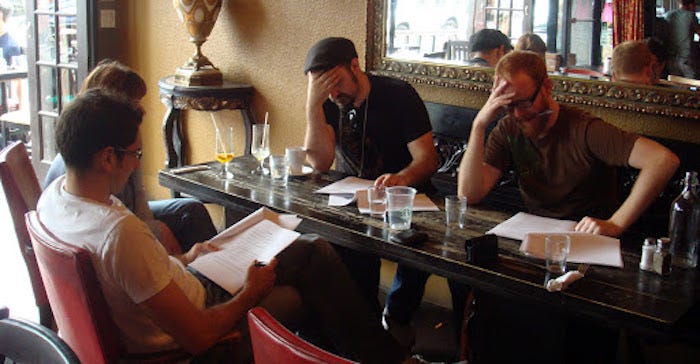
“It doesn’t matter whether you love the suggestion, hate it, or don’t know. Always give this same response.”
Here’s a lesson I learned the hard way. In any script notes meeting, any individual piece of feedback will inevitably fall into one of three categories:
- A great note
- A shitty note
- A note of uncertain value
How best to respond to a note?
- If it’s a great note, resist the temptation to say, “Oh, yeah, that’s a fabulous idea. Love it!”
- If it’s a shitty note, definitely squelch the impulse to yell, “What the fuck are you talking about? That ruins the whole God damn story!”
- If it’s an uncertain note, avoid going with, “I don’t know. Maybe it can work… then again maybe not.”
There is actually one default response which you can use for all story notes and it’s this:
“Huh. That’s an interesting idea. Something to think about, test it out, see how it plays on the page.”
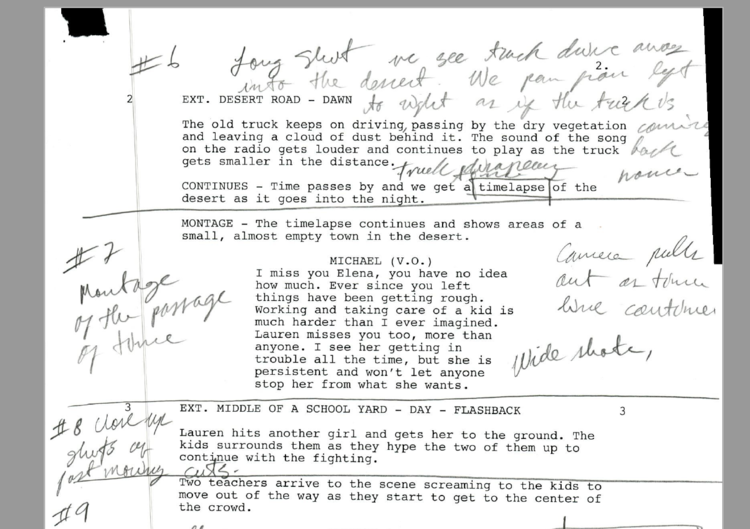
Why is this the correct response for every script note? Because it’s the safest answer.
Let’s say you receive what you think is a great note and you respond enthusiastically in the meeting. Later, what if you get back to your script, try it out, then realize, “Uh-oh. This actually does not work.”
This has actually happened to me and after a couple of those awkward conversations trying to walk back a suggestion, that’s where this idea came for the Safe Approach.
You don’t want to put yourself in a position where you have to go back to the execs, producers, directors, or actors who gave you the note and tell them their brilliant idea doesn’t fly. This after you made them feel really good about themselves and that note. You’ve put yourself in a tough situation, whereas if you take the Safe Approach, you give yourself some wiggle room in case the suggestion doesn’t pan out.
Likewise with a crap note. Critiques and suggestions don’t exist in a vacuum, they emerge from actual people who have spent actual time reading your actual script (presumably). Generally speaking, they come from a supportive place, so if their note is not good, you don’t want to crush them. With the Safe Approach, you at least give the impression you are going to test it out, so at least you’re giving them that. When you come back later and say something like, “I really tried to make that note work, but you know what, it’s problematic and here’s why,” you know you’ve protected not only yourself and your script, but also the ego of the person giving the note.
As far as uncertain notes are concerned, the Safe Approach actually comes from an honest place: You really don’t know if the critique and/or suggestion is helpful or not. Again, give yourself space and time to test it out. If it works, great. Next time you get together, you can all celebrate how the idea worked. If it doesn’t pan out, you can explain why and move on.
Obviously, you can’t say that exact same thing over and over, you have to work up some variations for the Safe Approach:
“Yeah, there could be some merit to that, I need to play around with it and see what’s what.”
“I can see why that feels like it could work, an intriguing suggestion, hopefully it can work.”
“That could very well have potential, I just gotta take it for a spin with the characters and those scenes, see how it feels.”
Okay, sure, I’m guilty of some hyperbole with this advice. However, bottom line: You have to… Protect. Your. Ass. It doesn’t matter whether you love the suggestion, hate it, or don’t know. Generally, your best response is…
The Safe Approach.