How to Generate and Critique Story Ideas (Part 7): Think International
Over the last three decades, the share of movie revenue has flipped: It used to be 70% domestic, 30% foreign. Now it’s 30% domestic, 70%…
Over the last three decades, the share of movie revenue has flipped: It used to be 70% domestic, 30% foreign. Now it’s 30% domestic, 70% international.
“The best way to have a good idea is to have lots of ideas.” Those are the words of Dr. Linus Pauling, the only person to ever win two Nobel Prize Awards. This is sage advice, especially for writers. A strong story concept is one key to the commercial viability of a novel, short story, or screenplay.
Over the next two weeks, I will run a ten-part series: How to Generate and Critique Story Ideas.
Today in Par 7: Think International.
BRIC. Are you familiar with it? If you have been paying close attention to GITS posts, you would know that BRIC stands for: Brazil, Russia, India, China. And Hollywood is laser targeted on those countries.
This strategy is a part of Hollywood’s increased focus on the international marketplace. Over the last three decades, the share of movie revenue has flipped: It used to be 70% domestic, 30% foreign. Now it’s 30% domestic, 70% international.
Notice, too, that subtle linguistic change: From “foreign” to “international.” When the U.S. and Canada used to dominate global B.O., the fact that Hollywood used the term foreign underscores the narrow North American perspective on the film business. With international, the term is evidence of the respect Hollywood has for the burgeoning market ‘overseas.’
I posted this article [July 15, 2011] about the growth of the international market. Check out this quote:
The success of a film outside America is not purely a marketing matter. As foreign box-office sales have become more important, the people who manage international distribution have become more influential, weighing in on “green-light” decisions about which films are made. The studios are careful to seed films with actors, locations and, occasionally, languages that are well-known in target countries. Sony cites the foreign success of “The Green Hornet” (Taiwanese hero, Austrian-German villain) and “Resident Evil: Afterlife” (Japanese location) as evidence of that strategy.
Here you have the tail wagging the dog, studio distribution people weighing in with the authority about what projects go or not depending upon how they are perceived to work [or not] in the international market. And that got me thinking about Inception:
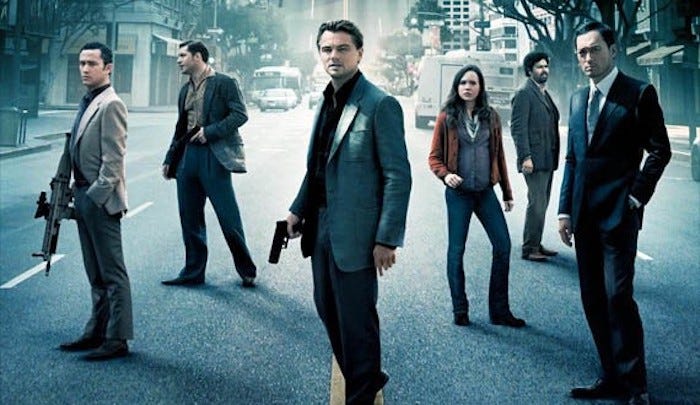
I’m not saying that when Christopher Nolan sat down to write Inception, the first thing that sprang to his mind was, “Hey, the movie business is an increasingly international phenomenon. I need to make sure to craft characters from all parts of the world to help drive foreign sales.” But he did end up with this:
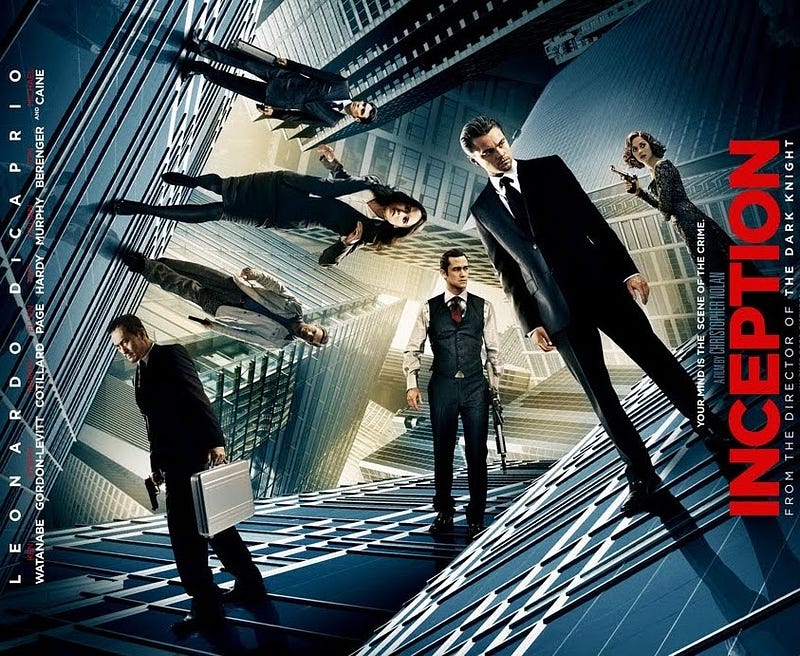
Two Americans [Cobb, Arthur], another American studying in Paris [Ariadne], a businessman from Asia [Saito], an Englishman [Eames], and a chemist from the Middle East [Yusef], the latter two of whom happen to be in Mombasa in Africa. Not exactly sure where Mal is from, but if it’s South America, then you basically have all the continents covered with the exception of Australia.
So one thing you can do when you develop your stories is consider the ethnic and national backgrounds of the characters in your stories. But you can even drill down deeper with this into your story concept. In this interview with screenwriter Greg Russo, we talked about a spec script he had written called “I-95”. It was changed to “Autobahn.”
SM: Here is how the story is described in the trades:
“Autobahn is the story of a washed-up ex-Formula One driver who wakes up trapped inside a BMW on the side of the Autobahn, Germany’s famed high-speed roadway, which has no general speed limit. He answers a phone ringing in the glove box, only to be told that he has 90 minutes to deliver the bomb-rigged car to a target or his wife and daughter will be killed.”
Who decided to make that change from the U.S. to Germany and why? Was that a tricky transition for you, shifting the story setting to Germany? How much and what type of research did you do to familiarize yourself with the autobahn, Formula One racing, and so on?
GR: It was a joint decision between myself, Inferno, and our director Mark Steven Johnson. We knew the concept worked. The trick with something like this is, how do you make it play to the widest possible audience? Naturally, the way to do that is to open it up to the ever-important foreign marketplace. So, the Autobahn felt like the perfect fit. Almost too perfect. More importantly, it wasn’t a superficial change. It made sense for our story and our characters and made it stronger. It was a tricky switch of course. But if my core concept, themes, and characters are transferrable, I can make it work. All that research came in the subsequent rewrites. Oh, and I had access to a German expert too!
So when you are kicking around story ideas, think international. If you’re lucky, by switching a location to another country, you might also transform an otherwise tepid idea into a hot one.
Part 1: What if…
Part 2: Halliwell’s Film Guide
Part 3: Images
Part 4: Titles
Part 5: Gender-Bending
Part 6: Genre-Bending
Tomorrow: Part 7 of the series How to Generate and Critique Story Ideas.