How They Write A Script: Stirling Silliphant
Stirling Silliphant (1918–1996) is a Hollywood icon with numerous notable film writing credits including Village of the Damned (1960), In…
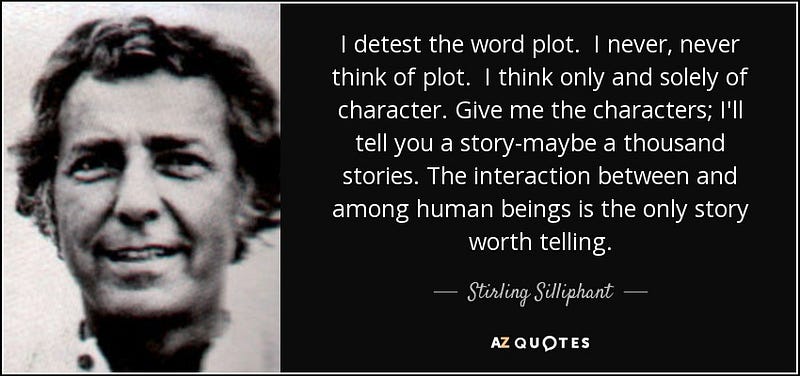
Stirling Silliphant (1918–1996) is a Hollywood icon with numerous notable film writing credits including Village of the Damned (1960), In the Heat of the Night (1967), Charly (1968), The Poseidon Adventure (1972), The Towering Inferno (1974), and The Enforcer (1976). Silliphant is remembered for two hit TV series in the 60s: Route 66 (1960–1964) and Naked City (1958–1963).
Here are some excerpts taken from an interview in “Backstory 3”, excerpted here by permission of its author Nat Segaloff. Silliphant offers some pure gold re writing — well worth reading.
ON HOW HE GOT INTO SCREENWRITING
I never intended to be a screenwriter; since childhood I had aspired to become a novelist and/or a poet. But I found films interesting, since I made my living publicizing them. When I met Joe Louis and learned that I could acquire the rights to his life story, it never occurred to me to write the film, only to produce it [The Joe Louis Story], I hired Robert Sylvester, a friend of mine who was a columnist for the New York Daily News and a big fight buff, to write the screenplay. Only when Bob failed to give me some of the scenes I felt were essential to the film, did I step in and write them myself. Later, when I watched the completed movie, I saw that the several scenes I had written were far and away the best ones in the flick — at least to my considerably prejudiced opinion. But, even more, I had discovered the pain of having to sit there and WAIT — as a producer — for the writer to deliver. What the hell, it struck me, why not be the guy everybody’s waiting for, rather than the guy who’s going crazy waiting?
ON WRITING TV
Things in TV were immeasurably different than they are today. In the sixties and seventies, for one thing — and this is KEY — the network commitment to a producer was for a far greater number of episodes than the networks now allot. Half-hour shows usually scored a thirty-six-episodes season. Hour shows seldom less than twenty-four episodes. For this reason, when a producer turned up a writer with whom he resonated, he was more likely than not to ask, even beg, that writer for multiple commitments. Apparently, I was such a writer when I was freelancing.
I have always felt that the most original writing I have done in the filmed medium was done in the period of 1960 to 1964 when I wrote the majority of the one-hour Route 66 filmed-on-location shows for CBS. These shows caught the American psyche of that period about as accurately as it could be caught. I wrote all of them out of an intense personal motivation; each was a work of passion, conviction, and, occasionally, of anguish.
ON MEETING ALFRED HITCHCOCK AND “TWO INCHES OF DIALOGUE”
My single meeting with Hitch: Joan (series producer) told me the master was actually going to direct one of his TV shows — this one his very favorite story — “The Voice in the Night,” to be the flagship episode for his one-hour Suspicion series. Joan drove me to his home up Bellagio Road, one of those canyon streets off Sunset Boulevard where you drive in through a gate.
Hitch was charming. Congratulated me on the scripts I’d done for the half-hour Alfred Hitchcock Presents shows, personally made me a scotch and soda and sat me down with my yellow pad.
I wouldn’t trade the hour that followed for anything I can think of at the moment… The man was BRILLIANT. He fucking dictated the script to me — shot by shot, including camera movements and opticals. He actually had already SEEN the finished film. He’d say, for example, ‘The camera’s in the boat with the boy and the girl. The move in is very, very slow — while we see the mossy side of the wrecked schooner. Bump. Now the boy climbs the ladder. I tilt up. i see him look at his hand. Something strange seems to have attached itself. He disappears on deck. I’m shooting through this foreground of — of stuff — and I’m panning him to the cabin door. Something there makes him freeze. He waits. Now the camera’s over here, and I see the girl come to him. Give me about this much dialogue, Stirling.’ He holds up his hand, thumb and forefinger two inches apart. I jot down — ‘Dialogue, two inches.’ As I say, the whole goddamned film — shot by shot, no dialogue — just the measurements of how much dialogue in the entire short story. It’s all introspection and the memory of horror, and the writer didn’t want to spoil it with dialogue. Lotsa luck, screenwriter. “Give me two inches of dialogue right here.”
ON WRITING IN THE HEAT OF THE NIGHT
In discussions early on with Norman Jewison, the director, we agreed that if the crime story were plotted as the alphabet, from A to Z, how much of it could we pull out and play offscreen without ever seeing or making any reference to it? We kept A and jumped to F, then from F jumped to L and from L to P — then from P to Z — and then we tried to see how we could still pull more exposition out of that fragmentary crime-story structure. We applied this principle to every scene — wherever we could detect any explanation or exposition, we stepped on it.
The result of this withholding of information was to compel the viewer to invest attention in the least detail. Maybe there was a clue in the look Gillespie (Rod Steiger) gave Virgil (Sydney Poitier) — or maybe not. But we’d better watch and see.
ON THE POSEIDON ADVENTURE AND THE TOWERING INFERNO
Let me begin by saying that the person in most peril from working on group jeopardy films is the writer.
It’s simple math. Take The Towering Inferno. Look at the ads Fox and Warners ran — a strip of star photos with shots of Paul Newman and Steve McQueen and Bill Holden and Faye Dunaway and Fred Astaire and Jennifer Jones and Robert Wagner and O.J. Simpson and Richard Chamberlain, etcetera, each labeled “the fireman,” “the architect,” the builder,” the contractor,” etcetera, actually labeling the stereotype in advance for the potential viewer. You do stereotypes and then change them a little bit, so they’re kind of off the wall and stylish. But, essentially, if they are not recognizable stereotypes, people have trouble with them — they have to know who they are so they can follow the story.
Okay, we had seven major narrative thrusts to fold in — seven major separate personal relationships to be introduced, developed, strained, then resolved, along with their interaction with another group: Holden with Chamberlain, Holden with his daughter, Holden with Newman, Holden with McQueen — seven of the bloody things. And then the eighth character, the FIRE itself, which while I wrote I gave a name to — MY secret — but my favorite character in the script. I determined to let the fire WIN — make it the hero — but I always knew that in the end the good guys, the architect and the fireman, would have to triumph. Now — you have a script of 130 pages. You have eight major story-character blocks — 8 goes into 130 around 16 plus times. So you know, going in, that you can only put Holden on 16 pages of the movie in terms of foreground action or any kind of meaningful dialogue. Yes, I call that FRUSTRATING because what you are not doing is writing. What you are doing is juggling.
That’s only the beginning of your problems. You have to deal with the logistics of the physical action, and this becomes a matter of charting, not writing. If something blows up on the fifty-seventh floor, and in the scene before that, you had Paul Newman down on the thirty-second floor and the elevators can’t be used — how are you going to get him up there? Simple, let him use the stairway. What if the stairway collapses on his way up? Okay, we need a scene about that. So before you can get the man up there to do his few pages, you now have to create a new scene out of the mechanical motivations of the action, Jesus, guys, where did we leave Steve McQueen in his last scene before we had to cut away to Fred Astaire looking for Jennifer Jones’s cat?
ON WHAT HE FEELS ABOUT WRITERS WHO DIRECT THE PICTURE ON THE PAGE
How do I feel? I fucking detest it. I spit in the milk of the mothers of the bastards who do it. It is so inexperienced of such writers. It reveals instantly their lack of knowledge of the hard process of filmmaking.
First of all, the director isn’t even going to read such nonsense. And any actor who’s not on his first gig and who has ever before held a real-life, by-God script in his trembling hand is going to black out all those instructions in his copy. When I first got to Hollywood, I attended acting classes for three years; then, I went back every few years — right up until I left town. I wanted to understand the acting process, so I could write for actors. Watching them, I learned how to streamline my dialogue — where to hesitate, where to rush — so that the writing itself would give the actor all the clues he need to find his way under the skin of the characters I’d written. Why should I tell him to speak a line ‘defiantly’ when he might be more effective, out of his own life, playing defiance by seeming to be meek — or seeming uncaring — or all the other infinite shades of human reaction? So not only is such writing presumptuous, it is short circuiting. It is denying the potential for magic to happen.
ON PLOT AND CHARACTERS
I DETEST the word plot. I never, never think of plot. I think only and solely of character. Give me the characters; I’ll tell you a story — maybe a thousand stories. The interaction between and among human beings is the only story worth telling.
ON PREP-WRITING AND WRITING
The writing is the easiest part of it. The trying period is the period of conceptualization, followed by research. This prewriting time can take anywhere from six months to ten years. But once I know everything there is to know about my characters, the actual writing of the script switches to automatic pilot. It makes no difference whether the script is for TV or feature — the writing period is the same: five pages a day, seven days a week. That’s it. Nothing magical. You just sit there and keep typing.
ON HOW HE STARTS HIS WRITING DAY
I believe there is a certain preparation the writer should make before he goes each morning or afternoon or evening to his computer or typewriter or yellow pad. It may be the Buddhist in me, but I truly believe that a sort of rite of cleansing is involved here. Certainly, you can’t do your best work if your mind is cluttered with other matters. To clear my thoughts, I simply read a few paragraphs of Harold Brodkey. How was that again? Yep — Harold Brodkey.
I will take a paragraph at random, for example, the following which ends his story ‘Ceil’:
In the tormented and torn silence of certain dreams — in the night court of my sleep — sometimes words, like fingers, move and knead and shape the tableaux: shadowy lives in night streets. There is a pearly strangeness to the light. Love and children appear as if in daylight, but it is always a sleeping city, on steep hills, with banked fires and ghosts lying in the streets in the dully reflectant gray light of a useless significant.
I do not believe there was any justice in Ceil’s life.
And I will read it aloud to myself several times, dwelling on ‘pearly strangeness’ or ‘the dully reflectant gray light of a useless significance.’
How, after reading this kind of conceptualization, can I possibly write a screenplay describing my hero as ‘young and lean’ or a physical movement as ‘he hurries across the room’?
You see what now happens? The talent in you, if you have any, is challenged — and you go to your work DETERMINED to put poetry on the page — for in setting, stage directions, time, place, feeling, the writing in a script should be at the level of a Bergman script, written more as a novella than as a Hollywood blueprint for a director who understands not words but only MTV images and blue light and wet streets.
For more articles in the How They Write a Script series, go here.