How They Write A Script: J.F. Lawton
Screenwriter J.F. Lawton has numerous writing credits including Pretty Woman (1990), Under Siege (1992), Blankman (1994), Chain Reaction…
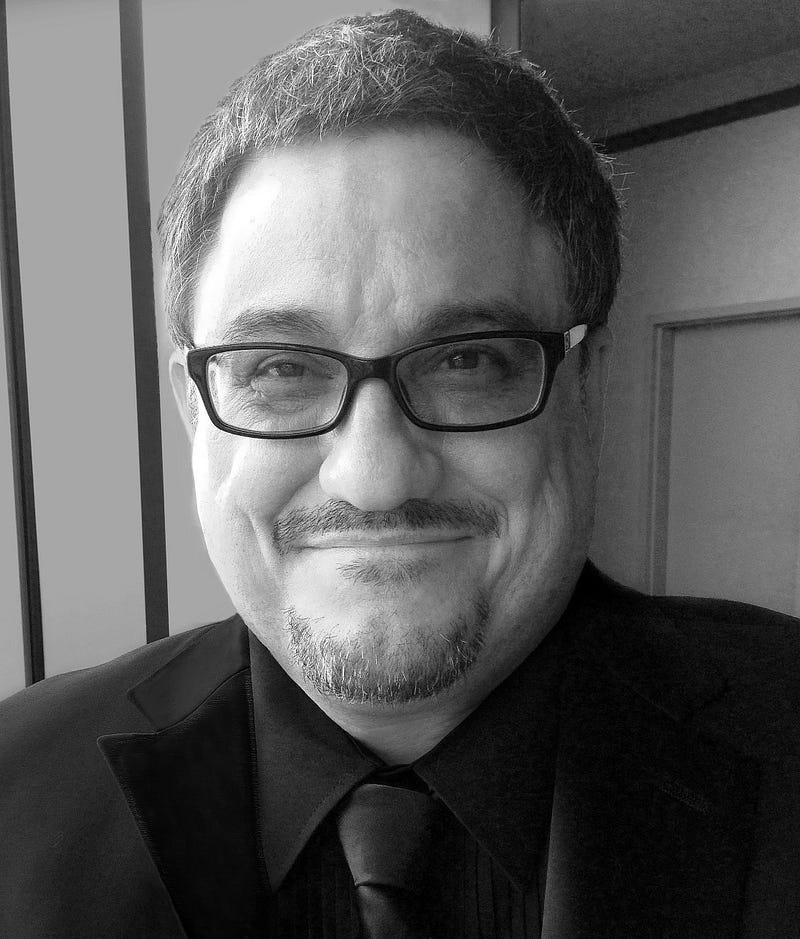
Screenwriter J.F. Lawton has numerous writing credits including Pretty Woman (1990), Under Siege (1992), Blankman (1994), Chain Reaction (1996), and the TV series “V.I.P.” (1998–2002).
In a “Written By” interview (August, 2001, not available online) with writer Marsha Scarbrough, Lawton compares martial arts and writing.
Do you train while you write?
I try to do 20 minutes a day if I can… sometimes more. I do it because I’m hunched over a computer all day. I do aikido rolls and judo rolls. It makes my back feel a lot better.
It’s a good way of relieving stress. Also, I’ve found that there is something about sword work that really focuses the mind and concentrates it.
How do martial arts focus a writer’s mind?
I think the two flow into each other. Writing is something that’s very inner. You examine your own feelings. In martial arts, you’re examining your own body. You’re examining the way that you move and questioning your instinctive way of doing it as opposed to the proper form way. There must be a lot of writers who are into martial arts because writing requires enormous self-discipline. Nobody wants to sit in front of a computer and type and invent stuff. Everybody’s got an idea for a script, but there aren’t that many people who can actually sit down and write one. It takes a tremendous amount of self-discipline. It’s the same thing with martial arts. It really takes some self-discipline to push yourself beyond your limits physically and mentally.
If you get into a situation, or you’re working with a sword, and you lose concentration and let your mind wander, you will get hurt. Likewise, when you’re writing, you have to keep the focus. Especially, if you want to write anything good, you have to be in the moment, you have to stay focused on the material. It’s very difficult at times. Writing is rewriting. To reread your thing objectively, and be right back to where you were but also modifying it at the same time, takes a lot of mental discipline too… and there seems to be a connection.
One of the metaphors in sparring is you see the problem coming at you and you block it. Somewhere in the moment of blocking is the opening for your attack. Any problem may actually reveal the entrance into the solution… if you’re not in panic about the problem.
In studying aikido, which I’ve read more about than practiced, although I have done a little bit, they talk about never confronting your opponent head on but always using his energy by deflecting it and turning away whenever you’re confronted with force. Philosophically, I find that very useful in this business. This is a very competitive business and a very tough business. There’s a lot of fighting, and there are a lot of big personalities. I find that philosophy helpful in dealing with a difficult producer or a studio executive who’s got a strong opinion. To turn away from it, not to confront every problem head on, but to turn them, and then look for an opportunity is something I’ve learned from martial arts. Also one of the things I learned when I was a kid that’s very helpful is confidence. When you learn about violence in a martial arts setting, you learn how to use it and control it, so you develop confidence. If you’ve got a good teacher, you actually become less violent. The most dangerous people I know are the calmets and the most peaceful because they don’t have to prove anything. They know that they can protect themselves. They know how to respond. They also don’t have a fear of anything, so fear doesn’t show itself as aggression. A lot of times in this business, when people are very aggressive, it’s coming out of fear. It’s coming out of insecurity. Likewise, if you’re confident in yourself, you can deal with people like that in a much more productive way.
Is knowing about fight choreography helpful to you as a writer?
One of the failings of many action writers is to think it’s for the stunt guys to figure it out. I’ve even seen writers write, ‘Car chase here.’ Part of the writer’s goal is to describe the action. A good action sequence tells a story. To tell that story you have to know what you’re doing. If you’re writing about cars, it’s good to know about driving cars. Likewise, if you’re writing a fight, if you know the techniques, you know the styles, you know where a person can make a mistake and how he could overcome that mistake, you write a much better action sequence. You can’t just leave it to the stunt guys. It has to be written. It has to be integral to the story. I write better action sequence because I understand martial arts… even if it’s not necessarily a martial arts action sequence, if it’s an Under Siege type thing where a guy is trying to get through the space. When you study martial arts, a lot of figuring out ‘How would I get through an opponent? How would I get past and manipulate my body in space to do things I need to do?’ That’s been very helpful.
What advice would you offer writers who would like to study martial arts?
I’d recommend finding a dojo close to you and just doing it. Each martial art has a different style. It’s interesting to look at the differences between them, but basically they all grab you for the same thing. I like the Japanese styles better, but that’s just a taste thing. I think the important thing is to start slowly. People have a tendency to want to learn too much too quickly. I like the fundamentals. I like to go back to the basics… just stance and punch and stuff like that. That’s where the real focus is, so try to avoid people who are too flashy.
For more articles in the How They Write a Script series, go here.