How They Write a Script: Billy Wilder
“In a serious pictures, you don’t hear them being bored, but in a comedy you can hear them not laughing. You tried so hard and the guy did…
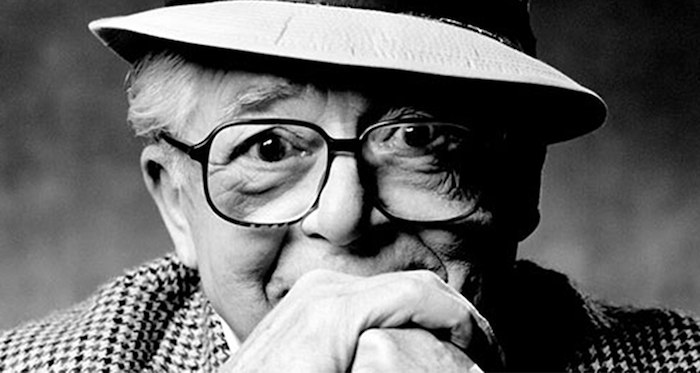
“In a serious pictures, you don’t hear them being bored, but in a comedy you can hear them not laughing. You tried so hard and the guy did the pratfall, but nothing — and you wish you were dead.”
What can I say? Billy Wilder is my favorite director. Why? Because at his core, he was a writer. For Wilder, it was all about the story. And finally because he made so many great movies: Double Indemnity (1944), Sunset Blvd. (1950), Stalag 17 (1953), Witness for the Prosecution (1957), Some Like It Hot (1959), The Apartment (1960) — and that’s just through 1960. Incredible range from dramas to comedies and simply some of the best movies ever produced.
What follows are excerpts from a wonderful book “The Great Moviemakers of Hollywood’s Golden Age,” edited by George Stevens, Jr. These are taken from two appearances Wilder made at the American Film Institute, the first in January 1976 and the second in March 1986.
ON THE ADVANTAGES OF WORKING WITH A WRITING PARTNER
“When I started in America I couldn’t speak any English, so I did need a collaborator. I was lucky to find some very good ones and I found them very helpful. When I became a director, it was always good to have another pair of eyes and ears that could kind of check and double-check as to what I was doing. And for all of you here, for the ones who are writers, you will find out that writing is a very dull and boring, dreary thing. One of the best things about the collaborator is that he stops you from committing suicide, unless you’re smart enough to work on the first floor.
“It’s fun, you know? You arrive in the morning and you have forty-five minutes of bitching about your wife and how lousy the food was, and you saw a picture and it stunk. It establishes a good atmosphere before you get going on your own crap.
“It’s such an exhausting thing, you know, facing that empty page in the morning. And then you always need help when you’re arguing with the front office. You need somebody there, preferably somebody with a machine gun around his shoulder. You have to have specific talent to be a collaborator. It’s like a marriage.”
ON HOW HE AND LONGTIME WRITING PARTNER I.A.L. DIAMOND WORK TOGETHER
“Mr. Diamond and I meet at, say, nine thirty in the morning and open shop, like bank tellers, and we sit there in one room. We read Hollywood Reporter and Variety, exchange them, and then just stare at each other. Sometimes nothing happens. Sometimes it goes on until twelve thirty, and then I’ll ask him, “How about a drink?” He nods, and then we have a drink and go to lunch. Or sometimes we come full of ideas. This is not the muse coming through the windows and kissing our brows. We just sit together and discuss, having more or less settled on the them of what we’re trying to do and having discussed the three acts in which we divide our pictures. We start to do the dialogue, talking to each other, and we fight it out while we’re doing it. If the two of us agree it’s no good, we throw it away and try a third version. In other words, it is not one of those things where you kind of get nervous and angry and walk around and say, ‘That was the best line ever and you rejected it.’ No, let’s find one that we both agree on. So you have to be a born collaborator.”
ON HAVING STORY IDEAS
“There is no such thing as somebody sitting down and saying, ‘Now, all right, I’m going to make a new picture.’ Not at all. You have ideas stashed away, dozens of them — good, bad, or indifferent. Then you pull them out of your memory, out of your drawer, you combine them… People think when it comes to a screenplay you start with absolutely nothing. But the trouble is that you have a million ideas and you have to condense them into a thousand ideas, and you have to condense those into three hundred ideas to get it under one hat, as it were. In other words, you start with too much, not with nothing, and it can go in every kind of direction. Every possible avenue is open. They you have to dramatize it — it is as simple as that — by omitting, by simplifying, by finding a clean theme that leads someplace.”
ON THE STORY STRUCTURE OF SOME LIKE IT HOT
“Well, the first act I would think is them getting on the train with the girls. Right? They get away from Chicago; I think that’s enough. Then the second-act curtain is the gangsters have a convention at the hotel in Florida. That’s suspense, right? Actually, it’s four acts. The third at is the guys trying to keep in disguise and they’re hiding under the table. Then the fourth act is the chase. It needs that kind of architectural structure, which is completely forgotten once you see the movie. We have to put those pillars in or that beautiful ceiling is going to come crashing down. Another thing, maybe for you guys who are structuring and writing pictures, the most important invention in Some Like It Hot was to make the fact of the two male musicians disguising themselves as women a question of life or death. If you don’t have death — if you have not seen the St. Valentine’s Day murder at the beginning and know that those are ruthless guys who want to bump them off — then these two guys who have hopped into women’s clothes could just take their wigs off and say, ‘Look, I’m a guy.’”
ON HOW HARD IT IS TO WRITE COMEDY
“It’s very difficult to do comedy because if they don’t laugh when they should laugh, you are there with egg on your face, and that’s sad. In a serious pictures, you don’t hear them being bored, but in a comedy you can hear them not laughing. You tried so hard and the guy did the pratfall, but nothing — and you wish you were dead.”
ON SCENE DESCRIPTION
“We just start right off with scene one, and since we are on the film set all the time, there is no ‘Slow fade-in, camera tiptoes.’ None of that. Just ‘Day’ or ‘Night,’ so that that cameraman knows how to light, not even “Morning’ or ‘Evening.’ There’s a minimum of fancy descriptions. I find with young writers, and some of them with very good ideas, that they get lost in technical descriptions of which they know very little. Nobody will say, ‘This is a great screenwriter because he always has the camera angles.’ Just have good characters and good scenes and something that plays.”
For more How They Write a Script articles, go here.