How They Write A Script: Ben Maddow
Ben Maddow (1909–1992) had a long successful career in Hollywood as a screenwriter and TV writer. His writing credits include Asphalt…
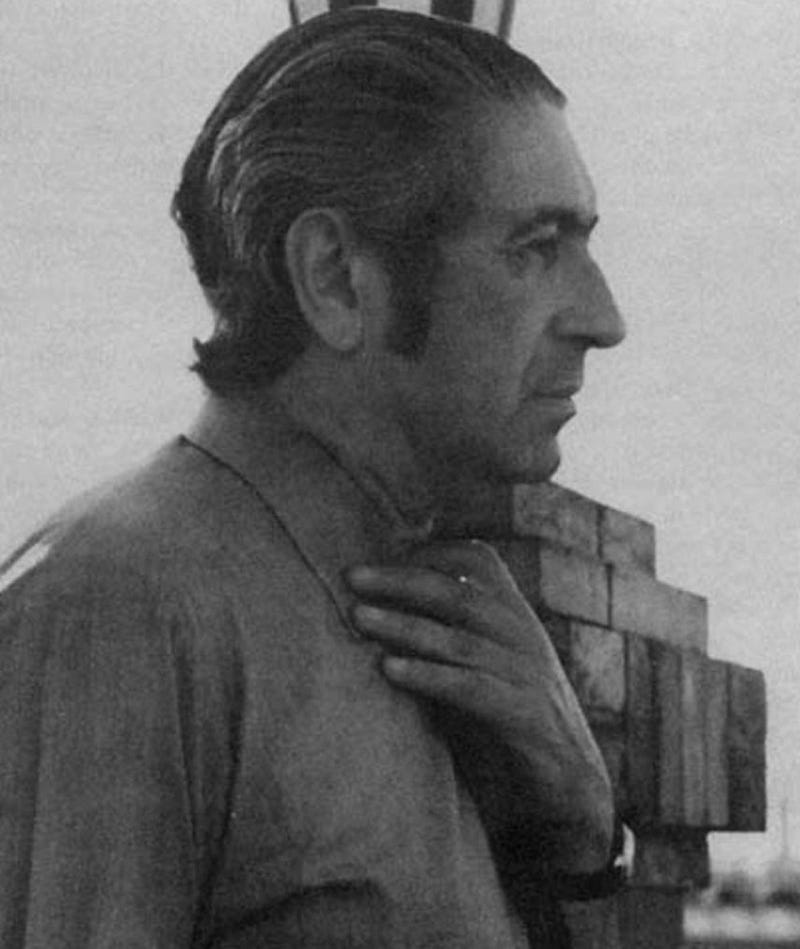
Ben Maddow (1909–1992) had a long successful career in Hollywood as a screenwriter and TV writer. His writing credits include Asphalt Jungle, and several blacklisted projects for which [at the time] screenwriter Philip Yordan received credit as Maddow’s front including The Naked Jungle, Men At War, No Down Payment.
These interview excerpts are taken from the excellent “Backstory 2: Interviews with Screenwriters of the 1940s and 1950s”, one of a 4-part series edited by Patrick McGilligan.
ON HIS START AS A POET
It was in college [Columbia University]. I began writing a lot of poetry. Mark Van Doren was one of my professors and he was the adviser to one of the literary quarterlies, which printed a lot of my stuff. My poetry was pretty dreadful, so exaggerated, but you could see how it might be sensational at the college level because it was just so much more complex in thought and in words than what any of these kids were writing at the time. Anyway, that was the beginning.
I liked it. I had read Shelley and Keats and Walt Whitman, and also I was tremendously fond of Shakespeare’s sonnets, even in high school. They had a great influence on me. I had just discovered Emily Dickinson and through Van Doren I was learning about other poets.
It [poetry] expresses things that you cannot express well otherwise. The condensation of language and so on is one of the great pleasures of the craft. There are things that are too subtle to put into novels.
Actually, I came to movies through poetry, in a sense, because when I was still working as an investigator I saw an ad in a New York newspaper for a
poet to write commentary for a short film — a 20-minute film mostly about baggage in a harbor [Harbor Scenes, 1935]. (Laughs .) The filmmaker was Ralph Steiner. A very remarkable man — not a great photographer, but a wonderful craftsman. I worked on the narration for his short film, and through him I met a whole bunch of photographers.
These still photographers were very anxious to make films and for someone to write for their films, and that is how I got drawn into doing the writing for documentary films, which was not too far [afield] from poetry.
As anybody who knows the history of the field can tell you, I invented a way of using narration in film which suited my purposes very well and has influenced other people — which was to construct the narration like poetry, in which every word modifies the image. I worked out a ratio of two words to a second, which worked so perfectly. In those days you ran the film as you were recording the narration, so you had this very, very close connection between the image and the writing. In that sense, I was not a writer, but a poet and a filmmaker. The, narration really meant carpentering phrases so they fit the rhythm of the film.
ON HOW HE GOT TO HOLLYWOOD
Everything in my life, actually, is an accident. Opportunities came up, or choices came up in which there was very little choice.
When I came back from South America, I was drafted. I just had enough time to finish the film before I went into the army. Because of my documentary background I was asked to join the Signal Corps. I went out to Long Island where there were writers sitting in boxes that had just been built for them. I had just come from a great adventure, and I was not going to sit in a damn box and be a writer. I didn’t feel I was a writer. Whatever else the army wanted to do with me, fine.
I was given a series of tests, and it was decided I’d make a great radio technician because my hearing was good and I could distinguish one tone from another. So I was shipped out to Los Angeles to radio school where there was a ten-week course in building radios. That is where I met a number of movie people because, as soldiers, we went to the Hollywood parties. One person I met turned out to be working for the Air Force motion picture unit. Well, the Air Force motion picture unit needed people badly, particularly people with experience on documentaries for their training films. I was asked to join.
That’s how I got to Hollywood [the first time]. Most of the people in the Air Force motion picture unit were ex-Hollywood people. Ronnie Reagan was there. I used him as a narrator over and over again. He was very good at it. He could read things that couldn’t have meant anything to him — you know, a B-29 electrical system — with the utmost conviction. Just take the script overnight and come back and read it with all the right phrases and emphasis. He was very good at it; he didn’t understand what he was reading, and he wasn’t expected to.
ON HOW HIS BACKGROUND WITH DOCUMENTARIES IMPACTED HIS SCREENWRITING
In both cases, you have to feel your way. In a documentary, you are not dealing with the paramount importance of the character decision. In Hollywood I always had to struggle with formal structure because structure in a documentary is quite a different thing, whereas in a dramatic story you have the same titanic problem every time. You are struggling with how to make things come out right [in the balance], the pace and everything. How much time you give to certain things, how much importance . . . it’s very complex.
I can say this without humility. My mind is very elaborate and full of rich associations, and I have to fight that in order to squeeze into a formal structure, a dramatic time sequence.
ON HIS EXPERIENCE OF ‘OLD’ HOLLYWOOD
No, I never knew any writers. There was a writers’ table [at MGM]. I was appalled by, because they discussed nothing but agents and contracts. At the head of the table sat [screenwriter] Leonard Spigelgass, who was a fairly bright man, but who put on this rather silly demeanor. I got nothing out of that scene at all.
Albert Maltz, whom I knew from college, once told me that there were three secrets for success in Hollywood. One was talent, the second was luck, and the third and probably most important was social contacts. Well, I didn’t believe any of this. I had a certain amount of ego, but I didn’t think that they would hire me because I was such a great writer. I knew that it was all luck!
ON “THE ASPHALT JUNGLE”
[W.R.R.] Burnett intended The Asphalt Jungle as a novel about the extraordinary difficulties that the police have in an urban world that has become a jungle. As a matter of fact, the narrator in his book is the police superintendent, is he not?
The film takes the opposite point of view. That crime is simply normal endeavor, another form of business; therefore the concentration on the characters of the criminals makes you like them all and sympathize with them. Certainly you don’t sympathize with the police at any point. In any case, I think many authors do not know what it is they are saying, and Burnett made those criminal characters so fascinating that as you read the novel you really didn’t feel as though the police were the heroes.
[John] Huston and I must have worked on the script together, oh, close to six months, and really very little work was done. No pages were turned in. We were mostly talking. He always did very little at the typewriter anyway.
The day would proceed. You’d arrive at his beach house at 9:30 or 10 A.M. and Huston would just be getting up to have breakfast. He’d come down in this beautiful robe and play with the Weimaraner dog with blue eyes that he had just got. And if the dog had thrown up, which he often did, Huston would have to haul the carpets out onto the beach.
Then later, we’d have lunch, work a couple of hours, and it’d come time to have a drink and so on. I used to come rolling home and I’d lift my fingers to indicate whether I’d had one cocktail or two, so my wife would know what state I was in. (Laughs .)
I had rented a beach house just about a mile north, and one day Arthur Hornblow, who was the producer, called me up and asked me to come and see him. He said, “Look, I can’t pressure John. He just won’t take it. But I have to tell you that this is going on too long. . . .” Though we were getting paid weekly, I was getting bored with this situation, too. And I really felt guilty about it.
I promised Hornblow that I would talk to John. John’s reaction was very interesting. He said, “Ben, you’re absolutely right! . . . But my father [actor Walter Huston] is coming over to dinner tonight with his girlfriend. Why don’t you have dinner with us and we’ll work after dinner?” I said, “No, I’ll go home and then I’ll come back after dinner. . . .”
So I did. I guess it was about eight o’clock when I got back, and they were still talking at the table. They were talking about John’s feeling that he was able to direct because he hypnotized the actors. Remember, he had made a film [Let There Be Light, 1945] during the war in which hypnosis was used as an example of how powerful it was. And he offered to hypnotize his father’s girlfriend, a much younger woman. She said, “No, you’ll make me do something I don’t want to do.” He assured her that he couldn’t do that, which is not true, by the way. Then he wanted to hypnotize his father, and his father refused.
Huston turned to me, and by this time a whole hour had passed, so I said, “Okay.” He had me stand up and he took his wristwatch off and shone a light on it, dangling it [in front of my eyes], saying, “Your eyes are closing . . .” My eyes closed. “Your arms are rising from your sides . . .” They did. “I’m going to pinch you and you won’t feel a thing . . .” He pinched me. “Do you feel it?” “No.” This went on until he gave me a posthypnotic suggestion. He told me that when he woke me up, he would offer me a brandy. I would taste it and say, “This is the most divine thing I have ever tasted in my life.”
So okay, I wake up, we go back to the table and sit down, and he says to me, “Would you like some brandy?” I say, “I wouldn’t mind.” He hands me the glass, pours the brandy, and all three of them watch me. He says to me, “Aren’t you going to drink it?” I lift it up, taste it, put it down, and there’s silence. He says, “How was it, Ben?” I say, “Fair.” (Laughs .)
That was Huston’s hypnosis — just nonsense. (Laughs .) We didn’t work much that night, but things proceeded a little more smoothly after that. And we finally did get the script done.
ON BEING BLACKLISTED
I was blacklisted about 1952. I had been hired by Stanley Kramer. That happened because we had a common agent. I was working on two films [for him] at the time. One was an early version of High Noon, and the other was The Wild One . I had done a very rough, tentative version of High Noon, from the novel [actually, a short story, “The Tin Star,” by John W. Cunningham], and a complete version of The Wild One .
Then Kramer called me into his office. He said, “I’m sorry, I have to fire you. . . .” Well, so many people had already been fired that I didn’t really need any further explanation. But I took my name off The Wild One because I saw a version of it that I disliked very much. It was partly mine and partly not. That’s always a very difficult thing, to assign the degree of responsibility [for a script]. I like to think that when a writer goes to heaven, he’s going to go to this huge file room, where they can look up his name and tell him precisely what his credits are. No crap!
We had some money in the bank and we had just bought this house for $19,500 at 4 1/2 percent, so it was not all that great of a burden. But we did need money, and a friend of mine named Irving Lerner, who was an editor and a director, was hired by this guy [Philip Yordan] to do a film: Man Crazy [1953] and — there was another one — Murder by Contract [1958]. Irving was a very wonderful editor but a terrible director. He just didn’t know where to put the camera. (Laughs.)
Yordan wanted a writer, so Irving recommended me, and, of course I could be gotten very cheaply then. I must have done — I really can’t tell you how many — somewhere between six and ten scripts for Yordan [during the fifties].That’s where everything becomes vague in the filmography, because some films that I never did have been credited to me. In fact, a friend of mine sent me a notice from a Spanish newspaper last year that said, “Ben Maddow, hombre misterioso.”
It was “I want you to write and, of course, you can’t use your own name because you’re in trouble, but I’ll pay you 50 percent . . . after all, on your best day, you could never make one tenth of what I make.” It was true! But I was never sure of what percentage it actually was.
ON PHILIP YORDAN: HOLLYWOOD PRODUCER
If you gave him a good idea, he’d steal it from himself later on. There’s an idea in Men in War [1957] in which the platoon commander is killed, they strap him into this jeep, and they drive him around as though he is alive just to keep up the morale. Well, Yordan used exactly the same idea in some film about Spain, El Cid [1961], where the guy is strapped into the saddle.
That brings me around to a really great story about Yordan. Somewhere along the line he said to me, “I’m sure we could sell a Western — there’s always a market for one. Have you got an idea for a Western?” This was a Thursday and I said, “Well, no, but I’ll think about it.” He said, “Well, let’s talk about it on Monday.” So I came back with an idea for him on
Monday and he said, “Fine.” He didn’t really want to listen to it too much; he just said, “Do it. And get the screenplay done as fast as possible. I’d like to have it done in three weeks.”
I actually wrote the screenplay in about three and a half weeks, and when I brought it back, he sort of cursorily looked at it to see how many pages it was. It was 134 pages, so that was okay. He changed the names of the characters because he carried with him a little book that said things like “James means ‘noble,’ “ right?
He said, “Now, we have to go to work.” I said, “What work?” — expecting him to talk about revisions. He said, “Now come with me.” He sat in the study and he made the following phone calls. He called Simon and Schuster and said that he had just sold a screenplay of a Western to Warner Brothers and were they interested in the book from which it was taken? Well yes, they would be interested. Then, he called the script department at Warner Brothers and told them he had sold a book to Simon and Schuster and would they be interested in the screenplay? He’d send it right over, which he did.
He sat there and worried for about three quarters of an hour. Then he said, “This is really very shaky, I’ve got to make this certain . . .” He called up a minor executive at Warner Brothers and said, “I know you owe $14,000 in Vegas. I will pay that sum for you and get you out of this trouble. All I want you to do is the following. I have sent a script over to Jack Warner. It has a blue cover and is called Man of the West . Get to it before he does, in the morning, pick it up, and return it at four o’clock and say, ‘I picked this script up by mistake, instead of mine, and I started reading the first page and I couldn’t put it down.’ That’s all I want you to do.”
Well, he had to pay the $14,000, but so what? Because the screenplay was sold. Now he called Simon and Schuster and told them he was going to send them the book manuscript right away because the film was going to be made. So I had to sit down and write the novel, which I did.
ON LOOKING BACK AT HIS HOLLYWOOD CAREER
I only did films because, one, I was tremendously interested in film, and, two, it earned me a living so I could take off time to do my own work. I notice that most of the guys who were in the same position I was, writers with ambition, never got around to doing their own work. They would accept one assignment after another. Or they would spend three or four months between assignments doing nothing or getting drunk.
I found it interesting to live out here. At first I thought I didn’t really belong here. But it’s nice to have a large house, where you paid the mortgage years ago, instead of a small apartment [as in] New York. We have a vacant lot where I grow oranges and peaches, which is also part of my background as a farm kid. And, of course, the weather is marvelous.
For more How They Write a Script articles, go here.