How the WGA Won Historic Contract
‘It Never Needed to Go This Long’
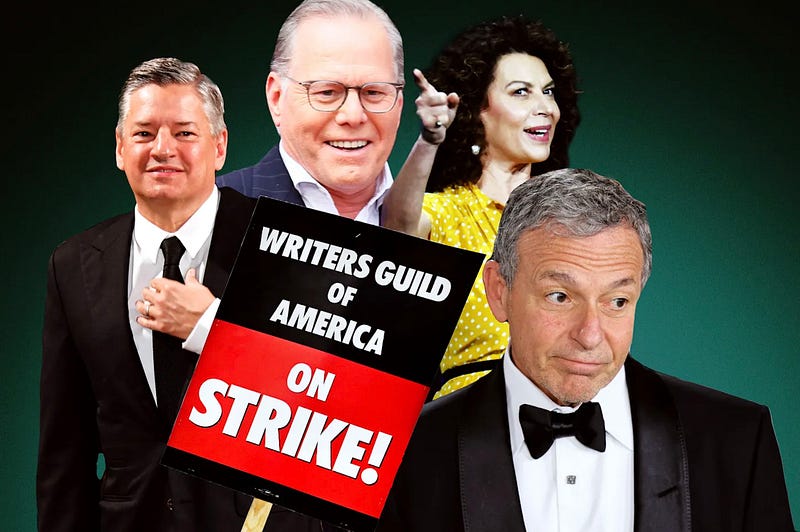
‘It Never Needed to Go This Long’
From Vulture:
When TV historians start trying to make sense of this summer, one of the biggest subjects of debate will likely revolve around why Hollywood conglomerates opted to bring their businesses to a screeching halt at the same time they were already deep in crisis with the grim new post-peak-TV reality. The executive-incompetence theory is certainly one possibility, but to others, the motivating factor was even more basic: money. “They really didn’t have any interest in resolving things before putting a couple quarters’ worth of savings into their pockets,” the veteran exec says, echoing a sentiment heard often from industry insiders even before the strikes began. Burdened by streaming debt and the market’s pivot toward valuing profitability over subscriber growth, the entertainment giants figured that freezing spending for a few months would be good for their short-term bottom line. At the same time, the studios hoped that a weakened WGA would settle for a less costly deal, saving a few more nickels — and, more importantly, making the gods of Wall Street happy. They also figured that they’d quickly make deals with both the Directors Guild of America and Screen Actors Guild, putting even more pressure on writers to settle for less.
Of course, that’s not what happened. While the DGA settled for the relative crumbs offered by the AMPTP, the Fran Drescher–led SAG didn’t bite and ended up striking in mid-July. The actor walkout left many studio sources I spoke to genuinely shocked. SAG’s move also gave writers a huge boost in energy and leverage, turning what many at the studios expected to be a two- or three-month pause into a five-month disaster. “When SAG went out, anybody with half a brain knew this was different,” one longtime showrunner says. In theory, this labor solidarity ought to have prompted the studios to start making serious concessions and sent the CEOs to the bargaining table immediately. Instead, two more months passed during which there was very little movement — but a lot more pain, particularly for workers. “The absolute hard-assery of the media conglomerates during these negotiations was completely immoral,” the veteran writer says, a judgment echoed by the longtime showrunner: “This whole thing didn’t have to hurt as many people as it did for so long,” he says. “That’s a choice the studios made, and it’s a devastating moral indictment.”
But it would be wrong to suggest the studios simply lost the war that played out over the last five months. Fact is, at almost every turn, the Hollywood unions won in their battles with management, with victories big (WGA-SAG solidarity, showrunners sticking by their less-compensated staff writers, public opinion) and small (shutting down filming of TV shows and movies before the SAG walkout, getting Drew Barrymore and Bill Maher to reverse return-to-work plans). “The studios got outplayed by the Writers Guild,” says Cynthia Littleton, co-editor-in-chief of industry bible Variety and the author of TV on Strike: Why Hollywood Went to War Over the Internet, which chronicled the saga of the 2007–08 WGA work stoppage. Littleton argues that the WGA “had goals and a pretty clear strategy on how to get there,” along with what she labels the guild’s secret weapon: its rank-and-file members. “The studios, with all their money, had nothing like the force of the WGA membership,” she says. By contrast, “The AMPTP had a policy agenda, which is different from a strategy. It was playing a very traditional ground war, and it absolutely didn’t work in this environment.”
“Policy agenda” rather than a “strategy.” What posed as a the AMPTP’s strategy was to simply wait out the Guild and hope the writers would splinter and fold.
Didn’t work.
One thing that surprised me was the impact of social media. In the early days of the strike, the trades’ comment sections were filled with naysayers who asserted that the WGA messaging to the public would have no influence on the companies. It did in at least three ways:
- The WGA use of social media contributed significantly to framing the writers as the Good Guys and the CEOs as the bad guys. Poll after poll showed public support for the writers with over 70% siding with the Guild.
- Every time the AMPTP would float some gossip or lie via the press, Guild members would flood social media sites to push back, even making fun of the companies’ heavy-handed, ham-fisted attempts.
- Finally, writers used social media to communicate with each other. Whether publicizing picketing locations, promoting picket theme days, or just providing moral support, sites like Twitter became a daily message board for writers.
Overall, the Guild strategy revealed how outdated and ineffectual the conventional AMPTP playbook was.
Hopefully in 2026, the suits will toss that playbook and negotiate in earnest from the start.
To read the rest of the Vulture article, go here.
#WGAStrong
Please consider contributing to the Entertainment Community Fund.