How ‘Searching’ Uses Tech Devices as Narrative Devices
The co-writers of the new ‘Cinema Digerati’ thriller Searching talk about their creative and writing process in crafting the story.
The co-writers of the new ‘Cinema Digerati’ thriller Searching talk about their creative and writing process in crafting the story.
After a strong opening weekend in limited release, the new thriller Searching is expanding into 1,100+ movie screens this week and with a 93%/96% rating on Rotten Tomatoes, it looks like a movie you should check out.
In the Sunday edition of the New York Times, co-writer / producer Sev Ohanian and co-writer / director Aneesh Chaganty talked with Times reporter Mekado Murphy about their creative and writing process. I found a couple of interesting things worth considering here. First, how they wrote the story:
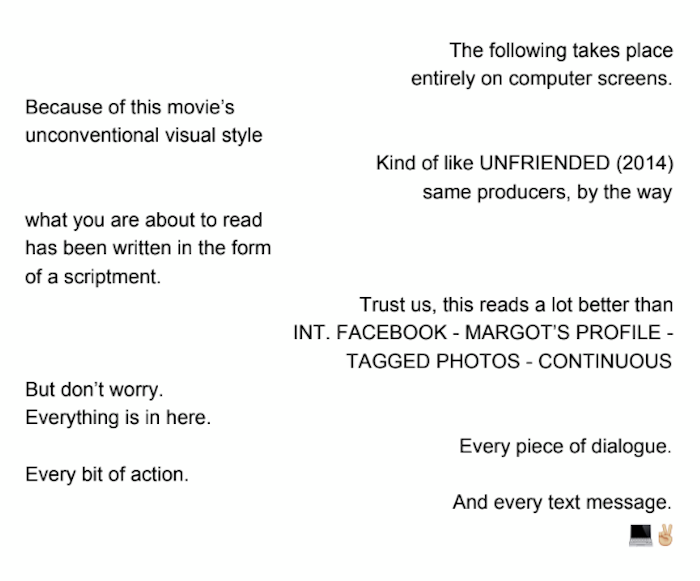
Much like those earlier films, “Searching” takes an unconventional approach to storytelling, which meant even the screenplay was written in an unconventional way. I asked Mr. Chaganty via iMessage about the difference. He texted, “What we ended up writing was a scriptment — a creative mix of a screenplay and a treatment that factored in the mouse movement, text messages and browser windows.”
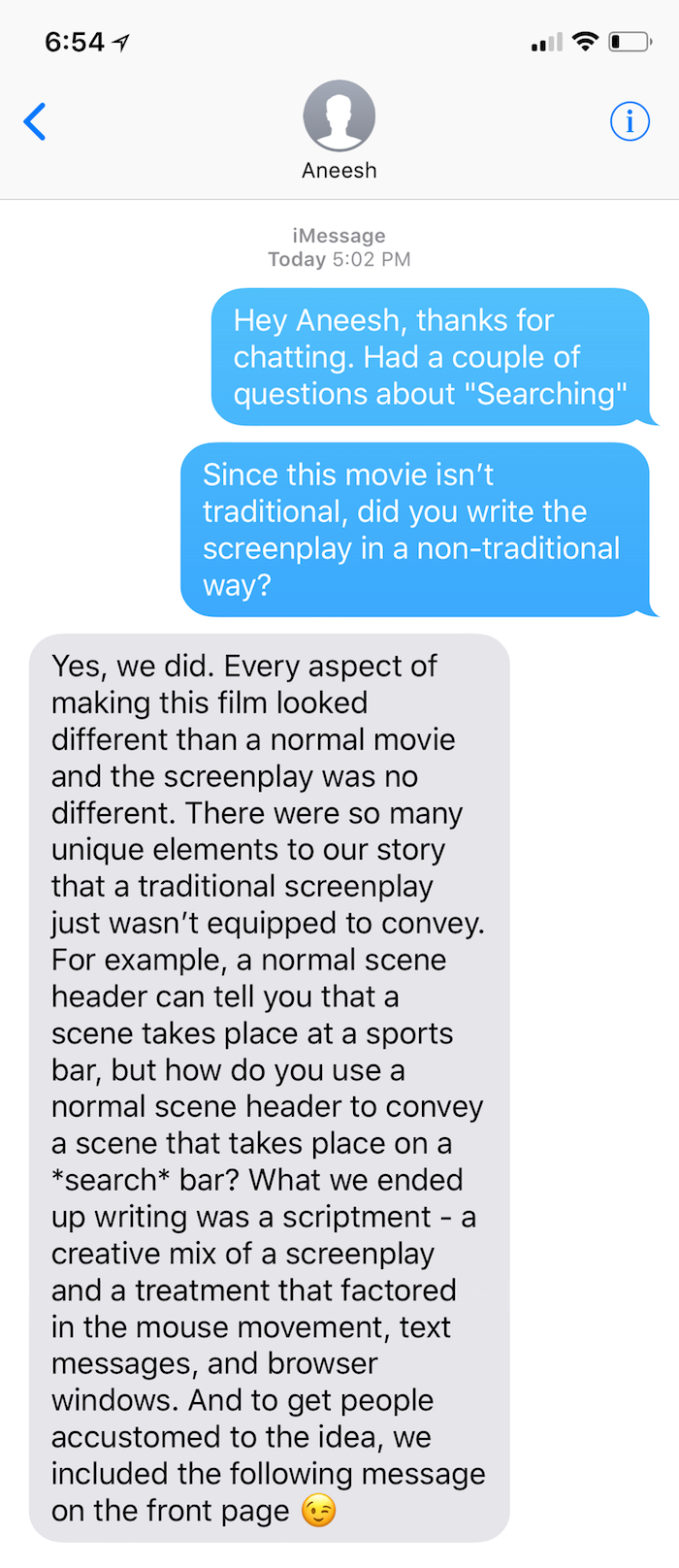
First takeaway: Don’t buy into the nonsense about so-called screenwriting ‘rules’. There are no rules. There are conventions. There are expectations. But the very idea of rules is restrictive. What we do as writers is creative. And our sole responsibility to tell the story the very best way possible. Because of the type of narrative content in Searching, the writers needed to write a scriptment. And it works.
The next thing I found quite interesting was how the writers dug into and reflected about “all the buttons and features of the Mac operating system?
They were trying to understand these functions in an emotional context [emphasis added], and asked what it means to “x out of something,” or to backspace a text, or to “share” something.
“What does ‘shut down’ mean when you’re in the middle of trying to find your daughter?” Mr. Ohanian said. “All of these things, we realized, we are constantly engaging in every day, and it’s emotion.”
He added, “These devices that we use on a regular mundane level are completely places that we are expressing ourselves.”
That reminded me of my GITS post: Ctrl, Alt, Del: Three Act Structure:
I’m always looking for different ways to think about story structure because you never know when some metaphor or language is going to resonate with one of my blog readers, suddenly the proverbial light bulb going off in their minds: “Oh, now I get it!”
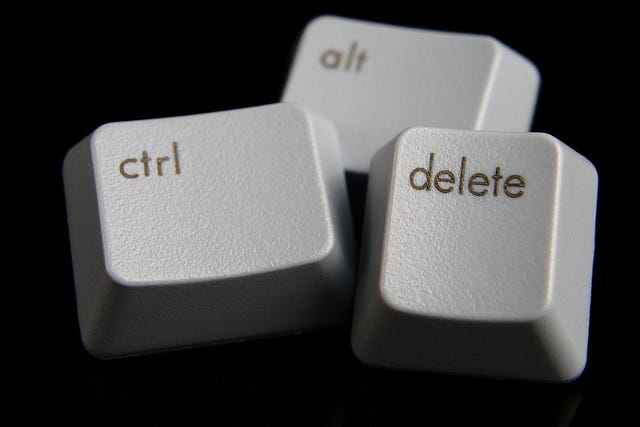
So a few weeks back as I was staring at my keyboard, lost in that haze writers slip into when they lose momentum in their writing and drift into a kind of mental never-never land, my eyes landed on those familiar keys on my Mac:
control
alt
delete
I found this technical definition of what has come to be known as the “three finger salute”:
In a personal computer with the Windows operating system, Ctrl-Alt-Delete is the combination of keyboard keys that the computer user can press at the same time to terminate an application task or to reboot the operating system (have it shut down and restart itself).
That got me thinking: If, as Joseph Campbell asserts, the whole point of The Hero’s Journey is transformation, might we not think of that as rebooting the character’s operating system (i.e., way of being)?
Takeaways: (1) Be open to unique thematic considerations your story’s narrative elements may inspire, such as the emotional life of computer operating systems as they relate to human interaction. (2) Don’t overlook the obvious: People watch movies to have an emotional experience.
Here is an anatomy of a scene from the movie Searching as described by the director Aneesh Chaganty:
For the rest of the New York Times article, go here.
Twitter: @SearchingMovie, @aneeshchaganty, @SevOhanian.