How much of the “iceberg” do we reveal?
My response to a reader question.
My response to a reader question.
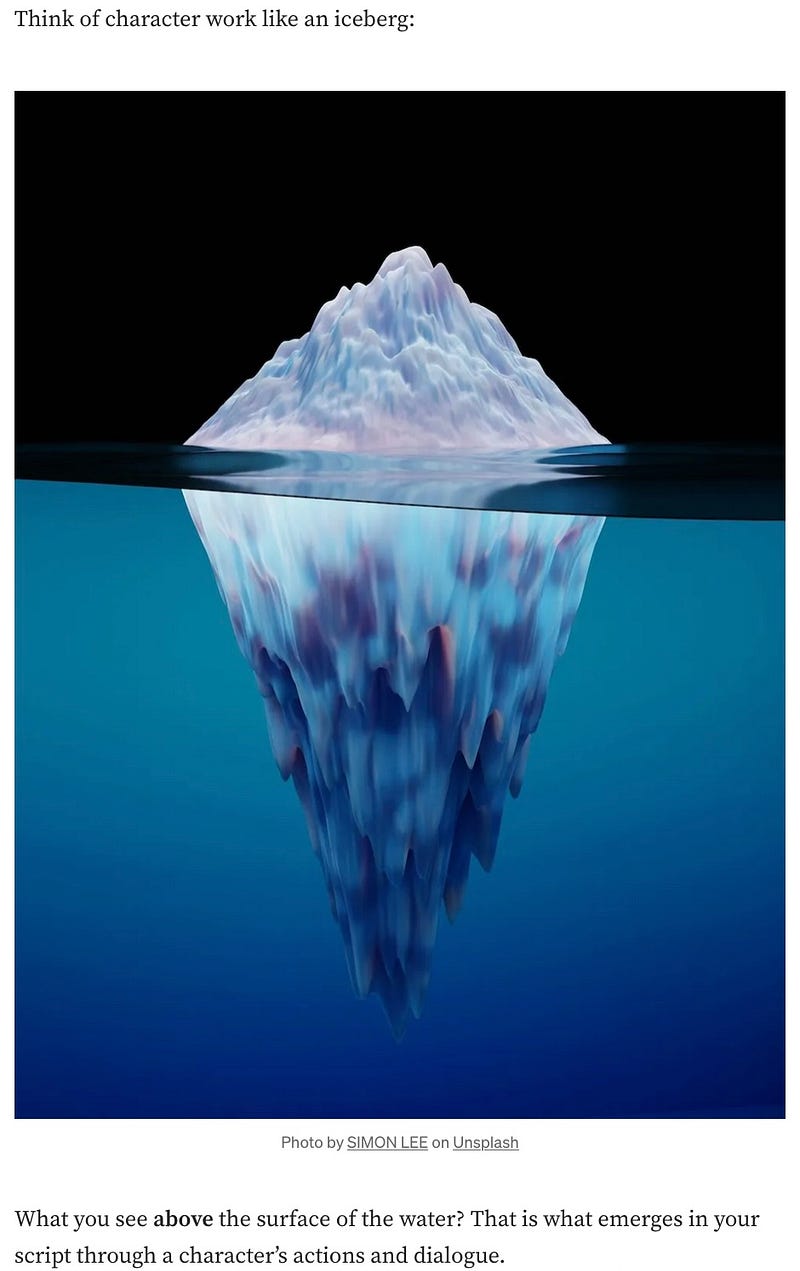
Yesterday, I posted this article: The Iceberg Theory of Writing. That led to a question.
Here is how I responded to Erum’s question.
Erum, great question. This is why it’s important to determine what your story means, what some call the “central theme.” If you do know it, you can use it as a lens through which to look at and assess everything else: scenes, characters, dialogue. You can use that sort out all the material you’ve brainstormed to determine what’s relevant to the script and what’s not.
Second piece of advice: Tease the reader. Or per Billy Wilder: “Don’t give them 2=2=4. Give them 2+2.” Make the audience work to figure out certain aspects of the story. Hold back some of that exposition. Don’t include that flashback. Cut those lines of dialogue. The tendency often is to spoon feed everything to the reader. Don’t do that. By omitting some narrative material, you invite the reader to become a participant in the unfolding story because they have to use their imagination to stitch together things that happen off screen.
Finally, this. Screenwriting is an iterative process. You write a draft. See what works. Maybe you need less of the “iceberg” in the script. Maybe you need more. But often you’ll discover “less is more.”
Hope that helps!
As to the 2+2 observation, years ago, I ran a 28-part series on the wonderful interview book Conversations with Wilder. Here is link to Part 4 of the series The Lubitsch Touch in which Wilder extols the storytelling skills of his hero filmmaker Ernst Lubitsch.
He realized that if you say two and two, the audience does not have to be told it’s four. The audience will find it themselves; let the audience find the joke. There was always an innuendo, in setting up situations, and you were rewarded by the laugh of the people who added it up.
That is just one of three tips I provided to Erum about how to use the iceberg theory of writing. The main thing is this: You must do the work which creates the iceberg by immersing yourself in the story universe and the characters’ lives. Some will be directly relevant to the script, others not. You try it. If it works with readers, great. If not, you rewrite the script until it does.