How do I know if it’s too much or too little scene description?
Reader question via email from Anonymous:
Reader question via email from Anonymous:
How do I know it I’m writing too much description in a scene or not enough?
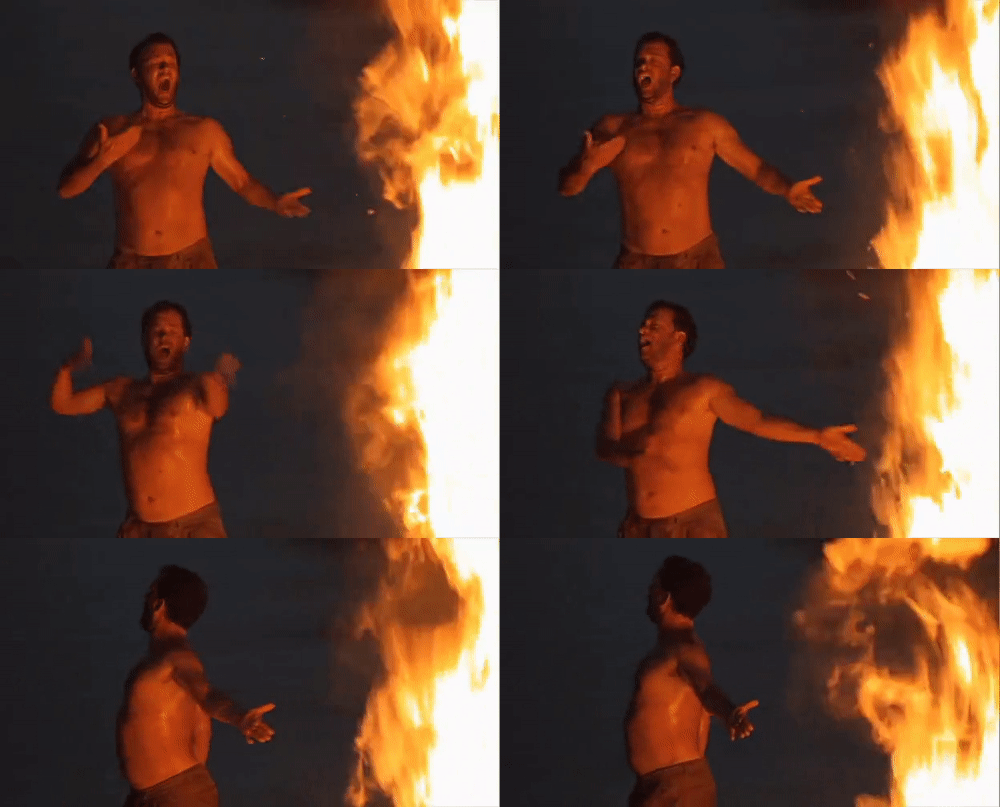
First off, you start with the invisible character who is ‘telling’ your story, what I call Narrative Voice. What is their personality, their descriptive style? They may write more prosaically to match the feel of your story’s genre. On the other hand, they may be of a leaner, tighter take on things. For example, there’s a big difference between this scene description from the script for the movie Cast Away:
Chuck darts into the jungle and returns dragging a huge log.
He throws it on the fire. We see his face in the light of
the fire. He is exultant. He dances. He sings at the top
of his lungs. Papa-ooo-mow-mow!Chuck throws another huge log on the fire. Papa-papa-papa-
oooo! The log splutters and explodes, sending up a huge
shower of sparks that climb and sparkle in the
darkness...until they merge with the stars.
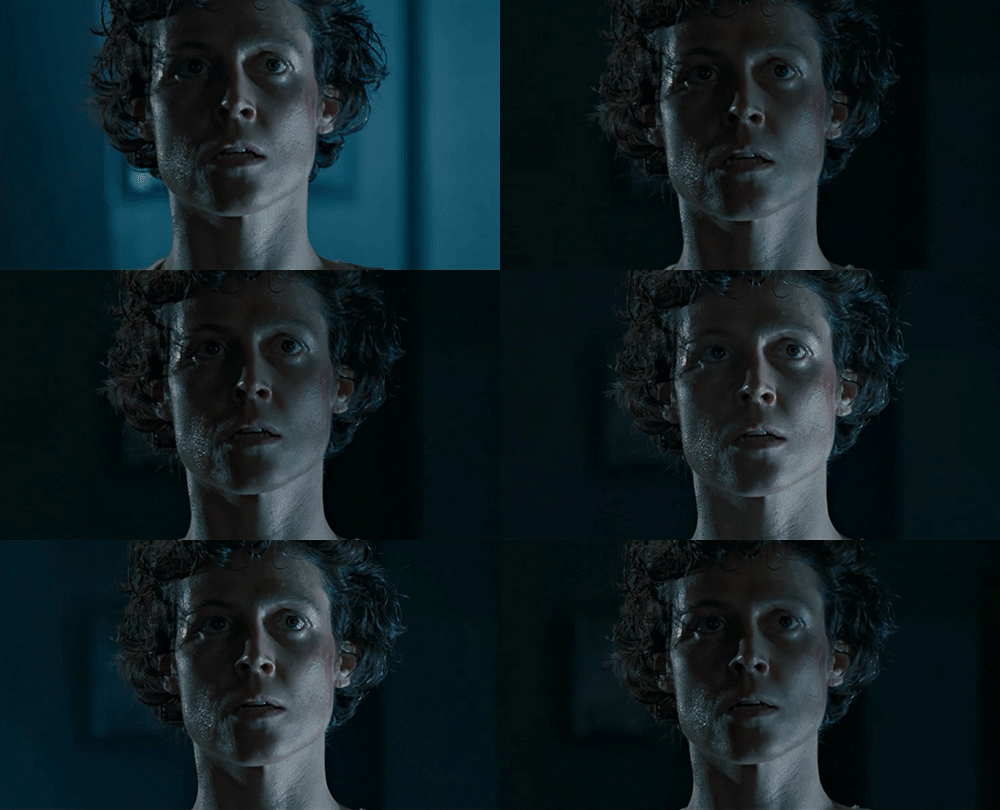
And this type of scene description from the Walter Hill and David S. Giler draft of the screenplay for the movie Alien:
Ripley whirls.
Finding herself facing the Creature.Ripley's first thought is for the flamethrower.
It lies on the deck next to the Alien.
Next she glances around for a place to hide.
Her eye falls on a small locker containing a pressure suit.
The door standing open.
She begins to edge toward the compartment.
The Creature stands.
Comes for her.
Ripley dives for the open door.
Hurls herself inside.
Slams it shut.
Make sure you get in touch with your Narrative Voice and style sensibility for your script. You should ground every choice you make about handling scene description in that.
Next there’s a writing mantra which provides guidance: Minimum words, maximum impact. That’s the way with screenplays, both for film and TV: We have to write more with less. The novelist Raymond Chandler, who did some screenwriting including Double Indemnity with Billy Wilder, said this:
“The challenge of screenwriting is to say much in little and then take half of that little out and still preserve an effect of leisure and natural movement.”
As far as the concern about how much is too much, how much is too little, there’s no precise formula to know for sure. You give it a try. You read it. You read it aloud. You futz with it. Test that out. At some point, you give your pages to readers (hopefully ones who know a thing or two about screenwriting). They say it works. Great. They say there’s not enough there to track what’s going on. You add some. They say it’s overwritten and wordy. You cut some.
In early drafts, we can default to more because we want to be in the moment and give expression to what we see in our mind’s eye. Then as we do subsequent drafts and edit, the default shifts to less as we try to find that delicate balance not too much… not too little… just enough.
Another touchstone to guide the writing of scene description: The Three E’s of Scene-Description:
Is it Essential?
Is it Efficient?
Is it Entertaining?
The first question speaks to overwriting. The second questions speaks to underwriting. The last question speaks to goal.
Let’s say you’re writing a scene. You see it in your head. Whatever you choose to describe, press yourself to make sure you include only that which is essential. When you read it back, make sure you think it’s effective. And always strive to make it entertaining.
Aim for that sweet spot: Minimum Words. Maximum Impact.
Final point: This is Reason #538 why you absolutely must read movie scripts. The more scripts by pro writers you read, the more you begin to get a feel for how much is too much and how much is too little, just by tracking how those writers handle scene description.
Readers, what advice do you have on this subject? How do you know when you’ve hit that sweet spot of just enough description and not too much?