How and when is it okay to use voice-over narration?
The supposed Hollywood conventional wisdom is NOT to use V.O. narration.
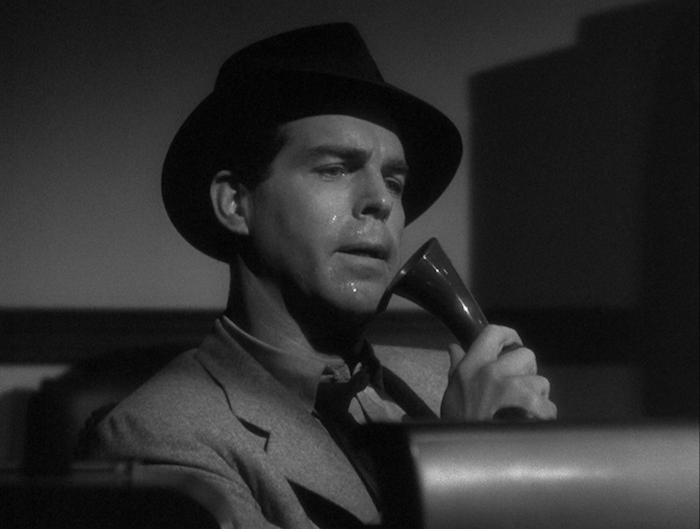
The supposed Hollywood conventional wisdom is NOT to use V.O. narration.
A question from Ryan H.:
Narration is generally considered a no-no in screenwriting, but some films have made magnificent use of it (A CLOCKWORK ORANGE, for one). Do you have any tips as to when and how to use narration?
There does seem to be a conventional wisdom in Hollywood against narration. My guess is execs and producers think it represents sloppy writing per the axiom, “Show it, don’t say it.”
A great example of this attitude can be found in the words of the Robert McKee character in the movie Adaptation:
“And God help you if you use voice-over in your work, my friends. God help you. It’s flaccid, sloppy writing. Any idiot can write voice-over narration to explain the thoughts of a character.”
Yet consider this list of movies which use voice-over narration:
A Clockwork Orange
Forrest Gump
The Shawshank Redemption
Fight Club
Apocalypse Now
Sunset Blvd.
Double Indemnity
Trainspotting
American Beauty
Stand By Me
Platoon
To Kill A Mockingbird
Lolita
Babe
A Christmas Story
Each of these movies uses voice-over narration and that’s just a list off the top of my head. So what can we glean from this list?
1. When the narrator ties together a story that takes place over a long span of time: Movies that make several time-jumps and cover several years — like Forrest Gump and The Shawshank Redemption — can benefit from a narrator V.O. Hell, they probably wouldn’t work if they didn’t use narration.
2. When the narrator provides a distinctive personality (read: entertainment value): A la A Christmas Story. The narrator in this movie offers some of the most entertaining moments along the way.
3. When the narrator can help to establish a mystery upfront: Like American Beauty and Sunset Blvd.. In both cases, the narrator foretells in the movies’ opening scenes the Protagonist’s impending death.
Other than that, when I look at that list, I see movies where the narrator offers deep insight into the Protagonist’s inner world, revelations that might not be made as well through action and dialogue — Platoon, Fight Club, A Clockwork Orange, Trainspotting, Apocalypse Now, Lolita — each a deep journey into dark psychological places, where the narration is both revelatory in content and evocative in tone.
As it is, even without voice-over narration, scripts have a Narrative Voice, evidenced in the language of scene description, the nature of scene transitions, the pacing of scenes, and so on. For more on that, you can go here for an article I wrote for Screentalk magazine.
I guess the question boils down to whether your story benefits from taking that Narrative Voice, which is invisible in most scripts, and giving ‘life’ to it in the form of V.O.. Given Hollywood’s apparent disaffection for this narrative device, you’d have to have a genuinely compelling reason, like those listed above, for using narration.
And perhaps what the fuss is really about is development executives don’t like BAD voice-over narration. When it’s used well, not a problem.