Hollywood’s Slo-Mo Self-Sabotage
Since the streaming era, movies and television feel less special, labor conditions have plummeted, and turbulent mergers and layoffs call…
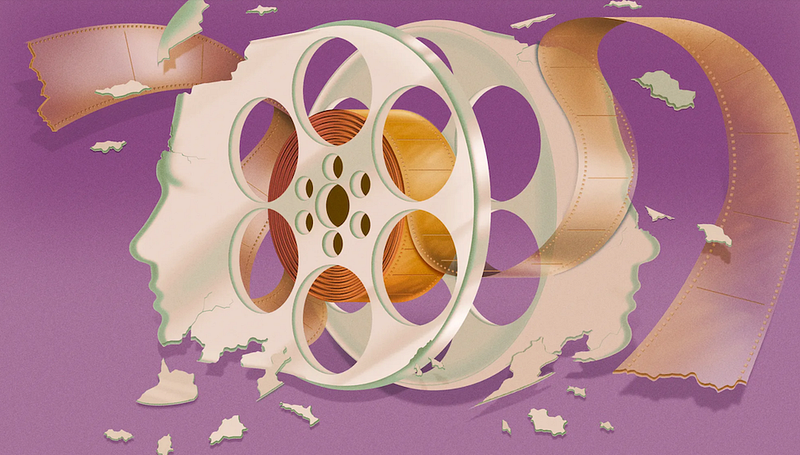
Since the streaming era, movies and television feel less special, labor conditions have plummeted, and turbulent mergers and layoffs call into question which legendary institutions will still stand in another ten or twenty years.
This is a solid article on the current dynamics in Hollywood which have created the context for the strike. It’s from the latest issue of the New Yorker and written by Inkoo Kang, a television critic for the magazine.
To survey the film and television industry today is to witness multiple existential crises. Many of them point to a larger trend: of Hollywood divesting from its own future, making dodgy decisions in the short term that whittle down its chances of long-term survival. Corporations are no strangers to fiscal myopia, but the ways in which the studios are currently squeezing out profits — nickel-and-diming much of their labor force to the edge of financial precarity while branding their output with the hallmarks of creative bankruptcy — indicate a shocking new carelessness. Signs of this slow suicide are all around: the narrowing pipelines for rising talent, the overreliance on nostalgia projects, and a general negligence in cultivating enthusiasm for its products. Writers and actors have walked out to demand fairer wages and a more equitable system, but they’ve also argued, quite persuasively, that they’re the ones trying to insure the industry’s sustainability. Meanwhile, studio executives — themselves subject to C-suite musical chairs — seem disinterested in steering Hollywood away from the iceberg. This is perhaps because the landscape is shifting (and facets of it are shrinking) so rapidly that they themselves have little idea of what the future of Hollywood might look like.
— —
After “Top Gun: Maverick” broke box-office records, sequels may have been seen as the key to luring audiences back to theatres, which have been languishing since the pandemic. But this summer’s long-in-the-tooth franchises — “Mission: Impossible,” “Transformers,” “Indiana Jones,” and “The Fast and the Furious” — have performed just satisfactorily, if not disappointingly. “Barbie,” meanwhile, saw the director Greta Gerwig infuse the half-century-old blond blank slate with her own idiosyncratic anxieties to produce a Zeitgeist-capturing film with an unmistakable authorial imprimatur. But Hollywood’s ignoring the obvious takeaway, which is that viewers appreciate novelty. Instead, Mattel has announced that it will follow up “Barbie” by raiding its toy closet for more I.P., and has put dozens of projects based on its products into development.
Trends in television are no less dispiriting, with networks soliciting “visual Muzak,” as some in the industry have put it. The TV writer Lila Byock told my colleague Michael Schulman this spring that the streamers are most eager for “second-screen content”: shows to have on in the background while the viewer presumably scrolls through their phone. In a recent interview, the actor and director Justine Bateman said that network notes now request that shows be less engaging so that distracted audiences won’t lose track of the plot and turn them off.
This may be the single most outrageous thing I’ve read since I began working in Hollywood in 1987: Second-screen content? I get that contemporary consumers feel the need to check their phones and text and chat and whatever when watching whatever wherever, but for the entities who provide that entertainment to embrace that behavior?
WTF?!
Creating “content” to “have on in the background” … this is what streamers actually want?
Frankly, I’m embarrassed I ever subscribed to Netflix [I cancelled my subscription the day we went out on strike].
No wonder the streamers are frothing over AI. If all they need to provide to subscribers is “background content,” I’m sure AI can manage that. Heaven forbid, the “content” would dare to divert the viewers attention from their iPhone because of an interesting plot twist … or a shocking decision by a character … or an actual emotional moment.
No. Just provide background visuals, background noise. No need for those pesky human writers with their concerns about subtext and characters arcs and conflict and drama.
Can the legacy Hollywood movie studios really embrace this shitty vision of the future of cinematic entertainment?
Is there one studio CEO who will step up and say, “I think movies are worth saving. I think the theatrical experience is worth saving. I think TV…”
Well, c’mon, Mr. CEO. [Of course, it’s a “mister”]. TV is just second-screen content. So much for the 2nd Golden Age of Television. Thanks, David Chase. The Sopranos ushered in two plus decades of compelling television. But it’s all bye-bye now. TV as a 21st century boob tube for easily distracted viewers.
Somewhere along the line, Silicon Valley swallowed Hollywood. Not by buying the studios so much as creating the streaming dream and seducing the studios into buying into that dream.
Which has turned into a nightmare.
This is why we strike. To save the suits from their own slo-mo self sabotage. There are still people who love movies, who love television, who love storytelling. Writers. Actors. Producers. Even studio executives.
I have to believe. I must believe that the Good, the Creative will win out. What we know as Hollywood may die …
… But cinematic storytelling will never go away.
For the rest of the New Yorker article, go here.
For the latest updates on the strike and news resources, go here.
Please consider contributing to the Entertainment Community Fund.