Hollywood’s New Rules of Rom-Coms
So Long, Ice Queens and Gay Best Friends.

So Long, Ice Queens and Gay Best Friends.
As recently as two years ago, the conventional wisdom in Hollywood was that the romantic comedy sub-genre was dead. Some of my screenwriting friends working in Hollywood told me their reps advised them not to refer to their projects as romantic comedies, but rather as “a comedy with romance.” A subtle distinction perhaps, but a way of avoiding the dread rom-com tag.
Then in 2018, Netflix came along and almost single-handedly revived them. A recent Hollywood Reporter article delved into some of the dynamics at play for the rom-com revival.
Last year, when Set It Up star Glen Powell expressed interest in I Want to F*** Your Sister, Melissa Stack’s 2007 Black Listed screenplay, the writer-director had concerns that the premise had become outdated. The film features a finance bro’s transformation into a better man when his attractive younger sister interns (and gets hit on) at his company. Stack thought a comedy depicting the sexual harassment of a woman in the workplace was “problematic” in the #MeToo era. But over a coffee at a Pain Quotidien in Larchmont Village, when Powell asked, “What if we swapped the genders?” she says “it was like dominoes falling.” She could address the harassment men can face and the female attention men are supposed to desire in a laugh-out-loud, cathartic story (Stack, still working on the script, is seeking to avoid any “cougar” archetypes with the gender swap). I Wanna F*** Your Brother was picked up in June by STXfilms with Powell attached.
Pushy men, stolen kisses, the rating of women: This is the stuff of ’80s and ’90s romantic comedies, and with the recent run of Netflix hits like Powell’s Set It Up, creators looking to fill a renewed appetite at studios and production companies are sorting out which genre tropes to keep and which to trash.
Creators are particularly careful not to repeat the mistakes of past installments, which some attribute to a dip in interest in the genre in the late aughts. In 2007, 35 theatrically released films — a slate including Knocked Up and the Hilary Swank-Gerard Butler film P.S. I Love You — made nearly $972 million worldwide, adjusted for inflation, according to movie industry data firm The Numbers. By 2018, 15 such films made $241 million. “I don’t think audiences ever stopped wanting rom-coms — they got tired of the traditional conventions, and the struggles of those theatrical films scared people away from the genre,” says Matt Kaplan, producer of To All the Boys I’ve Loved Before and The Perfect Date. Though theatrically the genre is still struggling, a few streaming figures suggest it’s back in a big way: In October 2018, Netflix reported in a shareholder letter that more than 80 million accounts globally had watched one or more of the summer’s rom-coms. (By contrast, 2008 saw fewer than 80,000 tickets sold for all films in the genre.)
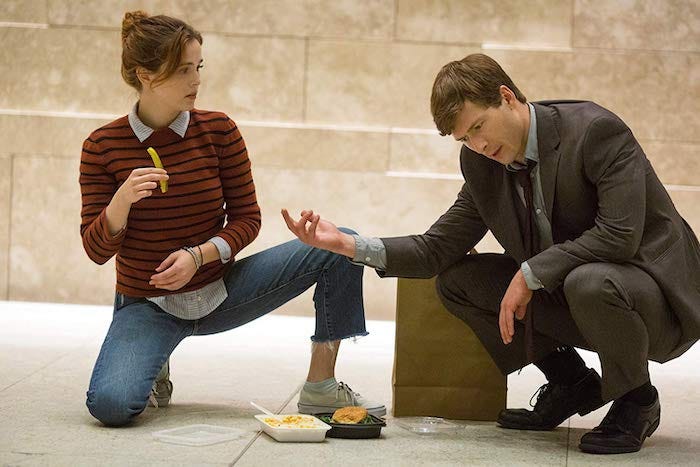
The THR article details some of the conscious creative choices filmmakers have made to freshen up what had become a stale sub-genre:
- Swap genders
- Explore interracial relationships
- Write heroines who have lives outside of their romantic relationships
- Avoid the ‘meet cute’
- Avoid the ‘gay best friend’ who only exists as a comic foil or gossip
And this from the Hollywood Reporter article:
What else telegraphs as retrograde today? Creators list the makeover that helps a female protagonist land her crush (Miss Congeniality); what [Paul] Feig calls the “insulting” trope of the “ice-queen” businesswoman who chooses between her career and her happiness (The Proposal); and the rich man who falls for an employee with significantly less power (Maid in Manhattan).
Some things, however, would seem not to change:
But the grand gesture (think Tom Cruise’s speech to Renée Zellweger in Jerry Maguire) will last forever, [Katie] Silberman says, along with the plot device of a massive fight between the central couple. Feig and [Karen] McCullah both cite the enduring appeal of the opposites-attract trope, which brings conflict and comedy to the romance. Feig adds that external pressure (illness in 2018’s The Big Sick, family disapproval in Crazy Rich Asians) will always be important.
If you’re a writer in the romantic comedy space, this is good news. It also means you need to get on top of current story sensibilities. You can check this out: 15 Netflix original romantic comedies, ranked from least to most delightful.
And here’s a taste of the current vibe with the trailer for 2019 Netflix movie Always Be My Maybe:
Takeaway: Whenever it comes to tropes, it pays to be aware of them, whatever the genre. Sometimes, they can work as is. But oftentimes, the best approach is to subvert expectations by playing against type.
For the rest of the Hollywood Reporter article, go here.