Hollywood is on strike because CEOs fell for Silicon Valley’s magical thinking
Silicon Valley’s invasion of Hollywood brought with it science fictional notions of growth for the industry, a penchant for secrecy and…
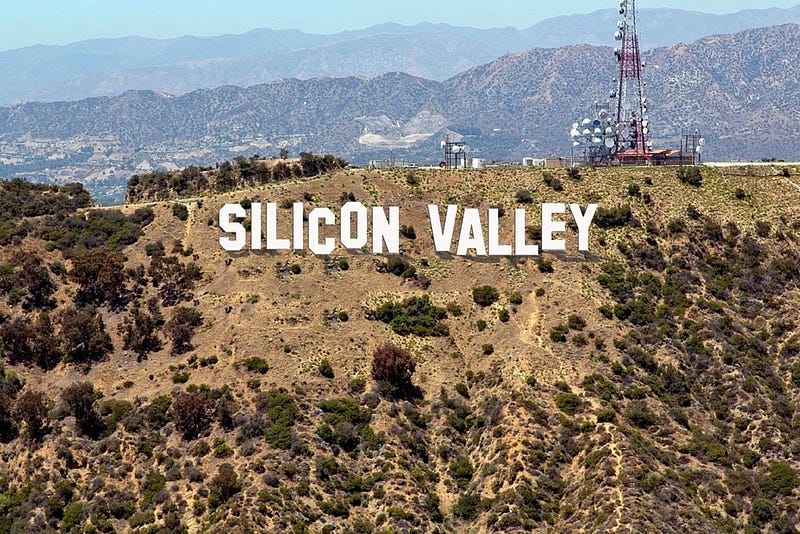
Silicon Valley’s invasion of Hollywood brought with it science fictional notions of growth for the industry, a penchant for secrecy and unaccountability and the expectation that it could get away with treating workers like robots or invisible code.
From Brian Merchant, the Los Angeles Times technology columnist.
In one respect, the actors and writers of Hollywood uniting on the picket lines in a historic, industry-shaking strike is a tale as old as time: one of workers fighting bosses for better pay. Yet the reason this battle is shaping up to be so uniquely intractable and momentous — as you might have gathered from all the headlines about artificial intelligence and streaming economics — is very much of our moment.
But it’s not, ultimately, technology that’s at the root of the problem. It’s that the studio executives both new and old have embraced the powerful — and ultimately disastrous — magical thinking pumped out by Silicon Valley for the last 10 years.
Studio heads are touting the disruptive properties of digital streaming, the transformative power of AI, a brave, unpredictable new world for entertainment writ large — and how writers and actors must adapt to this new future. But just as it did when it was issuing from the tech sector during the 2010s, this talk too often amounts to a smokescreen that lets executives and investors line their pockets and risks leaving workers holding the bag.
“These companies blew up a successful business model that the public enjoyed, that was immensely profitable, and they replaced it with a mishmash that we have now,” Adam Conover, the star of “Adam Ruins Everything” and a negotiating committee member of the Writers Guild of America, tells me. “And now, they’re refusing to update the contract to reflect those changes.”
So writers, actors, and other entertainment industry workers are being asked to take pay cuts to pay for the mistakes the companies have made. It reminds me of what Naomi Klein wrote about in her book The Shock Doctrine:
In THE SHOCK DOCTRINE, Naomi Klein explodes the myth that the global free market triumphed democratically. Exposing the thinking, the money trail and the puppet strings behind the world-changing crises and wars of the last four decades, The Shock Doctrine is the gripping story of how America’s “free market” policies have come to dominate the world — through the exploitation of disaster-shocked people and countries.
At the most chaotic juncture in Iraq’s civil war, a new law is unveiled that would allow Shell and BP to claim the country’s vast oil reserves…. Immediately following September 11, the Bush Administration quietly out-sources the running of the “War on Terror” to Halliburton and Blackwater…. After a tsunami wipes out the coasts of Southeast Asia, the pristine beaches are auctioned off to tourist resorts…. New Orleans’s residents, scattered from Hurricane Katrina, discover that their public housing, hospitals and schools will never be reopened…. These events are examples of “the shock doctrine”: using the public’s disorientation following massive collective shocks — wars, terrorist attacks, or natural disasters — to achieve control by imposing economic shock therapy. Sometimes, when the first two shocks don’t succeed in wiping out resistance, a third shock is employed: the electrode in the prison cell or the Taser gun on the streets.
Based on breakthrough historical research and four years of on-the-ground reporting in disaster zones, The Shock Doctrine vividly shows how disaster capitalism — the rapid-fire corporate reengineering of societies still reeling from shock — did not begin with September 11, 2001. The book traces its origins back fifty years, to the University of Chicago under Milton Friedman, which produced many of the leading neo-conservative and neo-liberal thinkers whose influence is still profound in Washington today. New, surprising connections are drawn between economic policy, “shock and awe” warfare and covert CIA-funded experiments in electroshock and sensory deprivation in the 1950s, research that helped write the torture manuals used today in Guantanamo Bay.
The Shock Doctrine follows the application of these ideas through our contemporary history, showing in riveting detail how well-known events of the recent past have been deliberate, active theatres for the shock doctrine, among them: Pinochet’s coup in Chile in 1973, the Falklands War in 1982, the Tiananmen Square Massacre in 1989, the collapse of the Soviet Union in 1991, the Asian Financial crisis in 1997 and Hurricane Mitch in 1998.
Disaster capitalism. Wait for a crisis. Better yet, create the crisis. Then take advantage of the general population. In the case of Hollywood, their aim is at the workers. From Merchant’s column:
The boom times are over. Executives know it. Wall Street knows it. And the story that we’re in a revolutionary moment of technological transformation will run out of gas soon. So the bosses are using that moment to do what Silicon Valley wound up doing when its other big swings didn’t pan out: squeeze labor.
Just as Uber and Lyft, which promised drivers rich rewards and flexible fares, started reducing rates and making it harder to earn those rewards, Netflix and the streaming cohort cut in its mold are now trying to square their promises of world conquest by slashing worker pay under the fog of magical thinking.
But this time, The Powers That Be aren’t facing a dispirited, confused populous. Rather, the people they hope to manipulate are writers, actors, and other entertainment workers who know the truth: The jig is up.
For the rest of the Brian Merchant column, go here.
For the latest updates on the strike and news resources, go here.
Please consider contributing to the Entertainment Community Fund.