Hollywood Actors and Writers vs. the Studios: 1933 vs. 2023
A Depression-era standoff between newly formed unions and studio moguls pivoted around a new technology: talkies! Some lessons for the age…
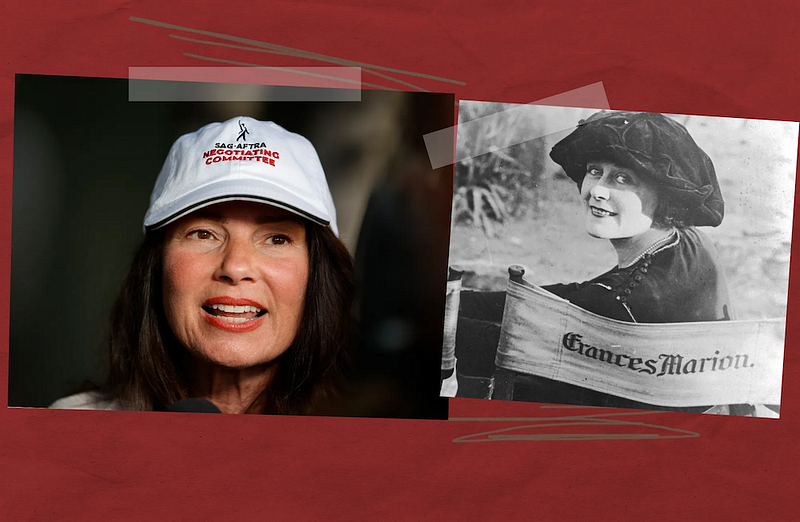
A Depression-era standoff between newly formed unions and studio moguls pivoted around a new technology: talkies! Some lessons for the age of AI and streaming.
Over the years, I have taught a university level course called “History of American Screenwriting.” It begins in the 1890s and the birth of the film business, then proceeds decade by decade up to the present. One constant theme throughout the history of Hollywood filmmaking: The Powers That Be have always perceived writers as a necessary “evil,” therefore, writers have been forced to fight for every creative right and financial benefit.
Cari Beauchamp, who has authored six books on film history, recently wrote an article for Vanity Fair which illustrates the historic nature of the battle between Hollywood writers and the “suits.” Here is an excerpt from that article.
Recently, former Paramount head Barry Diller suggested that movie moguls — and Hollywood’s highest paid actors — take 25% pay cuts. The goodwill gesture, by Diller’s reasoning, just might help bridge the gap between the striking writers and actors and the big studios and streamers. When I first heard Diller’s proposal I thought, It’s déjà vu all over again. Few remember that in 1933, the studios actually joined together to mandate that administrators and creators making over $50 a week take a 50% pay cut.
It didn’t work then and it probably won’t work now.
— —
The Depression, which began in 1929, had circled the globe and hit Hollywood with a wallop. President Franklin D. Roosevelt was inaugurated in early March of 1933 and closed the country’s banks for a week to get a handle on the economy. Suddenly, fewer and fewer Americans had cash for necessities, let alone movies. (By 1933, audience numbers had dropped to 60 million a week — from a sky-high 110 million in 1929.)
In response, several movie studios including Columbia, Paramount, and Warner Bros. agreed to salary cuts. MGM, which during the Depression was still operating in the black, responded this way.
MGM’s boss, Louis B. Mayer, apparently, only had enough money on hand to cover his staffers’ salaries for a couple of weeks.
As MGM story editor Samuel Marx later wrote in his book Mayer and Thalberg: The Make-Believe Saints, Mayer, with his beard “stubbled and his eyes red,” entered the largest auditorium on the lot at a pivotal moment in March to address his assembled employees. Mayer promised to keep the salary reductions short-lived and, if necessary, to repay them all out of his own pocket. He feigned tears. His voice caught. Lionel Barrymore and others cheered him on, expressing their support. When Mayer left the room, feeling triumphant, Marx heard him ask the casting chief, Benny Thau, “How did I do?” (Mayer’s crocodile tears moment was recreated in a scene in David Fincher’s 2020 feature, Mank, about the tortured birth of Citizen Kane.)
Word of Mayer’s cynical comments soon spread. And the film community got mightily riled. They held meetings. They looked to other industries across America in which organized labor was becoming a vital force. In short order, the screenwriter Albert Hackett would credit Mayer with creating, in one fell swoop, “more communists than Karl Marx.” And one long, hard look at their “contracts” proved to the writers, directors, and actors that those pieces of paper offered them no protection. Their only option was to unionize.
Which the writers did in 1933.

There have been eight writers strikes since 1933. The current one has echoes of the scenario which resulted in the founding of the Guild decades ago.
In 2023, the guilds walked out at a similarly fraught time, as a quintuple-whammy hit them right in the paycheck. COVID had recently rocked the industry. The looming threat of AI was on the horizon. The early success of streaming had prompted studios to spend outrageously, and unsustainably. CEOs were getting massive pay increases. And actors were plagued by a lack of transparency, a reduction of residuals (last negotiated decades before), and the failure of studios and streamers to pay most of them a living wage. What’s more, the moguls of 2023 had to answer to board members, shareholders, or bankers, many of whom had no real knowledge of filmmaking but had come to the erroneous conclusion that unless their companies could come up with blockbusters and sequels, their slate of pictures — not unlike silent movies during the Depression — would be headed for the dustbin as well.
The struggle today is existential in nature in large part due to the presence of Amazon, Apple, and Netflix who, unlike the legacy studios, have no connection to or concern for their place in Hollywood history.
Writers and actors realize this. So once again, we fight for our creative and financial rights.
Hopefully, history will look back on this collective effort as a turning point in the contentious relationship between writers and the “suits.”
By the way, Louis B. Mayer never paid back MGM employees for their salary cuts.
For the rest of the Vanity Fair article, go here.
For the latest updates on the strike and news resources, go here.
Please consider contributing to the Entertainment Community Fund.