Great Scene: “The Silence of the Lambs”
Two flashbacks to Clarice as a young girl are critical to the narrative. Plus, the script for a third flashback which was never shot.
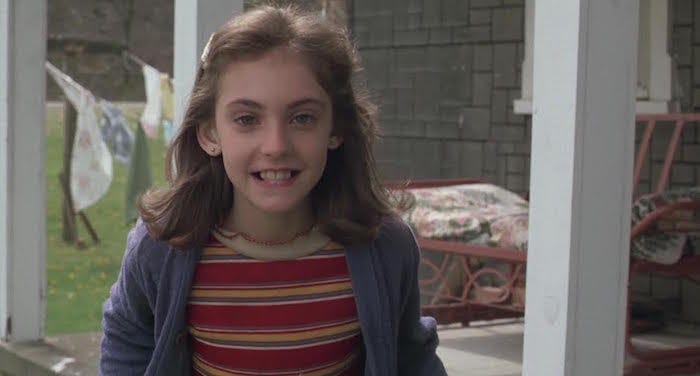
Two flashbacks to Clarice as a young girl are critical to the narrative. Plus, the script for a third flashback which was never shot.
The 1991 movie The Silence of the Lambs won all five major Academy Awards: Best Actor, Best Actress, Best Director, Best Adapted Screenplay, and Best Picture. For good reason. It’s a tremendous movie.
IMDb plot summary: A young F.B.I. cadet must confide in an incarcerated and manipulative killer to receive his help on catching another serial killer who skins his victims.
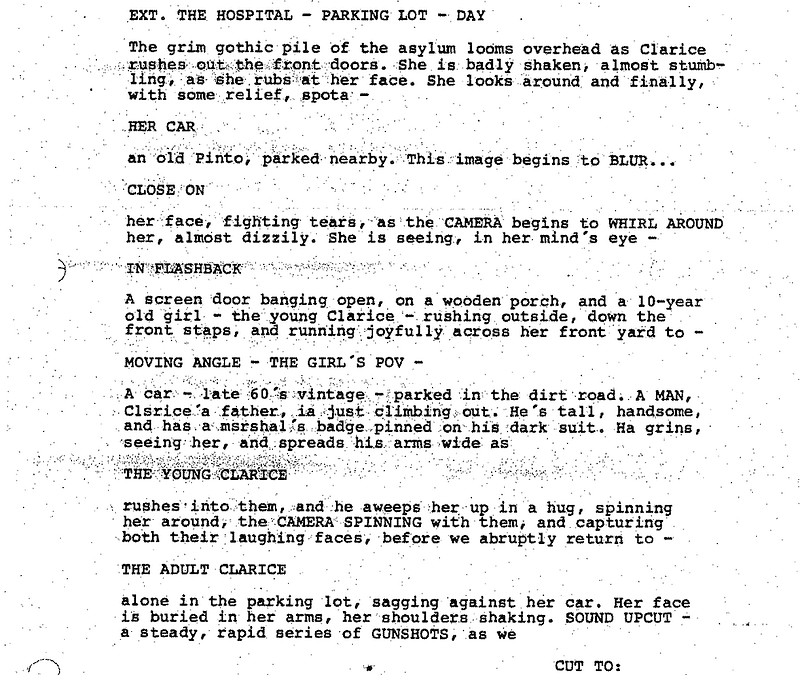
There are two flashbacks which provide a deep insight into Clarice’s psyche. The first one is right after she has had her initial meeting with Lecter and had a disturbing experience with the prisoner in the next cell Miggs. As Clarice leaves the prison and heads toward her car, she revisits a moment in her past.
Here is the scripted version of the scene:
Here is the movie version:
Her father, dressed in his sheriff’s outfit, coming home from work, Clarice, then 11 years old, surprising him, then as he swoops her up into his arms, she asks, “Did you catch any bad guys today, Daddy?”
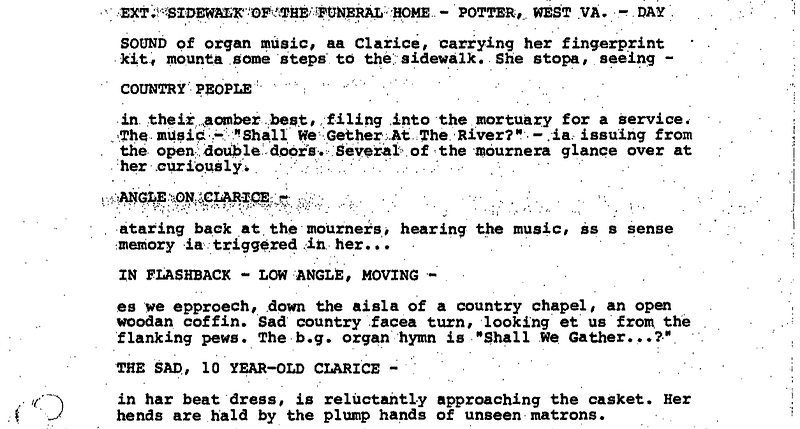
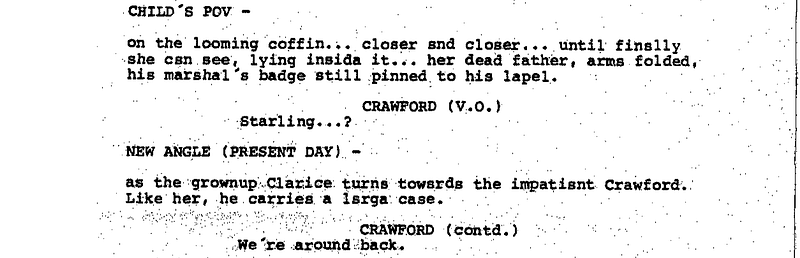
The second flashback occurs at a funeral parlor where the body of one of Buffalo Bill’s victims has been laid out for an autopsy. Here is the script version of the scene:
Here is the movie version of the scene:
This flashback reveals that her father died when Clarice was a young girl, but also demonstrates how Clarice’s issues about her father’s death lie close to the surface of her consciousness. It drives home a key point: She has never recovered from the loss of her father. His death dictated her choice of vocations (he was in law enforcement, she followed in his footsteps). His death has haunted her as she has subconsciously equated his murder with the slaughter of the lambs in Montana she witnessed (with horror) as a child. His death made her a victim and fuels her identification with Buffalo Bill’s kidnap victim Catherine Martin. All of that melds together in this evocative flashback scene.
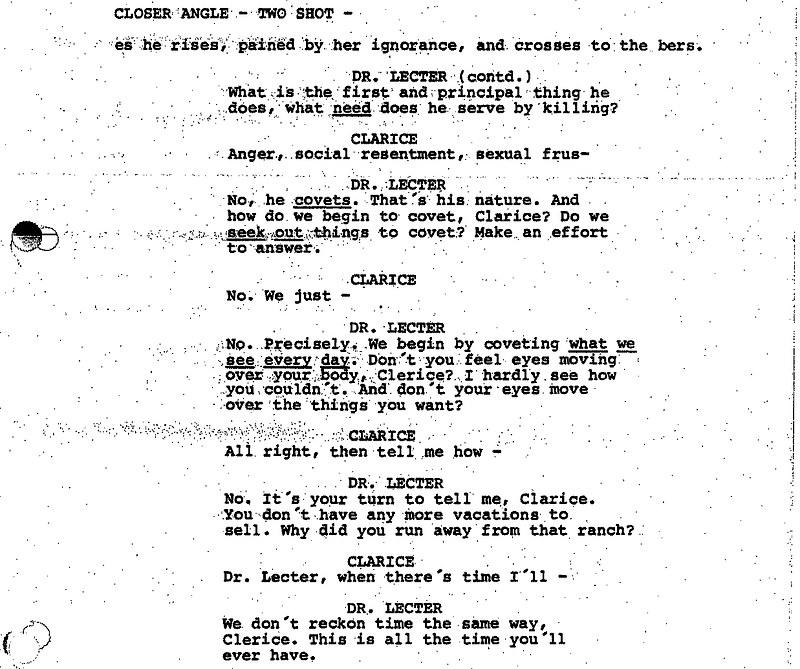
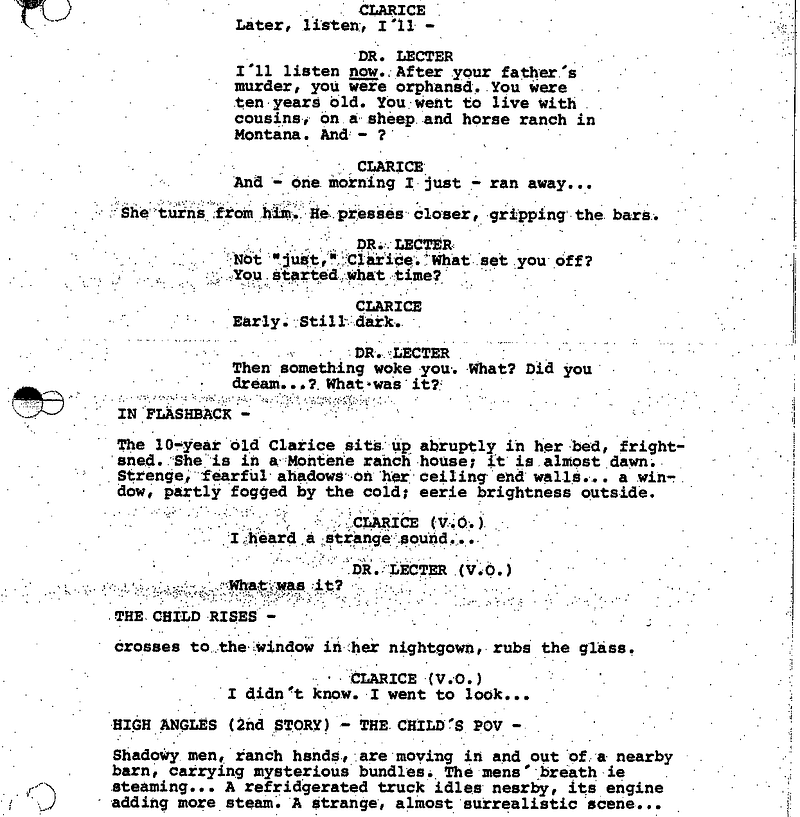
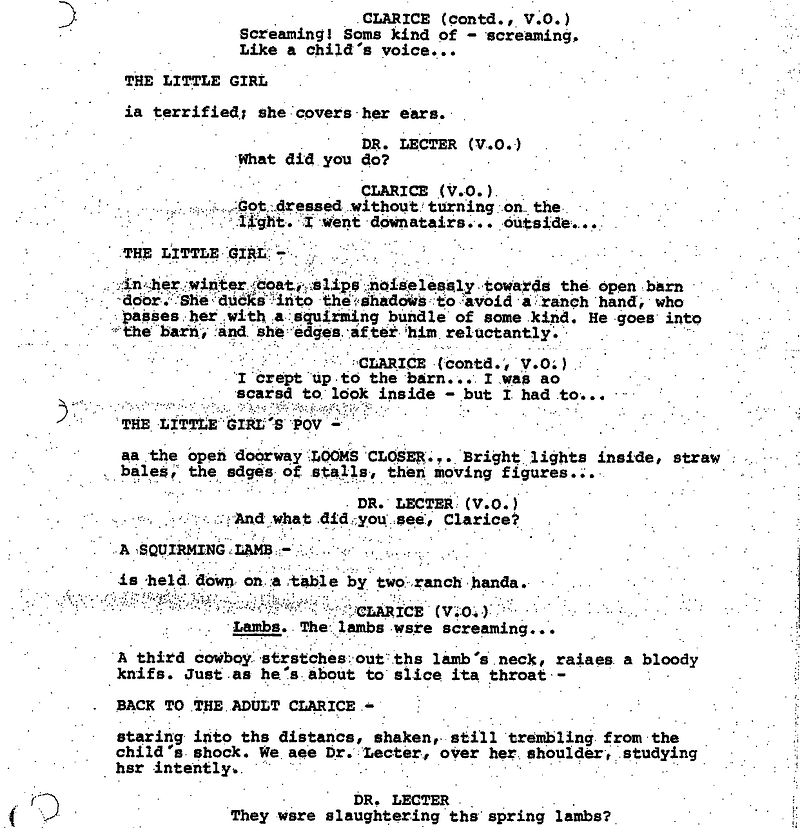
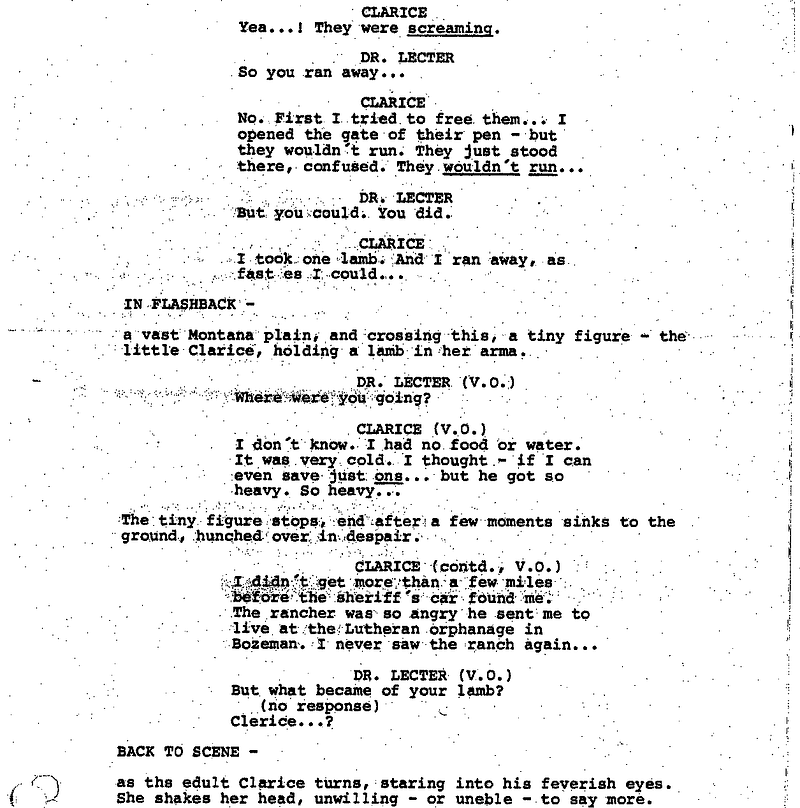
Interesting to note, the script called for a third flashback, but was scrapped. Here screenwriter Tally explains why:
I could see that if we were going to have flashbacks, they should culminate, there should be some climactic thing, and we should see the child Clarice encountering the slaughter of the lambs and trying to save one of them. Jonathan was willing to shoot them, it was going to be the last thing we shot as we had to wait for the lambing season in spring, and it was going to cost a million dollars to set up the whole thing. Then Jonathan shot the scene where Clarice tells Lecter about the killing of the lambs. He sent the dailies to me and said to watch them and give him a call. So I watched these performances, and they were extraordinarily powerful, and Jonathan, said, “How can I cut away from these performances to a flashback? It’s all there: she’s [Jodi as Clarice] telling us the entire story in her face, in her words, we don’t need to see it as well.” He said it’s just primary rule of filmmaking that if you can show it instead of telling it, you show it, but don’t show it and tell it. He was right, but it was scary to me.”
Here is the script version of the scene:
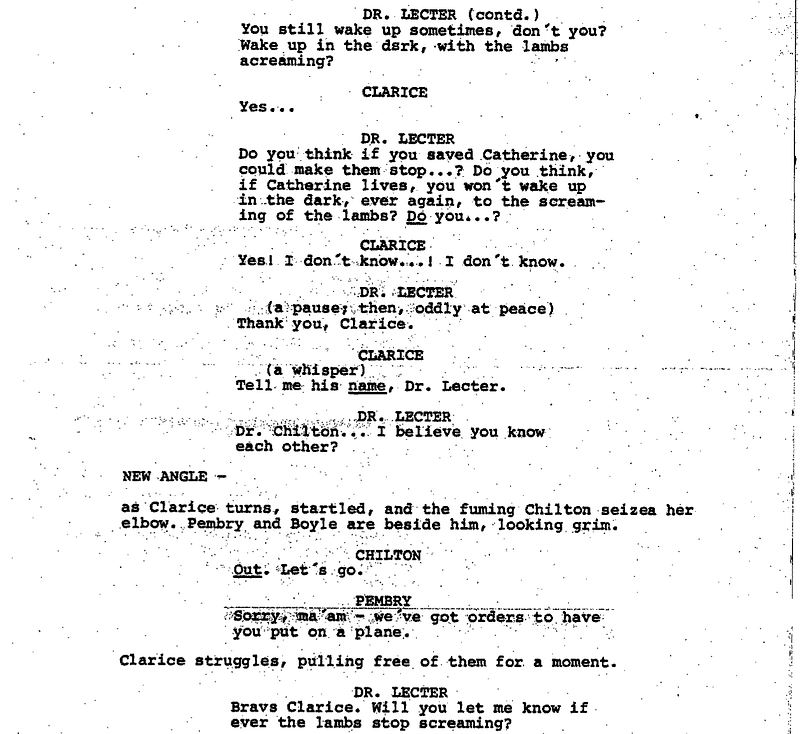
Here is the movie version of the scene:
Foster’s performance is so incredible, it’s easy to see why they chose NOT to film that third flashback. I think the filmmakers’ choice was the right one: Stay on Clarice. A rare case where say it trumps show it.
Interesting to note, Tally’s script includes another scene featuring young Clarice in Montana. It is located at the very end of Lecter’s escape sequence. Here it is:

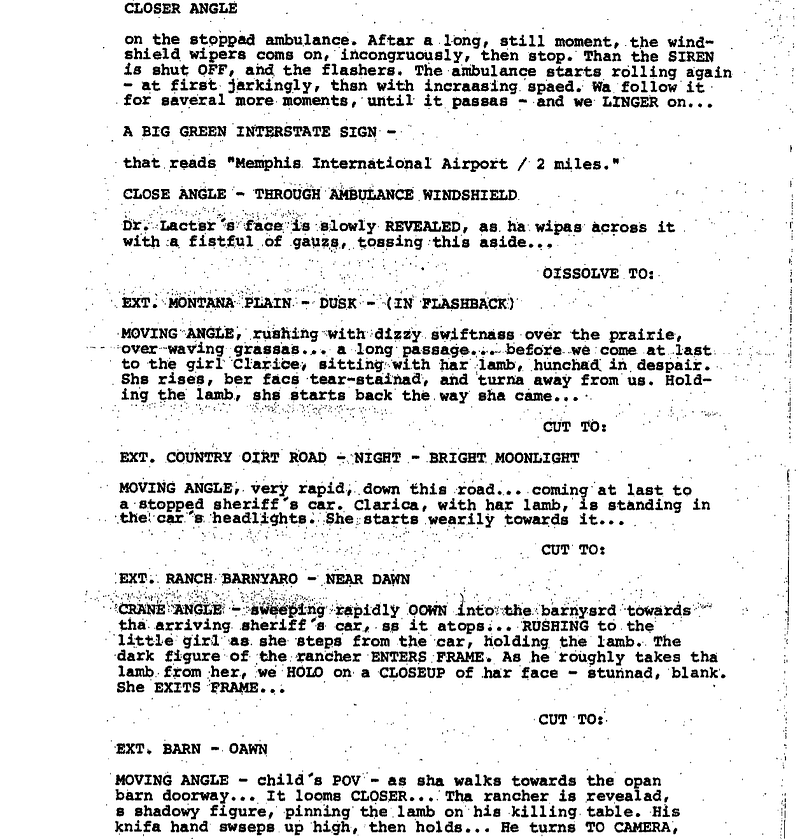
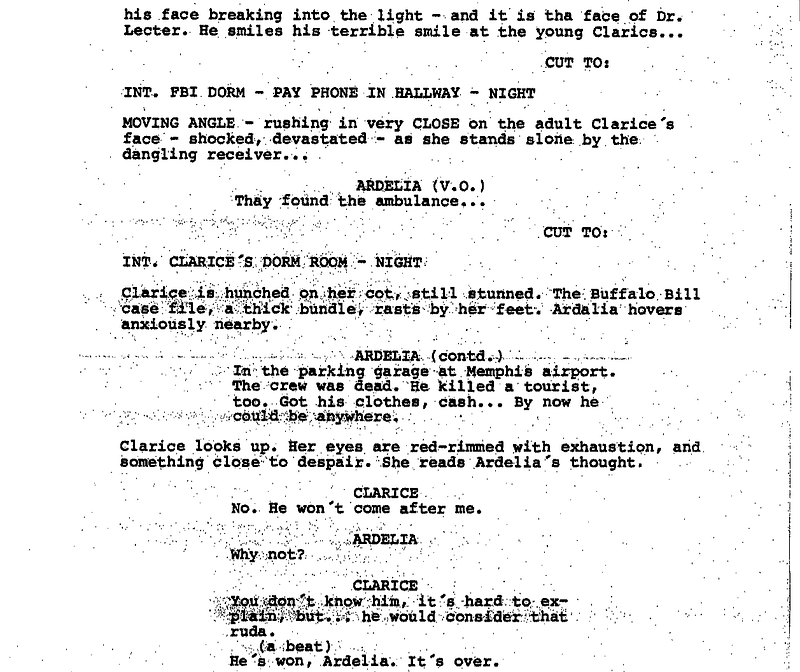
The rancher revealed to be Lecter! It’s an interesting idea, but I can see at least one reason why it wasn’t included in the movie. All three flashbacks, including the third one which was never shot, are subjective flashbacks. That is, they are grounded in Clarice’s memory. The scene depicted above is … what? It begins with Lecter in the ambulance. It ends with Ardelia. In other words, it’s not framed specifically as something arising from Clarice’s memories. It feels disjunctive in comparison to the other flashbacks.
To read more on Ted Tally and his experiences adapting the Thomas Harris novel “The Silence of the Lambs,” go here.
For more articles in the Great Scene series, go here.