Great Scene: “Get Out”
Missy hypnotizes Chris and sends him down into the Sunken Place.
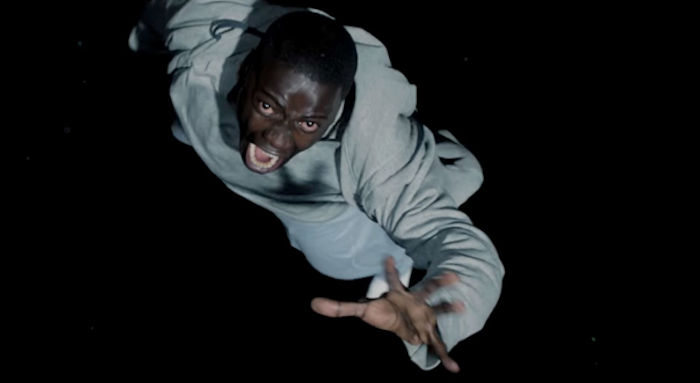
Missy hypnotizes Chris and sends him down into the Sunken Place.
The 2017 movie Get Out was written and directed by Jordan Peele, a film he refers to as a “social thriller.” However, one can’t help but feel that with the Sunken Place scene and vicariously connecting with what Chris is experiencing that this is a horror movie.
IMDb plot summary: A young African-American visits his white girlfriend’s parents for the weekend, where his simmering uneasiness about their reception of him eventually reaches a boiling point.
Setup: Chris attempts to sneak outside to have a cigarette when he is spotted by his girlfriend’s mother Missy, a psychiatrist adept at using hypnosis in her practice.
Here is the scripted version of the Sunken Place scene:
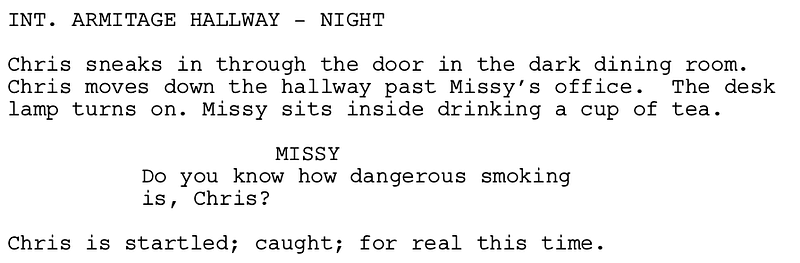
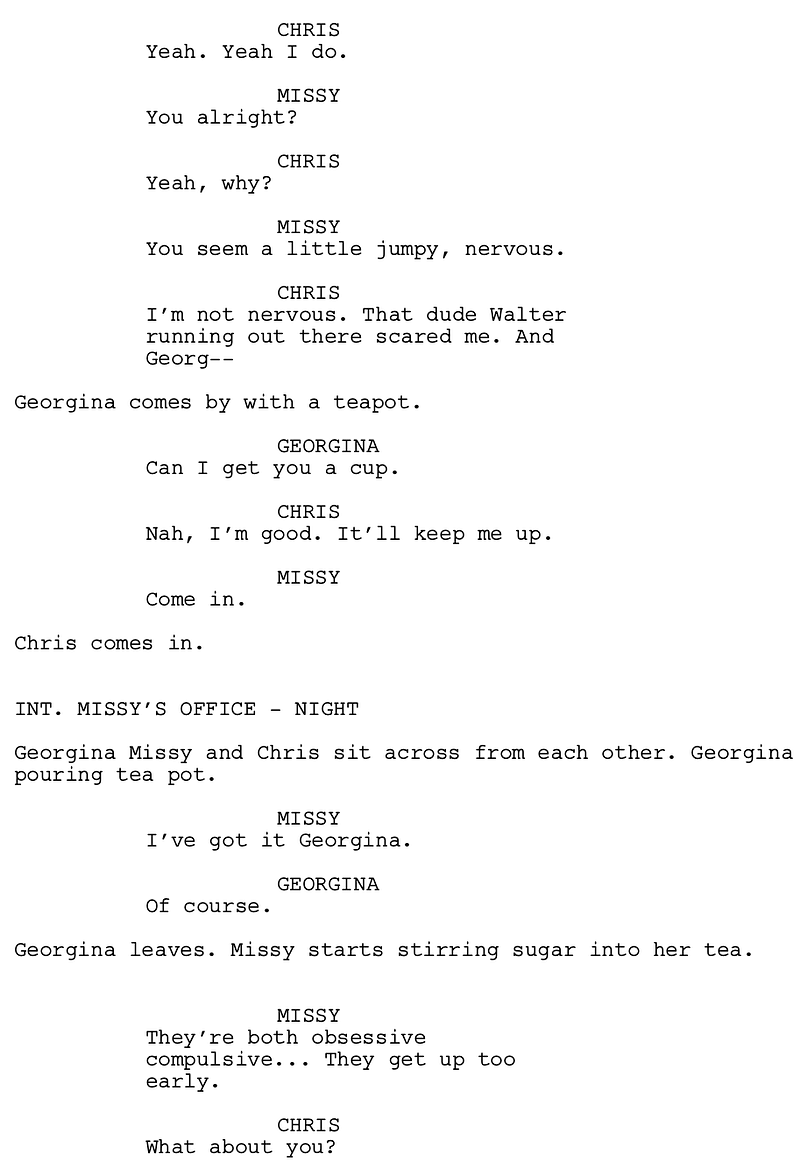
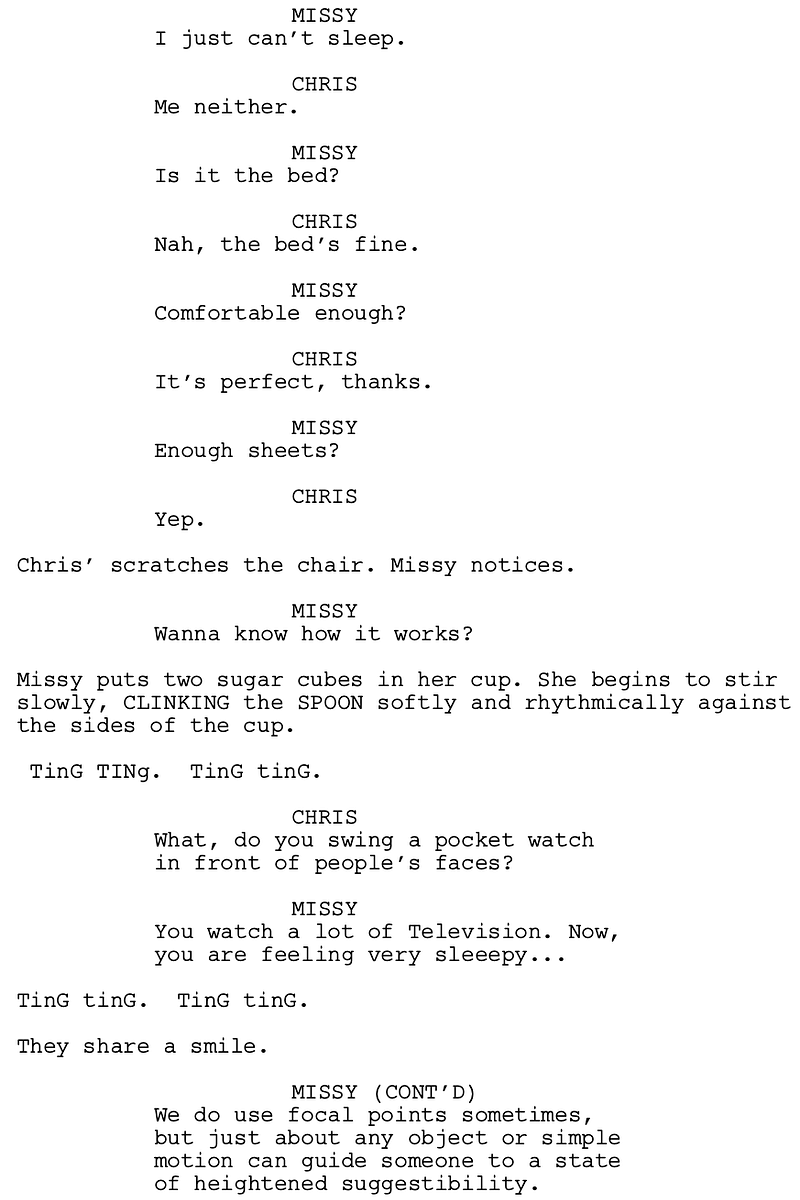
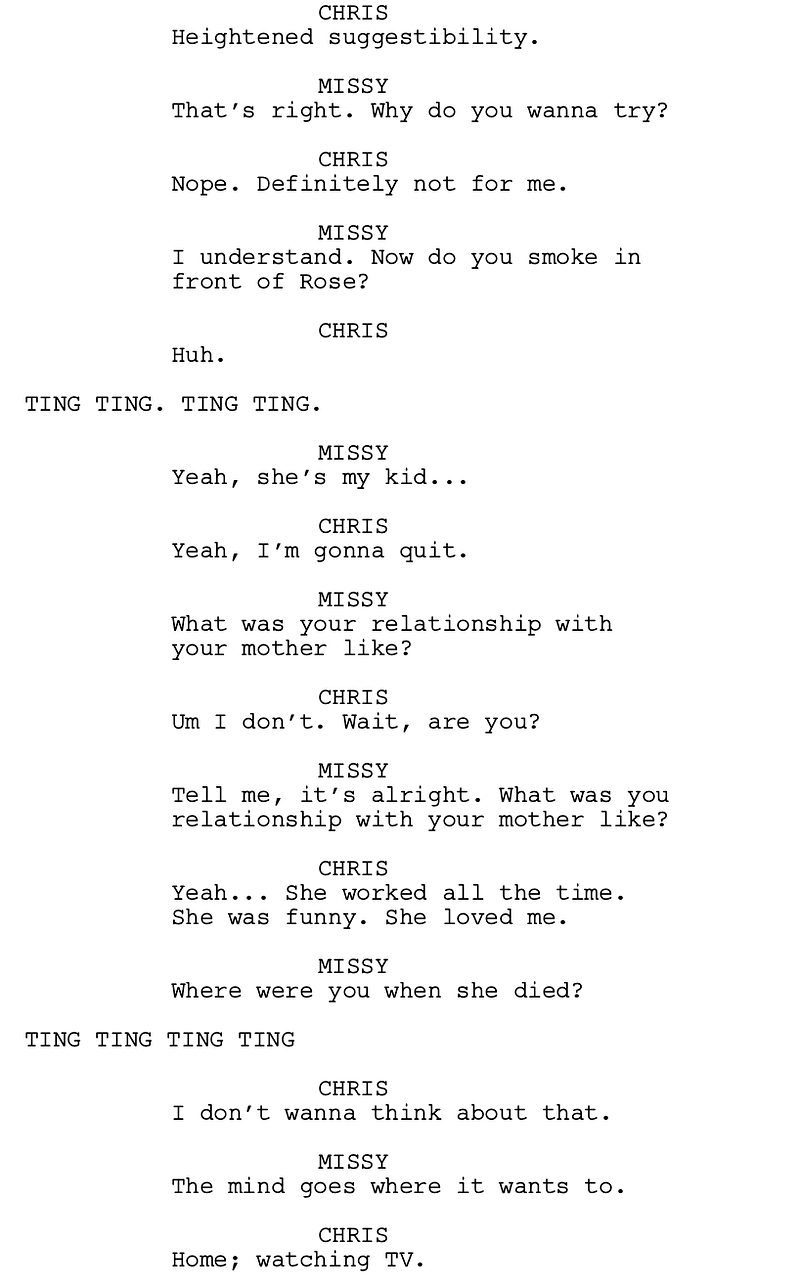

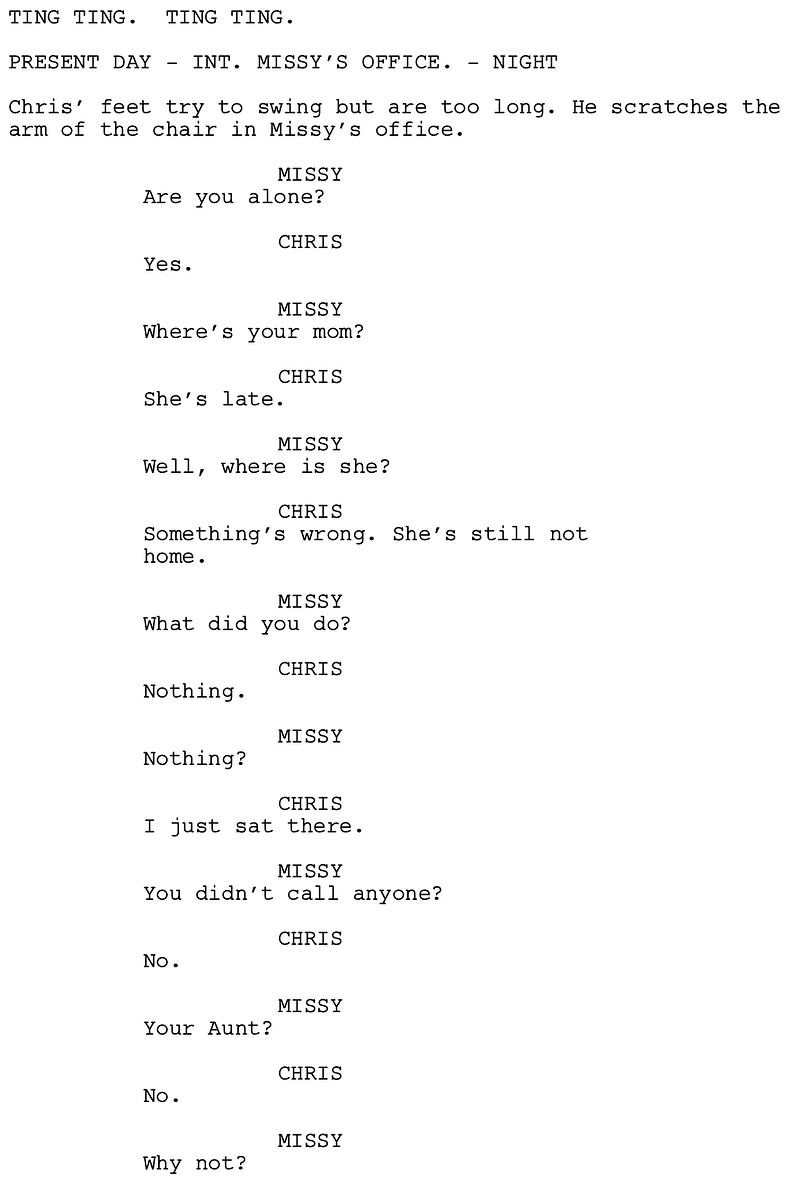
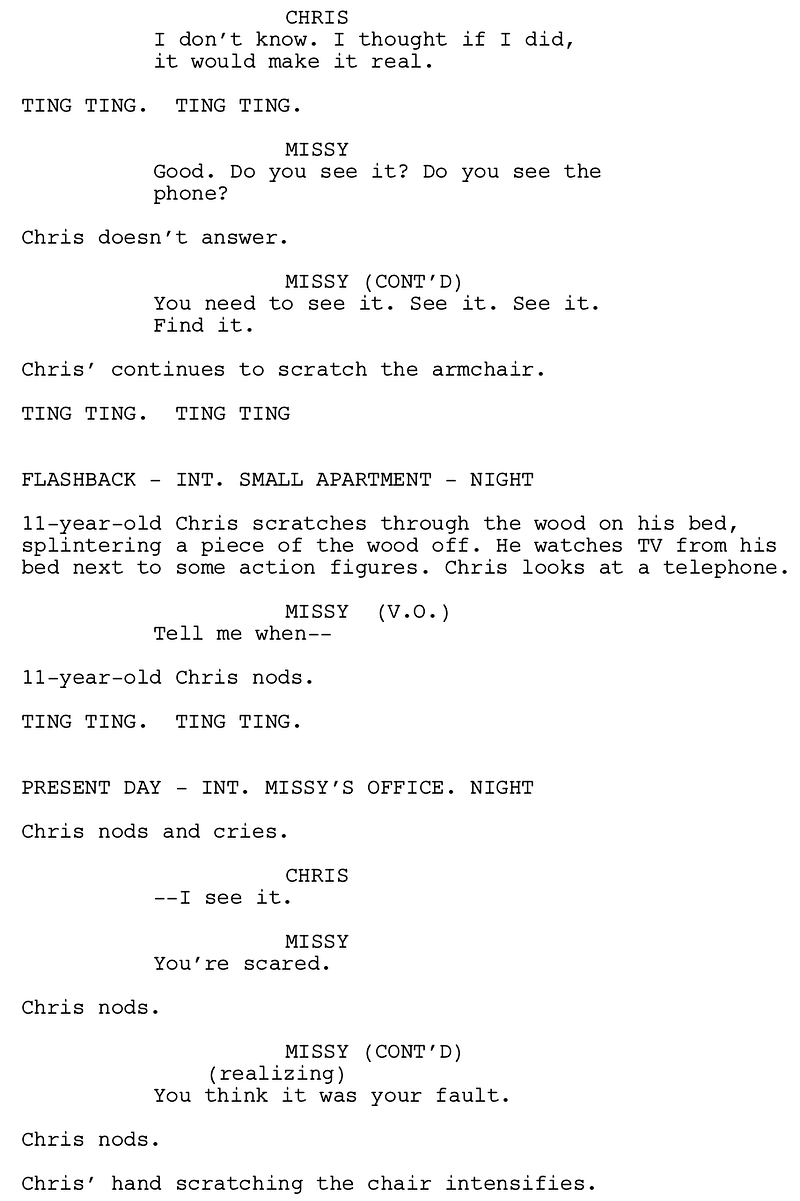
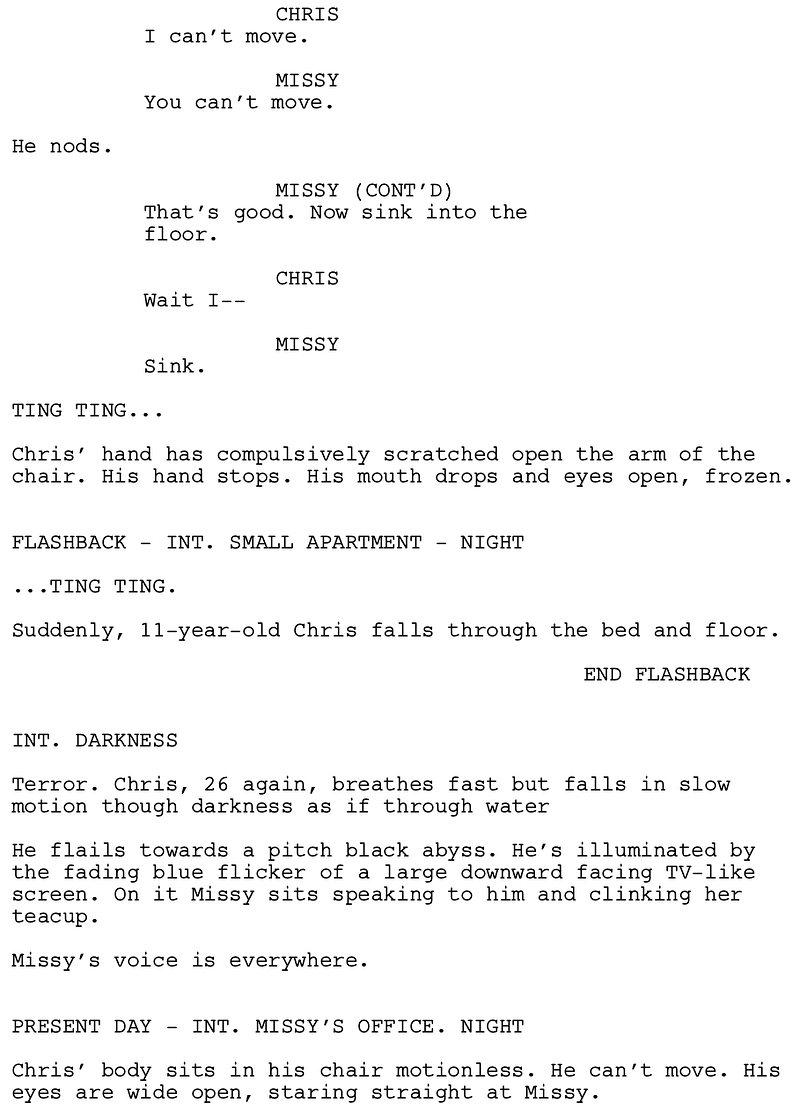
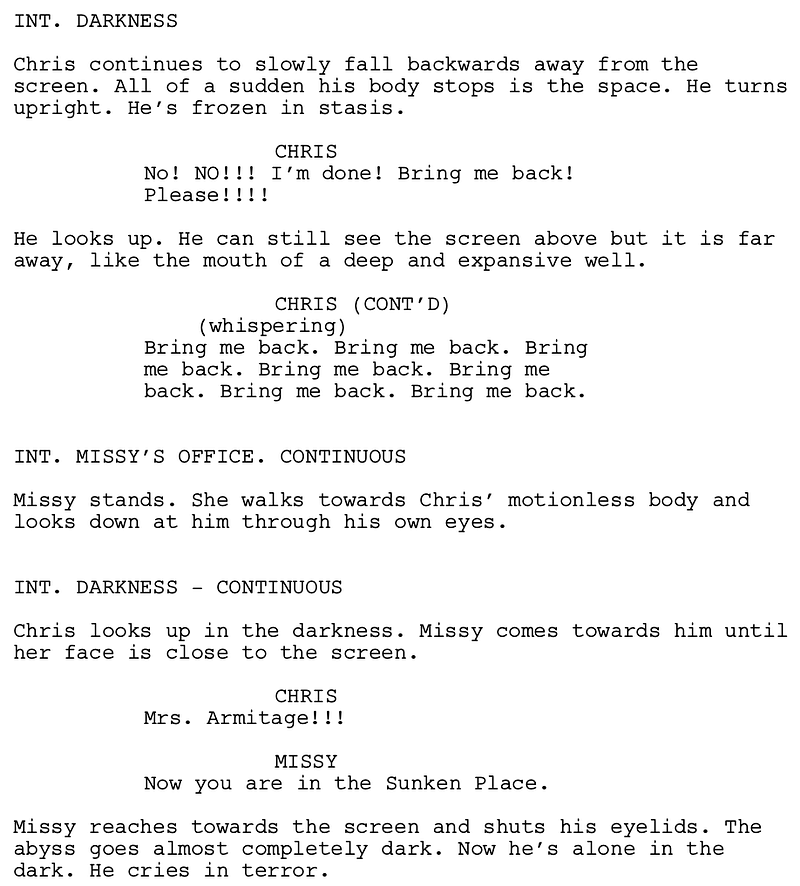
Here is the movie version of the scene:
It is interesting to note how much dialogue has been cut by the time the story reached the film stage. The one side I wish could have made the final cut is this one from Missy: “Wounds get locked in your heart and they fester and grow into ugly little things like depression and addiction. But, they are all in there somewhere. All we need to do is find the key.”
Very Jungian!
No matter. Missy comes off as a compelling Nemesis figure in (A) hypnotizing Chris without his consent, (B) forcing him to relive the night of his mother’s death, (C) cementing his feelings of guilt (“You did NOTHING”), and (D) sent Chris to the Sunken Place.
What does the Sunken Place mean? From a Jungian standpoint, we can look at it as the residence of Chris’s shadow, the seat of his guilt and shame over not having done something to save his mother’s life. It is completely irrational, but feelings aren’t rational and this way, Chris can hold some control over the fickle nature of fate which claimed his mother’s life in a car crash.
But the Sunken Place has other layers of meaning. Here is what Peele had to say in an Indiewire interview:
You know when you’re going to sleep and it feels like you’re about to fall, so you wake up? What if you never woke up? Where would you fall? And that was kind of the most harrowing idea to me. And as I’m writing it becomes clear that the sunken place is this metaphor for the system that is suppressing the freedom of black people, of many outsiders, many minorities. There’s lots of different sunken places. But this one specifically became a metaphor for the prison-industrial complex, the lack of representation of black people in film, in genre. The reason Chris in the film is falling into this place, being forced to watch this screen, that no matter how hard he screams at the screen he can’t get agency across. He’s not represented. And that, to me, was this metaphor for the black horror audience, a very loyal fan base who comes to these movies, and we’re the ones that are going to die first. So the movie for me became almost about representation within the genre, within itself, in a weird way.
The Sunken Place represents the way people of color are marginalized by white Americans. This fits with the movie’s take on white-black relations and the specter of slavery alive and well.
It also represents how in order to move forward psychologically, we must confront that which we fear the most, we must dive into our own Sunken Place.
For more articles in the Great Scene series, go here.