Great Scene: “Dr. Strangelove: Or How I Learned to Stop Worrying and Love the Bomb”
It’s one of my five favorite movies: Dr. Strangelove or: How I Learned to Stop Worrying and Love the Bomb (1964). Directed by Stanley…
It’s one of my five favorite movies: Dr. Strangelove or: How I Learned to Stop Worrying and Love the Bomb (1964). Directed by Stanley Kubrick, co-written by Stanley Kubrick & Terry Southern & Peter George, based on the book “Red Alert” by Peter George, and featuring terrific performances by George C. Scott as General ‘Buck’ Turgidson, and Peter Sellers in three roles — Group Captain Lionel Mandrake, President Merkin Muffley and Dr. Strangelove — it is arguably the best political satire ever filmed.
There are any number of memorable scenes in the movie, but I picked the one sometimes called “Nuclear Rodeo.” Here is an IMDb plot summary:
U.S. President Merkin Muffley is on the hot line to Moscow with some rather embarrassing news for the Soviet premier: “Hello, Dimitri….I’m fine….Now then, you know how we’ve always talked about the possibility of something going wrong with the bomb….The bomb, Dimitri. The hydrogen bomb….Well, now, what happened is that, uh, one of our base commanders…he went a little funny in the head….and he went and did a silly thing….He ordered his planes to attack your country.” A comedy about an accidental nuclear attack? One that ends with total annihilation, thermonuclear apocalypse? Preposterous! Stanley Kubrick thought otherwise. In the end his thinking prevailed. The mad saga revolves around a psychotic Strategic Air Command officer, Gen. Jack D. Ripper, who lets loose his B-52 bomber squadron on the Soviet Union. Ripper takes this unilateral action because of his paranoid belief that Communists are sapping and contaminating “all our precious bodily fluids” as part of their plan to take over the world.” Unbeknownst to Ripper, his attack will trigger the Russian’s ultimate weapon, the Doomsday Machine, a diabolical retaliatory device set to blow up the planet.
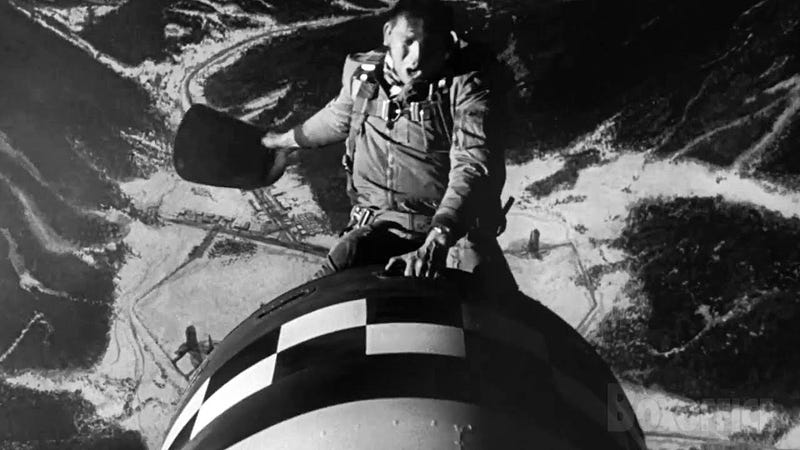
One B-52 bomber has managed to make it past Soviet defenses. Despite some technical problems with the aircraft, its pilot Major ‘King’ Kong, played wonderfully by Slim Pickens, is determined to drop his nuclear payload. Here is the scene from the movie:
Here is the scripted version of the scene:
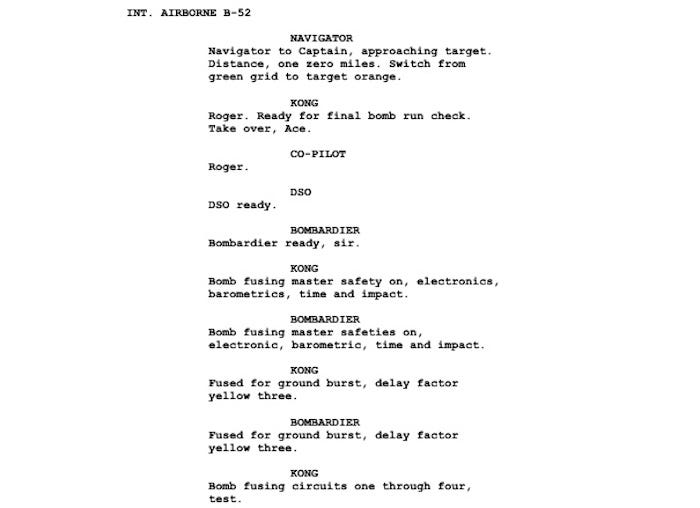
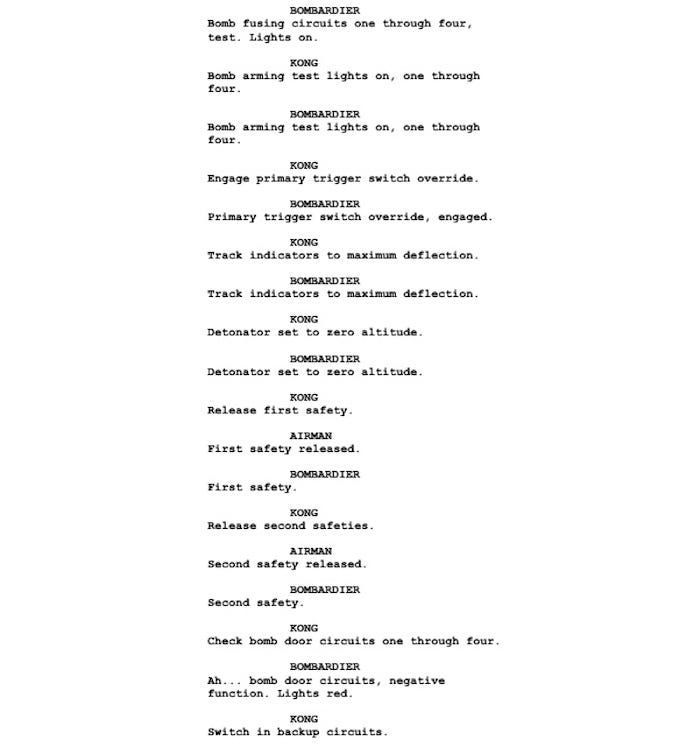
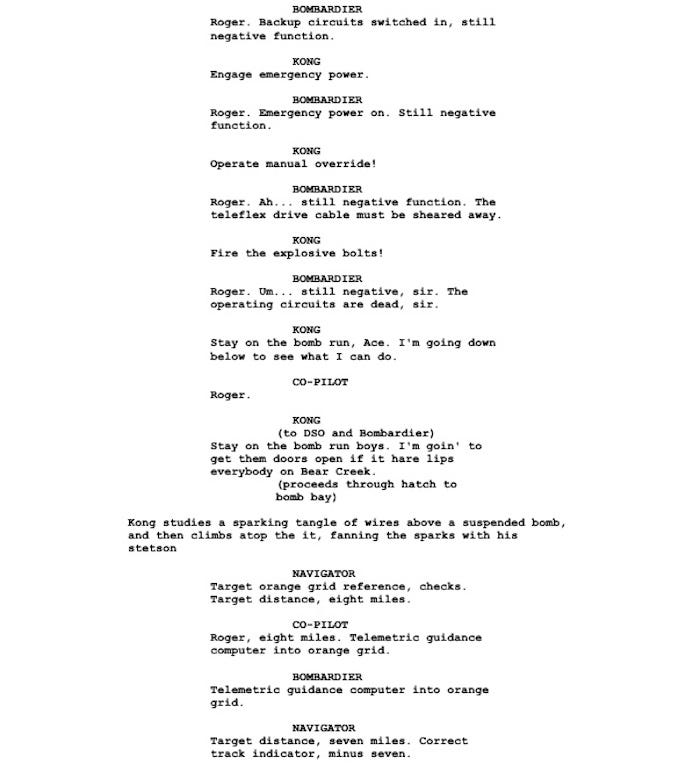
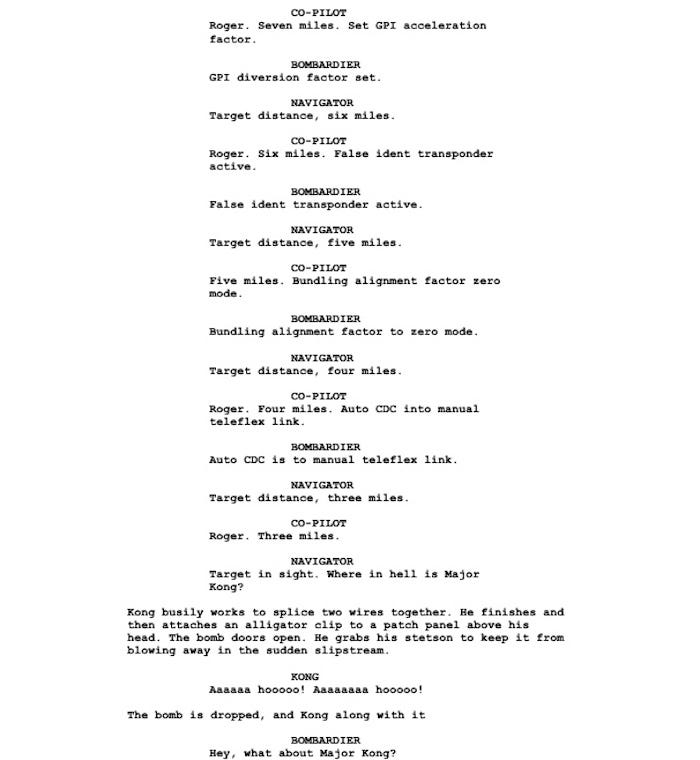

From the movie’s Wikipedia entry, check this out:
Kubrick started with nothing but a vague idea to make a thriller about a nuclear accident, building on the widespread Cold War fear for survival.[21] While doing research, Kubrick gradually became aware of the subtle and unstable “balance of terror” between nuclear powers. At Kubrick’s request, Alistair Buchan (the head of the Institute for Strategic Studies), recommended the thriller novel Red Alert by Peter George.[22] Kubrick was impressed with the book, which had also been praised by game theorist and future Nobel Prize in Economics winner Thomas Schelling in an article written for the Bulletin of the Atomic Scientists and reprinted in The Observer,[23] and immediately bought the film rights.[24]
In collaboration with George, Kubrick started writing a screenplay based on the book. While writing the screenplay, they benefited from some brief consultations with Schelling and, later, Herman Kahn.[25] In following the tone of the book, Stanley Kubrick originally intended to film the story as a serious drama. But, as he later explained during interviews, he began to see comedy inherent in the idea of mutual assured destruction as he wrote the first draft. Kubrick said:
My idea of doing it as a nightmare comedy came in the early weeks of working on the screenplay. I found that in trying to put meat on the bones and to imagine the scenes fully, one had to keep leaving out of it things which were either absurd or paradoxical, in order to keep it from being funny; and these things seemed to be close to the heart of the scenes in question.[26]
After deciding to make the film a black comedy, Kubrick brought in Terry Southern as a co-writer. The choice was influenced by reading Southern’s comic novel The Magic Christian, which Kubrick had received as a gift from Peter Sellers[6] (which, coincidentally, became a Sellers film in 1969). Sellers is also sometimes considered an uncredited co-writer, as he improvised many lines later added to the script.
The movie was originally supposed to be a “thriller,” but the very idea of “mutual assured destruction” seemed so absurd to Kubrick, the story naturally veered toward the satire it became.
In any event, the image of Maj. Kong, riding the H-bomb like a bucking bronco, down toward its eventual explosion is one of the most indelible images in cinematic history — so whatever possessed Kubrick to make the change from the script was inspired.
If you visit the Wikipedia entry, take the time to read about the original pie fight ending, but cut from the film:
What a brilliant movie!
For more articles in the Great Scene series, go here.