Great Scene: “Cast Away”
In a fundamental way, screenwriting is scene-writing, so the more we learn about this aspect of the craft, the better. One way to do that…
In a fundamental way, screenwriting is scene-writing, so the more we learn about this aspect of the craft, the better. One way to do that: Study great movie scenes.
Today’s movie: Cast Away (2000), written by William Broyles Jr.
IMDb plot summary:
A FedEx executive must transform himself physically and emotionally to survive a crash landing on a deserted island.
Chuck (Tom Hanks) has just gotten done seeing Kelly (Helen Hunt) for the first time since his return to civilization. She gives him the keys to his car. They head outside into the rain.
“You have to go home.” That’s what Chuck tells Kelly after she confesses, “You are the love of my life.” This is followed by a scene in which Chuck shares his thoughts about the couple’s fate.
Here is that monologue:
We both had done the math. Kelly added it all up and… knew she had to let me go. I added it up, and knew that I had… lost her. ‘cos I was never gonna get off that island. I was gonna die there, totally alone. I was gonna get sick, or get injured or something. The only choice I had, the only thing I could control was when, and how, and where it was going to happen. So… I made a rope and I went up to the summit, to hang myself. I had to test it, you know? Of course. You know me. And the weight of the log, snapped the limb of the tree, so I-I — , I couldn’t even kill myself the way I wanted to. I had power over nothing. And that’s when this feeling came over me like a warm blanket. I knew, somehow, that I had to stay alive. Somehow. I had to keep breathing. Even though there was no reason to hope. And all my logic said that I would never see this place again. So that’s what I did. I stayed alive. I kept breathing. And one day my logic was proven all wrong because the tide came in, and gave me a sail. And now, here I am. I’m back. In Memphis, talking to you. I have ice in my glass… And I’ve lost her all over again. I’m so sad that I don’t have Kelly. But I’m so grateful that she was with me on that island. And I know what I have to do now. I gotta keep breathing. Because tomorrow the sun will rise. Who knows what the tide could bring?
Hollywood has had a long tradition of a type of ending: Give ’em what they expect… then give ’em what they want. The ending of Cast Away provides a double twist. The first scene above — between Chuck and Kelly — plays out, in the traditional manner. Give ’em what they expect. Chuck will drive away and leave Kelly behind. In other words, Boy doesn’t get Girl.
Then give ’em what they want. Kelly races out in the rain to tell Chuck she loves him. Ah, so Boy does get Girl. They even sell this to the point of having her get into his car. She smiles. He smiles. This is going to be a Happy Ending. This is what the audience wants!
But then… no. She has to go home. As Chuck drives Kelly back up the driveway toward her house, we’re back to Boy doesn’t get Girl. The first twist on the give ’em what they expect, then give ’em what they want pattern.
Then the second scene where Chuck delivers the monologue cited above, basically explaining how he processed finding then losing Kelly. That last line — “Because tomorrow the sun will rise. Who knows what the tide could bring?” — is not only an acknowledgement of the wisdom he learned from his time on the island, it also sets the stage for the second twist.
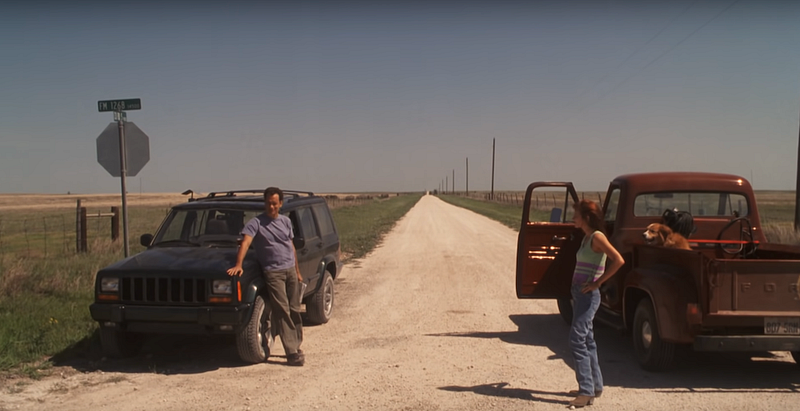
Look what the tide brings in: A pretty woman in an old pick-up truck who may be what Destiny has in store for Chuck… especially since she appears to be the intended recipient of the FedEx package which “saved” Chuck’s life.
So maybe good ol’ Chuck is going to get the Girl after all… and the audience can at least imagine a Happy Ending, giving us what we want.
Takeaway: We can play around with conventions. Explore twists that provide a fresh take on what audiences expect. Better to have an emotionally resonant ending rather than something that comes off as too pat.
Interesting to note that this ending set of scenes is way different than the draft of the script which you can find online (Third Draft, March 13, 1998).
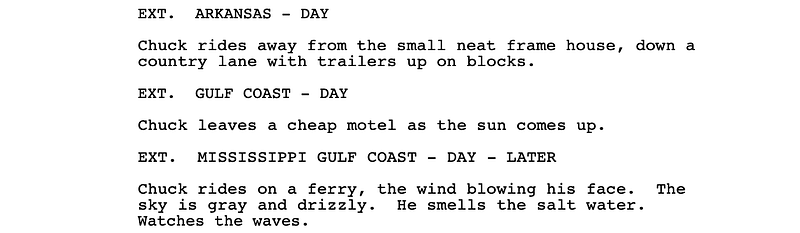
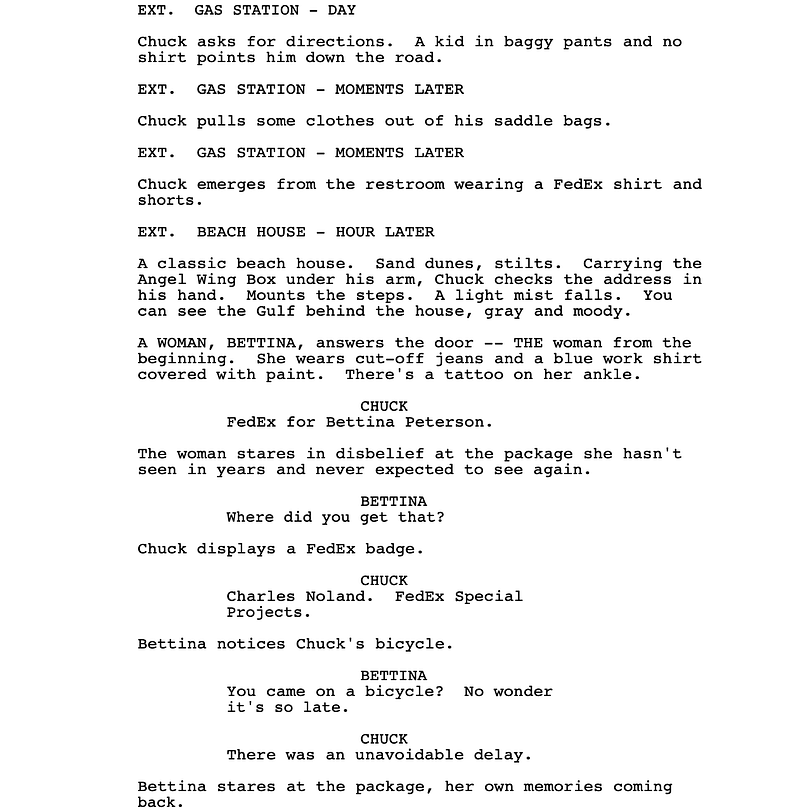
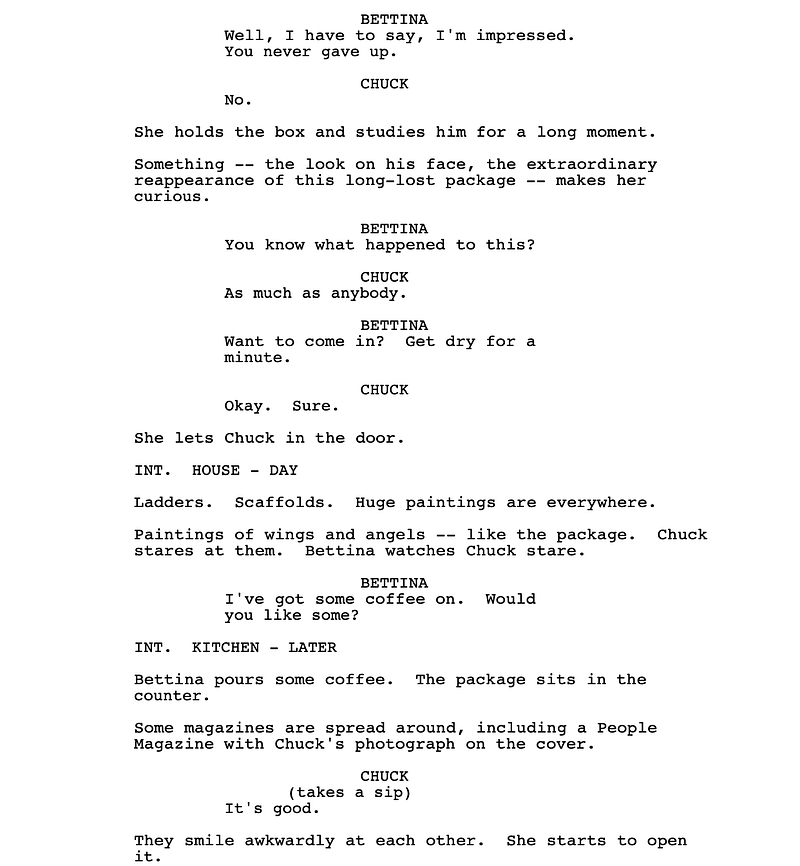
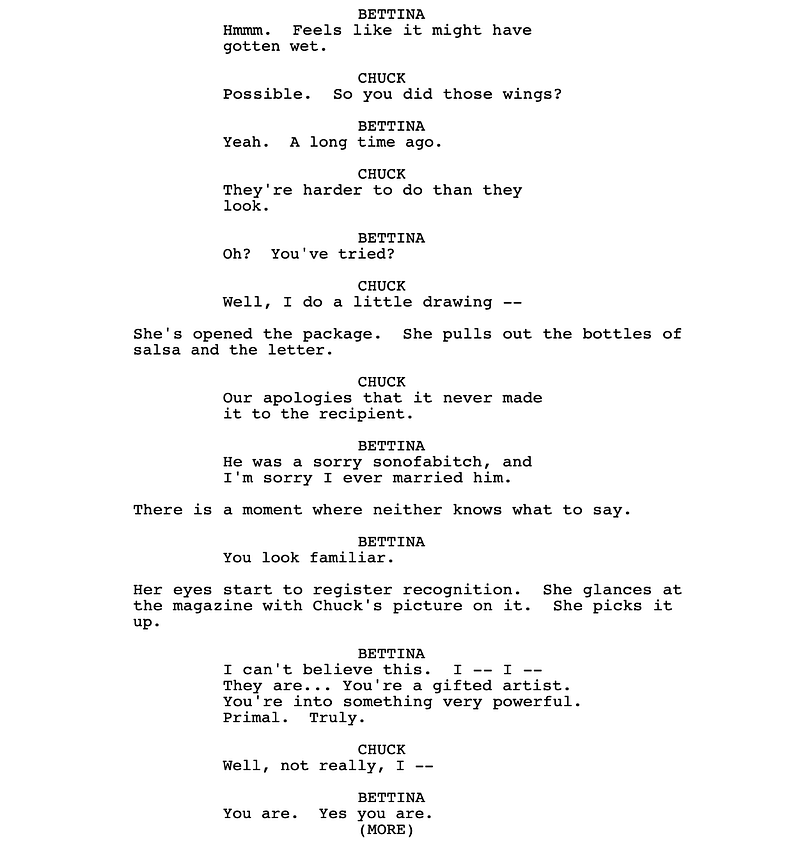
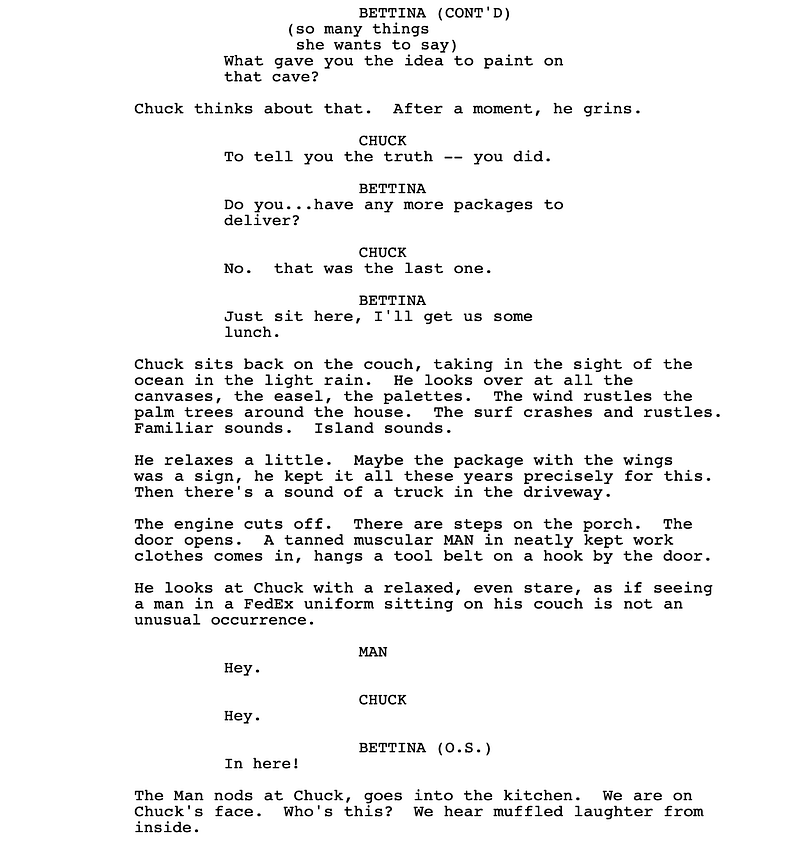
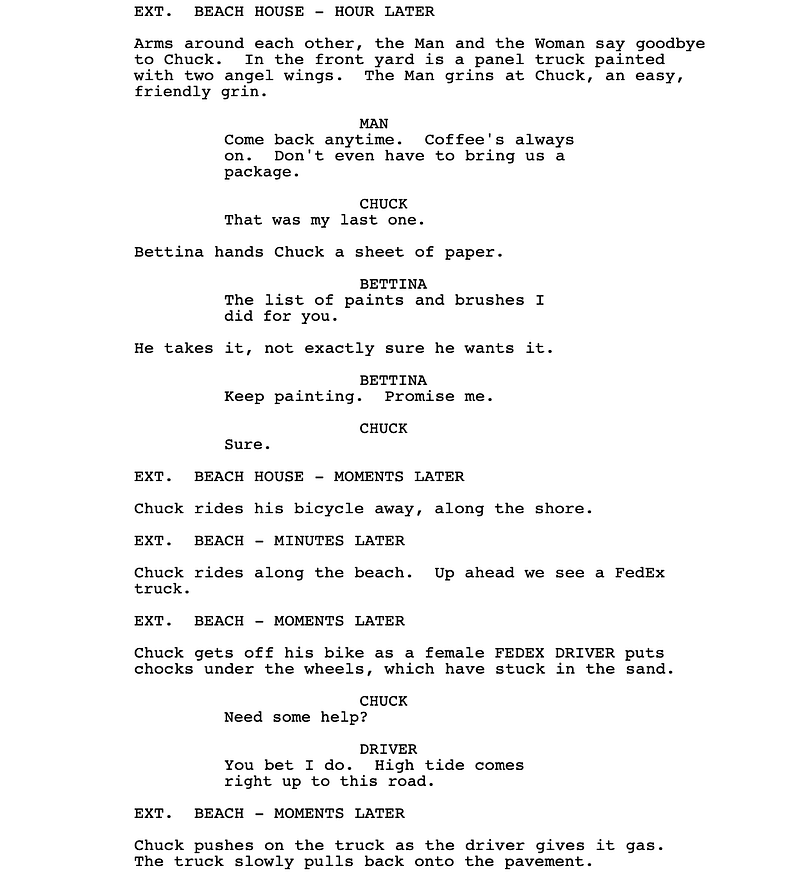
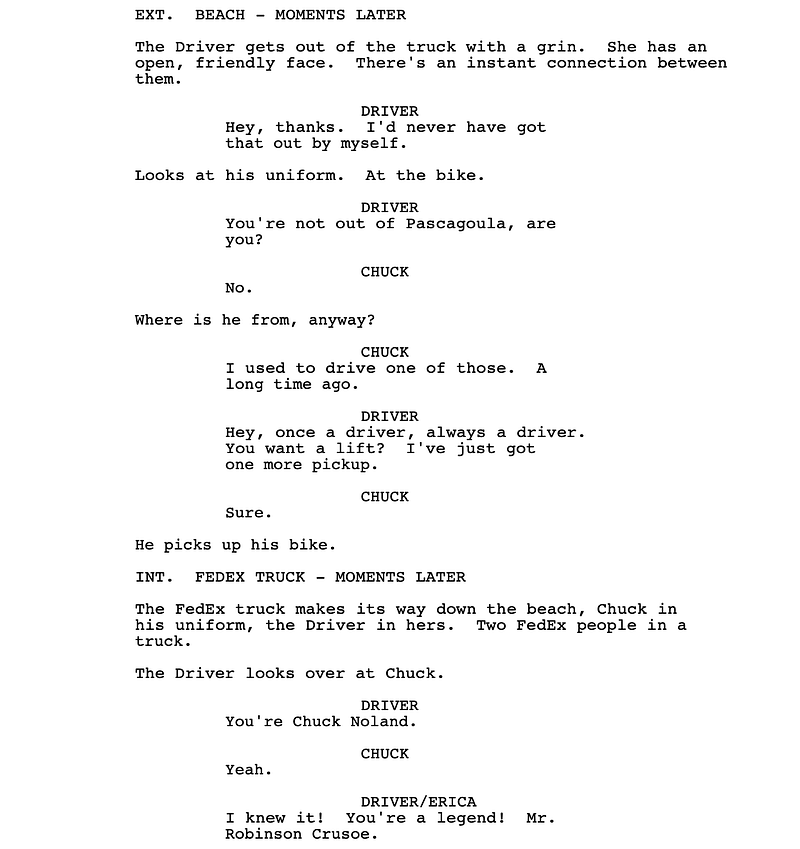
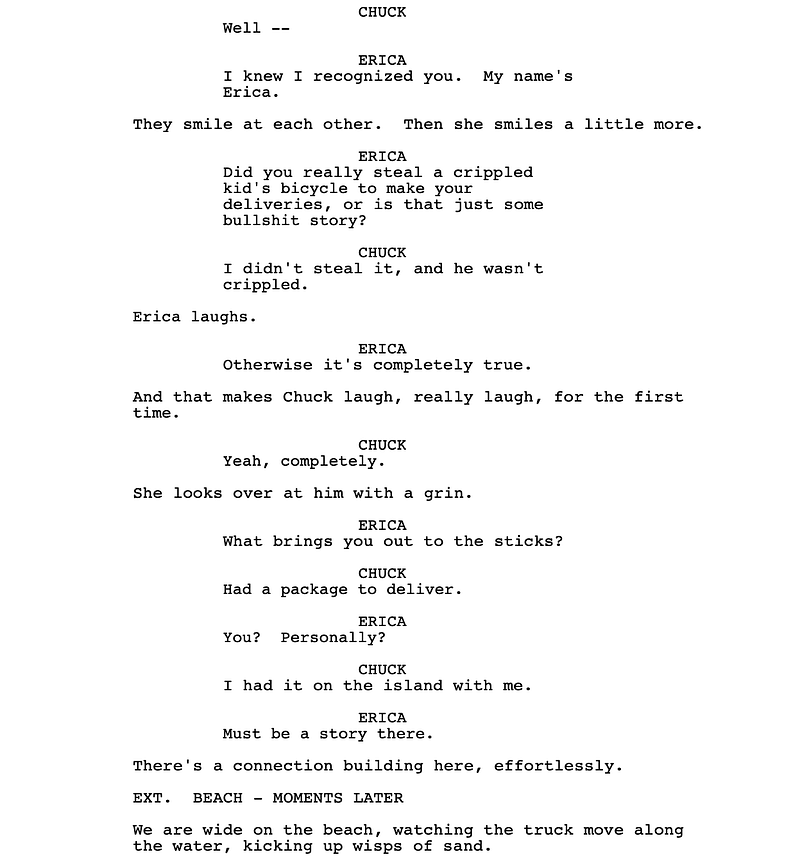

Almost every story element is different — from script to screen. Yet, you can see in this draft of the script the emotion they were trying to achieve.
It’s one of those projects you wish you could interview the participants — screenwriter William Broyles Jr., director Robert Zemeckis, actor Tom Hanks — and learn how they went from the ending in the third draft to the one in the movie.
Because the movie nails the emotional landing.
To read all of the entries in the Great Scene archive, go here.