“Go Into Yourself”
Words of wisdom from Rainer Maria Rilke in his Letters to a Young Poet.

Words of wisdom from Rainer Maria Rilke in his Letters to a Young Poet.
As we approach the end of the year, I would like to recommend something to you: Every day, read a passage in the book A Year With Rilke: Daily Readings from the Best of Rainer Maria Rilke.
Who is Rilke? Here is a brief biography via Poets.org:
On December 4, 1875, Rainer Maria Rilke was born in Prague, the only child of an unhappy marriage. Rilke’s childhood was also unhappy; his parents placed him in military school with the desire that he become an officer — a position Rilke was not inclined to hold. With the help of his uncle, who realized that Rilke was a highly gifted child, Rilke left the military academy and entered a German preparatory school. By the time he enrolled in Charles University in Prague in 1895, he knew that he would pursue a literary career: he had already published his first volume of poetry, Leben und Lieder, the previous year. At the turn of 1895–1896, Rilke published his second collection, Larenopfer (Sacrifice to the Lares). A third collection, Traumgekrönt (Dream-Crowned) followed in 1896. That same year, Rilke decided to leave the university for Munich, Germany, and later made his first trip to Italy.
In 1897, Rilke went to Russia, a trip that would prove to be a milestone in Rilke’s life, and which marked the true beginning of his early serious works. While there the young poet met Tolstoy, whose influence is seen in Das Buch vom lieben Gott und anderes (Stories of God), and Leonid Pasternak, the nine-year-old Boris’s father. At Worpswede, where Rilke lived for a time, he met and married Clara Westhoff, who had been a pupil of Rodin. In 1902 he became the friend, and for a time the secretary, of Rodin, and it was during his twelve-year Paris residence that Rilke enjoyed his greatest poetic activity. His first great work, Das Stunden Buch (The Book of Hours), appeared in 1905, followed in 1907 by Neue Gedichte (New Poems) and Die Aufzeichnungen des Malte Laurids Brigge (The Notebooks of Malte Laurids Brigge). Rilke would continue to travel throughout his lifetime; to Italy, Spain and Egypt among many other places, but Paris would serve as the geographic center of his life, where he first began to develop a new style of lyrical poetry, influenced by the visual arts.
When World War I broke out, Rilke was obliged to leave France and during the war he lived in Munich. In 1919, he went to Switzerland where he spent the last years of his life. It was here that he wrote his last two works, the Duino Elegies (1923) and the Sonnets to Orpheus (1923). He died of leukemia on December 29, 1926. At the time of his death his work was intensely admired by many leading European artists, but was almost unknown to the general reading public. His reputation has grown steadily since his death, and he has come to be universally regarded as a master of verse.
A few years back, I started each day with a reading from A Year With Rilke and I found it both thought-provoking and inspirational. Here is one example of his wisdom taken from Letters to a Young Poet, dated February 17, 1903:
There is only one thing to do. Go into yourself. Examine your reason for writing. Discover whether it is rooted in the depths of your heart, and find out whether you would rather die than be forbidden to write. Above all, ask yourself in the stillest hour of the night, have I no choice but to write? Dig deep within for the truest answer, and if this answer is a strong and simple yes, then build your life upon this necessity. Your life henceforth, down to its most ordinary and insignificant moment, must prove and reveal this truth.
I am sometimes asked by my students this question: Am I good enough to be a writer? Do I have the talent to pursue being a writer?
My response: You are asking the wrong question.
A more pertinent question to ask is what Rilke poses: Have I no choice but to write?
If the act of writing… creating a story… brings you joy, that is one thing. But equally, if not more important is if you have a compulsion to write. If a need to create lies at the core of your being. If your life would be unfulfilled if you were “forbidden to write.”
Being “good enough” or having the requisite “talent” to be a writer are important considerations, particularly if your goal is to make a living as a writer. But the odds against financial success as a writer are so enormously long, that cannot be the basis upon which you assess your potential as a writer. You must write because you love it. You must write because… well… you must.
By writing, you discover your voice. You learn the craft. You discover a process of breaking story, pounding out a first draft, then rewriting, polishing, and editing, so that you end up with something someone will enjoy reading.
How to discover if you have that need, that compulsion, that obsession to write? As Rilke suggests: Go into yourself. Reflect on why you write. What is your motivation to pick up a pen or put fingers on a keyboard and type Fade In or Once upon a time.
Here is one way to approach your self-reflection: Imagine you are very near the end of your life. Push the visualization to the extreme: You are on your death bed. Among the many feelings you have as you approach your final days, is one of them this: I regret not pursuing my interest in writing.
Lean into that moment. How deep is the pain you feel when considering the choices you will have made which led you away from writing?
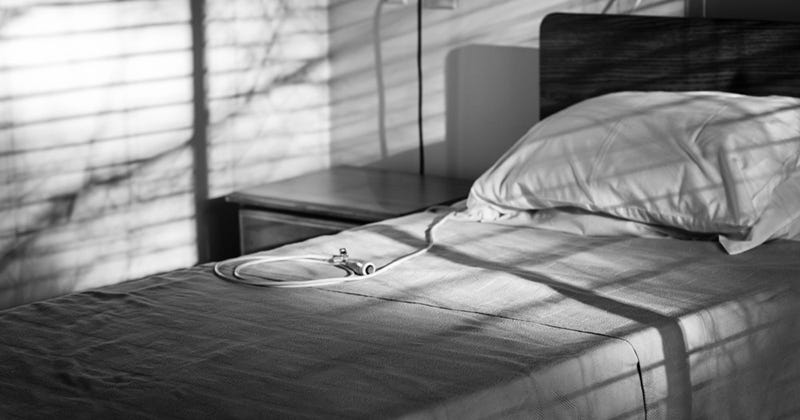
If that exercise proves too challenging psychologically, try reflecting about yourself in the opposite extreme.
Imagine you are seated at your writing station. A desk in your home office. The coffee shop down the street. The public library across town. You are typing… or writing by hand… it is a story of your own creation. And you are lost in that universe.

How does that make you feel?
If it is a kind of rapture you do not feel in any other context, that should tell you something about who you are and your relationship to writing.
Want to be a writer? How much talent you have is important. But the first question you need to consider is do you have a passion to write.
The best way to answer that question is to go into yourself.