Go Into The Story Interview: Wenonah Wilms
Wenonah Wilms wrote the original screenplay “Horsehead Girls” which won a 2018 Nicholl Fellowship in Screenwriting. I had the opportunity…
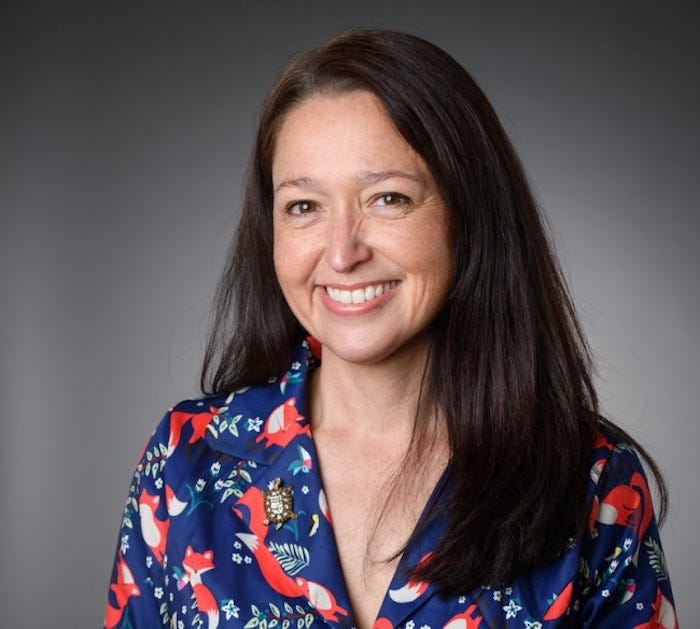
Wenonah Wilms wrote the original screenplay “Horsehead Girls” which won a 2018 Nicholl Fellowship in Screenwriting. I had the opportunity to chat with Wenonah about her background, her award-winning script, the craft of screenwriting, and what winning the Nicholl has meant to her.
Scott Myers: Wenonah, you grew up in Minnesota. You still live there, right?
Wenonah Wilms: Yup, I do. I live in Minneapolis.
Scott: I think it’s fair to say, you took a rather circuitous route into screenwriting. Could you maybe talk about your background and how it was…I think it was one day, you were in your 30s. You picked up a book on screenwriting and began your writer’s journey.
Wenonah: I didn’t set out for it to be a crazy life-changing adventure. I was a stay-at-home mom, just turned 30, with three little boys under the age of five at the time, and looking for a hobby, which I think a lot of stay at home moms do. I needed something to feel more independent — something for me.
It’s a really silly story. I feel weird that I have to keep telling it, but it’s all I have. [laughs] Do you know “Project Greenlight”? That was the reality screenwriting show on HBO that starred Matt Damon and Ben Affleck.
Scott: Yes.
Wenonah: The first season had just come out and I was like, “Wow, Ben and Matt are pretty cool and cute. They seemed accessible and wanting to launch careers. What do I have to get on the show and hang out with them?”
Write a script? That sounded interesting. I wasn’t a writer. I liked movies, but I didn’t really love movies. I wasn’t into film as an art or anything like that, but this looked like something that I could do in my spare time. It’s really naive thinking back on it. I always get an inner cringe.
I looked up screenwriting and, for the first time, looked at a script, and thought, “I can do this.” I picked up a couple of books and just started reading and then I knew right away that what I had to do was start writing. I had my first feature written within a couple months. It sucked.
I kept rewriting that first script over the course of several years. I love that story so much and I won my first fellowship with that script. The story is very special to me.
I never did turn it into Project Greenlight. It wasn’t quite the genre they were looking for. That was the strange motivation to start this weird career. [laughs]
Scott: Ben Affleck and Matt Damon.
Wenonah: I know. I wish I had a better story. It’s embarrassing. No offense to them, it’s just not where most people’s passions start.
Scott: No. It’s a great story and I can just see where this is going to go. At some point, Affleck and Damon will end up producing something of yours and they’ll love that story.
Wenonah: Finally, everything in my life will be wrapped up in a bow and I’ll be happy.
Scott: Jumping back a bit, I think you said that you’d grown up loving movies. How and when did they become such an important part of your life?
Wenonah: It’s funny, because I like movies like everybody else, but I never really wanted to make movies or be involved in the industry in that way. I feel I like movies as much as anybody else does.
I grew up in the ’80s, so John Hughes and his films were really cool. I don’t know, everyone in every generation could probably say that, but I feel like everybody misses movies of the ‘80s.
I used to go to the video store and rent a VCR, have the three day rental and haul that thing back, try to hook it up to the TV. I don’t feel like I have an enormous or more than the average love of movies, but I do love screenwriting.
I love the format of the script. I love the rules and the language, and all that really clicked with me. It was years before I had a short film made. I think my first film I had made was in 2006, so it was about five or six years before I even had even seen what it was like to have something I wrote be on the screen.
Scott: That first script you wrote, I believe that’s the one that was inspired by your grandmother. Is that right?
Wenonah: Yes, correct.
Scott: That was in 2000, 2001?
Wenonah: About 2001.
Scott: I believe, if I’m not mistaken, in watching the video of Robin Swicord when she introduced you at the Nicholl ceremony, she said you’d 22 screenplays or something like that?
Wenonah: Yeah. I’ve written 22 features at this point.
Scott: That’s a little over one per year, which is a pretty good average. She said, Robin, in her comments that “Writers are in a way, all of us, autodidacts, and we teach ourselves how to write.” How did you teach yourself to write? You watched movies, you bought a few books. What else did you do?
Wenonah: I read a lot of scripts, as many as I could find at the time. 20 years ago the Internet was less generous with screenplays. I bought screenplays online. I bought screenplays on eBay. Just reading scripts and learning the language of screenwriting was the biggest teacher for me. Rereading my own things, going back and rewriting.
When you have 20 years to practice hopefully it all becomes second nature at some point. I do feel like I’m still learning. Every once in a while I’ll still pull out an old screenwriting book when I’m getting ready to write something new. It gets me motivated and ready to start staring at the blank page again.
Scott: Reading scripts, I couldn’t agree more. That’s one area that watching movies or TV, writing pages, those, seem maybe more natural. Reading scripts is like, “I got to sit down for two hours and all this.” There’s just some things you cannot learn I think or let me say it the other way. There are things you can learn best by reading scripts.
Wenonah: Yes, absolutely. I can’t remember which script it was, but just I sat down and copied it just to feel what that was like to hit the return and tab to dialog on a page; what it looked like and what it felt like. I don’t remember which exactly script that was. I did that early on, just copied another script onto my screen.
Scott: I believe that F. Scott Fitzgerald did that with a Charles Dickens novel like literally. I even think that Felix Mendelssohn the composer did that with a Bach thing. I’ve read something where they just wanted to get into the rhythm and flow of the source material.
Wenonah: Just to feel what it was like to write one without having to come up with the stops and the starts of creating it, which is what I do on the spot anyway. It was interesting.
Scott: You’re part of the Red Cliff Band of the Lake Superior Chippewa?
Wenonah: Correct.
Scott: You told the story. It was very moving when you said I want to thank the academy speech, which you got to say about your grandmother and her being pulled out of her home, kidnapped essentially as a five year-old.
People say it’s a great script, but nobody is going to make it. You said in your speech when you’ll spend the next 20 years writing alien and zombie movies or something like that. Is that right?
Wenonah: Yes. The very first screenplay was based on her life. She was a Dakota Indian. When she was young it was very common for the government to take Indian kids away from their families and place them in boarding schools. Basically kidnap them and take them as far away as they could from their home.
Their parents knew where they went, because all the kids were going. But, with very limited resources it was hard to visit their kids. They took them away, and then they wouldn’t see them for years.
I really had no idea of what she went through. When I was 18 or 19, she started handwriting stories of her life for our family. I had no idea that any of this had happened and certainly not to my Grandma. This was my family and I didn’t know.
My father gave me her essays after she had passed away. She was a school teacher, so she was a very good writer. It was very hard to go through them. I was very close to her — and I cried when I read them, thinking about what she must have gone through.
When I was looking for a story to write for my very first screenplay I thought, “Well, I just need something. I need to practice. I need to get going on some story. What I’m I going to do?” I thought about her stories and I thought this would be a really great way for me to honor her.
I didn’t want to rip off her stories, so I contemporized it. I changed it and made it my own. It was based around boarding school experiences. Now, I forgot like the second half of your question. [laughs]
Scott: Well, just that led you into…Because people said, “Oh, this is a good script.” In fact, you said you won a fellowship on it six years later, but they said, “There’s not going to be money to make this. Who’s going to star in it? There is not an audience for this.” That led you, I guess, maybe more would you say chasing the market?
Wenonah: Right, exactly. I did. I made some friends locally that were in the business, and they were like, “This is great. This is really cool. Nobody’s ever heard of this before. You have a unique voice.” But because the main actors were Native American women, one was an elder and one was a teenager, and that’s the problem. Who would even star in this?
Everyone in the business knows it’s who you get as an actor first and what attachments you can make. Who would want to direct this? Who was going to give money to this? While it became my greatest writing sample and my favorite script, honestly, it just wasn’t going to be a thing.
That was my big lesson. You need to write things that have a possibility of getting made. I’m not a director, I’m not rich, I can’t just make my own movies, and I knew that I was at the mercy of filmmakers and always will be. If I wanted to have a career, I needed to write something a little more mainstream.
After that, it was 15 or 16 years before I even touched another NativeAmerican themed story because I was trying so hard to not be the “Native American female screenwriter.” I wanted to be known as a good screenwriter first.
I guess I really took that idea and ran with it because coming back to Native themed scripts was hard for me. I wasn’t sure. It kind of bit me in the end last time, and I didn’t know if I should go there or not again, but things have changed thankfully.
Scott: I was going to ask you that because “Horsehead Girls,” the script for which you won the Nicholl Fellowship, is a Native American theme script, and was it you looking at the way that culture had changed, the Me Too Movement and whatnot, that made you think, “You know what? Maybe there is room for this type of material nowadays”?
Wenonah: Definitely yes. I think everything really happened very serendipitously for me with this project. I read an article about a Native American comic book artist several years ago, which led to a Native American short film that I wrote called “Waabooz” which is “rabbit” in Ojibwe. I knew a director who was looking for a short film, and I said, “Well, I have this. You might like this. It’s a Native American short film, but it’s a superhero story.” She loved it.
In order to make this though, I took her to the reservation, introduced her to my reservation, my family, my culture. The reservation can sometimes be closed off to outsiders so we went through the process of pre-production and production together and I ended up spending a lot more time on my reservation than I had for a long time.
I spent my summers there as a kid, but it’s a five hour drive for me and I was raising a family and didn’t get up there as much as I wanted. Doing this short film, I got to know some of the law enforcement officers and people in the community at a better level, and started hearing and seeing the darker side of reservation life. The side you don’t see when you’re a carefree kid. I knew there were stories here and I was a writer and I knew that this could be compelling on a human level.
I also started to become aware of the missing and murdered indigenous women’s movement (MMIWM) Living in Minneapolis with a large Native community, I would hear about these stories quite a bit. I decided to use the sex trafficking problem in a television pilot I was writing but knew it was a bigger story than a subplot in a tv show.
At the at the same time the movie Wind River came out. Great movie, but I made reference to this in my Austin Screenwriting Competition acceptance speech. While it touches on the abuse of Native women, the person that I identify with, the Native Woman was dead in the first 30 seconds. The rest of the film is about white people becoming the heroes of her story.
That’s not the take I would have had. I wanted a Native female protagonist. I want her to be the hero. She’s going to be angry, she’s going to be vengeful, she’s going to take back her life. She’s not going to be a victim. I knew I was the one that had to write her.
I wrote it really fast. It was a first draft that I just banged out, and I got lucky I think. Everything in the universe sort of came together.
Scott: You submitted the first draft to the Nicholl?
Wenonah: I did.
Scott: You had submitted a lot of scripts previously to the Nicholl, I guess?
Wenonah: Yup, I think 12 of them over the course of 16 years.
Scott: Wow. Let’s jump into it. “Horsehead Girls” is a really taut, compelling story. A logline that was provided by the academy people: “A blackjack dealer on a remote reservation recovers from a night of brutality trying to save a girl from a sex trafficking ring. When her teenage daughter is kidnapped by the same organization, she fights to not let her become part of a horrific fate she knows too well.”
Your story’s protagonist is Keya Pathwalker and she works as a blackjack dealer at a casino located in an Indian reservation. It’s like an immediate race. You meet her in the morning after a harrowing set of events. Let’s start off talking about Keya’s background. You sort of indicated the protagonist that you knew you wanted. Not that one of Wind River who is basically 30 seconds in and dead.
Wenonah: [laughs] Right.
Scott: You wanted this one to be alive. Could you maybe unpack her character a little bit more?
Wenonah: My protagonist came into this story deeply flawed and with a tragic background. This is something that I’m actually continuing to explore now and I’m thinking about writing a prequel because I feel like her character has a lot more going on as a younger girl.
She was part of a sex trafficking ring when she was younger. She got pregnant and escaped with the baby. There’s no father of the children in her life, she’s a single mom raising two kids. She’s just trying to get by. She goes to work every day at the casino. She’s involved in some of the opioid problems on the rez. She’s in an abusive relationship. She’s very weary, I think. She’s been a victim her whole life. She’s on the brink at this point of not taking it anymore and fighting back.
Scott: She’s got these two children. One is Brylee. That’s the one who was born from the experiences. She’s got this physical reminder in the form of her daughter of her past in the present. Then she’s got a young boy named Aiden who’s a little pistol. He gets in many things.
How did they come to emerge into your storycrafting process? You have Keya. Did they come pretty early in the process? You knew she’s going to be a single mother? You knew she was going to have these two kids?
Wenonah: Yeah. I’m a mom. That whole concept of a “mama bear” comes out. Even if she wasn’t going to stand up and protect herself all these years, when you have children, that changes everything. A lot of moms would say they would kill someone that would harm their children. At the very least you would do anything in your power to stop it.
Keya couldn’t stand up for herself or save her younger self, but this is her time to save her daughter. She’s not going to let the same thing happen to her daughter that happened to her.
Scott: You mentioned that she’s angry, maybe even vengeful. I have this theory about stories that…When I’m working with my students, I say, “Why does the story have to happen to this character at this time?”
It’s like there’s almost a fate involved. These events that transpire unleash this thing that’s inside her that emerges over the course of the story. Does that feel like an apt description of what happens with her?
Wenonah: Absolutely.
Scott: You do an interesting thing in that you have these dual timelines. Actually, there’s another one, too, where you go back to her past. You’re handling all of these.
The interesting thing in dealing with the events of the night before and the next day, the following days, is you’ve got these dual narrative structures, these dual storylines. How early on did that come into your thinking that you’re going to do it that way?
Wenonah: I don’t generally do flashbacks. I went through my own learning as, “Don’t do flashbacks. They’re misused unless you do it really well.” I was very apprehensive about it, but the opening scene in my head was always what became the first page of the script. Her walking down the road after the “bad night.” The aftermath is our starting point.
I knew the story was going to be about sex trafficking. I have this image of her the day after. I just worked backwards from that. I thought, “What happened the night before, and what’s going to happen going forward?” Everything revolved around this huge event.
To me, that opening image was the jumping off point. It just flowed. I’m not sure if it came out chronologically because I’m so involved and invested in it at this point, but I think that it worked..
Scott: Yeah, although it works very well. That’s my point. I don’t like people who say there are these definitive screenwriting rules because, first, there was no rule book. There’s not like a rule book, are there? When they say, “Don’t use flashbacks,” and then you look at some of the greatest movies of all time.
What you did that was so interesting was you really teased out the events of what happened in the previous evening. You created a mystery there. I’m assuming that was intentional.
Wenonah: Yes. As people have their memories of trauma, It might come in flashes and bits and pieces. You’re trying to piece it all together into this narrative of, “What the hell happened? Did that really happen?”
In my head, it was the trauma of everything that broke it apart. Now, we’re all trying to put it back together into the story. Even though she did some terrible things, she’s still sympathetic because she did take matters into her own hands. She defended and protected someone even weaker than herself. She was a hero.
Now, we’re going further back in time to understand where she came from and why this has happened. Yeah, I played around a lot with time. I’ve gotten the comment that the story is “unrelenting” and that’s what I was going for. A feeling like once this is in motion, there’s no stopping it and shit is going to get crazy. I think it keeps moving the story forward in each timeline.
Scott: Also too, it’s intriguing because I work with university students. There are so many projects after now where there are these multiple historical timelines. Like right now, “True Detective 3” has got three timelines. I don’t know if you saw “Sharp Objects,” the limited series on HBO. That really blurred the line between past and present.
Some of my university students say they prefer stories with that kind of shifting, back and forth, because it’s more interesting than just a straight chronological thing. We may be seeing something where this antipathy toward flashbacks is…
Wenonah: OK, good. I’m never ahead of trends.[laughs]
Scott: You got a little bit more ammo there, Wenonah, on your side.
Wenonah: I’ll take all the luck I can get.
Scott: Yeah, they’re unrelenting. I think that’s actually a strength in the story. You keeping upping the stakes. For example, at the end of Act One, there’s a dramatic discovery. She was traumatized the night before. There was a young woman turns out her name is Sarah that she tries to help escape. We learned that later on.
Her car is missing the next day. They find it at the end of this dirt road. This young woman who is Sarah is in the trunk of her car. By the end of Act One, you’ve got all these mysteries going on.
There are two guys that we met in the flashbacks, Stranger and Tattooed Man. Then you discover the Tattooed Man is dead. Then you discover that she killed Tattooed Man. You’re upping the thing.
It would’ve been one thing just to say she’s completely innocent. She was victimized, but no. She actually kills this guy. You’re making for a much more complex read and a much more complex story to tell about that character, right?
Wenonah: Yes.
Scott: That was intentional?
Wenonah: Yes. She could’ve been killed in this sex trafficking ring years ago but she escaped. Now she is seeing what happens to girls when they don’t escape, what’s their fate — foreshadowing what can happen to her daughter.
Seeing what this young woman, Sarah, is going through makes us understand why she has to go through the extents she does to keep herself safe and eventually save her daughter. Sarah’s character lays out the stakes.
Scott: Yeah, but also that she does have that rage inside. That gives expression to it when she takes out the Tattooed Man who was like…I call him Thesaurus Guy…
[laughter]
Scott: …his little linguistic thing. Let’s talk about this sex trafficking dynamic here. You create a very specific type of environment in South Dakota, the oil wells, the workers there.
There is this RV encampment that basically you say in scene description, they can disperse in 10 minutes. Is that drawn from real life? Is this based on research that you found, or is this something that you just extrapolated from your imagination?
Wenonah: Maybe a little of both. I did have to do research into the sex trafficking rings and why they pop up, and how they get away with it, and why aren’t they being prosecuted.
To me, this is a lot about place and geography. I imagine the old Western circling the wagons except in different context here of the RVs all circled around to protect their ugly trade, protect their secrets and violence and along with the landscape so barren and flat and hopeless. You can see it from a mile away but can never catch up to it; a moving target. It’s all out in the open and yet “untouchable” and now she’s having to go back there to her past to destroy it.
I created a lot of the world, but it’s based on the fracking and mining towns that pop up. There’s even sex trafficking on boats on the Great Lakes. I made up the skin branding in the shape of the horse head from the oil rig, but this is something that can happens to young women in real life in big and small cities to the runaways and the stolen — and it’s horrific. I hate that there’s so many stories to draw from. The research is heartbreaking.
Scott: There are two sets of law enforcement entities involved here. There are these two Indian police officers, Lonnie and Ben, who are part of the community that Keya is part of.
Then there are these two FBI agents who come in because they’re investigating these double homicide. Could you talk about the emergence of that and what you were going for with those parallel law enforcement entities?
Wenonah: I did think early on that it was too many people, too many cooks in the kitchen. In reality, that’s how it is. Reservations are sovereign entities. They do have their own police departments and their own laws, but when it comes to murder, then you do have to call in the FBI. That’s who everything is handed over to.
It was necessary for me to make that reality in the scripts. I’m friends with law enforcement officers on reservation. They’re great people. They’re overworked, understaffed, and underpaid.
I think that when they do have to call in bigger guns that they’re probably not taken as seriously, because they deal with a lot more drugs, abuse, and things that happen on reservation. It’s sometimes very hard to get the attention of bigger entities when it comes to things like that. The FBI would normally step in on murders, especially double ones.
Scott: You could’ve very easily gone to the trope of the white men stepping in and acting like an asshole and the FBI agents. There was a bit of that. Ben and Lonnie actually do take some evidence from a Laundromat and get rid of it. That’s their way of supporting Keya?
Wenonah: Yeah. They protected her. After learning about her past, you have to pick a side. She’s part of their community, they can’t protect her so they did have some sympathy for her.
Scott: Let’s talk about that laundromat scene, which is one of the best scenes in the movie in your script. I said movie because I saw it in my mind. I actually see it playing out. Her boyfriend, Randy, shows up. He’s pissed off because…Maybe you can explain why he’s pissed off.
Wenonah: She has intimated her black eye and her being roughed up was from him because she did not want to give away where she really was and who she was with. Everyone believes it, because he’s a piece of shit. She didn’t completely throw him under the bus but she’s not denying it either. He’s heard the rumors around town that she’s saying he beat her up.
Scott: He got beat up himself.
Wenonah: He did. His brother’s in the police department. People are standing up for her.
Scott: There’s a fight in the laundromat. At the end of it, this is how you described the culmination of that event. After she fights back and her son sprays him with mace, she walks up to him and kicks him in the balls, dropping him to the floor like a bullet to the spine.
He cries and vomits on the floor. She says, “Don’t ever touch me again, Randy. You understand? I’m not afraid of you or anyone anymore. I’ve had enough.” That’s basically in the middle of the script, and it feels almost like a transition.
She’s now made this definitive turn. She’s killed the Tattooed Guy, but this is personal. This is someone that she’s wavered around Randy for many years. In fact, her girlfriend tells her, “You don’t let the guy…You got to stand up.” Now, she is. Does it feel like a transition for you at that point?
Wenonah: Absolutely. She’s found her strength. She has seen what she’s capable of. This is definitely a point where she is over it. She’s deciding to not be a victim anymore. Again, one of her children is there. She just does not want this to go on anymore. That is definitely a turning point for her.
Scott: You mentioned mama bear. In fact, there’s even a line of dialogue later on. Right? Mama bear. A big, big turn is Brylee, her daughter, gets kidnapped. As you said, she’s already seen what happened to Sarah.
Sarah in some ways is the Ghost of Christmas Future. “If I don’t do something, that could happen to Sarah.” Moreover, she has her own experience, and that could happen to Brylee as well.
You’ve got this interesting dynamic in play where she is off to try and find Brylee. Meanwhile, the FBI agents were trying to find her. That must’ve been interesting for you to try and balance out those two different storylines, I imagine.
Wenonah: Yeah. If I was going to watch this movie, how would this all play out? We’ve got the ticking clock. We’re literally racing across state lines.
We don’t know what’s going to happen to Brylee, who I wanted to set up as a fighter like, “I’ve seen what you’ve gone through, mom, and I’ll never fall to that.” While Keya has raised a strong girl, she might be afraid that she’s going to start fighting back. She means to get to her before that happens. You see what happens when someone starts fighting back. They’re going to get hurt. Brylee doesn’t know what Keya knows.
Scott: It recalls a bit not specifically but the feel of The Silence of the Lambs. A protagonist attempting to save a young girl from a criminal element as the FBI is on the case. Did you ever draw any inspiration for that or that movie or…?
Wenonah: I love that movie. I do love things that are dark. I love crime and mystery. Definitely, yeah. That’s a very big compliment. Thank you.
Scott: You have lots of really nice setups and payoffs. I don’t know about you but I love to see those in scripts. I love to write them. Especially using flashbacks, for example, at one point, we see Keya digging a hole in the ground. You don’t see what’s in there. That creates some mystery.
Later on, she returns to that spot. That’s where she retrieves the 38 caliber pistol she used to kill the tattooed man. How much fun is it for you to do those setups with payoffs?
Wenonah: I love it. All writers must go back when they see an opportunity for something that you can go back and put back in. That’s my favorite part of going through a script and saying, “Where can I place my setups and payoffs and foreshadowing?”
That’s my favorite part of screenwriting, because you just slip them in there. It’s great. I wish I had more.
Scott: I was just talking about this the other day. We call it reverse engineering. It’s like, “Oh, I got a great beat here. Now, I gotta go back and set it up.”
Wenonah: I love that.
Scott: There is a secondary character. I look for these little grace notes, this character, Faris, one of the FBI agents. She’s a female. It’s a subtle thing, but I’m thinking you were intentional about this.
As they’re tracking Keya’s actions, they’re picking up clues. Faris is developing a healthy respect for her. When she learns that Keya’s going to go after Brylee and one of the…Lonnie or somebody says she’s going to do whatever she has to do to save her daughter Faris says this, “It’s about fucking time someone did.”
The subtext to me is that this is beyond about Brylee. This is about misogyny in general or the way that women have been mistreated. Now, it’s time for women to fight back. Is that a fair reading of that?
Wenonah: Absolutely. They were talking earlier like, “Why hasn’t anybody stopped these people? How do they keep getting away with it, and why aren’t you doing anything?” It’s not that easy if you do it by the book. To watch someone throw that all away and go for it in a vigilante way, one woman to another is like, “Go girl. Yes, do it. Let’s do it.”
She is bound by the law to not do that. But as women and as mothers, we got our backs definitely. She’s pretty pleased about that.
Scott: I want to pick up on that, too. It was a really compelling moment in the script right toward the very end, basically the final struggle. As part of the Horsehead Girls rules, they’re told not to know each other’s names.
You probably made that up or maybe it is real, but I’m guessing that’s to keep them from humanizing each other. Just make them feel more like objects unless they would connect with you. Is that right?
Wenonah: Finding out who they are and where they belong. To me, this actually goes back to my grandmother’s boarding school experiences. The first thing they do is they strip them off their identity, their names, their language, and their culture.
To me, that one act alone of removing who you are to just make you nameless, faceless, and then nothing is so horrible.
For someone to be like, “That’s gone. No more. We’re not using that every again.” So much is wrapped up in your identity. I guess it was just a call back for me to all of the atrocities for Native Americans. Taking away their names was right at the top of the list.
Scott: Their identity. That scene that I was talking about, there’s a group of these girls. They’re surrounding this stranger guy. She tells them her name and elicits them to share each of their names.
When I read those pages, for some reason I thought of you typing it the first time that scene. Do you remember what your feelings were as you typed it as each of those girls were saying their names or what feelings you’re having?
Wenonah: Yeah. It gave them back their faces, their names. I felt like I was doing that for each of these characters. For anybody that’s been in any situation like this, you give them back their humanity and you give them hope like, “We’re getting out of this.” It was very cathartic to write that. It’s a big scene that I would actually love to watch.
Scott: I felt that was just so powerful. Your script ends with this superimposed over credits: “American Indian women suffer sexual violence and human trafficking at the highest rate per capita in the country. It’s time to fight back.”
One of the biggest challenges with this script, again to spotlight in a way, was to write a story with a strong message but not come across as preachy, where the message would outweigh the story. How challenging was it for you to find that balance between story and message in writing Horsehead Girls?
Wenonah: I feel that was really important, too. Many of the documentaries that you see have Native Americans in them and views that are very politicized and that’s important and needed in the film and the Native community. I love documentaries, but that’s not what I do.
I feel like there’s these are two completely opposing views of the modern Native American culture in media. We’re either very spiritual and connected to our environment and each other or we’re victimized, forgotten, abused and lost. I think there’s truth in all of it but in the end we’re all just people living our lives the best way we know how. There’s a balance between culture and people.
Everyone wants to tell a story from their viewpoint. I also have viewpoints as well. To me, like I was saying earlier, being a writer is the most important thing to me. To be able to tell stories with strong characters I relate to is number one. I’m not trying to romanticize or politicize anything. I just want you to feel something while I tell a story. One story. One slice of life, a moment in time. it’s up to you what you feel after that.
It’s a Trojan horse. You can slip your messages in that way, and people will go into it and come out of it with whatever their view is on the sex trafficking or Native American women. I might change those views, I might not but a strong story that makes an emotional impact or makes you questions why you think a certain way is more important to me than trying to make you think like me.
I like people to come up with their own viewpoints. Maybe things change, maybe not. That’s OK, because this is my story. You’re welcome to write your own.
Scott: That’s why I thought it was so great, because Keya is such a specific character, and she is deeply flawed. She’s not just an angel in white. She’s got demons of her own. The nuance in her character helps create more nuance in terms of the overall messaging. You did a good job of finding that balance.
Wenonah: Thank you.
Scott: Let’s jump to the “I’d like to thank the Academy” moment, your Nicholl experience.
Wenonah: Surreal is the number one thing. It’s so funny. You have weeklong events and activities put on by the Nicholl, which is amazing. We have panels, lunches, dinners, happy hours, and all the kinds of things to ease you into who you are and what you’ve done.
Before you get out to LA, they send you this document from a lot of the past winners, writing out what you can expect for your week at the Nicholl, a little anecdotal, “Congratulations. You’re one of us, and here’s what you can expect.”
All of them say, “Just enjoy it. Enjoy and have fun.” [laughs] That whole week, I didn’t enjoy. I was so nervous, scared, and taking in so much. Now, in retrospect, of course, I would look the next years’ winners and say, “Enjoy your week.”
It was very, very scary and surreal for me probably because I’ve been building this up in my head for so, so long. 16 years of entering this competition. I’ve always just told myself, “I’m not going to stop. I’m just going to go and go until I’m dead or whatever.”
To win it is just incredible. It’s incredibly validating. It’s humbling. It’s exciting. I feel like I’ve been telling people that it’s going to make your career. If you win the Nicholl. Your career is set.
Now, I feel like I have to prove that. I’m hustling. I’m taking a lot of meetings and I’m trying to get work. I’m just trying to make the most of it now.
Scott: Did you get representation of this?
Wenonah: I did. I’m rep’d by UTA.
Scott: UTA. Peter Benedek, who’s their cofounding partner, was my first agent.
Wenonah: They’re great, all of them.
Scott: What’s the status of “Horsehead Girls”?
Wenonah: We’re still looking. I know that my agents think that it’s a good script and an important script. Because it would be my first sale, they don’t like me running into this all super excited. They’re having me take it slow and easy, which I appreciate.
Find the right match, which is somewhat challenging, given the cultural relevance in male versus female and Native versus nonNative. Who is the right match to take this on? We’re still looking.
Scott: Robin Swicord said in her comments, “The right producer.” That’s absolutely critical. You got to find someone who gets the materials and is passionate about it. Maybe not necessarily as you are but passionate about it. That would be my goal.
Congratulations again. Let’s jump into some craft questions here. This is funny. It seems like such a basic question but it oftentimes stops people. How do you come up with story ideas?
Wenonah: For me, it’s character first. I have a person in my head and I just go through the basics like, “What are their flaws. What are their goals? Where do they live? Male or female? How old are they?” I start with a person and then start throwing problems at them. It’s always that way. I’m a character writer for sure.
Scott: How do you go about in doing your prep writing? What are the processes brainstorming, character develop, plotting, and all that?
Wenonah: I’ll usually open a new file on my phone in the notes. I don’t ever start on my computer. Once in a while, I do it on paper but I just start throwing down ideas for either a scene or a character, story questions, a lot of questions what if, what if, what if.
Then I let it sit in my head and I watch the movie in my head over and over. I’ll add to it, take stuff out. Then I’ll just sit down and write. I don’t outline. I open up my final draft and I write. It takes about, I don’t know, four weeks to eight weeks.
Scott: The whole process or once you go to pages?
Wenonah: That’s it. That’s all. It’s the whole thing. [laughs] I just think about it and then I write it. It’s very simple sounding. Of course, obviously, there’s a million things that go through my head.
I get that thousand yards stare when you try and have a conversation with me and I have a story in my head. It takes up all of my thoughts.
Scott: How old are your kids now? The boys?
Wenonah: 18, 21, and 23.
Scott: That I was going to say. If you had the little ones around, then maybe the thousand yards stare thing may not work so well.
Wenonah: [laughs] They’re used to it at this point. You’ll ask me a question and I’ll look at you for a long time. I’ll be like, “What?” They’re like, “Oh, she’s thinking of a story. Let’s not bother Mom.”
Scott: Somebody had a quote like that. It was saying one of the most challenging things as a writer is to convince people that when you’re staring out the window, you’re actually working.
Wenonah: [laughs] Exactly.
Scott: Dialogue was an impressive in your script. How do you go about finding your characters’ voices?
Wenonah: I listen. I listen a lot. For this one specifically, you have to spend time around the people. It’s a different place. It’s a different community. We have our ways of speaking.
It’s funny. One of the first people that read this is one of my friends. He’s a police officer on the reservation and he said, “You know, it’s like you’ve been living here your whole life. I don’t know how you do it.”
I said, “I grab a bar stool and I hang out for a couple of hours and I talk to people.” Dialogue is definitely the hardest part. To me, it came in last as far as my craft. Learning the format, learning the verbs, tenses, all that was not easy, but it came fairly quickly for me. It was the dialogue that was hard.
The last edit I did on my very first script I stripped out every single line of dialogue and just started all over. It’s tough. I guess one of the things I talk about to new writers is “Scooby Doo” is my goto for dialogue.
I say, “You have to think about, if he says, ‘Zoinks,’ or ‘My glasses,’ you can attribute one word or one line of dialogue to each character, you know exactly who they are. That’s up to you as a writer to develop your character so strongly that you can give them those quirks and those oneliners and you know who they are.”
Scott: How about theme? Are you one of those people that starts off with a theme or some themes in mind? Do they emerge as you’re writing the story?
Wenonah: I think the second way. It goes backwards. I think I go back through and think about what I’m trying to say and then see how I can incorporate that in each scene or plot point or theme. For some reason, I never think about it in the beginning. I don’t know.
Scott: Most writers I have interviewed, the same thing. Stuff emerges as you go through the process. What about when you’re writing a scene? Do you have some specific goals in mind?
Wenonah: Conflict. I know that’s trite but it’s always in the back of my head. Ramp it up, ramp it up. My husband will read my pages. He’ll hand it back and he’ll be like, “You’ve got to throw more shit at them. More conflict, more conflict.” Each scene, I always tell other writers, “You cannot have enough. [laughs] More, more, more.”
Scott: The convention was to write, put the protagonist through hell and back. Boy, you really did that in the whole… including one moment. She’s out in the middle of South Dakota. There’s a buffalo stampede.
Wenonah: I honestly didn’t know if that was too much. I handed this to somebody. I said, “There’s this buffalo scene. I might have gone too far.” I was like, “I kind of love it. Why not?” [laughs]
Scott: Why not? Movies are visual cinematic experience. It’s great. She sees these things thundering by. You get that with the first draft out for you. I just turned it to the Nicholl to win. Most people, they got to rewrite the script. I’m sure you have rewritten. You talked about rewriting that first script.
Wenonah: Yes.
Scott: What’s your rewrite process like?
Wenonah: I’m pretty lazy, which is why I don’t like to rewrite. I tend to rewrite as I go. I’ll open up whatever I did yesterday and reread it, tighten it up. Then I’ll write my pages for the day. Then I do what I call bread crumbs. I will write like two or three sentences of what I want to add on tomorrow.
I always try to leave my writing for the day on a cliff hanger so that I’m eager to pick it back up again. I hate rewriting. I hate opening it up and having all those red marks all over it.
I’m a very fast writer and I’m a very fast rewriter because I think I just don’t want to deal with it anymore. Once I fade out I’m sure everyone is the same — At that point it looks more like a job. When I’m doing rewriting it feels a lot more like a job than my passion.
Scott: How do you go about your actual writing process? Do you write everyday or do you spread like bust? Do you go work in private? Do you go to coffee shops? Do you listen to music? Does it have to be quiet? How do you write?
Wenonah: All of it. To me a fivepage day is a minimum, doable amount without going crazy. 10 pages is a good day for me. I’ve had a couple 20page days in my time, but not often. If you think 10 pages a day for 10 days is a script, so 5 pages in 20, I like to massage the numbers quite a bit. I like the goal. I like the end.
Like I said, I’m quick. I spend a lot less time on the writing, I think, than on the planning, and then the whole rest of the thing. I don’t write every day. I’m not a journaler or a diary keeper. I’m not precious about it. I just drink a lot of coffee.
Scott: Coffee, yeah. Do you know there’s a software or an app, it replicates the sound of a coffee shop? You can add chatter. You can add the barista doing the…If you like to write in coffee shops and you can’t be in one you could…
Wenonah: That’s awesome. It’s funny because I started writing when my children were very small and I was used to being constantly distracted, having “Mom?” and cartoons and things going on around me all the time.
Then once they started going to school fulltime I was like, “It’s too quiet.” I need something to drown out, to have a background to…you know what I mean. It was a transition for me to have more quiet time to write. That makes me sound like a bad mom…I promise I didn’t ignore my kids to write. Maybe I did a little.
Scott: You’ve had, I think you said, six short films produced, including this most recent one. How important do you think it is for screenwriters to be doing that, to be writing and producing short films? What can writers learn from the experience of being on set and seeing how what’s on the page gets translated onto the screen?
Wenonah: So important. To me that was a huge turning point to start writing things that got produced. I have short films. I did a web series last summer. The first couple of times…I have a lot of anxiety about hearing my dialogue out loud, watching actors perform it. It’s kind of hard to do. You have to force yourself to stay there and listen and take your notes.
There’s two parts of that. One is the whole performance and having it filmed and being in that space and what that’s like writing things on a piece of paper that you know will translate in space. It’s very practical to be able to see things get made, because it really influences your writing.
On the other side of that is being around filmmakers. Like I said, for me, not having access to directors and producers and ADs and everything like that it was a whole different thing to have this be my community. Instead of having a writer community, I have a filmmaker community, and they are essential to getting stuff made.
You need that. You need to find your people and make films. Then people start coming back to you if they see what you’ve done and say, “Hey, I have this other idea. Would you be interested in writing this?”
You start building up your reputation, especially when you’re local. They’re small communities like I live in. You become known as a screenwriter in town. That’s to me how you develop your career. It’s all networking.
Every time I hear about writers that hang out with other writers, that’s really frustrating for me, because you have to be around filmmakers to be successful. Writers will help you be better writers but filmmakers will get your pages on a screen.
Scott: This is a question that comes up quite a bit with me. People say, “Is it possible to be a screenwriter and not live in Los Angeles?” How are you approaching that?
Wenonah: I am a screenwriter not in Los Angeles. Like I said, I’m known in Minneapolis, as a screenwriter. I think to do the kind of things that I want to do and be taken seriously and show that I can do it at a higher level with studios and television shows, I know that I need to be in a different place.
It’s much harder for me, I think. That’s the question everybody asks during the Nicholl and everything, is “When are you moving?” I do have the luxury of all my children being grown and my husband’s company has an LA branch that he could easily move back and forth. I just got lucky that everything happened for me at a time when I will have more freedom and I can travel and be somewhere. I’m [laughs] a little older than I’d like to be starting my career in Hollywood, but it’s just what it is. I want to go to LA and prove that I belong there. It’s terrifying. I love Minnesota and will never give it up for good but I have to give it a shot so I won’t have any regrets as an old lady.
Scott: Yeah, having lived there 15 years and I’ve written 30 commissioned projects out there, you just get used to it. There are regular working people.
Wenonah: Right. It’s your job.
Scott: It’s your job.
Wenonah: It’s what you do. I want that job.
Scott: I know that Nick Shank “Gran Torino.” I don’t know if he still lives in the Twin Cities, but I believe that…
Wenonah: There are definitely some local people that are known as Hollywood-type writers, but I know that they established themselves and then came back, which I would love to do. I love it here, but I know that if I get staffed on a show, it would be a totally different thing.
Scott: If you want on TV, you have to be in LA. This is a question I’m sure you’re going to be asked now a lot, so we’ll end with this. What advice can you offer to aspiring screenwriters about learning the craft and breaking into Hollywood?
Wenonah: I think it’s important to have a thick skin, or at least be able to take people’s opinions and criticisms and stand by your voice and know what you do right and do well. Then, be open because you’re going to change a lot as a writer throughout your career.
Hopefully, you’re going to improve and you can’t do that in a bubble. You have to have people around you helping you, mentoring you, guiding you and telling you when things are not working and why.
That, to me is a big deal for writers. I also think that being part of a film community and getting films made is huge. Short films or whatever, that will definitely help you write. You don’t know the medium you’re writing for unless you take it all the way. That’s a couple of things.
Get some good sleep. Don’t drink too much. [laughs], it’s not cute, and don’t stop writing. If this is what you love doing, don’t stop because it hurts to stop.
For my interviews with every Nicholl Fellowships in Screenwriting winner since 2012, go here.