Go Into The Story Interview: Wendy Britton Young
My interview with the 2024 Nicholl Fellowships in Screenwriting winner.
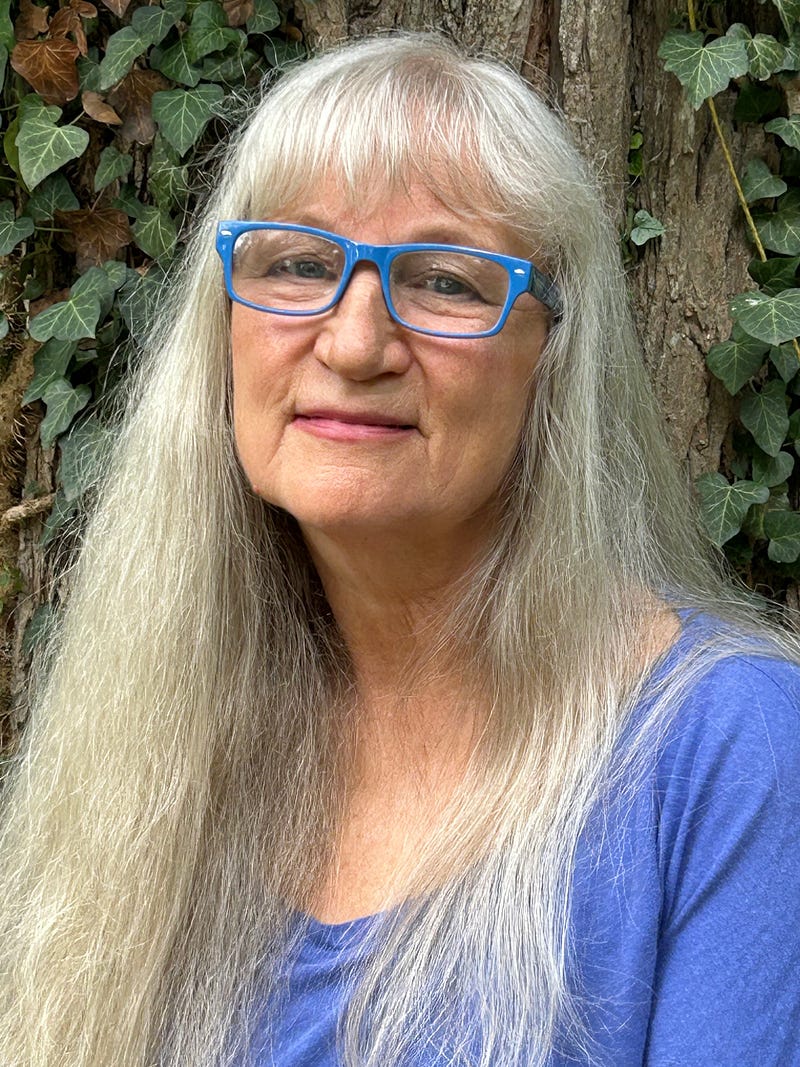
My interview with the 2024 Nicholl Fellowships in Screenwriting winner.
Wendy Britton Young wrote the original screenplay “The Superb Lyrebird & Other Creatures” which won a 2024 Nicholl Fellowship in Screenwriting. Recently, I had the opportunity to chat with Wendy about her creative background, her award-winning script, the craft of screenwriting, and what winning the Nicholl has meant to her.
Here is my complete interview with Wendy.
Scott Myers: OK, Wendy. Congratulations on winning the 2024 Nicholl Fellowships in Screenwriting.
Wendy Young: Thank you so much. It’s exciting.
Scott: I found this description online of your storytelling interest. You said you’ve always been a storyteller and also that you were a folk singer.
I know you’ve done a little bit of acting, and also it says your storytelling draws on animals and the natural world to reveal our humanness, and that your stories aim for the heart.
So let’s start with that, your origin story. Where’d you grow up and how did you find your way into writing as an interest and say, even particularly, how did you find that being drawn to the natural world?
Wendy: I’ve always loved animals. As a kid, it was horses and dogs. I felt a deep kinship with them, like we understood each other. I was also a big tree climber, so all of this seems to have stayed with me. Also, my parents were environmentalists early on.
I grew up outside of Philadelphia, the second of four kids in a very musical family. My dad was a folk singer by profession, like a Pete Seeger type. In fact, he knew Pete.
I was always into the arts. I was a fine arts major in high school. My mom was an agent. My sister and I played music together, and my mom would get us gigs, and we did a lot of touring colleges and coffeehouses. Performing folk music, you tell a lot of stories — “Where does this song come from?” That kind of thing.
I also did character work. I started when I was a kid. We would be Dickens carolers in malls and stuff like that. Later, I joined a theater group for a little bit and played Ophelia in “Rosencrantz and Guildenstern Are Dead.”
My husband and I have four kids. He’s also a musician, and all of our kids were into the arts.. Actually, all four of them did acting — but my youngest is an actress by profession, as well as a singer/songwriter. I read her audition scripts because she started when she was very young. Finally I decided maybe eight years ago that I was just going to try screenwriting. I came to the party pretty late, but I was like, “I think I can do this.”
Scott: I’ve interviewed hundreds of writers. I don’t think I’ve ever heard someone say, “Well, you know, I kind of got into the whole screenplay thing and became familiar with it through the scripts that I was reading for my daughter’s auditions.” That’s pretty interesting way to connect with screenwriting.
Wendy: Totally. I also composed the music for a couple of short films. I guess somewhere along the way, I got bitten by the bug, and I just thought, “Why am I having all these stories constantly swirling around in my head if I’m not supposed to write them down?”
Scott: I have to say when I discovered screenwriting, it was like, “Oh, wait a minute. This encompasses everything.” Was that the same kind of reaction you had?
Wendy: Yes, although I was a little bit intimidated by it. My daughter’s acting teacher, Tony Savant, from Playhouse West, also has an online screenwriting course, and he was like, “Why don’t you do this? You can learn the basics,” and so I started doing it.
Actually, I started writing this story, the Superb Lyrebird, and I just wanted to do the story and didn’t turn in the lessons. Then I hit a wall, and I thought, “Well, I just can’t do this. This is a magical thing, and I don’t know the right magic words for it.” Then I went to a film festival that was associated with Tony’s class, and I thought, “Well, all these other people are doing this.” I gave myself a spanking and just went for it.
Scott: Somewhere along the line, you certainly learned the ins and outs of screenwriting. I mean, your script “The Superb Lyrebird & Other Creatures” is, indeed, superb, a great read, the way that it’s written. How did you go about learning the craft. There was that online course …
Wendy: Tony’s course is very foundational. And he gave me a lot of notes. There was a lot of trial and error. My first version of it was really pitiful, my first draft.
I never went through the thing where I resented getting notes. Anytime anybody would help me, I lapped it up, and I just kept making it better. I’ve written other scripts, but this particular script seemed to sort of capture people’s imagination.
Scott: I believe you said you’re a member of a writer’s group. One of the writers in your group I know from a previous Black List lab. How did that happen?
Wendy: We all were finalists in the women-over-40 Writers Lab. One of the ladies got in touch with us, and she said, “Why don’t we have a group where we pitch to each other?” It’s down to the four of us now. We practice pitching, but we also read each other’s scripts, and it’s a fun group. They gave me great notes on the Lyrebird script. It wouldn’t be what it is now without all the help I’ve gotten, from other friends as well.
I love the collaborative process. To me, that exchange of energy is so enlivening. I guess being a musician too, when you’re playing with other musicians, you have that wonderful connection on stage. So this feels familiar in that sense.
Scott: Let’s jump into the script, “The Superb Lyrebird & Other Creatures.” You mentioned this was the first thing you imagined as a screenplay. How many years back are we talking?
Wendy: Eight years ago.
Scott: Wow, eight years ago. Here’s the logline.
“A neurodivergent teen who envisions people as animated creatures, battles an entitled rival for a life changing art scholarship, while her sister unwisely crosses the line to help.”
What was the starting place for the story?
Wendy: I started with a character — the protagonist, and she was an artist. The neurodivergent aspect of it came in a little bit later. Essentially, she’s somebody who has a very unusual point of view, who has the gift of a beautiful imagination — of a unique artistic voice. Her challenge is that some people around her want her to fit in more — to normalize.
Also, I just thought there aren’t that many films that really express the story through the eyes and voice of a character with that point of view.
Scott: Yeah. You’re right. There’s Little Man Tate. There’s a movie, Gifted, or even if you want to go further on this sort of spectrum, Rain Man, but those are…the character is not the protagonist. They are a central character. They’re an important character, but they’re not the protagonist. It’s always from the perspective of someone trying to wrap their head around or deal with this unusual person. In the case of your script, that would be Mea.
In Latin, it’s mea culpa. I was curious about that actually. Was there any sort of symbolism to the name? Because I know that “mea” means “mine,” I think, and then in the Italian, it’s short for Maria, and it means bitter. Is there any symbolism in that?
Wendy: Yes. Both sisters each have their own kind of selfishness, and it’s expressed very differently, but it was “me” and “I” — Mea and Ivy. But, to your point, “mine” could imply “my voice.”
Scott: There you go. Me and I. Character names can be important. Right off the bat on page one, you’ve got these quick images, quite a visual opening. Then there’s an animation right up front with briefly sketched baboons, wildebeests, and warthogs. So I think this probably circles back to what you’re saying. You’ve never seen a story that’s told from the unique, specific perspective of a protagonist with this kind of mental acuity.
The animation, was it always there, or was that something that emerged over the course of the writing?
Wendy: I always had the animals in there. A friend of mine suggested I use animation, and I immediately liked that. Then I sent it off to a contest, and one of the readers there said, “This animation is really unique and captivating, and you should have more of it.”
I only had three moments of it, and I was like, “Of course!” Then I went “wild” with it.
Scott: Let’s dig into that a bit. Not just the animation, but it just occurred to me, I never thought of — animation — animal.
Wendy: Hey, that’s right.
Scott: The protagonist, Mea, the way she’s described when she’s introduced:
“Mea Strang, Viking hair, blue, unblinking eyes, behind those eyes, a different world. She hugs a thick notebook like it’s a Bible.”
A notebook turns out to be extremely important.
She’s very knowledgeable about animals. She really immerses herself in that. It could have been anything. She could have seen people and seen them as robots or whatever, but animals. Maybe you could unpack that a little bit. Why that works for you in terms of this character.
Wendy: Because she’s been a bit isolated. The way I wrote her family is that she was overprotected because she had some trouble early on where people made fun of her, and so she was homeschooled and alone, with the exception of Ivy, her sister.
She goes outside to draw, so she spends a lot of time in nature, and she feels safe around animals. So, in situations with people where she feels anxious, she pictures them as animals.
Another really cool thing is that when I was researching this, I came upon this little film made by a young woman who has Asperger’s, and she has a bunch of friends who are on the spectrum, and they, especially two of the young women talked about their imaginations as being a creative place, but also a retreat where they felt safe.
So if they were struggling with too much input or anything that was presenting a challenge to them, these beautifully constructed worlds — I’m just getting chills — were this place that they could go to that was totally theirs, and they were very elaborate, and had such beauty to them. It’s funny because I had been creating this character along those lines, but when I saw that little film, I was just like, “Oh, my gosh. This is so real and so beautiful.” It was inspiring.
Scott: What you just said was quite lovely. It’s like the security that stories can provide us.
Wendy: Yes.
Scott: Right? The narratives that we can construct about things. I was quite struck by what you were just talking about there, that it really is a way for her to navigate this stuff.
Wendy: Yes.
Scott: She has a sister and in the script, we see her first, she’s got Mea behind her. Her sister Ivy, 24, so there’s a seven year difference between the two of them.
Here’s how Ivy is described when she is introduced:
“The blonde woman is Ivy Strang, 24, a charming, determined Jean d’Arc, sans the divine guidance.”
Could you describe Ivy to us? What we need to know in this introduction of this character at the beginning of the story.
Wendy: Yes. I try to use my first piece of dialog to promise something thematic about the story. Mea is anxious about going to this new school, so she says to Ivy, “Did you know dodo birds went extinct because they had no fear of humans?” Ivy’s response is, “Just act normal.”
That one exchange gives us a lot of information, both about the story, and their dynamic.
Ivy is complex. She’s Mea’s protector, and takes that role very seriously, especially since the parents passed away in a car accident. But she’s also frustrated by it.
She hasn’t even really adulted herself, but she’s thrown into that position. Really, she’s probably been in that position since Mea was born. But she’s a bit of a mess because she hasn’t dealt with her own personhood and development, being so focused on Mea.
So there’s a lot of conflict there. Their relationship is close, and also complicated.
Scott: Yeah, and of course, you know as writers, we know you can’t have drama without conflict, and so you’ve got this complicated, complex relationship between these two characters.
Ivy even introduces herself as a sister-guardian when she’s trying to get her into this school midyear of her senior year, and they’re like, “Why?”
“Well, she’s been homeschooling. Well, there’s this scholarship…” that she perceives as being the pathway for her sister to have a future. Right?
Wendy: Yeah.
Scott: All this to the detriment of her own personal journey because she’s going to a local community college, and I think I remember she was going to major in teaching, and then she was going to do sociology and then do theater and then psychology, which suggests she’s trying to find herself but not succeeding.
Wendy: Yes. She almost uses Mea as an excuse to not deal with her own lack of focus, let’s say.
Scott: Yeah. If I were doing an armchair psychologist, I could say the reason why she hasn’t locked on something is that if she did, then that would upset the dynamic between the two sisters where she’d have to go and follow her own thing.
Because of this terrible accident within the last four years where their parents were killed in a car crash, she’s had to take on the massive responsibility of taking care of Mea, and so that has held her back.
Wendy: Yes. Her one place where she feels in control, her comfort zone, is with the guys. That’s her go-to, where she’s very at ease and confident. Of course, that is the opposite of Mea, who looks at that kind of wistfully and feels the pangs of wanting to have greater connection, possibly in a romantic way.
Ivy’s been holding her back, thinking she’s a child. That it’s not time for that yet, but it’s going to come. It’s like the tide coming in.
Scott: You mentioned you have my book, “The Protagonist’s Journey.” One of the questions I ask at the very first stage when I’m working with writers, the Protagonist Character Treatment consisting of eight questions. The last question is critical: “Why does this story have to happen to this character at this time?”
Clearly, Mea has to…she’s got to go through, essentially, sort of a delayed puberty socially, and Ivy’s got to go through her own adolescence, I guess, in a way. Is that fair assessment?
Wendy: Yeah, they’re kind of jostling each other into adulthood, needing different kinds of skills and experiences, but both in that process.
Scott: Again, I mentioned that my family, we have–all children are special and all children are gifted in their own way, but there was a little moment there that I was like, “Oh, yeah.” On page two, “On Mea, the clicks of a pen” — this is the person behind the desk — “are exaggeratedly loud.”
Wendy: Yeah.
Scott: Then also on Mea’s hand, half-open, holding a tiny, wool hummingbird with Velcro feet. I completely understand and get that. It’s like, I think they call it overexcitabilities, where a “normal person” would receive the stimuli from the world at like 100 percent. Well, these people would appear to be at a 110, 120, 130 percent.
So noises like that or textures, tastes, smells, and stuff like that. Also, just the security blanket aspect of having something like that little hummingbird. This was based on some research, I would imagine, that you’ve done or personal experiences from people you know?
Wendy: Yes, both, for sure. A lot of research that really drew me into the subject. I asked people I knew who had family members who were on the spectrum. Also, I’ve known different folks myself. Mea’s character is an amalgamation of them — the hyper focus on animals and the “did-you-know” facts. Somehow, I also must have had the kernels of her somewhere in me because she kept leading me along this path of showing me who she was.
Scott: Character-driven storytelling. If only there were a book …
Wendy: Yes. Exactly. [laughs]
Scott: What’s interesting about this story, I don’t subscribe to the theory that everything’s a hero’s journey, but boy, it just seems like it’s the case.
This is one of those situations where you got these two people, they’ve been going along with the status quo for several years, then boom, here comes the call to adventure, the universe says, “OK. You’ve got to change. You can’t stay the same.”
“Famed Greenwood alum to award Lavish Art School scholarship.” Why does this story have to happen at this time? So was that always there? You knew that Mea was an artist. You knew she’s got this older sister. Something had to happen, or how did that emerge, that scholarship?
Wendy: Yeah. I’m trying to remember. Well, I always knew that there was another art kid even from the very beginning that was kind of an obnoxious, entitled character. I guess I had to devise something for them to compete over that would really be, for them, very high stakes.
Because in that kind of rural town, there’s really nothing for Mea there. She’s going to get lost. She’s going to get forgotten unless something or someone lifts her up and shows her real talent.
By the way, she’s not a savant. She’s a talented artist, but she does have this gift of imagination, and that is her voice, and she knows she has that.
So she has this depth inwardly that a lot of kids her age don’t have, but you don’t get to see it right away because she expresses herself differently.
Scott: Yeah. I like what you said earlier. This specific character is neurodivergent, let’s say, but it really is more of a story about any person or any child who has that — what is it? — the beat of a different drum. They have their own worldview that isn’t perhaps in the mainstream. That’s what you’re going for, or something like that. Right?
Wendy: It’s true of all kinds of artists and writers and people who have been told that pursuing an art is a waste of time and, “You better go learn to do something useful.” My gosh, so many artists experience that in one way or another.
Scott: Nowadays, with education, not to diminish the importance of science, but so much of the money and resources are going towards STEM, and meanwhile, the school districts are cutting back on music programs and art programs. What’s going to feed the soul of society? You know?
Wendy: When my son was graduating high school, this woman asked him, “Where are you going for college?”
He said, “Well, I got a full scholarship to go to Berklee College of Music.” She said, “What are you going to do there?” He said, “Study music.” She said, “So just for fun then.”
Scott: One of the things that I am so drawn toward in characters and stories, and that’s where I tell my students: Character. Care-Actor. You want the actor to care about the character, care-actor, but you want the character to make the audience care.” That’s like a fundamental thing.
Then you did such a wonderful job with all the characters in your story. Let’s run through some of the different ones. So you’ve got the two sisters. You got Ivy, 24, who’s the caretaker. Literally, the money that the parents — I’m assuming their life insurance policies or whatever — that went to Mea.
There’s a weird situation where Mea is essentially paying her older sister to be the caretaker. So it’s a complex relationship between the two of them. Different world views, different mental constructions, but then there’s these other characters.
Let’s talk about Jake, the art instructor who’s the first one to see, “Ah! This is someone that has a unique view.” So maybe describe Jake to us. What do we need to know about this character?
Wendy: He becomes her mentor. He’s an academic, also an artist, part Native American, and he uses Native philosophy to connect with Mea and her animal people. He sees how she uses it, like you say, to interpret her world.
His character doesn’t really change that much, except I hint around that he’s maybe given up some of his painting in order to teach and has lost a bit of that creative drive, and meeting Mea sparks that back in him. That’s a gift she gives him. He’s a great character. I picture Billy Bob Thornton playing him.
Scott: There you go. Early on, Mea calls him Professor Jake Bird Cloud. It’s his tribal name. Did she know or intuit that he’s got this…?
Wendy: He tells her that, but he doesn’t tell everybody. It’s not in the script. It’s more back story.
Scott: Back story.
Wendy: Yeah. He trusts her with that information. He’s kind of a private person.
Scott: I want to talk about another character, the lyrebird. There’s a description here. “A book is open to a page describing the superb lyrebird. Sitting at her desk, Mea’s eyes read, hyper focused:”
“Shy, solitary, ground bird, lyre-shaped tail feathers, extraordinary ability to mimic.”
“Next to Mea are brushes, palette, and her notebook. Mea stares trance-like, her brush dips black, touches the paper,” [ then there’s an animation.] “Mea paints herself as a lyrebird.”
That connection, you had that eight years ago.
Wendy: I saw on Facebook a clip of a lyrebird. It’s an absolutely mind-blowing mimic — any sound. It will mimic car alarms. It will mimic chainsaws. It will mimic other animals. You don’t often hear its own call, and so that’s kind of symbolic of Mea, struggling to get her voice heard.
The mimic thing is important because there’s a thing with some Asperger’s folks, and especially in young women I think, where they imitate the speech or the behavioral patterns of those around them to get by in social interactions.
Scott: Oh, she does mimic. There are times where she just literally will say a line that someone said because I think she thinks it’s socially appropriate.
Let’s talk about some of these other kids. It’s so easy to fall into stereotypes, but you’ve got this kid Pandora and some of these other girls, sort of like you would think, “OK, the mean girls.” Right? Pandora’s got a little bit more to her than that. Maybe you could describe that character. What’s going on there?
Wendy: Yeah. I was pretty intentional about that. I wanted to have somebody that first appears to be a mean girl. But she’s more clueless, and self-absorbed. She thinks she’s helping when she quasi-diagnoses Mea, repeating stuff she’s learned because she wants to be a psychologist. So she’s just kind of insensitive, but in her mind, she’s helping.
When Mea’s at this party where she doesn’t fit in and she wants to kiss this boy, Pandora thinks she’s gonna grant her wishes, like an adolescent fairy godmother. She tries to be helpful in her own way.
Of course, Ivy only sees her through a certain lens, and assumes that she’s always trying to be mean in some way.
Scott: That’s going to be Ivy’s default mode no matter what, is that she sees the world as a fearful place in terms of Mea. It’s kind of interesting. It’s like Mea’s got a certain lack of understanding of the social interactions of “normal people” or whatever, but Pandora’s got her own sort of lack of understanding of…Right?
Wendy: Exactly. Which is funny, and true.
Scott: Yeah. So they’re kind of two sides of the single coin. She’s thinking, she’s talked to, “Oh, she’s ASD.” She knows all this stuff, but she’s like, “Oh, I think I could help her. Hook her up with this boy, and that’ll be…”
Wendy: “Do you need a hug?”
Scott: No, no. The touching thing… Now there is a boy that is pretty much of a — I guess you could say — jerk. Doyle, who is the rival. You mentioned in the Lyrebird there’s this scholarship.
We’re going to talk about the guy who’s creating it in just a bit, but there’s this scholarship, it’s a wonderful opportunity, it’s like the kid selected for it will go to London and Paris and Florence. It’s all paid for18 months, it’s two years of college credit.
I could see where I could go, “Oh, this is absolutely what we need to do,” and so there’s like six students going to be vying for this, including Mea. Maybe you could talk about Doyle as, I guess, sort of the nemesis character in terms of the scholarship.
Wendy: Yeah. Doyle’s problem is that he’s been like the star of the show his whole way through school. He’s really very good. He’s kind of head and shoulders above everybody else, and so he thinks, “Well, I got this all tied up,” and then somebody steps in who he thinks shouldn’t be there.
He has this story in his head that the only way she could beat him is if somebody feels sorry for her and elevates her because of her differentness. That’s a hard pill to swallow.
I did make it rough for him, but I gave Mea a little insight into him when she breaks into his house and looks at the books next to his bed. They were about this artist and that artist, and then the last one is a self-help book called “You Are Not a Teen-Age Loser.”
Scott: He sort of got that anti-woke thing going on, I think. She would be a DEI selection. Right? Because he is really good, but as pointed out by — I think it’s Reed — the guy we’re going to talk about. He says, “She’s got voice. You’ve got technique. She’s got a unique voice.”
Let’s talk about this guy, Reed. This is how he’s introduced:
“Doyle sucks up to art celeb, Reed Benedict, 35, boyishly cool in a sleek black Buck Mason shirt. He’s enjoying life in the spotlight, but here to give back. Which is also really cool.”
By the way, he lives in Malibu. So as soon as the guy comes back to his hometown, I was like, “OK. This is going to be an interesting dynamic.” Counterpose him to Jake, because they kind of play off each other a bit. How would you describe Reed in contrast to Jake?
Wendy: Well, Reed was Jake’s student, and he was a hometown kid that did well. Reed has talent, but he’s also made some shallow choices. So there’s tension, I think, between Reed and Jake because Reed is chasing, not just success, but a shallow lifestyle.
I think Jake is disappointed in him. Reed really does care what Jake thinks about him because he was his mentor too.. I didn’t put this in the script, but I think Reed donated this plush art wing, and that’s how this dingey high school has a really great art studio.
So in a way, Jake is beholden to him, but also disapproves of his lifestyle. But Reed is also perceptive. He reads Ivy’s mail. And he is giving back with this scholarship, but also he’s trying to raise his profile. So he’s three-dimensional as well.
Scott: Yeah. All the characters are that way. He comes back, and then as soon as there’s an intersection between Ivy and Reed, I’m like, “OK,” and Jake figures that out, “Now, you don’t want to do this, Reed.”
In a way, the similar sort of thing, like the scholarship is this Call to Adventure for Mea. Reed is in a way kind of a Call to Adventure for Ivy, because they do end up having a romantic liaison, and that has implications for her, and it has implications for Mea. Was that always in the cards for you, that romantic liaison between the Reed character and Ivy?
Wendy: Yeah. I did write him in that way because it was pretty obviously a betrayal of Mea, who crushes on him. But she’s kind of crushing on everybody. Anybody who comes into her sphere–she’s just trying to work that out.
Reed does make her feel special–he’s the big famous guy, and he thinks she’s special. So she quickly claims him as off limits for Ivy, which is frustrating for Ivy because, like I said before, this is her go-to place. She knows her way around guys, and here’s one that’s pretty famous.
Scott: And interested in her.
Wendy: Yeah.
Scott: So jumping way ahead, there’s a conversation that the two of them have, a very frank conversation — I think it’s the second time we’ve seen that they’ve engaged in physical, intimate relations — that is very mature.
You sort of go in there expecting, “Oh, Ivy’s going to go off on this guy and talk about what a fraud he is and all this sort of thing and storm out, while Reed’s going to have to kind of lick his wounds,” but he has his own worldview, and part of it is that, “I am enjoying myself. What’s wrong with that?”
Again, the characters are so finely drawn in the story, and that scene…Do you remember writing that scene? Because you come out of it like, yeah, these are two people who have legitimate points of view. Do you remember the writing of that? I imagine that took some time writing and then rewriting it. Right?
Wendy: You know that. It was like I had to learn how those characters…I had to learn their truths, because it was initially a little bit more shallow. It got more truthful as I listened to their points of view.
Scott: That decision to go out with Reed… actually, she goes on a date with some other guy, but, I mean, eventually with Reed. That date with the other guy precipitates Mea, with Pandora, again, trying to be nice, “Hey. There’s a party.” So Mea goes to this party, and I’m like, “Uh-oh.” All the way through this thing.
There’s the punch laced with vodka. There’s somebody who gives her a gummy. Pandora brings this guy for her first kiss, which she feels is like a camel spitting, and then she leaves, loses her journal. She’s out. It’s like one thing after another.
That must have been as much as we love our characters, and I’m sure you do love Mea, that must have been hard to write all those things that she had to go through.
Wendy: Interestingly, my initial draft was a lot tougher in that an assault happens, and people did not like that. They kept saying, “It feels like this is two different stories.” A crime is committed here, but she’s asleep. She doesn’t know who it is, and it was like a crime story.
Finally, I was just like, “What is the essence of this story? What is going on here?” I was like, “Complex characters, simple story.” Let the characters be fabulous and wonderful, but don’t freaking make the story go in 90 different directions.
The essence of the story is her unique gift and POV. So I dropped half of what I had written.
It’s still tough, though. I was in tears writing at times, because, from Mea’s point of view, it’s devastating. She has to get her notebook — her work — back in order to complete her scholarship painting.
Scott: When you said, “Complex characters, simple story,” that’s literally something I put online. “Simple story, complex characters.” That’s a good a truism about writing as there is.
I do want to talk about the evolving story of the lyrebird. If you don’t mind, I’m going to read the first part of this thing because it’s really quite lovely. This is Mea’s voice over, “But of all the creatures, it had the most beautiful song. One day, Whistling Wind passed by. Hearing the bird sing, Wind was jealous, ‘I’m tired of whistling. I want a beautiful song.’ When the bird fell asleep, Wind crept in to steal the song.
“Quickly, the bird swallowed it. Wind rushed down its throat, but it could not catch the song. Finally, Wind gave up and fled, leaving behind a tiny gust. When it awoke, the baby bird could make no sound. The song had fled into its tail feathers, which formed themselves into the shape of a lyre. The lyrebird was mute except to echo the other animals.
“One night, 10 years later, maybe more, when the lyrebird slept, Wind took its parents away in a storm. ‘Be careful, lyrebird,’ warned its mother, ‘The forest is full of fearsome creatures.’”
Could you maybe talk about the genesis? I mean, so much of that obviously is directly applicable to Mea. Could you talk about the genesis of the story within the story, this lyrebird story?
Wendy: Yeah. It’s a direct expression of Mea’s point of view. This is her mythical interpretation of what happened to her to make her different from other people. It also shows that Mea’s parents, especially her mother, were fearful, and that Mea absorbed some of that fear.
Scott: You were in the zone. Moving ahead in the story, there’s a significant All Is Lost moment. You don’t think Mea’s going to be able to participate in the scholarship contest, let alone the fact that she and her sister have a big break, but then things turn out.
The very ending of it, on the last page, “The forest is full of life and good medicine,” which is a wonderful callback and a beautiful way of rounding out the story.
Wendy: I was lying awake at night, and I was like, “What is the ending?” Because when I write I have to have the ending. Sometimes I write the opening, but I don’t get to do all the in-between stuff until I pretty much have the ending. Even if it changes, I have to have that beautiful thing that I’m writing toward.
If I have something that I know is like this little pearl that really moves me, then I can write. So I had that ending pretty early on, and I remember when I thought of it, I was like, “That last line is just…yes.”
Then at the very, very end where Jake is looking through the notebook, and he sees the picture of the lyrebird that Mea is giving him. Then there’s the moment where it turns its head and looks at the audience.
I was like, “That’s magic,” because to me, it’s like saying, here’s a beautiful story and it’s about your voice, and it’s about imagination, and that look out to the audience is like an invitation: “What’s your story, what’s your voice, and what are you going to do with it?”
Scott: It’s circling back to hero’s journey: “Follow your bliss.”
Wendy: Yeah.
Scott: Find that thing you’re passionate about. If you feel like you can share with the world, then do that.
Wendy: It’s a little bit magic, you know?
Scott: Yeah. It is magic. I think you mentioned that you had some good news recently. You had an option agreement on this and a director attached. Is that right?
Wendy: Yes. A director and producer team have optioned it. The director is Manfred Lopez Grem, whom you worked with at a Black List Feature Lab. He read the script a while ago, and gave me some fabulous notes. When I won the Nicholl, he saw it as an opportunity for the story to move forward, and asked to direct it.
The producer is Simon Taufique. He’s produced a number of beautiful films, including “Imperium,” starring Daniel Rdcliffe. He has a film currently premiering and in competition at Sundance 2025, called “Ricky.” And he’s composed music for many others as well.
When the three of us met, I felt like everybody was speaking the same language, and that the story was in really great hands. I’m looking forward to collaborating with these guys!
Scott: Well, sending our creative juju towards you so that this will be in Sundance in 2026. Shifting over to the Nicholl, what was that experience like?
Wendy: Wow. So fun! They’re such warm, authentic people. I couldn’t get over the fact that…I just couldn’t get it into my head that these cool people on the Nicholl committee read the script and voted for me. I told Susannah Grant, who wrote “Erin Brockovich’ and “Ever After,” among other things, that I wake up in the morning and think, “If I could just write a script like Erin Brockovich, I would die happy.”
Scott: Well, don’t die on us yet.
Wendy: Yeah, not this week [laugh]. It was just so warm and supportive and encouraging. In fact, you have to do a little speech when you accept your award, and I talked about the power of encouragement, and I thanked all of the encouragers there. That really is what they do, and they do it beautifully. It did kick me up to a different level, not just in terms of visibility, but also in confidence in my own voice. So kind of a mini Lyrebird moment.
Scott: Congratulations again. It’s great. Love the script. Can totally see it and look forward to seeing it fly.
Let me ask you just a couple of craft questions here. You mentioned that you’ve written some other scripts. How do you come up with story ideas?
Wendy: It’s more like, “How do I pick from the storm of ideas that are constantly flying into my head?” The picture that I have is of the people put in those tubes, with all of the dollar bills being blown around, and they’re supposed to grab them.That’s what it’s like.
My biggest problem is trying to…I want to write all of them. I know that’s never going to happen, it’s just like which one to do now. I don’t know. They just are constantly flying into my head.
Scott: Then how do you determine which ones to write?
Wendy: Eventually one or two come to the forefront. Right now, I’m working on one, mainly. I make a ton of notes and then I have the story in my head enough to write. But I like to have another that’s in line behind it.
If I get stuck, I just shift over, and then those creative juices are flowing over there, and you can take the momentum back to the first story–you’re not in a stuck place.
Scott: How about prepping a story? Do you have a specific process at this point? Like when you’re breaking story, what they call it in Hollywood?
Wendy: Yeah. I do a lot of daydreaming, especially while driving. I have notebooks full of handwritten notes, and everything is out of order. It’s like I’m in the middle of a giant sphere with all this dialog and story bits swirling around, but that’s how I work.
Scott: The characters, we’ve talked so much about the characters in your script that are just so beautifully drawn. Is that more of an organic thing, or do you have particular exercises, biographies and interviews and that sort of thing to help develop them?
Wendy: I would say I know about those things, and I use them, but in a way that’s organic. I’m just not very…the word that comes to mind is sequential about it. I do come up with a bio, but it just takes longer, I guess, because it just comes in little lightbulbs as I explore the character.
Scott: The story, if you laid it out with all that sort of organic and wonderful…following your instincts and jotting down notes in this sort of not capricious, but floating kind of way…
The script reads like, “OK. This happens on this page. This happens on this page.” It’s not like you sat there and said, “Well, the scholarship needs to be announced here.” It lays out…not in a bad way when I say “conventional,” but it lays out like a conventional movie.
Was that just complete blindside, or did you actually bust out cards, or how did that work?
Wendy: I would think of a scene, and it would give me a lot of joy to write that certain scene. I write out of order, but I do get there eventually. I write the scenes that I want to write at that moment, and then I go back and make them better, and then figure out the order.
I would say that I have a rough idea of the shape of the story, but I do wrestle with organization.
Scott: Well, if you know the beginning and you know the ending.
Wendy: Yes. That’s true.
Scott: Then you could probably get there. In my book, I did lay out, “OK, you want a path of least resistance. This is the eight-sequence theory,” or whatnot. I’ll lay that out for you. I think more importantly, most people, because we’ve seen, read, or heard thousands and thousands and thousands of stories, so we have an intuitive sense of this.
Aristotle, beginning, middle, and end. That sounds like what I’m hearing from you is you have kind of a trust in that, that maybe there’s an innate instinct there that you’re going to write whatever scenes you want and eventually, somehow, it’s going to all take shape. Is that a fair assessment, a fair approach?
Wendy: Yeah. I think there is an enlivening of the actual story that takes place when you do all that daydreaming. I feel like something really does come alive. There is an “other dimensional-ness” to it. It’s a living thing. It blossoms, it matures. So then you do have a shape that you’re writing to, a living thing you’re connected to. Let’s put it that way.
Scott: Yeah. I tell my students it’s the difference between receptive writing and reflective writing. Receptive writing is the daydreaming and writing the scenes you want to write, writing notes while you’re driving.
That’s the idea of go into the story. You go into the story, immerse yourself in the lives of the characters, and just see what emerges. So you do all that, but then you also step outside, like you said, that you don’t mind getting notes at all. In fact, you really just sort of soak that up.
So you do have to kind of think about it structurally and just pragmatically. Right? So that part of it. Let’s talk just a bit about the reflective writing where it’s like, “OK. This is too long, or the direction I went where she was assaulted, that was too much.”
Now you have to do both, kind of receptive and reflective. Right? Maybe talk a bit about incorporating notes and revisions and that sort of thing.
Wendy: When I get a note, sometimes it’s like, of course! Sometimes I have to keep trying it on. It will end up either fitting, or I try to hear the “note behind the note,” and solve the problem a different way.
I will say structure is something I’m still working on. But I’ve gotten better at it.
Scott: Well, maybe you can have a happy synergy where you’re really comfortable with that sort of receptive mode, and then you get these notes from your writer’s group, and they’re like, “Hey, but if you do this, you could have this happen here and shape the structure a little bit this way.”
Wendy: Full on admitting I get a lot of help!
Scott: OK. One last question. Is there a single piece of advice to a youngster, a young person, or a new writer? It doesn’t matter what age they are. They could be 80 years old, and they’re just starting out, or they’re trying to embrace their writer’s voice or whatnot. Is there any single piece of advice you would — after having gone through your own journey — offer to someone else?
Wendy: I would say don’t try to write like everybody else. Write about something that you love. Find something beautiful and meaningful to you. It can be funny or exciting, or sad.
Even if you’re writing like an action script or something where there’s not as much weight on the characters or theme, but find something meaningful that you connect with. And then hold on to that because you’re going to go through times when you feel like, “Why am I doing this? Why am I writing this? I don’t like this story anymore.”
You have to be able to connect to something in the story that can pull you along, that gives you chills, or gives you joy. To me, it’s beauty — I use that word a lot.
I think human beings have this…We’re drawn to beauty. What does that mean? Find that thing in yourself. What is your big inner tuning fork resonating to? There’s a reason you’re connecting to it. Hold on to that. Write it.
For my interviews with every Nicholl Fellowships in Screenwriting winner since 2012, go here.