Go Into The Story Interview: Ward Kamel
My interview with the 2024 Nicholl Fellowships in Screenwriting winner.
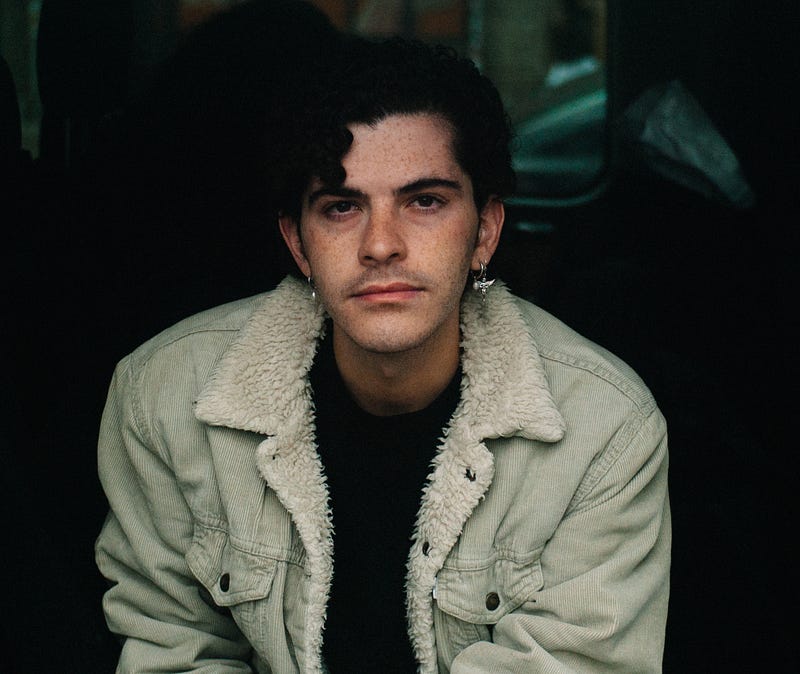
My interview with the 2024 Nicholl Fellowships in Screenwriting winner.
Ward Kamel wrote the original screenplay “If I Die in America” which won a 2024 Nicholl Fellowship in Screenwriting. Recently, I had the opportunity to chat with Ward about his creative background, his award-winning script, the craft of screenwriting, and what winning the Nicholl has meant to him.
Here is my complete interview with Ward.
Scott Myers: Ward, congratulations on winning the Nicholl. That must have been exciting.
Ward Kamel: Yeah, it’s a dream come true for sure.
Scott: Let’s learn about your background. You describe yourself as a Syrian filmmaker based in Brooklyn. Where did you grow up?
Ward: I grew up in Damascus in Syria until I was about 13, and then I moved to Dubai in the UAE and went to an international high school there from 13 to 18. Then at 18 years old, I moved to New York and have been here ever since.
Scott: You must be fixed on what’s going on in Syria right now politically.
Ward: Yeah, very much so. The last 72 hours have been a bit of a whirlwind. I obviously have lots of family there. It’s a mixed bag of emotions, but it’s the most significant thing that’s happened in the country essentially in the last 14 years since the Arab Spring started, but also arguably in the last 40, 50 years since the Assad regime has taken over. It’s a crazy time.
Scott: Good luck on that to you, your family, and friends. Where did you develop an interest in film, TV, writing, and the creative arts?
Ward: I would say I was lucky enough to be one of those people that from an early age decided that I loved film. Around the 12-year-old, 13-year-old mark, I moved to Dubai from Damascus, and my father established a little bit of a tradition for us where we would go to the movie theater at least once a week, usually on Fridays.
I think it was an attempt on his part to maintain some semblance of consistency in my life after such a big move. Being part of not only watching films, but also watching them in the context of the theater with an audience became a pretty regular practice in my life.
Then thereafter, discussing the movies with my dad over dinner. The consistency in doing that allows you to start seeing patterns like what you like, what you don’t like, and a little bit the artifice of the craft in a good way and understanding like, “I’m generally starting to wrap my head around a 3-act structure. I’m generally starting to wrap my head around the flaws of the characters.”
I was just really fascinated by it, almost at an academic level. I think I didn’t really take it seriously as a potential career until a few years after that. I went to an international high school and they offered an IB class, an IB curriculum.
A group of friends at that school and I, we learned that there was an IB film class that was available, but our school wasn’t offering it because none of the teachers had been trained to teach the curriculum. We approached one of the teachers that taught media studies or something tangential to film, and we asked her.
This was the year before we were starting IB. We asked her if it was at all on the table for her to over the summer get licensed to teach the film IB curriculum. She was also a cinephile, so she was into it. There were enough of us, I think it was seven of us, that the school justified it.
We signed this little petition and she got trained. Then for those last two years of high school, I took the film IB class that I think really opened it up as a craft, not just as sort of…took me from being like a cinephile into an aspiring filmmaker. We made a couple of small, really bad short films.
That was when I was like, maybe I should apply to film school to study film. There are a few film schools in the Middle East, but I really had my sights set on either Canada or Europe or the US. I had never left the Middle East until then, and I was really hungry to explore the world. But in the end I actually mostly applied to STEM or English programs.
Film schools were plan B, but then the compromise that I had with my family was I would only really apply to film schools that I felt were towards the top. It felt like I couldn’t really convince them to let me study film at a university unless I could also say it was one of the best film universities or one of the best programs.
The one that ended up taking me with a full ride, which was massive, was NYU. The idea of living in New York was so exciting. I moved to New York to go to NYU to study film. I think at that point, I was locked in. The rest was just continuing down that path.
Scott: Wow, getting a full ride at NYU …
Ward: It’s prohibitively expensive otherwise, but I was very, very lucky to get that for me.
Scott: I hope you’ve stayed in touch with that teacher you had in high school. I love it when I talk to writers and they say there was this one teacher who saw something in them. That’s one of the beautiful things about teaching, when you can provide some inspiration and influence with a student.
Ward: Yeah, 100 percent. We’re still in touch. We’re connected on Instagram. Her name is Claire Young. She’s great and she’s still teaching. I think that she’s still maybe offering the film class at school, so it’s cool. Yeah, she’s the best. I owe her a lot for sure.
Scott: You may have started a tradition that maybe other students will take the IB film program and who knows, they may follow in your tracks.
Do you remember some of the movies you watched with your dad? Were there any that on those Friday nights would you go out and then you come back and have dinner and talk about them or maybe a couple of them that popped a mind that really influenced you or inspired you?
Ward: Yeah. It’s funny. The thing that I think I retroactively have realized was because this was happening in Dubai, we weren’t really getting any of the indies. It was really just the global film exports. Pretty big budget, like blockbuster films that we were watching. I think at the time, I obviously wasn’t really enmeshed in the indie filmmaking scene or films that I felt like were probably like the movies that I really looked towards now for inspiration.
I remember there were a couple, this was later on, but very randomly, the one movie that does stick out that I’m still to this day surprised made its way at such a global level to screen in Dubai was Anomalisa, the film written by Charlie Kaufman, a stop motion film.
I watched it with my dad. It’s a weird movie to watch with your dad. That’s number one, but my dad is a cinephile himself. It wasn’t awkward at all. We were able to talk about it afterwards.
That movie, I remember, was also one of those along the journey. I think every filmmaker has a list of a few films they can draw a straight line from towards how they got to where they are today in a very serious way.
Anomalisa was definitely one of those movies for me. I remember watching in theaters and being like, oh my god, there’s something so special about this from a craft perspective, but then also from a content perspective. Yeah, that definitely was like a bit of a touchstone for me.
Scott: When you were back in high school, you said you made some short films that were, obviously they’re not going to be that great at that point, but then you’ve gone on to make other short films which have done well, including “If I Die in America”, which inspired your Nicholl script. I watched it on Vimeo because it was selected as one of their short of the week Vimeo staff picks. Talk about writing-directing. Is that where you’re headed now?
Ward: Yeah, I think so. I like to think of myself as a bit of a writer director as opposed to just a pure screenwriter. I feel like in the NYU Film and TV program, I was definitely focused a lot more on directing, but what often ends up being the case when you’re starting off and especially in school, you’re not really getting sent scripts. Do you know what I mean? No one’s having you direct their writing. You end up having to write almost out of necessity because if at the time, my goal was to direct something, I’d have to write it first.
For a while I did think of screenwriting as a means to an end almost, the end being directing. Obviously, I’ve definitely moved past that now and I think of screenwriting as very much its own craft. I think screenwriting opened up to me as a craft or I became enmeshed in it as a craft as a result of COVID.
I graduated in 2020. I was supposed to make this thesis film, this thesis short film, but it was delayed because I was supposed to shoot in April 2020. I think we all remember what happened. It was delayed and then I graduated in May and all of a sudden it was like, OK, welcome to the real world.
My whole shtick, the way that I paid my rent was working on set. I did a lot of grip and electric and AC-ing work, and I couldn’t do that anymore once the pandemic hit. I started taking like development internship jobs at doc companies, little odd remote jobs that were still somewhat film-related, but it was always like a few days a week. It was never full-time, and you start atrophying the creative muscle.
It was so frustrating not being on set. It was so frustrating not being able to make this film that was supposed to be this crowning achievement of all the four years. The only thing left to do was just to write as much as I could. That was the only creative output that was available to me at the time. I joined a writer’s group, a group of friends that I had known at Tisch.
They were more serious screenwriters than I was at the time. We started meeting over Zoom and I feel like I had a bit of a re-education almost after graduating when it came to screenwriting features specifically. I had written a bunch of shorts, but I’d never really written a feature.
They are just an incredible group of screenwriters and were able to take me in, teach me all the tools that I still use to this day. Since 2020, I’ve written more than a feature a year. That’s usually what we aim for. We try to do these writing retreats and this feature specifically, If I Die in America, was my fourth.
I do think of myself as a bit more of a writer-director. However, I’m more than open to the idea of maybe writing for someone else to direct. It’s just for this particular project that is the way that I’ve been thinking about it.
Scott: Your short film actually reminds me of Whiplash. Where Damien Chazelle figured let’s take a sequence of, or in that case, it’s like literally basically one scene. You have a similar a thing. It’s a stretch of scenes that tells a narrative, which is actually reflected quite closely in the feature script. Were you inspired by Damien Chazelle in that regard?
Ward: Yeah, that’s such a case study and such a north star about how you can make some forward momentum or forward progress on getting a feature made by then just going out and making a short film. I feel like that is the gold standard example.
In my case at least, the life cycle and the way that both the short and the feature have orbited each other, it started off as a feature. It was always a feature in my mind.
I remember, I think this was like 2022 or something like that, as part of the writers group, we were stress testing different scripts. I had written up to the midpoint, something like that. It was like the first 60 pages of the script. Something about it was just not working. I couldn’t quite crack it. I was just banging my head against the wall and dropped it and then wrote like two other features.
A couple of features later, earlier in the conversation, I had mentioned that my thesis film was delayed. My thesis film was delayed as a result of COVID. NYU gave us this three year extension to say that we could use the allotment that we would have been able to use for a thesis film should we decide to boot production back up, and it was about to expire.
This was 2023. It was my last chance to be able to make this thesis film using NYU’s resources. At the time, I had already taken a full-time job and I had forgotten about it, and you have to pay rent and bills. It had fallen to the wayside, especially after 2020 and 2021, those two years, the last thing that was on my mind was making a short film.
But it was about to expire and I was like, OK, well, I need to make this thesis film, I think. I read the script that I had written for the short that was supposed to be my thesis and just absolutely hated it like three years later.
I was like, wow, this was trash. First of all, thank God I didn’t make it. Second of all, I think I need to write another short. I started ideating, started thinking about what I would want to write.
I can’t remember exactly how it came to me or what exactly inspired me, but at some point, I started considering like, “Well, wait a minute, that feature that has been in the back of my head for the last couple of years, is there a short out of it? And could that maybe work better as a short than a feature?”
And so, I wrote the short, fleshed it out, sent it to my DP and my producer and they loved it. Immediately we were like, OK, yeah, this is it. This is going to be the thesis film. And then I cast it, we were fully in pre-production.
I met with the actor, Gil Perez Abraham, who’s in the short, who ends up playing Manny in the short film. We just had a lot of conversations about the character. That opened up almost the feature in my mind, but I was still focused on the short. We shot the short, finished it, everything.
We started submitting it places. It premiered at SXSW. When it got into SX, we found out in December of 2023. SX happens in March of 2024. I knew that I had three months up until I actually had to be on the ground in Austin.
Immediately, my first reaction was, OK, well, I bet people are going to ask what’s next as they often do. I already have a half-baked version of this feature, and now I feel like I’ve so many more tools to attack it because I’ve actually directed an actor playing this character.
I’ve been thinking about it. I was living and breathing the short for a while. I started rehashing an outline, like a page one outline for the feature. It just came out easier than it had ever been. I think really making the short, it’s a very roundabout way to work on a feature script, but at least in this case it worked.
I wrote the outline out in like a week and I was like, OK, I think this is it. I think this can be a pretty decent feature. Then I went and I wrote it on a little writing retreat with my producer. That was what we were shopping around at SX and that was what I submitted to the Nicholl.
Scott: It obviously did work because you did win the Nicholl. Here is the logline of that script “If I Die in America”:
“After the sudden death of his immigrant husband, an American man’s tenuous relationship with his Muslim in-laws reaches a breaking point as he tries to fit into the funeral they’ve arranged in the Middle East.”
What was the inspiration for this story?
Ward: I think largely, everything that I had written up until this point and in a lot of ways, a lot of my writing is largely influenced by this theme of immigration and what it means to be an outsider. I’ve had two big moves in my life. The first was from Damascus to Dubai.
While that doesn’t sound like the biggest move ever because they’re both Arab countries, they are very, very different cities. Damascus is largely comprised, or at least when I was living in it, it was 100 percent Syrians. Whereas you go to Dubai and the expat population is something like 83 percent expats. It’s really global and the first language there is English in a way, more so than it is Arabic.
Then obviously I had this other gigantic move when I was 18, barely 18, from Dubai to New York. I don’t have family out in New York. I was really thrown out here. What ended up happening was the year that I moved to New York, 2016, it was the year that Trump got elected and then on his first day of office, the Muslim ban went into effect.
With the Muslim ban, as a Syrian citizen, I was directly affected. I was on the list of the seven countries that essentially made it so that I couldn’t really leave the country for quite a while. I didn’t leave the country for six years.
That in combination with the fact that, there’s a lot of specifics I can get into, but that in combination with the fact that there aren’t any diplomatic ties between the US and Syria. There’s no Syrian embassy in the US and so renewing my passport was a nightmare if I couldn’t physically leave the country.
It was a confluence of factors that made me feel a little bit trapped out here. That’s one side of it. The other side of it is that I also just have a bunch of immigrant friends and just gravitated towards immigrant artists when I was at Tisch.
In conversations with other fellow immigrants, even if they weren’t Syrian, even if they weren’t in the specific scenario that I was in, this idea of this anxiety that we were all eventually would come to mind was what would happen if I died out here?
It’s a morbid thought because I can almost guarantee you every immigrant has at least once in their life considered what that would look like exactly, where would they get buried? How would they be mourned?
In my case, there were a couple more complications that made it interesting. The first is that in Islam, traditionally burials are really, really quick and there isn’t much pomp and circumstance. Ideally, if you’re running everything perfectly, after the person passes, they’re being buried within a few hours.
Like there’s really very little, it’s unlike the Western tradition, there’s no open caskets, you don’t draw it out, you’re really supposed to just get the person in the ground, and the funerary rights themselves lack some of the pomp and circumstance that Western funerary rights do.
The other is this interaction between queerness and Islam, which is something that I’m really interested in, not just this, but a lot of my work.
I think what’s happening in Muslim communities, both in diaspora and in the region, and then also obviously what’s happening globally when it comes to how queerness is changing both in its depictions and mainstream media, but then you’re getting these younger generations that are able to be connected at a global level that are starting to question their elders, long-standing positions.
This is definitely something that I started being in touch with a little bit more after I left and being around fellow queer immigrant artists in diaspora in the States, all of a sudden, all around me were examples of these other artists that were getting in touch with their queerness, or these other people, other immigrants, getting in touch with their queerness away from home.
They were developing this really integral part of themselves while they weren’t around their family. All of a sudden, there’s this kind of fractalization that occurs where there’s a part of you now that your family isn’t really in touch with or up to date on.
All of that orbiting around itself to create this situation where someone that was a queer Muslim immigrant died abroad, there is this urgency in getting them back. Then there’s this all there’s also this idea of which version of them is being mourned.
Is it the version that had paused the moment that they left and they immigrated out to this country, or is it this version that’s continued to grow and change amongst their chosen family, in this case, in the United States?
That placed against the tension of a man who wanted to delay his grief was really interesting to me because it’s in direct opposition to the, again, speediness of Muslim funerary rights. That’s the long-winded answer.
Scott: It’s a fascinating setup and an interesting journey that the protagonist goes on. Let’s talk about these two key characters, Manny and Sameer. Could you talk about the relationship between Manny and Sameer, and their respective backgrounds?
Ward: Yeah, for sure. In my mind, they met in college, maybe grad school. Sameer had immigrated to the States from the Middle East and so was probably closeted for a large, large chunk of his life and then blossomed stateside, and Manny’s is probably his first serious relationship that’s queer.
Manny’s backstory is that he grew up outside New York, he grew up in New Mexico and he has a strained relationship with his mother, but has also moved to New York and in his own right, even though he’s not an immigrant has blossomed similarly to how Sameer might may have in New York.
I think they meet each other and it’s a really immediate attachment, but then what ends up really coloring the relationship, what ends up really coloring the story is this idea of a green card marriage.
It’s this gray area that I think is a lot more common than most people think, where it is definitely not a transactional green card marriage the way that some antagonists in the script describe it. It’s not like I’m going to pay someone $10K to obtain a green card.
However, it’s also not quite as simple as well, this was just a completely regular marriage that had absolutely no twinge or at least hint of transactionality in there. The question that I feel like often came up was: would we have gotten married this quickly if it weren’t for the green card implication?
It’s not whether we would have gotten married at all, or let alone would we be in a relationship. These are loving relationships and loving partnerships, but the speed at which you decide that you maybe need to commit at this paperwork level is accelerated because of this added reality of, OK, well, if we don’t do that, one of us might not be able to be in this country anymore.
I think part of what I was really interested in in the script is an examination of what those relationships are like and what it does to a relationship that otherwise may have been just completely a fully loving partnership.
Like, is there room to say that that accelerated commitment strains the relationship, but then at the same time ties you to one another in this real way. You do become family in this measurable, on paper way, but then also in an interpersonal way. There’s a dependency. There’s again, a heightened level of commitment.
To me, that’s also unfolding at a subterranean level throughout the film, as you described with the flashbacks, where you have a microcosm. The intention at least is that there’s a small microcosm of a movie inside a movie, and inside the movie being the lifespan of this Brooklynite love story that dives into the implications of a modern day immigration journey.
Scott: The flashbacks are interesting because they’re told in chronological order. It’s like you see the unfolding of the past in these snippets, these little moments, so that there’s a coherence to it. You can fill in the blanks between the historical moments.
There’s even a scene that you basically reflects what you were just talking about, where they ask each other about the green card is how important that is.
Did you always have flashbacks in mind? Was that already in that half-baked and a half-written script that you had?
Ward: Half-baked is the right way, first of all. [laughs] You didn’t have to correct yourself. It was definitely half baked.
[laughter]
Ward: I’m trying to remember. I think so. I think the flashbacks have always been part of it. I think largely because, to put it this way, I’m interested in both these things at the same time. The first is everything that happens after the death, but then I’m also supremely interested in, again, the lifespan of the relationship as I described it.
Like, how do you tell a modern day love story through this immigration lens where you’re dealing with all the implications of what a green card does or what the realities of immigrating to this country and staying here legally do to a relationship, and then also this death abroad, repatriation of a body with a culture clash hero’s journey.
In order to do that, do both those things at the same time, you either have to have the death be the midpoint of the movie and then you’re just telling the story of their relationship and then one of them dies and then the rest of the movie is everything that happens after that, which covers these other areas I’m interested in, like queerness and Islam and who gets to grieve you, or do it the way that I’ve done it, which is, let’s let them play out on at parallel planes, in tandem.
I think I ended up being gravitated towards that because it then allowed all the scenes where Manny is in the Middle East that are taking place in quote unquote real time to then be colored by the flashback that came either just before or just after.
The rulebook is like: no flashbacks, similarly to no voiceover, and I would have been the first person to espouse that rule until I started writing this and I was like, “Well, you know what? Rules are made to be broken.” Yeah, hopefully my next one doesn’t have voiceover though, or narration. That’s what I’m really worried about.
Scott: The flashbacks set a mystery into motion early on. There’s a birthday party in the Queen’s apartment where Sameer and Manny live, and Manny wants to tell Sameer something. There’s something on his mind. One thing after another basically interrupts him.
It gets the reader to ask, “Wait, what exactly happened between these two?” That revelation doesn’t happen in this early scene. It’s like your choice to interrupt Manny in the flashback creates a mystery that plays out underneath the ensuing scenes.
Ward: Yeah. I’m really glad that you’re phrasing it exactly how I would want it to be phrased. I’m glad that it resonated at least. Yes, I think that the thing with the flashbacks is as a formal device is that I often think about it, there’s two things that I think are important for anyone who’s reading that I felt I needed to stress test when I was working through the flashbacks.
The first is, does the movie work without them? I think the answer is yes, and you almost want the answer to be yes. It’s counterintuitive, but I think if the flashbacks end up making it so that that’s the only way that the movie works, I think that’s honestly maybe not a good thing.
I think that in my mind, I would like to be able to pull out the flashbacks and that’s like a 30-page script, or something like that, and that works itself. You pull out the flashbacks and then the flashbacks all together are a 30-page little movie that works.
Then what’s left also, that’s not the flashbacks, also works, but the flashbacks are additive. They’re not absolutely necessary. It’s not like the whole thing would collapse. That’s the other criteria is, is the flashback doing anything to add to the texture of the film, even though it’s not entirely necessary? Is it adding to it or is it just repeating a beat?
Like if we know that he’s sad and then we get a flashback of him being sad, that’s not very additive. If we know that he’s sad, but then we get a flashback that elucidates exactly why he shouldn’t be sad by this thing that had happened, then to me that’s a functional use.
I’ve definitely, I think, gone back and forth on, like, I would say, arguably one of the harder parts about writing the script was the flashbacks and deciding when I was just being gratuitous or it was just like a scene that I really wanted to show.
Then I ended up deciding that, well, actually, I don’t know if this is doing all that much or this is maybe I’m hinging too much on this flashback and I think that also is like a mistake. I hope that answers your question.
Scott: It’s actually a really interesting idea. Think of the flashbacks as its own story.
Ward: That’s how I was thinking about it a little bit. I think the way to think about it, it’s similarly to sometimes the way I think about character arcs where you write your first draft, or at least you’re looking at the draft of the outline. What does it look like if I just started and stopped only the scenes where that character is in it?
This is maybe not as applicable when you’re talking about a protagonist, but if we’re talking about a mentor character or even an antagonist, what would their movie look like if it was just their scenes back to back?
I literally in the past color-coded, if you’re familiar with the script, every scene that Sama is in, who plays the sister character, where does she start? What sequence of five scenes do we get with her and what is the delta in the first and last time we see her? Same with Noora who is an antagonist/mentor.
I did something similar with the flashbacks where it was like, these are almost operating as their own little story. I think at one point, I really did just read the flashbacks from start to finish without any middle pages and just see if they’re working as their own thing.
Scott: I want to move off the flashbacks, but one last point about them. The script establishes Manny and Sameer in the early part of the relationship, their past story, where it’s all lovely and beautiful and they’re in the full flesh of the romance.
Then as you go along in the script into other flashbacks, there’s a more nuanced thing happening there. Part of it is that issue about the green card, but there’s something going on with Manny in particular. That has to happen in order to understand what he does with Eren, who is another character, Manny actually has an affair with. Otherwise, that would be like out of the blue. That revelation causes us to ask: Why did Manny, who is in a long-standing relationship with Sameer, have an affair with
Why did he do that? That is one of the things you tried to accomplish in the flashbacks, yes?
Ward: 100 percent. I think it’s also this idea that he’s very guilt-ridden, and he’s going out into the…There’s this adage, that you want to be really, really hard on your protagonists. I think we tend to protect them because they’re to an extent an extension of who we are, but I think the instinct is that you really do want to put them through the wringer.
I think the reason that Manny is put through the wringer is because he’s simultaneously having to play offense and defense. What I mean by that is that he is both having to defend the fact that he really did love Sameer with all his heart because here is his family disenfranchising him of his right to grieve.
We know that he did love Sameer, but at the same time, he’s dealing with the fact that, like you described, he had had an affair and that towards the end, the relationship wasn’t just strawberries and cream. That it was, as most relationships will be, it wasn’t perfect.
I think that tension is really interesting because the thesis statement I think that I’m making is that the relationship doesn’t need to be perfect for someone to have the right to say, “Yeah, but we were still in love. What we had was still loving, and I still have the right to grieve this person.”
It just complicates that because I think that there is a version of this movie where they really did have just this perfect relationship. It’s just simpler in a way that I don’t think is as both realistic and entertaining because you’re putting your protagonist through the wringer but for the wrong reasons.
You never want, at least I find that I don’t want just the bad things to happen to the protagonist, like that’s very passive and that almost is like a little bit masochistic. I want a lot of the pain to be coming from this internal turmoil that they’re having. It’s not that they’re just getting beaten up, and they don’t deserve to be beaten up at all.
In that way, that thread, that mystery that you’re talking about that unfolds in the flashbacks, is coloring every single time he’s having to, in so many words, yell out, “He was my husband, we loved each other.”
There’s also, we’re starting to become privy to the fact that well, towards the end, it was bumpy.
Scott: You say guilt-ridden, and there’s a profound set of circumstances around that. Manny’s trying to tell Sameer this thing. Sameer is hungry. He goes out in the car to get something to eat, and he crashes and he dies. That’s like the midpoint of Act One. It’s a very provocative event.
There is this mystery. Manny finds his phone that’s sitting on the bed and he’s wondering whether Sameer might’ve seen that and may have seen some text chats with this guy, Eren, that he had an affair with.
You plant that seed there. That’s part mystery, and also we understand the guilt because he never did tell the truth to Sameer before Sameer died. Was that always in your mind to have that conjunction of him not being able to tell Sameer, then Sameer dies in the car crash?
Ward: That wasn’t in the half-baked version. I think that something that happened going off the previous one that I was making, when we were making the short, I think I really quickly realized that in the short, it works because it’s so short that Manny is a little bit perfect.
He doesn’t really have this flaw in the short. It’s just this crazy circumstance that happens to him, but he has this loving relationship as far as we can tell. Again, it’s a short, so we don’t get all that much from it, but there’s this one flashback where, even in the flashback, he’s not in the wrong.
Like the flashback essentially just elucidates the fact that, this is just in the short, that Sameer doesn’t do a good job of connecting Manny with his family. I think when I started, what I was struggling with in the feature and what unlocked to me, I think, once I made the short was that it’s really difficult to care about…
It just becomes a little bit exhausting for everything that happens to Manny happening when he’s perfect. It’s brutal. It’s a little bit too much that a lot of it unlocked for me when I realized that he needs to come in with some sort of flaw. He needs to come in with either a vice or something that he’s guilty about or something that he wants to get done or maybe some ulterior motive.
I went through a lot of different iterations, and eventually landed on this idea of like, well, let me pull from experience and really hone in on this idea that these green card situations, like they can add some toxicity to these otherwise loving partnerships.
That toxicity sometimes comes out as one partner acting out by deciding that they want to feel like they still have some agency over their lives. That agency comes out in the form of having an affair. If that were to be something that had been truncated, like he had never confessed it to Sameer, and then Sameer passes.
Then all of a sudden he’s putting up this fight about how much he loved him. At the same time, he’s carrying this secret that he wants to confess, but also knows that confessing would just kill whatever progress he’s making with his in-laws. I started asking myself all those questions. I was like, cool, that’s it. I would watch that movie. I also, more importantly, would want to write that movie.
Scott: Yeah, because it’s bad enough that he had that thing that he never confessed to Sameer, but there’s the toxicity that it surrounds queerness in much of the Islamic tradition. He faces that at one point early on when Dalal, they come because Sameer’s family wants Manny to basically sign off so they can take Sameer’s body back and do what you were just talking about, let’s get him buried as quickly as possible.
Manny is not ready to deal with this at all. I mean, it’s just a shock to the system, obviously, that his husband has died in this crash. Dalal brings, I guess it’s her brother, Khalil, and he says to Manny, “This was not a marriage.” He says it was an arrangement for a green card.
For Manny to express the truth about the affair at ths point would just make it even that much more complicated.
Ward: Absolutely. Manny finds himself in this position where he’s having to defend both his relationship with his husband, but then also to an extent, the validity of queer love, and that this was so much more than an arrangement. It was, and we learned that it was.
That’s also another function that the flashbacks serve is that like early on, we’re not getting all that much of the relationship that there’s a part of you that wants to leave Manny when Manny says, no, this was so much more than an arrangement. This was my husband. We loved each other. Then the flashbacks are proving that to an extent.
But at the same time, Manny now has to put his guilt aside because all of a sudden his main goal in a lot of those scenes is to validate and or provide some validity that no, this was a loving partnership. Queer love is real and this was so much more than an arrangement. I wasn’t taking advantage of your son. Not only was I not taking advantage of your son, I have such a right to grieve him.
He’s, again, it’s that idea of him playing defense and offense. Like he’s put again in this corner, but in doing so, he’s delaying and delaying and being very… reticent, is the word that you used, even though he really needs to confess, he needs to get it out and it’s eating him up inside.
Scott: I doubt you were necessarily thinking about this, but it is a classic hero’s journey. He leaves the Old World and goes to Dubai, the New World. Just like Joseph Campbell says the journey in the outer world is incidental to the journey inward. It’s about transformation. In other words, Manny going to Dubai and confront Sameer’s family forces him to deal with his inner state of disunity.
You just hit on it that Manny’s got this conflict going. He’s got to present himself to the people in Dubai as if they had a perfectly loving relationship in order to push back against the prejudices and biases against the queer love. Yet on the other hand, he’s got this secret that’s just eating away at him that at some point has to come out.
It’s an interesting dynamic that he, as he enters Dubai, that he’s dealing with, as you were saying, offense and defense.
Ward: Yeah. We have flashbacks, so I’m breaking some rules, but I definitely am a screenwriting nerd. Joseph Campbell, like the eight sequences, it does matter a lot to me that.
I think the idea often is you have these tools in your toolbox, you need to learn how to use them so that when you aren’t using them, it’s a conscious decision, or when you’re deciding to break them, you’re doing it on purpose and you’re really aware of what it is that you’re doing “wrong.”
I do think that in a lot of ways I’ve ended up in this position where as specific as this film is and as identity-based as it is, and as culturally relevant as it is or culturally rooted at least as it is, it ultimately is still pretty structured and pretty classically an eight sequence structure.
I feel like I can call out every single eight-sequence beat. That’s what I’m a fan of, but even the acts are pretty clear. I mean, the act to break is immediately as soon as he gets on a plane, and that’s about as clear as you can get when it comes to leaving normal world.
Scott: Let’s talk about some of these other key characters Manny meets when he goes to Dubai. First, there’s Nora, who is Sameer’s mother. How would you typify her? You mentioned earlier that she’s an antagonist or maybe also a mentor figure. She does go through an interesting bit of an arc in the story. Talk a bit about Nora’s situation.
Ward: To me, Noora’s like the matriarch of the family. She holds a lot of power, at least in the residence that Manny ends up staying in. She’s sort of running the show to an extent because, and maybe we’ll touch on this later, but because the patriarch, the dad, is a little bit out of the picture. He doesn’t want to get his hands “dirty” with a lot of this. He’s moved on with the second marriage.
She, I think, is also Manny’s litmus test for whether or not he’s being accepted. She’s the only person that he really cares about pleasing because very early on in most of act one, we established this dynamic that Sameer was protective of his mother from Manny.
This was, I think, a flaw that Sameer had. I think it’s cruel that he would do this, but you see this happening a lot in these especially queer immigrants and diaspora. You want to compartmentalize these two worlds.
I think Noora’s arc is this journey where at the beginning, I do think that she wasn’t entirely aware that her son did have this loving partnership with Manny. I think she did think that it was a little bit more of, oh, his roommates and maybe a little bit of don’t ask, don’t tell.
Then once Manny is there and when she sees how much he’s fought to grieve, and especially when he has this massive display of emotion at the actual burial, she’s starting to take a step back and realize, “Wait a minute. I think that this man loved my son. And I think more importantly, my son loved this man.”
She’s going through her own difficult journey of accepting Manny as her son-in-law, which is a very, very foreign concept for a traditionally conservative Muslim matriarch woman. Like the idea of seeing him as a bit of a son is difficult for her, but we see her try and we see her get very, very close.
Then that doubles the tragedy of then when she realizes, when it’s finally revealed that Manny was unfaithful. It almost happens right as she begins to accept that her son did love him, and so it ends up being this really hard-hitting…
Like, it’s a very inopportune time for her to have just accepted that her son loved this man so then also the very next thing that she finds out is that this man cheated on her son. In a way, that final interaction between her and Manny is the ultimate validation that she actually did accept that they had a loving partnership because of how mad she is at Manny.
Because there’s almost an argument to be made here that if she’s only upset about it because she actually buys that Sameer and Manny loved one another — if they hadn’t, then the “cheating” wouldn’t be such a big deal to her, right? She believes that the love was real. She finally hops on board and so then is rightfully furious when she finds out about the affair.
Scott: Right. Like, midway through or maybe a little bit after she says, “I know your plane’s supposed to go tomorrow. You want to hang out?” She does have an arc. She goes from antagonist to mentor because she provides a key piece of information where he ends up. She says family is very important. You should get in touch with your mother. That’s a mentor moment.
What about Sama? She’s the sister, Sameer’s sister. Talk a bit about that subplot, the relationship between the Manny and Sama.
Ward: I’m not embarrassed to say that I very much pulled from my relationship with my sister. My sister’s the best. She’s one of my best friends. I definitely informed a lot of who Sama is. I would say that in the entire script, Sama, and maybe this is going to point out how much I care for my sister, but I would say that Sama is the only person that really is truly not flawed at all to an extent in the entire script.
She’s the straight character. She’s straight, obviously not meaning not queer/straight, like she does everything right. She is super accepting of Manny. She’s an ally, she’s a queer ally. It’s clear that she’s the only person in the family that actually knew Manny beforehand and it had a level of a friendship.
She is in Manny’s corner, she’s fighting for him the entire time. She’s also giving us the lay of the land. She’s a little bit of that playing that role, the character. She’s sometimes even literally translating what we’re seeing. Also, acting as a bit of a litmus test for Manny, although not quite as much because he already knows that she’s on his corner.
Because of that, her being the person that he confesses to and then her reaction to that confession, being like, “Well, I don’t accept this. I don’t accept this apology,” is what leads us to the low point for him when he goes out on his night out.
Scott: You talk about Sama being a kind of perfect character. Sameer’s father is the exact opposite. This guy is bigoted and it’s all about him. He’s embarrassed and humiliated by this gay guy showing up at his son’s funeral. They have a physical altercation where Muhammad, the father, literally pushes Manny: “You, go away. You shouldn’t be here. You shouldn’t be here.”
Sama intervenes and takes Manny to a hotel bar and they’re having a conversation. There’s a guy, Southeast Asian guy, and there’s a little bit of business in the bathroom where potentially Manny could have followed this guy’s offer to engage in some sexual activity, but he doesn’t. That’s when he goes back and says to Sama, he finally confesses about his affair with Eren.
I’m wondering what happened there. Maybe it was just leading up to that point he was ready to say it, but there’s something it seems that goes on in that bathroom where he declines the opportunity to have sex with this guy that then triggers him to basically maybe find the courage or inspiration. Does any of that make sense, or maybe you could unpack that?
Ward: No, no, 100 percent. Again, I like to think pretty structurally and in my mind, where we are right now, what you’re describing in the script is where what I would call close to the end of sequence six. The end of sequence six, the way that I write to is that’s the end of act two. Then the end of act two is marked by this low point. This is the dark night of the soul.
In my mind, a really good dark night of the soul occurs right after the protagonist could have gotten really, really close to actually graduating and really, really close to changing. But since this script ends up being a bit of a tragedy, we kind of…
I think what happens in that bathroom is that in more ways than one, Manny really sees himself regressing into this past version of himself where he would have been the person to have taken this advance.
Also, we put him through the wringer at this point that it’s not even just that he’s flawed, that he’s very promiscuous. You would understand maybe why someone in his position at that point would crave some level of intimacy and crave this idea of being seen for who you are, which is being seen by a fellow queer person in this moment where all you’ve done for the past few days is be invalidated.
But then in seeing that, I think everything bubbles to the surface, especially also after seeing Muhammad engage in some activity that reminded him of himself because Muhammad has this moment where he’s being sexually inappropriate with this maid earlier on.
All of that has corralled him to accept that he’s just going to have to take the beating and confess. Then as soon as he does that it backfires in his face, and it’s like a little bit expected that it would. Then he goes on this bender where we find him towards the end of that bender being at the dark end of the soul.
Scott: Yeah, including which he ends up with that Southeast Asian guy in an alleyway and they’re making out and these two locals say, “No, no, you don’t do that around here.” The Southeast Asia guy runs off, but Manny gets assaulted. Manny’s physical injuries intensifies the Act Two All Is Lost turning point.
I’d like to talk about the ticking clock you’ve set up in the script: the broken phone. Sama tells Manny someone’s going to upload the content of the broken phone into another iPhone. And there’s this big question: If Sameer did learn about Manny’s affair with Eren from Manny’s phone, then perhaps the car crash wasn’t an accident, but intentional. That Sameer might have been so upset learning about Manny’s infidelity, he committed suicide.
There’s a lot at stake with this broken phone … ticking clock … did Sameer know or not … did he respond to it to Manny …
Ward: Yeah, that certainly was the intention. In fact, I think since I’ve sent it to you, I’m still drafting this film because I intend to make it. I’m really adamant to get it in as good of a place as possible.
Something that I am working on is in that scene, making it a little bit clearer that actually what Manny is really confessing isn’t just that he cheated, is that he thinks that he killed Sameer because he thinks that Sameer found out. You know what I mean?
Like there is this feeling that ultimately this whole time, that’s what he was really actually very anxious about was that Sameer had found out, had been in this horrible mindset and maybe suicide is a big term, but that at least it contributed to the fact that he had crashed and he’s carrying all the guilt with him.
Then, exactly as you described, all of a sudden this phone becomes huge, well, did Sameer send anything before he crashed? Did Sameer indicate at all in any way whatsoever that he was OK, that he wasn’t OK?
Manny sees that the phone is about to be fixed. Sama says something along the lines of like, oh, it’s going to be fixed tomorrow. That contributes to him wanting to get ahead of it, to say like, “Well, now my back’s up against the wall. There’s no going out of this.
“If I don’t confess and then tomorrow they fix this phone, and then it turns out that Sameer had sent an angry paragraph that hadn’t been delivered because the phone was broken or something like that, then Manny’s going to get caught.” You know what I mean?
It’s a day late and dollar short but he thinks it’s better than nothing to at least get ahead of it. But then obviously there’s this twist later on that in fact, when the phone gets delivered, it’s clear that Sameer had no idea that the cheating was a thing. He hadn’t gone through Manny’s phones or hadn’t suspected it, and that it truly was just an accident.
Scott: Yeah, it is. Like a little bit of a MacGuffin, I guess you’d say, because the phone that exists is this thread, and then doesn’t really play out that way. I don’t want to give away the ending of it too much of what happens in Dubai.
Again, there was that one little setup that Nora said about family is important and you should because he’s been disconnected from his mom. His mom got caught up with some guy who was a conspiracy theorist and that might’ve influenced, so there’s been this distance. He doesn’t even know whether she’s with that guy anymore or not.
That idea of going to New Mexico, was that always there? When you had that half-written script, did you know that that was going to be essentially the Dana Ma or did they come up later on?
Ward: Yeah, they came up later on. I think the way that it came up was the same way that this idea of infidelity/guilt came up. Because to me, what this film ended up being and what I’m really trying to do with it is examine this idea of guilt and forgiveness.
We meet this character at a moment in his life where he’s very guilt-ridden, and then he has this potential opportunity to scrub away some of that guilt by confessing and then he can’t. It’s robbed of him.
He goes on this journey to try to be forgiven by his in-laws or at least be able to let go of some of that guilt by confessing to them. But then he’s sidetracked by this attempt to prove that actually what he had was real. In doing so, it makes it so that his confession is all the more brutal to them.
Then finally, when he does confess, the kind of gut punch is that they can’t really forgive him. They’re not going to be able to forgive him. Where he’s left and where I hope that we leave him is that the only real call to action for him moving forward is for him to forgive himself.
I felt like the visual and the arc of, how do we see that someone is starting to get ready to forgive themselves? To me, that means that they’re forgiving those around them and that they are letting go of any grudges that they have.
That’s the first thing you need to do in your journey towards self-forgiveness. You can’t forgive yourself if you have a grudge on someone else, or if you’re incapable of forgiving someone that you feel has wronged you.
For the first time in this entire script, we see him actually step outside of himself because in a lot of ways, he is acting narcissistically for the majority of the film. He’s putting his interests ahead of everyone else’s.
We need to see him at the end move away from that. The way that it manifests is that he actually takes Nora’s advice and says, “OK, well, you know what? I’m going to forgive my mom.” And hopefully, that’s a step towards some level of self-forgiveness and self-acceptance.
Scott: Yeah, one of those stories where the end of the story is really the beginning of this character’s journey toward wholeness. I was very interested in, is this mom’s a singer? There’s a lot of music in the script, people singing and whatnot.
Of course, Manny is a trained singer as well, but does not sing until the very, very, very, very end in New Mexico. He sings with his mom and Ricky, her boyfriend, he plays along on guitar.
The English translation: “Where will I go without my beloved? What will I do? Where will I go? What am I going to do without my beloved? Where will I go without my beloved?” That feels completely relevant in terms of Manny’s lost his lover. “Eurydice, Eurydice, oh God, answer me. I am surely ever faithful to you.”
“Ever faithful to you,” which is not true. It sums up very nicely in an ironic, not in a funny way, but ironic in a nuanced way about who, where this guy is in his journey. That song, you clearly gave a lot of thought to that moment. I’m assuming that when you thought of that song, that music, that was like, “OK, this is where I’m going to do this.”
Ward: It’s a funny story about how that came about. Very early on in the drafting process, I like to think of myths, even if it’s a Shakespearean reference or if it’s just a straight up reference from the Odyssey or the Iliad, or even a lot of Muslim theology or biblical stories or pre-Islamic Arab storytelling, I just like to be able to anchor myself in some hero myth or a piece of folklore.
I feel like if it’s withstood the test of time, then there’s probably something we can learn from it. Very quickly, the thing that stuck out with this script was the Orpheus myth.
The myth of Orpheus descending into the underworld, and fighting for a chance to save his wife and then being given one last opportunity to bring her back up above the surface as long as he’s told he can’t look back. He needs to keep looking forward and then at the end he fails.
I’ve had this myth in mind a little bit just as an inspiration, like something on the poster board of my brain as I’m thinking about the story. Obviously, there’s like this direct link with death, but it is such a hero’s journey. It’s a hero’s journey into this really hostile world.
Similarly to the one that Manny takes — this idea that in order for him to be able to save his lover, he has to look forward. I think what a lot of Manny does when in my mind, the idea that he needs to save Sameer is he needs to preserve his love for Sameer and his memory of Sameer and have it not be tarnished by this idea that his in-laws are grieving him in a way that’s really untrue to who Sameer was.
But he’s just incapable of looking forward because in a very literal sense, the movie often looks back at how he got here. All of that was in play as I was thinking about this movie. I also am a big classical music nerd
I was just trying to find the piece that I resonated with that he could sing at the end that wasn’t just this like tragedy. Like I didn’t want it to feel, at least melodically speaking, like a sob song.
I also obviously cared a little bit about what the lyrics were and what the piece was in a larger sense. And I stumbled upon this Orpheus opera that Gluck wrote, an Italian composer, many, many years ago. It’s based on the Orpheus myth.
This is the song that occurs at the end of the opera, it’s not quite the end, but the end of the myth as we know it is that Eurydice dies, and because Orpheus looks back at her and then he laments her with this song that’s in the script. The song itself, I picked it first because of the actual musicality of it, less so than the lyrics of it.
It just felt like a really beautiful mix of, it’s a major scale song, right, it’s not minor scale. Which to me matters because again, I don’t want to hit you over the head with the final note of the film being this like really sad piece of music, but at least melodically speaking, it doesn’t sound very sad, especially for a lamentation.
It fits a voice register of someone who could be like a mezzo-soprano, because I’m thinking of what singer is Manny? Is he actually an opera singer? Probably not. Then I was like, “OK, cool, this song is great. I like how it sounds. It’s familiar to me. It’s familiar enough that a lot of people probably recognize the melody.”
Then I read the lyrics and I was like, “Oh, this is it. Are you kidding me? This is absolutely perfect.” Then I even wrote it earlier on because I already had a flashback where they do go to the opera and that was the piece they were watching was Gluck’s Orpheus. I checked the New York Met had done it in the past. It’s canonically true that this opera has been staged at the Met at one time or another.
Scott: One last thing. I mentioned you’d set up the very first scene where we meet Manny and he’s in a club. Then Sameer, the very last thing is the same thing, but it’s switched. Manny is the one who at first was staring at something, someone, the closer we creep towards him, the fainter his scowl grows until…
Manny did that first, but then Sameer does the exact same thing. I was curious, what was going on there?
Ward: In my mind, what that moment is, the very first moment and the very last moment, is the moment that they first met.
That’s never in any of the flashbacks. The earliest flashback in the film is their first date, but we never really find out how they met. Then we obviously, after that first date, it’s like all the way up until Sameer’s death, and it’s never really brought up how they met.
I really did feel like at some point or another, I wanted to touch on that. It just felt like having a full flashback of them just doing this meet-cute wasn’t tonally correct. I’ve subscribed to the adage of come in late and leave early in more ways than one.
Even when you’re cutting a movie, even when you’re shot listing something, but even when you’re writing something, you want to come in late and leave early. I do think that there’s a lot of weight often, I think, in our memories of people when it comes to our very first impression and that very first moment that we saw them.
I liked the idea of bookending it visually because this film goes so many places, literally, between these scenes in Brooklyn and in Queens and the flashbacks and then obviously in Dubai and we’re crossing countries.
There’s a really diverse visual palette that bookending it felt correct and bookending it in this world that they’re probably most comfortable with which is this like Bushwick rave scene. It’s a world that I know very well.
In my mind, the very, very first shot is what Sameer was seeing when he first met Manny, and the very, very last shot is what Manny was seeing when he first met Sameer. It’s just locking eyes across this dance floor.
Scott: Yeah, that’s beautiful. Great script, really enjoyed it. Let’s talk about the Nicholl experience. What was that like, both learning that you’d going through that process of, oh, quarterfinals and learning that you won, and then also the Nicholl week experience and getting to meet the other cohort members from this group?
Ward: Yeah, it was absolutely a whirlwind. It was wonderful. The experience of finding out was surreal. I’m sure you’ve heard this from other fellows. Essentially, it’s a really quick deluge of notifications that within the span of a month, I went from finding out that I was a quarter finalist to finding out that I was a finalist.
That’s really not a long time compared to a lot of other, like when we’re talking about festivals or we’re talking about other screenwriting competitions, found out I was a quarter finalist, a week later, semi-finalist, a week later, finalist.
The switch between semi-finalist and finalist was also pretty intense because A, you’re going from 150, I think, to 10. The finalists, there’s only 10 of them. Since there are five winners traditionally, that’s essentially a coin toss, so great odds.
Then secondly, when you’re going from semifinalist to finalist, that stage is you’re only being read by Academy members. You’re not being read by just the Academy readers. All the people that read the semifinal scripts are Academy members.
At that point, when I got to the semifinalists, I was like, OK, well, this is where my script is going to get thrown out. Like this is as far as I’m going to go. Then we find out that we’re finalists and I was over the moon. It’s already such an honor to be a semi-finalist, let alone a finalist.
Then very quickly afterwards, they got us on a Zoom and they were like, yep, you’re the five that won. It was the week that I was waiting between being a finalist to finding out whether I won was maybe one of the longest weeks of my life. It was very, very difficult to think about anything else. Imagine trying to do your laundry, you know what I mean?
But it was obviously a highlight, an all-time high for sure, finding out that I won. Then it was just go, go, go. The Academy moves very quickly and they’re very efficient. The time between me finding out that I won in the actual Nicholl Fellow week was, I think less than a month, and so it was figuring out flights because I’m based in New York and everything happens in LA.
The Nicholl week, the Fellow week itself was life-changing would be like a little bit of an understatement. It’s a beautiful combination of these mixers with previous fellows, these workshops and little seminars with a range of different people, including past fellows, but fellows from a range of different…
What I’m trying to say, I guess, is that we were often meeting with fellows who had been in the industry for 20, 30 years because they won the Nicholl in the year 2002 and we were meeting with fellows that won last year, what their experience one year out of winning had been like.
We met with people that talked to us about management, representation, how to find a lawyer. It was really a bit of a bootcamp. We also did a tour of the Academy Museum, which is lovely. Then we just got to meet all the other fellows, which was really special.
I hadn’t had an opportunity to meet everyone else like Colton, Wendy, Alicia, David, Charmaine, and they were all amazing. They’re all wonderful, and we got along really well. I really have just the most positive things to say about it. It was equal parts educational and just so enjoyable and so fun.
Scott: I think you said that you intend to direct “If I Die in America.” What’s the status on that now?
Ward: We are at the moment, technically still in development. I’m still putting the final touches, I think, on this current iteration of this draft. Then we’re going to be sending it to potential production partners in 2025. We’re looking to shoot in early 2026.
Right now, I think the two biggest hurdles for us are having a really concentrated exploratory period about where it would make most sense to shoot this because it’s set in Dubai, but there might be a lot of reasons as to why we might want to shoot somewhere like Morocco or Jordan.
Then budgeting that out, because you need to work with line producers that have had some experience shooting in those specific regions to wrap your head around how much that would cost. Then obviously cast attachments would be the step after that. We’re really excited about that.
We have some people in mind. We’re just waiting to make sure that, A, we’re not sending anything that’s premature from a script perspective, but that when we are reaching out to cast, we have some rough semblance of when and where we’re going to shoot.
Scott: Well, good luck on that. Let me ask you a couple of craft questions. You mentioned sequence theory. You mentioned approaching scenes, get in late, out early. What is your prep process like? Do you spend time brainstorming doing character development? Do you break up the cards? How do you break story?
Ward: I’m happy to talk about my process. I don’t think that anyone should copy it. I think the ultimate whatever works for you, but I don’t do cards. I don’t do a lot of outside the outline character work. For example, I know I have friends in my writers groups that do like diary entries and all sorts of really fun craft things.
I’m pretty straightforward when it comes to my process and it’s always been the same for every single one of my features. I’ve never deviated from it. My process goes as follows. I’m a really, really heavy outliner and I don’t write a single page until the outline is in pretty detailed shape.
I try to leave off writing until the very end. That’s essentially for me, the very last step. There are reasons as to why that’s not super clever, because I think that doesn’t leave a lot of room for discovery on the page.
Then I also think the other con of doing something like that is that you do get pretty attached to your first draft because your first draft is actually pretty developed. That makes it difficult to then commit to a page one rewrite or makes it difficult to kill your babies.
The pro of that in my mind is that I have allowed myself in the past, every feature that I’ve written, to write it in less than 12 to 13 days, but what I do is I just outline for a good three to four months first, and then I meet with fellow writers in my writers groups about my outline and not my actual script.
That accomplishes a couple of things for me. When I’m getting major notes on an outline, then while I’ve just described that I’m more precious about my first draft, it’s a lot easier to slash and cut and play around with an outline because at a volumetric level is just a lot easier.
The parts are smaller, it’s fewer moving parts, at a word count level. When someone is asking me to consider changing the way that this scene flows, it’s just changing the way that the sentence is written out as opposed to rewriting 10 pages. The outline phase is very fluid and really flexible.
I usually write close to 15 to 16 different iterations of the outline from start to finish. They end up being pretty beefy outlines. They’re like scene by scene outlines, the end up netting at around 18 to 20 pages for the outlines.
Then once I’m really happy with that, and I feel like I have an outline that I’m extremely satisfied with, then and only then do I then go somewhere else and I spend, usually every single retreat I’ve done, I’ve done 12 days to be very exact.
I do six writing days, a break day, six writing days. Average out 10 pages a day usually. That works out for a 120 pager, but a lot of days it’s not quite 10 pages a day, but a lot of scripts aren’t quite 120 either, so it works out.
That’s how I’ve done it every single time. At the outlining phase itself, I can be maybe sometimes a little bit more creative when it comes to, not quite cards, but there are times where I do a full outline pass where I make it so that every single beat is…It’s that like Matt Stone and Trey Parker thing where they talk about how every single beat be…
Scott: Therefore, but …
Ward: Therefore, but, exactly. I do sometimes do some funky outlines for the lack of a better term, but generally speaking, it’s just outline for four months, write for 12 days, and then move on to the next one. Moving on to the next one is maybe ideate for two or three months. That’s just very, very loose. That’s just like five log lines every day. That was something that my professor at Tisch would have me do.
In those moments where I’m just ideating, I try to do five log lines a day, or it’s just staring at your blank cursor and trying to watch the movie in your head while I’m thinking about what the log line for it would look like. Yeah, that’s my rough process.
Scott: When you say ideation, you’re intentional. You’re intentionally sitting down and saying, I’m going to come up with ideas. Is that right?
Ward: Yeah. I think that’s the only way. I subscribe to that, but that often can be a really, really frustrating experience, obviously. A lot of it can sometimes feel like you just wasted three hours because you spent three hours writing three sentences.
To me, you need that level of infrastructure around, infrastructure being temporal infrastructure. You need to be able to just stare at a wall for 20 minutes for something to come to you, in my mind, but it is active in this way.
I’ve never really written anything that I just thought of randomly one day. It’s always been these like five log lines a day that then I look back on at the end of the week and I’m like, well, these three are pretty good. That’s what’s nice about outlines.
That’s what’s nice about being really strict about not putting pen to paper on final draft or on whatever screenwriting software you use, because then there’s also this exploratory period or some level of stress testing where if before I’m even writing, I’m trying to see…
Like, the first step I take after I’m trying to graduate from a log line to a outline is I mark out a sentence for each sequence. It’s usually a sentence for each sequence plus two more things. It’s normal world, inciting incident, refusal of the call, it would be great to have, but it’s not that important.
Then the lock-in, and then it’s fun and games, sequence three, midpoint. Subplot, sequence five in my mind is usually the subplot and then dark night of the soul and then climax. Then you can have your three-part climax, the Snyder three-part climax. For me, it’s usually just some variation of storming the castle and then sequence eight, the resolution.
That’s a sentence each and not to put pressure on anyone reading, but in my mind, there’s no reason why you can’t have a log line and then do what I just described, hit all those points in less than an hour. If you can’t, then you either just need to think about it a little bit harder or maybe that log line is no good or something’s broken about the log line. That to me is step two.
If I do that and I’m like, “Wait a minute, this is actually pretty great,” and I actually love this climax and I think that that’s really cool arc, that’s when maybe I’ll start thinking about, should I start outlining this for real, and do some work on the normal world and do some work on the midpoint. If I’ve done that for two weeks straight, then I’m in too deep, and now I’m going to write it.
Scott: Let’s talk about theme and working with story themes. A lot of writers I know say, I don’t understand what the theme is until I get halfway through the process, or I’ve written 10 drafts or whatever. Other people start with theme. Where are you in terms of theme, and what do you understand it to mean?
Ward: I think I’m a little bit more on the latter camp, but I think it’s important to at least first define what the theme is. To me, I think often what it boils down to, is the why of it all. Why am I telling this story? The question is somewhere in there. It’s not exactly that. The theme isn’t just the answer of why you’re telling the story.
I’m not counting writing assignments, although you can definitely approach writing assignments that way. I’m counting your very personal work. Like the thing that you want to be your magnum opus or your calling card or something that you just can’t help it.
To me, it’s pretty important to have an answer to that question. If I don’t have an answer to that question, I do feel like I’m flailing. But, sometimes the answer is pragmatic.
Like, I wrote a sci-fi rom-com and the reason I wrote that sci-fi rom-com was because I wanted to write a sci-fi rom-com. But I also did have a little bit of a thing that was, you know it’s a sci-fi rom-com, it was very, very genre, genre heavy. But I wanted to write something where the protagonist was Arab and it wasn’t a big part of the story.
In my mind, it felt like, well, let me double down on genre, write something that’s super-duper fun. Then your protagonist just happens to be this Arab kid named Omar, but that’s not what the movie’s about. That wasn’t quite a theme, but that also falls into that universe of why am I telling the story? To me, that’s important.
The line from my bio, the underrepresented characters in grounded, relatable ways, I feel that I’m still at a moment in my life, and maybe this might change, but I feel that I’m still at a moment in my life where for me to really rev up about a story, I need to find my in to it. My in often comes from this idea of, what am I adding to the canon of narrative filmmaking or maybe even TV that I feel is missing or that I wish was around when I was consuming?
Very often the real straight line that I can draw is Arab characters, Muslim characters, characters at the intersection of maybe multiple hyphens, hyphenates of my identity. It’s like, are you a Syrian immigrant or a queer Muslim? Like all those kinds of things that I’m like, well, I haven’t really seen that and I think I can maybe play my part and put it out there.
I think what I’m also realizing is that my in can be something as simple as this idea that I mentioned earlier, which is, is this an immigrant narrative? But that can come in so many…Like, Superman is an immigrant narrative. Do you know what I mean?
Scott: Sure.
Ward: That can be such an in to be able to tell a story. But then if you’re writing the superhero story and it’s for some reason you’ve decided you want to do that, I think for me grounding myself in this idea that like, OK, yeah, this is the superhero story, but what it really is, is that it’s an immigrant narrative all of a sudden gives me that in that I’m able to attack with.
Then the grounded and relatable is just an attempt. The main concern that I have is often when it’s a similar instinct as to why when I wrote that sci-fi film, the sci-fi rom-com thing, I wanted him being Arab to not be a big part of it. The concern and the anxiety is that you’re fetishizing or that you’re maybe…Like in my day-to-day life, like I still, I’m probably experiencing, I don’t know.
You want to avoid making it the whole thing because I feel like in real life, it often isn’t the whole thing, but in so many ways, it influences everything else. How can you tow that line between being authentic and representational and grounded without being facetious, or the other word that I’m thinking of is self-aggrandizing or something like that.
Scott: All right, one last question for you. It’s been a great conversation, but let’s wrap it up with this. What’s the one single piece of advice you would give to someone who aspires to win a Nicholl, aspires to break into Hollywood as a screenwriter. Do you have a single piece of advice you would to give them?
Ward: Ooh, that’s a hard one. My single piece of advice, this is a bit of a cop-out answer, but my single piece of advice would maybe to…Honestly, I think what really got me to where I am today, I described that for a while, I wasn’t really that intently focused on screenwriting and I doubled back down into it.
A piece of advice that I would give that would hopefully be able to get someone at that level to jump in is to set a lower bar for yourself, or at least to not decide not to pursue something just because you’re worried about it not being this perfect thing. We tend to be too precious and we tend to be overly protective of what we worry our creative output has to look like.
I think oftentimes, you need to exercise a muscle that can otherwise atrophy, and what that means is that the means to an end often isn’t the product but it’s the actual practice of exercising that muscle. All of this is to say, write a bad script. That’s fine. That’s better than not writing a script because you’re worried it’s going to be bad.
I’d rather you just write a bad one because then all of a sudden, when inspiration strikes and you have something that you actually think has a lot of potential, it isn’t the first time you’re writing down a scene in months because you’ve held off for too long because you’re worried about what you’re going to write being bad.
I think that that idea of setting a lower standard for yourself in service of outputting more often and in service of engaging in artistic practice more often is something that I’ve definitely done. For a while, I was worried it wasn’t going to work out because I was worried that what that meant was that I was just going to be writing a bunch of garbage my entire life.
But it seems to at least have worked out in this one specific way where, again after I finished the short, like I said, I was banging my head against the wall, getting to this midpoint of this half-baked version of this. I went and I wrote two other features.
I don’t think those two other features were great, but I don’t think that this feature, then when I decided to write it, would have even been close to what it ended up being had I not then made a bunch of mistakes with those other two that I had written in the meantime.
If I had just been waiting to write this perfect thing, not to even say that this is remotely perfect, but if I had been waiting to write something that I felt like was going to be at a really high standard, it probably would never get there because in order for you to get to that point, you need to be practiced. In order to be practiced, you need to fall pretty often. That’s my long-winded piece of advice.
For my interviews with every Nicholl Fellowships in Screenwriting winner since 2012, go here.