Go Into The Story Interview: Walker McKnight
Walker McKnight wrote the original screenplay “Street Rat Allie Punches Her Ticket” which won a 2019 Nicholl Fellowship in Screenwriting. I…
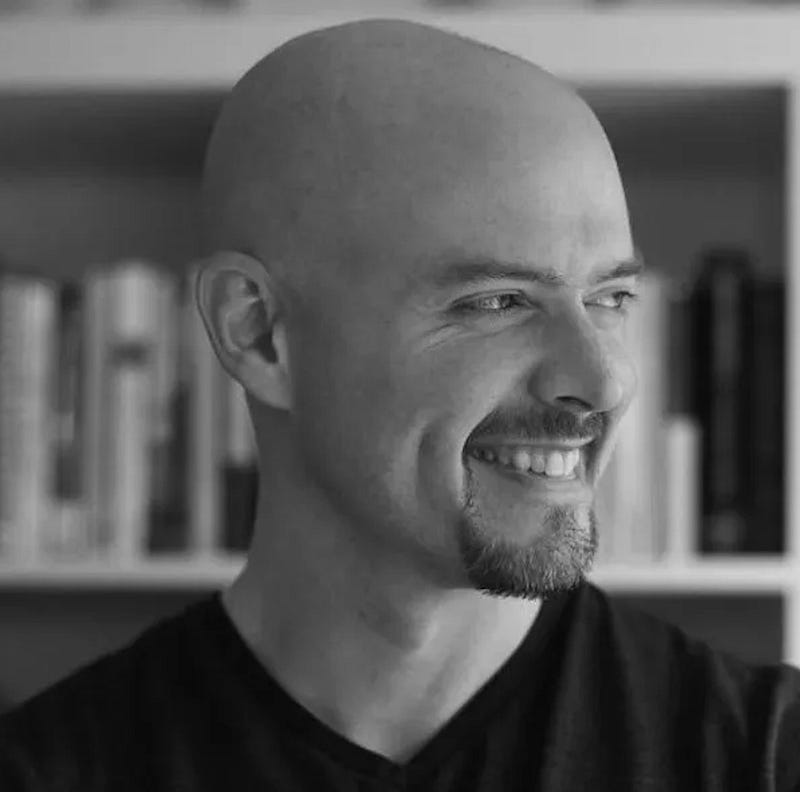
Walker McKnight wrote the original screenplay “Street Rat Allie Punches Her Ticket” which won a 2019 Nicholl Fellowship in Screenwriting. I had the opportunity to chat with Walker about his background, his award-winning script, the craft of screenwriting, and what winning the Nicholl has meant to him.
Scott Myers: You live in Atlanta. Has that always been your home?
Walker McKnight: Nope — I’m from Milledgeville, Georgia, a smallish city about an hour‑and‑a‑half drive southeast of Atlanta. I stayed through my first two years of college, which I did at Georgia College. It anchors downtown Milledgeville.
From there I went to University of Georgia in Athens and finished up. Then a brief internship with the State Department in Geneva, and on to Atlanta in January 2000 for grad school in international relations, which kicked off a ten-year mini-career in defense consulting and international security (my film MA came later). I’ve been in Atlanta since then, minus three years in DC for work. It’s coming up on 20 years since I first moved to Atlanta.
Scott: Atlanta is an exciting place now, right? There’s a lot of production going on there.
Walker: It is. It’s sort of weird to see it. I joke with people about how when it first started happening…I can’t remember when they passed the tax cut that kicked all this off, but right at the beginning when film shoots would start to show up, and you’d pass them in your car and be like, “Oh wow, what’s that? I wonder what they’re filming?”
Now it’s so common that it’s just more like, “Oh, it’s another traffic backup.” But still good for the city. There’s still a ton of production coming here and happening and you see actors walk in and out of my little coffee shop where I write.
Friends often say, “Oh, this must be great for you as a screenwriter. Atlanta’s really blowing up.” I tell them, “Well, everything’s ‘below the line.’” It’s just production. All the creative is still in LA, for the most part. Things written and produced out there come her to shoot. It’s still nice for the city for sure.
Scott: Let’s jump back in time. In your Nicholl acceptance speech, you mentioned how your parents were a huge influence on you, reading books and renting VHS movies, you said, with monsters in them.
Walker: Right. I remember making that specific request a lot.
Scott: When did you first realize that there were people who were called screenwriters who actually wrote movies?
Walker: I don’t know. I think I must have always known on some level, but it’s embarrassing how long it took me to realize it was an actual career field. It didn’t occur to me that just anyone could write a screenplay until I was 30. I joked in the speech about how I still have no idea what I was doing in my 20s, but there’s some truth to it. It took somebody handing me Syd Field’s Screenplay to get me started. I remember watching the Oscars long before then, and there were screenwriting awards, but somehow I never made the connection as a career field. Maybe it seemed too lofty and distant a field. Unreachable.
But once I started reading the books that explained it step by step, it was like, “Oh, yeah. You can just do this, and here’s an act structure, and here’s all this stuff.”
Scott: In your Nicholl acceptance speech, you said that for the 15 years you were learning the craft of writing, an imposter syndrome was your constant roommate. In contrast to people who knew from the age of 10 or 12 they wanted to do this, you discovered it late. Could you talk about that observation a bit more, that imposter syndrome?
Walker: Part of it was me being insecure about coming to it late and imagining the only people who had success with it had been studying story and literature and writing since they were kids. Which isn’t true, and I know that now, but it was still something that affected me. It was a sort of selection bias — anytime that I would hear about some filmmaker, maybe not writers, but some filmmaker that I loved…you read about people like Steven Spielberg, or…God, I remember reading Robert Rodriguez’s memoir. And they’re 10 years old and they’re making movies in the backyard and they’re putting on shows and all this stuff.
And those are directors, not writers, but I think I conceived of filmmaking, and maybe screenwriting by association, as a domain of people who just had that magic innately from an early age. Or at the very least since college, taking creative writing classes and working at it.
I took my English lit requirements as an undergrad, but I just didn’t pursue these things. There was this feeling of “Who the hell am I to think I can do this?”
Even in the first screenwriting workshops I took at 30 — which is still not old — I was definitely on the older side of students there.
Some of this is also just core insecurity that is part of my personality. I put it all together and pigeonholed myself as somebody who started too late to have any success at it. What I didn’t consider was that being a voracious reader and movie lover since early childhood has been its own kind of education. And to be fair, it wasn’t like I talked myself out of writing — once I started, I never stopped. I couldn’t.
Scott: I sold my first script when I was 32, and I didn’t write my first script until I was 31. I had a similar trajectory as you.
Walker: That’s an awesome turnaround! You wrote your first one at 31 and sold one at 32. That’s amazing.
Scott: That was back in the day when things like that could happen.
Walker: Oh yeah, I guess. Spec market was a little different.
Scott: At some point, someone gave you Syd Field’s book, “Screenplay.” They thought you were a writer, or you’d expressed an interest in writing, or they just thought you’d be a good writer? What happened there?
Walker: It was my friend Colin. He and I had been big film buffs forever. He was the only friend that I had through high school and college who I could rely on to watch really out‑of‑the‑norm stuff with me.
He would find crazy stuff or we would just go to the video store and just pick out unconventional movies. We both subscribed to film magazines and we would read about newer, edgier stuff and seek it out.
I remember when “Trainspotting” hit theaters, there was only one theater in the whole state of Georgia where we could see it — that was in Atlanta. We would make those trips, two hours in the car just to go see original stuff on the screen because that was the only option.
There was definitely no streaming back then, and it sometimes take up to a year for the indie movies to reach us on rental.
Anyway, he knew how much I loved film, and he probably knew I wasn’t super‑excited about the career path I’d gotten myself into. He was also dabbling with writing, so he was just like, “Here’s this book. It might give you an outlet.” I think he just kind of knew.
Scott: You read the book and did you immediately connect with the idea of screenwriting?
Walker: Yeah. It was like I’d always been an addict, but I didn’t know drugs existed. Somebody just handed me the drugs and I was like, “Hey there!” It was off to the races.
I think I started trying to write my first script even before I was done with the book. Of course, I still didn’t know I was doing, so I started looking for workshops and… this was 2005 he gave me that book. Is that right? Yeah, about 2005.
I spent over a year on that first screenplay, thinking it was going to be the most brilliant thing anybody had ever read, and I was doing wonderful things and reinventing a genre…I had no idea that it would cause straight‑up nausea in people. It took the workshops to find that out. I signed up for two at the same time.
Those were the first two teachers I mentioned in the speech, Jenna Milly and Michael Lucker, and they were both great. They managed to offer the perfect amount of constructive criticism about what I’d written while also being encouraging about the good aspects of it. And pushing me to keep going. “Oh, you have to write the next thing.”
I can remember Jenna said she was reluctant to tell students this, but her teachers at UCLA had told her that it took an average of eight screenplays for you to start writing good ones. That’s a difficult thing to tell a student, because a writer always needs to believe the thing they’re writing can be great, even if it’s the first or second. And there are exceptions to every rule, but it was right on the money with me — not until my eighth script did I write something that wasn’t abjectly terrible.
Scott: Going back to your speech, you mentioned four teachers by name, and you went to UCLA Professional Program in Screenwriting. You got an MA from Georgia State University in screenwriting.
How important has that structured academic environment been for you in terms of learning the craft, as opposed to just reading scripts and watching movies and breaking them down?
Walker: It’s been essential. The feedback really helps. Especially early on, getting teacher feedback on what I was writing and having the give and take on craft questions was a huge part of the learning process.
Screenwriting how‑to books can be wonderful, but you can trick yourself into believing that you’re doing what the author recommends. I certainly could. I would look at the examples they gave and then at my own stuff and imagine I was doing the same thing, that it was lining up, or that I had the act structure just like they described. But when someone who knows their stuff reads your script and is able to assess it directly, they can see something totally different. They don’t bring that hopeful bias to it.
Most of my education has come from just getting notes back on first drafts. That’s been crucial. Every first draft I’ve written — that first round of notes are brutal, but also so instructive. It never ceases to be a shock what the reader sees and how different it is than your own read of it.
I only listed four teachers in the speech. I’ve had others that were lovely, but Jenna Milly, Michael Lucker, Jack Boozer, and Tim Albaugh have been big influences.
Scott: You mentioned in your speech something I thought was really insightful. You said, “My favorite storytellers throughout my life have been able to conjure something out of nothing, and make me actually care. The difficulty of accomplishing that never ceases to blow my mind.”
When I heard your comment, I was reminded of that wonderful TED Talk Andrew Stanton from Pixar did in which that was his primary point: Make me care. Create an emotional connection between the story and the viewer or the reader.
Could you maybe talk a little bit about that and how important that is for you in your own writing?
Walker: I think the most painful note that I get back on my writing — the one I dread the most — is when a reader says, “That was really interesting.” Interesting — that terrible word! If someone reads a whole script and all I get back is “Walker, that was really interesting. You did this or that, had this little twist of plot, or this was unexpected, and that made it interesting” — it kills me, because I know the script had zero emotional impact on them. They didn’t care. They may not have straight-up disliked it, but they didn’t feel anything. No real connection to the story. I’d almost prefer someone telling me, “I hated this!” At least then they would have felt something.
When I’m watching a new movie or TV show and I hit a point where I feel my attention drifting, I always ask myself why. What’s going on with the story that’s losing me? The answer is almost always that I haven’t connected to the characters — I can’t make myself care what will happen to them.
That’s the most important part of any story. Everything else is just window dressing. Even now, I marvel at what good storytellers can accomplish. Stories shouldn’t work. The audience or the reader knows it’s all bullshit. They know it’s something a writer conjured out of nothing. Yet somehow the great ones can make you care about this completely unreal thing — whether or not this protagonist lives or dies, succeeds or fails, finds love or loses it, etc. It’s mind‑blowing.
Scott: You accomplished that with your Nicholl‑winning script, Street Rat Allie Punches Her Ticket, not only creating this whimsical, wildly entertaining story universe but the characters who inhabit it also equally colorful.
Plot summary, “Street Rat Allie leads a small band of teenage girls in their makeshift existence in their wildly original ramshackle city of the future where they struggle to survive.”
Let’s start there. How and when did you come up with this story concept?
Walker: I can’t pinpoint a specific time when the idea first took root. Like most of my scripts, it began with little daydreams of random scenes. If a particular daydream reoccurs enough, I reach a stage where I think, “OK, obviously, this means something to me. Let’s explore it and start asking questions.” It began with a really simple daydream a hardscrabble girl sitting in this chair in a warehouse, being interviewed by some creature so disgusting that it wouldn’t appear onscreen. You just heard a voice. And it was her standing her ground but obsessively chewing bubble gum as a means of coping with her fear. I kept imagining that scene.
Eventually, I asked “Well, who is she? What is she doing there? Why is she being interviewed? What’s going on? Why do I care?”
I probably went to my notebook and started concept development in early fall 2018. And for a while, it was just her — Allie — in this future city, sort of on her own. Somewhere in there, I started to think that she would be a part of something bigger, a kind of found family. Just her by herself was too bleak. Not enough emotional connection. So I made her part of this gang and then built from there.
Scott: The post‑apocalyptic setting, was that implied in this daydream? Did that emerge as you were developing the concept?
Walker: It was always a future version of Earth, but the world got progressively more difficult and their situation got more extreme as I kept developing the story. Bizarrely, I think Allie even had an actual semi-normal job in really early concept development. Then by the end, she’s the leader of a gang of homeless girls who are always under threat of starvation.
They went from above-ground home to sewer. Humans became the bottom rung of the ladder, the least populous species, sharing the city with all this other craziness.
I liked the idea that it was sealed off from the rest of the world and the viewer wouldn’t know if this was the best the world had to offer, or if (as is rumored among the characters), that there are much better places outside the Bubble. The legend became motivation for them.
The short answer to your question is, the world got progressively more extreme and difficult to survive in.
Scott: I know you love science fiction and fantasy. Of course, a big part writing in that space is the world‑building process. That’s what you were just describing in effect.
The idea of things getting progressively worse, I’m curious, was that arising from that learned screenwriter instinct to make things more challenging for the protagonist and the characters there or was that more deriving from your work with the characters, your direct engagement with the primary source material, the characters in the story?
Walker: Both. Once I decided she was part of a gang and she had these other girls, I started imagining that want versus need thing. Or sometimes it’s described as false goal versus true goal. I’ve heard it talked about different ways.
It meant putting Allie in the position of wanting something for herself, which is not wrong for her to do, and yet feeling this crushing pressure to be responsible for these girls and be their protector, even a kind of mother.
If just having enough to eat on a daily basis is a big issue in this place, then Allie having to provide for multiple people is so much more emotionally challenging than just her surviving.
So yes, it was a combination. Make it harder on her but also give her this crushing role and a legitimate reason for wanting to get away, to move on to what she can imagine is a better life.
Scott: They live in this bubble that’s largely inhabited by creatures that are not human. Let’s drill down into some of the humans, this gang of girls. There’s Allie who’s the leader.
What about Moonpie? How would you describe her?
Walker: Moonpie is the second in command of the Rats, but also she’s the one who’s been with Allie longest and who looks up to her the most. She is to Allie what Allie was to Jammer, who’s very briefly in that first scene, the previous leader who left.
In terms of Allie’s evolution, her biggest challenge is to recognize that the same cycle is playing out over again and that she’s got to break that cycle. Jammer, essentially, made the selfish decision to get out once she had the opportunity. She left Allie brokenhearted. Allie survived, rose to the challenge and became the leader that was needed, but only after a lot of pain.
Now, she’s about to do that to Moonpie. They have the closest bond. It’s going to destroy Moonpie the most if Allie leaves.
At midpoint, Allie realizes she can’t abandon them. She’s got to get them all out. But she’s still focused on something that’s ultimately selfish — putting them all in danger to fulfil her dream of getting out.
Whatever happens, it’s going to affect Moonpie the most. Allie’s emotional journey is tied to all of the Rats but it’s closest with Moonpie.
Scott: That’s interesting, your note that, in a way, she’s stuck with this handling of the mantel thing and trying to maybe break that chain.
Two other characters, PushPop, how would you describe her?
Walker: She’s kind of a middle child. She’s almost Guppy’s partner in a way. Guppy’s the only one who is still truly a child. Even though everybody takes care of Guppy, PushPop is Guppy’s right hand.
PushPop is also a visual representation of how tough the world is. She has the eyepatch from the beginning, and I was going for a thing where you wonder, “Maybe it’s just an affectation, a cool gang thing.” And when it’s removed, it’s like, “Oh, she’s literally missing an eye. It’s happened recently, and she and the others have had to deal with it.”
Scott: There’s this group of four, they are scrambling every day to find food. They’re street performers, right, to earn money?
Walker: Street performers and thieves, depending on the situation or the day.
Scott: They live at a place referred to as The Nest, which is this subterranean…this hiding place. You designated it in the scene heading as, “Home Street Home.”
Walker: Yeah.
Scott: I thought that, “Well, that has some thematic meaning,” because the story is about an ad‑hoc family, and trying to, I guess you could say, find a home.
Walker: Totally. I worried about putting Home Street Home only in a slug line and not explaining it. But Beta readers seemed to get it and like it.
Everything about them is constructed or ‘found.’ They’re a found family, it’s a found home, it’s a found little safe‑ish street. Home Street Home, that’s the closest they’ve ever gotten to an actual home.
I loved reading about the mudlark gangs in 19th century London that would troll the shore of the Thames at low tide for anything washed up they could sell. That was their income. They were orphans, living under the bridges and wherever they could. I can’t imagine what they had to do to create a space for themselves. Would they pick a spot and lie in a heap on top of each other at night, or were their territories and living spaces more constructed? Thinking about this kind of thing was part of the inspiration for Home Street Home and the Nest in the sewer.
And on top of just having a home, you’ve got almost literal monsters trolling the streets at night looking for a meal. That was part of the sewer aspect, having a space where they could lock themselves up behind a grate and a chain.
Scott: Let’s talk about some of these colorful characters who are threats. That initial daydream you had with Allie in this room, and being interviewed by some disgusting creature, I’m imagining that’s Big Green…that evolved into Big Green?
Walker: Yep, that survived pretty much intact to a final draft.
Scott: Big Green is the, I guess you’d say, the main nemesis in the story?
Walker: Yeah.
Scott: Describe Big Green for us.
Walker: He’s a gangster. He’s also probably the most biologically extreme of the creatures in the Bubble. Him being a blob who can absorb things is a dab at allegory for how he’s a leech on the city. Of all the criminal bosses, he’s the most powerful, the smartest. He’s stockpiling the food that everybody needs, cornering the market on supply, hoarding the cash.
I guess the name Big Green sounds like a really on-the-nose anti‑capitalist metaphor, but I promise that wasn’t the inspiration for him. But the fact that he’s a big, disgusting blob, he’s shifting, no solid form, hard to pin down, difficult to look at…he’s the worst of all these things you imagine in terms of criminal exploitation of others.
I don’t think of the denizens of the Bubble as aliens. My idea was, and there’s one line in the script about it, is that this is a version of Earth very far on from what we have now, a place in which a wild west of genetic experimentation has produced this massive diversity of crazy creatures. He’s one of the products of that.
Scott: Let’s talk about Cry Baby. What’s Cry Baby’s deal?
Walker: The robots in this script for the most part have very human‑ish personalities and dysfunctions. In terms of film legacy, they are closet to the robots of Wall‑E or the droids in Star Wars. They aren’t the most realistic robots you’re gonna see in film, though I imagine if we keep doing our best to make what we build as human as possible, we might get close.
I’ve always loved the idea of robots with big, wild personalities. Cry Baby is a renegade robot that’s gone a little bit wrong in the head.
Scott: Wants to be a human.
Walker: Wants to be a human, can’t control her emotions. Imagines that she’s never going to be satisfied being a robot, and she’s made her gang out of all the other broken, reject robots. They are not the ones that run the city. They’re the old models, the ones falling apart.
She resents pretty much everyone. Both loves and hates humans because she can’t be like them. In terms of the antagonists, she’s the wild‑card. Big Green is calculating but somewhat predictable. Bottom Dog is human, and he’s fairly predictable also. But CryBaby, you don’t know what she’s going to do from second to second. That’s part of what makes her scary.
Scott: You’ve got these three opposing groups ‑‑ Big Green, Cry Baby, Bottom Dog ‑‑ operating as antagonist‑type figures. Other characters, Breakable Velvet, Gutter Suckers, this incredible world that you’ve created of this environment.
Now, the plot hangs on a couple of things. There’s this ticket to get on of this train to leave this bubble, to go to some mythic, hopefully real, place that’s better.
Allie gets a ticket, but then loses it, and then Big Green has it, and says, “OK, you need to take this item somewhere.” That’s basically how the plot spins out.
There’s a great quote from Joel Coen ‑‑ I’m a huge Coen brothers fan ‑‑ where he said that all movies are an attempt to remake The Wizard of Oz.
I was thinking about this, because you’ve got, Allie is an orphan like Dorothy, and she dreams of going somewhere out there over the rainbow, get out of the bubble and go someplace else.
She has these three friends, like the Cowardly Lion and the Scarecrow, the surrogate family, and home being so important.
Big Green saying, “You’ve got to go do this thing,” is like the Wizard of Oz saying, “Go get the Witch’s broomstick.” I don’t know if that was intentional or not, or that maybe Joel Coen is right ‑‑ unintentionally or unconsciously, trying to replicate The Wizard of Oz.
Walker: That’s wild! It’s totally unconscious, but what you’re saying makes sense. There are definitely echoes of that. You’re the first person to bring that up, but it’s funny.
It was important to keep the world outside of the Bubble mysterious. We don’t truly know what Allie is going to find out there, but we also have a very real, tangible message from Jammer, the person who’s probably the closest thing to a mother she ever had. And she’s calling her on, saying “Hey, I’m waiting for you. It’s OK. I didn’t forget you. Come on.”
That’s gutting for Allie. Jammer is the most important thing in the world to her. For her to even consider walking away from these kids that depend on her, it had to be something that intense. To your point about Oz, you could say this is Allie’s version of trying to get home, because to her, wherever Jammer is, that’s home — even though it’s a place she’s never physically been. She is trying to get back there, because her home left her.
Scott: I think that separation is one of the most common and important themes that we see, and story dynamics that we see, in movies. She’s got it working on multiple levels. One is, she’s separated from this person who she, as you say, probably is the closest to a mother figure, to this place that she’s imagining in her mind that’s out there, that’s much better than the place where she lives.
Yet, to do that would separate her…If you did that, then she would be separated from this family, this group of girls that she’s not only become close to, but responsible for. That theme, the ticket gets separated from her, and so separation plays out throughout the story quite a bit.
Walker: Yeah, all these girls are terrified of losing each other. It takes Allie half the script to start to realize that she can’t possibly do that. But even once they decide to stay together, you still want to keep throwing separation at them, or the threat of separation.
They have to make the decision to destroy their literal home, the Nest, in order to save each other. So for a section of the script, they’re adrift again. Even at the end, when three of them have been told by their leader to get out and save themselves, they still can’t do it. They have to stay just for her.
Scott: That ending is quite noteworthy, because it’s got so many twists and turns to it, and you write action sequences so well. How many drafts did it take for you… How long did it take for you to hit that ending, because it’s tying all these storylines together in an intricate, and yet a logically and emotionally satisfying way?
Walker: The drafts question is always funny. I don’t know if other screenwriters wrestle with this, but there’s a point during revision when I don’t know what to call an actual draft vs. just fiddling with little bits of the story.
In terms of a page one rewrite where significant things changed, maybe three to four drafts. Certainly not more than four. Then after that, it’s moving pretty minor things around. Toying with dialogue or like changing little aspects of scenes.
I’ve been proud of other scripts I’ve written, but I don’t think I’ve ever come to care as much for my characters as I did for this group of homeless girls. In early drafts the endings were a bit darker, and I just found I couldn’t end things that way for them.
I put them through hell, and then I keep them in the city even though they were trying to escape. Life isn’t necessarily going to be massively better for them going forward. So given all that, I had to let them walk off into the sunset, arm in arm. It took a little bit to get there, but I got there.
Scott: That classic ending: “Give them what they expect, then give them what they want.”
Walker: Which was never my instinct. In my early days of screenwriting, I was very much into the downer ending, or the last‑minute, pull the rug out from them, “oh no” kind of thing.
I’m glad I’ve moved away from that. Not that that can’t be done super well, too, but over time, I’ve come to a more direct emotional connection to my characters than I probably had early on.
Scott: You come back to that point we talked about up‑front, about caring?
Walker: Yeah.
Scott: The last thing I’d like to discuss about the script before we move onto some craft questions is that there’s a sense of humor in it. With all the stuff going on in this ruffian, post‑apocalyptic world, there’s a very specific tone there.
Is that more a reflection of your writer’s voice, or is that something you actually thought about? Because I have written comedies, tone is such a critical thing. This is not a comedy, but there is humor in it. I’m curious about how that evolved, or how that worked for you?
Walker: Certainly it’s voice to some degree. It’s what I respond to. A lot of my stories involve people maintaining their sense of humor in the face of bizarre or supernatural or sci-fi threats. Standing up and staying tough but having a quirky sense of humor about it. I don’t know why that’s such a thing for me.
I probably worried about tone more than anything with this script. I was definitely going for something specific. I’m so impressed when storytellers in any medium manage to nail this incredible mix of diverse tones ‑‑ humor, weirdness, danger, actual stakes, heartbreaking moments, dark moments, light moments ‑‑ and have them all work together somehow in a big soup. That blows my mind.
This example is as far away from this script as it can be, but I just got through rewatching the first couple of seasons of “Veronica Mars.” So good. It does what I’m talking about — having legitimately scary, dark, brutal things happen while also somehow finding the light moments and the weird, slanted, funny take on it.
I’ve often described what I was going for in this script as a “fun dystopia.” Most of the times when you see dystopian stories, they’re deadly dark. The characters are constantly surrounded by and mired in all these reminders of the vanished old world. “Oh, here’s everything we’ve lost.” Everyone is dirt‑caked and struggling. Everything’s misery.
I tried to take this into a post‑post‑post‑apocalyptic place. It’s so far beyond a collapse that the characters barely even care about what was lost or what came before. It’s just become a series of trivia question for them. This is just the reality.
The place might be a nightmare, but they’re still kids and they’re going to find humor in things. They’re used to seeing giant, scary, horrifying monsters loom over them. Sometimes it will be funny to them, or they will naturally crack wise. Fun dystopia! I don’t know if I succeeded in making that, but I tried.
Scott: What’s the status of the script?
Walker: Nothing’s happened yet, but I have a management team, so that’s one lovely thing that the…
Scott: Who’s that?
Walker: The company is Fourward. It’s Jon Levin and…
Scott: Jon Levin. He was my agent for many years…
Walker: No…
Scott: Yeah, at CAA.
Walker: Yeah, it’s him and another manager named Sean Woods. They’ve been super‑cool, and Jon’s been really fun. They’ve been getting it around town and getting reads from people. We’re still in that process.
Scott: Jon’s really smart.
Walker: Oh God, yeah. He knows everybody. Even in just the super‑brief time I was in LA doing the Nicholl Fellowship week stuff, they both got me into four really nice generals. So yeah, they’ve been great.
Scott: Let’s jump to a few craft questions here while we have a little bit of time. Let’s talk about your prep‑writing process. What is that like?
Are you just noodling around in a notebook, or do you have a specific set of processes that you do when you’re developing a story?
Walker: I have a couple of digital means and a little pocket notebook that I write down story ideas in as they occur to me. Just throwing in random scene or story nuggets.
But once a specific idea has started to get its hooks into me, I’ll decide to explore it in earnest and break out a new notebook to fill that up. And I stay with pen and paper for quite a while before I go to actual pages on a computer.
I force myself to stay in that pen-and-paper concept development phase as long as I can. It’s a “don’t let the cement dry” kind of thing. I’m trying to keep it fluid so I can explore every element of the idea. So I’m jotting down stuff about the world and characters and why I like the idea. Asking what it means to me, why should I care, why is this story happening now — all those really big questions. At a certain point, I start to toy with structure options. I’ve sort of intuited most of them by then, but I force myself to get literal with questions like “What’s that inciting incident? What’s that central character question? What’s the first act? What’s the midpoint?”
I’ll play with that a while, and if I get to a point I’m happy with, I’ll start outlining. A really detailed outline. I don’t go to pages until I have every scene described and in order. Of course, it will change over time, but I really force myself to avoid page one before that process is finished. I may write dialogue and scene snippets by hand in the notebook, but there is no actual digital screenplay file created until the outline is done.
Then I’m on the first draft, however long it takes me. Sometimes that depends on what’s going on with the day job, but I’m usually relatively quick with the first draft.
I’ll revise that a couple of times. Then I’ll get that out to beta readers, usually four or five people. I’ll get notes back, rewrite it again, maybe revise that again, and then get that to maybe just two or three people.
You have to be strategic, because it’s hard to ask people to read stuff more than once. Sometimes I hold people in reserve and I’m like, “Well, that person’s super‑sharp with their notes, so I’m going to wait until I’ve got two or three drafts under my belt. Then I’m going to go to that person and they’re really going to give it to me.”
Then it’s another rewrite and polishing. I think like most writers, there’s never a point where I think, “OK, it’s done.” It’s more like “the competition deadline’s coming up, and I’ve gotten to the point where I’m just fiddling with little individual lines of dialogue, so it’s time to let it go.”
Scott: What about writing a scene ‑‑ structuring a scene, laying it out, writing a scene? What are your goals?
Walker: The first goal is that I find it fun and inspiring and exciting. Hopefully something in every scene I can get excited about that. But beyond that, it’s a lot of basic Screenwriting 101 stuff. Conflict in every scene, no purely exposition scenes, goal and opposition to goal. If my protagonist is not in a scene, there really needs to be a very good reason.
I’m sure that sounds very basic, but I do think about these things.
My first draft is very…I’m caught up in the story and I’m having fun and I’m discovering these places and living these moments with the characters for the first time. Even though there’s an outline, I try to make it about just discovery and fun. I’ve been imagining the movie, and I try to live it in the moment.
In later passes, I can start to judge each individual scene and get serious about whether or not it’s justified or the way it’s structured. But that first draft, it’s just the magic (hopefully).
Scott: That’s interesting, because I always recommend that with the students and writer clients and whatnot, say, “OK, yeah. It’s great to work out the outline scene by scene, and I’m a huge proponent of that ‑‑ doesn’t work for everybody, but at least just give it a try. But when you actually sit down to write the scene, go from more of a feeling place, like Ray Bradbury says: “When you sit down to write, don’t think ‑‑ feel.” Have fun with that first draft. Really allow yourself to enter into the lives of the characters and be with them and just see where that takes you. That way, you get that balance between left and right brain.
Walker: Yeah. Unless you’re lucky enough to actually have your film made, I think you’ll never get closer to actually watching your movie than that first draft. That’s always the most fun part for me.
I don’t worry about length on the first draft. It’s not rare for me to end up with a 160‑page first draft. I don’t worry about it, because I’m letting whatever I want to happen (without straying dramatically from my outline).
Scott: You’ve still got a day job. How do you work your writing life into that?
Walker: There are pros and cons to my day job, but it’s a freelance kind of education-technical writing, which gives me some flexibility. I work from home and I work from coffee shops, and I mostly make my own hours. It helps me choose when I want to write. I can choose to start at 8 AM with the day job and write on a screenplay in the evening, or I can start and do my first two hours of the morning with screenwriting.
I know I have friends with very demanding all‑day office jobs who are still able to write. I don’t know if my trajectory would have been the same if I had the same.
Although I do write some every day, weekends are big for me. I will spend generally at least four hours a day, usually the mornings, on whatever the screenwriting or fiction‑writing thing is that I’m working on.
Scott: That’s right, because you’re also a novelist too, right?
Walker: Nothing published yet, but yep that’s a big goal too. I love both mediums. I’m rewriting a novel draft currently.
Scott: What about the Nicholl experience? How was that whole thing, where you get the call and then you’re going to LA…
Walker: I was naïve about what a big deal it was. It’s not like I didn’t know the Nicholl Fellowship was really important, but I was unprepared for everything that went into it after winning.
Maybe it’s just a consequence of having written for 14 or 15 years without anything happening, but seriously, my aim going into this competition was just to make semifinalist again.
I’d had a couple of semifinalist finishes before, and I knew if you make semifinalist, you will reliably get ten or so requests for reads from various producers and managers. I thought “that would be nice. Just let me get semifinalist.”
Then I made finalist and I was like, “This is nuts.” And even though that’s down to just twelve people, the idea of being one of the winners still seemed ludicrous to me.
I was so sure I wasn’t going to get it that waiting for the announcement didn’t stress me out. I’d just assumed that was it, and I was happy. I was like “Finalist ‑‑ that’s huge. I’ll take it and go along my merry way.”
Once we reached the finalist level, they put us all in touch with each other. We’re still in touch. Everybody’s super‑cool. We all chatted constantly until the announcement of the winners. Then you have to get on Skype and be told that you won. The Skype call is wonderful but nerve‑wracking. A good chunk of the committee stands there in your little Skype screen ‑‑ four in the front and five in the back, staring down at you. All incredibly nice, but still intimidating.
Then it was just getting ready for the Fellowship week in LA. They did so much for us, Joan and Chris and Melissa, I’m so grateful. Meeting previous winners was really helpful too. It’s great that you put up these interviews on your blog, because I was able to read some from previous winners I knew I would meet.
We had some workshops where they laid down their experiences working for a few years. Lots of advice. “Oh, this is what it’s like when you go do a general meeting, and this is how you should act. If you get chosen for a job, here’s our recommendations for that.”
We had a big lunch with the members. Julia Chasman and Dan Petrie introduced me at the ceremony, both were so wonderful. I spoke with them at length at the lunch and got to geek out with them over films I love that they wrote or directed or produced. It was just a week of that, and then of course the ceremony itself was just absolutely nutty.
I made those jokes at the beginning of the speech about a panic attack, but I wasn’t kidding. That was the first time I’d ever given a public speech. Even the first time I’d spoken into a microphone my whole life, and I had to do it in front of a thousand people. It was wild.
Scott: Let’s wrap it up here with a question that you will doubtless be asked many, many times over hopefully a long and fruitful career. What advice can you offer to aspiring screenwriters about learning the craft?
Walker: I would say to always remember ‑‑ this will sound very in-the-clouds romantic, but just always remember why you’re doing it. I think writing should always be, at its core, because you want to make somebody feel something. You want to give them a wonderful experience.
Whether it’s sitting down in front of their TV or going to the movies, you hope to be part of the chain that got them there, and that they had a good time, and got excited, felt something meaningful.
There can be many moments of frustration in writing, like you’re on your tenth draft and still rewriting and getting back notes and the whole thing starts to feel more like a math problem than an actual story…but it’s all worth it if your heart is in the right place and you’re actually trying to bring something to somebody.
As for learning the actual craft, I just say find great teachers if you can. Get through a lot of teachers, hear all their insights, get all their feedback. Off the top of my head I can think of at least seven I’ve had.
And find great readers! One of the biggest challenges for me has been finding and making the relationships with people who can read my scripts and give great notes. It’s so essential.
So I do recommend classes. I never did an MFA, so I can’t speak specifically to the value of it, but I made many valuable relationships through the UCLA program and the GSU MA program in Atlanta, plus the various workshops I took.
It’s easy to let those relationships fade, so avoid that if possible. Keep emailing with these people, and don’t just use them for notes. Make personal relationships. Reach out to them even when you don’t need them. Offer to read and give notes on their stuff even when you don’t have anything you need from them.
I’m probably rambling at this point. I think that’s all I got. Read a lot! Scripts, but books too. Find and watch movies you love. See stuff that inspires you!
For my interviews with every Nicholl Fellowships in Screenwriting winner since 2012, go here.