Go Into The Story Interview: Vanar Jaddou
My conversation with the 2020 Nicholl Fellowships in Screenwriting winner.
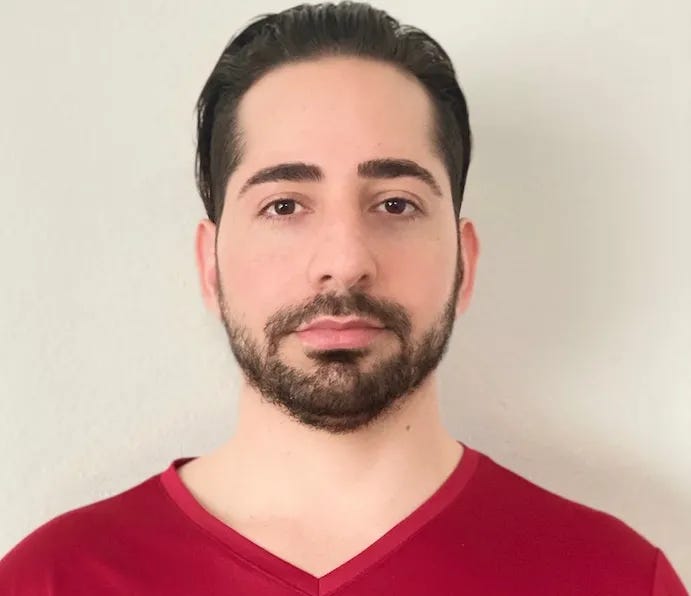
My conversation with the 2020 Nicholl Fellowships in Screenwriting winner.
Vanar Jaddou wrote the original screenplay “Goodbye, Iraq” which won a 2020 Nicholl Fellowship in Screenwriting. I had the opportunity to chat with Vanar about his creative background, his award-winning script, the craft of screenwriting, and what winning the Nicholl Award has meant to him.
Scott Myers: You are first‑generation American, right?
Vanar Jaddou: Yeah, first‑generation. My parents came here from Iraq. They’re from a village in Iraq called Tel Keppe or Tel Kaif. It’s in the north of Iraq. That’s where a lot of Chaldeans came from.
Scott: You settled in the Detroit area.
Vanar: Yeah, my dad came to Detroit first. He’s the oldest child in his family. They’re 10 kids, seven boys, three girls, and his parents, so 12 total. My dad’s the oldest. When he came here, he and his brothers would have gotten enlisted in the war if they didn’t come. When he was 21, he brought his two younger brothers with him who were 18 and 15 at the time.
There are two primary locations where Chaldeans settle. Detroit is one, and San Diego is the other. My mom’s family went to San Diego. Eventually, maybe 10, 12 years later, they met up in Detroit and they got engaged after a few weeks and built a life here.
Scott: If I’m not mistaken, that’s the largest Chaldean population, over 100,000 people in the Detroit area.
Vanar: Yeah, definitely. There’s more than that even. Detroit is the largest area for Chaldeans. When you take into account Saddam and then even after Saddam with ISIS coming in, basically, those villages were completely wiped out, so they needed somewhere to go. There’s Chaldeans in all parts of the world. There’s maybe two million of us or so worldwide, I would estimate.
But Detroit is the number one place where Chaldeans settled. It’s a very small culture. Of course, people like to settle with their own. It definitely makes it a hotspot for Chaldeans.
Scott: Your father, I understand, had a small video store. You didn’t have cable, but you were watching video, VHS tapes when you’re growing up.
Vanar: Yes. My dad had a small video store. My dad put us to work when we were really young. Even before I could see over the counter, it was a place that I was working. He used to get the promotional VHS tapes all the time, the ones that were…before they came to theaters and before they were released on VHS, they had these promotional tapes. We got to watch all those demos. Just being in that video store all the time being surrounded by that, I really fell in love with movies. I used to binge‑watch them constantly. Whenever I worked, he’d let me take home whatever I wanted, even rated R movies, anything.
I watched anything and everything when I was young. Even some of the horrors, they’d be in a corner of the video store, and it’d be a little bit darker there. I’d be eight or nine‑year‑old kid terrified to go to that section of the store. [laughs] It was good times. Good times.
That’s definitely what sparked it for me. I mean, it’s never something you know until later on. You never know it’s going to lead to something like this.
Scott: You didn’t discover screenwriting until a little later, though you did take to writing pretty early on. I remember reading an interview with you. You talked about how you were writing skits in sixth grade. How did your interest in writing develop?
Vanar: Writing in general, I’ve told this story before that my mom used to make us write a short story or draw. Usually, we drew Dragonball Z or some anime characters. She used to make us draw that before we went outside to play sports. That’s initially where I fell in love with the arts in general.
Later on in school, it was something I discovered that I was pretty good at compared to other subjects. I remember in eighth grade, we had a really, really strict teacher. Would never give out As. If anybody got an A on a paper, it was a miracle. I was getting all As on all the papers. That’s when I thought that I was pretty good at writing.
I went to a specialized high school for math, science, and technology. I remember even writing the chemistry reports, the teacher would have a “see me after class” note. I’d be like, “What’s this about?” She’d be like, “These are not poems. This is not literature. This is a science report. I just want the facts.”
I tried to turn anything into a short story or into something poetic or literary. I majored in English literature in college. I was going to be a lawyer. I’ve talked about it before about the arts, they’re not a big thing in Chaldean culture. There are certain things, especially first generation, are expected to go into. It’s either entrepreneurship, law, medicine, engineering, finance. One of the staples.
We don’t have a lot of artists. We don’t have any screenwriters. I think I know only one Chaldean screenwriter out there in the world. I was going to go to law school. I chose against that. It was obviously a bit of a shock to everybody.
I don’t regret it. It’s been a struggle to this point, as it’s been for everybody, all of us. If you ever want to do anything worthwhile in life, then it should be challenging. That’s generally how I got to where I am today, I would say.
Scott: You had an interest in movies. At some point, were you watching these films when you were a kid and seeing “screenplay by” or “written by” or did it come later that you realized there are people who actually write these things?
Vanar: That probably came later. After college, I realized it was something that you could do for a career. It was never seeing “written by” or something and me saying I want to be that person. It was more of an infatuation with film and an infatuation with writing, and they just came together.
Having watched so many movies, I became almost a film critic. Not just for the writing or the directing. I would look at everything ‑‑ the acting, the cinematography, the music, the set design. Every single little component of a film, I would sit there and dissect it.
We all do. We all watch terrible movies and we all watch great movies. Especially when you watch the bad ones, when you say, “I would have done this, I would have done that,” after you do that for so long, it eventually starts to click that maybe I should try my hand at this and let’s see how I can do.
Scott: In another interview I read, you talk about some of your filmmaking influences. Clearly, you’ve had an immersive experience as represented by some of these names. Gilroys, Coen brothers, Christopher Nolan, Charlie Kaufman, Nicole Perlman, Spike Lee, Scott Frank, Vince Gilligan, Francis Ford Coppola, and Sophia Coppola. How did you go about learning screenwriting? Yeah, watching movies, but actually sitting down and understanding format, style and all that.
Vanar: When I first decided let me try my hand at this, I would start watching the films that I wanted to watch. Then I would have the screenplay pulled up if it was available, just going through it line by line as I was watching. I would pause and then read, and then play again and read.
All the great movies I had already seen prior, I went back and read all those scripts. In the beginning, I tried to mimic a lot of people’s techniques, which helped and didn’t help at the same time. “Goodbye, Iraq” was the fourth script that I wrote. Prior to that, I wrote a couple really bad scripts, I would say. Of course, there was a learning process. We all have to write those to start.
Then I realized that I wasn’t at the level that I wanted to be at. I’m still not at the level that I want to be at. To me, there was a huge gap between me and…I would read Oscar‑winning or nominated scripts and I would just shake my head and say, “How did they do this?” I couldn’t figure out how they were doing it.
I had to go back to the basics. I started reading a lot of books on screenwriting. That helped me to develop my technique structure‑wise and character‑wise and all of that. I was already a literary buff, but I went back to reading some classics and looked at it from a different angle, an angle of a filmmaker. If I was to turn this into a movie, what should I be looking out for?
I did a lot of little exercises like that. Then what I did was I compiled all this knowledge into this 25, 30‑page document on techniques of writing. Now before I write anything, I go back and I read that whole thing. It just takes 30 minutes to an hour.
What I found out was a lot of these techniques that these writers use, they probably don’t even realize that they’re using them. It’s just embedded into their subconscious. For me, what I wanted to do was try and figure out a way that I could do that as well. How can I just have this be a part of me without constantly addressing it?
Scott: A lot of writers talk about the importance of that subconscious writing, coming from that more intuitive state. It sounds like what you’re trying to get at.
Vanar: Yeah, exactly. If you don’t have that embedded in your subconscious, then it’s going to take you a long time to write a script. The script is going to ultimately progresses as the techniques supporting it start to evolve more and more. That’s what happened for me with “Goodbye, Iraq.” Going forward, I’m hoping that this just becomes more of second nature to me.
Scott: You mentioned in an interview, “I’m interested in good storytelling. It could be the type of adventure that’ll shake your world, frighten you, make you laugh, sad, create that knot in your stomach, cause you to question things, enliven all these different emotions that were dormant before you sat down to read this or watch that.”
I think that definitely applies to your Nicholl‑winning script, “Goodbye, Iraq.” I’d like to move into that part of the discussion. Described as an action‑adventure thriller about a paranoid ex‑soldier who tries to assassinate Saddam Hussein. When he fails, he and his daughter, 13, have to make a nightmarish trek from Iraq to the United States while being hunted by Saddam’s ruthless regime.
On a much deeper level, it’s a story about a father and a daughter, two people who see the world in completely different ways. In the script’s title page, it says inspired by true events. Could you unpack the genesis of the story and maybe what those true events were?
Vanar: Sure. My dad and my late grandfather shared with me so many different stories, untold stories of Iraq, of their villages, of their people there, what they went through under the regime of Saddam. There were so many differing opinions, actually.
That’s where some of the initial seeds were planted. Several other things are true, like the hanging of his parents, being robbed in red as communist would be. Parts of the refuge were real. Of course, the chemical attacks on the Kurds.
Things like my father’s cousin in Detroit who came here from Iraq and who started a column and started writing things about Saddam and thought he was safe on the other side of the world, but he was found murdered in his store a few days after he wrote a column.
A lot of things were true, but it was also finding that synergy between truth and fiction. As anybody who’s writing historical fiction knows — if you want to categorize this as such — we’ll find that there needs to be that collaboration between fact and art. That’s where the initial seeds were planted.
Then of course, there were dozens of interviews with Chaldeans, with Kurds. I spoke with the Director of the International Crisis Group for the Middle East to make sure things were historically accurate. Then all the individual research that I did, which took me well over a year. That’s where I got the blueprint. But a script is much more than a blueprint.
Like I said in that quote, to me, films have an obligation to entertain. Engaging, informing, empowering, and enchanting the audience are all important. Those aren’t just random words. They’re necessary, each of them. But to me, the number one duty of a writer or an entertainer is to do that. Entertain.
You see sometimes a film is very engaging and informative, but it’s boring. Nothing happens. You’ll see an action film is very entertaining, very cinematic, but it lacks any emotional depth. You’ll see a film that can empower, but it comes up short on a conceptual level.
To me, I always ask, “Does this script deserve to be shown on the big screen?” You say yourself I need to ascend to that in order to produce my best work. For me, I feel like satisfaction is the enemy of artistry. I’m very harsh to myself, very self‑critical. Harsher on myself than anyone else.
That’s the bare origins of “Goodbye, Iraq,” and then everything else is a product of imagination. Cormac McCarthy, he’s been very inspirational for me. The way that he crafts his prose, his themes. Everything he writes is pretty violent and dark. The stakes are always life and death. I leaned into that.
No Country for Old Men, for example. That’s one of my favorite movies. For my script, I wanted to find a way to subvert genre in a way and come up with something that I had never seen before. No one has ever seen a movie like “Goodbye, Iraq” before. It doesn’t exist.
Scott: You certainly start off the story with a bang, quite literally. The two central characters in the story, the father and the daughter. The father is Mahzen. He, as noted in the logline, attempts to assassinate Saddam Hussein. That’s the opening incident. Did you always have that in mind, that opening?
Vanar: Yeah, I did. I always wanted to start with that and see what that would catalyze. That’s something that did happen. There was someone I knew who tried to do that. There were many other people, of course, who tried to do that as well, unsuccessfully.
I wanted to build the whole story around that first scene, because that’s what set everything in motion. I wanted it to be fast‑paced. I wanted them to be on the run the whole time. To be looking over their shoulder the entire time. That was the way that I thought would serve that purpose best.
Scott: That does set everything into motion. It causes the whole narrative engine to get kick‑started. How would you describe Mahzen? His backstory that led him to this crucial point where he’s attempting to kill Saddam Hussein.
Vanar: The idea for Mahzen’s character came from not only people I interviewed, but from an imagined version of what my father could have become if he was enlisted or he joined the regime, which they were pressuring him to do so.
I wanted him to experience some of the paranoia and some of the guilt of what he’s done in his time there with the regime. He was a character, I thought, who had been plotting this for many, many years. He had joined the regime not because he wanted to help them, but because he wanted to be privy to their secrets and eventually one day, his time would come where he would have this opportunity.
He was a mole who was in the regime, but was working with the resistance and he never forgot about what the regime and Saddam did to his parents. He held on to that for his whole life. Everything he did in life was built around that. Built around waiting for this moment.
Now, with his daughter, he essentially took his final shot to not only try and avenge his parents, but also for his country. He saw some of the things that the regime was doing that he didn’t want to be a part of, but at the same time, he had to or else he’d be ousted.
He took his final shot. Then set off with his daughter hoping to build a better life for her than he had for himself. Along the way, little does he realize that she’s already experienced much of what he did when he was young. A lot of the violence, a lot of the horror, the very thing that he didn’t want to subject her to, she’s been subjected to on this journey.
Scott: Let’s talk about the daughter. Her name is Noor. Thirteen years old. These were two primary characters in the story, the father and the daughter. She’s spirited and lively, very smart. How would you describe her relationship with her father at the beginning of the story?
Vanar: At the beginning of the story, I would say her father is her hero. She lost her mother when she was younger. In Chaldean culture, it’s very patriarchal society. It’s very traditional. You always look at the father as a role model, somebody that you take a lot of values from.
Early on, I would say that her father is her hero. As the story evolves, she starts to learn more and more about her father and what he’s really like, what he’s really done. It changes her perception of him.
Scott: He lies to her about why they’re on the run, right?
Vanar: Yeah, he does. He tells her that they’ve stole some information, which is partly true. He has stolen some information that could incriminate a lot of people who were affiliated with the regime and some of the things that they did, but the real reason they’re fleeing is of course what he tried to do in the opening act and kill Saddam.
That’s something that Saddam would send his forces to the other side of the world to deal with. He’s not going to have one of his attempted assassins on the loose. He made that mistake too with Mahzen in that his parents were killed but Mahzen was spared and later joined the regime.
He also doesn’t want to make that same mistake with Mahzen’s daughter, with Noor. He wants them completely out of the picture. He doesn’t want them to be a threat at all and he doesn’t want to be looking over his shoulder.
Scott: The question you can’t have drama without conflict. You’ve got nemesis type figures. One is Saddam, who we only see for a few seconds of flashback but he’s not present. He’s present as this ghost looming over everything.
You’ve got these two characters, Angra and Sayeed. It’s not just that Saddam is offended by the fact that someone tried to kill him and he’s going to wipe this guy out. Both of them have a personal reason why they are personally connected to wanting to take out Mahzen. Isn’t that right?
Vanar: Yeah. That’s a very good observation by you, first of all. With Saddam, I wanted to create this big brother‑esque persona where he’s never shown. There’s this book called “El Presidente” where it’s kind of magical realism and they’re living under this dictatorship.
That’s how it was there in that time. You see these posters with Saddam. You see him on the news. You hear his name, all good things of course. If you say anything bad about him, then you disappear the next day or you’re found in a ditch somewhere.
I wanted to create that essence with him. He did have that godly power, almost, over life and death. For him to be this omnipotent, omniscient type of character, that’s what I was going for, that mythological feel that he was bigger than life. That’s how it was.
With Angra, he is an extension of that. He is this character who feels like he’s been spawned from the aftermath of this crime, from the very evil soils of Iraq to condemn Mahzen for this sin that he’s committed.
Of course, his position in the regime has been threatened now. He’s always been able to catch every enemy he’s pursued. Mahzen is the one who has evaded him. Now it’s become very personal for him. Mahzen was part of the regime while Angra was there.
Sayeed, too. Sayeed, on a more human level, thought he was like a brother to Mahzen. They came up in the regime together, fighting side by side. They’ve been to each other’s homes. They’ve seen each other’s families. It became very personal for him as well to have somebody like that under your nose the whole time, and he’s a liar. He’s betrayed you.
Everything he has said, everything he has done had been a complete lie. That Mahzen would do such a thing to not only the regime but to Saddam as well, is the ultimate sign of disrespect.
Both their motivations are very different. But Angra’s is deeper, because not only is it personal, but there’s much more at stake for him. Angra is more of that extension of Saddam who believes that everything they’re doing for Iraq, including all the chemical attacks, he believes it’s a cleansing. It’s something holistic, almost, in a sense and they’re doing the right thing. They’re purging everything. They’re taking out the people who are a threat to building the government they want. They don’t want radicals. They want prosperity for their people, truly, but it has to be their vision, and there can’t be any opinions allowed. It’s not a democracy.
Originally taking out Mahzen becomes about that. Upholding what they’re trying to build. Removing traitors. And then as Mahzen continues to escape, his position is threatened, his loyalty is questioned, and everything he once hung his hat on, of never letting an enemy of Saddam/Iraq to escape, is now in jeopardy. There is a ton at stake for him.
Scott: I think that’s super important, because even though we may think of a dictator like Hussein that he may tell people, “Go to the end of the Earth to take care of this miscreants,” that personal element will help sell it. Literally, they travel Turkey, Greece, United States. It’s quite a trek for these two guys.
I want to ask you a question about this journey. Was this a typical or traditional pathway to escape from Northern Iraq, the route carved out here in terms of their journey, or is that something you stitched together through research and just kneading cool set pieces?
Vanar: That’s a good question. It was a combination of both. I would say all the people that I interviewed, they all had a different journey of how they got here. There were a couple people whose journeys were a lot more extreme, whose circumstances were a lot different. They’re all refugees, but that word’s got different connotations.
It was definitely a combination. The interviews, research, and my own imagination, of course. Ultimately, I wanted it to be as dramatic as possible. I went to the extreme. I went to the very end of the line, of where I thought I could go where would something still be held viable and considered as a possible truth, but also wanted to cut out anything that was boring.
This is a movie. It needed to keep the pace. That’s what I came up with.
Scott: I was reminded of the movie producer Larry Gordon. He produced 48 Hrs., Die Hard, my movie K-9. He’s a big action guy. He told me once, when you write these kind of movies, you need to have something go whammo, that’s what he said, every ten minutes. Something big has to happen.
As I was reading “Goodbye, Iraq,” I know you look at it as inverting, subverting genres and whatnot, but it does have an action component to it, absolutely. You’ve got chase scenes and cars with machine guns. You’ve got people jumping over chasms. You’ve got hand‑to‑hand combat. You’ve got chemical warfare, missile strikes.
Was that construction of frequent action set pieces something you had in mind? I know you talked about how important entertainment is to you, so I’m imagining that yeah, you did have that in mind, or did that action arise as you were plotting and then writing the script, or maybe a combination of both?
Vanar: Going into it was something I already knew that I was going to do. When I started writing…Everyone’s process is different. For me, you need to put pressure on the protagonist and all the other characters any chance you can get. You need to see what they’re made of in a very short amount of time.
The audience doesn’t want to sit around waiting. Things have to happen fast with increasing tension and escalation. Those are the moments where real drama is born. Where real schisms can come into play is during those moments of truth, those conflicts.
I definitely consider myself an action writer. My favorite films are the big blockbuster movies that are high concept. Conceptually, they’re brand new and innovative, original, and they’re very, very entertaining, but of course, they have to all have heart, and they should be discussing something deeper, some important global topic, even if it’s just subtextually. I think that formula is what’s missing a lot in movies nowadays. But it has to be organic and part of the story. You can tell when someone is trying to jam in something, “oh let’s just throw this diversity card in there!” or whatever it is.
I pride myself on being able to write big commercial scripts like that that are just as literary as they are cinematic, and I don’t think many of those exist to be honest. Action is something that from the get‑go, it was always a part of the process. I did have a plan the whole time that, just like you said, things have to happen every 10 pages or whatever it is. There has to be those moments.
Scott: In fact, while we’re talking about action, let me read a little bit of your action description, which is quite vivid as I said earlier to you. It’s a very visceral script. There’s a moment where Sayeed has found Noor and the father. This is how you describe it.
“Noor takes off into the woods. She’s fast, real fast. Sayeed swivels.” Now I have to note, a bunch of double dashes separating this: “fathers ‑‑ daughters ‑‑ daughters ‑‑ men captured ‑‑ boot to the head ‑‑ boot to the face ‑‑ girls carried off ‑‑ screams — screams.” Then the next scene opens with “Nauseating nonstop forward motion. Rasped breathing.”
That’s obviously quite visceral, quite active. I know you mentioned the Gilroys. I know that Dan Gilroy’s Nightcrawler, that script had that double dash thing going on. Were there some scripts you studied that you were inspired by with that staccato writing style?
Vanar: That’s a good question. Maybe subconsciously, I was. Nightcrawler is a really good script. Funny enough, the dashes are something that I always used going back to writing in middle school.
It was a type of punctuation that I was always infatuated with. For me, every word, every sentence is something that I want meticulously crafted.
I know a lot of writers don’t think that way. That’s OK. I’ve heard a lot of even professional screenwriters say a script, a screenplay should be a blueprint. Don’t worry too much about the prose and that. For me personally, I never approach it that way. I want to immerse you completely in the world.
The punctuation, for example, there’s a reason for every stylistic element on the page. If you look at it like that, all the room on the page is extremely valuable, I only want to fill it with the most carefully selected words, then I think you get a better end result.
Technique, it’s not just about having a mastery of story and characters, and conflict and all that. To me, it’s just my personal opinion, but it’s also having a mastery of words. Of language. Language creates experience. Maybe that’s what stood out to the Nicholl committee, I don’t know.
Besides the story. I want you to feel like you’ve picked up and you’re reading something of mine. I want to create that particular style and way with words that you’re probably not going to see in most scripts. That’s part of your voice. That’s part of what will define you as a writer.
Scott: You mentioned the key word there, “feel.” I would agree with you. People who say that screenplays are fundamentally a blueprint to make a movie…At some point they are, as a production draft, but there’s the selling script. You’ve got to get people excited. You’ve got to get champions. You’ve got to get actors. You’ve got to get directors and people who are going to advocate for the project. That, by and large, is about getting them emotionally involved in the thing so that they’re excited about it. Word choices are big. I thought you do that quite well.
In fact, on the feeling part, I want to jump to something here on that, because it really is a father‑daughter story. There’s all this action going on. I was reminded as I was reading this, Joseph Campbell says that the hero’s journey, which takes place in the outer world, that’s the realm of the events that happen and the plot, is really at heart an inner journey.
There’s the transformation which takes place within the characters. You’ve got this epic journey ‑‑ Iraq to Turkey to Greece and eventually the United States. This couple, if you will, this father and daughter, each of them go through a shift, a transformation, a change. Could you articulate that? What did Noor learn about her father? How did her relationship change with her father?
Vanar: For one, she learned that her father is not the man that she thought he was. She maybe always had some kind of inkling as to what he might be capable of, what he might be hiding, but in this culture at that age, that’s never something that you broach with your father.
With the situation they were thrown into, she obviously became a lot more outspoken as the journey progressed. It gave her that courage to start asking the questions that maybe she always wanted to ask, but never had the heart to. By the end, her father is more of a hero to her than she initially thought to start. It comes full circle, and then even goes beyond that.
In her eyes, all the things that he sacrificed, just going through that journey with her father by her side, what he sacrificed for her personally, there’s this certain level of maturity that she got to by the end that she didn’t have to start. It was only going through all those tribulations that she was really able to appreciate everything that her father has done for her and is trying to do for her.
Scott: I don’t want to give away the ending, because it’s quite dramatic. The ending ending. Did you have that ending in mind from the get‑go or was that something that evolved through the process of writing?
Vanar: That definitely evolved. It was something I was going back and forth on. I had a couple different endings. I don’t know how you feel, but to me, the ending of the film is probably the most important thing. You could do everything well for an hour and fifty minutes. If the last ten minutes are not great, that’s what people are going to remember by your film.
I was going back and forth with the ending. I had multiple ideas for it. I wrote multiple versions for it. That’s the one that I settled on that I thought would be the most fitting in terms of character, in terms of arc, in terms of plot.
Scott: Let me throw out something to you to see whether this connects with you. It may have been something you consciously thought of or may have been one of those wonderful subconscious things that emerges there. There’s several themes.
Freedom is a big theme that runs through, but there’s a theme of God and faith, this rather tragic character, Abe. Mahzen’s rather cynical at this point throughout pretty much the story, but Abe is a believer, I guess you could say. He says something to Mahzen. “He will reveal himself to you in time, Mahzen, when you’re ready.” He’s talking about God. We’re talking about faith.
If Mahzen learns that his daughter is capable of doing stuff that he couldn’t perceive that she could do perhaps, then in the end, the conversation they have, that’s in a way him adopting a sense of faith that he’s believed that she will be OK. Is that a fair assessment? Does that ever occur to you at all or no?
Vanar: That’s exactly right. I’m happy you picked up on that.
Scott: There you go. One screenwriter to the next.
[laughter]
Scott: What a journey for you. Your family and telling the story, and the journey of the characters in the story, conceiving and writing it, and submitting it to the Nicholl. You win the Nicholl, you have people reading the material. What are you feeling now after having taken this journey with “Goodbye, Iraq?”
Vanar: The first thing I felt when I was given the news was validated, I would say. The first thing I did was…I like to listen to music scores when I write from films. I love this score from Gravity. I think it’s Steven Price. First thing I did was go outside and just plug my headphones in and listen to that, because it felt like I was…
All writers are in a very dark place until they get some recognition, until their work is read or produced or what have you. I felt like I was in that dark place for a long time. Listening to that score, the wordless music can say more about how I felt than probably I can ever articulate. It did feel like rising from the darkness to a brighter future. Initially, that’s what I felt.
Now, most of it has washed away. I look at everything in terms of athletics. You had a great performance or you won a championship, OK. Now, it’s a new year. Now, you have to move on. You have to prove yourself again.
I still put myself in an underdog role because I still feel like I haven’t ascended to the level that I want to. While I’ve won this award, none of my films have been produced yet. There are still other challenges that I’m looking forward to. I feel like those types of challenges, I tend to embrace them as opportunities.
Even selling this will be one. People are scared to touch movies like this because they haven’t seen them before. A lot of people in the film industry think similarly, they follow trends, but there are also bold artists and producers who are intuitive enough to see how successful something can be. See all the selling points that other people don’t. My challenge as a writer isn’t just to write, it’s to try and change the way the industry thinks about certain films, and break down how profitable such films can be for them because there are factors they are not considering. I would never write something niche that I didn’t feel could be a big international success, both commercially and on a type of critical level of course. It’s just not my style.
So what I’m feeling now, I want to get this made. This is an English movie with some Aramaic, which is what I speak, it’s one of the oldest languages in the world, and some Arabic. The lead two characters speak English only. Chaldeans can have a European look as well. My siblings, they are all light features and rarely pass for Middle Eastern. But I have more traditional features. Just to show how diverse the cast can be. This is a global movie. Not everything in the world needs to be based on IP or a news article that only 0.001% of viewers have ever read. So many millions of people can connect to this story on so many different levels, it’s not a Middle Eastern story, and destroying that perception is part of my mission.
Scott: What are you writing now? Can you tell us the genre or area of interest?
Vanar: Yeah. I’m writing an action sci‑fi thriller that centers around dreams and deals with some things that we don’t normally discuss in movies.
Scott: Big science fiction. Sounds Nolan‑esque in a way.
Vanar: Definitely. Like I said, something with a big blockbuster appeal. Something that could be watched by anybody anywhere. It has that visual element. It has the conceptual element. It’s grounded. Then it gets into some deeper taboo issues that we don’t always talk about.
Scott: That leads into some craft questions, if you don’t mind. The first one would be how do you come up with story ideas?
Vanar: Good question. When you’re writing a script, as you know, the inspiration is predicated on so many things. The process is never entirely the same. It depends on the genre. For me, usually, it starts on a conceptual level.
If you think of the elevator pitch or logline or what have you, if that doesn’t grab people right away, then no matter how good the writing is, no matter how good the story or characters are, it’s not going to excite people. I try to start on a logline elevator pitch type of level, building the concept, something that’s original, something that’s never been done before. Nicholl is an exception mind you, because I don’t think they care about concept too much, they’re looking for real organic stories and they’re looking for the next generation of great writers.
After that, I get into character. Sometimes you hear writers say, “Just let the character guide you. The character will take you places that maybe you didn’t envision.” Yes, sometimes. But sometimes you need something that’s more structured. There needs to be one central conflict that’s the engine that’s pushing everything forward the whole time. I rarely let my characters just free‑roam around and see what happens — only when I have writer’s block.
I need to put them in particular situations that are going to reveal the most about their character in the shortest amount of time. That’s my general process, I would say. I know everybody is different. I know some people, for example, they’ll just write a vomit draft to start, and then they just plow through it. For me, I like to start on page one every time. I’ll write, let’s say, 10 pages. Then, the next day, I’ll like to start on page one. I go back to those scenes, and I start revising right away.
Once I have a good draft done, I go through it and fix the big stuff first. Character and plot and structure stuff. I don’t like when writers disregard plot. You’re not just writing a story, you’re writing a movie. Then we get into smaller stuff. “Oh, this scene is only a 7 out of 10, 8 out of 10. How can I make this a 9 out of 10 or 10 out of 10?” Sometimes it’s just adding small little things. A connection between two strangers that will pay off. Whatever it is.
A lot of times, it’s going through the script after an adding moments like that that really elevate the drama, elevate the characters and the relationships, and create those higher stakes, any chance you can get to make the stakes higher, to get the audience take care more about what’s happening is something that you need to do.
Scott: How about themes? Is that something that you start upfront with, like you’ve got some themes in mind or something you discover along the way?
Vanar: Sometimes, themes are apparent right from the get‑go. You want to follow those themes. I feel like theme and dialogue are intertwined a lot. Also, that moment, when the inner journey is resolved and the exterior journey is resolved, the theme can also be expressed visually.
You can do it through that, through prose and through action, visually. You could also do it through dialogue and subtext. Sometimes, yes. Sometimes, when the story is completely in your mind, you already know the message or messages that you want to send by the end of it. But other times, it just comes out through the actions and words of your characters. How they respond in certain types of scenarios, certain conflicts.
Scott: What do you think about when you’re writing a scene? Do you have some specific goals? I know you want to be entertaining. You talked about that. Obviously, you have affection for words, but are there other goals that you have in mind when you’re approaching writing a scene?
Vanar: Yeah, sure. If you’re writing action, I really think everything that your character is doing should reveal something new about himself or herself.
For example, if it’s an action sequence and you haven’t demonstrated that your character is athletic or is strong and that he or she can take a bullet or has military‑type of maneuvers or as a sharp shooter, whatever it may be, everything needs to have a purpose in that sense.
In terms of the dynamics of a scene when multiple characters are speaking, I think you always want opposing ideologies that are both valid, those schisms I spoke about earlier. When two people see a similar situation completely differently, I think that’s what creates the drama and the conflict.
Then it comes down to layering. I’m never satisfied with a scene. I want another layer, then another. I’ll spend a week editing one scene even on the 10th draft, I don’t care.
Scott: Quite visually, are you interested in directing at all?
Vanar: Unfortunately, that’s not a skill that I have mastered. Maybe down the line, it’s something I would be interested in. I know a lot of writers want to direct, but for me, I feel like I wouldn’t be able to do justice to a script that I wrote if I directed it. I feel like there are people who are a lot more advanced than me in terms of their craft.
Writing is something I’ve focused on solely for the last nine years or so. I would never want to compromise the integrity of a film by doing something that I can’t do at an elite level. I am interested in working and collaborating with people who are as serious and meticulous about what they do in their line of work, as I am with what I do. If we can find a director like that for Goodbye, Iraq, if they put in the same kind of time and obsession as I did on my end, I think that it’s a movie that could help change the landscape of the industry and I could envision a best director nomination to be frank. We talk about inclusion, we talk about diversity, we talk about originality and inverting or subverting genre — here is a director’s chance. The movie is 75% English. Don’t be afraid to tackle it. You don’t need to be Middle Eastern.
Scott: One last question, I always end with this: What advice can you offer to aspiring screenwriters about learning the craft and trying to get into the position like someone such as yourself?
Vanar: Very good question. This is just my opinion. I’m sure that other people, like yourself, who are way more experienced than me can give better feedback. I’ll give my opinion. I think that if you really want to succeed on a high level, you have to be your harshest critic. You can never be satisfied.
You need to throw yourself in the ocean without a lifeline, without a flare gun. You need to be prepared for any kind of storm you’re going to weather, any kind of beast that’s lurking down there. You need to be prepared to sink or drown.
If you really want to do this, I don’t think that you should have a backup plan. People always ask me, “What are you going to do if this doesn’t work out?” I don’t know what’s going to happen if this isn’t going to work out. I hope it does.
I’d always say something just to get people off my back. I’ll continue consulting or maybe I’ll become a professor or something like that, but really, I never believed in a backup plan. I always thought a backup plan is an excuse to quit. Like, “Screenwriting, it’s not going to work out. OK, I have this to fall back on.”
When you have nothing to fall back on, then you’re all in. There is no lifeline. This is it for you. When you think in terms of that, then it really pushes you every day to get better. You start to read Oscar‑winning scripts and you say, “How can I get to that? What do I have to do to achieve that level of success or that level of writing? How can I get there?”
I know quite a few screenwriters, both professional and some that haven’t made it yet. I would really like to see that mentality of pushing their own limits. Not just for, “Yeah, we want a paycheck,” or “We want our movie to get made,” but to bring the best out of themselves. Seek mentors anywhere you can seek mentors, join writers’ groups. Don’t get discouraged. I fall back on Kobe Bryant’s lessons all the time, every day.
Aside from all that, the number one thing I would say is don’t be in a rush to send out your material, because you just get one first impression. That’s one of the biggest mistakes I always see. People are just so eager to make connections. They spend all their time doing that, sending emails, calling, going to mixers, whatever. You want to fly under the radar for as long as you can until you’ve honed your skill to that elite level. That’s the time to start coming out and saying, “OK, this is what I could do,” and then see the response if people don’t ignore you anymore. You know that, “OK, I’ve reached a level that…Now, maybe I could start thinking about turning this into a career.”
You have to be very hard on yourself. With the words from a language standpoint, my personal opinion is, don’t write a script like a blueprint.
I’ve seen people say, “I wrote a script in four weeks. I’m thinking. How can you write a script, a movie, in four weeks? How is that going to actually turn out?” You’re competing against people who have been working on their scripts for a year, or even years, and have nuanced every fine detail. Don’t be delusional.
The moment that I knew I was done with “Goodbye, Iraq,” for example, was when I went through, and I’m like, “I don’t even know if I could delete one comma here. I don’t know anything else that I could do.”
I’m sure there could be somebody, like yourself, could probably pick some things apart, but for me, I didn’t know where else to go. That’s when I knew probably I was done. On a language level, just make sure you understand that every single word counts, pick every word carefully, craft every sentence as meticulously as you can, and other people will start to notice.
And you asked me, how to get into the position I’m in, I’m not sure I’m in any crazy position or anything, but if you want to win Nicholl, you have to want to win. When the first batch of results come out, you’ll go online on Instagram and you’ll see everyone posting they made the top 20%, or they made the quarterfinals, and they’ll give a long speech about how happy they are. That’s fine, but you’re asking for my honest opinion, there’s a lack of honesty in the world. And in that world every person does not get a trophy. The chances of becoming a lifelong professional screenwriter aren’t that much different from becoming a pro athlete. If you’re trying to win an NBA championship, and you only make it to the playoffs, are you going to celebrate? No. Your mentality will take you where you need to go.
Scott: Maybe there’s one other secret tip, and that’s access to your 30‑page document that you put together.
[laughter]
Vanar: I think that would definitely be helpful to a lot of people for sure. That’s something like you’ll read a book, and you’re like, “Man, this book is not that good. I didn’t learn that much from it,” but you’ll take two things from it, two bullet points from a 200‑page book on screenwriting. Those two bullet points are worth it.
That document, if there is anybody that ever reaches out to me ‑‑ and, of course, I welcome people to reach out to me because I know how it feels to be in that situation ‑‑ I would gladly share some of my tips that could help expedite the learning process because, as you said, that’s definitely a big part. I won’t give you my email but if you really want to find me online, you can.
One of the things I always ask people not just in writing but in life is, what are some of the mistakes you made when you were younger that you realized now, or what would you do differently? It becomes a crash course in life.
If you made a mistake, for example, in your youth, maybe I would love to talk to you about this at some point. But in your life or screenwriting career, if you can fill me in about that mistake, then potentially, I can avoid it. I could save myself a year or two years just by not going down that path. I’m willing to share that with people who are serious about wanting to win Nicholl.
For my interviews with every Nicholl Fellowships in Screenwriting winners since 2012, go here.