Go Into The Story interview: Steven E. de Souza
An in-depth conversation with the legendary Hollywood screenwriter who has had an enormous influence on the modern action movie.
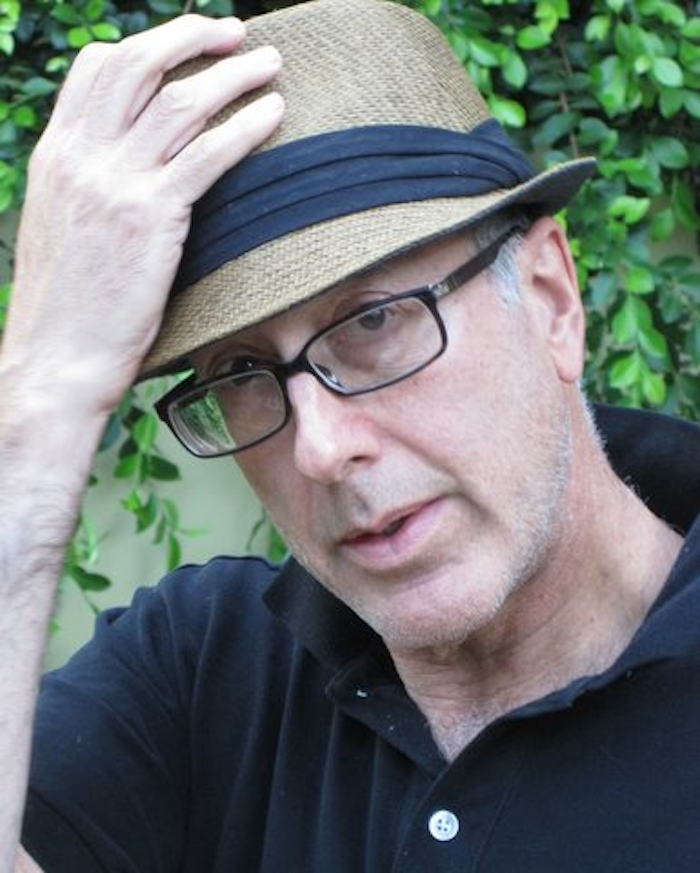
An in-depth conversation with the legendary Hollywood screenwriter who has had an enormous influence on the modern action movie.
Steven E. de Souza has written movies which have grossed over two billion dollars at the box office. Two of the projects he worked on are considered to be the prototype for their type of story: Die Hard (Action) and 48 Hrs. (Buddy Action Comedy). Other screenwriting credits include The Running Man, Die Hard 2, Hudson Hawk, The Flintstones, Beverly Hills Cop III, Judge Dredd, Ricochet, and Street Fighter, as well as countless uncredited film projects in which he worked as a “script doctor.”
I got to know Steven via Twitter and in 2016, I invited him to be a panelist at the Courier 12 Screenwriting Conference hosted by DePaul University (along with another legendary screenwriter from the 80s and 90s Jack Epps Jr.)
That session was so informative and entertaining, I vowed to do a longer interview with Steven. It took a few years, but we did it: A two-hour conversation covering the entirety of Steven’s screenwriting and filmmaking career.
Steven is a natural born storyteller and the fact he has been involved in so many notable movies means he has had a front row seat when Hollywood discovered the box office power of action and action comedy movies.
Today in Part 1, Steven describes his time as a journalist and local TV writer-producer in the Philadelphia area in the 70s. It was a wild time and he was definitely a part of it!
Scott Myers: Let’s jump into it here. You grew up in Philadelphia, went to Penn State.
Steven E. de Souza: That’s correct. I had, as an instructor, Philip Klass — pen name, William Tenn, the famous science‑fiction writer. David Morrell, the writer of Rambo also was another student of his, along with my roommate, Ray Ring, who’s written a series of detective novels about a park ranger detective, Henry Dyer. Tenn had a few graduates who went into those arenas.
Scott: But you first went into journalism.
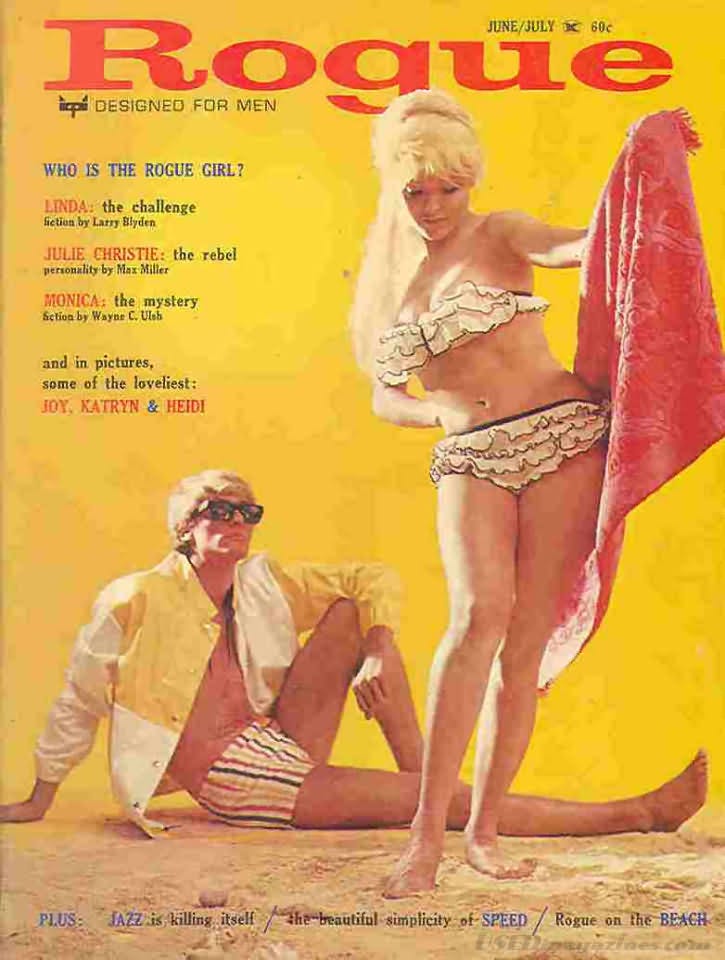
Steven: Yeah. Believe it or not, I was first published in my senior year of high school in Rogue Magazine, which at that time was trying to compete with Playboy. In fact, this got me in trouble. I brought it to school, and I’m showing it to classmates. The teacher says, “What are you passing around back there? Bring it up here. Well, Mr. de Souza, we don’t think highly of pornography here. You’re going to the principal’s office. The guidance counselor is going to meet you, and we’re calling your parents.”
We’re waiting for my parents to come in, and the guidance counselor and the principal are there, holding the Rogue magazine. “You just earned yourself a three day suspension. What possessed you to bring this to school?” I go, “Well, an article.” He says, “Everybody says that.” I said, “No. I wrote an article in there. It’s behind the centerfold.” He looks, and he goes, “Son of a bitch. That’s your name. What did they pay you for that?” I said, “$75.” “No kidding. That’s fantastic. Listen, tell his parents not to come.” and they let me walk out, suspension forgotten!
At the end of the day when they did the announcements on the PA, they go, “The pep club will meet in room three. Due to reseeding, softball practice will be on the soccer field. And congratulations to one of our seniors, Steven E. de Souza, who was published in… [long silence] …who was published today.”
Scott: [laughs]
Steven: In addition to writing for highly inappropriate magazines for a high schooler, I was also part of that first generation of young filmmakers running around with 8mm cameras making their own movies. My 20 minute epic was called “Coldfinger”, a parody of the Bond movies compete with a Shirley Bassey manque title song (you can glean the plot from the title — a supervillain obsessed with ice). I still shudder remembering we staged a holdup of a WaWa store where my villains brought actual guns from their father’s closets and a highway patrolman stopped by, and seeing the camera… just left!
Teenagers making films was novel enough in the late 60’s that we got a lot of press in the Philadelphia area papers, and, as it happens, a classmate of mine was Johnny Carson’s nephew and he mentioned it to Johnny, who requested that I appear on his show with a film clip. Typical of the luck that dogged me in my early years, literally the day before I had sent my only copy off to the inaugural Kodak-Cine High School Film Festival, and although I was a finalist, they took eight months to return the film. (To this day I wonder, if only I’d appeared on The Tonight Show at age 16, who knows where I could be today?)
After High School, I wrote for the local underground paper in Philadelphia, “The Distant Drummer.” This is around 1969. In a bizarre set of circumstances three people who were involved with that newspaper were later accused of murder.
Scott: Really?
Steven: Yeah. One was the famous African-American activist Mumia Abu-Jamal, who’s been in prison for a long time after what many people feel was a sketchy trial. He was, at that time, a high‑school student with a bootleg radio station. He would come in to give us the schedule for his radio station which we would publish.
Another one was Ira Einhorn, the nationally prominent leader of the Philadelphia anti-war movement often mentioned in the same breath as the Chicago Seven. But now better known as “The Unicorn Killer”: He murdered his girlfriend and hid her body in a trunk. He fled to France…
Scott: That’s a famous case.
Steven: A famous case. He was in France forever, where they refused to extradite him because of the death penalty. Finally, when the US guaranteed there would be no death penalty, he was extradited. He’s in prison now.
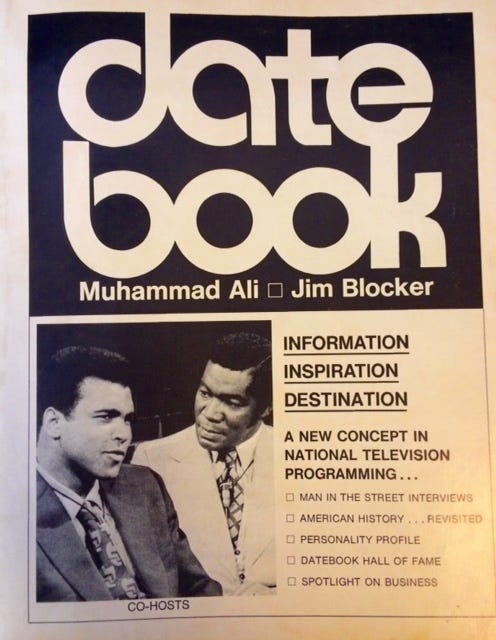
The third fellow, Jerome A. Johnson, was associate producer of “Date Book,” a local TV show I was working on also, who was also in there all the time. He ended up whacking the Mafioso, Joseph Colombo, in Central Park. We never could figure out, we’re at the TV station, Muhammad Ali is on set, we’re going, where’s our Associate Producer? Then we see in the news, he’s dead, shot on the spot by Colombo’s bodyguards!
I don’t know what was in the water cooler at the Philadelphia Distant Drummer, but that was strange.
Then, I wrote for The New York Times and a number of other publications, but I was working in local TV stations. My first job in television was for a pilot for a talk show that Muhammad Ali was the host, so one of my first employers was Muhammad Ali!
Then, I worked at a number of stations in Philadelphia, and finally, I had a steady gig at a PBS station that was across the river in New Jersey.
I had a time‑out after college. I was on active duty in the Army, I was a medic. I never left the States, but I did my share of pulling bullets and shrapnel out of some of our soldiers, most famously, General Wesley Clark, when they brought him back from Vietnam. He was one of the patients we had. I’ve met him since then. He keeps promising to give me an autographed pictures signed, “Thanks for the hospital corners!”
Also, strangely enough, you don’t think it’s going to happen if you don’t leave the United States, but I got injured in training. I get migraines to this day from a cervical injury when a helicopter door slammed into my neck.
Also, later, very unexpected on a normal day at the Army hospital, some of the guys said, “Let’s get some food. Forget the commissary, we’ll hit Mickey D’s.” and a truck hit them right at the gate of Valley Forge Hospital. Suddenly, we’re in suburban Pennsylvania, and we’re pulling guys we know out of a burning vehicle. One of them died while I was trying to insert an airway. People forget how much happens domestically in the military.
Anyway, when I came back from the army, I figured, “All right. Let me pick up my journalism slash entertainment career.” I’m looking in the newspaper and I see an ad, which you never see in real life, it says, “Writers, producers, directors wanted for a television station.”
But normally, an ad like that would be a come‑on and a scam. Because it was a PBS station and they had federal and state money, they had to run ads. I said, “This is great. It’s only a twenty‑minute drive across the river.”
I’m driving around, looking at the address, and where is it? It’s a bowling alley. The third time around the block, they’re putting a new sign over the bowling alley sign that says, “WNJT-TV New Jersey,” and you can still see the blinking pin and ball behind it.
I go inside and they’re ripping up the bowling alley to make the high ceiling to be the studio, but they left two lanes, because they had a gig to do “Bowling for Dollars.” They were going to shoot it there. Anyway, I say, “Who do I see about the job?” and they say, “Go back there behind that.”
“That” being a plywood wall that was held up with sawhorses to create a little cubicle. I go around the corner and I’m fresh out of the army where I’m a medic, and there’s a guy scratching his stump, his artificial leg leaning against the desk.
It turned out that in their wisdom, the state of New Jersey decided, “Who can we get to hire everybody who works in the television station? Who do we have in New Jersey with the experience to do that?” It turns out, he was in charge of all of the movie programs for the state prisons. That was his qualification to staff a PBS television station! He did the movie scheduling for all the prisons.
I show him my clippings, New York Times, other quality appearances, True magazine, another magazine competing with Esquire. But he goes, “Oh, Rogue? I know that magazine.”
Anyway, he says, “Gee, you’re a real writer, but we already hired all of our writers.” I’m figuring, “I’m ready to be an assistant, a gofer, or a PA.” and he says, “Listen, we do have one position open. A writer/producer. Will you take that?” I go, “uh, yeah, sure.”
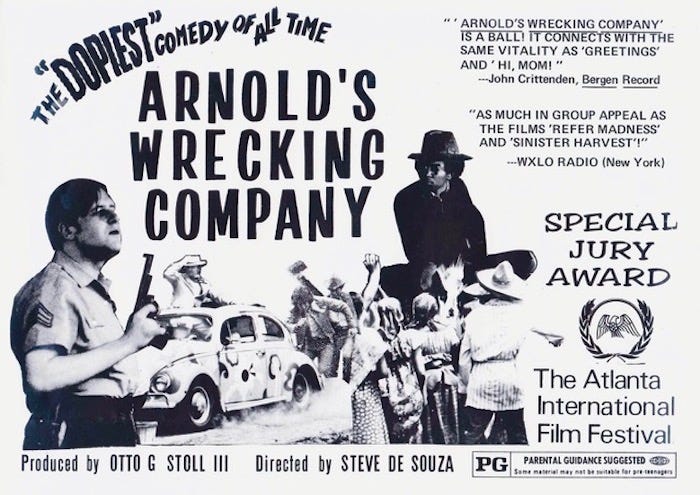
I got hired there, and I worked there for about a year. During that period ‑‑ this was a time when there was a lot of low‑budget underground gonzo filmmaking going on ‑‑ some of us at the TV station said, “Let’s get in on this.” I wrote and directed a Cheech and Chong-type movie before Cheech & Chong.
[Editorial note: The movie was Arnold’s Wrecking Co. (1973). Plot summary: A student tries pot for the first time, loves it and decides to distribute it in a big business kind of way. Soon he has the police and the mafia on his tail.]
As we put this together, a fellow who worked at the station in the news department said, “Listen, my brother‑in‑law has a film rental house, and I can get you a great, great rate on the equipment. Especially, as you know, if you rent on Friday you don’t have to bring it back till Monday, you get over three days of work for the price of two!”
This is great. We made this movie over the course of a year on weekends. Finally, we finished the picture, we were in post‑production at a post‑production house. I go into work one Monday at the TV station, and there’s a security guard at my desk and says, “You have to report to the station manager.”
I go into the station manager’s office, and there is the fellow from the news department. He’s got tears running down his face, and it turned out, there was no “brother‑in‑law with a film rental house”. All he had was a key to the equipment room at the TV station. Late on Fridays, when everybody was gone, he would unlock the door, pilfer the television station’s cameras, gear and Nagra recorders. He had made up, at whatever Kinko’s was in the 1970s, fake letterheads for the nonexistent rental house!
Alas, this day he got caught returning the gear and he had broken down and confessed. I’m going, “I didn’t know. I didn’t know, he said he had a brother-in-law!” and they said, “We’re not prosecuting you, it’s too embarrassing for PBS. But clean out your desk, you’re cut loose.”
So I concentrated on posting the movie, and I took it to the Atlanta International Film Festival, that was in 1973, where it won the Special Jury Prize. It was a good time to have a pot‑oriented movie — I think, both the audience and judges were stoned.
I made a deal to distribute the picture with a buyer who was there, and as my continued good luck at that time carried on, this distribution company went bankrupt the week the movie came out. It was in about two dozen theaters on the East Coast and the Midwest, and then sank like a stone. (However through the modern miracle of streaming it can be seen on Pluto TV and Tubi.)
With the film’s release nosediving, the one bright note coming out of Atlanta was I hooked up with the late Alan Abel (http://www.alanabel.com/) the famous media prankster who had recently conned most of the major networks and national press with his apparently earnest campaign to put clothes on America’s disgustingly naked animals via SINA (“Society for Indeceny to Naked Animals” — motto: “A Nude Horse is a Rude Horse”) and on Alan’s behalf I worked the media from New York to Philadelphia for him as a successful graduate of his next con, “Omar’s School for Beggars.”
Anyway, with the movie D.O.A. at the box office, that’s when I said, “You know what? I’ve got to try real Hollywood. This has not been working out here for me. I’m going to try real show business. I don’t want to be forty years old, and I’ve never tried the real thing.”
Bear in mind, all of this craziness is before Steven made it to Hollywood. Once he reaches L.A., things get even more entertaining.
Tomorrow in Part 2, Steven shares the incredible chain of events which led to him becoming a network TV writer.
[Editorial note: The opinions expressed in the interview are those of Steven E. de Souza and do not necessarily reflect those of myself or Go Into The Story.]
Twitter: @StevenEdeSouza.
For 100s more exclusive Go Into The Story interviews with screenwriters, filmmakers, and industry insiders, go here.