Go Into The Story Interview: Simon Machin
Simon Machin graduated from the DePaul University School of Cinemati Arts in June, 2024 and it didn’t take long for him to put his…
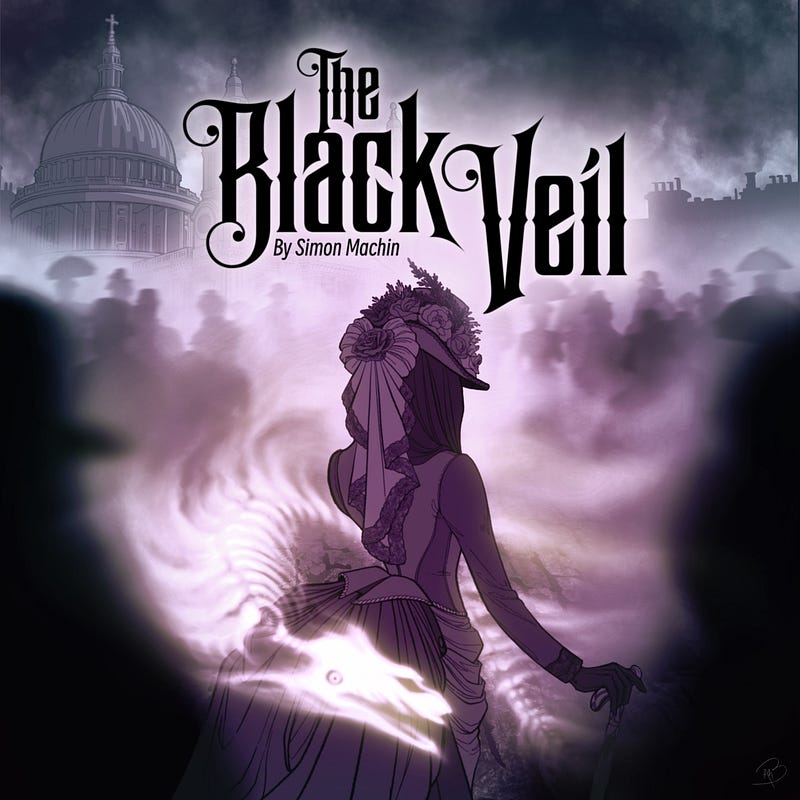
Simon Machin graduated from the DePaul University School of Cinemati Arts in June, 2024 and it didn’t take long for him to put his education to work. The Black Veil is a thirteen-episode audio drama and represents an audacious creative project.
Wanting to learn more about the process of producing an audio drama, I reached out to Simon for an interview.
Scott Myers: How did you develop an interest in writing?
Simon Machin: Truthfully, I’ve been writing for so long I can’t really remember why I got started. I think it may have been around fourth grade. We were given regular writing prompts that were just meant to be simple daily exercises we would read aloud to the class. I wrote a character called Bob the Gigantic Pink Yeti. I don’t remember why or what the prompt was, but the other kids in class found it really funny. So the next prompt I decided to use the character again. And again. And eventually it became like a little serial adventure each week. It was very, very dumb. But I realized how much I enjoyed making new characters and scenarios. That eventually evolved into a hobby of writing random things throughout my childhood which turned into more serious writing at around high school. But it wasn’t until college where I started to consider it a legitimate job and for a while I had no serious interest in being a writer.
Scott: How did your college experience impact your desire to pursue writing?
Simon: As much as I might consider myself creative, ultimately I’m more logic-based when it comes to work. I’m better with plans, organization, and managing stuff. Growing up, I didn’t think there were many jobs that could do that and also be creative. This is why my degree is in producing. And frankly, working on The Black Veil was still mostly producing. But when I got to college and took some scriptwriting courses, I was surprised by how clear cut scriptwriting actually is. There are act structures, beat structures, character arc structures. Sometimes this can get as granular as to the specific page count. When you have to meet a specific run time and only have 30-ish pages to tell a story, that restriction makes everything much clearer to me. That changed my opinion on writing dramatically. Learning to approach writing in a way that works for me is what made me realize that I, as an individual, could do this.
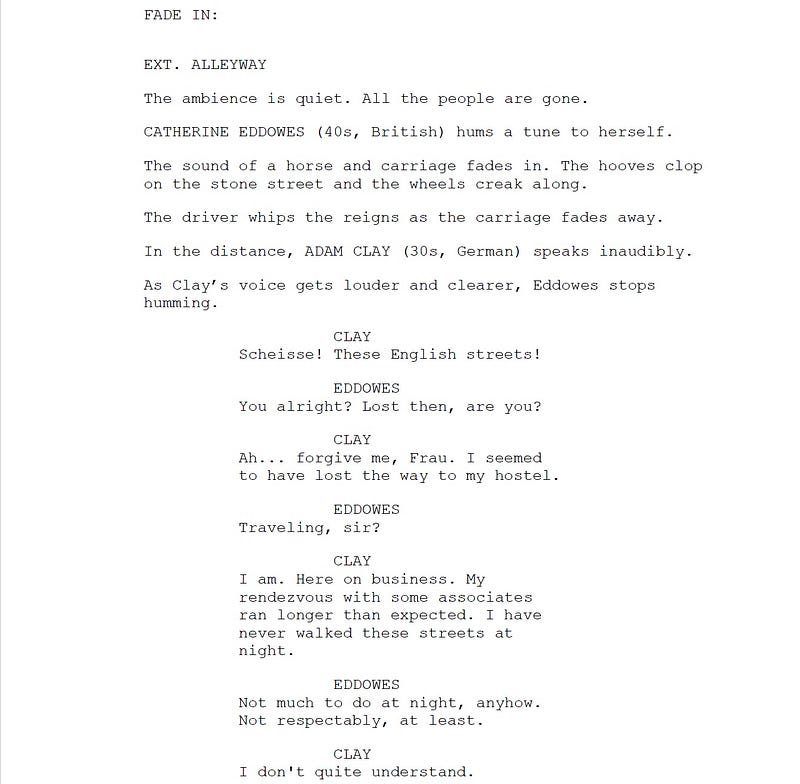
Scott: Which brings us to The Black Veil. What exactly is it and how did you get involved with the project?
Simon: The Black Veil is an audio drama. Basically a television show with a cast of characters but it’s audio only. They are very similar to the radio shows of the 1930s and 1940s. The medium became very popular during covid and is slowly building its own industry separate from Hollywood. Freshman year of college I was the editor for an audio drama called Hollow produced by Violet Hour Media. That’s how I discovered the medium. Since I was graduating a year early, in lieu of my senior year I decided to make an audio drama of my own. So I wrote The Black Veil myself and then casted, produced, directed, edited, and did the sound design all on my own too.
Scott: Talk more about the process of pre-production, production, and post-production when it comes to doing a scripted narrative audio drama.
Simon: Preproduction is very straightforward because you only have to worry about the actors at this stage. There are no cameras and there are not sets. I went through the entire script and broke the lines up by character to determine word and page counts. Most characters have too few lines to justify having their own actor, so most were grouped together by type. So for example, all German men were played by one actor throughout the entire season. Then I put out a casting call for each grouping.
The actors don’t have to travel or do hair or makeup or anything like that. And unlike other voice acting jobs you also don’t have to match your lines up with animation or do any mo-cap like with a video game. Most recordings only last 1–2 hours and the actors do it from home. It’s a pretty good gig. This also meant that everybody wants to do it. I had hundreds upon hundreds of applications for nearly every role. It took weeks just to cast, sort, and listen through auditions. But I eventually got a cast who I was very happy with.
From this point I scheduled remote recordings over Zoom. Most actors have their own home studios after covid so I nearly always got professional level quality. The only big problem with this method is that actors are not recording together. If two characters are in the same scene, those lines might have been recorded months apart. This was my main job as director. I made sure that not only was the action, emotion, and pronunciation was all correct, but that dialogued flowed from one line to the next despite actor separation.
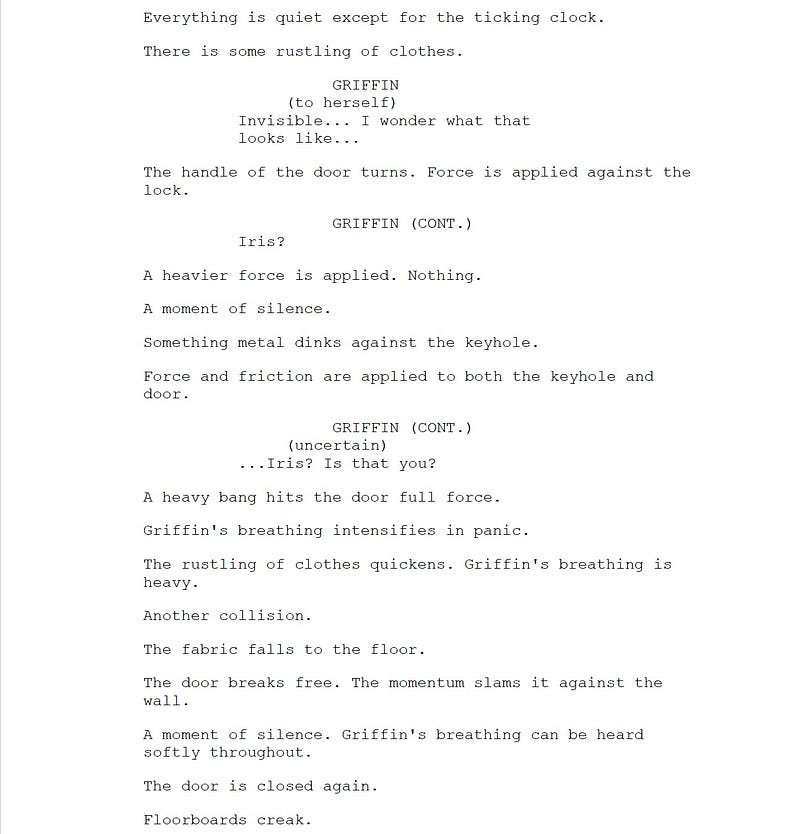
After recording was finished I took all of those lines, cut the correct takes, and assembled them together into a dialogue edit. Again, those actors were not in the same room, so the spacing of the lines was entirely on me. I ended up learning a lot about human conversation trying to get the pacing right. Once the dialogue was finished I used a library of sound effects to create action and ambience. Sometimes the sound effects were ready-made like a gunshot, but other times the more unusual sounds were created by overlapping sounds together. There is then an additional layer of ambience and then to heighten the dynamism of the soundscape I would add panning left-to-right, muffling, echoes, EQ modification, and so on. I have a background in editing so I could go on forever about all of that. But basically everything you hear was crafted intentionally by me.
By this point the only thing left was music. The Black Veil has an original soundtrack composed by Jake Bradford-Sharp. Frankly, there is no industry standard when it comes to music in audio dramas. Our main worry was that the music would overpower the dialogue. So we put a lot of thought into when and how the music would come in. Jake created eight original themes and then broke those themes into stems which were basically each individual instrument track. I could then turn on or off each instrument individually. This allowed me to bring in subtler notes early, then rise into the full piece during action scenes, then turn it down for dialogue, all while keeping the music dynamic.
Most productions would have a different person do each of those steps, but I did all of it myself. It took about a year and that didn’t include writing.
Scott: After all that, what advice do you have for people interested in this type of storytelling?
Simon: Audio dramas are a great way to start off because the entire thing can be in your control. You can make a show, fully completed from start to finish, and share the finished work with others.
But while audio dramas might be easier to make than movies or TV, that doesn’t mean they are easy outright. And the quality of the audio drama almost exclusively rests within the script. A movie might have a boring script but have fun action sequences or interesting visuals. An audio drama can’t. If the script is flawed then the entire audio drama will suffer for it. I’d go so far as to say that writing for audio is a completely different discipline than writing for visuals.
So my biggest advice is to understand the strengths and weaknesses of writing for audio. If there are no visuals then you can create fantastic worlds of sci-fi and fantasy. Let your imagination run wild, because it’s not like it’ll affect the budget. But at the same time realize that you can’t have that epic fight scene because when it’s reduced to just sound effects the audience may have no idea what is going on.
I’d recommend listening to other people’s audio dramas or reading their scripts. And not just recent releases. Try to find shows from the 30s or 40s. They had decades to get the formula right. Everybody has their own little tricks to make the most out of audio. And if you learn those, then this medium gives you the power to create full shows for the fraction of what it takes for TV.

Simon was one of my screenwriting students, so I’m happy to support his creative endeavors. Well done, Simon!
To learn more about The Black Veil, visit the series website.
You can listen to the trailer here.
Instagram: @theblackveilaudio.