Go Into The Story interview: Selwyn Seyfu Hinds
My conversation with executive producer and showrunner of the new eight-episode TV series “Washington Black” which is on Hulu now.
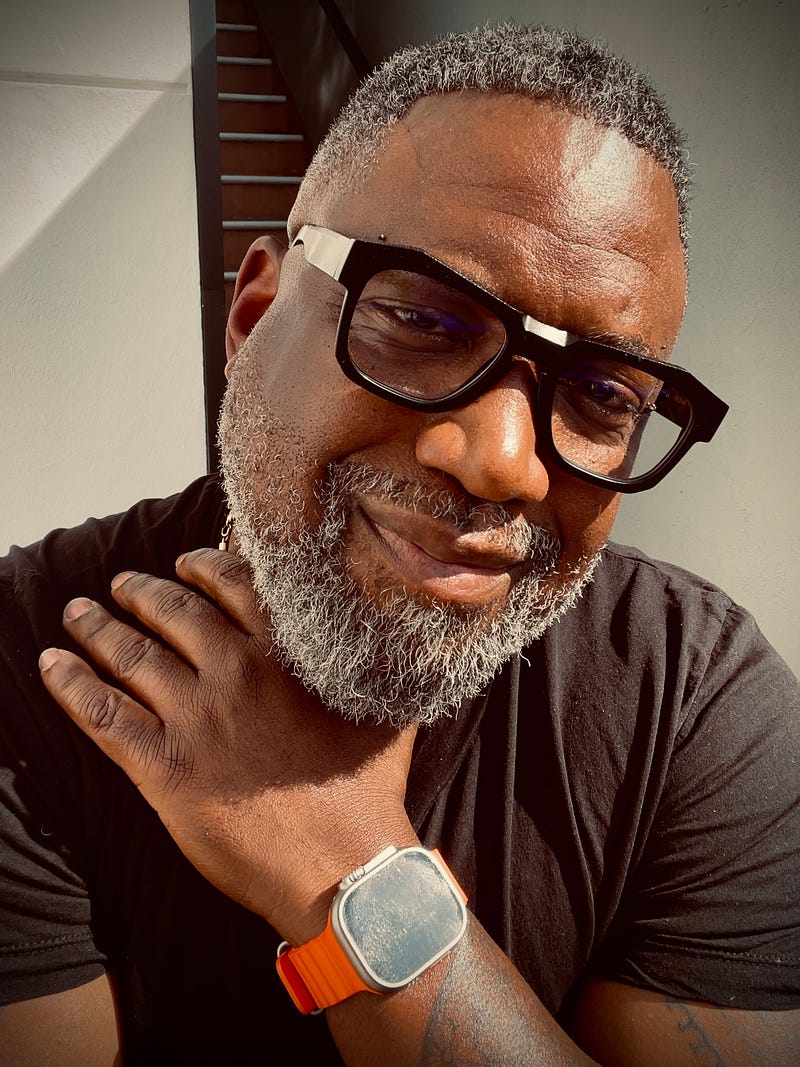
My conversation with executive producer and showrunner of the new eight-episode TV series “Washington Black” which is on Hulu now.
One of the benefits of social media is the way it facilitates connections between people. That’s what happened with Selwyn Hinds and myself over a decade ago. A fan of my blog, Selwyn and I stayed in touch over the years. In 2021, Selwyn landed the gig of adapting the lauded novel Washington Black as a Hulu miniseries. And what an adventure this has been!

Here is how Hulu describes the story on the series website:
Based on the bestselling novel of the same name, Washington Black follows the 19th-century odyssey of George Washington “Wash” Black, an eleven-year-old boy born on a Barbados sugar plantation, whose prodigious scientific mind sets him on a path of unexpected destiny. When a harrowing incident forces Wash to flee, he is thrust into a globe-spanning adventure that challenges and reshapes his understanding of family, freedom and love. As he navigates uncharted lands and impossible odds, Wash finds the courage to imagine a future beyond the confines of the society he was born into.
Starring: Tom Ellis, Rupert Graves, Iola Evans, Ernest Kingsley Junior, Eddie Karanja
Creator: Selwyn Seyfu Hinds
Production on the series spanned three years (2022–2024), several continents, Covid protocols and Hollywood industry strikes. Selwyn and I get into that and much more in this exclusive Go Into The Story interview.
Scott Myers: Let’s start our conversation with the novel, the series is based on, written by Esi Edugyan and published in 2018, much lauded novel. I want you to go back in time. What were your reactions, do you remember, that you were having as you were reading it? What aspects of the story were you connecting with?
Selwyn Hinds: First and foremost, just as a piece of craft and a piece of writing, the novel just blew me away. Unsurprisingly, it did that to everyone who read it. It also turned out to be extraordinarily personal in several ways.
First, I am from the Caribbean. I’m West Indian. Finding a book that centered a character who was from the Caribbean was just was amazing. Even more specifically, although my family is from Guyana, on both sides, our roots are in Barbados. I am actually from the same place that the lead character is.
That I found really astonishing. Then I would say the third piece of it speaks to the thing that we look for as writers when we’re trying to figure out our way into a story, then how personal we can make it, how much it speaks to our bones and DNA.
As it turned out, my own odyssey of migration, of leaving Guyana, of coming to the US, of then moving multiple times within the US, all of that happened for me between ’14 and ’19, felt ‑‑ circumstances notwithstanding, because that was a much rougher time ‑‑ but at least thematically felt like what the lead character in the novel goes through when he has to leave Barbados after a tragic circumstance, and then goes into odyssey around the world in the service of finding himself, finding love, finding romance, finding freedom.
I knew that story intimately. Once I made those conclusions, I said, this was something that I had to write.
Scott: Well, that’s what I was going to say. I was asking you whether this is something when you were reading going, “OK. I gotta write this. I gotta get this thing produced.” So that was pretty upfront in your process?
Selwyn: [laughs]
Selwyn: Yeah. Yeah. Yeah. That that was right away. The good thing was I was sent the book with that intention, so this wasn’t something that I had to read and then figure out how do I get it up this gigantic mountain.
My now good friend Sterling K. Brown, he and his company found the book, loved it, then partnered with one of our producers, Ellen Goldsmith‑Vein, who at Gotham Group, where I was managed at the time. So it’s a very easy call for Ellen to make to say, hey, I have this writer who is from this part of the world, and I think this might speak to him a little bit.
That was a very short circle to draw. Then the next big step for us was convincing the book author, Esi, to trust us. As you said, the book was very hot. I think Barack Obama had just put it on his best of year list. There were multiple people chasing it, but none of them had a package that included a writer.
That was a big nod in our favor. So myself and Sterling and Anthony Hemingway, who’s also an EP on the show, the director Anthony Hemingway, as three of us got on the phone with Esi and convinced her to trust us with her baby. And she did.
Scott: Given the fact that you had a similar biographical background as the protagonist of the story, that probably helped, I would imagine.
Selwyn: I think so. I mean, she found that fascinating. I was able to just talk to her in just anecdotal ways…One of the things that I thought would be fantastic in terms of the opportunity is we’ve had no shortage of film and TV that have looked at that antebellum American era.
We are all familiar with the construct of cotton plantations. But say for some very specific Caribbean things, for the large part, Americans don’t know what a sugar plantation looks like, feels like, smells like, what that was. Growing up where I did in Guyana, where that memory of yesterday feels like it was just 24 hours ago.
In my childhood, my great grandfather used to ride me on this big old bicycle past these towering fields of sugarcane and tell me about all the stories that were hidden within those stocks.
I was able to talk to her in that kind of language and tell her that I too was invested in this world and also the idea of worlds behind worlds. It’s a very similar kind of double consciousness that exists in her book, the line between what’s real and what’s surreal and the bridge that connects the two.
We just spoke a very similar writing language that she responded to, and yeah, and she gave us the book.
Scott: You mentioned that this is unique in the sense that this is not your classic antebellum set in the South Nodes. Also, you’ve got this storyline that takes place up in Halifax, Canada too, which is another area that I don’t think people are as familiar with. Could you maybe talk about that part of the story?
Selwyn: The wonderful thing about the novel ‑‑ I hope that we’ve captured in the show ‑‑ is that it is rooted in real tactile, tangible history that not enough people know. Although it takes flights of fancy into the fantastic, besides the Caribbean piece, which we spoke about, the other main anchoring location for the novel is Halifax in Canada.
In the 1800s at this time, there was a thriving Black community there that was very diasporic in nature. That community comprised of loyalists who had come up north from the US. It was comprised of people who had made their way from the West Indies, especially Trinidadians, Jamaicans. There were many West Africans there.
In the writers room, we shorthanded, we would call it our own Mos Eisley. It was just so, we instinctually understood what that meant and what we were trying to create. That’s something that we had a great time writing, that we did a lot of research into, and that, I think, was impactful on the entire crew and cast during production.
We shot all over Nova Scotia, but especially in Halifax. We’d meet people, whether they were day players or extras or just people that we met in casual passing of African descent who would say, “Hey. You know? My folks have been here 400 years.” Sort of, like wrapping your head around that was pretty stunning.
All that found its way into the show, at least I hope it does. It certainly did find its way into the performances of the actors because they had a sense of the legacy that they were all tapping into.
Scott: Let’s touch on the protagonist of the story, George Washington Black Wash, as he’s known as, because you meet him when he’s 19 up in Canada. Is that correct? That’s how…
[crosstalk]
Selwyn: in the show.
Scott: So maybe just give us a sense of who he is when he’s at 19, his life circumstance at that point.
Selwyn: There’s so much interesting to talk about the character. I will take a quick step back for a second and illustrate one of the differences with the novel or choice that we made. The novel is told in the lead character’s first person recollective voice, and it’s told linearly. It begins when he’s a child and ages all the way up.
Now, obviously, in an eight‑episode season, we couldn’t do that. You wouldn’t meet the adult character until the end of the season. [laughs] So we decided that we had to tell the story in a nonlinear fashion where we’re cutting between two timelines.
Also, it occurred to us that understanding his past in a more immediate context lended a kind of emotional resonance to his presence, so we wanted the two to come to speak to each other. When we meet Wash at 19, we have yet to understand what’s happened in his past, but we’re meeting someone who is part of this thriving Black community in Nova Scotia.
We’re meeting someone who, right away, we understand has a scientific bent. There’s a particular project that he has spent the last several years trying to figure out. There’s a particular goal of his that in the show is both story plot goal, but also emotional character goal, the goal that he has to fly.
That we established right from the beginning. We also meet his mentor figure, Medwin, who is played by the incomparable Sterling K. Brown. It just takes you right into ‑‑ I’m a big believer in you are trusting me a great deal when you commit your time to a show.
From the very beginning, I want you to understand, I want you to feel that these are people that you’re going to root for, people that you’re going to trust, people that you’re going to want to spend time with, people that you’re invested in.
So that first scene, that first meeting that says, here is this dreamer. Here’s this boy who is kind and optimistic and joy, and here is this man who will do anything to protect him. That’s just, like, the rooting relationship of the show.
Scott: Then there is the story of Wash at 11. The dual storyline, it makes a lot of sense from a writing standpoint. How did you then mesh that? And what was his situation when he was 11 years old?
Selwyn: There’s a peg pretty early in the first episode that generates that first flashback where we go back. It happens when there’s a particular danger that adult Wash have been running from that we don’t know yet, but once that danger arrives in Halifax, it sends us back into the past to understand what came about.
We go back to Barbados eight years prior. We go back to a place called Faith Plantation. We meet this eight‑year‑old boy. We meet the woman who was his protector. We meet their community. We also meet a fascinating character played by Tom Ellis named Titch, who, we had a ball of writing, but who was really, really challenging to write.
Titch becomes the gateway to the young boy’s flourishing, untapped genius in the arts and sciences. He also becomes the literal and figurative means of his escape from plantation.
We had to write a character who felt like he was close to, but completely not drenched in all those white savior tropes. We had to write a character who was complicated because you will love Titch, but you will also reel and shock from what he does later on in the series.
We had to ground all those things in just the larger family structure and dynamics of the folks that Titch comes from. Tom Ellis plays the role incredibly. I’m so proud of his work, and I think it’s some of the best stuff he’s ever done.
Scott: This production, I guess, that was a good word. I was going to say it’s insane. [laughs] 2022 to 2024…
Selwyn: Yeah.
Scott: Dealing with COVID protocols, entertainment industry strikes. You’re going to Mexico to ice…I saw you on social media sometimes. You posted a picture in Iceland. I was like, I hope Selwyn’s surviving this. How did you maintain the stamina? You’re dealing with snow. You’re dealing with deserts...
Selwyn: [laughs] Yeah.
Scott: How did you manage that?
Selwyn: Scott, there’s a joke I tell, like, whenever the going would get really challenging on set, I would tell the crew. I was like, guys, let’s just get through today, and I promise you the next show that I write is going to be on a nice back lot in Los Angeles, and we can all go home after work. [laughs] But we got through it together. I would say that’s the best answer.
Even whether you had been in the business 1 year, 2 years, 5, 10, or 20, no one had ever done anything like this before. I insisted from the beginning, and Disney let me do it, that I didn’t want to shoot this thing on stage anywhere. I wanted to be in the environments. I wanted it to be as practical as possible. I wanted it to be authentic, it to be tactile.
When Wash is, like, cold and afraid in the Arctic, I wanted you to feel that because the actor really feels that. We tried the best that we could to do that. That challenging in enough of itself, but then also as you said, the conditions of the world.
We start production and COVID’s happening, which makes everything three times as long and we get through most of production, but then all of a sudden, we’re on strike and we got to shut down. [laughs] It was quite a lot happening.
But persistence on everyone’s part, especially have to give a lot of credit to our partners at Disney who never ever wavered with their conviction about the show. I’m just so happy for everyone involved that we’re here at the finish line and people get to see what we’ve done.
Scott: The writers room, obviously, they have to be talented writers.
Selwyn: Yeah.
Scott: What were you looking for in terms of their personal backgrounds or personalities? Because you knew this is going to be an arduous process. What was that process like in creating that writers’ room?
Selwyn: That is a great question. I don’t know the rooms I put together. I assume most of us will put together a room like a basketball team. There’s a sports team of some kind. There is a general baseline, and then there’s specialties that you’re looking for.
My general baseline might have been more challenging in some respects because I needed people to be able to tap into and be comfortable with emotion in a way that I don’t think is common in a lot of rooms even the ones that I’ve been in.
Literally every one of my writer interview sessions turned into like a therapy session. Because, look, I’m the showrunner, and so I would lead with, let me be really vulnerable in this space and talk to you and give you the permission and the comfort to respond to me in kind.
Not everyone can necessarily do that, but I knew ‑‑ my writing in general is really informed by this ‑‑ but I knew particularly for this show that our engine was always going to be emotion. That we would derive the momentum that pushes the people through our ecosystems because of emotion. That was just something we had to have.
That was the general trade. Then once that was nailed, there were just, like, particularities that we needed. I needed to make sure that I had someone from Canada in the room, specifically someone who was both Black and Canadian. So one of our co‑EPs, Shernold Edwards, was that person.
It has been a long time since I’ve been 19, so I needed to have a staff writer who was a young Black guy, as young as I could find. [laughs] Found out in a wonderful young man named Blaize Ali‑Watkins, and this was his first job. It’s always a great thing to be like, here’s your first staff writer job. He was just invaluable.
Yeah, just surrounding people with again, a combination of upper levels, great support staff. We had a good time. It was a brilliant room. I say that knowing that as not an objective statement, but truly brilliant room. They were tremendous, and they gave the actors the material that they needed to do what they did.
Scott: One more writerly question. Eight episodes. How did you land on that? Was this something you saw in your head, or was this a result of the writer’s room? How did that come about?
Selwyn: I started the assumption that it would be 10. When I broke the season early on, even before we hired a room, it felt like it organically laid out over 10. Then just in the process, as you know, whether it’s in writing, or it’s production, or it’s post, stories just naturally get slimmer.
You’re like, what is the most effective way to tell this thing? Where are we treading water? Where are we wasting time? That process just, the story found best shape that it needed to be in. Without having wasted momentum, wasted space, or wasted time. So the eight came around very organically.
Scott: One of the things that I would imagine was of a special challenge for you, but also an opportunity, was this combination of this is a story about slavery, and, of course, there’s a legacy of storytelling, cinematic storytelling, that tends to have a respect with some sobriety of it.
Yet this story also has a fantastical feel to it. That Wash has got this, it’s like an aspirational thing because Wash has got to balance those two. Could you talk a bit about that as a challenge and as an opportunity?
Selwyn: My friend Sterling actually puts this very, very well. He says that at this point in our cinematic history of life people who look like us Black folks in general, don’t want stories that are about wallowing in pain. We want to transcend it.
So it was my job to figure out, you still needed the gravity push, if you will, that Wash’s circumstances provide to the rest of the story, but we don’t want to stay there. As you know, most narratives that ‑‑ which is why and even in talking about this, I never talk about it as a slave narrative or any of the sort.
Most of those stories, liberty and freedom physically is the point, and that’s the dramatic crescendo, and then you’re done. Like, we start free. [laughs] We flashback to this is how he literally flew away from this place. By the first episode, we’re done with that. You know what I mean?
The institution that he escapes from has a shadow that hangs over him emotionally way more than physically. It’s really about stepping out of the worst of places and times to finding the best of yourself.
It was never going to be a story that had to be weighted down by the place that he came from. It was always going to be a story that showed you the complexity and the nuance of how we transcended it.
Scott: I’m going to quote you and get your reaction to this quote. You say, “The show is about finding the wings that we all have, about not letting the world give you permission as to whether you can fly, but to find your path to what flying might mean to you.” I read that, and I’m thinking, wow. That’s something we need to hear right now in our world. Right?
Selwyn: Yeah.
Scott: Could you elaborate on that? Maybe the story has a particular kind of a resonance with where things are going on?
Selwyn: It does. Sometimes you’re just a caretaker of the right thing that comes into the world at the right time. That’s the case with this character and the show. I was excited by George Washington Black, the character, because this is a young man, this is a protagonist, a hero who felt so different than anything I’ve ever seen.
He’s a scientist. That’s why he’s cool. He’s not like a bad guy with a gun, like anti like, he’s a loving, kind, brilliant, joy‑centered young man. I just thought that in and of itself felt radical. The thing I spoke about earlier, his story goal is he is building a flying machine. It just so happens that that notion, if you think about it metaphorically, is also his emotional goal.
It’s also the character’s goal. It’s how do I fly above and beyond the world and the circumstances that want to pin me down here.
We read this in books a lot and smart blogs like yours, but it’s really true for writers. If you can find a way to make your character’s story goal, the thing that he is trying to do in a movie or television, be a natural companion or the same as his emotional goal, the thing that he internally needs, you’ve got something.
You’ve got something that hopefully lets you accomplish the other thing that we try to do, which is telling a universal story through the specificity of one person’s circumstances. And because Walsh’s goal on the face of it, was so singular to him, for me, it also had a purity that spoke to all of us, which is where that quote comes from.
This is a young man trying to build a machine that will let him fly. Emotionally, this is a young man trying to find the wings that will let him fly in an emotional sense. I just thought that was something that we can all identify with and try to figure out how to do in our own lives.
Scott: Well, so here you are, 2025. The series launches in a couple of days. Wash definitely goes on a hero’s journey. I would assume you look back on your experiences as your own hero’s journey. What are you feeling right now? What are some of the emotions you’ve got going on?
Selwyn: It’s pretty surreal. I would say even this very moment talking to you.
You and I have spoken about this in the past, but 15, 16 years ago or whenever that was, when I was making my transition from being a journalist, which is the first half of my writing career, to screenwriting, going to the story was probably number one or number two of my resources, of how I taught myself to do this thing.
The fact that now, years later, I’ve done the thing and I’m chatting with you about it, it’s awesome [laughs] . It’s awesome. Yeah, it feels a little surreal.
I’m a human being, so I have all the anxieties that all insecure writer beings have. I may sound super confident like I know what I’m talking about, but I am a nervous, insecure writer like we all are on the inside who just wants people to like me. There’s a lot of that.
Probably the largest emotion is a lot of happiness for other people. I’ll get there for myself eventually, but every time I see my actors, especially the young ones post about this or I was with our young lead, Ernest Kingsley Jr., who’s British, but when he came to LA a couple days ago, I took him around to see the billboards.
I was with him when he’s looking at a billboard, he’s like, that’s my face. Getting to experience that kind of joy, even on a personal side, my parents or my daughter, sometimes it’s in cataloging and reading other people’s emotions that help you make more sense of your own.
For me, it’ll be once the show has actually come out and a couple days later, it’ll all really hit me, and I’ll sit down in a quiet corner and say, “OK. You know?” Right now, it’s just like a bundle of nerves and excitement and trepidation and all the other things.
Scott: Well, hopefully, you’ll take satisfaction that you did the equivalent of what Wash did with the airplane, you created this thing that flew.
Selwyn: I did.
Scott: Flying into people’s imagination.
Selwyn: [laughs] That’s a pretty cool metaphor, too. I love that.
To watch the video of my conversation with Selwyn, go here.
Learn more about the Washington Black series here.