Go Into The Story Interview: Sean Harrigan
My interview with 2023 Black List writer for his script First You Hear Them.
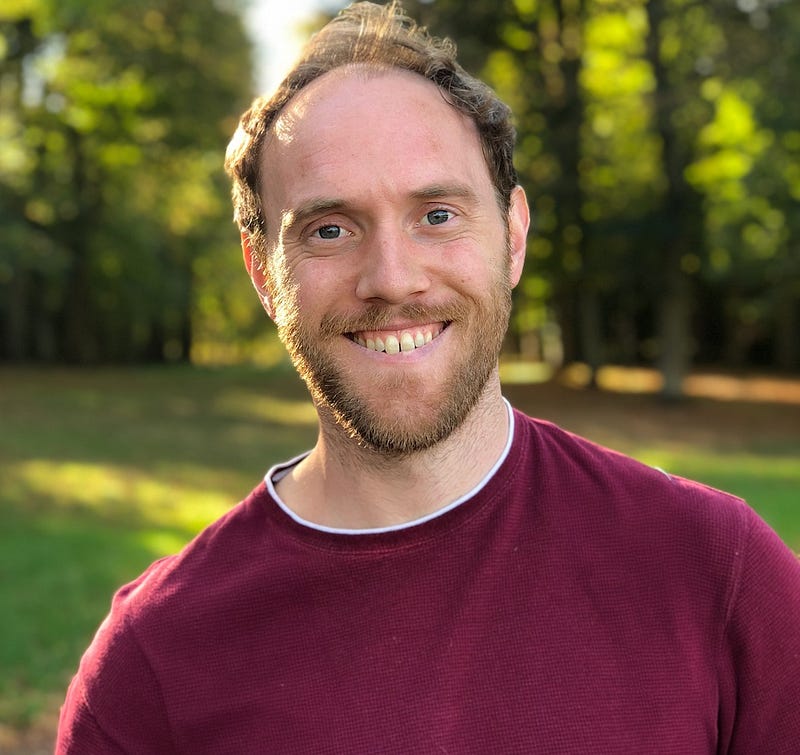
My interview with 2023 Black List writer for his script First You Hear Them.
Sean Harrigan wrote the screenplay First You Hear Them which was named to the 2023 Black List. Recently, I had the opportunity to chat with Sean about his creative background, writing his Black List script, and the craft of screenwriting.
Here is the complete interview with Sean.
Scott Myers: I believe you have an acting background.
Sean Harrigan: I do. Yeah, I actually went to school and got my BFA and MFA in acting. That became a lot of the focus during school. Though I was always writing and doing screenwriting on the side.
Scott: Where’d you go to school?
Sean: So I went to UCSB, UC Santa Barbara for undergrad and then UC Irvine for grad school.
Scott: Did you study screenwriting at all in the BFA or the MFA programs?
Sean: It was mostly something that I did on my own. I took one screenwriting class when I was in school before starting the BFA — a screenwriting course that was taught by Jon O’Brien at Santa Barbara City College.
I took it with one of my friends, who’s also a writer and was also on the Black List a few years ago. We ended up writing our first two scripts together, which should probably never see the light of day. They were ones that we had our training wheels on for and gave us practice there.
Then in school, I had a choice before I went to UCSB. I was planning on doing a creative writing major, but then a roommate of mine had been in the acting program there. That felt very exciting and engaging, so I decided to pursue that.
The schooling for grad school or undergrad when you’re in an acting program, those can be very intensive. They can be very focused, but whenever I had time, whenever I wasn’t in rehearsals or in a play, I would be working on screenplays.
I wrote two on my own during the course of school. Then one of them, once I finished school, ended up placing in a contest. That gave me momentum with screenwriting. At the same time, I realized for me, there was a difference between being an actor in school versus being an actor out in the industry.
It’s such a different kind of feel when you have your next part guaranteed for you. There was something about the ease and ability for screenwriting where you just need yourself and your computer. That’s the fundamental thing of practicing the art, whereas there’s so much that goes into just being able to try to get on set or in a play or to fund your own work. There’s so much work that goes into it ahead of time.
Scott: I could never face what the actors have to face, that personal kind of rejection with auditions and such.
Sean: My old manager said with screenwriting, they don’t judge you on your cover page. With acting, you can be the best actor for whatever that means, but not be the person who gets cast because you’re not the right fit for the role. There’s elements of that with writing. Having the right concept, the right relationships. But it’s different. The work stands a little bit more on its own.
Scott: It’s actually what I was going to ask you because I’ve actually known quite a few actors who have gone into writing. What are some of those transferable lessons you learned as an actor that you can then bring to your writing? What have you discovered in doing that?
Sean: I think a lot of it is under the surface, but at least for what I’ve been able to discern, there is a sense of having to put yourself in the character’s shoes and figure out the logic and emotional logic of why they do certain things.
You’ll sometimes watch something and you’ll go, “Oh, I know they wanted to get this person to this end result, but I don’t know why the character did this.”
I think I have some understanding of, “OK, if I am putting myself in this character’s shoes and thinking like they are thinking, what is the logic that gets them up to this plot point or this event. And if that doesn’t connect, how do I find that connection in a way that feels organic to what their experience would be? How do I connect to what that experience would be?”
Scott: You’re speaking my language because I wrote a book on character‑driven screenwriting and storytelling. I always tell my students every scene, you’ve got to do two things. You’ve got to find where are they emotionally in it? When they enter the scene, what’s their emotional state? What are their goals?
In particular for the Protagonist, you’ve got to be where are they in terms of their arc and how is it seen affecting them. It’s all character stuff.
Sean: Yeah. It’s really a mix of the connecting with them internally. Then also having that bird’s-eye view of where you’re trying to get them to and how that tells the story both plot‑wise and thematically.
Scott: There’s nothing worse than watching something and a character does something that you know the only reason they do it is because the writer needed them to do it.
Sean: Yeah. I think you can feel when it’s not organic to the character’s choices, which isn’t to say that as a writer, I sit down and just follow my character wherever they want to go, though I’ve always been tempted to try that.
I am usually thinking of it from within the structure of the concept and plot and themes. But I if I have these beats plotted for them, I still have to find out what connects them from beat to beat, not just what connects my plot points.
Scott: That’s a good segue into your Black List script, “First You Hear Them,” because the characters certainly are presented with multiple choices along the way.
They could do this or they could do that. Every single one, I have to say, was completely plausible based upon the characters and where they were in the moment.
Sean: Thank you.
Scott: Here’s a logline for your script:
“A group of 20‑somethings, try the quote-unquote ‘perfect’ drug for the first time. It’s only when they come down from the euphoric high that the hauntings begin. First you hear them, then you see them, then they come for you.”
What was the original inspiration for this story? Was it like an a‑ha moment where the concept just struck you, or is this something that evolved over time?
Sean: A little of both. This was the first horror that I had written. Most of my stuff has been in genre or sci‑fi space.
What I like about horror, and I think this is true for sci‑fi, too, but especially horror, is that you can really explore interesting thematic or social ideas behind the stories because so much of horror that can lend itself to that kind of metaphor.
With this, I said, “Looking at the prevalence of addiction, especially with the opioid epidemic and beyond, what would a horror movie about drugs look like?”
One of the first elements of it was “OK. You take a drug, and you have hauntings happen to you.” Then one of the a‑ha moments was shifting that and saying, “Oh, actually, what if it’s when you stop taking the drug? That’s when you have the hauntings.”
That felt a little more interesting and also organic to the metaphor that a lot of addiction can stem from trying to keep the things that haunts us at bay. And then to make that literal, in the story, you can keep these hauntings away as long as you keep taking more of the drug. That’s when it clicked in.
It went through a lot of different variations from that. I explored, “Where could this live?” I had an idea that was a post‑apocalyptic version of this, then latched on to the idea of more of these kids going through it.
Actually, the first scripted draft of this was much more “Trainspotting.” It was looking at a mix of Trainspotting meets “It Follows” or something like that. Having these people who are in this really intense state of addiction from the start and going through that experience.
Along the way when it got some reads, someone had suggested, “What if you said changed it over to people who are a little younger, fresh out of college, maybe somebody who’s first trying the drug for the first time, making it a little bit more relatable and almost playing with that DARE, “Reefer Madness” type of fear? That’s when it shifted into what it is now.
Scott: It’s interesting, your commentary there, because the idea that these hauntings occur when the drug is wearing off. Aligns metaphorically with the withdrawal experience of someone trying to get off drugs.
Let’s talk about the horror angle. Your first crack at writing in the horror space. There are certain tropes specific to the genre. How familiar are you with horror tropes and such?
Sean: For me, I come from both an outsider and insider view. For a long time as a kid or even growing up as a teenager, even into college, I didn’t latch on to horror.
I remember seeing The Sixth Sense when it came out when I was a kid, and that scarred me for a month. That was one of the scariest things that that I could imagine. Just the idea that you could start seeing dead people at any time was terrifying to me.
The supernatural stuff was always what scared me growing up, so it never was a genre that I latched on to. Then I did a crash course in it, in a way, when I finally revisited it when I was older. And had a deep dive into seeing as many horror movies that I could.
I still wouldn’t consider myself a genre expert, but I do feel like I’ve seen a lot of the mainstream horror classics or even a lot of the indie ones that have come out in the last 10 or 15 years. It’s helped give me a sense of the horror tropes, while also coming in with a newer, slightly outsider perspective to hopefully find something fresh within them too. And connect to that little kid sensation of what would have scared me growing up.
There are people who have such a deep knowledge of horror and know it so well that you really have to be aware of what the tropes are so that you know if you’re playing with them, playing against them, or hopefully not, sinking into them.
Scott: One that you clearly were aware of is that you want to start off with a strong opening incident. You certainly do that. These two young women, Morgan and Lily, on a dark street, and breaking into a car, and there’s drugs involved, these pills. Then there’s this strange individual, like bent‑neck woman, I guess.
Lily doesn’t do very well with that, and Morgan sets up a mystery there. It’s not only just a really compelling and scary opening, it also does set up quite a few questions. It gets us curious, it gets us involved right away.
Sean: Yeah. I know a lot of writers say this, but I feel like those first 10 pages and that first scene specifically are always the hardest. They’re the ones that I spend the most time on and go through the most changes. I think because you’re not starting from a place of momentum and building from the previous scene.
So, I went through a lot of different versions with this one. There seemed like something interesting to me of playing with the irony element of it. Who is the person who you would least expect to be robbing a drug dealer? And then letting it unfold from there.
Then, by making it Morgan, it creates this specter across the story because she’s never seen alive again within the script, but she is this person that creates a lot of the impetus behind it. It was a way that you can also introduce her and emotionally latch onto her, while setting the tone and like you saying, setting up some of the mystery behind it.
Scott: Yes, because Morgan is tied to some of the key characters in the story. Of course, Morgan dies, there’s a payoff for Morgan later on in the story, so it’s not just a random event that happens. It actually is tied to the plot.
To your Protagonist character, Shae Howland, who you describe as, “24, Black, stares ahead at the building from the driver’s seat.” This is, it turns out, is a drug rehab center where her mother is supposed to be. Could you describe Shae’s situation at the beginning of the story, because she’s got several negative dynamics going on in her life?
Sean: She’s gone through a lot of different variations because in the first version of the script, as I mentioned, she was this Trainspotting-esque addict, who was already starting from that place.
Then, when I switched over to making the characters more relatable, I landed on the idea that she was instead somebody who never did drugs. But with that approach, I wanted to do it in a way that felt responsible.
I don’t want, ultimately, the movie to say, “If you do a drug for one time, you’re going to get addicted.” Even if no one’s going to take that away from the script, I wanted there to feel like some justification behind her journey. That’s where it helped having addiction already in her family.
She almost has rebelled so far from addiction in the fear of becoming like her mother that she’s become, in a way, an addict to not using, not touching anything. Having such fear of seeing how her mother turned out: an addict and somebody who’s been absent from her life. Her mother’s in the drug rehab center when we first see her. And her mother has fled from this drug rehab center, not for the first time.
So, really, Shae is almost a reaction to those things. She is somebody that is so far away and so fearful of those things that she’s afraid to engage in drugs, and in a way, that’s a larger extension of being afraid to engage overall in some aspects of her life that she is a little bit disconnected from her life.
Scott: Yeah. Using my own language system, she’s definitely in a state of Disunity at the beginning. She’s disconnected from a lot of aspects of who she is and what she could be doing. Literally, she goes to a bar on her birthday and she’s drinking water. She doesn’t drink alcohol even. She’s unemployed. She recently broke up with this guy, Carson, who comes back into the story. That’s Morgan’s brother. She has a fender bender. She just had a lot of bad things going on.
That’s also a reflection, like in the external world of her state of Disunity. It’s an interesting place to put her. You mentioned that word “reaction.” She does… starting off as very reactive to things. Then over time, she becomes much more proactive, which is an interesting nature of her arc.
Sean: Yeah. I think she definitely starts off as reactive, while also just mainly pushing to get through the day as it goes on. Going back to what we were talking about earlier with character logic, to justify her eventually taking the drug, the idea was really making it like, “What is the worst version of her day?”
How could we put her in the tree and start throwing rocks at her to get her to finally say, “OK, this has been such a terrible day. I want to let loose.” To have that feel logical and also earned within the script.
So she starts off as reactive to this awful day and then makes the proactive choice of going, “OK. I can do this. I am not my mom.” Her friend, Poppy, talking her into that and everything resulting from that choice.
Scott: That’s your inciting incident, or as Joseph Campbell would say, the “Call to Adventure” when she pops that pill. That friend of hers, Poppy, they’re roommates and longtime friends. Poppy’s very helpful in that scene, first of all, inspiring Shae to go to the birthday party. Shae wasn’t even that interested in doing that.
Maybe you could talk a little bit about Poppy and how that character emerged and what their function is in the story.
Sean: It was one became a little clearer in every draft. Actually, I learned a lot from this script about finding specific ways to make every character have their own story along the way.
What emerged as I went through different drafts was Shae and Poppy having this symbiotic relationship that is really good for each of them, but also is destructive for each of them. Poppy is the cheerleader for Shae, and at the same time, we see along the way that she’s also really reliant on Shae.
Even as she seems like she’s the one that’s in the lead and in control and guiding Shae into this experience and into letting loose, we see over time that she’s following Shae. As Shae becomes more proactive, like you mentioned, Poppy ends up following Shae along this journey, and that becomes more and more destructive to both of them.
Shae in a way is also Poppy’s addiction in that Poppy is living vicariously through Shae. She’s too connected to Shae and needs to find her own path out of all of this.
Scott: At some point, she makes a decision to go off on her own. I remember that Carson even says, “I’m surprised she did that because she’s always following you.”
Sean: Yeah.
Scott: Your comments there, again, speak to the fact that you’ve got addiction here, not just literally the physical addiction to drugs, but it works in several different layers. You could have a psychological addiction to another person, an addiction to your own self-image, an addiction to your own bad behavior.
There’s four major characters. Let’s get to the third one, Javier, a neighbor. What was the inspiration for that character?
Sean: You want to have a variation in their tempo, in their personalities. He’s a little bit more of go with the flow is how he wants to see himself. He’s a little bit looser. It seems like he has the most experience with drugs out of all of them.
But there’s also an element of him that is repressed. He sees himself as a lot more relaxed and chill than he actually is. Under the surface, there’s a lot of fear and angst from him that only comes out in these more extreme circumstances. So, that was a different viewpoint on what Poppy and Shae are experiencing and a different tenor to the script.
Scott: Yeah. When you introduce him, you even say in scene description, “He lives at a lower BPM.”
[laughter]
Scott: So, there’s a birthday party, and they go to a club, dancing and all that sort of thing. This is where they meet this guy, Derek. They take these weird pills. Right off the bat when you’re reading these things, it’s like, “OK. Wait a minute here.”
It’s described as six brown pills. They seem to be molding, flaky, some fungal growth caking it. So that’s not just your pristine little Molly or whatever. This is an odd thing. It feels like a mushroom territory.
Let’s talk about the drug. I’m sure that has a back story in terms of your development. How did that come about?
Sean: I think there was always something fungal about it that felt interesting. That mixed with a party drug. Having elements of both. Like ecstasy combined with a mushroom-like experience, with a hallucinogenic element which we see gets carried out a lot farther into the hauntings.
And then a lot of the concepts around the horror resulted from that. The hauntings themselves have this fungal element too, with this growth that’s apart of them.
That fungal growth ends up carrying over to Shae too. We see it when she cuts her hand later in the story. That culminates when we learn that this growth is actually coming out of people. Each step of that over time organically came from the idea of the drug. It all felt like part of the same theme, part of the same world.
Scott: I don’t know if you’re a fan of Carl Jung. It strikes me that this story, even just that part, is very Jungian in nature. There is this stuff that’s already inside of us. He says, “The privilege of a lifetime is to become who you are.” He’s a big fan of like, “What’s going on with the unconscious?”
The idea that this stuff is growing and emerging physically, as opposed to just being made as a chemical in a lab. No. It’s actually tied to a human character and emerging from inside out.
Anyhow, I don’t know if you’re a fan of Carl Jung. I’ll throw that out there for you that when you’re being interviewed at Cannes, you can drop a little Carl Jung on the film critics.
[laughter]
Sean: That’s perfect. I’ll mention that. I’ll say I had a Jungian approach for this all along.
Scott: Exactly. Of course, the script is called “First You Hear Them”. There’s a euphoria with the drug. At first, it’s great. Shae has this incredible high. Then even at their job interview, she takes a bump on it and goes back in, and she nails the job interview. There’s that.
Then once the drug starts to wear off, these hauntings happen. The first manifestation of it is sound, “First you hear them…” Could you maybe walk me through your process of this growth? It starts with sound, but then becomes something more. How did that emerge in your story‑crafting process?
Sean: Those were those fun ones where you find them on the page. With horror, you want to have that natural build where you don’t want to reveal too many things too quickly. You want to let it unfold.
So I came up with it during an early version of when Shae arrives at Derek’s house. I liked this idea that Shae didn’t see the horror. It’s always out of her view, off to the side or only heard. Starting off really small and just playing with sound.
It also felt very much in line from my own previous drug experiences when I was younger. First, there is that auditory hallucination and then it shifts to be more visual.
Then the rule of first you hear them resulted organically from that. First you hear them, then you see them, which eventually gave this third element where the hauntings don’t actually see you at the beginning. That felt creepy to me. That the hauntings can be there, right next to you, but haven’t yet moved into action.
That rule ended up giving me the structure of the build. A build that keeps cycling through. It resets every time you take the drug.
That timeline gets condensed every time they take it. At the same time, you can have that circular nature propel the horror again and again. It felt like it gave the horror enough runway and the opportunity to milk each version of the scares that could come from it.
Scott: I could see it’s very advantageous because, as you’re talking about, you can raise the stakes and the tension that way. Then, they have to reset and do that in interesting ways every time, was an interesting challenge for you.
I have to say, I thought it was ironic and fun. I know the guys who wrote A Quiet Place. There, they had that idea: Make a noise. You die. Here, your story inverts it.
Sean: Right. [laughs]
Scott: One last thing about this brown pill. Just thinking about this character archetypes, the drug is like a Trickster because it does give you this incredible euphoric experience, so it’s an ally in a way, but then it can really mess with you big time with withdrawal hauntings.
Let’s talk about this other character who is Carson, Shae’s ex-boyfriend, comes back around. Speaking of archetypes, he’s like a Mentor figure because he’s been doing this for a while now, like six weeks.
Sean: It always felt fitting to have somebody else come in who’d had previous experience with the drug and drugs in general. It felt like another way to have a foil for Shae, of somebody who has given in to all of this.
At the same time, he created this dynamic where ‑‑ despite Shae having an interest in being straight edge and not having drugs at all — she ended up gravitating romantically to a person who was the opposite of that.
He’s able to cause tension between Shae and Javi and Poppy and act as an antagonist in some ways even though he’s on their side. Somebody to push against their dynamic and push their schism further.
And just logistically, he acts as the mentor character that comes in, who can give you the rules, who can give the background to the horror, but in a way that feels organic and feels right to the story.
Scott: In fact, he even says, “You can’t stop taking it.”
Sean: Mm‑hmm.
Scott: Like literally. That’s a revelation. Right? We talked about these choices that characters make and they should be grounded in who they are, and it makes perfect sense that Shae would, “OK. I don’t want to do this anymore.”
She goes to the drug rehab center and says, “Help me.” You got a great scene there, which really cracks open the horror of this in a very dramatic way. When the person helping her there says, “OK. Well, we’re going to have to go through a detox process, and we’re going to lock you into this room.”
You know, “Oh, man, this is not going to turn out well.” It does it with the emergence of this Crone character because now it’s no longer…Well, I suppose it is still a hallucination.
Talk me through the physics here. This drug…is there like a portal in the realm of the unconscious ‑‑ Again, Jung, the collective unconscious ‑‑ where these demented, haunted souls live, and the drug, it opens that portal, and they come into the realm of the experience of the individuals taking the drugs?
That was my take on it. I’d be interested to hear what your take on the physics of it.
Sean: Yeah. That was my thought essentially. I don’t remember if it’s still in there of Esteban saying something similar — that there are these things that are around us, and when you take something this good, you open yourself up to them.
Some of the idea is that you’re unlocking this Matrix-type of thing with the drug, of seeing the things that are always there or seeing the things that are haunting you and having the drug be a portal or some kind of lifting of the veil. That’s how I saw it as far as what the hauntings are, that they’re things that are always there, and ultimately that all of them are metaphors for the things that are haunting each of the characters.
They’re these manifestations, a personalization of what they’re each going through.
Also, just to highlight with the rehab section and what we were talking about earlier with character motivation, that sequence is a good example of that since it resulted from a note that I got about how it would be cool and fitting if we had scenes in a rehab center.
Which was a great idea but one I had to figure out how to justify, since she’d only taken drugs one time. So I knew I wanted to get to this end result but had to find Shae’s way into it. Which came down to Shae’s sense that she just needed help.
I knew the sensation of having a bad trip, of just wanting someone to get you out of it. And that was coupled with Shae’s knowledge that she knew of people who could help. Plus, having her acknowledge when she got there that she wasn’t sure if she should even be there.
So those things together felt like the way to make it justified for both Shae’s logic and the audience’s logic to have her in the rehab, which ended up being a great set piece to set up, “OK, now you’re locked in here with them, how do you get out?”
Scott: A looming sense of dread, “This is not going to turn out well.” You planted the seed there, too, because her mom had been at the drug rehab place, and so she actually went there, and that’s where she saw her grandmother. All of those things.
I could totally understand someone who had a bad trip experience for the only time they’ve ever taken drugs, that they’re like, “I can’t do it.” That makes perfect sense.
I thought you did something really smart, which is, at some point, the four of them are now together. You’ve got Shae, Poppy, Javier, and Carson. Again, Carson’s playing a mentor‑type figure, but he says, “We all need to time this so that we’re at the same level of drug influence.” Otherwise, if everybody is at sixes and sevens, then you don’t have an opportunity for those scenes where they can actually be processing what’s going on.
They’re all at the same level of sobriety, then at least they can talk through like, “This is what we need to do.” I thought that was a very smart thing.
Sean: In my experience writing horror and studying horror, one of the questions is how do you have that time where the horror pauses and you can have a breath for the character moments in between? The classic thing is that the horror only comes at night.
The drug gave that ability in this. It gave them a chance to pause and all get synced up, as you mentioned. Then, from there, the audience gets a break from the intensity and the characters have moments together.
Then you can break that apart later where then you can say, “OK. Now they’re not at the same place. Javi isn’t able to get more of the drugs, so he can be having a different experience than the rest of them can,” which works with their fragmentation later in the script.
All of them being in the same place felt like it made sense logically for how you survive this thing. How you divvy this thing out to be able to give yourself enough time. While also giving us a reprieve before you ramp up with the next scare or the next propulsive scene.
Scott: That period of time is so important because you’ve got to set up the ground rules and the characters’ understanding of what’s going on and give them specific mini-goals they will then pursue.
Also, it sets up for what happens later where you say, “OK. As long as they’re on the same wavelength, this is OK, but if they get disconnected, then that’s going to be a problem,” and you had that happen. It was such a great scene. The cops, they get stopped by the cops.
It all results in poor Javi getting busted. He has the packet of the pills. It’s like, “OK. They no longer have access to the drugs. Poor Javier is going be stuck in detention.” We’ve already seen what happened with Shae when she was locked up.
Sean: When coming up with the beats of this, it felt like there were certain hallmarks of addiction or just drug use that I had to hit. It’s like, “OK. If you’re going to tell an addiction horror, you’re going to have a drug horror, the cops have to be a part of that. How can you make it where you are putting the characters in the worst place at the worst time with it?”
That comes after they find Morgan and they learn that she’s died. You have that emotional moment. Then it goes right into this cop scene so they can’t sit in it too long. That’s the other component of the reprieves and character moments — you can have these times where they just took the drug, but you don’t want to sit in that too long.
They just got this drug. We think, “OK. This will be enough to carry them over.” Then you take it away from them and have them have to run away from the cops. And of course, Javi now being trapped in there with his haunting.
And from Javi’s arrest, all these dynamics that we’ve been setting up get propelled further, this conflict between Poppy and Javi and Carson with Shae in the middle.
Poppy and Carson argue with perspectives that are both correct really. With completely valid arguments that come from their unique viewpoints. Poppy saying, “We need to help our friends,” and Carson saying, “We need to stay alive long enough to do that.”
It puts Shae in the middle of that war, while also pulling her between Poppy, who’s a little bit more of this connection to her regular life, and Carson, who’s the connection to this addicted world and that temptation that she keeps going further down.
Scott: It’s great because it creates conflict because we have opposing views, both of the viewpoints are, in that particular case that you’re talking about with, “What are we going to do about Javi?” Both are plausible perspectives.
It’s an interesting thing because there’s this little, slippery slope going on here in terms of morality. Shae absconds with some jewels from her grandmother, and then hocks them because they’re ostensibly going to use that money to bail out Javi.
Then she says, “Well, wait a minute. We can get these drugs. We could actually sell them and make money.” Poppy’s like, “You’d put someone else through this?” You could just see Shae’s arc is taking her toward a very, very dark place potentially. Maybe you could unpack that, her journey, of Shae’s journey is really quite a compelling one.
Sean: It’s taking that character from one extreme all the way to the other. So, this person who didn’t want to do drugs is now going through all of the hallmarks of what addiction can sometimes lead to, the desperate things you do to get more and more.
A lot of the journey was setting up that slippery slope for her of how does she get more of the drug when she’s backed up against a wall? First, it is, “We need a little bit more money, Shae’s going to take something from her grandma.” Then it is saying, “OK, how do we get Javi out of jail? What if we sell it?”
Hopefully as we’ve gone on this journey with her, within the context and extremity of horror, these decisions become a little bit easier to empathize with then maybe it would be if this was a traditional, Trainspotting-style story, where sometimes I know at least, I can distance myself from the characters experience. Instead, we’re saying, “No, she’s doing this to survive.” And we viscerally understand because these things are terrifying and literally out to kill her. The addiction and actions are the same but can maybe be viewed through a different lens.
A lot of the ways that I get into writing is thinking about the character’s arc in a very broad emotional sense and their relationship, their view on the theme.
If we’re exploring addiction, how we take Shae from one extreme of not wanting to try drugs at all to this other extreme of doing things that are more and more desperate in order to be able to get more? That felt like the arc for her. So, it was just saying, what are the events that can motivate her to move in that direction? And what are the increasingly extreme ways she responds to them?
Scott: She becomes so active. She’s grabbing guns. Giving orders. She’s like a gang leader at some point. Of course, at the very, very end, and I don’t want to give away the ending, but she makes a decision on her own.
Sean: Yeah.
Scott: To do something quite dramatic, so she definitely…It’s like an empowerment story.Though it is not like this lovely, little, lyrical thing. She goes through hell to end up where she does.
The script’s ending, is that something that’s always been there, or did that go through multiple rewrites as you suggested with some of the others parts of the story?
Sean: I would say the set pieces stayed pretty consistent but the details within them changed a lot. I always liked the idea of a detox type of sequence, again hitting on those hallmarks of addiction. And then there was always an investigation to the source of the drug.
As far as the final moment, without giving anything away, it came down thematically to that these things are always with you. You don’t defeat them but you fold them into your life. And I think that came about in one of the earlier drafts. It felt like something that was true to the themes of the script.
With horror, there can sometimes be an ending where your character has gone through all of these terrible events, had this resolution, and then are suddenly killed in a surprise, twist ending. That can be effective but I’m generally not as drawn to that.
At the same time, horror that’s just a happy ending can sometimes feel not earned or not genuine. I personally gravitate to a middle place, if it feels right for the story, where the character survives, they become better for it, but there’s also something that’s lost along the way. That bittersweet ending is something that draws me and was what I landed on here.
Scott: It’s a terrific script. Let’s talk about the experience of making the 2023 Black List. Where were you on that Monday when they were announcing that list?
Sean: I had it on my radar because I knew from my manager that we had fans of the script. So I was on my computer that day but I think missed the actual announcement for mine. I learned about it from a text from a friend, who is also a producer on the script and really got the ball rolling on getting this script set up. He was also actually the person who I wrote my first scripts with way back in college.
Definitely, one of those bucket‑list things, as a writer, to be part of. Every year, I was always paying attention to the Black List scripts, the stories that were on there, and the things that people were gravitating towards. To be part of the list was such a cool experience.
Scott: You’re part of that whole cult now.
[laughter]
Scott: They’re a great outfit promoting screenwriters and screenwriting…
Sean: It really is.
Scott: I’ve got some craft questions for you.
Sean: Yeah, of course.
Scott: How do you come up with story ideas?
Sean: It can be so many different things. I think horror can be a nice driver because it can be starting sometimes with that metaphor. That’s the case in this idea, saying, “What would the drug version of a horror script be?” And then the idea emerges from there.
With sci-fi, it can also be a technology to explore. That’s another way in.
Then sometimes, it’s just that ephemeral thing where you think of something, and it clicks in from there. Many of mine have sometimes been…I’ll have two disparate ideas, and then I’ll suddenly connect them together.
It’s one of the hardest things to get yourself to do because it’s just sometimes having the quiet space to be able to go, “Oh, that came up out of nowhere,” and then you have that idea that you’re excited about.
I feel like I come up with the least amount of ideas actually sitting down at a computer and working at it. It’s usually just that shower thought, that driving thought, that comes to you suddenly.
Scott: You talked a bit about your process in terms of crafting the story. I’d be curious to hear a little bit more about your prep process. What do you tend to focus on? Brainstorming, character development, plotting. Do you use cards? Do you use whiteboards? How do you break the story?
Sean: Mostly, it’s pretty similar for every script that I do. I used cards early in but now it’s all in docs or bullet point beat sheets.
One place can be starting with theme and character, once I have the concept. I find there’s two broad versions with that approach. My protagonist’s journey is either the person who most wants to go on this journey or most wants to avoid this journey and from there, I figure out whichever feels the most interesting.
This one actually had both different versions, since the script changed. The addict/Trainspotting version had the person who most wants to go on this journey, and by getting the thing that they want, this perfect drug, they end up finding that actually they rebel against that. That’s their arc.
The final version now is the Shae who doesn’t want to take this drug. She doesn’t want to go on this journey. By doing it, by being forced to take this action, she ends up confronting her demons and becoming a better version of herself.
That’s usually one place that it starts with. That gives me a sense of the arc and where the character’s going, and also, it gives an idea of who that character is to a degree.
I still think in the terms of my old screenwriting teacher from Santa Barbara City College, where he called it the character’s crisis. What is that missing component in themselves that they need to solve? That at least gives me a sense of the character’s need and emotional trajectory.
Then from there, it’s usually plotting some of the events, some of the images that pop out. Figuring out where those belong. Then outlining some of the big moments. Where is the act one, the break into two? Where’s that inciting incident? Where’s the break into three?
It’s usually very structured from that approach. I’ve thought of and wanted to write things from a little bit more of the Stephen King/George Saunders approach. Follow the character or just write one scene at a time. Discover the story along the way.
Usually either the idea hasn’t lent itself to it, or there’s just the logistics of, I’ve often been with reps, wanting to get their input from the earlier stages. If I’m just handing over a completed script, I’m not getting the best of our relationship and their perspective. So I’m outlining to give us a shared vision.
It doesn’t mean that things don’t end up changing along the way. They do a lot. But it gives me the shape of it to then refine in the writing.
Scott: Are you sharing your work along the way? I think you’re with Empirical Evidence. Is that your management?
Sean: Yeah, with Derrick Eppich there. And yeah, I’m sharing work all through the process. Usually starting with a logline that feels compelling and also has legs in the marketplace. I typically come to things with a very high concept lens for a lot of the stuff that I work on.
I know some people caution against thinking that way, some people don’t but for me, the concept is what first gets me excited about writing. It gives guidance and a structure. And just from a business perspective, I want to write an idea that has the best chance of succeeding.
Then, every script is different but typically you have that idea, then that might turn into a paragraph, that might turn into a page, that might turn into a three‑page write up. Sometimes that turns into a six‑page write up. Along the way, with each version, I’m getting feedback, bouncing ideas back and forth, trying to find the best version of it. And making sure that we have a shared vision for this idea. Derrick and I have a great relationship and a real shorthand to be able to collaborate and find the best version of an idea before starting on writing.
Scott: What do you think about when you’re writing a scene, what are your goals?
Sean: Usually I have that plotted out as far as what it’s accomplishing for both the character journey and for the story. You want to have it be purposeful for those things and for where they are in their journey.
Beyond that, it changes scene to scene. And for all my earlier talk about outlining, so much of things within that structure is following what the characters would say, what their experience is moment to moment, what I picture them doing.
With action or horror, I’m imagining the moments like I’m watching the movie. But really, for any scene with dialogue, it begins with that. So much so that I’ll often write the descriptions last. I’ll think through a lot of different starting points for the dialogue but once one hits, it hopefully gets to that nice spot of just following the rhythm and flow of the dialogue from there.
Scott: One last question. If someone comes to you and says, “I’m an aspiring screenwriter. I’m trying to learn the craft and break into the business,” what is that one piece of advice you would give them to say, “OK, this is the single‑most important thing you need to do?”
Sean: I would say, the obvious thing is to always be writing, and, yes, that is a huge component, just keep doing it.
But there’s also this idea I’ve heard a lot and think about a lot. I’ve heard in interviews or in school this idea that, “If you can do anything else other than acting, other than writing, do that thing. This is way too hard to do, so don’t do it if you can be happy doing anything else.
I like that advice, but I twist it a little for me and for what I would tell a writer, which is, “Only do this if you would do it anyway.” If you would be writing regardless if you ever make a cent or if a script ever got made. Or maybe even ever got read. For me, I’ve learned over time that I’m always going to be writing. Even if it just sits in a drawer.
Of course, I’ve worked hard at this in the hopes that my work gets made. That’s part of the reason to continue to do it. Along with having the most time and ability to write as much as I want to, without having to focus on other jobs or priorities.
But there is something that is democratic about writing. From the highest‑paid writer out there down to the person who is just starting off, no matter all of the other trappings, you ultimately still have to just come back to your computer and do the writing. It’s not the only component to the job. But it still all comes back to having to do the work on the page.
That isn’t to say that I always want to write or it’s this continually joyful experience. But I feel it when I don’t. I feel incomplete when it isn’t part of my day. So that feels like the reason to pursue this. If you want it to be part of your life no matter what happens or what form the writing takes.
If you feel that way, keep doing it. Do it regardless of what the end result is. Then hopefully, the end results end up coming.
Sean is repped by Empirical Evidence.
Twitter / X: @swharrigan
For my interviews with dozens of other Black List writers, go here.