Go Into The Story Interview: Scott Neustadter and Michael H. Weber
Screenwriting duo whose movie writing credits include (500) Days of Summer, The Spectacular Now, The Fault in Our Stars, and The Disaster…
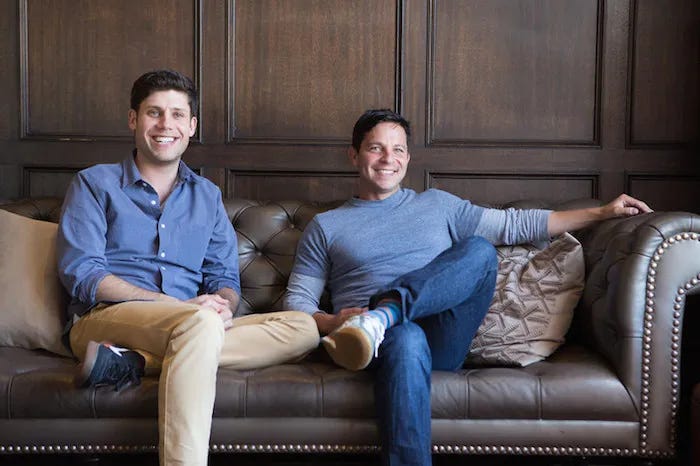
Screenwriting duo whose movie writing credits include (500) Days of Summer, The Spectacular Now, The Fault in Our Stars, and The Disaster Artist.
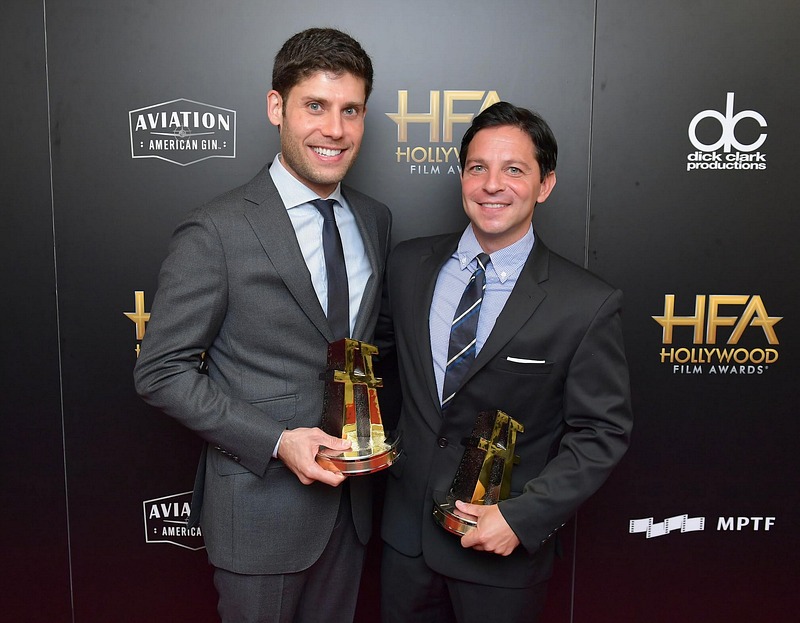
At the time I conducted two interviews with Scott Neustadter and Michael H. Weber (2013 and 2014), their screenwriting credits were already impressive: 500) Days of Summer, The Spectacular Now, and The Fault in Our Stars. Subsequently, they added to their credits: Paper Towns, Our Souls at Night, Rosaline, and The Disaster Artist, the last for which they were nominated for an Oscar for Best Adapted Screenplay. They also created the limited TV series Daisy Jones & the Six. In addition, scripts the duo has written have made it onto the annual Black List five times.
Here is my 2013 interview with Michael and Scott.
Scott M: As I understand it, the two of you met when Michael became an intern at Tribeca Films, and Scott was working there as a development executive.
Michael: It was, I want to say, March of 1998. My friends went away on spring break, and I couldn’t afford to, so I went back home to New York, and decided I would just use that week to find an internship. Opened the phone book‑‑I didn’t have any connections anywhere‑‑and just cold‑called a bunch of places. Went in, met with Scott, and very quickly, the conversation moved away from work stuff and became us talking about movies.
I had recently seen “Rushmore” and we were both gushing about how much we loved that movie. It’s pretty much been that way ever since when we’re together. We tend to talk about anything other than work.
Scott M: How did that stint at Tribeca precipitate you both getting into screenwriting?
Scott N: I had always wanted to be a writer. I just never thought it was a very practical way to make a living and I wasn’t brave enough to go out to LA, wait tables, eke out a living while working on the craft or whatever. So I went the development route instead. I was hired out of college to be the Story Editor at the company — which basically meant I was the in-house reader. I’m not good at very many things but when it comes to doing script coverage or story notes, I’m first team All-American. So they kept me around to read all the scripts, do notes, coverage, and weirdly enough, though I was a 21 year old kid, they valued my input. Which was awesome.
Michael: I was a summer intern in ’99, Scott was reading a million scripts. The internship wasn’t glamorous. None of them are. Then, in between photocopying and errands and whatever, I read a ton of scripts, generally whatever Scott thought was good. We would sit around and talk about them.
When I graduated Syracuse in 2000, most of my friends went out to LA and I never really wanted to leave New York. I just hung around Tribeca until they hired me. First I was doing floating work on the development side, but by July of 2000, I was hired to be one of De Niro’s personal assistants.
Scott N: Weber was the one who said why don’t we try writing one of these in our spare time. I couldn’t think of a reason not to.
Michael: We would sneak away during lunch breaks, have lunch on the roof of the Tribeca Film Center and talk about the scripts we had read and seen that Tribeca had bought. We’d go, “Really?” seeing these other places that bought.
Scott N: The false assumption I was under — that I think a lot of aspiring writers are under — is that most scripts in Hollywood are extremely good. Nothing like a few years reading unsolicited material to debunk that idea. But beyond that, even some of the scripts I was receiving from agents and managers, they weren’t exactly tremendous either. And they were getting bought and some of them were even getting made (12 years later, I still don’t entirely understand the getting made part of the equation but that’s a whole other story). Anyway, when the bar was set at Sorkin level, I was certainly not going to even attempt to write a screenplay. It was only when I realized there’s only one Sorkin, there’s only one Tarantino, there’s only one Cameron Crowe — it freed me up psychologically to give it a shot.
Michael: This was probably, I want to say early 2001. We didn’t know what we were doing. We didn’t have a plan. It’s not like we read a book on “Here’s how to collaborate on something.” We were mostly doing it to make each other laugh and make our friends laugh.
Scott N: He’s a very easy laugh. I enjoyed getting him to laugh at things though I am not, I don’t think, all that funny.
Michael: I came from a background in Syracuse of extensive outlining. My professor there, Evan Smith, who had a long career both writing and working as an executive, he on both sides of it, mostly in TV, had drilled into me the importance of outlining.
Scott N: Another thing I’m not — organized. And I hate outlining. But this is why I would sit down and write 50 pages at a time — some of which wasn’t terrible — but then not know where it was going, get frustrated, and delete it from my hard drive in disgust. I’m bad at writing, but great at deleting. You need to outline.
Michael: The first thing we wrote was a simple idea we both liked. A guy is stuck in a job he hates, and he finds out he has six or eight weeks to live.
Scott N: I called it “Suck the Marrow” after the Thoreau quote and because I liked having the word “suck” in the title of our first script. Basically, every time you see the story of a man with only a few weeks to live, it ends with the dude climbing Mount Everest or having a catch with his Dad or some life-affirming Bucket List-y thing.
Michael: We thought, “No. None of that would happen. You would quit your job in a blaze of glory and you’d blow all your money on the stupidest things and you would just go crazy.”
In our version, the main character did that, but then of course, six weeks or eight weeks or whatever come and go, and he doesn’t die, and there was a screw‑up. It turns out he’s going to live.
Scott N: So he has to right all the wrongs he just created etc. It was an extended episode of “Family Guy,” basically. Really broad, really ridiculous.
Michael: We had a corpse‑fucking scene.
Scott N: A terrific corpse- fucking scene!
Michael: We had a cadaver musical number. The main character is snorting Cocoa Krispies at one point. It was totally off the wall. What it was, most importantly, is, we told a really simple story as a vehicle for character development and jokes.
Our friends liked it and some of the people we worked with liked it. It never got sold or anything like that. It encouraged us that maybe we could do this story, or it was at least worth doing again. That was really important. It also was just the beginning of the partnership in terms of us.
Even then, when Scott lived in New York, he lived on the Upper West Side, and I lived on the East Side. We never wrote in the same room then. We can problem‑solve in the same room.
We outlined a lot by phone, by email, even, very rarely, but sometimes we’ll even outline a little bit together, but the writing will never takes place in the same room. It didn’t back then in 2001, and it doesn’t now.
Scott M: That same pattern came into play with “(500) Days of Summer”. Scott was in London and you two were swapping emails across the Atlantic Ocean about this script idea.
Scott N: We weren’t exactly writing “500” while I was in London. The truth is, having written a script that was funny, that people liked, but that didn’t go anywhere, it kind of proved my point about this not because a very practical way to make a living. And now I was 25 and starting to think maybe working at a movie company wasn’t either. So I applied to graduate school in England and when they took me I said “fuck it,” quit my job and moved to a continent on which I knew no one to study a discipline of which I knew even less. It was a crazy move but I was in the mood for something crazy. I was pretty much done with the movie business and writing when — and this is true — the very first day in England, I met the girl who would provide much of the basis of Summer.
Michael: We had always talked about doing a relationship movie, something real and something relatable. We had conversations like that.
Scott N: Problem was we didn’t have the relationship we wanted to write about. And then suddenly we did.
Michael: I think Scott rented that movie “Thirteen Conversations About One Thing.” The funny thing is, neither of us has still ever seen that movie. He rented it but didn’t watch it, and then he said to me, “We should do something like that.”
Scott N: It was “32 Short Films About Glenn Gould.” I was back in Margate (where I grew up) writing my thesis for grad school and trying not to think about that girl. Which meant a lot of movie renting and Smiths listening. I never opened the DVD but I remember looking at the box and the title and having this idea in my head of what that movie could be about. That’s when I had one of those rare lightbulb-y moments. I’ve saved the email I sent Weber at 2 in the morning, August 8, 2003 which you can read below:
“i’ve hit upon a possible way to do a relationship comedy a la annie hall and make it not suck. a bit like 32 short films about glenn gould, here we have what i’m calling 308 DAYS OF APRIL, april being the name of the girl. the movie is an out of sequence collection of incidents and events or whatever, like, 1 would be the scene of their meeting and 308 would be the scene of their break up. 8 would be the time in the elevator when he didn’t ask her out, 36 would be the first time they have sex etc. etc. all about relationships and romance and the craziness involved until we have a full length funny feature that people can laugh at and possible relate to that is as interesting character-wise as it is structurally. with enough bits and pieces from our own experiences and stories from people we know, this thing could write itself.”
There you have it.
Michael: We kept talking from there. I remember we both sparked to the idea of, you can have an insane moment on the way up in a relationship as you have on the way down, but the outcome is so different, based on where you’re at in the relationship. In most movies, that moment is an hour apart. But what if, in our version, they were right next to each other?
In an early draft, it was a scene at a Chinese restaurant or something, and he’s trying to make her laugh. On the way up the mountain, he’s making fun of some other people in the restaurant, and she thinks he’s the funniest guy in the world.
Then on the way down the mountain, her response is, “Why are you so judgmental?” It’s the same thing, but it’s based on where they’re at. Anyway, it was conversation about moments, about real things that we related to and other people would relate to that got the ball rolling. He had some diary thing -
Scott N: I believe we men call them “journals…”
Michael: And I started tracing out an entire relationship of just moments, moments that happen on the way up the mountain, moments that happen when you’re on the top of the mountain, and moments that happen on the way down, almost just like a boy and girl.
We just started talking about all these pieces, and some of them fell hard. They weren’t relatable enough. Some of them we needed to flesh out more.
Scott N: Ultimately we had what amounted to, like, 150 pages and I realized we were really still in the first fucking act. This wasn’t going anywhere. I didn’t know what point I was making because I was still broken up about the whole thing and in all our outlining and conversations the one thing that was really missing was the theme. Other than fuck romantic comedies, what were we saying?
And that’s when lightning struck a second time in the form of my actual ex-girlfriend getting engaged like less than a year after telling me she would never marry and didn’t believe in love. I was like, wait, what? No. You can’t. That’s… And then it hit me: if SHE could find it, there was hope for all of us. It was out there and just because it didn’t happen between these two people, doesn’t mean it won’t happen. There’s no such thing as no such thing. Now we had our point and then, rather quickly, we had our ending.
Michael: It was different than our more recent experiences, because it wasn’t the traditional outline we normally do, where we’ll have an 8‑ or 10‑ or 12‑page document, that’s just simply, and then this scene happens and then this scene happens and then this scene happens.
It was initially a little more, “We have a lot of ideas we like. Let’s maybe start writing them and then we can move the pieces around.”
Scott M: That idea of a nonlinear approach to the narrative, it was an organic thing and arose early in the process?
Scott N: I didn’t think anyone would be all that interested in reading about my relationship craziness. Which is what this was honestly. But when I hit upon the nonlinear-ness, it made me think hey maybe there’s something here other people will enjoy.
Michael: Yes. The cool thing is that in that example I was just talking about with kind of the restaurant thing, putting those scenes back to back, it meant that right off the bat, we could justify why we were doing this. It wasn’t like we wrote a standard romantic comedy and then thought, well, let’s throw in some gimmicks. From the very start, there was a method to the madness.
But then, we were realizing, this is about how you perceive experience and how you remember a pain you just went through and how you look back on things. Then, how pop culture and the things you love influence these experiences, the filter of music and movies and books.
Scott N: It started from a place of anger — “Jenny Beckman, bitch, etc.” But by the end of the movie, both character and author(s) have embraced the idea that there are no villains in this story. You cannot fault someone because they do not feel the same.
Michael: All that was…really excited in there from the very start. We probably couldn’t articulate it this well initially, but we both felt it. We knew we wanted, Scott is the music maven, and it was like, we’re going to have some cool music, and we’re going to have parts that will really feel almost music videoish.
VIP on the song and dance number was something we talked about very early on because we felt that way. When you meet someone special, you really do feel like you’re walking down the street and great music is playing.
Scott M: For a nonlinear movie to work, there has to be some internal logic tied to the characters. And in “(500) Days,” it feels like the main link has to do with memory. We don’t remember things in a linear fashion, and since the story’s told from Tom’s perspective, that nonlinear device dovetails nicely into his random memories of events.
Michael: Yes. We had ideas that we never used. For example, we kicked around the idea that Summer would stop the movie, after a certain scene, and go, “That’s not how that happened.” Then she would take control, and we’d see her version of what happened. It was a fun idea, but it violated the logic of the movie because this is entirely from his point of view. There’s been some criticism about why don’t we know more about what Summer is thinking? Why is she just this pixie fantasy dream? Anything that’s not in the movie is because Tom doesn’t remember it.
Scott N: Not just because he doesn’t remember it but also because he doesn’t know. Nor did he bother to ask. And it’s all his fault. All of it. He’s only seeing what he wants to see which is why he doesn’t see the axe falling. He doesn’t see it coming. Like the scene where she’s describing this dream she’s had. He’s not even listening! He’s only thinking about how great it is that she’s letting him in on a secret, sharing something with him she’s never told anyone. If he listened more a lot of this probably could have been avoided. That was the point, anyway. He is to blame for all that happens in this relationship, not Summer. We never wanted to be un-subtle about it but perhaps we were too un-subtle because people still talk about this as a two-hander, likely due to the “code” of contemporary romantic comedies between about two people and not just one wrestling with his own inner demons. But that’s what this is entirely. This is, for better or worse, all Tom’s story. You’d need a “Flags of Our Fathers/ Letters from Iwo Jima” situation to get both perspectives.
Michael: Really this is less about a girl, and ultimately, more about a phase of your life. The only character arc, it’s subtle, but it’s there, and as an adult male, it’s sort of everything. You’re talking about a guy who in the beginning of the movie is scared to ask a girl out. At the end of the movie, he’s willing to take his lumps. He just comes out with it, and it’s, whatever happens, happens.
There’s really not much more arc than that, and yet it’s something I think that’s very relatable that all men at a different coming‑of‑age experience have at some point.
Scott M: That’s interesting, too, because I know people will typify “(500) Days” as a romantic comedy, but I’ve always looked at it more as Tom’s growing‑up story. That’s really the root of the story, right?
Michael: That’s our joke, because unfortunately, so many romantic comedies were made so poorly for a number of years that romantic comedy became a bit of a dirty word, especially within the studio system, that we realized, actually even really not a romantic comedy. It’s a coming‑of‑age story dressed up as a romantic comedy. We have now been very fortunate to have worked with a number of producers and met a lot of other producers, and found steady work, and we’re very, very fortunate. We love our work and want to keep it going. But it’s interesting how regularly, especially after “500” came out, that we were approached to work on romantic comedies that went against really the reason for “500's” being. They were built around set pieces. They were built around wacky hijinks.
Scott and I have always joked, nobody’s ever gone on a date to the aquarium and been bitten in the ass by a dolphin. But for a while they were making them that way, like, “They’re going to go on a date and he’s about to tell her how he feels, but then something crazy happens.” That doesn’t happen.
When the guy doesn’t tell the girl how he feels, it’s because he’s scared. It’s a tool Scott and I have all the time, that probably more than any other tool in our toolbox, is we take a step back, and we ask the question, “What would really happen?”
The number of times that’s either enhanced what we were working on or got us out of a serious jam…thousands. It’s just why we connect to movies. We obviously just used that all the time on “500,” but it’s a question we ask on every project we work on.
Scott M: There are some ambiguities in the story. For example, Summer’s on the bench with Tom at Day 488. Is that actually real or is that some fantasy that Tom might have been having that he needed in order to resolve their breakup?
Michael: Yeah, we’ve always argued about that. It’s been a funny thing. It’s a fun argument. Because I believe she’s there. I’m not sure what Scott will say. I believe she’s there, but I will give you that in life, most of the time we are not that lucky to get that kind of closure.
Scott N: It’s the one scene in the movie with no basis in fact. At all. Even the cartoon birds are more real. That said, if you believe in the idea of closure, that scene is closure. That’s the scene where he can move on. Maybe she’s there, maybe she isn’t, but she says the things he needs to hear to get on with his life.
Scott M: There’s another ambiguous moment which is at the very end. Tom has gone through this process from a romanticized view of love to more of a realistic perspective, I guess you could say. Then he meets Autumn, he asks her out, and the script flips to the #1. So it’s like you saying: A, this is a new day in Tom’s life, a new way of having a relationship. Or is it B, this is Tom on the path to replicating the same behavior he exhibited with Summer.
Michael: Yeah. I love that question. Honestly, I don’t know the answer. You never know. Will he make the same mistakes? New mistakes? Will it be happily ever after? I don’t know. I have a girlfriend now but I was making a lot of mistakes for so many years, so I don’t know. I think it’s a really subtle thing to talk about. I don’t know if he ends up with Autumn.
Scott N: Exactly. You want him to have learned his lesson but who knows. It was Joe’s idea to look directly at the camera at the end, which really doubles down on the idea that this movie is entirely taking place in this character’s head. Hopefully, having witnessed this tumultuous time in his life, he’s as aware as we are that he needs to grow up. But the question of “will he” remains.
Scott M: I just got done reading a script for another one of your projects, “The Spectacular Now.” A terrific read.
Michael: Oh, thank you.
Scott M: Here’s a logline accompanying the script when it made The Black List in 2009. It says, “Hard partying high school senior’s life changes when he meets a shy insecure girl”. The protagonist is Sutter Keely. I saw him as a postmodern Ferris Bueller. Does that ring true to you?
Michael: Definitely. Again it goes back to the first time Scott and I met and liking the same movies. It wasn’t just great romantic comedies but I loved the work of John Hughes and they’re the movies I grew up on. They felt real to me. I mean, even at times when they get silly, they still felt real to me. Even in the silly moments there was euphoria. I don’t know if a kid can actually lead a parade in Chicago but the spirit of it is what it felt like at certain moments to be a teenager.
It’s funny how many of our projects, among the ones we most care about, are reactions to how they’ve been making a certain kind of movie. And it was cool that “Perks of Being a Wallflower” found an audience last year and did so well.
Because they really need to start making high school movies or teenage movies that are honest, that feel real. And there’s totally a place for vampires and witches and wizards and superpowers. And clearly obviously those movies do really well and people really like them. But for a while it seemed like they stopped making the ones that didn’t sugarcoat being a teenager or the other way of the heightened shenanigans of American Pie, which, by the way, I loved the first American Pie. But we were trying for something a little different. We didn’t want to shy away from the emotional complexity of being a teenager.
Scott M: And so were you bringing that mindset when you read the novel by Tim Tharp or did that come out of reading the book?
Michael: Scott and I have only talked about it. The same way we were talking about romantic comedies for a while before Summer we were always talking about, “Why don’t they make a few movies like they used to”, and it was the same kind of thing. We were very critical movie goers. We love movies. We just don’t go to the movies as much as we used to. I don’t think we started off thinking this way but it evolved into, “Let’s write the movies we want to go see”.
We got the book in Fall of 2008 and we both just fell in love with it. It just felt honest and funny and it touched a range of emotions. And it was what we were looking for. It was really a wonderful book. I don’t know if you’ve read it. It was short listed for the national book award for YA and deservedly so. It’s really a wonderful book.
Scott M: There’s a line from the Hollywood Reporter which resonated with my own experience when I was reading the script. The quote is, “It says a lot for the depth of the writing and the characterization to acknowledge that it takes the entire film to fully get a handle on Sutter Keely.” It’s interesting because here’s this fun, good-natured kid going around ‘rescuing’ other people, and yet he’s got this problem with alcohol, he avoids talking about his past or his future, in effect he’s a mystery. Was it a struggle for you to create a sense of connection to the character while embracing this idea that in some ways, Sutter is going to be a mystery for much of the movie?
Michael: No, a lot of that was in the book. That attitude of “live in the now,” that southern answer to anything complicated is, “Let’s just have fun.” Really, Tim Tharp does such a great job with that that we understood that. I, for one, did not enjoy my teenage years. They were very difficult in a lot of ways, and got it. I totally understood the emotional labyrinth of avoiding problems at school, problems at home, problems with money, problems with girls, problems with how you felt about yourself.
I totally got it. I did not have a drinking problem, but I understood that period of your life, and a lot of the choices Sutter made, which certainly helped as we just dug in on the book. There was so much good stuff in the book. We couldn’t keep everything, which is always a hard part of when you have a great book. Then given some budget constraints, there were even some things we wrote that didn’t end up in the movie.
You read a draft, there was a hotel party, and it’s kind of lame. He decides, “Screw this,” and then he ends up in a hot tub with an ex‑girlfriend. We couldn’t afford to do that scene. That’s the process. We could’ve had a lot more if we wanted to do a PG‑13 version. We stuck to our guns always. This was going to be an R‑rated movie, not because of T&A. We just wanted to be honest.
It’s been really interesting with some of our other projects learning, if somebody’s drinking onscreen, having kids drink is a bigger problem for the ratings board, we’re told, then teenage sex. Certainly in something like “The Spectacular Now,” we could not shy away from the drinking. We were not going to insert some metaphor for drinking. We wanted to be honest and not flinch.
Scott M: Well, that’s a key part, isn’t it, of his character, that it’s a way of living in the now, in that fog of the now. Part of his drinking ties into that, right?
Michael: Yeah, it is sort of a prism, if you will, of his way of looking at the world. You could probably do a similar version of this that is drugs, and we could do a similar version with…it’s why, I hope, lots of people, young and old, will relate to this character, because for most of us, being a teenager was really complicated. You didn’t need to have a drinking problem to understand the need to avoid all these complex emotions as you are becoming a young adult.
Scott M: This idea of living in the now reminded me of Ram Dass and his book “Be Here Now,” that idea about being fully present within the present. And yet, what’s so intriguing about your protagonist in this story is, he’s in the present, but it’s really more about trying to avoid both the past and the future.
Michael: Yeah, yeah. I think the past is filled with pain that he doesn’t want to acknowledge. I want to be careful here not to spoil for anyone who hasn’t read or seen it, but you almost wonder, is it avoidance of dealing with the future because unconsciously he knows his dad really is a loser and he’s going to end up like him. The odds are stacked against this kid. But thinking about the future is more pain. Thinking about the past is definitely pain.
Scott M: He comes to this wonderful little observation in the script I read, where he’s writing this application letter to college, in which he says…
Michael: Which was one of the things, by the way, I should add, that was not in the book.
Scott M: Oh, that wasn’t.
Michael: No, the book started with the whole Walter business. I think it’s just a simple narration, and it was fine. It began with this crazy day that leads to him getting dumped by his first girlfriend, and Marc Webb, who was the first director involved‑‑we were having a phone call‑‑was really pushing on this, like, “Let’s find a way to really try to hit the ground running in the beginning and make this pop.” I don’t know where I thought of the idea, but I hated writing those goddamn essays. Where I went to college, it was Syracuse, but where I applied and where I went was, “Who wants the fewest essays?” We played this, “Can I recycle the same essay the most number of times?” I was not a good student. I didn’t have SAT prep classes and tutors of how to get into college. I had none of that stuff. For me it was, “How can I just get this fucking process over with?”
I was thinking back to that, and that’s where the idea came from. “Oh, those damn essays” is a fun way to get in this character’s head early on. Just the fact that he’s dropping F‑bombs in his college essay, you learn a lot right there.
Scott M: It’s a great setup, because you call it back at the very end, in nice bookends.
Michael: Yeah, we were really pleased with how that part of it turned out.
Scott M: Speaking of set-ups and payoffs [in The Spectacular Now], let me jump to another one. The last line in the script I read — “Your forgot your coat” — evoked memories of one of my favorite movies, “The Apartment,” and the last line there, “Shut up and deal.” Is that still in the movie, where he shows up at the campus with the coat?
Michael: Scott and I both love “The Apartment.” That’s another movie that was a touchstone for us and our friendship and our collaboration. That movie is just perfect.
Scott M: I agree.
Michael: Unfortunately that last line from the script is not in the movie anymore.
Scott M: Really?
Michael: It’s funny, what you have to sacrifice to get a movie made. The baby steps of a career are really interesting, because first, you want to get a job, get hired for anything. Then you want to start to get hired for things you care about more. Then you want to get hired to write something that is definitely going to get made. And so on and so forth‑‑there’s kind of these little…you’re in the next club. The sacrifice needed to get the movie made‑‑we’re like, “We will do anything to get this movie made,” and unfortunately, sometimes things you really love have to be thrown overboard. I’m sure there are other writers, I don’t know, who throw fits or whatever, but at the end of the day, for us, really, the most important thing is getting the movie made.
When Jim Ponsoldt came onboard, he just got it right from the start. He understood the movie we were trying to make. He related to not just Sutter but other characters and their choices. He wanted to shoot in Athens, Georgia, his hometown, because he knew it well. He grew up there. He had experienced this there. Athens, despite being a college town, definitely has an Anytown, USA feel to it in some ways. It really could be any number of suburbs anywhere.
The good thing is, doing this independently, because he knew Athens so well, it really allowed us to stretch our limited budget. That to me was the biggest victory of shooting in the director’s hometown.
All this is a very long way of saying, it’s very hard to justify a character wearing a coat to a party in August. When we were shooting it was supposed to be, say, April, but man, it is hot in Georgia, and nobody would be wearing a coat. We tried it with Shailene wearing a coat, and it just didn’t make any sense.
It was the site of an old Civil War battle, actually, a swimming hole where there was a minor Civil War skirmish. It’s really, really a beautiful location. But it just didn’t make any sense. She has it tied around her waist, and Miles offers to hold it. But still, at the very end, when he says, “You forgot your coat,” it just doesn’t connect.
So not to spoil it, unless you want me to spoil it, but we went with a slightly different modified ending that is different but I think works and is ultimately satisfying.
I will say, if I could add one more thing, either ending is different than the book. The book ends on Amy leaves town. Sutter goes to drink with those barflies. He gets wasted, and the last page of the book is him wandering the side of a road drunk, and he’s taking about the broken glass on the side of the road. It is bleak. I don’t know if he’s about to die, or going to die soon. There’s no hope. We thought, “We don’t want to give this a ‘happier ever after’ entirely. This is still a kid with some problems.” But we wanted some hope in there. I think we did that on the page, and then I think ultimately we did that in the ending we actually have. People will walk out, hopefully, and talk about whether or not this will work out. But it’s certainly more hopeful than the very bleak ending of the book.
Scott N: I watched “The Graduate” with my dad at a really young age and it had the most intensely profound influence on me in a million different ways. I’ve noticed, when it comes to endings especially, I’m always just trying to do the last shot of “The Graduate”. This is the one where Benjamin and Elaine have “escaped” from her wedding and they board the bus and they’re giddy with excitement and happiness and love. And the bus keeps moving and we stay with them a few more beats, just long enough to watch their faces change from that exuberance to something else — fear? regret? anxiety? remorse? It changes for me every time I watch it.
And that ambiguity is, for me, the difference between a happy ending and a hopeful one. Happy endings aren’t real. Even the happiest ending is only happy because the story stopped there. But hopeful endings are a beautiful thing. That’s what I always aspire to. Does Tom figure out his shit or doesn’t he? Is Sutter going to deserve Aimee or take her down with him?
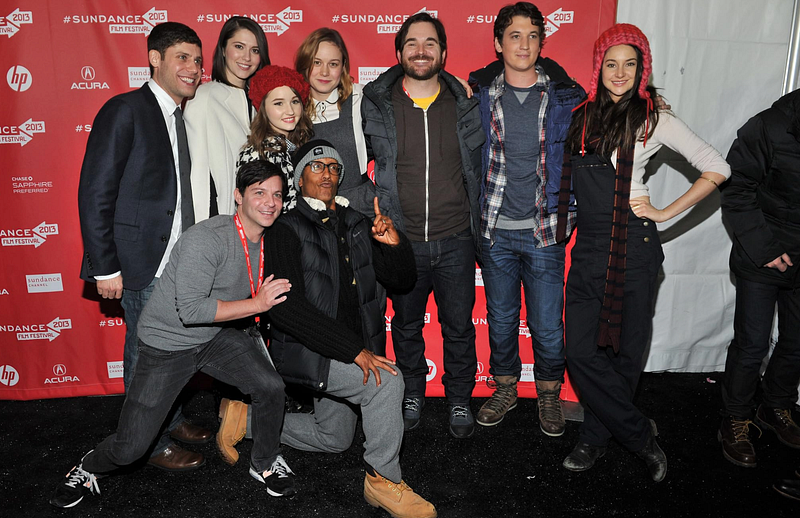
Scott M: Well, at least the original ending you wrote is in script form, so there’s that. Moving on, “The Spectacular Now” debuted at the recent 2012 Sundance Film Festival, got picked up for domestic distribution. What was that experience like out there?
Michael: Oh, it was great. It was really cool. It’s funny. “Summer” took four years to get made, and then another year to be released, and then from writing to release was five years on “Summer,” and it’s going to end up being about five years on this one. We’ve gotten used to this process of, you live with something for so long, and then it doesn’t belong to you anymore. It belongs to everyone else. You hear what people think, and the fact that the response has been so positive…
A quick tangent‑‑when this was almost a Fox Searchlight movie, many years ago, I believe about the spring of 2009, we went on a research trip to Oklahoma City. That’s where the book is set. He’s outside of Oklahoma City, and that whole area. We did a three‑ or four‑day trip to…actually, we started in Oklahoma City, but we went all around Oklahoma, just to get a sense of Oklahoma, but also, does this movie have to be shot in Oklahoma?
The people of Oklahoma were great, and it was really cool. I had never been there. It was great to discover, we can make this movie anywhere, and hopefully it will connect. High school kids are high school kids.” And we were in the library of a high school and I turned to the student librarian, I said to her, “Hey, just out of curiosity, what’s your favorite high school movie of all time?” And she thought about it and she thought about it, and she said, “Harry Potter.” And we said, “Thank you.” It was exactly the answer I wanted to hear, because we’re not making them like they used to anymore.
I felt bad for her and other teenagers that they’re not making things like “Ferris Bueller’s Day Off” and “Say Anything” and “Fast Times at Ridgemont High” and “American Graffiti” and all these movies I loved growing up.
I thought, “We’re doing this movie for everyone, but especially for her, because you don’t need to have all that other stuff. You can just show what it’s like to be a teenager.”
Scott N: Which is not to say there isn’t a place for the Harry Potters and Twilights of the world. When we were kids we had fantastic escapist movies about young people as well. What’s different now is that there’s ONLY those movies. A lot of it has to do with the ratings system and a lot of it has to do with television — but a fair amount probably also has to do with the cinema powers-that-be under-valuing the intellect and sensitivity of young viewers. We believed there was an audience, young and old, who would respond to a realistic, sensitive, heartfelt portrayal of teenagers. And I guess we’ll soon see if we were right.
Scott M: Like “The Spectacular Now,” you’re involved with a couple other projects based on novels: “The Fault in Our Stars” and it was recently announced you are doing an adaptation for “Where’d You Go, Bernadette?” What are some of the unique challenges of writing screenplay adaptations?
Michael: Those two in particular present a different kind of challenge. What we really liked about “The Spectacular Now”‑‑it wasn’t a bestseller. It wasn’t that widely known. It should be. But it’s not. “The Fault in Our Stars” I believe is at 54 or 55 weeks on “The New York Times” bestseller list. It trends on Twitter all the time. There is a responsibility with that one. Don’t screw this up. We feel it, and we care about that book as much as the fans do. The book is so wonderful.
In some ways it was the easiest job we ever had, because the book is so good, it really just came down to having to take a few things out, having to condense the ending a little bit. I wonder if I should be spoiling any of these things, so maybe not. Rest assured that we tried to use as much of it, because it was just so good.
Scott N: He’s right. All book adaptations come with their own unique set of challenges. Except this one. John did all the hard work and it was up to us to shape it and make sure the visual experience would enhance and not detract from the reading experience.
The hardest part, by far, was actually getting the job in the first place. It was a high profile book that a lot of screenwriting people were going for. We spent days trying to come up with something that would distinguish our version from anyone else’s version, things like, since Hazel is telling us this story, we can see the world through HER eyes — meaning maybe we don’t see her walking around with an oxygen tank and a cannula in her nose. And then later, during moments when things were really getting to her, those truths would reveal themselves at opportune times cinematically blah blah blah. Wyck Godfrey, the producer, said — and I’m paraphrasing, “go fuck yourself.” He wanted the POSTER to be Hazel with the oxygen tank and the cannula in her nose. And we were like wow, they’re really going for it. This is fantastic! So we doubled down and said hire us and you will get exactly the feeling you get from the book and here’s how. Thankfully, it worked.
Michael: “Where’d You Go, Bernadette?” turned up on a lot of top 10 lists, and people are really responding to that as well. We’re trying to preserve all the parts that people love, but also understanding the obligation to make this movie an experience that can stand on its own, even if you don’t know the book is always a bit of a balancing act.
“Where’d You Go, Bernadette?” is particularly challenging because it’s an epistolary novel. It’s told entirely through emails, letters. There’s a TED talk. There’s actually a transcript of a TED talk. We’re in the middle of writing that now, but it’s been a lot of fun to find creative ways to have all these different voices thematically, when it’s done so differently on the page in the book. I’ve been really enjoying working on that one.
Scott N: We’ve adapted books in which we’ve used one scene from the book. We’ve adapted books in which we’ve used zero scenes from the book. And we’ve adapted books in which we used as much as humanly possible from the book. What’s super cool about “Bernadette” is that we couldn’t use all of it even if we wanted to. Many of the book’s pleasures are about the experience of reading. So the trick is figuring out what the cinematic versions are of those pleasures. It’ll be interesting if we can pull it off.
Scott M: At this point, you two are basically Black List veterans. You’ve got “Suck the Marrow” in 2005, “(500) Days of Summer,” 2006, “Under Age,” 2008, “The Spectacular Now,” 2009, “The Fault In Our Stars,” 2012. What does it mean to you when a script of yours appears on The Black List?
Michael: It’s a really nice honor. The Black List, it seems to have really grown in importance over the years, and influence, and you read in the trades all the time, “This Black List script’s got a director,” “This Black List script just got made.” So it really seems to have become an important part of the business.
Scott and I do not write things, for the most part, that are the easiest sells. “The Fault in Our Stars” might be a hit book, but it’s about kids with terminal cancer. “500 Days,” it went out on spec and no one wanted it. It was a while before Fox Searchlight finally came in and optioned it, but then it was even a while before they decided to make it.
“The Black List” isn’t about just the commercial viability of a script. It’s just here to recognize, “Here are some great scripts.” That’s really cool because Scott and I tend to write things that are harder to sell or are certainly harder to get made or might not have the traditional marketing hook that other things do.
To have this recognition it’s a nice honor, but I think it’s also helpful, too, for people like us who write things that are occasionally less traditional.
Scott N: Lots of people see movies but not a lot of people read scripts and not enough scripts become movies. So, for me, the Black List is a really great way to get our stuff out there when it wouldn’t necessarily find an audience on its own. I’m also extremely neurotic and have low self-esteem so to receive any positive feedback at all is a life saver.
Michael: For me, I don’t live in LA. I’ve even seen when my aunt knows what “The Black List” is. She lives in Florida and says congratulations. When my girlfriend says congratulations, they are not in the business. They are not in LA.
It’s interesting to see how the influence has grown beyond just people in Los Angeles, which is nice. For me, because I’m not in LA, The Black List is a nice way each year for me to find out about a lot of the scripts that I should read.
Usually, the day after The Black List, I would start bothering my managers, “Hey, could you get me a copy. I want to read this. I want to read that. This sounds really good.”
It’s actually helpful to me in that regard, too, because I’m a reader and a fan first.
Scott N: Unlike Weber, great scripts don’t inspire me, they terrify me. When I read something good, it sets me back for weeks. I wish someone would create a “Mauve List” or something — the least liked scripts in Hollywood — so I can read terrible ones and be inspired that way.
Scott M: Some craft questions for you. How much time do you spend in prep writing? Do you have a specific process for research, plotting, character development, brainstorming, outline, and so on?
Michael: We don’t have a set format for the outline. It’s not as if the outline is the same every time. It’s just that it’s a document for us. We’ve been lucky. We’ve never had to turn in an outline. It’s just a map for us. How do we get into the scene? How do we get out of the scene? Are there any important points, moments, ideas, or jokes that we have to hit in the scene?
It’s somewhat informal, and yet it’s crucial for us. In fact, it probably wouldn’t even make sense if anyone other than the two of us looked at most of our outline, because we’ve been doing this for a while now. We almost have our own little secondhand language with a lot of things.
Then we will oftentimes spend as much time outlining as we do writing.
Scott N: God I hate that shit.
Michael: I think it’s why we write quickly, is because we spend so much time on the outline. It’s so much easier to diagnose problems in an outline.
You have the viewpoint to see everything from an outline, and you can’t always see when you’re simply writing. You don’t find yourself‑‑that expression a lot of writers use‑‑in the weeds. You don’t really find that happening as much with the more extensive an outline you have.
Because if you’ve already done the heavy lifting in the outline, the writing becomes a little bit paint by numbers. Put blue over here, put red over here. It’s worked so far.
Scott N: I would say — despite always having a proper outline before starting to write — I almost always find snags along the way that require us to step back and re-think things. Definitely don’t expect the writing to be surprise-free just because you think you have the road map perfected before you start.
Michael: Now, the cool thing about being two people, we’ll divide scenes up, so, if you take those four and I’ll take these four and then we’ll email back and forth.
But if there’s a scene that both of us really want to write, oh, I wanted to do that, you wanted to do that, then we know we’re onto something. Then if we’re both excited to write it, that’s a good sign, or one of us might write it, they’ll be like, “I’m going to send you a couple of jokes to include in that, even though you’re writing it.”
The flip side, and this is really helpful, if there’s a scene that neither one of us wants to write, then it’s like, stop the presses. You go, wait a second, if neither of us wants to write it, who the hell is going to want to read it, let alone watch it? There’s no way to do it without that scene? Or why is this not interesting to either of us? Having that barometer has helped us a lot of over the years.
Scott M: Michael, you’re in New York and Scott, you’re in Venice, California and you have this pattern where you don’t write in the same room, you divide up scenes, you email. That process clearly has worked for you over the years. Why?
Michael: When we’re together, we’re generally playing cards, talking about sports, TV shows, anything under the sun except work. I’ll come out to LA quite a bit for meetings to get jobs. Sometimes it takes both of us being in the room to put something over the top. They often like both of us there if they’re giving us notes. All that’s great‑‑I like LA, I have really good friends there‑‑but New York’s always been home to me, and even when we’re together in LA we don’t get work done. Usually it’ll be, I’m leaving, and we’ll even start to divide up scenes on the plane. “All right, I’m going to work on these four on the plane, you work on those.” It’s just always been that way.
Scott N: The other aspect of our process that he’s not mentioning is a severe difference in personality. He’s pretty easy going and laid back whereas I’m a raving psychopath. For example, I’m allowed to fuck with his scenes directly — and I tend to — but if he even touches a word in one of my scenes, hellfire will rain down! Instead, he sends me his thoughts in a separate email and I make whatever changes myself. There’s a few reasons for this beyond my neuroses, the most important of which is that this way, in the end, the script will always feel like one voice despite being written by two people in two different time zones. Which is crucial.
Scott M: How do you go about developing characters?
Michael: We talk a lot. We ask all our questions. It’s simple stuff, really. What does this character want? Why do I care? What’s the point of this character? Does this character change? Has either one of us ever experienced what this character’s going through? It’s really a lot of questions like that. But we rarely even need to break out those questions.
Scott N: Or I’m just writing about myself and my friends.
Michael: A lot of it, I think, just seems to be instinctual with us. We’ve never attempted to write an action movie. The character stuff tends to be our favorite thing. It’s like our bread and butter, that figuring out who these characters are. If we don’t understand and relate or just have a way in, it’s usually not something we’re interested in.
We’ll talk a lot about something before we start working on it, or even, before if it’s a job we’re chasing to get, and that spark is tied so closely to our feel for the characters.
Scott M: How about theme? What’s your take on that and how important is theme to your writing?
Michael: Yeah. We do talk about character, but we don’t ask those questions a lot. I think we both have really good understanding of character, but when it comes to theme, we talk about theme a lot. We will say, all the time, what is this movie about? What are we trying to say? We in fact had a phone call yesterday with Maria Semple, the author of “Where’d You Go, Bernadette?” to ask her a thematic question.
There are two big themes in the book, and we asked her, “When you were writing the book, what were your feelings on how and when those two themes connected, when they crossed paths?” Just hearing her riff helped us.
We spent a lot of time talking about theme, and not just in the macro sense before we start, when we’re outlining. The character motivation has to service the big ideas. So we go back to “What is this about?” all the time.
Scott M: It sounds like theme becomes a touchstone for basically for writing every scene.
Michael: It’s funny. We just always scratch our heads, and we always wonder, like a joke between us, “Are we over thinking this?” We ask ourselves that question all the time. We see a lot of movies that have tangents or fat, for lack of a better word, that don’t connect, or the wacky character on the side who doesn’t have anything to do with the plot, or is not even sure they are…We really want all the pieces to connect. I bet you we probably do over think it at times. But we want everything to connect and to make sense and to have a purpose. So I’ll be working towards what you’re trying to do and say. Getting all those pieces to fit is usually the hardest thing. I know we’re speaking really generally here, but when we pause in the writing‑‑we’ll have divided up a certain number of scenes and be a certain part of the way through it, but sometimes there’s a hiccup.
It’s oftentimes, “Wait a second. Do we need these next couple of scenes, or I’m realizing now we actually already accomplished this in an earlier thing.” A lot of that stuff goes back to the theme, because it’s, “OK, we’ve already serviced that part of it in relation to the theme over here.” We think about it with every scene, with every turn of the story and character beat. We really do.
Scott N: I heard a story once about Jeffrey Katzenberg that he used to make his animation writers put the theme of the movie at the top of every single page of the screenplay so they wouldn’t forget. I used to think that was madness but so often you do wind up falling in love with a character or a line or dialogue or a scene that has virtually nothing to do with the point of your story. Having one eye on the theme at all times informs the legitimacy or de-legitimacy of those tangents.
Scott M: How about this one: What do you love most about writing?
Michael: I really like, when I’m alone, and when I’ve figured out something’s not working, and then I figure out a way to make it work. Or I’m trying to figure out an idea for something and then you come up with something new that you hadn’t thought of, which is a new way. Then suddenly, other pieces click in a way that leads you to believe you’re onto something here. Those moments that propel you forward creatively are the best moments. You never know when those moments are coming. They can come on a good day. They can come on a bad day. I mean, they can turn a bad day into a good day. But those moments, if I’m sitting in a coffee shop by myself and pulling my hair out and then suddenly there’s an idea. Or I have a way, and some things are there that just, or I fix something, or suddenly something works. Those little moments, those tiny, tiny triumphs are the best ones.
Scott M: Like epiphanies, right?
Michael: Yeah, yeah. Sometimes it’s like a new idea, sometimes it’s, I had to fix something, sometimes you just fix it. Any of those moments of clarity can, in any way, are just, ooh. I could always use more of those.
Scott N: I was talking about this with someone the other day. I love writing but what I really love is having written. I don’t like anything I write. Twice in my life — reality/expectations and the bench scene in (500) — I finished a scene, read what I wrote, and went “yup, that’s it. That’s as good as I can do.” Every other time I’m disappointed. In my head the scene is bananas amazing but in execution I think it’s just meh. But then someone else will read it and they’ll laugh or be moved hopefully, or just be pretty psyched about it and I can take a little satisfaction in having exceeded someone else’s expectations of me. Cause I know I’ll never be able to exceed my own.
Scott M: OK, what’s your single best excuse not to write?
Michael: Oh, that’s a great question. [pauses] I feel really the single best excuse not to write, I will say, I beat myself up if I don’t write. Honestly five minutes after any excuse I poke a hole in it myself and I just feel bad that I’m not writing. Then begins that downward spiral of, like, you’re not feeling good about yourself and then you force yourself to start doing work as a way to feel better.
Scott N: My immediate role models — my parents and grandparents — all had jobs to go to, offices, business cards, that sort of thing. So I grew up thinking that’s what “work” was. And until I was 25, that’s what I did too. But now I have none of that. I don’t have office hours, I don’t have a boss, it’s so anathema to my way of thinking. So I wake up and I write. (More often than not, I wake up and I delete. But sometimes I write.) There are no excuses. I mean I also do the NY Times Crossword, surf the internet, watch Colbert, return emails, play with my baby — everything OTHER than write. But eventually I write. To me, it’s such a privilege to be able to do this for a living, I feel like I have to earn it.
Michael: Since we’re two people, though, it’s helpful. I think we push each other. So having a partnership, it pushes both of us forward in that way. Scott, he is relentless in getting a scene to be just right. I admire that quality in him, and he is just dogged. I think he is the hardest‑working person I know, so I try to be the second‑hardest‑working person I know.
Scott M: One last question. What advice can you offer to aspiring screenwriters about learning the craft and trying to break into the business?
Michael: I love this question, because most days, I still feel like an aspiring screenwriter.
Scott N: I agree.
Michael: Just write every day, and then write some more. I try to even be competitive about it. What I mean is, I know that when I’m not writing, someone else is. Only so many things are going to get read, and even fewer will get bought, and way fewer will get made. If you can make writing more important than even a few more things in your life‑‑if it’s the fourth‑most important thing, make it the second. That’s not to say you’re going to see results overnight, but in six months, you will.
Scott N: And I would say in addition to that two things: first, read. Get your hands on as many scripts as you can — good, bad, sold, unsold, the genre you’re interested in, the genre you’re not, anything and everything — read. The good scripts will teach you what works and the bad scripts will teach you what doesn’t but they’re equally valuable lessons to learn when you go off to to tackle it yourself. And read William Goldman’s Adventures in the Screen Trade while you’re at it which, if nothing else, is great for your confidence.
Obviously there’s no one way to do it and you will hopefully develop your own distinct style the more you write. But know that you’re initial audience (people doing coverage or, if you’re lucky, production execs) are looking for every reason in the book NOT to have to read the rest of your script. So the second piece of advice is: don’t fucking give them that reason! They have six more scripts to read that weekend and it’s already Sunday night and Game of Thrones is starting and they have to be up in a couple hours if they’re ever going to get to the gym this week — they don’t want to read your damn script.
Unless, of course… it’s awesome. In which case, your script is the highlight of THEIR week as well. Managers, agents, executives, they want nothing more than to read something amazing. But remember their patience is thin. Yours isn’t the only script in the pile nor is it ever going to be something they’d rather do than the fifteen other things they could be doing with their time. So if you’re smart, you’ll make sure at the very least your first 20 pages kick serious ass. Hook that first reader, get them reading because they’re INTERESTED, because they actually want to — and then it’s off to the races.
Here is my 2014 interview with the writers.
Scott Myers: How did you get involved with The Fault in Our Stars? Was it something you sought out or were you approached by the producers to write it?
Scott Neustadter: The very week the book was published, my Dad died of pancreatic cancer. We were super close and the whole thing was just tremendously awful and as much as I wanted to keep writing and working, there wasn’t much chance of that happening for a while.
At the same time, sensing the phenomenon it would later become, Temple Hill and Fox 2000 optioned the book and began looking for someone to adapt it. Weber and I had written a project for Fox 2000 (our upside down Romeo and Juliet comedy “Rosaline”) and they thought we might be a good fit for “Fault.” They didn’t know about my Dad situation or they might not have bothered.
In any case, a few weeks after the funeral, I remember our manager (Sean Perrone) calling to “pitch” me the book, doing his best high-wire act to gently reference the fact that, oh yeah, everyone in this thing has some form of cancer. But that was fine with me. For the past year all I did was think about cancer. And that’s all I was doing then too. This at least would feel like “working” again.
So, of course, we read it, we loved it, we lobbied hard to adapt it. We were up against a whole host of far more experienced and talented screenwriters but we knew, if given the chance, we could do a great job.
I still don’t know why they went with us. Probably because we promised them a script in two weeks. (Which they got in ten days.)
Scott M: Did you have any conversations with the book’s author John Green and if so, were there any themes or narrative content you zeroed in on with him in terms of your adaptation? Did you do any additional or specific research to write this adaptation?
Michael H. Weber: The truth is we had no contact with John until after we’d finished the adaptation. And we did no research before we started writing. Given the excellence of the book and what Scott and his family had just been through we didn’t need any extra preparation.
Our first draft, which turned out to be nearly identical to the shooting draft, was shown to John by the producers. He sent them an email that was forwarded back to us. The first paragraph said, “It’s the best adaptation of my work I’ve ever read.” Also, that our small modulations to the beginning and ending “are brilliant — genuinely better than the book.” His approval of our script meant the world to us.
Weeks later we finally met John. First Scott broke bread with him in LA and then I met John at Book Expo in NYC. Throughout this process he’s been nothing but warm and gracious to us. And now we’re all working together again on “Paper Towns”. Structurally, it’s a trickier adaptation than TFIOS, so we’ve been in frequent consultation with John over our choices. Hopefully it will be another movie we’re all really proud of.
Scott M: The Fault in Our Stars is the first of your movies to feature a female protagonist (Hazel). As writers, what was that experience like working from a female perspective and voice?
Michael: The Fault In Our Stars is our first produced movie with a female protagonist but not the first we’ve written. There were actually a few before TFIOS; most notably Rosaline, our upside down retelling of Romeo & Juliet told from the point-of-view of Romeo’s ex-girlfriend. (Hopefully going into production later this year, with Felicity Jones as the title role.) And since TFIOS we’ve almost exclusively written female protagonists; adapting the novels Where’d You Go Bernadette, Me Before You and Rules of Civility.
Scott M: When you read John Green’s book, what were some of the key themes you definitely knew you wanted to explore in your script adaptation?
Scott N: The projects we gravitate towards are almost always about the same thing — complicated relationships between two people that exist in the real world. In “The Fault in Our Stars,” everyone has cancer. Yes. But this is a cancer movie the way “Field of Dreams” is about baseball or “Remains of the Day” is about a house. “Fault” is a love story, a really beautiful one, but what makes it unique, is that the two people who meet and fall in love are acutely aware of the one thing you and I never think about — how much time is left. That was something that really appealed to us. None of us like to think about the fact that, just like Hazel, we’re all terminal. But it might be worth remembering from time to time.
Scott M: Adaptations are a real challenge in part because some of the toughest issues are not so much what to use from the original source material, but what to omit. In that vein, was there one scene or story element present in the book that you really wanted to include in the script, but couldn’t find a way to justify it in the final draft?
Scott N: We’ve gotten a lot of responses on social media from fans of the book who have seen the film saying “thank you so much for not changing anything.” Which is a huge compliment cause it sure ain’t true. But that was always our goal — to create the illusion that this is “Fault in Our Stars” in Final Draft form. Like you said, with any book adaptation certain liberties are taken: scenes get cut, lines are repurposed, characters become composites or disappear altogether. John’s voice is so strong and distinctive, the fans of his writing so rabid and passionate, the last thing we’d ever want to do is draw attention to the differences. So the fact that they’ve gone unnoticed (or, at worst, are being forgiven!) is the best praise we as adapters can get.
Scott: MI know you both are big fans of John Hughes, especially his teen movies like The Breakfast Club, Sixteen Candles, and Pretty in Pink. Apart from the fact the two lead characters in The Fault in Our Stars are adolescents, were there other elements in the story that resonated with your inner John Hughes?
Michael: Our inner John Hughes connects to almost everything we do! First and foremost, The Fault In Our Stars doesn’t talk down to young people. It treats them like the thoughtful, maturing young adults they are. Also, like many of the best Hughes movies, it’s about a time in your life when you discover the world is a much larger place. And as you are trying to figure out who you are in that world, it also seems to be the time of your life in which you care about music and books and movies with a passion and intensity that is unrivaled by later periods in life. Hazel’s love of An Imperial Affliction is a huge component of TFIOS — and the way she uses the book to make sense of her emotions and the world around her harkens back to John Hughes.
Scott M: The novel upon which the movie is based has a huge following of ardent fans, mostly young adults, but also older readers. How did you handle the pressure of knowing millions of them were out there hoping the filmmakers did a good job in translating the book into a movie?
Michael: We didn’t have to. Fortunately for us we were able to adapt the book soon after it’s publication. By the time it became a worldwide phenomenon our work was done. This may worry the hardcore fans, as if we won’t understand their passion. But the thing to remember is we were fans first. We love the book as much as everyone else and approached the job from a place of respect and zealous affection.
Scott M: In two of your previous movies, (500) Days of Summer and The Spectacular Now, you dealt with death in a more symbolic way: In (500) Days, there is the ‘death’ of Tom’s romance with Summer; in Spectacular Now there is the ‘death’ of Sutter’s belief he can always live in the present. However in The Fault in Our Stars, the story is about a looming and literal death of a primary character. Did writing a story with such a visceral sense of death differ from ones you’ve written with a more metaphorical exploration of death, and if so, how?
Scott N: The undercurrent, if you ask me, is actually less about death than it is about loss — losing something/someone you’re not sure you can live without. Tom and Sutter are thinking wholly of themselves — if I lose this thing, what do I have? What will I be? Me Me Me. And that’s their problem. Hazel, on the other hand, is thinking ONLY of others. When I’M gone, when I’M the thing that’s been lost, how can I mitigate the misery of those around me? That was a very intriguing switch in perspective for us.
Scott M: Why do you think audiences are attracted to see sad movies?
Scott N: I think all entertainment is only successful if it makes you feel something. That’s what we’re paying for, right? — to laugh, cry, be terrified, learn something. But it’s actually quite difficult to achieve. Audiences don’t just pay to be depressed. They’ve no interest in wallowing in abject misery for 90 minutes. So if you think about it, the promise of a “sad movie” isn’t just that it will make you cry. The real promise is that it will recognize that life — your life, my life, all of life — is filled with a shitload of terribly sad things — but that none of those things are strong enough to destroy us.
Scott M: Finally, what feelings and thoughts are you hoping moviegoers will have after they see The Fault in Our Stars?
Michael: If they’re fans of the book, hopefully it will rival if not enhance what they felt from the read. And if they’re new to the story, we want the movie to be a complex yet satisfying emotional journey. It’s not merely a “sad story.” There are of course moments of deep sorrow. But the movie should make you smile, laugh and think. A mixture of happy and sad is always our favorite combination.
Both the book and the movie contain the line, “pain demands to be felt.” It’s an idea that’s at the very core of the story. At the same time, both versions demand you appreciate the joys of life, however long or short they may be. Hopefully, people leave the theater and want to talk about these feelings.
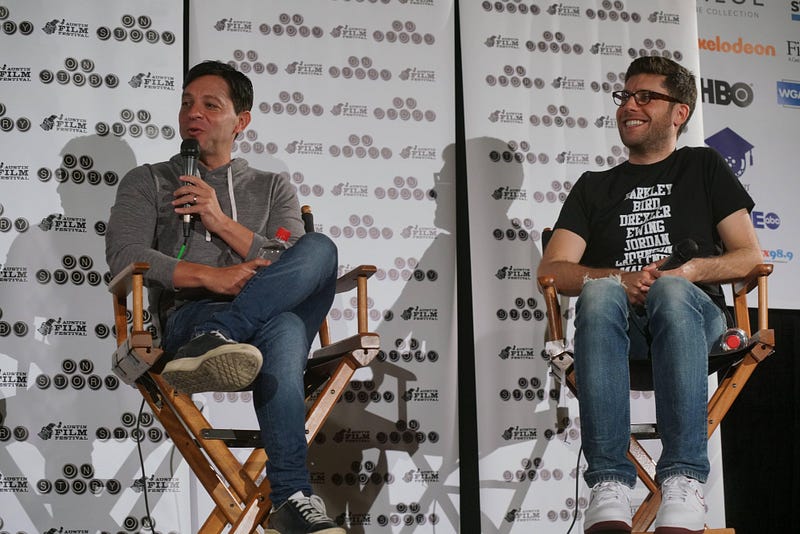
Here is an Austin Film Festival conversation with Scott and Michael about The Disaster Artist.
For 100s more interviews with screenwriters and filmmakers, go here.