Go Into The Story Interview: Robin Swicord
My in-depth interview with prolific screenwriter whose credits include Little Women and The Jane Austen Book Club.
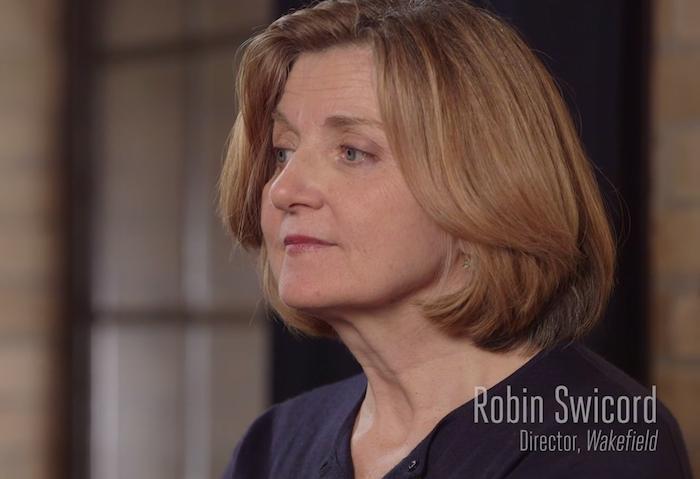
My in-depth interview with prolific screenwriter whose credits include Little Women and The Jane Austen Book Club.
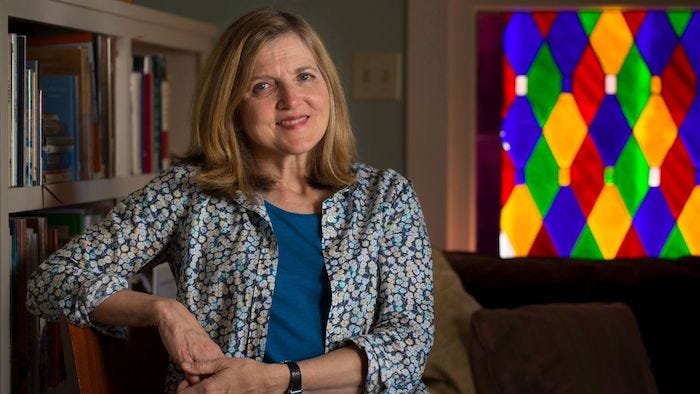
I first met Robin Swicord at the elementary school our children were attending in Los Angeles. When our paths crossed some years later at the Austin Film Festival, we discussed doing an interview. That opportunity arose with the release of the movie Wakefield starring Bryan Cranston, a film which Robin wrote and directed.
Robin Swicord’s other movie credits include Little Women, Matilda, Practical Magic, Memoirs of a Geisha, The Jane Austen Book Club, and The Curious Case of Benjamin Button.
In our May 2017 interview, Robin and I had an expansive conversation covering her path into the business of telling stories for a living, her experience as a creative in Hollywood, and lessons she had learned in her many years at the craft.
Scott Myers: Let’s start with your background because it appears you and I have something in common. We’re both military brats.
Robin Swicord: Yeah, that’s right. My Dad was in the Navy, and his dad was in the Navy, and his grandfather was in the Civil War, so they’ve been going to war for a long time.
Scott: I have to say your stint in Barcelona, Spain trumps my four years in Minot, North Dakota.
Robin: Oh, golly. At least I had something to really be nostalgic for.
Scott: Did you do a lot of moving?
Robin: You know, we didn’t do as much as some families that I’ve met. We were stationed in Miami. Before I was born, my Mom had to travel around a bit, you know, San Francisco and places where my Dad was doing flight school and stuff like that.
I ended up being born in South Carolina while he was in the Korean War. Then we lived in Miami, when my dad was attached to military intelligence there. Then we got sent to Barcelona, because that was the nearest base to the hot spot of Greece, where there was Cold War stuff going on off of Crete.
Our next place, after a brief little stop in Haddonfield, New Jersey, was Panama City Beach, Florida, at what I think was euphemistically called the Mine Defense Lab. This part of the Panhandle was then a very tiny little resort area, with beautiful white beaches, a lot of natural beauty, not very developed. It had a remote feeling. That was where we landed after living in Barcelona.
Scott: Do you think growing up in a military family has had any impact on your writing and the stories you’re drawn to take on?
Robin: I think that there probably are a couple of things, if I really had to try and parse this out; unravel things a bit. I would say that I never had a sense of really belonging anywhere, because we were always the new people. We were perching places and not living there.
I didn’t know that Panama City would become my family’s home for the duration of my school years. I didn’t really fit in, in any way, with the people around me. I was really considered to be sort of odd.
To keep myself company, I did a lot of reading. That life of books, I think, made me want to be a writer.
Scott: Evidently, you developed an interest in writing early and then carried that with you to Florida State, where you double‑majored in English and theater. I take it you started writing plays before screenwriting.
Robin: Right. I was exposed to plays, because I was a theater major. I had friends who were taking a playwriting class, though I never took a playwriting class. It was offered through the School of Theatre, but I was on a tech track, I was part of the students who worked backstage. I was always interested in production.
I loved movies but I started writing plays because I could always get friends together to read a play aloud, whereas I didn’t really have the money to develop an entire film on my own. It’s different now, but at that time, you just tried to scrape together enough 16‑millimeter film to go shoot a few minutes of film, and then you tried to find an editing bay where you could edit your film together.
You had to take your film to a lab in Atlanta, out of northwest Florida, so that it could get developed. It was a very cumbersome process. Not designed to turn you into a director.
Florida State was just starting its film school then; I think it was in my senior year. So I didn’t get any kind of formal training in film. What I had was a lot of exposure to watching movies.
I had grown up in this unusual place, Panama City Beach, Florida, that had one local television station, very small, that you could tune into on your rabbit ears. Because our town was on the Gulf, no one bothered to beam their programming there, because it would just go out over the ocean.
The TV station wasn’t affiliated with a network, which meant that all programming had to be done in‑house. A guy named Earl Hadaway worked at that station, who was a cinephile. He’d had a dream of going to Los Angeles and being in the movie business when he got out of the service. Instead he came back home and he began programming for the TV station.
He would bring in 16‑millimeter prints of everything Hitchcock had ever done, everything Cukor had ever done, everything that John Ford had ever done. He’d cut commercials into them, and when you’d turn the television set on, you’d see a spot for the local dry cleaning company, then you would see 10 or 15 minutes of the Hitchcock movie. These movies ran all the time.
That was the beginning of my film education: Straight‑up 16‑millimeter copies of film classics. When I got to Florida State, I worked for a little newspaper in their darkroom, later shooting for them; and I had the job at night of printing everything that would be in the paper. I always had to wait for my prints to dry. This was before resin‑coated paper.
I would go downstairs to the theater where they were programming FSU’s student movie club; programmed, I believe, by FSU students.
I saw so much. Or I saw good chunks of so much. [laughs] Somewhere in there, watching a movie, I noticed in the film credits that the screenwriter was listed. That was the beginning of me thinking: “Oh, that’s one way I could make movies — I could be the writer.”
Scott: You did make some short films and had this interesting path to Hollywood ‑‑ an industrial filmmaker in Atlanta and a copywriter in New York City. You started a theater company. Was there an intentional thread through all of that, or was this just a case of you following what you were doing and seeing where it would take you?
Robin: I don’t think I knew enough then to be strategic. The thing that all of that had in common was survival and creative work. I didn’t come from a family that had money. I worked to put myself through school. I had a scholarship from Florida State and I had a job while I was a student.
When I got out, I had to just keep working. But I sought out jobs where I could continue to develop myself as a creative person. I didn’t get a job at the Xerox place doing mindless work so at night I could write. I tried to find a job where I would be doing something creative at work as well. I felt, if I didn’t do that, I would go a little crazy.
I did some freelance writing and shooting work for IBM General Systems in Atlanta. This was a division of IBM, pre-laptops, probably now defunct. Their ad agency saw some of the stuff that I’d been doing for them, and they offered me a job in New York.
I had been wanting to go either to New York or LA. I wanted to be where movies were made. I ended up going to New York and taking this advertising job, which I wasn’t trained for, or even that adept at. But during that year, I wrote my first play, and friends of mine put the play on. They worked in the theater. I guess you could say we started a theater company, but we really only did a couple of plays.
That was a beginning. Through that, I was able to get the attention of an agent, who then approached me and asked me if I would be interested in writing movies, and I gave her a screenplay that I had written.
Scott: Called “Stock Cars for Christ”?
Robin: That’s right.
Scott: Which I’m imagining is not a sequel to Will Ferrell’s movie, “Talladega Nights ‑‑ The Ballad of Ricky Bobby.”
Robin: No, mine would be the prequel.
Scott: [laughs] What was the story behind that script?
Robin: You’ve definitely done your homework here. You can see that there’s nothing strategic in my choices. My own belief is that it’s all one big jazz improvisation, that you just keep following the thing that looks like a path that could possibly open, and finally something possibly does open.
Scott: That script, “Stock Cars for Christ”, got set up at MGM.
Robin: Yeah, it got bought by Freddie Fields, who was at MGM. Or he was at Columbia, and then went over to MGM when he moved over with David Begelman. My script was actually recommended by a person who worked for him, who was from Orlando, Florida — Lynn Arost. If you read that screenplay now, it’s not terribly good, but there is a certain voice that you hear in it that Lynn, I think, responded to.
Scott: I’d like to get a bit of backstory on just some of the many movies with which you’ve been involved. Let’s chronologically go through some of these, beginning with “Little Women.” How did you get involved with that project?
Robin: That was a project that I’d wanted to do since I was a child. I didn’t know about screenwriting, but I knew that there were people that made movies. When I was a kid and I saw the “Little Women” movies on TV, cut up with dry‑cleaning commercials, I thought, “Wait, that’s not the book. That isn’t right. This book isn’t about who these girls grow up and marry. This book is about something else.”
As a child, I hadn’t articulated what that thing was to myself, but as an adult, I picked up the book again. This was a book I read every year of my life for 10, 12 years. I picked it up again, and I thought, “This is such a great book. And it’s true that there’s never been a great adaptation of it. I should do that.”
I said as much to Amy Pascal, who was a secretary for a British producer named Tony Garnet. While he was in London living his life, Amy was holding down the fort at his office in Los Angeles. She would take meetings with writers whose scripts she had read. Just invite people in and have development meetings with them. [laughs]
We were talking at lunch one day, and it turned out that Amy had been named after two of the characters in Little Women. We said, “Let’s try to get ‘Little Women’ going.” We tried for about 12 years to get a studio interested.
Meanwhile, Amy graduated from that job and got a job working with Scott Rudin, when he was briefly president of a studio, and from there she ended up at Columbia. As her career grew, we remained good friends, and we kept saying to each other, “Let’s do ‘Little Women.’”
Then there was a year when Amy had developed “Groundhog Day” and “A League of Their Own.” She called me and said, “I think we can do ‘Little Women’ now.” So we set it up.
Scott: Persistence is a key in this business, isn’t it?
Robin: It really is. You have to be an obsessive to get anything done.
Scott: Let’s talk about “Matilda,” which you co‑wrote with your husband, Nick Kazan. I remember seeing that in the theater with my son, Will, when it was released, and really enjoyed it. I think this is a story you read to your kids, something you wanted to try and make because you enjoyed it so much from your family experience.
Robin: That’s right. My husband and I would switch off nights reading to the kids. When it was my turn to read, he would hover outside the door, [laughs] so he could hear what he was going to miss. Or we would wait till the other person finished and then go get the book and read what we had missed. We loved the book as much as our children did.
We approached Liccy Dahl, who was Roald Dahl’s wife, now a widow. Liccy was not inclined initially to option the book to us, because she said that Roald Dahl himself had never been very happy with the movies that had been made. I didn’t get the sense that Roald Dahl was a real cinephile from the things that she said.
We made a suggestion: That we wouldn’t actually option it, but she would essentially make a promise not to sell the book to anyone else until she had seen our spec screenplay. Then Nick and I wrote the script and gave her a draft. And she liked it enough that we went out to sell the book and the screenplay together.
Scott: Is that the only writing project you’ve done with Nick?
Robin: I’ve written with him on another Roald Dahl project, where we ended up being rewritten, I don’t know by how many writers. Many writers worked on “The BFG” — but we were the first ones to take a crack at it. I also worked with Nick on something that was an original idea that didn’t go anywhere.
We weren’t tremendously well‑suited to do side‑by‑side writing with each other. Because we work in very different ways, our process and the way we think about story is very different.
On Matilda and The BFG, I would outline and break down the book. Nick would then do a very quick, 10‑day pass, expanding on the outline but in script form, and then I would take that back, and I would work on it for a couple of months and give it back to him.
We mostly just passed drafts back and forth, and then we would sit at the very end and go head‑to‑head about, “I want to keep this in, and you want to take it out. This is why I think it belongs in…” Those kind of conversations.
Scott: Then there’s “Memoirs of a Geisha.” At this point, I think it’s pretty safe to say that a pattern’s emerged in your career ‑‑ literary adaptations. Do you think that’s become part of your brand in Hollywood?
Robin: I think that’s how people think of me. But the thing is, it’s a lot easier to get an adaptation made than to get an original story made, unless you’re making it yourself. When the Writers Guild ballot goes out at the end of the year, for us to select the best screenplays of the year, the ballot has Best Adapted and also just regular Original Screenplay.
The list for Adapted is always so much longer than Original, because it’s hard to get original work made. Studios seem to have more confidence in Intellectual Properties (I.P.) because those stories have already attracted an audience. The original stories that I have put out there have mostly not been made, but the adaptations have.
Scott: One was “The Jane Austen Book Club,” which I believe is your first feature‑length writing-directing gig. How was that experience, moving from writing to writing-directing a major studio motion picture?
Robin: Well, it was pretty seamless when it finally happened. After I did my short film, “The Red Coat”, I was able to get myself attached to an original script that I had written, but it didn’t go. The studio declined to produce it. Actually, I tried a few projects, trying to get them made as a writer-director.
There was one original script in development at Sony, “The Jane Prize”, about a family of Jane Austen scholars. Because of that screenplay, I guess John Calley thought, “Well, she’d be a good person to adapt this Jane Austen Book Club,” which was a novel by Karen Joy Fowler.
Given who John Calley was, a man I completely revered and adored, I knew that if it was between my little original movie getting made and John Calley’s adaptation of The Jane Austen Book Club getting made, he was going to win.
I loved the book and I wanted to do the job for him and for Amy, but I feared that once I did, they wouldn’t make my movie. If I didn’t take the job, someone else would get to write The Jane Austen Book Club. It was a really difficult decision for me to proceed on both fronts at the same time, but I knew that one of them wasn’t going to go.
I was the very early stage of a studio casting discussions for “The Jane Prize” when it became clear that John was going to bring in financing from Sony Classics for the other project. “The Jane Austen Book Club” was happening, happening right away. We already had an actor, someone John had approached to be a member of the ensemble cast. I didn’t have very much time to think. I had to assemble our cast and go. All of this happened very quickly once I had turned the script in to John. Within a couple of weeks I went into early prep for shooting.
Scott: Conversely, there’s “Benjamin Button”, which you received an Academy Award nomination for your part in writing the script. I believe you were involved in the project off and on for many years.
Robin: Right, it was about a 20 year journey from my first script to the time it ended up on the screen. I was attached to it for about 10 of those years. I wrote 16 different drafts of this for four different directors and two different producers.
At the end of my time with the project, I had a meeting with Sherry Lansing in which she was talking about how costly it would be to make the movie the way I had described it, and she asked me if there was a version of it that could happen in just the one year in which Benjamin turned 40, so he looked the same on the outside as he was on the inside; the thought being we would just do the love story that took place in that one year in his life.
I can really understand why a studio executive would suggest that, when they’re faced with what would turn out to be a majestically costly film. But I knew that the movie the studio was describing now wasn’t the movie I had journeyed for a decade to write. So I stepped back from the project at that point.
A few years later, David Fincher, who had been carrying my script around, decided that he would direct “Benjamin Button”; he had the opportunity to. He hired Eric Roth, who essentially rewrote me. Eric used a lot of the elements of my story, but also branched with his wonderful imagination into many things that I hadn’t thought of. It’s a kind of hybrid of what he and I both imagined. We thought differently, but it became a hybrid of the two.
Scott: Before we move to discussing your newest movie “Wakefield,” I’d like to talk about how involved you are in the Hollywood filmmaking community. The board of the Writer’s Guild Foundation, a trustee at the WGA Health and Pension Group, USC Scripter Award Selection Committee, the Academy of Motion Pictures Arts and Science Governors Board since 2012, the Nicholl Screenwriting Fellowship Committee Chair. Clearly you see being involved at this level to be important. Why is that?
Robin: First of all, some of those commitments I’m no longer involved in. When I became a Governor for the Academy, which is a very time‑consuming job, I stopped being involved in the Health Fund. And although I’m still a supporter of the Writer’s Guild Foundation, I don’t sit on their board. But I do a lot of mentoring in addition to that.
I work with Film Independent. I help teach their writing lab and I’m involved in their Global Media Makers program. I also mentor with Sundance. I go to that lab and I mentor whoever Michelle Satter and Ilyse McKimmie put in front of me.
I do believe that it is essential to remain engaged with the world, not just be in my little room writing. I also think that service to others is important, just in terms of your own development as a human being.
Scott: One last thing I want to talk about, the Nicholl Fellowships in Screenwriting competition. I’ve interviewed every Nicholl winner since 2012 and I think it’s fair to say for each of them it has been a life‑altering experience. What are your thoughts on the Nicholl Fellowships and its role in helping to provide an avenue for writers outside of Hollywood into the system?
Robin: Well, thank God for the Nicholl. Nicholl is one of the few launch pads for emerging writers. There are a few screenplay writing contests that also get attention for writers, besides the Nicholl Fellowship. The Austin Film Festival is one really good example. But there’s nothing like winning the Nicholl Fellowship to make people pay attention to you.
Before the Black List — also an excellent way for people to get to know a writer — the Nicholl was one of the very few ways that anyone could see the work of someone who had no Hollywood contacts, no agent, no representation, who did not know how to get their script to the right person.
The Nicholl gave emerging writers something to strive for. Because they could look at who won last year, and measure themselves against those scripts and know how much further they had to go. I think this Fellowship been essential for many years, and it remains extremely relevant and essential now, because we have not been great, as an industry, in building bridges to newcomers, in any branch.
As we try to change the face of Hollywood, the Nicholl becomes a natural place for people to enter, who don’t look like the people who have traditionally worked in Hollywood. It’s an important doorway.
Scott: Let’s talk about Wakefield, a terrific movie you adapted from an E.L. Doctorow short story which appeared in “The New Yorker” in 2008. You also directed the movie. Here’s a plot summary I got from IMDb:
“Howard, played by Bryan Cranston, has a loving wife, Jennifer Garner, two daughters, adolescents, a prestigious job as a Manhattan lawyer, and a comfortable home in the suburbs. But inwardly he’s suffocating, and eventually he snaps and goes into hiding in his garage attic, leaving his family to wonder what happened to him. He observes them from his window, an outsider spying in on his own life as the days of exile stretch into months. Is it possible to go back to the way things were?”
What about this story drew you to it as a filmmaker?
Robin: Well, initially I was drawn to it as a reader, when I saw the short story in The New Yorker. It’s hard to explain attraction to material. You know that you’ve had this feeling yourself as a creative person, that sometimes you’ll read something, or see something, and you’ll feel a kind of hook go in, sort of in the solar plexus. You feel a connection there. I had that with the short story.
Later, when I pursued it to make a film I realized that my own connection to it had to do with my childhood fantasies of leaving where I was. Of just being able to step out of my life. No one would know, and I would be perfectly safe, but I could just leave where I was and do what I wanted to, and everybody else would be frozen exactly where they were, so that I could come back any time. But meanwhile, Time had stopped. I could just do what I wanted. That feeling of being in an interstitial place was something that came back to me. The thought of Howard Wakefield kind of living in that interstitial space, trying to become something.
Scott: I don’t want to give away too much of the plot, especially the resolution of the story, so let’s focus on the two primary characters — the married couple, Howard and Diana. How would you describe Howard Wakefield, his state of being at the beginning of the story?
Robin: I think he’s living an unexamined life. He doesn’t know what he’s feeling as he’s feeling it. He has achieved a lot of external success, but there is trouble in his marriage and he can’t quite articulate that to us or to himself at the beginning. He is territorial. And he’s filled with these unexamined impulses, like his impulse to follow this raccoon up into the attic of the garage and get that raccoon out of there.
A sane person might say, “What does it matter if there’s a raccoon in your yard?” But Howard has a kind of controlling personality at the beginning. In that moment, with his territorial feelings on alert, he goes to shoo that raccoon out of there. From the garage attic, he looks down and he sees his family.
There’s been a power outage. Now the lights come on, and Howard can see that they’ve all been waiting for him to come home. She’s kept his dinner warm for him. He’s been almost petulantly ignoring her calls, even though he’s quite late, because his train has stalled and so forth. As he’s watching her, he begins recalling the fight they had the night before, a fight about jealousy.
Jealousy was a game they would play in their marriage, based on some atavistic idea of possession Howard had. His wife got the best of Howard in that argument. He mulls this over as he watches her. Then Howard sees her leave the house and throw his meal away in the garbage bin outside.
His mindset is, “I’m unloved, I’m misunderstood. If I go in that house, we’re just going to get into another big fight where I’ll be on the losing end. I’m just going to wait here for her to go to sleep.” This state of anger and resentment and game playing and trying to figure out where the power lies in their relationship — this is kind of where Wakefield and his wife been living for a while.
When he steps out and begins to look at himself, and at the marriage, and at her, when he really examines his life, things begin to shift for him. He goes through a lot of different stages, almost like stages of development. Bryan Cranston’s very funny doing all of that, but essentially he’s in pain for a lot of the film without ever really realizing it, initially. Gradually, and quite late in the story, he comes to a different state of mind.
Scott: That raccoon who leads Howard into the attic functions as a kind of Herald and that first night in the attic feels like a Call To Adventure. In fact, Howard says, “I never left my family. I left myself. I stepped into the wild.” Even though Howard travels no further than, basically, his own property or the town, it’s fair to say this is kind of a Hero’s Journey.
Robin: He’s on kind of a walkabout for himself. Again, it’s all unconscious. He’s not strategic about any of his plans. He doesn’t know what’s going to happen. He’s just following an instinct. He takes small incremental steps which lead him, unknowing, far from his original path.
Scott: I have a theory that in almost every movie there’s a question that lies at the heart of the protagonist journey and it’s this: Who are you? That question of self‑identity is clearly at the heart of Howard’s journey.
Robin: Oh, completely. It is very much a film about a man becoming a man.
Scott: It’s interesting how oftentimes we see a protagonist go through a metaphorical deconstruction and emerge at the end in a different state of being. In “Wakefield”, Howard’s deconstruction is not only metaphorical, it’s quite physical. He transforms before our eyes from season to season — the beard, his clothes, his behavior. What do you think is going on there with Howard where he is willing to go through this self‑absence from society and the psychological and physical transformation?
Robin: I think he’s trying to be not what he used to be, in that he’s not very focused on his appearance. Really, probably for the first time in his life he’s not thinking about, “What does this look like to others?” He’s just trying to be where he is; to survive, enjoy his flights of fancy, do the deep thinking he needs to do, and stand vigil over his family.
His appearance is just the accidental accretion of hair and fingernails that happens [laughs] to anybody that doesn’t groom themselves for nine months. But there is something self‑punishing in his choice to live as he does, to sleep on the floor of that attic, scrounging food at night from…There were scenes that are cut now, where Wakefield would occasionally break into people’s houses through the doggy door and take food.
He would forage in his own family’s garbage containers. He would go to the bakery garbage bins downtown at night. It is self‑punishing to make yourself live in this way. It takes a little while in the film for us to find out what he’s punishing himself for.
Scott: It’s a tricky bit of business because you’ve got to make the viewer buy that Howard would commit to this pretty irrational course of action. How much of a concern was that?
Robin: I thought about that constantly. I thought about it all the way through the editing process, too. We never stopped being a little bit worried about people not connecting to Howard because the things that he does are so extreme by standards of most people.
At the writing level I kept building in moments of alignment. I don’t think so much about whether the characters are likable. In some of my favorite movies, the protagonist starts out being very unlikable. But if I feel that the protagonist is human, and that I have felt the same things that they’ve felt, and that I might be driven to do the same kinds of things that they do, I take the journey.
I had to trust that if I built in those moments for us, for the audience early in the film, that the story would end up being a kind of wish fulfillment for the audience. “So this is what it would look like if I just walked out.” “I can’t believe this guy really is doing this! But, okay, yeah, I can kind of see how he would.”
Keeping that sense of alignment came up in editing as well. We’d be trying to cut for length, like, “Let’s see if we can get out of this scene faster.” But we’d realize, “We can’t cut this moment — this is one of the moments where we anchor the audience to Howard.” So it got built in during the writing, and then it got rebuilt in, during the editing process.
We were still making discoveries, though, in the last two weeks of editing, about how to tie us in a little more.
Scott: You hit on an interesting phrase there: wish fulfillment. In Wakefield at one point, Howard says, “Who hasn’t had the impulse to put their life on hold for a moment?” I’m sure that’s a question each of us has asked at some point in our busy lives.
Then also he has created an awkward situation. He wakes up that first morning and he says, “I’m going to have to go and explain. She probably thinks I had an affair.” Each of us has been in awkward situations.
Then the third point, once Howard commits to his course of action, he says, “I’ll sustain myself like a castaway, a survivor, undetected, unshackled. I’ll become the Howard Wakefield I was meant to be.” Who among us doesn’t want to become an ideal version of one’s self?
I think those three elements play together to create a compelling and identifiable character study.
Robin: Well, I appreciate how deeply you watched the movie and analyzed it to see that, because those were three really important points in terms of his development as a character and also points of connection for an audience.
I sometimes say about Howard Wakefield and about the movie itself, that it is strange, and he is strange, but he’s no stranger than I am. I think that’s true for all of us. If people are honest with themselves, they’ll admit that sometimes when they are driving on a freeway, they’ve thought, “I could just keep going.”
All of us have the impulse to flee our responsibilities at some time. Only a person who is in as much pain as Howard at the beginning of the film — secret, unacknowledged, even not completely fully-experienced pain — only he would do something this extreme. Wakefield had to do something this extreme, in order to jar himself into taking the inner journey that he needed to become a different man.
Scott: I’d like to talk about some of the filmmaking choices you made as a director. One thing is you’ve got two types of voice‑overs at work in the film. The first type is the traditional voice‑over narration where we’re hearing Howard’s inner thoughts.
Indeed, there’s this little bit of business with him on the train, as he’s heading home, he’s dictating on digital recorder. It occurred to me that this is a guy — a lawyer — who would dictate legal stuff, so he’s used to voicing his thoughts. That’s a great way to set up the use of voice-over narration.
Robin: That was a beautiful contribution Bryan Cranston made. It entered the script from a suggestion from him, because he wanted to establish that he was a guy who felt burdened and stuck in a routine of working all the time. I wondered, when Bryan suggested it, if he feared people would be jarred if they heard his voice for the first time as a voice‑over; but Bryan explained to me recently that his main thought with the dictation moment was to connect to his character as a guy who’s bored with his own life, though he’s unaware of it.
He had this idea that he would be dictating stuff on his phone for his assistant to type up the next day. I thought it was great. It was a great instinct. We used the hell out of it.
Scott: Then there’s this other type of voice-over where Howard comments on the action he sees through the attic window, oftentimes quite humorous in his observations. How early in the process did you have that in mind?
Robin: I had that from the very beginning. My view with him is that he’s a litigator. They stand in front of a courtroom and they talk. Or they are in mediation, talking and arguing. He’s a talker, and he’s a talker out‑louder, he’s speaks to himself when he’s alone. “Where did I put that?”
I also felt that Howard was tremendously self‑amusing, that one of his properties as a person was that he was very good at entertaining himself at the expense of others. You see him in the first part of the film really giving full flight to that and enjoying all the feelings of condescension and superiority that go with being the person standing on high, making snarky comments about people at the party.
That wears itself out, though. And after you stop filling the silences with your own voice, what begins to happen?
Scott: There’s another cinematic device you use in the movie. You mentioned it earlier: Visualizing images in Howard’s mind. Sometimes there’s are whimsical moments. Other times fantasies. There’s also a series of delusions caused when he gets a fever. Sometimes we don’t know if what we’re seeing through his eyes is real or imagined.
Could you describe what your thinking was using narrative device?
Robin: Well, I wanted to make a very subjective film. I wanted to make a film as much as possible from one person’s point of view, so that when he was mistaken about something we could be mistaken with him.
I tried to keep rigorously to things either happening in his head, or happening in the world solely when he is watching. I built that in to the screenplay. And I worked with that in planning our imagery, working with my Director of Photography, Andrei Bowden Schwarz. We shot through windows, through panes of glass, into mirrors — the idea of “subjective” became a visual throughline.
There’s one other thing: I’ve often heard people describe novels versus movies, saying that novels were interior and that movies were about what happened in people’s lives, as viewed from the outside. I have done enough adaptation that I really began to question whether this comparison is as true as people have thought. In screenplays, when you leave room for the actor to fill moments with emotional life, we easily gain access to the interior life of a character.
As much as I love novels and read them (I am an addict!), I often find some novels don’t have much rigor in terms of the narrative. Novelists can easily just go to an interior voice and spend lots of time developing back story to expose the simple question, “How did I arrive at this point?” They can explore, “This is what I dreamed last night,” and, “These are my fears, and these are the things I reject,” filling up page after page like that, while not a single narrative event has happened.
With screenplays, of course, as dramatists we rigorously follow the narrative line, with every scene ending with a plot point or some kind of change, and every scene pushing the next into existence.
Having sort of lived in both of these worlds, passing between these two places where narrative can be important and unimportant, I thought it would be fun to make a movie that was as interior as a novel. Where we were following small narrative events with that narrative tension found in a movie, yet closely observing the inner thoughts of the protagonist.
When I started taking apart “Wakefield”, thinking about adapting it, I thought, “Let’s use the interiority to try something that’s really hard to do.”
Scott: One thing I thought you did really well, you set that question into motion from the beginning: What will Howard eventually do? You sustain that tension quite literally through the last scene, in fact, the very last image.
I know it’s indicated in the short story, but could you talk about how important that was to you? Did you have that ending in mind all the way from the beginning of your creative process?
Robin: It was deliberate. I loved the way Doctorow had ended the short story. In terms of the movie, this felt like a story moment that the audience would get to experience themselves, in a subjective way. I wanted the audience to be thrown back onto themselves, to be shifted into a moment of reflection at the end of the film; to think for themselves about what will be the next thing that will happen to Howard. It kind of gives the audience ownership of that moment.
I resisted early notes that I got from people who were considering the film for financing; saying to us, “Oh no, you’ve got to change that ending. You’ve got to really spell it out to people.” But I knew that the least interesting thing would be for me to write that. Because whatever I wrote would only be one version of the possible. When I went to film festivals last fall, I had the experience of being at Q&As where an audience member would ask, “Well, what happens in the very end?” At one festival, I handed my microphone down into the audience and said, “What do you think happens?” Each person suggested a different version, as the mic was passed along. That was what I wanted: To make something that would engage the audience in that way.
Scott: You mentioned financing and I looked at the list of producers. I think there’s 41 of them. How challenging was it to secure financing for the project?
Robin: Yeah, it wasn’t my challenge, fortunately. I have wonderful producers — Julie Lynn, Bonnie Curtis, and Elliot Webb. Elliot Webb was the person who put me together with Doctorow and encouraged me to write the first draft. But Julie and Bonnie put the production together when I brought them the script.
I had worked with Julie on “The Jane Austin Book Club”. She really can squeeze a nickel [laughs] when it comes to a budget. That was one of the reasons why I wanted her to partner with John Calley on “The Jane Austin Book Club”.
She’s a wonderful producer. She has learned so much in making low budget films. She makes high-quality films for much less than you would think. She would like to break out of that niche, believe me. She would like to be a little more solvent personally, going forward! And she deserves to be.
In this case, she and Bonnie together went out to private equity to raise the money for this film, because we knew it wasn’t a studio film; and because foreign sales estimates for Bryan were at that time not as high as we needed them to be, in order to deficit- finance the movie.
At the time we were started to raise money initially, “Breaking Bad” wasn’t being shown in Europe. Over the time it took us to pull the movie together, Bryan’s star rose in terms of what his value was to foreign sales people.
Our best hope for private equity was to go to investors who were true Cranston fans. And Julie and Bonnie found two producers who adored Bryan Cranston — they were seasoned Broadway producers who pulled together the equity to bring “All The Way” to Broadway, Robert Schenkkan’s play in which Bryan Cranston had played the role of LBJ.
We ended up with only a small window of time when Bryan was available to shoot our film, a shift in his schedule that meant we had to get financed in only 9 weeks. So Julie and Bonnie were under a great deal of pressure. Broadway producers Wendy Federman and Carl Moellenberg said, “Stop right where you are. We’re going to help you raise what you need.” Wendy said, “I’m going to go to the people who came in with us before — because they’ll all be so disappointed if they don’t get to participate.” It was a godsend to have Wendy and Carl join us on “Wakefield” with that good energy, that can-do feeling. They pulled it together in record time. I also called on those 41 producers much later, when we went to New York to shoot our title sequence at Grand Central Station. I seeded our producers among the public crowd there, which added tons of production value. They all knew Bryan Cranston from doing the show with him on Broadway — it was a reunion.
Scott: Well, Cranston’s performance is phenomenal. The movie opens Friday May 19th in North America. I certainly encourage people to watch it. It’s a really intriguing and compelling story. You did a wonderful job with it, Robin.
Robin: Thank you so much. I really appreciate that. You’re a wonderful watcher of movies. Your questions have been great.
Scott: Thanks for that. Let’s jump to some craft questions. How do you go about developing characters?
Robin: I do a lot of just trying to inhabit the characters first, thinking the way that they think. It’s not writing that anyone’s ever going to see. It’s just writing as a way of getting under the skin of the character.
I look for certain things: A very strong desire in that character, for something that is not easy to get. The other thing I look for and explore until I find is, “What is it that this person is contending with inside themselves?” And: What narrative question is at the core of this journey that they’ve been launched into?
In imagining the antagonist, I think: What is it about this person that makes them the ideal antagonist for this protagonist? What does this person bring to the story that clashes so perfectly with our main character’s inner struggle?
I don’t write characters well when I try to write from the outside. I have to write them from the inside out. I apply analysis from the outside to make sure that there are enough character elements there, to allow a full narrative to emerge from the character. That’s what you want: For the action to rise from the character.
Spending that time in getting to know your people is essential. When I mentor writers, one thing we do is exercises that are like meditation exercises, to get inside the characters.
Scott: I’m so in sync with you on that. When I teach, that’s precisely how we approach things.
In fact, the point you’re making about how you go about developing an antagonist figure, we get into this idea of Carl Jung and the shadow, that if you can look at the protagonist and say, “What is their shadow dynamic, the dark, repressed, negative aspects of their psyche? What if you physicalize that in the form of the antagonist?”
That creates a psychological connection between the two characters. It’s like the protagonist has to face down that which they fear the most or that which they’re trying to repress, in the form of the antagonist figure. Does that resonate with you?
Robin: Yes. It’s not accidental. Who your characters are also comes out of what you’re beginning to explore thematically. It’s all of a piece. For me, the more time you spend thinking deeply about the story in terms of “What is it that I am really trying to say here?” and the more personal that you can make it, using what you yourself have contended with, or those things you’re maybe afraid to think about much — that’s going to be juicy writing.
Scott: What about dialogue? You’ve got such a great ear for dialogue. How do you go about finding your characters’ voices?
Robin: I appreciate what you’re saying about that. Sometimes I think I don’t write very good dialogue. I get in my own way sometimes. I get task‑oriented. I have to stop myself from doing that.
I think that all of this dialogue comes out of the characters themselves. What happens…there’s a kind of mystical transference that happens when you’ve done this very deep thinking and feeling about your character. You begin to embody your character. I literally feel like a character enters me sometimes. I don’t worry about writing the dialogue. I just sit at my desk and feel their presence, and then they speak and I write down what they say. Then later I’ll come back to the page, and I’ll go, “But I don’t like this scene.” Or “I don’t feel like we need this scene.” Or “I think this goes on too long.” The writer in the room starts adjusting things, so what’s on the page is not just mental run‑on sentences of dialogue.
Often if I’ve thrown out a scene I’m very happy to see it go, even though I heard all those voices that felt so right at the time. I don’t worry, because if I re‑imagine it and put myself in that same place, I’m going to get a whole new tranche of dialogue. It’s going to be given to me by the characters.
Actually the I just turned in this week, that I’ve been writing for the past eight weeks, and thinking about for two years… I tried something there in terms of technical craft was really useful to me. Which is: There’s always a part at the beginning of a scene, where you set up the scene with prose. You have to be concise and choose your words well, so that you’re not using more than you need to create a vivid film image that sets the scene for the reader.
I spend more time on that task than I want to sometimes, because I don’t want there to be big blocks of clunky description. I want the reader to seamlessly fly through the screenplay, and feel that they’re watching a movie.
On this new script, I hit on a technique of not writing the set-up, first. I typed “Interior” or “Exterior” and the place. And then just let myself be in the character’s presence. I didn’t even type the character’s name above dialogue. I left the format in Final Draft’s “Dialogue” mode, and just wrote down the transcript of what my characters were saying, as one long block of unparagraphed dialogue. I had already deeply imagined the scene during outlining, so I was in free-fall. After I’d come to the end of their dialogue, I inserted the character names, and clarified things with actions. Then I went to the top of the scene, and did the simple technical part of setting up the scene. For me, it was like writing in a backward order.
The result was: I wrote so much faster. I had felt I needed from 12 to 14 weeks to do a first draft — it was to be a long draft, the producers and I more or less intended this first draft to come in at about 140 pages, with the intention to edit it to something shorter on Draft 2. But with this experiment with technique, I was able to finish in 8 weeks.
Scott: Maybe disengaging I think you said the task…what did you call it ‑‑ they’re task‑oriented?
Robin: Task‑oriented. We have two creative minds. An executive mind, a planning, strategic, putting‑my‑ducks‑in‑a‑row mind. But that’s a different kind of writing than the receptive writing of hearing your characters and embodying them. We need both. One mind where you sit and craft sentences that draw the reader into the scene. Another that allows your characters to come alive.
Scott: This is a question I’m sure you get asked all the time but I feel like it’s a worthy one to end the interview with. What advice can you offer to aspiring screenwriters about learning the craft and breaking into Hollywood?
Robin: There’s no single way to get into Hollywood. You just have to push your way in through writing well, and making sure you give a copy of your script to everyone you run into. [laughs] “Everyone must read this!” But learning the craft before you ask someone to read is the essential thing.
I can only say how I learned: At your every opportunity be watching movies again, that you have already seen. Watch movies over and over. I got into a thing of watching with the sound off.
You begin to really see what happens from scene to scene and how these things connect, and how the film is paced, and you begin to notice certain patterns. When I teach structure, what I teach are the patterns that I detected watching movies.
I began to see that something very important happened halfway through, usually, that made the story more emotional. I noticed that toward the end of the movie, somewhere about two‑thirds into it, things were about as bad as they could ever get. That was the point where you think it’s just impossible for anything to work out. Then something would happen. And that’s the start of Act Three.
These were all discoveries I made when I was trying to teach myself to write. I do think that writing is largely self‑taught. I would say watch movies as many times as you can until you really understand them. Take notes for yourself about how they work.
Robin is repped by UTA.
Twitter: @WriterobinRS.
For more Go Into The Story interviews with screenwriters, filmmakers, TV producers, and industry insiders, go here.