Go Into The Story interview (Part 2): Steven E. de Souza
An in-depth conversation with the legendary Hollywood screenwriter who has had an enormous influence on the modern action movie.
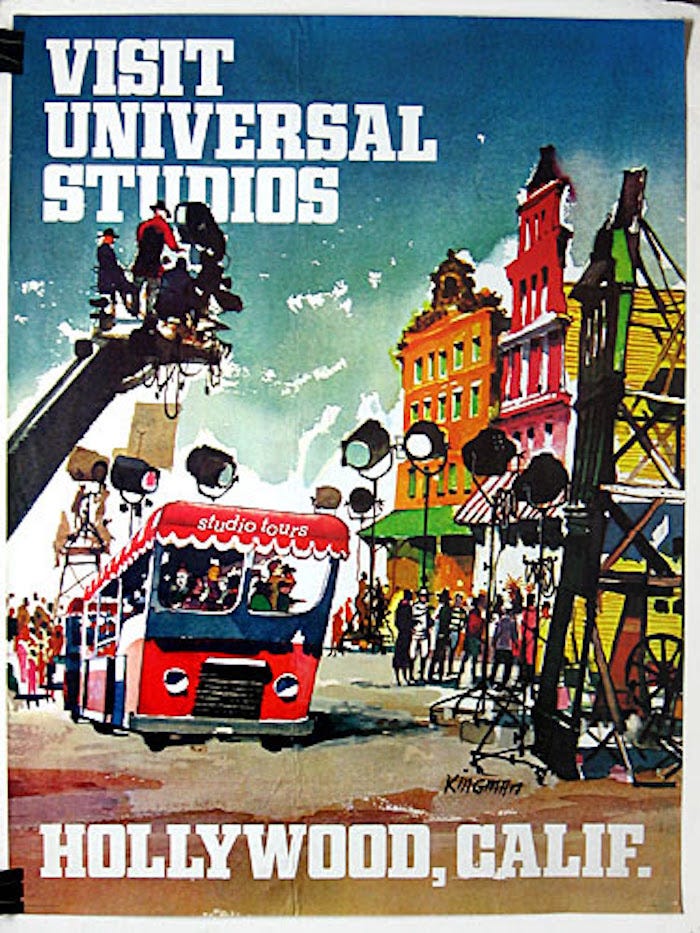
An in-depth conversation with the legendary Hollywood screenwriter who has had an enormous influence on the modern action movie.
Steven E. de Souza has written movies which have grossed over two billion dollars at the box office. Two of the projects he worked on are considered to be the prototype for their type of story: Die Hard (Action) and 48 Hrs. (Buddy Action Comedy). Other screenwriting credits include The Running Man, Die Hard 2, Hudson Hawk, The Flintstones, Beverly Hills Cop III, Judge Dredd, Ricochet, and Street Fighter, as well as countless uncredited film projects in which he worked as a “script doctor.”
I got to know Steven via Twitter and in 2016, I invited him to be a panelist at the Courier 12 Screenwriting Conference hosted by DePaul University (along with another legendary screenwriter from the 80s and 90s Jack Epps Jr.)
That session was so informative and entertaining, I vowed to do a longer interview with Steven. It took a few years, but we did it: A two-hour conversation covering the entirety of Steven’s screenwriting and filmmaking career.
Steven is a natural born storyteller and the fact he has been involved in so many notable movies means he has had a front row seat when Hollywood discovered the box office power of action and action comedy movies.
Today in Part 2, Steven describes a whirlwind first few days in Los Angeles which includes being a contestant on a television game show with Betty White as a teammate!
Steven: I knew enough from reading “Writer” magazine, and “The Writer,” that even though by then I had dozens of bylines in print, including noteworthy ones like the New York Times, that none of that demonstrated I could write a screenplay: you needed script samples — spec scripts — to break into Hollywood.
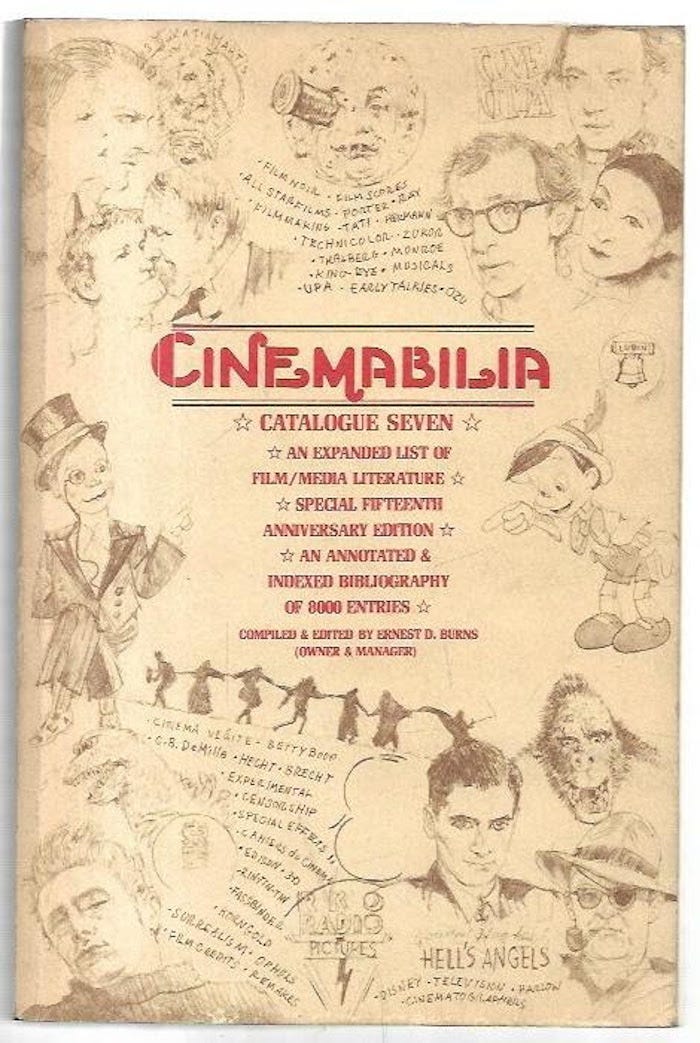
At the time I was at Penn State in its then nascent Communications Major, they didn’t yet have a scriptwriting class — yes, playwriting, fiction writing, journalism, but no scriptwriting. So in that long ago pre-Amazon era, I took the train up to New York to a very famous, legendary and now vanished and sorely missed book store called Cinemabilia, which had every book imaginable about motion pictures and film, and I bought a couple of books plus an armful of actual screenplays to learn what official script format was like… “Oh, these are the margins, totally different from a play!” And I spent like three months knocking out two spec scripts, while barely getting by as a substitute teacher across the river in New Jersey on days somebody would call in sick. For the two scripts, I stuck with the two genres that kept me stuck in high school for an extra year: I had repeated 9th grade because I always had Robert Heinlein or Raymond Chandler behind my algebra book.
I wrote a Hitchcockian thriller and a science fiction/body horror movie with a lot of creative kills in it — this was three years before “Alien” would perfect that mash-up. Having typed “The End” on both scripts, I said to myself, “I’m going to go to California, and I’ll give myself three months to make it…that sounds realistic, three months to be successful in Hollywood!”
Fortunately I had an aunt and uncle who lived in Los Angeles, so I could crash on their Castro Convertible. I bought a ticket — Freddie Laker, a bargain airline, had a $200 round‑trip ticket in those days.
I got off to an ominous start rushing to make an early morning flight with my dad driving. I had only one suitcase, but I had a big plastic bag of clothing fresh out of the dryer, but it was the same day we took the garbage out. We get to the airport, and the curbside check in guy hands me four tickets. I go, “Four tickets?” and I realize that there’s two bags of garbage my father mistakenly put in the trunk that almost got checked!
I arrived on a Saturday at LAX, and my cousin picks me up. I go to my aunt and uncle’s house, and Sunday morning, I’m thinking, “It might take a while to get hooked up in Hollywood. I should probably look for a real job to fill that gap of, you know, a few weeks before I click.”
I look in the Sunday paper, looking for something I could do. Now, we all know the jokes about a Communications Degree, like, “What are they good for?” But, in this case, I actually see two: One is, “Proofreaders wanted for Petersen Publishing,” which is the big house that does all the automotive magazines and repair guides — they also somehow published Dune of all things, I don’t know how that ever happened — that’s the one thing they published that wasn’t about cars, Dune probably paid for the big auto museum they have in LA now.
I think, “Well, I know proofreading. I was on the high school paper and the college magazine.” I call them up, make an appointment. The other ad was for telemarketing, for aluminum siding. I figured, “I could do that, I’ll just break out my radio voice from the college radio station.”
And then, lo and behold, I see another ad: “Contestants wanted for new game show! Are you good at crossword puzzles? Audition for ‘Cross Wits!” So now, I’ve got my Monday sorted. I borrow my aunt’s car, and roll out for my itinerary: Four stops.
The first stop is the proofreading interview, and the guy says, “OK, proofread these galleys. I’ll come back in half an hour to collect you and see how you did.”
It was just one column. I finish it, and I’m looking around for the guy. I find him in the break room. He says, “You’re done already? Maybe you want to go back and look at it again.” I go, “No, this was easy.”
He looks at it, he goes, “Son of a bitch. I’ve been here thirteen years. You’re the first person that ever got a perfect score!” Then he adds, “You sound like you’re from the East Coast. What brings you to Los Angeles?” and I go, “Yadda‑yadda‑yadda show business.” He laughs and says, “You and everybody else. Well, with a score like that, if you’re not working for Warner Brothers by then, ha-ha, you start next Monday.”
Now I’m off to the aluminum siding telemarketing interview. This guy slides a paper across his desk and says, “Here, read this.” I clear my throat, drop down an octave: ”Your home is the most valuable investment you’ll ever make. It’s not only a roof over your head, it’s your nest egg, protecting you and your family. But inclement weather can — “
“Oh, wow. Stop right there. That’s great. Say, you sound like you’re from the East Coast. What brings you here?” I go, “Yadda‑yadda‑yadda show business.” He says, “If I had a dime for every time I’ve heard that… well, If you’re not working for Paramount by then, ho-ho-ho, you can start here next Monday.”
Now, my next stop was to see a fellow I’d met at the Atlanta International Film Festival where my film won the Special Jury Prize, Barney Rosenzweig, who was a producer of the Charlie’s Angels show who said, “Listen, kid. I think you’re talented. If you’re ever in L.A, look me up. Maybe I’ll give you an episode of Charlie’s Angels.”
I go to the address, and it’s a motel that’s been converted into apartments. He’s living in one room. He’s just gotten divorced. The show is canceled. He says, “Look, I can’t hire you right now, but let me recommend you to my agent.” In front of me, he calls his agent and says, “He’s very talented. I’ve seen his film. Yes, he has writing samples.” Hanging up, he turns to me. “They’re expecting you. Drop it off there.” I drive to the agency, drop off my two scripts, and drive to KTLA, which is now the Scientology headquarters, but at that point, it was a regular television studio, and there’s two hundred people who’ve shown up to audition for the crossword puzzle show.

The first thing they do is to give everyone a crossword puzzle to fill out to eliminate people who can’t do a crossword puzzle, and it’s basically a middle school level puzzle, it’s no challenge at all. Nonetheless, 100 people drop out.
They take a break for lunch and say to the survivors of the cut, “We want you to get up in front of everyone here and say a little bit about yourself.” This is obviously to eliminate anybody who might freeze up speaking in front of a crowd, because the quiz show is, as they say, “filmed in front of a live audience.”
Sure enough, a number of people choke and crash. Finally, we get to someone who gets up and doesn’t choke. “Hi, my name is Becky, and I was Miss Junior Cook County in Illinois. I came here to be a model, and — “
”Hold it, hold it.” The guy running the room says, “How many people here came to LA to be actors, models, whatever?” Almost everybody in the room raises their hands. The guy groans. “Look, this show broadcasts all over America, and the audience doesn’t want to root for a bunch of show business wanna-be’s, they want to cheer on regular people like their friends and neighbors. So introduce yourself with your last real job.”
In my case, my last real job after getting canned from the PBS station was substitute teaching while I was writing my specs, so when I get up I say, “Hi, my name is Steve, I’m an English teacher at John F. Kennedy High School in Willingboro, New Jersey, go Gryphons!” So between my convincing all American bonhomie and my sterling crossword sample, I make the cut and I’m one of the twenty survivors out of the original two hundred.
They say, “OK. This is Monday. We’re going to practice with this group the next two days and then Wednesday evening we will pick ten of you to record a week’s worth of the show on Thursday.”
Tuesday and Wednesday, nine to five, we’re doing mock drills of the show. Very quickly I realize that of the twenty of us, a young woman named Victoria Stevens and I are kicking ass, we’re running away with it… soon we’re hanging out in the studio nosebleed seats between practice rounds, chuckling, pitying the so-called competition and, naturally we’re among the lucky ten who will tape the show on Thursday. I come back to my aunt and uncle’s house thrilled I’m going to be on the game show and my aunt congratulates me and says, “Oh, this package came for you, a messenger brought it.”
I open the envelope, and it’s the two scripts I dropped off at the agency Monday. This is now Wednesday and they’ve been gone for only 48 hours but they look like they’ve been gone for six months: They’re torn, the cover page is missing from one, there’s a coffee ring on the other. The names of each script is written in magic marker on the edge, as if to stack it on a shelf, where it could only have settled, what, five minutes. There’s a buck slip paper clipped the coffee ringed script: “Sorry. Too busy to read these now.” Then, to add insult to injury, “Dictated, but not read.”
Scott: That’s depressing!
Steven: Yes. I’ll come back to that, later… seeing my disappointment, my aunt says to me, “One of my best friends is Merv Griffin’s secretary.” Merv Griffin was the host of a talk show and also the producer of top rated game shows, all frankly bigger than Cross-Wits: “Jeopardy!” and “Wheel of Fortune”, so, a real contact!
My aunt says, “Maybe there’s some writing jobs on that show. Let me call her.” Her friend says, “Come over and have a cup of coffee with me, we just wrapped for the day.” CBS studios is right around the corner from my aunt and uncle, I’m there in a flash, the guard has my name, I go right in, there’s activity, hustle, bustle, it’s real show business… I cross through a studio and see the “Hollywood Squares” set, and Paul Lynde walks past me on the way to the craft service table… my first celebrity sighting, I’m on fire!
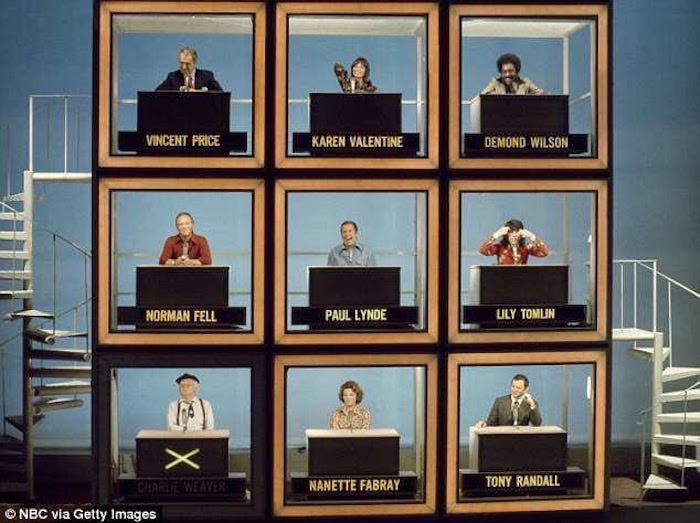
I go into my aunt’s friend’s office, where she delivers the bad news: “I should have checked before I told you to drive over here. Merv’s not hiring any writers now, and the only writers we hire are for the quiz show. That’s a whole different thing than what you do.” I go, “It’s OK. It was only a five‑minute drive. I saw Paul Lynde. I’m fine.”
She says, “Wait a second. There was a young lawyer who worked for Merv’s law firm. I’m pretty sure he quit to become an agent. I have his contact information.” She calls him up, listens, turns to me. “He wants to know if you have writing samples…script writing samples.” “Yes, I do. “He’ll see you right now, they’re over on La Cienega.”
I drive over there, fifteen minutes. This is Jim Berkus who’s now a famous agent, one of the founders of UTA, one of the giants. But then, it was literally his first day on the job, he was actually taking his belongings out of a cardboard box and putting them in his desk — in a cubicle.
He says, “Two sample scripts, great. Will you do television?” What do you mean? “Some people only want to do features.” “No, fine, whatever.” He says, “OK, I’ll read this stuff right away.”
The next day, Thursday, it’s tape day for the Cross Wits. Unfortunately, they put me opposite Victoria Stevens, which was heartbreaking, but I took it as a portent, because her name was “Victoria Stevens”. (Think about it.)
Now each team is set up with one civilian and two celebrities. Victoria’s celebrities are Leslie Nielsen and Abbe Lane, the singer, and my celebrity partners are Robert Q. Lewis, who was ubiquitous on game shows then, and the great Betty White.
If you look at the tape of this thing, you see me trying so hard to stay in character as the mild mannered civilian school teacher from Pennsylvania but when my team starts winning and keeps winning I quickly realize Betty is my star player… Robert Q. Lewis is going, “Steven, I think — “ and I cut him off! “Bob, please, Betty and I got this-!”
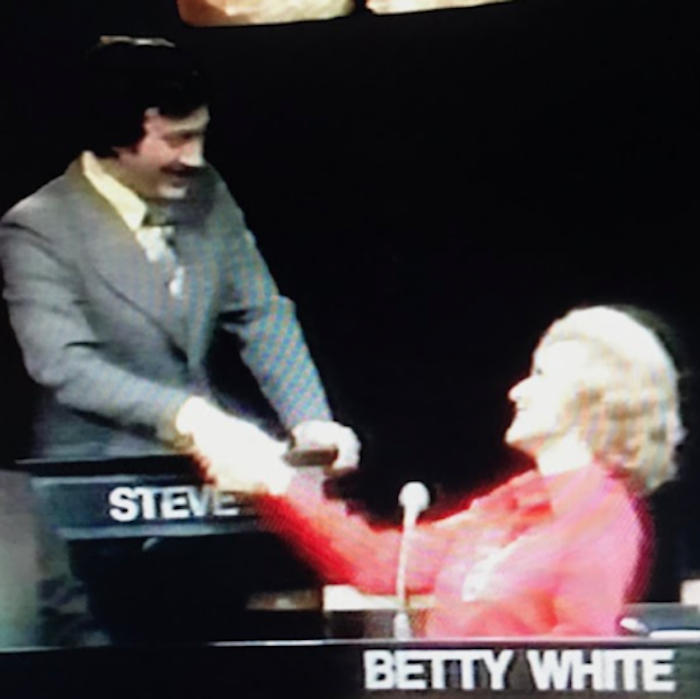
And I win a stereo… and a color TV… and a CAR which in LA is important. By the time the end credits roll, school teacher Steven is history, I’m so hyped up I grab Abbe Lane and kiss her like Adrien Brody did with Halle Berry.
After we finish taping, it’s late in the evening. Everybody who was on the show, we all go out to a restaurant. We’re partying, we’re drinking, and it’s two o’clock in the morning before I roll back to my Aunt’s house where to my surprise she’s waiting up from me like I’m in high school past curfew. I say, “What’s this?” She hands me a piece of paper: “This guy called, and he said call him back no matter how late it is.”
It’s Jim Berkus. He says, “Listen, I read your stuff right away. I think it’s outstanding, and I’ve given it to a Producer client of mine who wants you to meet him tomorrow at Universal Studios.”
Mind you, this is Steven’s first week in Los Angeles. Soon thereafter, he lands his first Hollywood writing gig. That’s the subject of Part 3 of the interview which will run tomorrow.
[Editorial note: The opinions expressed in the interview are those of Steven E. de Souza and do not necessarily reflect those of myself or Go Into The Story.]
For Part 1 of the interview, go here.
Twitter: @StevenEdeSouza.
For 100s more exclusive Go Into The Story interviews with screenwriters, filmmakers, and industry insiders, go here.