Go Into The Story Interview (Part 1): Liz Hannah
My hour-long conversation with ‘The Post’ screenwriter Liz Hannah.
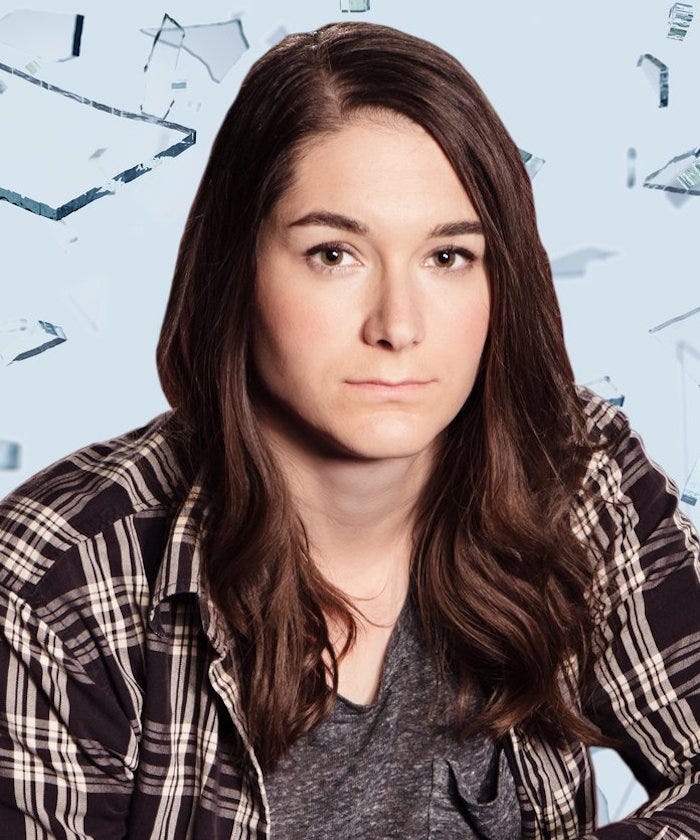
My hour-long conversation with ‘The Post’ screenwriter Liz Hannah.
Sometimes the story behind the story is as compelling as the story itself and that’s the case with Liz Hannah, writer of the 2015 Black List script The Post which went on to be directed by Steven Spielberg, and star Meryl Streep and Tom Hanks.
The Post goes into wide release this week, expanding into theaters across North America on January 12th. After reading this week-long interview series, I am sure you will want to see the movie. The story is both compelling in its historical context and relevant to the world we find ourselves in today. Plus, in our conversation, Liz provides deep insights into the inner workings of the script’s conception and creation.
In Part 1 of our six-part series, Liz discusses her background and how she began her journey into screenwriting with an eye toward film producing.
Scott Myers: Liz, I believe you were born in New York City.
Liz Hannah: That is correct.
Scott: Then you went to high school in Connecticut?
Liz: I did. My parents moved to Connecticut when I was four and then my mom ended up staying there. My dad moved back to the city, which, for me, was the best of both worlds because I got to have this small town high school experience, but I got to spend all of my weekends in New York City in Greenwich Village. Then I lived in Brooklyn.
I went to undergrad at Pratt Institute, so I lived in Brooklyn for the last four-and-a-half, five years before I moved to LA.
Scott: Where along the way did you pick up the movie/writing/screenwriting interest?
Liz: I was always a really big reader and I was a really big film watcher. Both of my parents, particularly my mom, is a huge film buff. We would just watch everything without, really, any specific genre or direction. We were constantly consuming. I think my love of storytelling came from them.
I always knew I wanted to make movies. I didn’t really know what that meant, ever. Part of it helps that I wasn’t really good at math, so I had to diverge and figure out what else I could be good at. When I went to undergrad, I was really lucky. Pratt has almost a conservatory like program. There were only like 25 kids in my film class in undergrad.
It was really a great opportunity to do everything. My mom, who’s from LA, had moved back to LA when I went to college. I would come out to LA and intern at production companies in the summer during college, so I kind of got a taste of everything. I found out that I really liked collaborating. That was where the jumping off was. I loved writing, but I really loved collaborating.
Where I saw that happening the most was in producing. I had worked for Rick Rosenthal and he’d gone to AFI (American Film Institute) and he’s a very proud alumnus of that. He had said, “Why don’t you go to AFI? I think you should go into producing.” I was like, “OK.” I applied. I got in.
I went to AFI for producing and really quickly realized I could only be a creative producer because, again, the whole math thing really is a bummer if you’re trying to be a line producer and you’re dealing with budgets. I was like, “OK, that’s what I’m gonna do.” Along the way, I was always writing.
I just thought that creative producing was going to be my way to be creative and to have that outreach into the world. Then I worked at Charlize Theron’s production company (Denver and Delilah Productions). I had interned there while I was at AFI and then I worked there for four-and-a -half years afterwards. That was my last job before I went off to write full time.
A couple of years in, I realized that I wanted to be on the other side of the table. Again, I was constantly writing. I’d written a thesis at AFI that had been greenlit, but I didn’t produce, we didn’t make. Part of it was I thought everybody else was better at it than I was.
I didn’t have a huge education in reading scripts until I worked in development and until I got out grad school. That was really, I think, eye-opening to me of the notes process, a collaboration from a writer’s perspective that I had never experienced before in terms of collaborating with producers, collaborating with directors, and talent, obviously.
That was where I opened my eyes. Like, “Oh, I can still do all this as a writer.” I can, A, tell a story, but, B, also be able to work with all these great people. I think I’d been there for a couple of years when I decided to leave. I love that company. I love the people there. I’m still very close to them, but I was feeling like, “I don’t think this is what I’m going to do.”
I really wanted to try and write, so I wrote a script that was a personal family drama. I sent it to my boss at the time and I sent it to my now manager, who I knew really well at the time. I said, “If this is any good, let me know and I’ll quit my job. If it’s terrible, I’m more than happy to stay here. I’m happy with the tough love and thank you for bursting that bubble for me.”
Both of them were like, “You should quit your job.” That was December 2012. I left and I’ve been writing full time ever since.
Scott: So it figures if someone is not good at math, screenwriting is a viable option because of the simplicity of three-act structure.
[laughter]
Liz: Exactly. I can count to three really easily, so there you go.
Scott: On your IMDb page there are quite a few short films with you having a producer credit. Some in New York, some in LA. That probably was Pratt and AFI?
Liz: Yeah. When I was at Pratt, my senior year I produced a short that had a couple of good legs at the festival circuit. Then, when I was at AFI, my thesis film actually was a finalist for a Student Academy Award, which was really fortunate and wonderful.
What’s funny, when you’re at AFI, you have to crew on all of these thesis projects, so I have all of these random IMDb credits that’s like cameo on this, PA on this, and stuff like that. That all is very much the hands-on experience of being at AFI.
Scott: Has having the experience as a producer and working in creative development impacted you as a writer?
Liz: I think it’s both a negative and a positive. When I first started out writing, I had to learn how to turn my producer brain off because it’s really easy when you’re breaking story or conceptualizing something to think, “Oof, how am I gonna pay for this?” It’s sort of the natural response immediately.
You have to really turn that off for the most part while you’re writing, particularly the first draft, because that’s somebody else’s job. That could be your job, but it’s your job later. You need to get the story out first. You need to get it perfect on the page, and then you can mess with it. Definitely, that is, on one side, it can be a challenge.
On the other side, I feel like I had some immense benefits from coming from development as I still constantly try to read. I think reading scripts: good, bad, mediocre, unfinished, anything is the best education you could get in how to write a script.
It not only teaches you what works, but it also teaches you what you like, ”Oh, I like how this character is shaped. Maybe this is how I want to sort of explore whatever character, or arc,” or whatever you’re working on. That, for me, is a real benefit.
Also, just being able to sit in meetings with any of the 250 people that have to make a movie come together, and feeling not totally out of place, and being able to, as you said, put the producer hat on, and be there, and be present, and put the writer hat almost just to the side for a second and say, “OK, how do we attack this producorially?”
Tomorrow in Part 2, Liz reveals what inspired her to write The Post and what her experience was like working with the Big Three: Spielberg, Streep, and Hanks.
Here is a trailer for the movie The Post:
Twitter: @itslizhannah, @ThePostMovie.