Go Into The Story Interview: Miguel Flatow
My conversation with 2022 Black List writer for his script Viva, Mexico!
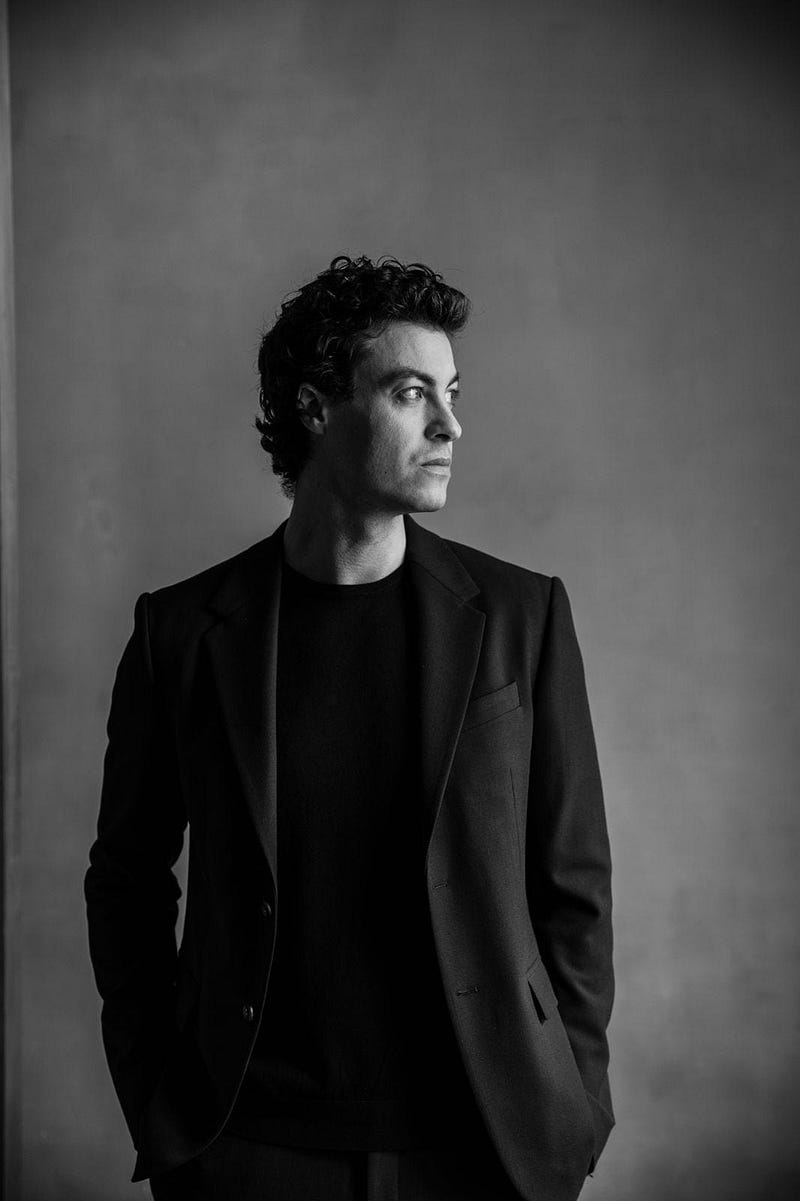
My conversation with 2022 Black List writer for his script Viva, Mexico!
Miguel Flatow wrote the original screenplay Viva Mexico! which landed on the 2022 Black List. I had the opportunity to chat with Miguel about his creative background, writing a Black List script, and the craft of screenwriting.
Scott Myers: You were born and raised in Mexico, yes?
Miguel Flatow: Yeah. I’m in Mexico right now.
Scott: Where?
Miguel: I’m in this small, rural town called the Tepoztlan, which is an hour south of Mexico City. It’s very beautiful. I step out of my room and see a waterfall and big mountains all around. It’s a nice, little, quiet place. Good for writing. No distractions.
Scott: Is that your home?
Miguel: Yeah. This is where I live. I go back and forth to L.A. I’m there in February for another two months. I go to Mexico City often.
Scott: Because Mexico’s got a long tradition of cinema… When you were growing up how much of a role did movies play in your childhood?
Miguel: When I look back on things, and kind of retrace my steps, I realized I saw a lot of movies with my father. My father is a classical music composer. He showed me a lot of good stuff when I was young. His favorite movie was 2001: A Space Odyssey, so I saw that about ten times by the time I was thirteen.
Also the classic black and white Tarzan movie, Out of Africa, he kind of loved all that. He had a good indie sensibility for movies. I just watched a ton of stuff with him. You don’t realize what’s happening at the time because you’re so young, but looking back, I can see how his influence and sensibility were slipping in.
I thought I was going to be a novelist for the longest time. That was my main objective even when I was starting college, and then I started moving toward film. I double majored in film and literature and I write with music and quite visually so it was a natural transition.
Scott: That was at Kenyon where you went to college.
Miguel: Yeah, it was my first or second time going to the US. I basically went straight to Kenyon without ever going to the US before, so that was a bit of a culture shock. Back then their film major was only two years old. Kenyon is such a good writing school, even the film classes were mostly focused on screenwriting, which is helpful, because I did learn the basics, at least. My film thesis was a feature script.
Scott: What about the directing part? Didn’t you make some short films there?
Miguel: I made several films, for sure. But their emphasis was more on screenwriting just because it was Kenyon and the program was kind of new. But yeah, I directed several short films and then several more after college, and then finished my first feature last year.
Scott: The movie For Diego. You wrote, directed, produced, edited…
Miguel: Color corrected, subtitled it…
Scott: How much money was the budget on that?
Miguel: It was $70,000. We filmed it all on an iPhone 11. At that point, it was the newest one.
Scott: Like what Sean Baker did with Tangerine.
Miguel: Yeah, 100 percent. We watched his films and then things like High Flying Bird, by Soderbergh. I definitely wasn’t the first one, but all of those films were a good precursor to just getting the courage to be able to attempt something like this. The movie has done very well. We’ve won several awards at different film festivals.
Scott: The premise of your movie: “On the way home from soccer practice one day, Diego is the victim of a hit and run. Pablo and his widowed mother are unable to pay for Diego’s life-saving surgeries, which prompts Pablo to recruit a team of eclectic friends and enter a soccer tournament to win the $100,000 peso prize money.” Was that based on a true story or something you just came up with?
Miguel: I played a lot of soccer back in my day. I was born in Cuernavaca, Morelos, but my parents split up and so I went to Chiapas for my high-school years. I played semi-pro there. Chiapas is the southernmost state of Mexico, frontier with Guatemala. It’s the poorest state in the country.
It’s very indigenous. One of those places where time has not only stopped moving forward, but it’s actually kind of reversing. It’s very beautiful. That gave me an insight into the professional soccer world, and from Chiapas, I went to Kenyon.
Scott: Did you play club soccer in Kenyon?
Miguel: I did. But I had given up on the dream of playing professionally by then. I had a bad knee injury while playing in Chiapas and then I was like, “Well, I’m now going to focus on writing, I guess. I become more academic.”
Scott: I have to ask you, your script makes the Black List, and it was founded by the CEO is Franklin Leonard, have you ever met Franklin? He’s a huge soccer fan.
Miguel: I know he’s a soccer fan. I’ve never met him. The soccer scenes in my film look really good in my opinion. We were filming with an iPhone and the DP was running in the field at full speed next to the player. I’ve never seen soccer filmed properly, which was strange considering it’s a massive market. There are many reasons for that.
Scott: Let’s jump to your Black List script, Viva Mexico. Plot summary: “When a washed-up superhero gets betrayed by a Mexican government, he must lead a populist social movement to fight the Narcos to topple the government, and free the people.”
What was the inspiration for the story?
Miguel: Sounds like a movie I would like to watch. What was the inspiration for that? Honestly, I got the idea several years ago on an acid trip. And then ideas are just competing for your attention in your mind. Usually, after several months of working on them conceptually, the ones that last and outcompete all the other ideas are the ones I sit down and write. It’s kind of a natural selection process for ideas.
So probably the genesis of the idea a few years ago was something like: it’d be hilarious if someone like Captain America shows up in Mexico and gets hit in the face and totally overwhelmed by Mexican culture. Like, there’s a scene in the script where the narcos steal his shield, and then later on he finds it and they’re using it as a guacamole bowl.
I wrote it last year, and then did some revisions, and then didn’t think much about it. Last year was a good year for me. I got my first manager and also signed with CAA.
Then I started giving them all the material that I had written for years but which had no outlet. And they seemed to really dig this one. But they didn’t tell me anything more. And then they call me one day and were like, “Congratulations, your script made it on the Black List.” And I was like, “Oh, that’s great. What does this mean?” [laughs]
Scott: I was reading the script and I kept asking myself, “What genre is this?”
Miguel: [laughs] If you find out, please tell me.
Scott: It’s got action, it’s got comedy, it has some dramatic elements to it. Did you think about the genre space or not?
Miguel: Not really. It’s borrowing from a bunch of stuff. I usually mix genres a bit, which I love. I would almost describe it as a social satire, or, like, a social post-modern criticism of Mexico.
The superhero trope is just a Trojan horse to explore some of these difficult and very serious things that should be addressed and talked about regarding the state of Mexican politics and the nation as a whole, but if you go too hard at it and do a super violent and realistic drama or a social documentary, well, nobody’s going to watch it.
I think it’s an important movie. It has something to say. It’s not a superhero movie. I have to preface this because that’s what you immediately think, obviously.
I wanted to make it entertaining enough while slipping some serious important social messages that I think should be just talked about regarding the situation that Mexico finds itself in. We’re in serious trouble with the narcos. I talk about it every day with my friends, with my family. Everybody has to be careful.
It’s a serious thing that just sometimes gets brushed under the rug by the government, or by the media. There are other artists who tackle it, but in such a harsh, unrelenting manner that nobody wants to see it because it’s just too grueling.
But at the same time, the script is a celebration of Mexico told from a foreigner’s perspective. I guess what I was saying was: “Look at this country, look at what’s worth fighting for. It’s so beautiful.”
But I needed to be careful about it. I didn’t want it to be like the classical white-savior complex that comes in and saves Mexico from itself. I was very aware of that, but in reality, we probably do need some help.
Scott: I thought of it as an anti-superhero movie, which I appreciate because I think I’m probably a minority of one. I’ve really gotten tired of superhero films.
Miguel: Yeah. Me too.
Scott: An ally! Frankly, I have a theory about this that one of the reasons why Donald Trump was elected president is because of superhero movies. They basically advocate, “We want someone to save us,” as opposed to individuals or the collective community saving themselves.
Miguel: This is a good theory. Yeah, you’re probably right.
Scott: They perceived his superpower as him being rich.
Miguel: Did you see that he released these NFT Trump cards? I was like, “This is so ridiculous. This can’t be real life.” [laughs]
Scott: Oh, I know, there are all sorts of images of him in superhero outfits and stuff. The whole thing is just crazy. But your story, the superhero aspect is like a Trojan horse and it’s almost McGuffin in a way, that you’re using it as a device to create a scenario where you are telling a rather populist story.
Did you have that intention at the beginning or did that evolve into a sort of skewed or different approach in terms of working with a superhero as an element?
Miguel: It definitely evolved. Even the first title in the very first draft was Captain Bald Eagle, and then once I started revising, getting more into the script, I realized, “Oh, this is really not about him. This is about Mexico, and the situation we’re in.”
Once I found exactly what the movie was about, for me at least, the whole script just got a lot more poignant and clear and that’s when I changed the title. I was like, “Oh, this is an exploration of the socioeconomic and sociopolitical complexities that Mexico’s dealing with and the superhero’s just an excuse to explore these in an entertaining and commercially viable way.”
It has a populous appeal, but the script gets pretty violent at times, you know?
Scott: Yeah.
Miguel: It’s one of those things where you’re laughing but you’re not exactly comfortable that you’re laughing about it.
Scott: Yeah, it’s that wonderful sort of post-modern mix of humor, violence, and drama. There is some kind of fantastical elements to it as well.
Let’s meet some of the key characters. The protagonist is John Bloom. He’s called that for about 10 pages and once he adopts this alter ego, this persona, Captain Bald Eagle, that’s what he is known as for the rest of the script. Here’s how he’s described when he’s introduced in the script: He’s buying a six-pack of beer and two cigarettes.
“Mid-40s, disheveled yet handsome, ennui and lethargy engulf his overall demeanor.”
He’s also got Prozac and Zoloft going on.
How would you describe his life’s state at the beginning of the story?
Miguel: Well, he’s semi-depressed and scrolling through Instagram or something, imagining a better life. It’s probably symptomatic of what a lot of men are going through, or the American population, or the world. Depression is at an all-time high.
My idea is that it’s not only him that comes to Mexico to help save it, but it’s Mexico that saves him as well because we have so many different things to offer instead of just scrolling through Instagram or fighting about pronouns, as big or as little as you want that problem to be, but when you live in Mexico and experience the day to day problems here, they seem more trivial.
Those sound like first-world problems. Here we’re just trying to put food on the table. The minimum wage in Mexico is eight dollars, something like that, so you can understand why there’s such immigration flooding to the United States. That’s eight dollars a day, by the way.
I wanted to show the contrast of how you could be depressed but still have all the privileges that others can only dream of and believe your problems to be universal. That’s why one of the lines toward the end of the script that Captain Bald Eagle says to Juan Rojo, the other main character, is: “You’ve reminded me of my purpose.” I mean, you’re the superhero. You’re supposed to be saving the world. But sometimes we make the world very small in our heads.
There is some serious shit going on that should be addressed and talked about more, but you fixate on the smaller stuff and then get depressed about it. But then you go to a third-world country and you realize in the US you guys actually have it pretty good. Or used to, at least. [laughs]
Everything is contextual. You become your environment, and so I wanted to show how sometimes all the conflict, the internal conflict the US experiences, the self-implosion that from afar it seems to be undergoing, is actually quite self-created. All conflict is self-conflict.
Scott: That’s that idea Joseph Campbell talks about, that the external journey is incidental to the internal journey.
I was reminded of that quote that, supposedly, Joel Cohen or one of the Cohen brothers said, “All movies are an attempt to remake The Wizard of Oz. Captain Bald Eagle goes to Oz, which is Mexico, and has this experience and does find a home. He finds that sense of purpose in the end.
Miguel: You’re so much more eloquent when talking about my script than I am. I’m going to steal that.
[laughter]
Scott: I thought it was interesting, too, you have a wry sense of humor. I love the whole Peloton thing. “Are you the guy from the Peloton commercial?” while in the middle of a huge civil war. [laughs] He’s not really a full-fledged superhero because he only had a partial dose of super soldier serum.
Miguel: Yeah, because he was a junkie. It was a mix-up.
Scott: The humor of it, did you always have that in mind, the tone?
Miguel: That was there from the beginning, just because I feel like the scenario is funny. Honestly, I think Mexico is just so surreal.
Even that quote I have about Dali that says, “Mexico is the only place that’s more surreal than my paintings.” That’s a hundred percent true. Sometimes I don’t even know how this country still operates. It blows my mind. But it’s also quite funny. I think Mexicans have an incredibly warm, but also conniving, sense of humor. We’re good at laughing at ourselves. And the premise is inherently funny. Mexico was always just going to impart its surrealness and its silliness on the characters and the plot.
Scott: You establish that tone pretty soon as he puts on his outfit, and he’s like, in a taxicab.
Miguel: The taxi.
Scott: Goes to the airport. He’s at the ticket counter. In his outfit. İt’s absurd, right there. Then from a plot standpoint, he shows up, he meets the governor. Within like, I don’t know, six hours, he’s kidnapped twice.
Miguel: I really liked that line where he says like, “I’ve been in Mexico for 24 hours and I’ve already been kidnapped twice.” I laugh every time I read it. [laughs]
Scott: Let’s talk about these characters that are involved in his situation. Governor Eduardo Pena, what was the inspiration for him and how would you describe that character?
Miguel: Well, yeah, he was based on the former president of Mexico before AMLO. He was a controversial president, not exactly like the character in the script but definitely a riff on him.
Now we have a leftist president for the first time ever. That’s another conversation altogether, but it was definitely a riff on him. I wanted to make the movie small enough that some of the set pieces were believable. Like you can’t take over the entire country, that would be crazy and pretty hard to pull off, but maybe at the State level it could work. So that’s at the level the story takes place.
I never specify which State it is, it’s nondescript, and that was intentional because I didn’t want it to be a criticism of a particular state in Mexico; the criticism is about Mexico overall and the way it operates, but it happens somewhere in the south, which is the least developed part of the country.
This world exists in Mexico. I know it. I played some serious soccer back in the day, which actually exposes you to all different socioeconomic levels. You have the rich guys trying to go pro because their dad got them into a team, but then you have the really, really good players and they’re mostly from the streets and they’re betting everything on this one opportunity to get them out of their situation. That’s kind of what my movie For Diego is about.
But yeah, I know the world. I know the different levels of Mexico. I even worked in politics in Mexico for a little bit. While I was applying for my Master’s at NYU, I worked in the Chiapas Government. I was an adviser and speechwriter to the Secretary of State for four months and that gave me an insight into how ridiculous the Mexican government operates. Particularly the State Government.
I mean, there’s a superhero running around, but the Mexico portrayed in the script does exist. If it gets made I hope to direct it. I know where to find the streets and the dilapidated houses and everything. Visually it makes complete sense to make.
Scott: The two kidnappers, the first one, Sordomudo? How would you describe this character and how he emerged into this story?
Miguel: I like his nickname because he’s the head narco kingpin and he cuts ears and tongues, so Sordomudo means deaf-mute. Oh jeez, I can already see how tricky it’s going to be to talk about the script and not sound crass. There are a lot of pitfalls where I can go wrong. [laughs] It’s politically incorrect, but I think the idea is important. I don’t know.
Scott: Then there’s Juan Rojo, who kidnaps the Captain again, but as it turns out, to save him, to pull him out of a sticky situation. Could you talk about this character?
Miguel: Yeah. I think he’s my favorite character and the real protagonist of the film in some way. I don’t know what I can say about him. He’s an indigenous character, a genius of sorts, that got recruited by the CIA and then deflected when his mother gets murdered by the Mexican Government.
Then he goes to a personal vendetta, and through embarking on that journey, finds a very noble cause worth fighting for, an important social cause, and realizes there’s more to do here. In a way, he completed Captain Bald Eagle’s journey like three years back, and when the characters meet they are at different stages in their evolution. But only one can fully understand the other.
Captain Bald Eagle then joins Juan to help him accomplish his mission, which is basically to topple the government which is in cahoots with the narcos. I don’t know what else I can say about him. He’s a chess expert. I play a lot of chess as well. I wish I was more like him, probably. [laughs]
Scott: It’s like, I’m reading the script, I’m going, “This guy seems too good to be true.” I kept waiting for, “Oh, it’s a twist. He’s actually… No. He’s just good.” He’s a really attractive character, very passionate, and very insightful. When he explains to Captain Bald Eagle what’s really going on, and what the plan is, that seems like something that people would do, like the CIA. This is where I was dialing into this story. It’s the relationship between these two guys. You spend a lot of time just having these two interacting, entire scenes where they’re just talking philosophy and life.
Was that something you discovered along the way, or was the intention all along that I’m going to feature these conversational scenes almost more than the action scenes?
Miguel: I guess it was intentional. Juan was always going to be the guide and a way to talk about Mexico and say what I wanted to say. He’s like our Virgil in a way, bringing the Captain through all these different levels of Mexican culture. To reference The Divine Comedy, through all these different levels of hell. That’s why I say the movie is more of a social satire or a social criticism, something along those lines.
Also, practically speaking, I needed a character who could speak perfect English to interact with the Captain, so the script is partly in English as well.
I really love dialogue and I think I’m good at it so I don’t think it feels expositional because the Captain is literally getting introduced to Mexico.
I do think Juan stands for many different things. He’s a symbol of hope for the Mexicans. He’s a symbol of truth. He’s everything that we probably need but, as you say, he’s almost too good to be true, even though he can get violent and has his own agenda. But he’s probably the real superhero of the film.
Scott: You mentioned this thing where Captain Bald Eagle eventually does find purpose. Juan identifies that as an itch and says, “I know what you’re capable of, you’re just missing a little motivation, a little purpose.”
He is a mentor character. Then, there is another character, Gaby, who in my language system, she’s an attractor character who is most attached to the Captain’s emotional development. In fact, they become lovers.
Was that character there early on, or did the Gaby character comment on the process a little bit later? What was the timing on that?
Miguel: No, that was early on. I wanted to explore how that would look like because Gaby has a son and it’s almost like Captain Bald Eagle becomes a quasi-father figure to her son as well. And in a more practical, less sexy way, her character operates at many different levels and serves several different functions, one of them resulting in Captain Bald Eagle getting even more immersed in Mexico. I mean, he literally falls in love with her. So by proxy, he falls in love with Mexico too.
I have to say though, it’s very hard to talk about characters in such a practical way. For me, writing is just so instinctual. When the writing is going well, I have no idea what I am doing. [laughs]
For me, it’s never just the three Cs, and the X and Y, and Z. It’s so much more about intuition and muscle memory. Honestly, when I write, I try to be there as little as possible. And when I’m not writing, I try to be there as much as possible. Today I did four or five hours. That’s kind of a normal day for me. On a really good day, I can get seven to ten hours. But those are rare.
On the best days, when I’m finished, I’m kind of exhausted and I have no idea what happened. I’m being serious about that. I don’t really remember what I wrote. I just know it was good. That’s why I say it’s difficult to talk at such a granular level about the characters.
The trick for me is that I think about it a great deal before I start, and then it becomes very intuitive. It’s never that intentional, which is probably a terrible thing to say because execs might read this. [laughs]
Scott: It’s like that Ray Bradbury quote, “When you sit down to write, don’t think. Feel.” I tell my students that we talked about receptive writing and executive writing. Receptive writing is when you were there with the characters and you, and it’s intuitive.
We’ve all heard, read, or seen thousands and thousands and thousands of stories, and it’s all about how there are various levels of our consciousness and subconsciousness. A lot of writers would say the best writing is that subconscious type of thing because then you can step back and look and discover what you did and say, “Oh, yeah, well, from a practical standpoint, that’s helpful because it personalizes his connection to this cause.”
But that’s not where she came from. She came just from your instincts, but you do that thing where you bounce back and forth between going into the story and outside of it.
Miguel: It reminds me of Stephen King’s book “On Writing” when after he published Carrie people kept telling him, “Oh, the color red in the clothing and then the blood, and blah blah blah,” and he started finding all these themes that he infused into the story that he wasn’t aware of while writing it.
So when I talk about it, I can kind of BS my way through the intentions and the practicality of things and make sure I sound semi-intelligent and like I know exactly what I’m doing, and in a macro way I do, I pay a lot of attention to structure, I know my beats, I know my payoffs, I know what goes into making a script work, but while I’m writing all of that goes out the window. Honestly, the best writing happens when you have no idea what just happened.
Scott: I want to talk to you about the violence. I’m smiling because it’s just so interesting to me. Normally, when you read these superhero movies or action movies, there are pages and pages of descriptions of the action.
There are a couple of times where you do a pretty detailed thing, but occasionally you’ll just literally write in caps and with an exclamation, “ACTION SEQUENCE!”
Could you talk a bit about your attitude toward the use of violence in the story?
Miguel: To be totally candid, I’m not the biggest fan of violence in film. Even the new Game of Thrones, I was like, “It’s such good writing, but it’s too violent for me.” Honestly, I don’t know if I need that in my psyche. At this point, the world is just a little bit too much.
I’m in the mountains here. I’m trying to play with the butterflies and smell the roses, and even from here, I can feel it. So I’m not the biggest fan of violence, but I think it was important in the script. You have to have a reason for it.
It’s an important part of the story and the thematics I’m delving into — the Narco struggle, what the coalition is trying to accomplish, what they’re fighting against, what they’re literally trying to achieve, so yeah, the script can get quite violent at times.
I even write in the script that it has to be “graphic” because you have to realize what the stakes are. Again, it’s a tricky script because there’s a superhero, which has a pg-13 nature to it, but the violence is a way to pin down the reality of the situation.
Even doing some research for the script, I saw a lot of images of what the Nacros are doing. Rooms with dozens of people and children decapitated and people hanging from bridges. I did like two days of research on that, and afterward, I just went out to my garden and stared at a flower for a while because it’s insane. There’s no way I could diminish that. Otherwise, what’s the purpose of telling this story?
Scott: There’s a side of dialogue that Sordomudo says, “This is not Hollywood, Captain. This is Mexico. We cancel people a different way here.”
Miguel: It comes back to your first point, which is the problems that you have in the US, it might seem huge but trust me, there are other problems in different parts of the world. Even the canceling thing. It’s different to be canceled because you said something politically incorrect than to be canceled in Mexico because you looked at someone the wrong way.
I think it’s the most violent country in Latin America now. It’s really a shame.
Scott: I don’t want to give away the ending, but Juan does gain control of a TV broadcast-type thing. He gives an eloquent and inspiring speech. I’m imagining that comes from a place that’s pretty personal to you. Is that fair to say? The content of that speech?
Miguel: The idea, I stole it from…What is it? Chaplin’s… What is it? The…
Scott: Oh, The Great Dictator.
Miguel: The Great Dictator. Yeah. I’ve always loved that one, and I was thinking about it often. I watched it a few times before I wrote it so it was definitely a rip-off. I’m sorry I’m being so poorly eloquent talking about my script.
But yeah, I needed an impactful speech. Something that made me think, “Would I leave the house if I heard that?” Again, it functions both as a thematic thing, and a practical thing, it works for the film because it needs to galvanize everybody to go fight, including the mariachis.
Scott: It stands in the tradition of V for Vendetta.
Miguel: Great film.
Scott: Also even Network. Howard Beale.
Miguel: Network. Probably one of my top five films of all time, for sure. Sidney Lumet.
Scott: You mentioned you wrote the script, and you set it aside. Because you’re at Rain Management, but then you signed with CAA, and then that’s when you said, “Oh, okay, let’s pull this thing out.” Is that how that worked?
Miguel: No. I signed with Rain Management, and then I gave them the script. Then I think they used that as leverage to get CAA to sign me. But I don’t really know.
Before I even signed with Rain, I sold a big TV show to a studio. It’s in development right now. I actually turned in rewrites today. That’s why my brain’s a bit toasted cause I just finished writing. But yeah. That’s probably what got me my reps, more that my film. The show’s in English, about finance, set in New York. I sold it as a spec script before I had any reps.
That got me Rain, and then CAA evolved from that, and then I don’t know exactly what needs to happen to get a script on the Black List, execs vote, I’m not sure, but they were obviously involved.
Before I had reps I had a lot of material because I’ve been writing my whole life. I’m 31 now. And I’m writing in my second language, so it took a while to get good enough in English where I can be competitive. And I live in Mexico. The whole thing just seemed so quixotic, so I was just writing a lot and shooting my little film and doing my thing.
Then before I premiered my film at the Morelia Film Festival, which was already a big accomplishment because, again, we shot the entire thing on an iPhone, literally like two weeks before Peacock said they were buying my script. So everything happened at the same time. We’ll see if the show gets made. So far so good.
Scott: The annual Black List was something you had some familiarity with, but it doesn’t sound like you were sitting there on December 13 whenever it was rolling out at 10 o’clock in the morning, checking your Twitter account. How did that play out? Where were you when you found out that you made the Black List?
Miguel: Well, I’m on Instagram more than on Twitter. [laughs] Twitter has the writers and the managers, but Instagram has the execs and producers. But no, I didn’t even remember it was that day. Nobody told me. I think maybe my manager mentioned something about the Black List, but very much in passing. I’m pretty green to the industry, less so now because I’ve been in development for a show for a while and now being with CAA and prepping another show with a producer so getting the hang of it and figuring out how everything works. I knew about the Black List in the sense that it hosts scripts and it’s a service that you can pay for. That’s it. But not about this specific Black List.
I know script competitions are a big thing. I never tried one. My whole life I’ve always thought, “I’m just going to do my thing. Everybody’s doing that. I’m going to do the opposite.” That’s always been my philosophy.
Then all of a sudden, I went for a walk in the morning, and when I came back my phone was blowing up. Like 20 missed calls and all these messages congratulating me. And I was like, “Oh, what happened?” [laughs]
That was a busy day. Very cool. As the days progressed, I realized what a big deal it is. I have friends who have been actively trying to get into the Black List for several years and still haven’t been on it.
I’ve been interacting with more writers and execs recently and have a better understanding of what it really means, but ultimately what it has given me is more confidence in my craft. Which is always the best gift. A good Christmas gift. Because when you start out, and I’m not starting anymore, but when you are, making a living as a writer is a daunting task. Suicidal, almost. As they say, writing is a race against your own enthusiasm. Self-doubt can always cripple that. I’m writing a lot these days because I’m writing with confidence. The Black List is a big part of that, for sure.
Scott: Congratulations, again. I’ve got a few craft questions for you. I’d be interested to see, given your rather more instinctual approach to writing, so let’s start with that… You mentioned Stephen King’s On Writing, he talks about how to come up with story ideas. He says, “They’re like fish floating overhead. You just stick your net out, and you grab one.”
So, how do you come up with story ideas?
Miguel: Honestly, I have trouble not coming up with story ideas. The more I do it, the more it’s become, at this point, a disease. I’ll be in any social situation, and somebody says something, and I just go off. [laughs] I can see myself doing it. It’s like, “Ahh, I’m already gone.” I’ll just follow the idea.
I’ve become very good at pretending I’m still listening to the conversation, but in reality, I’m like, “Oh, that could work here. I can try that. I can mix that with this and put it together in the third act.” Everything has a potential story, so I’m always collecting ideas, to the point where its becoming troublesome because I drift a lot in my thinking and struggle to be present.
But yeah, I have more ideas than I know what to do with. Usually, I let them compete in my writer’s brain for attention. I start developing them in my head as much as I can. Some of them turn blue and die. Others are persistent. Which means I keep thinking about them. Once I start figuring them out more, the ones that are ultimately ready to hatch, are the ones I start writing. It’s a natural selection process that happens in my head. I don’t have a problem getting ideas. I have a problem choosing which ones to focus on.
I don’t really go after a specific thing. I write what I feel like writing. I don’t pay attention to the market. I pay attention to whatever idea outlasts the other ones. That way I’m always writing. If one of the ideas I developed doesn’t work in the current marketplace, that’s fine, I have a whole assembly line of scripts following the one whose time hasn’t come yet. Maybe someday it will. The important thing is that I’m writing every day. It keeps me healthy. If I’m not writing, the rest of my life falls off a cliff. I stop exercising. My diet gets worse. I have less energy. I’m less creative overall. So as long as I’m always working on something, I feel good. I’m new to Hollywood, but I’m not new to writing. You have to learn what your creative process is. What works for you. All I know is that I’m very prolific and I’m getting better and I’m now on the Black List. [laughs]
Scott: You said maybe you start to develop the story. Do you have a set process for that, or is that, again, more intuitive? Do you start with index cards and character development? How do you go about breaking the story?
Miguel: It’s changed since I got it repped, and since I sold the show. It was already changing a little before, I guess. If I’m writing a spec, which, I should say, is how I’ve been writing for most of all my life until very recently, then for the idea that finally wins, and is ready to hatch, I write a sequence analysis — I guess it’s an outline, scene by scene — all on a notebook.
I have a lot of notebooks. [laughs] I literally just stare at a white wall, figure it out in my head, then write in the notebook. It’s a nice time because I can go to a café and get out of the house. I write that by hand. Usually, if I’ve finished a notebook, I know I have the script. But a lot of notebooks turn blue and die halfway through. So sometimes even the idea that outcompeted all the other ideas can die on me in the notebook. But if I finish the notebook, I know I have the script. I know that’s a movie. That’s usually the longest process. It’s old-school. That will take me a few weeks to finish.
Once I have that, I translate the notebook onto the whiteboard with post-it notes. I usually have different color post-its for each scene. And each color represents a character from whose POV I’m approaching the scene. It ends up looking very pretty. Then, once I have that, I start writing the script. Then I write very quickly.
I usually knock out a 100-page script in about three weeks. I don’t stop until I finish. I live in that world for two or three weeks. Nothing distracts me. All of reality seems to be about my story. It’s a weird state to be in. I’m not the most enjoyable person to be around. I’m very detached during that time.
But now my process is changing. I’m developing a lot more. And I’m starting to do my outlines directly on the computer, which is sacrificing the café visits for speed and practicality. It feels like I’m turning pro, for better or worse. Producers are expecting things. I have deadlines. I’m now mostly skipping the notebook part because it took the longest. But I like how it’s going. As long as the quality doesn’t diminish, I don’t mind going faster, even though I’ve always been fast. Writing at the Studio level is just a different game. It’s actually an insane amount of writing. But also because I’m always writing a spec on top of developing stuff with producers and doing rewrites.
Scott: Let’s talk about a subject that I think is probably the most nebulous aspect of writing in general, which is the theme. We hear that word a lot. What’s the theme of the story? What are the themes in the story? There doesn’t really seem to be one specific definition that people have zeroed in on.
Do you think about that upfront, or do you think about it while you’re writing? Are you looking for a central theme or themes in your story?
Miguel: I would say I probably do think of theme, but maybe in the sense that I think about what I want to say or explore. Again, my first language was is Spanish. I lived in Mexico till I was 17. Then went to the US for college.
I am writing in my second language, even though now English has become my primary language. I dream in English and think in English. I mostly read in English, probably 90 percent.
It took me a while to even get the confidence to write in English. The prepositions still always get me, damn them! I think you need to get to a point where writing becomes instinctual. I think it was David Foster Wallace who said that you need to write a million words before you can call yourself a writer. You need to get all of the bad writing out of your system. The only way to do that is to write a lot. I wrote a novel before this. It got sent to all the major publishers in NYC. It didn’t get published. That was heartbreaking. It was 200,000 words long. I wrote a novel in Spanish before that. That was just my training.
It took a while to get here, even though I still want to think I’m relatively young. Especially for a writer. But I already feel like I’ve been writing for a long time. I’ve read all the books. I’ve read all the fucking classics. And now that I’m here, and the sun is shining, I’m taking it very seriously.
But I digressed. Theme. Yes and no. Everything has to feel natural to me. It has to be intuitive. I really need to be a little bit outside my mind so that it works well.
I guess I think of it only in very broad strokes, like, “Oh, the shit happening in Mexico is serious. Somebody should…” It’s very basic like that. Then once I get into the writing — and especially rewriting, because as we all know, writing is rewriting — then I start polishing and accentuating the themes.
Again, it’s a little bit complicated for me to talk about things in such a pragmatic way because everything’s just — it’s muscle memory at this point. I think that I’m getting more and more confident in my skills as a writer because I can now almost lose myself on command, to get into a flow state, for lack of a better word, even though I wouldn’t even call it that.
You see it even in acting. Talking as a director, when somebody’s in a scene and kind of loses their train of thought or forgets exactly what they were going to say, that’s usually the best acting they do. That’s my state for writing. People sometimes ask me, “Do you meditate?” And I say, “Yeah, I meditate like four hours a day,” because that’s the time I’m writing. I’m not in myself. I’m not thinking about myself. I have no problems. I’m not thinking about my friends, about my health, about my finances. I’m not even thinking.
When you’re writing, so many things need to be happening at once. You have to be moving the plot forward. Checking the page count. Hitting your beats. It needs to be formatted correctly. The dialogue needs to be interesting. It needs to be dynamic. It needs to flow nicely. The character’s decisions need to make sense. Grammatically it needs to be impeccable. You need to alter your sentence length. Write in an active voice. Be economical with your words. Write exactly what you mean. Add emotion. It needs to be visually clear…
All of these things need to be happening at the same time, it’s so complex, that I think the more conscious you are, the more you’re not going to be able to hit all of the notes, as opposed to being able to lose yourself and let all the training kick it and let the unconscious do its thing.
This is a recent development, but we all know that feeling, we’ve all experienced it at times, but I’ve been training myself to the point where I can now sit down and 5 out of 7 days a week just completely dissolve into an ocean of words and it’s just my favorite thing in the world. There’s no conflict, everything just fades away.
Scott: It sounds wonderful that you’re in a terrific place creatively.
One last question for you, what advice would you have if some young writer came up to you and said, “Hey, how do I develop my craft as a screenwriter and try to break into the business.” What advice would you give them?
Miguel: I guess it’s a two-step advice. First, is to make sure this is what you really want to do, because, boy, is it a hard industry. I mean, I’m still figuring it out, but it’s just so hard to break in. It’s a very competitive and closed industry to get into, and there’s no manual. There’s no corporate ladder. You don’t get promoted after two years. If you don’t come from money, accept that you’ll be pathetically poor for a long time, with the odds being entirely against you that you’ll ever make it. You’re getting paid very well to make shit up. That privilege comes with sacrifice. And when I say it’s difficult, trust me, I’m not being glib. Whatever you think difficult means, multiply that by 10. That’s how difficult it is just to break in. Now I hear that sustaining a career is equally impossible, if not more, so looking forward to that. [laughs]
And in a way I feel like you don’t choose to be a writer, the writing chooses you to be the vessel. I don’t think I was ever like, “I’m going to be a writer,” I just always loved writing and loved words and books and movies and it was one of those things that chose me. I really had no say in the matter. I do remember once, a few years back, when I looked at myself in the mirror and said: “You’re a writer.” But I was already in my mid-20s. The decision had already been taken for me. I just accepted it. It took me that long. I had already written a novel by then.
If you’re one of those folks — which I meet all the time — and you like writing but it feels more like a passion than a calling, or it’s a hobby, or a way to get rich — which is definitely a terrible strategy — then honestly, and this is the capital-T Truth, you’re not going to make it. Maybe at some level, but not at the level that you’re thinking. Maybe you can be a copywriter. [laughs] But you’re not going to be able to compete against people like me, who dedicate their lives to it.
Secondly, when you’re starting out, and you read all these giants, you read the Kafkas, the Hemingways, the Virginia Woolfs, the Aaron Sorkins, all these guys, and you think, oh boy, maybe one day I could do something like that.
The gap between your writing and what you can appreciate as really good writing is just the most frustrating gap there is. And the only way to close the gap — and imagine what that gap is when you’re writing in your second language — is literally just an insane amount of writing that you need to do. You need to get all the bad writing out of your system in order to get to the point where your material is viable in the marketplace
I would also say it’s not 10,000 hours. I don’t think it is. And this is not my phrase, it’s from a Silicon Valley guy who’s kind of a tech guru called Naval Ravikant, but he says, “Not 10,000 hours, but 10,000 iterations.” That’s 100 percent true. Even in Hollywood sometimes, right now that I’m developing a few things, everybody is like, “Slow down, you’re going too fast. Take a beat. Think about it more.”
I disagree. It feels fast to you because, in my opinion, everyone is a bit slow. Hollywood is slow. So you can spend four days twiddling your thumbs writing 2 hours a day, but if I write 8 hours a day, then in one day I finished the work that took you four days to complete. It’s so much better to be iterating than to be adding fake hours to the scale. You need to be iterating. You need to be like, “Okay, this is the script. Okay, that’s done. Let’s do another one. And another one. And another one.” Instead of like, “Oh, I’ve been writing this script for a year.” Well, it’s going to feel like a year to read it. Also, for me, writing is the cleanest form of thinking. Grammar is the logic of thought. I write to understand and explain to myself what I’m thinking. So not only am I writing more, but I’m also in a clearer mental state. Always in the story. And never in my mind.
For my interviews with dozens of other Black List writers, go here.