Go Into The Story Interview: Michele Atkins
My interview with the screenwriter whose screenplay won a 2016 Nicholl Fellowship in Screenwriting.
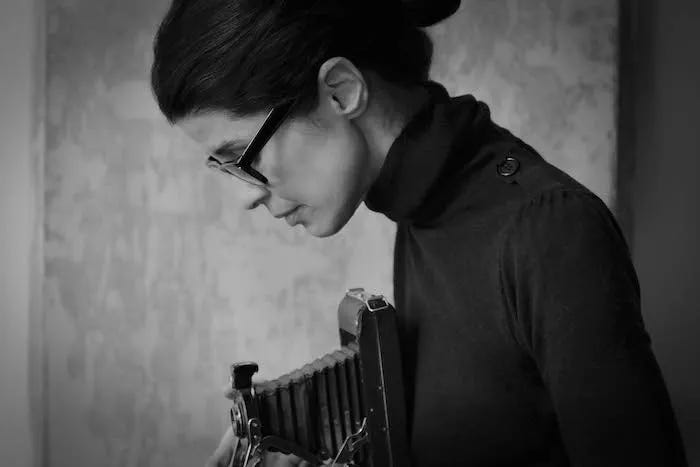
My interview with the screenwriter whose screenplay won a 2016 Nicholl Fellowship in Screenwriting.
Michele Atkins wrote the original screenplay “Talking About the Sky” which won a 2016 Nicholl Fellowship in Screenwriting. I spoke with Michele about her background, her award-winning script, the craft of screenwriting, and what winning the Nicholl has meant to her.
Here is the entire interview.
Scott Myers: You got a Bachelor of Science degree in documentary filmmaking, right?
Michele Atkins: Yeah, it was called more television field production, but yes it was a documentary, TV, field production. Basically running around with cameras, and lights, and shooting.
It was a combination of documentary study, television news, it encompassed pretty much all of that sort of shooting and writing.
Scott: How did you develop that interest?
Michele: When I was a kid I watched a lot of movies. I’d watch old films. I was into the films of the 40s.
As I got older, I watched a lot of films, that had to do with the making of news. Was also really into “60 Minutes,” and I thought, “This stuff is super cool!”
My parents at the same time ‑‑ whom have nothing to do with show business, or Los Angeles, or New York City, or anything like that.
They said, “You know, if you’re interested in this, you should probably start hanging around the news stations. Get in where you can here in Buffalo.”
So I started interning at TV stations, and working a job as well to save up money for college. My interests developed from there.
In my junior year, I went and lived with my father for the summer, and I ended up working as an intern on a film. A Hollywood film. I realized soon after that, “Wow, I think I like actually this film making aspect, rather than the television news sort of business.”
I fell in love with it down there in North Carolina, and realized that film was probably more of the route I wanted to take.
Scott: You graduated and now, you do quite a bit of working commercials.
Michele: Yeah. I eventually moved out to Los Angeles. I really wanted to be on set but I didn’t know anyone. It’s a lot about who you know. I guess I really don’t have to say that. We all know that.
I tried my best to get out and get on set. It wasn’t easy. I had to find a way to earn money, and so I actually worked in script development for a couple years.
I learned a lot about script notes and writing and realized that I did not want to be on the development side pretty quickly, but all of these experiences gave me knowledge that was invaluable.
I ended up getting in with a group of folks after living in LA for a couple of years that started off doing lower budget features and they were also doing commercials.
I figured it would be a great way to earn some money, have free time to nurture my own director’s reel, my own writing, and not have that nine to five job.
Scott: You’ve been doing this for quite some time with some major companies, for example UPS, Budweiser, Toyota. Could you talk about what your specific responsibilities when you’re doing these type of commercials.
Michele: I produce commercials. I worked up the ranks from PA to coordinating to UPM then to producer.
I work on budgets, push forward the creative vision, and do the hiring of the crew. There is much more than that — it is really all encompassing.
Then I decided I wanted to add on to the producing. I wanted to do more. I started directing my own projects, producing and directing my own projects and my own commercials.
Scott: This is Kaboom Productions?
Michele: Yes, I’m signed with a commercial production company that has offices in San Francisco and a satellite company in Los Angeles.
Scott: You said, “This would be a good idea to work these commercials so I can continue to do some writing.” How did that interest evolve?
Michele: They asked us this question when we were sitting around the Nicholl Fellowship luncheon conference table.
My first interest was reading. When I was a kid I always had my nose in a book. I love these imaginary worlds that you could go into from reading. I still love reading. I’m a big reader.
Then from there I started writing little plays that either my friends would be in or my family would be in. Just little tiny plays that we would do at home during the holidays. Then I moved into writing shorts and then screenplays.
I was always interested in that and I don’t think that I applied myself on a regular basis like I have been in the past five years. I was always tinkering with some writing, some little project that I was working on.
Scott: How did you go about learning the basics of screenwriting?
Michele: Originally I was in, like I mentioned development for those couple of years when I first moved out to Los Angeles in my early 20s. I really got the gist of screenwriting and format and how notes were given.
I took some classes at UCLA and I joined a couple writing groups and would just write shorts or write feature length scripts, and go in and read other people’s scripts and give notes as well as get have that back and forth with people.
Coming up with that group of folks that you can rely on, and they can rely on you, and you’re able to give feedback and get feedback. Then I started working more seriously on my projects than I had in the past.
Scott: Whatever path you took worked because you wrote this wonderful script “Talking About the Sky” which won 2016 Nicholl Fellowship in Screenwriting. I’d like to jump into that if I can. Here’s a plot summary provided by the Nicholl.
“Walter Mackay is haunted by a shameful past. The next country music star working at a slaughter house discovers he has cancer. Thinking life isn’t worth living he has a spiritual experience and searches for his daughter.”
What was the original inspiration for your story?
Michele: Originally the story idea came from a couple documentaries I’d seen. One was on a country bluegrass singer/writer who was essentially told if didn’t stop drinking he’d die. He didn’t stop and he passed away shortly after that.
During that time, it was during like a two, three month period I saw another documentary about a guy that killed a bunch of family members in his car driving inebriated. After the fact the family really fought and wanted to clear his name that he actually wasn’t inebriated while he was driving.
I thought, “Gosh, didn’t the worse thing already happen?” Like you’re fighting after the fact that he wasn’t inebriated but they already did test proving that he was. So change in thinking can be difficult for those surrounding us as well.
The idea came about of how do people change? How does one person change and what tragedy has to happen to make someone able to go down a different road?
Scott: Fascinating how synchronicity works in our lives. Here you have these two documentaries you saw months apart, you pull those together and come up with what sounds like a central question or theme you were able to explore with the script.
Michele: I think so. I thought back to how I came up with the idea because it’s not on either of these people because they both drank. They both had alcohol in their system during their story and I wanted to be very careful that my lead character did not. I did not want to see Walter drink through this entire film, which he does not.
I wanted to see how he lived sober. Even though he changed, because of his experiences something more had to happen for him to decide to seek his daughter. Even though, he had some bad things happen to him it still wasn’t enough to try to repair his family.
Scott: That’s basically the announcement of the cancer is like his to adventure to start that journey, right?
Michele: Yes.
Scott: Your script introduces Walter this way. “His demeanor bears a weight, the kind held only by those who have gone through misfortunes that alter the way one carries themselves with each of his steps the burden of life seems to be lifted and dragged forward upon his body.”
You began the story with him in a visually arresting environment, which is a cattle slaughter house. Why that opening image?
Michele: I thought a lot about the luck or lack of luck we all have in life and what makes someone get the set of cards that they receive when we’re born.
How do you end up with the lucky life or the unlucky life? How are people born in a certain country or how is a cow immediately born for slaughter. Some people are born into poverty and some born into wealth… are these situations deserved?
My thought was there’s a bunch of uncontrolled circumstances that we’re born into and I liked the idea of these cows going off to slaughter. It wasn’t because they did anything right, it wasn’t because they did anything wrong. It was just their luck in life. Walter had a drinking problem and was that something that he brought about himself or is that just his luck in life. I wanted to compare the randomness.
Scott: It also sets the tone of dealing with this theme of death which runs through the story.
Michele: Yes.
Scott: In fact there are several animals. There’s a raccoon, a squirrel, and an intersection with a stag. That was a conscious thing on your part, right?
Michele: Yes, very much so. I went on a trip to visit my father for his 80th birthday party in North Carolina.
I lived in Tennessee for a portion of my childhood, and then moved back up to Buffalo, but my dad moved over the mountain to North Carolina.
There is a lot of road kill there and they’re in all different positions, some their mouths open, some are splattered, and there’s a lot of it.
I thought once again about people and animals luck in life. About how little control we really do have and how much control we actually think we do have.
Scott: I was going to ask about because I’ve lived in the South for much of my life and the script really is quite accomplished in creating that sense of authenticity, a place.
Michele: Thank you.
Scott: You had lived in Tennessee for a while?
Michele: Yes. We lived in front of a cow pasture in Johnson City. We had a cow pasture behind our house and a slaughterhouse in that pasture.
Scott: In reading the script there are a number of themes, but I was struck by two quite prominent ones. One is regret. In fact at a key moment in the script very late in the story after Walter has gone on his own hero’s journey, if you will, into his past, he says aloud to himself, “It might be easier, not having to live with regret on my mind.” Could you speak to that theme in the story, regret?
Michele: I think that the logline you read at the beginning describing Walter with his shameful past, really touches upon how Walter looked at some of the things that he did.
Although he was trying to change the way he lived and trying to reconnect with his daughter there were some things that he just could not forgive himself for.
Scott: Yes. He’s got a lot of things to look back on as failures. There’s a failed marriage to his ex‑wife Lynn, a failed relationship with his daughter Delilah, a failed musical career — he’d not only married to Lynn, but at one time they’d been in a pretty famous Country‑western duo. And then a major incident in his past which ended up putting him in prison.
The major drive in the story is him seeking out his daughter Delilah and in doing that it intersects him with people from his past in a way it feels like this journey of trying to find Delilah it services him having to face down these many faces of regret from his past. Is that an accurate description there of what you were going for?
Michele: I think it also had him face the music career he once had because when he has to seek out Delilah’s ex, that here is this famous country music star, Caleb Steele. It was once what Walter was, that he can no longer have, because he’s aged, and he’s at a different place in his life.
There’s a little bit of facing some of his demons, and some of the things that didn’t quite work out for him.
At this point he has his eye on the prize, which is seeking out his daughter, and trying to heal that relationship. That becomes the most important thing to him, is to try to do right by the people who actually have a place in his life at this point.
Scott: That was the other theme that really struck me, this idea of redemption, of trying to do something to maybe heal some of the wounds from the past. In fact, you mentioned that earlier. I thought that was quite interesting, your comment, “He had stopped drinking,” which is one thing. But he’s basically still living a form of escape, or trying to escape from his past. His journey is in part to confront the impact points of his past.
Michele: Walter lived in a certain sort of purgatory while he was working at the slaughterhouse, and driving around in his little motor home, and not wanting to face the way things are.
He was a little bit of a grouch, a miserable man. Once he was given the death sentence, that is the time where he decided that, “Now is the only time. Am I going to turn this around?”
Although he was not drinking any longer, I don’t think that the healing had begun until…It’s interesting. The healing had not begun until he was dying.
Scott: It calls to mind that “Shawshank” line. “Get busy living. Get busy dying.” It’s interesting, because you’ve got Lynn, his former wife, and then the daughter, Delilah. They’re representing those mistakes that he’s had in the past.
Then along the way, he meets another mother and child, Lily, 48, you describe, when you introduce her, “A dark, long‑haired woman stands outside in a security uniform. She carries a quiet, fearful anger, something like a beaten dog whipped too many times.”
She’s like this security person at this store. He parks his camper in the parking lot. That’s how they intersect.
She’s got this 12‑year‑old son, Hank, who plays guitar. You’ve got those two that are representing, basically, opportunity in the present, perhaps. It’s like a chance for him to do something without the taint of the past. Does that feel like a fair sort of analysis of those characters?
Michele: Yeah, I think that’s a great analysis. I couldn’t put it any better.
Scott: You’ve got this interesting thing going on, where Walter’s going on this journey from the past. Again, he’s got Lynn and Delilah, other people, too.
Then you’ve got this thing in the present. In the end, he commits a redemptive act helping Lily and Hank by intervening in an altercation. It all comes together in that last, very dramatic scene.
Michele: Yes. Lily and Hank gave him an opportunity to be a stand‑up guy. His ex‑wife already had everything. His daughter, Delilah, was denying him the opportunity to heal, because she has her own demons.
She’s got her battle with the booze as well.
Lily and Hank became that opportunity where he could be there for someone. They wanted him in his life. It was a little bit easier for him to help them.
Scott: They weren’t tainted by his past…
Michele: No, they weren’t. Actually, he didn’t want to talk about his past, and where he came from, because he didn’t see himself as that famous country singer, anymore.
He doesn’t even really sing that much in the screenplay. He more just lives his life, and tries to heal. He tried to avoid that past with them, and just start new, start fresh, and try to be of service to them.
Scott: In fact, his stage name is Dobb McKay.
Michele: Yeah, that was his stage name.
Scott: It’s one of those situations where the actual sort of formatting thing, whenever he’s in a situation where someone knows him from his past as Dobb, your character name is Walter/Dobb. It almost reinforces that duality, disunity, that disconnect from the past.
Michele: Yeah.
Scott: I want to talk about the dog, Henrietta. I bet people read the script, say, “I love the dog.”
Michele: She is a main character, you know.
Scott: Sure, she is. She’s got her own subplot. What was the inspiration for Henrietta?
Michele: I’m a huge animal lover. I love watching their personalities as they walk around. Each animal does have a unique personality.
When I lived in front of that cow pasture in Tennessee, my brother and I, I kid you not, we were watching “The Waltons” one night. We heard a little scratch at our back door. We opened up the door, and this little puppy mutt came walking in.
When you live in front of a cow pasture, there are a lot of stray animals that come out of there, whether it be kittens or dogs. My mom picked up a lot of dogs, actually. She was always trying to help the strays in our neighborhood.
We got to keep this dog. We had her for about 16, 17 years. We grew up with her. We named her Snoopy. Real original name, huh?
Henrietta was that dog that came from the dog pasture, and was Walter’s first stab at healing.
And having someone or something else than him in his life, became his pal, a little bit begrudgingly on Walter’s part. He doesn’t let her sleep up on the bed with him. It’s not like he treats her like his best friend, at first. The relationship grows.
When she’s taken away, we see how much Walter misses her, and how much she means to him, and vice versa.
He wanted to give Henrietta that choice, to come back to him. After he’s at the hospital, and he comes back out and tries to find her, then we see how much Henrietta really means to him. Then he sees how much Henrietta means to him.
I wanted that opportunity, because at that certain point, before he goes in the hospital, we’re really unsure where Walter’s head’s at.
He’s a little bit of a grouch. He yells at people, is somewhat cordial to Henrietta, but not super nice to her.
After he comes out, and he has that experience, he just realizes now is the time to have, and mend, and nurture these relationships. Henrietta’s one of them.
Scott: The fact he does have a measure of concern for her demonstrates he has the capacity to care about someone else. That gives him a foundation for us to believe that he will go on this journey that he does. Of course, I was so caught up with the dog, I’m thinking, “If Walter’s going to die, I want to know what’s going to happen with Henrietta.”
[laughter]
Michele: You’re not the only one. A couple people came up to me during the Fellowship week, and said, “Boy, I was really concerned about Henrietta. What was going to happen to her?”
Scott: You resolved that quite nicely.
Michele: I think Henrietta ended up at the best place she could be.
Scott: There are two other things I want to talk to you about. One, you have an interesting little bit of business there, where Walter intersects with this old Native American guy. It’s almost like a little bit of magical realism. It’s real, but then you wonder whether it’s some sort of fantasy thing in his mind, acting a kind of mentor figure.
Talking about Geronimo, this character says, “He was warmed by the sun, rocked by the winds, and sheltered by the trees. He could go everywhere with a good feeling.”
It’s a line that Walter, later on, repeats. Could you talk a little bit about what you were going for there, with that little subplot?
Michele: I looked up some old Indian phrases. I was reading about Geronimo. At the same time, I was reading a book about a teacher that went up to Alaska, and was reading about the plight of the Native American Indian and the Alaskan Indians.
I was in a space where there were some really thoughtful pieces coming from that particular piece of literature I was reading, which did not have Geronimo in it, by the way.
It was just something that I looked up, some different phrases. I wanted something musical, whereas Walter walks up, and he becomes first in tune with the music that’s happening.
Then he realizes that this person at the bus stop knows where he’s coming from. He had the same experiences in this roundabout conversation that they have.
He’s a little bit of an inspiration to Walter when he needed someone to talk to. You know the randomness of feeling like you’re meeting someone, and you’re on the same page as them?
I wanted him, when he needed it most, when he’s wandering around the city in his slippers, in his hospital attire to find someone who could get him that piece of advice that could give him the strength to find his way.
Scott: I want to ask you about the structure of the story. There’s a mystery quality to it where there’s a series of these questions that arise as we follow Walter along in his pursuit of Delilah.
Who is Delilah? What happened with he and Lin? Why did they use to drink? Why did he stop? How did he lose his musical career, or what did they do to end up in prison?
How conscious were you of it that it does play out like a mystery? How challenging was that, for you to structure each one of those moments of revelation, so they built on one another leading up to essentially a confession at the end?
Michele: I wanted Walter himself not to be able to face his past. That I wanted as the story was to be revealed to us as it was being discovered by Walter. I wanted it to be at a place where Walter could actually take it in and understand it. Then the audience could know what it took for Walter to confront his demons, his mistakes.
As I was writing it, although you do see him go to the graveyard, I didn’t want that to be revealed as to why he was going there. It was too dark and painful for Walter to discuss, therefore the reader could not know either. I also did not want his musical past to be brought up a lot because I wanted that to be something that Walter put behind him.
I don’t think Walter was able to face a lot of his secrets along the way until he was emotionally ready. Until he ended up growing stronger. When we first met Walter he was not able to face many of these problems he had buried.
Little by little, he was able to reveal to us and revealed to himself what actually had been going on.
I don’t know if you realized, but in the opening when the two younger cowboys working at the slaughter house, they were listening to the Walter’s music. It was actually a song that he and Lin Lynn sang at the opening on the radio.
He didn’t even bring it up to them. Most people who would be in that situation would probably say, “Hey, yeah, that’s me. That’s me on the radio. You want to be a big country star. Well, you hear that song? I’m singing it.”
He didn’t even want to do that. He wasn’t at that place. He was so beaten down that something like that wouldn’t even had nurtured him.
He was somewhat forced to tell Lily and Hank that he was famous because they discovered he was famous. It wasn’t something that he ran around telling everyone.
Scott: That brings up the last thing I want to talk about in terms of the script, which is music, obviously a key component. You’ve got a lot of lyrics in there. I’m guessing some of those are original.
Michele: I wrote all of them except for one set, but all the other lyrics I wrote.
Scott: One of them, “The wheels turn below me as I’m looking for the light. When I hear a voice that’s calling, I know I’m going toward the light.” That’s an original?
Michele: Yes, I wrote that.
Scott: That’s symbolic of what he is trying to do, trying to find the light.
Michele: Yes, very much so.
Scott: It’s a great script. I really enjoyed reading. Let’s get to the fun part here, which is Nicholl Fellowship in screenwriting. How did that all go down?
Michele: I got an email from someone that I had met briefly last year at a dinner. He was a young.
He asked me what were the final, he said, not your process, or not that you got notes, but the final thing that you did to your script before you turned it in? Was there anything special?
I thought back to when I actually enrolled in the Nicholl Fellowship. I really didn’t think that much about it. I had spent so much time on my script I just lived and breathe the characters so that all of them made sense to me.
I was fond of them I really enjoyed visiting each and every one of them every time I had to do a rewrite. I just really loved those characters.
When I sent my script in. It was just a last minute. Oh boy, better send this in, the Nicholl Fellowship is going right now. Why don’t I just push this baby through?
It was quite shocking that I kept moving forward into the semifinals, or the quarterfinals, and then the finalist. I really was not prepared for that.
Scott: Where were you when you got the call?
Michele: Visiting my dad in North Carolina. They set you up on Skype and just tell you to be on Skype during the certain time.
I was there with my dad, one of my sister lives in Durham, and the other lives over in High Point Archdale area. My husband was there, so we had a house full of people. This day that I was going to be with my family was predetermined months in advance. It wasn’t anything that I could shift.
I just told them that morning, “Hey, this call may or may not come through, so I’m going to have my Skype on just so you all know.” They all ended up being on the phone call as well.
We got a little bit of feedback on the phone call. There was some reverb going on. We had the Facebook opened, so we kept hearing what we were saying and what the Nicholl committee was saying twice. It was a little bit chaotic, but it was nice to have my family around.
Scott: What was the experience like doing the whole Nicholl week?
Michele: It was wonderful. They have quite the week setup for all of the winners, and very informational, and quite nice, and a lunch in with, I got to hang out with Eva Marie Saint, who championed my script, which was amazing.
I’ve talked to her about a lot of her stories, and I’m a huge admirer of her work. I was over the moon about that, not to mention that she was my grandmother’s favorite actress. My mom was just in a tizzy about that, so that was quite fun.
To be able to talk to all of the writers and writer directors who have massive amounts of experience.
It was just incredible, and not to mention all of the other Nicholl winners. They were a lovely crowd. It’s not just saying, oh, well, I was with these people for a week and we all got along.
The other winners were just fantastic and nice people. We had a lot of laughs. The laughs, that you’re actually crying by the end of it, because they were just so funny and so lovely.
Scott: I’ve interviewed all of you now for the 2016 class and it’s just a terrific group of people.
Michele: Yes. I feel really fortunate. You just don’t know when you’re walking into a situation where you’re going to spend a lot of time with folks. You never know, but they’re just really nice. It was a good time, very nice and very talented as well.
Scott: Let’s jump in to some of those talent‑related questions about craft. In your Nicholl acceptance speech, you mentioned writer’s groups and teachers. You had mentioned it earlier here too. How important have they been for you in learning the craft and then in writing the script?
Michele: The writer’s groups were terrific. I met a man named Howard Casner. He has a blog and he does script notes. He ran a writer’s group in Hollywood that I went to for a couple of years. It’s defunct now.
I still have a relationship with him. I get notes from him. What Stephen King would call your ideal reader, that person who likes the same films that I like and the same projects that I like, he likes.
This is someone that I have a relationship with now that I can notes from and show my work to. As well as other folks in the classes and the groups that I read their scripts and they read my scripts.
There is also a producer named Andy Fraser who gives me awesome notes. He was interested in my projects when no one else really cared. It takes time to read and give notes. I was fortunate that Andy gave me his time.
You have to give to get. You have to read and give notes and spend some time with other people’s work. Those writing groups taught me that that you just don’t go in and show your work and never show up again.
It’s something that week after week you go to and you read other people’s work, and you try to be helpful to them as well. Not only that but, learn how to give notes that are constructive and not overly critical, so that the person receiving the notes can actually hear them.
Scott: I always tell my students when we do workshops it’s really valuable for you to provide feedback to other people on their work because you’re developing your own critical analytical skills.
Michele: Absolutely. No, I agree with that.
Scott: Let’s talk a little bit about because I’d the rest to hear you path in terms of we’re doing commercials. Is there a cross‑pollination for you from working in the storytelling world of commercials and screenwriting? Have you found some cross‑pollination there?
Michele: I wanted to get better, and I wanted to work on my directing. I’m very familiar with the commercial world, so I ended up getting a project through Levi’s. They did this contest with AFI.
I did a short film for Levi’s that essentially I won money to do a short film for them. It was shown at AFI fest 2012. It was more about commercial advertising type of a short than the actual film narrative short.
After that, I ended up getting that spot got some press. I ended up being in this commercial magazine called Shoot Magazine, up‑and‑coming director to watch.
I got signed shortly after that. Every time I go out, and I shoot and I direct a commercial, I’m just working on my craft and to be a better feature director. I would like to direct TALKING ABOUT THE SKY.
Scott: Is that your goal with the Nicholl script?
Michele: Yes, it is my goal.
Scott: Eva Marie Saint, who you mentioned, was your champion in terms of the script and introduced you at the award ceremony had an interesting comment.
She said, “When reading a script, you hope to find truth, reality, well‑defined characters, and a good story. I found all of the above in talking about the sky.” What do you think when you hear that comment?
Michele: Wow, it was something. I felt really lucky that that script got to her, that she was able to read it, that the Nicholl committee read it, and that they liked it as much as I did. I’m glad the script spoke to them. You never know what the ultimate end is going to be for anything. Eva is a class act and I am trying to find the right words to describe the thrill it was to have her like my writing, but there aren’t good enough ones! If you look at her career it is amazing and not many people have the talent and successes she has. It is remarkable.
When I wrote that script, and was driving for rideshare I was making the transition from producing commercials to directing commercials. I put myself on a strict schedule every day.
This is how long I’m going to drive. I’m going to come home and write.
I was excited every day to get home and be able to write. At the end of the day to find out a good outcome happened to something that I put an immense amount of work into is very pleasing.
Scott: One thing that jumped out to me was the idea of well‑defined character. Maybe you could drill down to that a little bit because the characters in your script are very strong. How do you go about developing characters?
Michele: I have a picture in my head, or it’s something that I see on the street, or just a little snippet, a little slice of life.
I’m one of those people watchers that when you go to the airport, or you’re taking a train, or you are waiting for a coffee. I like to watch people and how they interact.
I start off with something like that, and then you start painting layers.
At first, you have a little sketch and an outline, and then you pick up something else, a certain speech pattern or word that somebody repeats over and over again. You think, that would be good for my character.
A lot of times when I was driving around or even now I have my phone, and I will dictate notes into the notes app or the voice app.
I’ll run dialogue back and forth, or I’ll hear something, a response, or a certain way a voice sounds. I’ll put it into my phone as notes for a certain character, and then I’ll go back and see how it works.
The going back to your script over and over again creating layer after layer after layer really enriches your characters.
I know some people suggest you do that character outlines in the back story, and I did do that a lot of times in the treatment. For instance, I just wrote a treatment for a script that I’m working on now and it was 50 pages, which is far too long for a treatment.
A lot of it is dialogue and a lot of it is history that I very well may not put in the screenplay.
Scott: Reminds me of that Tarantino quote. He said, “The audience doesn’t need to know everything about the characters, but they need to know that I know everything about the characters.”
Michele: That makes a lot of sense.
Scott: I was going ask you about your dialogue process, but you got into that pretty clearly. Regarding Walter, was he a songwriter? Because at times, his dialogue felt like they could have lyrics been straight from a song?
Michele: Yes, he was a songwriter.
That’s why in the opening someone comes to his doorstep and wants him to sign the papers. It’s because he wrote the music/lyrics, his ex-wife wanted permission to record the songs acoustically.
Scott: What about when you write a scene, do you have a thought process of things you’re trying to accomplish when you write a scene?
Michele: I do but it’s probably not as exact as some people do. It’s like a big block of clay. I eventually push it into the different acts that they need to be.
At first, I’m mostly working on character and what their goal is, and then I start whittling down more into the individual scenes and what they’re trying to accomplish.
Scott: So this 55‑page treatment, is that more typical of what you do in story prep before you go to Fade In or do you do an outline?
Michele: More along the lines of treatment. In this that particular one (the 50 page treatment), there are historical facts in it and there are dates because it covers a period of time. There’s certain, just procedural items are in it.
For instance, just talking about Medicaid in Tennessee, or Medicare with something in the script for talking about the sky, that I had to look up.
Even if you write a script where you think there’s no research, there’s always some sort of research you’re going to have to do, right?
I have to see what was the state of healthcare in Tennessee, what would make sense, what wouldn’t make sense. This new script I am working on, my fellowship script, that’s the script with the 50 treatment pages, there’s a lot to look up because it’s covering different decades.
Scott: You’ve got a successful career as a commercial director. What’s your actual writing process like? Do you carve out time every day to write or do you only write when you’ve got time? How do you go about balancing those two aspects of your life?
Michele: When I’m not directing and shooting, I’m writing essentially. I write every day. I get up in the morning, and might workout or do something in the morning, but by 9:30, 10:00, I’m writing. I’ll write all day long till the end of the day.
Scott: Where do you see yourself? Ideal world 10 years from now, what are you doing?
Michele: There’s some director/writer’s that I’m a huge fan of, and I’d love to have some semblance of their career.
I’m a huge fan of Andrea Arnold, Jacque Audiard, the Dardenne Brothers, and Mike Leigh.
I’m going to keep writing about people that move me, people trying to find the goodness in their hearts, those who may not be lucky or those who are on the fringes. That’s the kind of story that interests me most.
Scott: Let’s hope that that happens for you. I got one last question. What advice can you offer to aspiring screenwriters and film makers in general about learning the craft and breaking into the business?
Michele: I would write what you love. Write with what you can align with, and feel good about.
Whether it’s a success or it’s not a success, at least you didn’t sell out, right? You write what you love to write, you don’t try to write to fit in somewhere. You write what’s in your heart.
If you fail at something, it’s yours. If you win, it’s yours. Whatever it is, make it yours.
For my other interviews with Nicholl winning screenwriters, go here.