Go Into The Story Interview: Michael Werwie
It’s a pretty rare honor for a screenwriter to be the recipient of a Nicholl Fellowship in Screenwriting and be named to the annual Black…
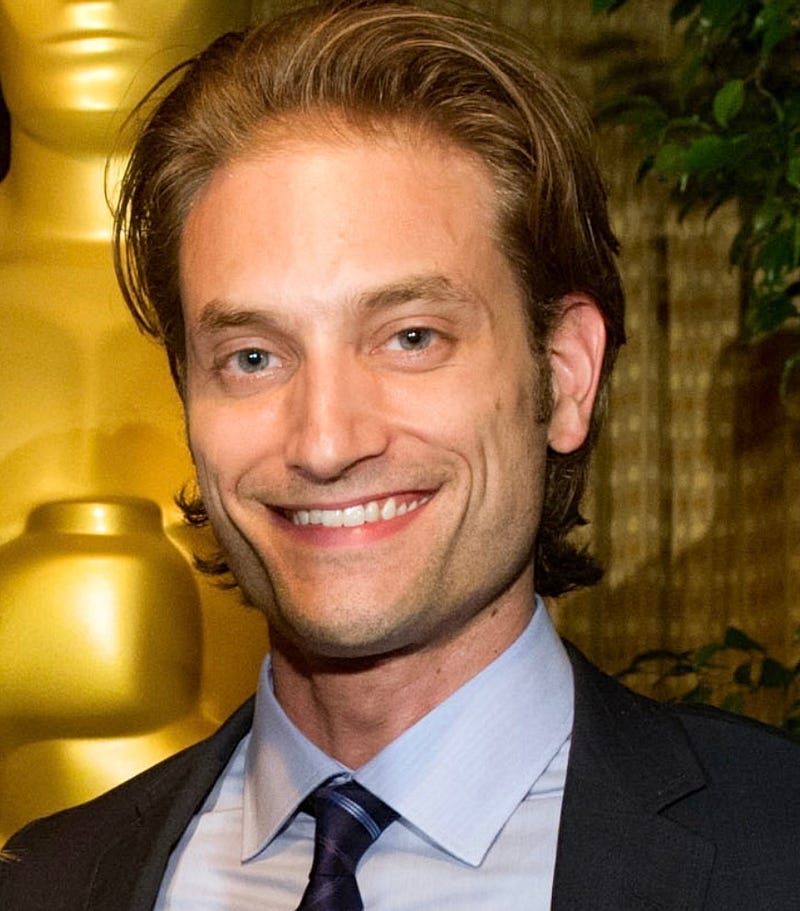
It’s a pretty rare honor for a screenwriter to be the recipient of a Nicholl Fellowship in Screenwriting and be named to the annual Black List in the same year, but that’s what happened to Michael Werwie. His original screenplay “Extremely Wicked, Shockingly Evil, and Vile” not only won the young screenwriter a 2012 Nicholl fellowship, it also landed on that year’s Black List.
That script was produced in 2019 starring Lily Collins and Zac Ephron. Michael followed up with the 2020 movie Lost Girls from his screenplay.
Here is my 2013 interview with Michael in its entirety.
Scott: OK, so first off, I think this is the stuff of legends. You were all of 11 years old when you bought the Syd Field book, “Screenplay: The Foundations of Screenwriting,” is that right?
Michael: Yes, that’s correct.
Scott: When did you become aware of the fact that there are people who actually write movies?
Michael: I was a huge horror movie fan and I believe it was in the back of a Fangoria magazine that I saw ads for Syd Field and Final Draft. I was also making movies with our home camcorder, and at some point I put two and two together and realized that they weren’t just shot sequentially, they were written by somebody. There was actually a book out there that tells you how to write them, and a piece of software that helps you format them. I went out and bought Sid Field, and shortly after that got Final Draft, on floppy disk.
Scott: Were you, at that point, reading screenplays?
Michael: This was pre-internet so I didn’t have access to them but I remember buying the original “Texas Chainsaw Massacre” screenplay through a mail‑order company. I remember reading it and being confused by the archaic format.
Scott: Previously had you been writing or interested in novels or short stories?
Michael: Yeah, I had been writing short stories for a while. In grade school we’d have class assignments to write a Halloween story for the local paper or do a book report in a creative way. Any opportunity to be creative, I took it.
Scott: This is Wisconsin we’re talking about?
Michael: Yeah, born and raised in a suburb of Milwaukee called Whitefish Bay.
Scott: I’m assuming that you were always kind of a movie guy, your family too?
Michael: Yes. My family watched movies all the time.
Scott: I understand that you wrote your first full‑length screenplay when you were 15.
Michael: Yes. I began it when was 15. I think I finished it when I was 17 or so.
Scott: What was it about?
Michael: It was like anybody’s first script. It was about four friends who were hanging out the summer before college. It was a really bad character drama where nothing really happened.
Scott: People kind of standing around, smoking cigarettes, talking about the meaning of life…
Michael: Yeah, exactly.
Scott: You went to USC as an undergrad.
Michael: Yes.
Scott: What was your major there?
Michael: I majored in Business and triple‑minored in Psychology, Spanish, and Film. I always planned to write after I graduated, just chose to study something else that I thought would be more versatile when I graduated.
Scott: As I understand it, you got into doing hedge funds after you graduated.
Michael: I interned while I was in school for a hedge fund and also for Smith Barney. I was interested in investment banking but then realized it didn’t leave me with enough mental energy to be creative at the end of the day and that was always the priority.
Scott: Is that how you segued into a lengthy stint as a bartender?
Michael: Yeah, once I graduated I took a job bartending, and I bartended for nearly 10 years.
Scott: That was in L.A.?
Michael: Yes, West Hollywood. I was at one place for the entire duration of its run, from day one until the last day, called O-Bar. Then that closed and I went to another place not too far away.
Scott: How has bartending fit into your writing schedule?
Michael: Bartending couldn’t have been a more perfect fit. I had my days completely free and I used that time to write. I’d wake up, eat breakfast, and write, and that just became a discipline, to the point where if I skipped it or didn’t have time to do it for whatever reason, it felt strange. I would do that every day, and would also take meetings, if and when I had those (which were few and far between for many, many years). Bartending allowed me to make the most money while working the fewest hours. It was a good balance because I could treat writing like a full‑time job and still pay the bills.
Scott: I understand you’ve written 13 scripts. Were they similar or different genres?
Michael: The first five were all over the place. The fifth was a thriller and the first that got a unanimously positive response. It actually placed in that year’s Nicholl in the top 30, so I was encouraged by that. The next five scripts were various types of thrillers. I took a very business approach and tried to brand myself as a thriller writer, and during that process, I learned a lot about writing in general. So by the time I got to my 10th or 11th script, I just started writing whatever I felt like writing, regardless of genre, and trusted that I had the skill and craft to do it well. So the last few scripts I’ve written were more character‑driven dramas. Now, I don’t worry about genre. I let the story decide that.
Scott: So 13 scripts. At what point in the process of writing all those stories did you start to feel like, “You know what? I’m kind of getting this. I’m understanding this craft of screenwriting”?
Michael: I thought that very early on. It wasn’t necessarily true, but I would say around the fifth script, I thought I knew what I was doing and that I was ready to have career doing it. I had certain external things validating me — placements in the Nicholl and other competitions, occasional meetings with managers. Nothing ever came of those things, but you don’t have the foresight to know that there’s still a lot more to be learned. So nine years ago I thought I was ready to be a professional writer. Now that I look back on what has happened since then, little did I know then I was far from it and had a lot to learn.
Scott: You mentioned in your acceptance speech for the ‘Nicholl” how a friend described the life of a writer as a case of crickets or whiplash. What do you mean by that?
Michael: I think even as a working writer, there are going to be long stretches where you’re working on assignment or working on a spec and there’s not much activity on the business end. There’s not a lot of incoming calls and, just like a struggling writer, you’re kind of off everybody’s radar while you’re at work. Then when you write something that’s good, that’s well‑received, and there’s a flurry of activity, all of a sudden everything’s happening all at once. In my situation, once I won the Nicholl, it was literally overnight. So from a third party’s perspective, it looks like an overnight success, when really, I’ve been working 15, 20 years to get to this point. For the last few months, I’ve been taking meetings nonstop. I’ve taken about 60 meetings in two months so this is definitely my whiplash phase.
Scott: That’s a natural segue to get into the script that has garnered all this attention, “Extremely Wicked, Shockingly Evil and Vile.” It’s a story about the serial killer Ted Bundy, essentially told from his perspective. How did you hit on that idea?
Michael: I did some research in the serial killer arena for a different script I was writing and came across his story. I didn’t really know much about it and made a mental note to go back to it. When I did, I thought the story was too good to pass up. It had been done many times before, but it had never been done from his point-of-view, without any violence in it, and that was what attracted me to the story. Had I written this years ago I probably would have written the slasher version of it, but this was much more interesting to me now.
Scott: That’s a really interesting choice you made in that you really don’t give away whether Bundy is guilty until the very, very end. At what point in the story development process did you make that decision?
Michael: The common thread among everyone who knew him was that he had this facade that led you to believe that there was no possible way for this to be true. It was essentially a con man story. It was a classic unreliable narrator, and once I decided on that, you could have him say pretty much anything. He could defend his innocence the entire script, and the most powerful revelation would be the one time that he admits to it. And remember, the drama is not from his admission of guilt, it’s from his admission of guilt to the person he loves most. That’s something that was partially by design and partially by surprise after having written it and realizing how effective it was. It became a story about a con man who manipulates and seduces the reader just like he did the people in his life.
Scott: You also made another interesting narrative choice, which was to spend a significant amount of time from the perspective of Liz, Ted’s girlfriend. What was the thought process there where you were splitting up the narrative between these two points of view?
Michael: Well, the script is deceptive in that it’s actually her story. The device that structures the script is a letter he’s written to her from jail, which allows us to be put in her point-of-view as he manipulates it. We, like her, are the ones being seduced by Ted. We fall in love with him. We are attracted to his charisma, his intellect, and everybody likes the underdog so everybody sides with the underdog. You have to remember he’s not lying to us. He’s just leaving out portions of the truth. The core of the story is really a dysfunctional relationship, something that anybody can relate to, just in this instance the stakes are dramatically heightened.
Scott: Yes, it’s like she functions as us, as the outsider coming in. I think you mentioned that offers an opportunity for us to feel that sense of seduction, how smart, sly and clever Bundy is.
Michael: It’s a seduction, and it’s a betrayal. At the Keyser Soze moment at the end, your allegiances completely flip from one character to the other, depending on how much knowledge you have going into the script.
Scott: That’s interesting. I lived in Aspen from 1978 to 1980 and Ted Bundy was obviously quite famous on the local scene because of his escapes there from Pitkin County Jail. But you’re saying there are a significant number of people nowadays who really aren’t that familiar with Ted Bundy.
Michael: Oh, absolutely. It’s a generational thing. I would say people my age or younger typically don’t know enough about the story to know who it is going into it, and the twist works great. People older than me typically have at least a vague recollection of it because they lived through it. But luckily the read is not dependent on the twist because the script covers a phase of Bundy’s life that most people don’t know a lot about. The crimes he’s famous for have already happened and we begin with his arrest.
Scott: You mentioned you had read several books, primary sources, people that knew Bundy. How much other research did you do, and how long of a period of time did you spend researching it?
Michael: I would say probably three months reading and watching everything I could get my hands on. There’s a lot you can find online as far as trial video and transcripts and interviews and crime reports. His FBI file has recently been made public which you can get directly off the FBI website, that chronicles a lot of the events. The courthouses have tens of thousands of pages of transcript. Almost every character is a public domain character, and it wasn’t that hard to corroborate different sources because the events have been well-covered in books and media.
Scott: The process of writing the script, how long did that take you? How many drafts?
Michael: I usually do anywhere between two and 10 drafts of each script. It took me maybe three or four months to write the first few drafts. I put it away for almost a year, and then did another pass on it to submit to the Nicholl and that’s what won. I call it my fifth draft.
Scott: What about this story made you think, “You know what? This would make a great movie”? What are the narrative elements that struck you either at the beginning and/or along the way where you said, “I think this can really work as a movie”?
Michael: It’s a movie I would love to see. I didn’t think it would do anything in the marketplace to be perfectly honest. I thought the characters were compelling, I thought there were two really great roles for actors, I thought it would be something for a director to sink her teeth into. But as for its commercial potential or market value, I didn’t have a lot of confidence in it. I was actually pretty surprised as it advanced in each round of the Nicholl. The response has just been unbelievable as far as who’s calling in about it, who’s showing interest, who I’m meeting with — far beyond anything I ever expected. It all began with a character, a tone, and my own obsession.
Scott: Beyond that level of cool narrative elements, marketability, and all that, it really boils down oftentimes to what’s the emotional resonance a writer has for the content in making a decision to go forward. What was that for you? What about this story on an emotional or psychological level really appealed to you?
Michael: I think that’s an important point. For me, the lesson I learned writing this was the importance to being connected to and passionate about the material. In this script in particular, I think there are a lot of relatable elements in that it portrays a dysfunctional relationship. At its core, I think anyone can relate to the fundamental issues between Ted and Liz.
Scott: How about the title, where did you come up with that?
Michael: The title comes from one of the verdicts. I thought it was so bold and absurd given the tone of 75 percent of the script, and then it becomes less ironic and more literal as the story concludes, and that was very interesting to me.
Scott: What’s the status of the script at this point?
Michael: Michael Costigan is producing and we’re currently out to directors.
Scott: Let’s get into some of the fun moments here. What were the circumstances when you learned you won the Nicholl?
Michael: I was actually out getting coffee trying to distract myself from thinking about it, and as I was walking home, a friend called me from Germany asking about the status of the Nicholl. I told her I didn’t know and that’s when I got a call on the other line which I recognized as the Academy number. I clicked over and it was Greg Beal calling to tell me I won. I was in shock. I didn’t really know what to say and it took a little time for it to set in. After entering for ten years, I got a little emotional.
Scott: How soon did the emails and phone calls start happening for you?
Michael: [laughs] Well, it had already been in full force the whole month leading up to that phone call. Really everything started happening after the finalist announcement went out. It was about a month between the finalist announcement and the Fellow announcement, and I was already taking meetings nonstop. The meetings only became higher profile once that call came through.
Scott: One thing I was struck by in talking with some of the Nicholl winners this year is there’s almost a sense of camaraderie amongst you. It’s like everybody seems to have gotten along very well in meeting each other and supporting each other. Is that a pretty accurate assessment?
Michael: Absolutely. I think all of us were honored and humbled to be in this position, and seven of the writers were from out of town. We had a whole week of events and bonded through it all because it’s something very few people get to share.
Scott: You have a script requirement as part of the deal with the Nicholl. Do you have something planned for that already in mind?
Michael: I have a couple ideas. We had to briefly pitch them in a letter to the Nicholl committee prior to the Fellow announcement. I’m currently breaking the stories for each.
Scott: You signed with UTA and Evolution Entertainment. Is that right?
Michael: I had already been with Evolution for about two years in kind of a hip pocket arrangement. My (now) manager had read an earlier script of mine that was a semifinalist in a previous Nicholl, loved the voice, and made himself available to me along the way. Once the Nicholl madness began, it became more of an official relationship, we added a second manager, and went from talking every few months to talking multiple times a day.
Scott: And UTA?
Michael: I signed with UTA after the finalist announcement but before the Fellow announcement. I met with a few agencies, solicited a lot of opinions, and ultimately went with who I felt would be the best fit. I have an awesome team.
Scott: So you’ve been going around whirlwind of meetings. How has that experience been for you, and do you feel like you’ve been prepared for that, sitting in those rooms and talking story with people in Hollywood?
Michael: Working for as many years as I have to get to this point, I feel comfortable talking about story in any kind of situation. As far as the generals, you sit in a room, drink free water, and receive praise for your work. It’s great. I think where the learning curve’s going to occur will be in the pitch meetings. Going in the room and selling a take on an idea is a whole other skill that I’m looking forward to developing.
Scott: Let’s talk about another piece of happy news for you when you found out you made the 2012 Black List.
Michael: The Black List has always been a dream of mine just like the Nicholl, and there was a really good feeling among my reps and me in the weeks leading up to it because the reception of the script was just so phenomenal. We had so many calls coming in that we were in the fortunate position of being selective of the meetings because there just weren’t enough hours in the day. At that point we felt good about the Black List, but the big question was where it would land. I was on the phone with one of my managers as it was being announced on Twitter and we were both in suspense. It was all very exciting.
Scott: Let’s shift to some craft questions. How do you come up with story ideas?
Michael: I get asked that a lot, and I never know how to answer. I don’t know. I think the more observational you can be in the world, the more open you’ll be to ideas in whatever form. I often put ideas together in the shower, or driving, or random moments when I least expect it. I think when an idea has story potential, it’s something that sticks with you. I’ll often carry it in my head, sometimes for a few years before I actually get to breaking a full story.
Scott: How important do you think story concept is to the overall viability or marketability or success of a screenplay?
Michael: I think it’s hugely important but I don’t think it’s the only thing that’s important. The reason I say that is because the two scripts that have done the most for my career both began as character concepts. I didn’t really have a great sense of the plot. The one in particular that got me my manager, I must have done five or six page one rewrites before I had a working plot. I ended up doing about 10 drafts of that script, but I had written probably five hundred original pages before I knew exactly what it was and where it was going. It’s always better if you have a strong concept that invokes a very clear plot and character in the pitch alone, but it’s not the only thing that’s important.
Scott: That’s an interesting conjoining of words ‑ character concept. I’d never quite heard that, but as soon as you said it, I was like, “Yeah, that makes sense.” You have a strong character at the center of the story and the particulars of their narrative imply a story.
Michael: Yeah, I guess if you want an example you could look at Jason Bourne. He’s a spy with amnesia. If you start with just that concept, that character concept, you could craft any kind of story around it. Look at Dexter or Walter White. Forensic serial killer, meth cooking chemistry teacher with cancer. TV is rich with examples.
Scott: As long as we’re talking about characters, how do you go about developing them? Are there specific tips or tools that you find you use regularly in developing characters?
Michael: I wish I had a standardized process for developing characters, but I don’t. Every project is different. I think they just kind of show themselves. Sometimes it takes some time of just outlining the story before I get a better grasp on who they are and what they want. It’s always is a hard process to figure that out. I don’t have any tricks or tools to make that easier, unfortunately.
Scott: So is it safe to say that you have kind of an organic process in terms of how you approach developing a script, as opposed to a specific step‑by‑step thing that you develop over time?
Michael: I’ve been trying to develop a standardized approach, but every project is different. I’m a big fan of outlining even though I hate doing it. I say that even though I didn’t outline my Nicholl script at all, because in that case, there was already a chronology of events and I knew I was going to tell it linearly. I just had to figure out the act breaks. But normally I think outlines are key, at least a loose, general one. It doesn’t have to be 50 pages, but I think it’s helpful to know the signposts along the way. It’s very important once you get into the business of pitching, because if you expect the studio to pay you a lot of money to write a script for them, they’re going to want to see the architecture first.
Scott: So in terms of prep writing before you type FADE IN, all those different components that a writer can engage in — brainstorming, character development, plotting, research, outline. Which of aspects of prep do you tend to devote most time and focus to?
Michael: Probably plotting. That’s a tricky one, because it’s a function of character. You have to have a grasp on the characters because the characters will create the plot. I like to start with a log line, and I’ll work for a while to get it into the best shape possible, so it actually conveys a complete story. I’ll break that into three sentences which represent the first, second, and third acts, basically a log line for each act. Then I’ll break each act into a beginning, middle, and end, and just keep breaking it down until I get to the actual scenes. I keep breaking everything down into their smaller component parts, to the point where you can structure the beginning, middle, and end of the scenes themselves. That way you can see the dramatic rise and fall of the action on a micro level and a macro level.
Scott: Let’s shift the dialogue because I was impressed with that aspect of your script, “Extremely Wicked, Shockingly Evil and Vile.” There’s that phrase, “great ear for dialogue”. In your opinion, is that something a writer is born with, or can it be developed, and if so, how does a writer go about developing the ability to write dialogue?
Michael: In my case it’s developed because I can look back at my early work and see the shift. I don’t know how it happens. I know that at one point I was watching a lot of “West Wing,” and so my dialogue started to sound like Aaron Sorkin. Then it was Tennessee Williams. It’s kind of influenced by whatever you’re obsessed with at the time, I think. Now, I like to think I have a better ear for it, but it’s probably developed through practice. Like so many elements of the craft, it’s important to practice, practice, practice. The more you do it, the more you internalize it on a subconscious level and you don’t have to think about it too much anymore. It just comes out, and you’re not even aware that you’re employing certain rules of the craft.
Scott: How about bartending? Has that been a helpful experience in terms of your ability to write authentic‑sounding dialogue?
Michael: I’m sure it has. I don’t think about it specifically like that, but you’re always absorbing things. I constantly find myself writing things down that I overhear, or things that I like the sound of, or the rhythm of a sentence. I don’t usually go back and use those things, but it does keep me the habit of keeping an ear open to anything that sounds good.
Scott: How about theme? How do you work with theme?
Michael: I’ll probably get crucified for saying this, but I don’t really think about theme anymore. In my early scripts I put a lot of thought and a lot of energy into crafting and shaping theme, weaving it through the story to the point where it got heavy‑handed and preachy. I just stopped thinking about it and started trusting that it will reveal itself at some point along the way. I trust that it’s going to naturally be within every character and every scene and running through the spine of the script, because it’s this mysterious, intangible element that’s driving the writing already.
So I don’t put too much thought into it, at least in the early stages of a script. Once I finish a script, I’ll have read it through many, many times while I’ve been working on it, and certain things will start to emerge and certain ideas resonate, and so I’ll eventually develop or deepen those ideas. Other ideas that seem like they stray from the spine of the story, I’ll take out.
Scott: What’s your actual writing process?
Michael: I try to write every day. I love listening to music and I like being out of my apartment, among people, so there are a few different places I’ll go. I rarely wake up and feel like writing. I know that sounds horrible, but I’ve made it a discipline, where I sit down and do it, and trust that over a period of time it’s going to add up to something, but I would say that if somebody was watching me while I was working, it wouldn’t look like I was actually writing. So much of it is thinking and being frustrated and staring at the wall.
Scott: Do you have any screenwriting principles that you hold near and dear?
Michael: I think two things. When you’re first breaking a story and when you’re doing that first pass, it’s important to not really censor yourself too much or judge yourself or the work. It’s important to just get it out and get to the end. Now that’s much easier said than done, and it’s something that I still struggle with because I’m a perfectionist and I want to write it perfectly the first time through, but that’s never how it works. On the other hand, I think the analytical part of writing is just as important, if not more important. I think rewriting is more important than first‑draft writing and that’s the place where I really excel. So if I can force myself to crank out a first draft, it becomes a lot easier for me to go back and assess it in an analytical way.
Scott: Finally, you’ve won the “Nicholl.” You’ve gotten on the “Black List.” You’re right on the front end of hopefully a long career as a screenwriter. You’ve made that transition from being outside to inside. What one piece of advice could you offer to aspiring screenwriters?
Michael: I would advise anybody who’s serious about it to persevere, and be in it for the long haul, because I speak from experience. It takes a lot of work to get there, and don’t be afraid if doubt starts to creep in, because it certainly does, and if it doesn’t I think you’re fooling yourself. So just be prepared to invest your time and energy into a very, very long process. And do it out of love.
For my interviews with dozens of other Black List writers, go here.
For my interviews with every Nicholl winner since 2012, go here.