Go Into The Story Interview: Michael Kujak
My conversation with the 2021 Black List writer.
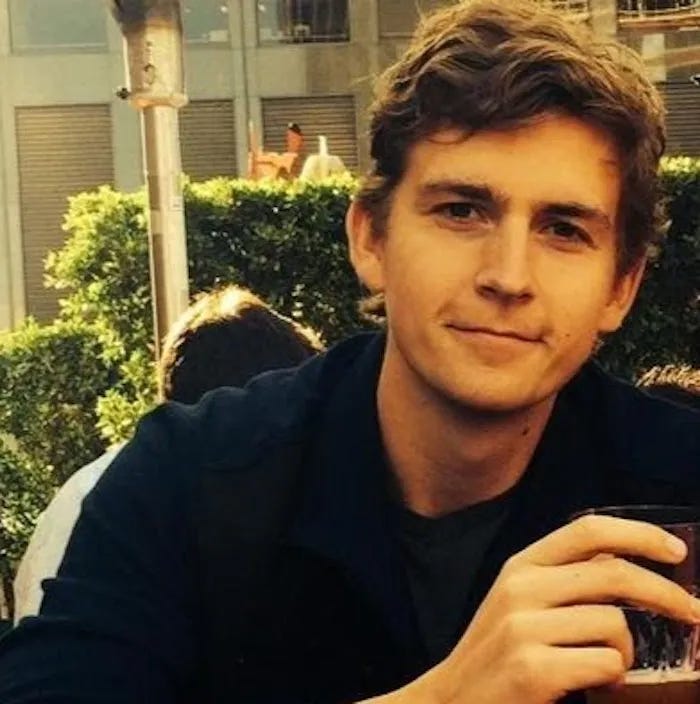
My conversation with the 2021 Black List writer.
Michael Kujak wrote the original screenplay “Follow” which landed on the 2021 Black List. I had the opportunity to chat with Mike about his creative background, his script, the craft of screenwriting, and what making the annual Black List has meant to him.
Scott Myers: First off, congratulations for making the 2021 Black List.
Michael Kujak: Thank you so much.
Scott: Let’s learn more about your background here. Where’d you grow up? How did you find your way into writing as an interest?
Michael: I grew up in Bloomington, Minnesota, which is a suburb that’s just south of Minneapolis. We’re famous for Mall of America, if you’ve ever heard about that big monstrosity of a mall out there. I grew up there and got into writing in high school.
I had one of those magical “Dead Poets Society” high school teachers, that was just a great influence on me. I found her in 10th grade. She had a creative writing class. I got really into that and basically took all her classes after that.
She helped guide me towards writing and didn’t even see that I was necessarily talented or anything like that. She just saw that I was super into it and took it more seriously than the other kids. That’s how I first started to get into writing in general.
I also didn’t ever think of screenwriting or writing as a career. I don’t know if that’s growing up in the Midwest, or just everybody, but I was a responsible, practical kid. I never thought I would try to get into any of this. That was something crazy people did, to be an astronaut or something like that. It was just a wacky job.
Then I went to school for journalism. I thought, “If I can’t write then that’s the more responsible options.” We had a newspaper in Minnesota, maybe I could do that. I went to journalism school at University of Wisconsin, got into the newspaper there.
It’s a good major for people who want to be into screenwriting because it teaches you to write on deadline and it teaches you to not be too delicate with your writing. You’ve got to write a few thousand words every single night before midnight and it teaches you a lot of good writing habits.
Scott: You stand in the long tradition of journalists who became screenwriters, most notably Ben Hecht, the most prolific screenwriter of all time. Hitting deadlines and not being precious with words, those just slot right into being a screenwriter, right?
Michael: Totally. Just having that work ethic and being able to write out, do it every day, fit it in, and especially for aspiring screenwriters being able to write in the morning and late at night, on the weekends, being able to write at any time.
That’s been helpful as well because I’ve held a 9:00 to 5:00 day job for all the years I’ve been in Los Angeles, so being able to squeeze in the writing whenever I can, or at weird times during your schedule is also a helpful skill.
I spent all four years writing at the school newspaper, and it was…I don’t even know if they have them in colleges anymore. This was a daily newspaper. We put one out six days a week, we didn’t on Sunday, but it was like get up before 6:00 AM. I didn’t get home until midnight when we went to print.
It was pretty intense [laughs] for four years and by the end of school, I was pretty burnt out from journalism. I felt like a haggard old reporter, and newspapers were dying — this was like 2013 — or at least declining significantly.
Once I graduated, I had a part-time job. I was just living out the lease in my apartment before moving back home after college and was just bored at this part-time job. That’s when I first picked up a notebook and just started doodling out the outlines for what were spec scripts. I didn’t even know you called them spec scripts then.
So I started outlining episodes of these existing TV shows. Then before or after work, literally because I was used to being a workaholic from the newspaper and now having nothing to do, I would just type them up before after my part-time job.
Then by the end of summer, when I moved back home, I had five or six spec scripts of just existing TV shows. Literally hadn’t shown them to anyone. Just had them buried in a drawer, not talking about them.
Then when I moved home, I was drunk at a bar with my best friend, Rachel Scanlon. She admitted to me that she was thinking about moving out to Los Angeles and trying to be a stand-up comedian, which I knew she had always wanted to do. Again, I just didn’t think that was something that responsible people do.
But when she admitted it, I was like, “Well, I actually have these scripts in a drawer that I haven’t shown anyone. What if we saved up money over a few months and moved out there together?”
Somehow, we had a drunken handshake deal that night that ended up working out. We saved up $5,000 over five months. Then on New Year’s Day of 2014, moved out to LA.
Scott: Score one for alcohol.
[laughter]
Michael: Green, creative, delusional, young millennial out to Las Angeles. Very broken record.
Scott: You’re writing specs. Do you remember some of the TV shows you wrote the specs on?
Michael: Back then, I did a “New Girl” first. I did a high school reunion episode of New Girl. Can you imagine doing a high school reunion? It’s never been done before in the history of television.
[laughter]
Scott: Never been done before.
Michael: Never. That’s all I knew back then, I was in high school. I did a high school reunion. I didn’t even know what it was like to be in my 20s, because I was barely out of college. I did a “Bob’s Burgers.” I did an “Archer.” Just having fun writing them. It was a good way to get into it.
Scott: How did you learn screenwriting format and theory?
Michael: Over that summer, it was podcasts, looking stuff up online. You could Google screenplays. Google would have this archive of pilots that I remember looking up, and sample episodes of TV scripts.
Once I got into it a little bit more, then I started discovering resources like your blog. “Go Into The Story”, which was huge for me. There are tons of screenwriting books and screenwriting podcasts but to have a daily newsletter that you can wake up to, that was big for me.
Having a little nugget every morning, a piece of dialogue, inspirational advice from a great screenwriter.
Scott: [laughs] Wow. That makes me feel great, honestly. So you’re out in LA. By the way, how’s Rachel doing with her comedy career? Has that taken off for her, I hope?
Michael: She’s doing great. She’s much more talented than I am. She is flourishing. They’ve got a podcast. They travel across the country. It’s called “More Than Friends with Ray and Kenz.” They’re two LGBT female stand-up comics. They do a bunch of shows. They’re hilarious.
We got signed by our agencies two weeks apart. She got signed by APA. Then two weeks later is when I got signed by William Morris. That was seven and a half years in. That’s the answer, if someone asks how long does it take to get in? It’s seven and a half years.
Scott: It’s interesting that you were writing a bunch of TV comedy scripts. The script you wrote, “Follow,” which made the 2021 Black List, while it’s got some humor in it, it doesn’t fall into that genre.
Michael: Those, to me, were less intimidating because they were only 30 pages. Later on, you learn that comedy is the hardest one. Writing a 30-page comedy pilot is harder than anything, but when you’re just starting out, you’re like, “Well, it’s only 30. So, I guess I’ll try that.”
Once, I had been writing for years and found my voice a little bit more. It tends to be pulled towards either historical dramas or the horror-thriller stuff, which is more in the vein of what “Follow” is.
Scott: That’s a nice segue to your script “Follow.” Here’s a plot summary:
“When a social media influencer meets a fan at a meet and greet, she’s so taken with her cleverness — that’s the fan — and vulnerability that she, the influencer, invites the fan to intern with her for the summer. At first, they’re an unstoppable team, but soon the influencer is forced to wonder who she has led into her life.”
What was the inspiration for “Follow”?
Michael: This idea came out of my friendship with Rachel. She was a comedian out here. She was doing standup, but she started doing digital comedy videos with a lot of influencers out here. When we moved out here, we didn’t know what a YouTube influencer was.
I would watch YouTube to watch sports highlights or bloopers from The Office. I wasn’t following influencers on YouTube, but when we moved down here, we met kids that were nineteen years old, and they had a million dollars, and they lived in a mansion in the Hills.
We were like, “Oh, what is this world?” and so she started doing videos with them. I got invited to a party out there, and we were one of the first people to arrive.
We showed up at this influencer’s house in the Hills, and there was a teenage girl that was there. We were like, “Oh, that’s a little weird,” because this is an adult LA hipster party, and there’s this teenager there.
Me and Rachel went up to her and we were just making small talk with her, and she had won a contest to hang out with her favorite influencer for the day, who was this girl whose house we were at. You could tell the girl was a little bit sad and a little bit scared at being at this adult party.
The influencer had ignored her because she’s trying to host this party, and so we just made small talk with her until her Uber showed up to take her to the airport. She was a sweet girl. She was from Ohio, and she played lacrosse.
When she left, I couldn’t get her out of my head because I could tell she was disappointed with what she wanted that day to be, or what that relationship was going to be with this influencer that she was a huge fan of.
That stuck in my head as a relationship of something I wanted to do a story about. Later on, I thought mixing that relationship in with the classic format from stalker thrillers of the late ’80s and early ’90s, like Single White Female or Basic Instinct to Misery, there’s a bunch.
Just that relationship in that basic thriller format from 20 or 30 years ago was something I wanted to try. When I signed with my manager, John, he looked over the ideas that I had in this list of them, and that one stuck out to him. This one, he wanted to develop with me.
Scott: When I read your script, I had noted some of the same movie associations: Misery, Single White Female, Fatal Attraction. There was an ’81 film called The Fan, that stars Lauren Bacall, and then, of course, All About Eve.
You have a quote in there from your Protagonist, where she says, “You ask kids today what they want to be, and they don’t say astronaut, athlete, or movie star. They say they want to be an influencer.”
I remember reading a poll. It was in some newspaper or something, where it said that the number one thing above and beyond anything else that the kids aspire to is to be famous. This does seem to hit it on the target.
I’m assuming that made it appeal to you like, “Well, I’m thinking about something that can be relevant and have an audience.”
Michael: It did fit pretty naturally to me because a lot of these stalker thrillers, culturally, were darker fairytales or warnings, the danger of going too far…
Scott: Morality tales.
Michael: Morality tales, exactly. When I moved out here and I got used to that influencer culture and saw that girl at that party, I couldn’t get those ideas out of my head. What I later learned to be called parasocial relationships, or these relationships that we have with people online. We know them, but they don’t know us. Who we follow and who follows us.
It was just intriguing to me to explore those ideas of an artist’s relationship to their fans, an artist’s relationship to the emerging technology, and looking at how to find a balance there.
A creator’s relationship to their fan base can get toxic quickly if the entire way you make money is to monetize these young kids’ eyeballs. That’s essentially what you’re doing if you want to be a successful influencer and pay the bills.
I wanted Follow to be a little bit more of a cautionary fairy tale to these young kids who want to do this great thing, which is inspiring other people with their YouTube videos on whatever their craft or their passion is. I didn’t want to completely demonize it. I just wanted to show how parasocial relationships can be quite complicated.
Scott: It’s a slippery slope for both the influencer and the fan because it’s a two-way street. They need each other. The two main characters, there’s Hannah who’s the influencer and there’s Millie who is a 15-year-old girl, who is the fan. Who came first in your story-crafting process?
Michael: They came together. Hannah was based on an influencer that I knew, a general lifestyle influencer. I had her in my mind pretty early on. Millie took a little bit longer to find, but it was a really interesting one to write once I had her down.
One thing that separates this script a little bit from the classic stalker thrillers is that before, in the past, the antagonists are very clearly the antagonists. They’re crazy psychopaths, and Millie is that but we as the audience also, hopefully, empathize with her a bit more.
Like you said, it’s that two-way street. She’s younger. She’s more impressionable, and she’s doing things for more interesting reasons than the classic stalker thrillers, where they want to become the other person that they’re obsessed with. They want to date the other person they’re obsessed with.
Millie believes in what Hannah’s doing and what her channel is about. She was lonely. It saved her life when she was younger. She believes in what Hannah’s preaching, even more than Hannah does. Hannah’s the person who started this whole little community. She knows how it’s fake, how it’s produced.
Millie truly believes in what Hannah is preaching. That makes her devout and sincere in this compelling way.
Scott: It’s pretty easy to slide into Millie’s worldview, and even start to see the…Not that she is the Protagonist. She’s not. To see the world as if through her eyes. She’s bullied. She lives in relative wealth. Her parents jet off to Aspen, if that’s to be believed. We don’t know whether that’s true or not. For all we know, they could be buried in the backyard somewhere.
I always tell my students, you’ve got to find some point of empathy for the nemesis. You don’t necessarily need to sympathize with them, but you have to have some point of emotional connection. You did a really good job with that Millie character.
You feel like this person, Hannah, is important to her, that she has been bullied, that she is a misfit and has found meaning. Let me ask you a question.
Michael: Sure.
Scott: You’ve got these fans of Hannah known as “Fannahs.” Did you come up with Hannah and then hit on the Fannah thing? That’s pretty clever.
Michael: No. I came up with that pretty quick as just a rhyme. I find it funny that all these influencer communities, they eventually…bigger artists, too. Everyone eventually gives their audience some type of name, or their fans some type of nickname. It’s a great way to brand who your audience is. It gives them a sense of identity.
Like Beyoncé and the Beehive. There’s a million of them. Tying that audience together is a smart thing to do.
It’s also very good for marketing and all that, but that was, again, just how it can be a very slippery slope that you’re marketing yourself as these people’s friends, someone you tell something intimate details of your life. Yet, it’s all just to monetize it in a very hyper-focused version of reality television.
Scott: I have this theory about a story that, fundamentally, all stories ask a question of key characters, and in particular, the Protagonist, “Who am I?” Like self-identity. With everything else going on, that question exists at the core of the character’s psychological journey.
With your script “Follow,” you’ve got this personal identification so closely aligned with a social media presence, the one million, the two million, the five million subscribers, in that sense of external validation. One of the reasons Millie is sympathetic is that she keeps bringing Hannah back to “What about the old days when you first got started? It seems like you were more honest there.”
Were you thinking about this idea of self-identity, external validation? Were those some themes that were running through your mind when you were working on this?
Michael: Absolutely. Especially, Hannah’s identity and how it’s tied to her fans was definitely a big part of it. It’s very hard to separate yourself from your community if that’s where you’re getting all your validation and love. All these young girls in Hannah’s case, all of them are looking up to her. They see her a certain way.
To separate yourself from that is a really, really difficult thing to do. Especially when you’re sharing intimate details of your life. A breakup that you have with the boyfriend, that’s now a very big storyline in the TV show that is your life. It’s also just a breakup that you actually have to deal with.
It becomes very hard to separate your job from your personal life when you’ve used your personal life to monetize it, which ties into classic views of celebrity, but it’s just even more hyper-focused in these new technologies.
Scott: Your Nemesis character, technically Millie, she goes from archetypally, a Mentor, a Trickster, to Nemesis over the course of time. The quote that Hannah has with her fans, she says, “I love all you guys so much. Without you, there’s no channel. Just remember to always be yourself.”
She says that, but it’s Millie, as a Mentor, that keeps bringing her back to that point, right?
Michael: Yeah. I liked those types of generic, self-motivational, self-help type of advice statements that influencers will wield. They so often wouldn’t follow their own advice.
It would be these generic things that they would find on Instagram, they would repeat it. Yet who they are is completely being dictated by their own audience, and what is best for the channel, and growing the channel and driving the numbers in the right direction.
Scott: In fact, you’ve got another one that has its own little subplot, where she says, “Hannah, ignore the haters. Follow your dreams. Failure is not an option.” It sounds like a self-help guru type thing. It’s innocent in a way, and yet Millie grabs onto it and does her own thing with it. Maybe you could talk to that a bit.
Michael: I got a little bit of that from Nightcrawler. Self-help advice is perfect for a psychopathic or more extreme personality because they don’t have to see the contradictions or doubt as much. “Failure is not an option.” That’s a motivational thing you might see on a gym poster but if you take it literally it would get dark real fast.
Millie, who is a psychopath, takes it to its more natural extremes, where it’s like, “We’re going to grow this thing no matter what for the greater good of all the people that you’re going to help on your channel.”
I like that almost religious angle for being a prophet for this personality.
Scott: Yes. She does have a religious fervor about this for Hannah. Let’s talk about Millie. Here’s how you introduce her.
“A small, shy Fannah, Millie Barnes, 15, steps forward from the line, and rushes up to Hannah. Hannah takes the girl in for a beat. She’s not like the other Fannahs, copying Hannah’s look. Millie has long, unkempt hair, horn-rimmed glasses, and sports a private school uniform.”
Where does she begin this journey with Millie? How would you describe her personality at the beginning of the story?
Michael: I think of that meeting, where that scene takes place that you described, it’s very much a fucked up meet-cute moment from out of a dark Rom Com. It’s these two people who were almost circling each other. They had never met in person, but they were very much a part of each other’s world.
Both of them are pretty lost and isolated when the story begins. With Millie, she’s coming of age, she’s in puberty, she’s in middle school. It should be when she’s making those close friendships that carry her through the rest of her adolescence. Instead, she’s invested her emotional self in these online communities, and specifically, the Fannah community.
She is just way out there. Much like Hannah, she has no one else in her life besides this community. When she finally reaches out to Hannah, we leave it a little ambiguous as to how much of what Millie is doing is calculated in the beginning, versus how much is happenstance. It’s left to the viewer’s imagination.
I found both the girls an interesting mirror of each other, where they’ve both, in their pursuits, basically isolated themselves. That makes them perfect for each other. When they meet, Millie becomes a personification of Hannah’s audience.
The audience has manifested itself into a creature that is called Millie. Millie can then help her in all the things she wants to accomplish, but then also, indulges all the more toxic aspects of an influencer’s relationship with their community.
Scott: That scene we were talking about happens on page 12. It’s almost like a call to adventure or inciting incident in a way, the intersection of these two characters. You’re planting the seed. It’s innocent enough.
Let’s talk about this writing challenge: about how much you give away, teasing that out, and building the tension. I’m imagining that was a pretty significant part of the process for you in crafting the story.
Michael: Yeah. That was a big thing we addressed through several rewrites as we continue to develop it with 21 Laps, the production company. It’s still something we go back to. It’s a very fun but a very tricky game of figuring out what to reveal about the two characters. What do we share with the audience? What does Hannah know? What does Millie know?
Finding that balance about how they reveal themselves to each other is a really delicate balance. In earlier drafts, we had Millie go crazy earlier. We thought, “It’s a stalker thriller. That’s what people are here for.”
Then, in later drafts, we decided to scale it back a little bit in the first half of the script to let it become a little bit more of a a slow burn. In the way the script exists now, you get to invest yourself…There’s not even a ton of horror-thriller elements in that first half.
It’s very much this show business, coming of age drama, getting to know these two girls, and falling into their relationship. When we flip the switch, and it starts to enter that horror-thriller storyline, hopefully you’re invested in these girls enough that it becomes a little bit more dramatic, and a little bit more terrifying.
Scott: It’s done quite well. There is that edge. Millie does seem to know an awful lot about Hannah. That’s something that’s brought up. Then you also mentioned an influencer whose death happened three years ago in rather mysterious circumstances. That elevates the tension.
So let’s talk about that influencer’s death. I was quite interested with this. The 1600 Vine Street building, that’s actually a thing.
Michael: I went and walked it, actually. I went down to Hollywood. I walked around the apartments as much as you can. I had read an article about that community of all those influencers living together. Almost a little incubator of young people being able to market with each other. Obviously, it became this prestige place to live.
Scott: I was wondering how much research you did. Then I thought, “Well, wait a minute, since these people are all online personalities, you probably don’t have to leave much beyond just getting on your computer and seeing people do their thing.”
Michael: It was weird background research. I would pick an influencer. I would go back all the way in the beginning of their channel.. It’s crazy to see what starts as videos we would all make as a kid. It is two teenagers in a driveway, hula hooping, hanging out. Kids messing around, kids at sleepovers, kids dancing, doing karaoke in their bedroom.
Slowly, you start to see the counts go up a little bit, a little bit. They start to get a little bit more attention. Everything starts to get a little bit more produced. The titles get sharper, the ideas get sharper.
You see it morph into this professional product that is completely different than what it started out as. The amount of detail that you can get from these people’s lives is pretty stunning. I felt like a creep doing some of this research, because you learn so much about these people from their channel.
Scott: That’s what drives the thing, in part, is the fact that they do reveal so much.
Michael: Sure.
Scott: I’m always driving home this point to my students that movies and TV are primarily visual media. I want to talk to you about one particular visual in your script, quite an image. Hannah is at Vlogcon, which is like Comic-Con for vloggers. She’s in the hotel room with Millie.
The image starts on the roof of this hotel. Then we cut into the hotel room. There’s a “yelp,” followed by, “A dark shape passes the balcony window behind them. Cash drifting down past the window like snow fall.” It’s surreal. I’m curious, do you remember when you had that idea, it’s such a metaphor for everything that this thing’s about.
Michael: We had it very early on. That image that you’re describing was literally the teaser at certain points in the script, because it’s such a creepy image. I had that early on. The character that that moment is built around is based on a very popular influencer or personality that we don’t have to get into. That image was very early on, and something I always wanted in the script.
Scott: You mentioned the teaser. I want to talk to you about some of the choices you made as a writer here. One of them is that you begin the story like Sunset Boulevard or Double Indemnity. You begin the story in the present: Hannah is bound, clearly being held hostage. Talking to someone off-screen, but we don’t know who. Essentially, what you’re telling is an extended flashback. What was the thinking there for taking that approach to starting the story that way?
Michael: It can be a very cliché way to start a thriller, I know. But we really wanted to give the audience a little taste of something so that we could afford a slower burn in the first act. There’s other stalker movies that you know the person’s batshit crazy by page 10. I didn’t want to do that. I wanted people to empathize with Millie and build her up.
Scott: When Billy Wilder does it, you’re pretty much in safe territory, as long as you do it well. I thought, too, you’re dealing with not only development people, but potential audience members who are sophisticated, so with the opening you have in the script, you start thinking, “Well, wait a minute, maybe Millie isn’t the person that Hannah’s talking to in the opening. It might have been one of the sisters, or it may have been this or that character.” You plant some potential red herrings through the story before we really zero in on Millie. Was that intentional?
Michael: I wanted the audience to be confused by the teaser as much as they were frightened by. It does pay off at the ending. I don’t want to spoil anything but in the opener, you’re not even sure how much Hannah is acting.
You’re not sure if she’s being sincere, or if she’s being held at gunpoint or hostage, or if it’s all an act. Which is a question that repeats throughout all the videos that she shoots. How sincere is she being in this moment? How much of herself is she really showing?
Scott: She’s at Vlogcon. She’s being interviewed. She comes up with this bulimia thing, a confession of sorts to a big audience. Part of me was like, “She just made that up.”
Michael: Whether she made it up or not, the lack of hesitancy to monetize your personal trauma…There’s such a short road between having these traumas that happen in everyone’s life and being able to talk about them. All that’s great.
Then when you see it be accepted by the culture, how quickly someone will monetize a trauma that may or may not have happened to them. It may have happened in a lesser way, but then they amplify it. How easily she’s able to turn that into a moment, or a viral moment for the audience, and for the video later on.
Scott: I want to talk to you about another choice that you made as a writer. The perspective of the story, the point of narrative attack in virtually every scene is Hannah’s POV. Then, later on, there are a couple of moments where it switches to Millie. There’s a scene where she’s listening in on Hannah talking to her friend, Sarah. Where basically, Sarah says, “You got to cut this thing off,” meaning get rid of Millie. We’re experiencing that conversation, but from Mille’s perspective as she eavesdropping on the call.
Then there’s another one where she takes a phone call. They’re in some pitch meeting for a product. She said, “I’ll get that call.” It’s from her manager, Todd. I’m wondering whether that…First of all, whether you were even thinking about it. You were like, “OK, I’m going to have these moments where we’re seeing these scenes from Millie’s perspective.”
Or were you feeling like, “We’ve now gone far enough along in this story, we pretty much know where Millie’s head is at. I’m going to allow the audience to track with her what’s going on in the story”? Do you understand what I’m getting at there?
Michael: Totally. We had to play with it a lot, in terms of when to reveal it, and how much to reveal at different points. You watch something like Single White Female, and you break away from the protagonist’s POV almost immediately.
You see the stalker. She’s in her apartment. She’s got a voicemail. She deletes the voicemail. Right there, you know this person’s up to no good. We had earlier versions of the scripts where we revealed it on page 15, 20, or 25, those little moments into Millie.
But I wanted to keep us just in Hannah’s POV for at least half the script, so that we’re seeing Millie through her eyes before we started to break out of Hannah’s perspective a little bit.
By the time you hit that halfway point, and messed up shit starts happening, it’s almost too late now. Hopefully, the audience fell for Millie in the same way that Hannah has, in a way.
Scott: I thought it was an intentional move on your part. I just wanted to track the thinking on that. I don’t want to give away the ending. It’s quite dramatic. Did you always have that finale in mind?
Michael: Yeah. I did have that finale from pretty early on. We were building to that. There’s other stalker thrillers that it is a tribute to. Rupert Pupkin from King of Comedy and stuff.
I always wanted to build up to a big finale built around the more delusional fantasies parts of Millie to manifest itself in something physical at the end. It gets pretty messed up.
Scott: I think it fits. This is about social media and what a person’s real life is like in that. It blurs those layers. It reminds me of a moment in the movie Adaptation, where the screenwriting guru Robert McKee tells the screenwriter character Charlie Kaufman, I’ll tell you a secret. The last act makes a film. Wow them in the end, and you got a hit.” Your script has that feel, like, “OK, man, we’re going big time here with this finale.” Did you have that ending in mind all along, or was that something that you’ve played around with?
Michael: We did play around with some different endings for it. Again, through the writing process I feel for aspects of Millie’s personality. I wanted her, one, to stay sincere throughout it at all. Part of me, without spoiling anything, wanted her to win in a certain way, or at least for her ideology to win in a certain way.
While the audience can get mad at a lot of the stuff that Hannah does, “Oh, my God, how could she fall for all this?” I wanted it to be sincere that she would make the choice that she makes at the end of the day, even though it might seem crazy to people.
I also didn’t want to write a movie that was…the message that was technology is bad or cell phones are evil. I didn’t want to write something that was that straightforward. I wanted it to be a little more, hopefully, complex, and made people think about it more than just provide a simple moral.
Scott: Let’s talk about the actual writing of the script. You had this idea for a while. You meet with John Zaozirny your manager at Bellevue. He says, “I like this idea.” How long was that process where you started developing it, to the point where it’s going out to people?
Michael: We started that about three and a half years ago, working on the script. It was awhile ago now. A lot of it got paused because of COVID. We were working on other things.
John is a very close, hands-on manager. I liked that. I was already a big outline fan before him. The way we work is I’ll write Act One of the outline. Then I’ll go to him. I’ll get notes. We’ll rewrite it. Then Act Two of the outline, go back to him. There’s no big period where I go off and write a big draft of the entire thing. We do block it out like that all the way through.
We put the time into the idea and the outline early and upfront, so that we don’t waste too much time on an idea that’s not going to pay off later on. A lot of heavy outlining in the beginning. That was probably about four months. Then we did another maybe five months on the first draft.
John has another great thing at Bellevue that he calls the Circle of Trust. I think every single literary manager should be doing this. All of his clients give notes on each other’s scripts once they’re to a place that we like it enough to bring to them. You
It’s helpful to get 10 or more different opinions on your script, all from other writers, other thinkers, that are somewhat around your level/ All these collective thoughts coming in, it was good for feedback. There’s so much of it.
If the same comment pops up 10 times, it’s almost undeniable. It’s like, “Yes, this is something we need to fix about the script.” That’s a helpful tool to have writing with John.
Scott: How did John and your other reps handle getting the script out there? Obviously, it did. It generated enough interest that people voted for it for the Black List.
Michael: We started by taking it out to different production companies. We met with three or four different ones. I was blown away by my interview with Emily Morris at 21 Laps.
21 Laps did Stranger Things. They do a lot of great stuff but that was also a coming of age horror thriller. That was something that they were very good with. Emily gave fantastic notes and got it right away.
It’s almost like a first date or something like that, where you feel a connection with someone, someone who gets it. We developed a whole other draft of the script based on that meeting with her. Over the course of four or five months, a whole other rewrite with the production company.
Once we finished that draft, we were trying to attach different people to it. Didn’t have a lot of luck there. We were about to take it out to the studios, and then COVID hi so we had to pause for awhile.
When things started to get back to some kind of normal again, we took it out to some of the different studios and we’re still waiting to hear back on some of those. That’s where the script is at now. It probably took a year and a half to write. Then another three or four months to rewrite with the production company.
Then about nine months of pause with COVID. Then about half a year here, where we’ve finally started to take it out to the studios and try to sell it.
Scott: On Monday morning, December 13th, where were you when the Black List was rolling out?
Michael: I was in Solvang, this small getaway town just outside of LA. My girlfriend and I were out shopping at the little main street shops and I got the call from John. I was like, “Oh, it’s going to be another studio that passed on the script.” He called and said I made the Black List. That was really, really cool. Also, it happened in front of my girlfriend’s parents so that was nice timing.
I’ve read every Black’s script for the last six or seven years. The Black List scripts would all leak on Reddit screenwriting thread. I would read one a week till I’d worked my way through the list.
I thought they were a great tool for learning screenwriting. The Black List was a huge deal to me. Getting on it was really, really fun. I did a little dance. We got drunk.
Scott: I was going to say, you’re in the wine country up there in Solvang. That would be a nice little rounding it out. You and your friend Rachel saying, “Let’s go to LA.” An alcohol inspired decision. Then, boom. The Black List. “Let’s have a little bit of vino here to celebrate.”
Michael: Yeah. It was definitely right around Christmas time. It was the perfect time to find out, and fun.
Scott: That’s great. Congratulations again for making the Black List. We’ve got time here for some craft questions. You mentioned you’ve got this list of story ideas. How do you come up with story ideas?
Michael: I keep a list throughout the year, a Microsoft Word list. I track any ideas that I have. Basically, I write them out specifically as loglines. I try not to make little sketches of notes or anything. I force myself to try to put it in logline form or this meets that.
I keep a list of that going on throughout the year. I’m lucky if I get one a month. By the end of the year, you’ve got 10 or 12 and once we’re done with the next project, I can bring them to my manager. I can say, “Do you think any of these could sell? Do you think any of them are worth investing our time in?”
It’s a pretty practical, good way to do things. In terms of conjuring up the ideas, I never sit down and try to come up with a movie idea.
Normally, I’m listening to a podcast or I’m watching another movie. You’re watching a comedy, and you’re like, “Well, what if this was a thriller?” You’re watching a thriller, “What if this is a comedy?” Easier stuff like that. I’ve gotten a lot from podcasts. History podcasts, true crime stuff. Stumbling upon stories that I didn’t know about.
They come from all different areas. Having that sheet, a specific place to write them down and track them throughout the year and have them ready to go when it’s time to do the next thing, is helpful.
Talking to John, there are a lot of writers. They finish the last thing, and it’s like, “Well, what’s next?” Now they’ve got to start accumulating those ideas or trying to force yourself to come up with one, which I don’t think I could ever do.
Scott: It’s very helpful that you’ve got John over at Bellevue to help you sort through your story concepts. Are you putting your producer’s hat on when you’re looking at these ideas that come up? Are you saying, “What’s marketable, who’s the audience?” Any of that or are you just generating the ideas?
Michael: Early on, it was literally whatever I wanted to do. Then you learn to put the hat on a little bit. That was a thing with reading the Black List. You start to see these trends. You start to see certain things that are a little bit more popular.
Again, it’s never good to chase a trend, necessarily. But it’s also good to know that they exist, or a certain box that a type of idea could fit into. With Follow, I had that moment with the young girl at the party, where that came about all organically.
Having that specific box of late ’80s, early ’90s thrillers to put it in, that’s what combined it into like, “Oh, OK, this one’s ready for the Microsoft Word doc.” [laughs] I’m like, “Now this is a good one we could combine. It could be something.”
You come to it at the end of the year, and if it still interests you a year later then it’s time-tested too. I trust it more if it interests me a year after I had it. Everything interests you the day you have it. You’re like, “Oh, my god, I can’t wait to start it.” If it sticks around, then you know it’s a good one.
Scott: You mentioned you’re a big outline guy. Maybe describe what that process is like.
Michael: Early on writing, I started with the most basic Save the Cat, all those type of outlines and stuff. When me and John develop one now, it’s four different acts, It’s 1, 2A, 2B, and 3. That’s how we divide it up.
I’m a structured person. I like having that. Once I get to the first draft and on the page, that’s where it gets a little bit…You’re calling the muse. You’re figuring things out. You’re letting the characters discover their own voice.
Having the scaffolding of that outline to carry you through. Even if it’s going to completely change by the end of the first draft or the other draft, having that guide there allows me to sit down when I’m approaching that first draft, and I know that I at least have some type of plan of where I’m going. I love it. I couldn’t stare at a blank page.
Scott: Are you a card guy?
Michael: No. Just Microsoft Word and then Final Draft. Tons of people love those cards. Something about arts and crafts in the cards, cutting it out, and then visualizing it. I couldn’t be more like, “No way.”
I don’t know if that’s from my reporter days at the newspaper of living in a Microsoft Word doc. I have to have it in that spreadsheet.
Scott: If you get in the TV writers room… [laughs]
Michael: I know. I’m going to have to get used to it.
Scott: You mentioned that first draft about characters developing their voice. How does that happen? Is that an organic thing? How do you go about developing your characters?
Michael: Character development has always been hard for me. I’ve been insecure about it, because it’s the most important part of screenwriting. It’s the hardest part. Everyone always says it’s got to be character-driven or character first.
That’s great and all if the idea itself derived from a character, opposed to a general premise. But I’ve never been able to figure out [laughs] how to write exactly like that.
Once I’ve got my super detailed type-A personality outline, where I’ve got everything marked out, then once I get on the page, then I can get them talking to each other. Once I discover their voices, “Oh, this guy’s a little bit angrier than I thought. Oh, this person is passive aggressive, or a little more shy and intimidated.”
Once they start talking to each other, you can fill in a lot of that extra stuff. Then when you’re done, reverse engineer other things into it that weren’t there before.
It’s kinda the same with the theme. I always start with a theme. I have it written down. It’s very fancy. It’s ready to go. Yet, it completely changes throughout that first draft, and then I’m re-engineering it later on.
Scott: Let’s talk about the importance of theme. Do you feel you have to have something in mind for the story’s central theme before you start or not?
Michael: Sometimes, yeah, you can just start with what a theme is. It’s good sometimes to open up a page, and instead of trying to write the movie, writeabout the movie. Talk about it and what you would think, walking out the movie, what you think it would be about, what would touch people, or resonate with people.
The first time I felt like I wrote a movie that had a real theme was a biopic that I did called “Two Thumbs.” It was a biopic about Siskel and Ebert, and their rivalry and friendship throughout the years of hosting their TV show together.
In the beginning, I’m like, “Oh, it’s just going to be about friendship or it’s going to be about ambition.” I wrote the first draft, and Ebert had this quote about empathy and how movies are windows into other people’s points of view.
It wasn’t until the very end when he said that. I was like, “Oh, the whole thing is about empathy,” and then I was able to reverse engineer that entire theme into later drafts of the script.
I didn’t know that was the theme until I got to the very end. That’s my favorite script that I’ve written because that was the first one where I was able to capture a real emotional through-line. Like I could tell a story, and when you get to page 90, even when I would read it, I’d be moved by what I was reading.
It took me years to get to that, to get to something with that type of emotional through-line.
Scott: Somebody should make that movie, Mike. Let’s see if we can make that happen. I’m here in Chicago. Ebert’s a god here. He loved movies. That’s the thing. He gave two thumbs up to both of the movies that he reviewed of mine because he went on wanting to like movies, whereas Gene was more of a tough guy.
Michael: He was a little bit more competitive. More like you look at sports broadcasters these days. There’s a “hot take” culture, where you had to love something or hate something. He was competitive and a very good marketer of his own ideas and his opinions.
Personally, Ebert is my favorite as well. He was more intimate. It was just about his experience. There’s nothing better than a Roger Ebert movie review. Anytime I see an old movie, I go and look up his review. It’s that last paragraph where he sums up his thoughts and feelings about a movie. Scroll to the bottom when you have an Ebert review, and read that last paragraph.
That’s why he won the Pulitzer, is because he can write those.
Scott: A couple more questions. When you’re writing a scene, what are your goals?
Michael: I have a list of things when I’m doing the outline, in terms of character goals, what I want this to accomplish for the story.
Then I’ve got a few little extra things I like every scene to have. How does this scene build the world? What foreshadowing are we doing here? I love se- up and pay off. It’s the set-up and punchline to comedy. If you have a set up or payoff in every scene you’re building something entertaining and dramatically satisfying.
That sounds very basic. It could literally be like, in this scene, she’s eating an Oreo. In the last scene, some other character chokes on an Oreo. Tiny little things. It sounds a little robotic and paint by numbers, but people love setup and payoff.
Scott: Finally, what advice do you have for aspiring screenwriters about learning the craft, and trying to break into the business.
Michael: For aspiring screenwriters, write every day, if you can. Make it a habit. Whether it’s five minutes or five hours, whatever you can do. Try to write every day. Make it like exercise, work, or anything else. Write every day.
Finish what you start. That’s important early on. Don’t get halfway through something, get attracted to a sexier idea, and then abandon it for something else. You have to finish that story to see what it is and learn lessons that you need to learn about storytelling.
Also, moving onto the next thing once it’s time. It’s never really going to be done. It’s hard to put the stamp on something and finish it. But you’re just not going to learn all the lessons you need to learn unless you can say, “Hey, all these mistakes I made on this script. I’m not going to make them on the next one.” Then move on to the next one. Just keep writing.
For my interviews with dozens of other Black List writers, go here.