Go Into The Story Interview: Michael Ballin and Thomas Aguilar
My interview with 2021 Black List writers.
My interview with 2021 Black List writers.
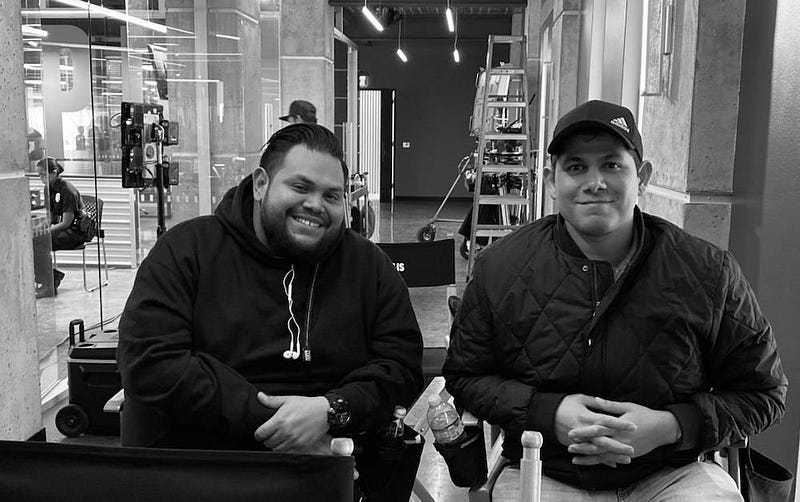
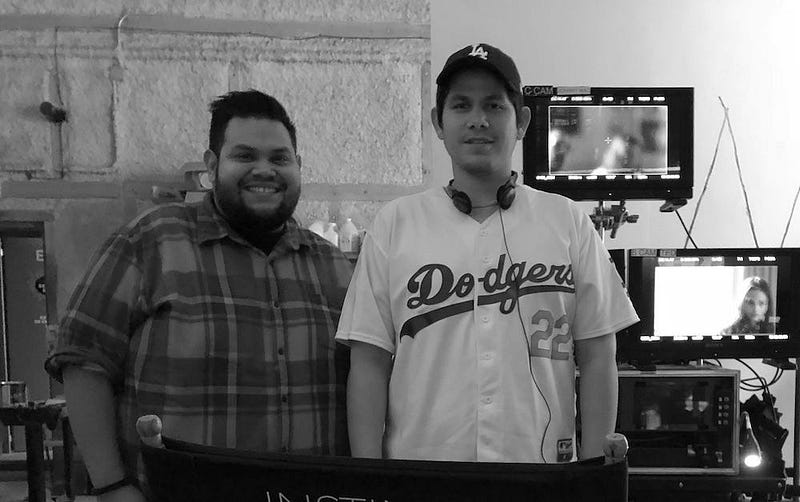
Michael Ballin and Thomas Aguilar wrote the original screenplay “The College Dropout” which landed on the 2021 Black List. Recently, I had the opportunity to chat with with Mike and Tom about their creative background, their script based on a period of time in the life of Kanye West, the craft of screenwriting, and what making the annual Black List has meant to them.
Here is the interview in its entirety.
Scott Myers: Congratulations, Mike and Tom, on making the 2021 Black List with your script, The College Dropout. Great to have you here. I’d like to learn a little bit about your background, how you developed an interest in movies, television, and writing. Mike, let’s start with you.
Michael Ballin: So much of our youth was watching movies and films together, so our interest developed together. We’re brothers by the way, just with different last names.
Thomas Aguilar: It’s a long story, but basically, our parents were on-again, off-again. They had me. I got my mom’s last name. They split up, got back together, and then they had Mike.
Michael: And I got my dad’s last name. For our whole life, we’ve been explaining that story to people because nobody believes that we’re actually full-blood brothers.
Scott: That’s wild. This was where? In Southern California?
Thomas: Yeah. We grew up in the suburbs of Southern California.
Scott: What’s the age difference between you all?
Thomas: I’m about a year and a half older.
Scott: Pretty close then. You were growing up together, you’re watching movies, TV, comic books. What’s the thing that piqued your interest in writing?
Thomas: Movies and TV were everything to us growing up. We saw Independence Day in the movie theater that summer probably about 17, 18 times.
Michael: Four times in one day.
Thomas: We got in there at 9:00 AM. We’d go see Independence Day. We’d walk out, and my mom would be like, “We should see it again.” We’d go back into the theater and watch it again. And on the other hand, our grandpa showed us One Flew Over the Cuckoo’s Nest when we were about eight years old.
Michael: He kind of gave us a film school at that age. One Sunday it was Cuckoo’s Nest or 2001: A Space Odyssey. I remember sleeping through some of that, but the part that we were enthralled by was Dave and HAL 9000. That dynamic had a strong impact on us at a young age.
Scott: This is your grandfather and your mother, both supporting your interest in film.
Thomas: Totally.
Michael: A movie household. People were amazed at all the movies Tom and I have seen in theaters. We saw everything. I remember we saw War of The Worlds or even Miss Congeniality on opening weekend. We used to run a WordPress blog to review all the movies we were watching.
Thomas: TV too. When we weren’t at the movie theaters, we were watching a lot of TV. We grew up with our Grandma and our Mom. Our grandma loved CBS and loved procedural television. ER, Law and Order, CSI. We were just in it all. On our fridge, we would have the network schedule. Prior to DVR, we’d be like, “OK, tonight’s Numbers, tonight’s House MD.”
Scott: That’s great. You had film school education even before you went to college, really grounded in film and TV. Let’s talk a bit about that. Thomas, Cal State, is that right?
Thomas: Yeah, I was at Cal State, Los Angeles. I did my undergrad there.
Scott: That was sociology?
Thomas: Yeah, I took a sociology class, and I loved it. And throughout college, I started to think, “Am I really going to do this movie thing?” Am I really going to pursue this? I was like, “You know what? Maybe I’m going to put movies aside for now and pursue it after being a professor or something.”
Scott: Mike, you went to Cal State, Long Beach, is that right?
Michael: Yes.
Scott: You majored in something a little bit more directly relevant to writing literature and film. Is that correct?
Michael: Yeah, I actually started out majoring in film, but in film school, there’s a lot of bureaucracy. It’s not like high school, where we could just shoot whatever we wanted for the AV club. We had these great teachers who encouraged us.
Tom: Shout out Mr. Murray and Mr. Herschler!
Michael: But it was tougher in college, because you get there and it was like you had to enter a lottery to get a film made. I wasn’t into that and was like, “We can go out and make a movie with three people right now.”
I read Rebel Without a Crew plus the technology at the time was just burgeoning where Canon DSLRs gave you close to film-like quality. You just go out and shoot something. We’d cast our friends or younger siblings in our short films.
So I minored in film and got a degree in English. That was probably one of the best things because I was able to learn storytelling from the masters in literature and learn filmmaking on the side. It was a great experience.
Scott: Both of you wound your way into the whole Hollywood system. Thomas, how did you get into working for Sony?
Thomas: It was funny. After I graduated from CSULA. I got into graduate school at USC for journalism and that was the plan for me. I was going to do some serious journalism. I told Mike, “Hey, I don’t know if I’m going to be doing the movies as much anymore.” Mike was still shooting short films. But one day, I called him. I said, “Hey, I have to make a video, a journalism video,” some piece, and he said, “OK, I’ll help you.”
And we start shooting it. During the shoot, Mike said, “Tom, this is what you’re going to do?” It had become some David Lynch thing.
Michael: When it really should have been a straightforward local news piece about this record store and it became this trippy, avant-garde movie. Fun, but not journalism.
Thomas: When I took it in to the class, they looked at it, and the teacher said, “I think you want to be in the film school. I don’t think you want to be here.” I was like, “Well, it’s too late to go to film school. I didn’t get in.”
I call Mike, and I say, “Hey, where are you?” Mike was…
Michael: In San Clemente, shooting a music video.
Thomas: He was shooting a music video, and I said, “Mike, I’m coming. I’m done with this.” I walk into the USC registrar, and I say, “How do I leave the school?” They said, “For good, or…?” I said, “Yeah. I’m done.” I dropped out of graduate school. I drove down to San Clemente and met up with Mike.
After that, we never really turned back. It was sort of like, “This is it. We want to do this together.” I just got an internship at Sony and got into the movie business.
Scott: You sort of made that jump from “Yeah, I got an internship at Sony.” [laughs] A lot of people out there struggling to find those type of entry level positions. How did you do that?
Thomas: After all the journalism stuff, I knew I wanted to make movies. I was applying to every job in town , every place I could go. I just wanted to get on a studio lot. That was the goal. How do I get into a studio?
I knew getting an assistant job might be tough to start. So I thought, “I have to get an internship.” I went on a bunch of interviews, and finally, someone was like, “Hey, we can offer you a spot” Luckily, it was a paid internship. The pay wasn’t great but, I said, “I’ll take it.”
Scott: I hope you remember the name of that faculty member at Annenberg who said, “Thomas, I don’t think you want to be a journalist.”
Thomas: Oh, my God. Her name’s slipping my mind. I can get you the name, but yeah.
Scott: I’m just saying, that’s pretty awesome that someone would say that because that really did align with your creative interests.
Michael: At the time, too, that choice was a little bit crazy. People were like, “You’re leaving grad school, USC, to go be an intern and work on short films with your brother?”
Thomas: That day, when I showed up to the set, Mike was with the camera, and I walked to him and said, “All right, what are we doing?” He goes, “Did you just drop out of school?” I go, “Yeah. Let’s do this.”
Scott: What about Mom and Grandma?
Thomas: They always loved that we work together. I think they thought that was such an awesome thing to pursue. I think they were a little shocked, but they were supportive.
Scott: Mike, were you still in school at this point?
Michael: I was still in school. Funny enough, I was reaching my end with short films. I was struggling while directing a project. It was for a festival. We had a week to make it. I remember we shot it. I was like, “This is a mess.”
So I brought it to Tom and I said, “Look at this. Can we do something with it?” It was due Tuesday morning, and this was Sunday night at 11:00 PM. He’s like, “OK, we have something here. Here’s what we do.” He pitches some great saves and asks if we can get the crew back together. We spend the wee hours shooting things and then editing together in his room.
It was the first time as adults we partnered up again. It was like the Avengers coming together.
[laughter]
Michael: There was no time to second guess each other or to argue. We just had to do it, and we did it, turned it in. That same day, I started an internship at a New Line Cinema. We just forgot about it.
But, I was a horrible intern. I always messed up coffee orders. The thing I most enjoyed doing was coverage. I liked coverage, love reading scripts, and linked up with a good executive there, Dave Neustadter. He’d ask me to read scripts and give thoughts. That really helped.
A couple of weeks into that internship, we got a call, “Hey, you guys won Best Drama at this Film Festival.” We didn’t expect the validation. The partnership was born there. That was better than any award. It was the start of something, “We could do this together.”
Scott: Wow. That’s a terrific story. I hear good things about Dave Neustadter.
Michael: He’s great. He was really helpful. He showed me Straight Outta Compton when they had it. I remember just reading and being like, “This is so cool.” It’s kind of the birth of the biopic there a little bit for us.
Scott: Thomas, when you were doing stuff, were you doing the coverage thing, too?
Thomas: Yeah, I was definitely doing coverage at Sony. But soon after Sony, I ended up working at Imagine, and that place was groundbreaking for me. It was a place with so many great execs to work for. At the same time, I got to see the development process. I got to see how projects would evolve, which was nice.
Scott: At some point, you started working in the TV.
Michael: There’s a nutshell version of the story, which was, we were working on a pilot, and it got picked up by a contest. They were like, “Hey, we really like this. We want to set you up with some people.” That’s where we met our agents. The crazy thing about that, though, Tom was working for Once Upon a Time.
Thomas: Yeah, during the agent hunt, I was working for Eddy Kitsis and Adam Horowitz. It was such a great experience. It was a true master class from those guys, to watch them make multiple TV shows and to be a part of that was great. I told Mike, “We got to get our TV pilots in order,” so we started to write a pilot.
Michael: Fast forward and we were up for a couple different shows, but only one gets picked up, Instinct, which was in New York. And the showrunner Michael Rauch picked us to join the staff. So basically, I think we got told on a Friday, “It’s a go.” I had to quit my job as a teacher that day.
We had to get on a plane and fly to New York. First, we didn’t have anywhere to live. We were literally driving around with some real estate guy over there. He picked us up and he was like, “OK, let’s look at some apartments.” We couldn’t find anything. We stayed in a hotel for our first three weeks there.
We just would walk to the writer’s room every day. And this was a big change for us, we were L.A. guys.
Scott: How long were you in New York?
Michael: Six months, and then we’re off. Then, we came back for another six months for a second season.
Scott: Thanks for that background. Now let’s talk about your script, The College Dropout, I see some synergy here with Tom dropping out of graduate school. Plot summary:
“A young Kanye West’s intimate journey to create his seminal first album, that reinvented hip hop music.”
It’s probably safe to assume you’re fans of Kanye West’s music at least early on. What was it that made you think this would make a movie?
Thomas: We were in New York like Mike said, and we had seen Love and Mercy. It’s a story about Brian Wilson and how he created Pet Sounds and his journey to do that. We were walking and Mike said, “Let’s do an album movie.” I said, “That would be cool, but we gotta find the right one” We started talking about different albums.
Mike said, “Let’s do The College Dropout” because it was a huge album for us growing up. I said, “Mike, his music’s too important to us. I’m not sure we wanna tackle this one. And we don’t have the rights.” He’s like, “Let’s just write it, let’s just have fun.” We jumped right in.
Michael: What was cool, too, is that we didn’t want to do it “cradle-to-grave.” It felt like the perfect album to introduce you to Kanye. There were events in there that felt compelling on screen. One of the formative movies that inspired us was the movie Nowhere Boy (2009).
There was something about that movie that when I first saw it, you wanted to see John Lennon with The Beatles, but what’s so great is that they don’t show you that. They show you how he was before that time, and even at the end, they wouldn’t even say the band’s name. We were inspired to make our version of that for Kanye.

Scott: You were fans of the music. It started off whimsically, “Let’s do an album project,” and then, of course, that album, The College Dropout, having been important to you.
I’m curious about where the balance was in that original instinct to do this. How much of it was writerly-oriented, and how much of that is putting on your producer’s cap.
If you’re coming at it primarily from a writing standpoint, it gives you a chance to explore the dramatic conflict, creative talent. He’s rebelling against familial, societal, and his own heightened expectations. But you put on your producer’s hat, it’s like, “Kanye West, one of the most well-known musical artists.” You’re looking for an audience, you got a big audience.
I’m curious whether you even thought about it from the producing side of things, or was it just like, “No, we just want to write this because it’s cool. We really dig that album?”
Thomas: It’s funny. Between me and Mike, that’s always the push and pull we’re always dealing with. We want to write a good script where you care about the character’s personal journey, but at the same time, we want to write it for a large audience.
We want to make it for us, for our families, and for a packed theater. I think that came into play, like, “This could potentially be an interesting thing for everyone, not just fans of Kanye.”
Michael: A calling card for us in terms of making big studio movies. You had the IP that is Kanye, people could access that, but we could show a different side you didn’t know much about and do some cool things. We saw the genre was being advanced, and we were like, “What do we have to add to it?” Because you don’t want to repeat what’s out there.
Scott: Was this after Blonde Ambition? Do you remember that script about Madonna that came out in the Black List? I think it was five or six years ago (editorial note: The script topped the 2016 Black List), which was a similar thing, just focusing on a young Madonna Louise Ciccone as she was trying to break into the business. Had you read that, or were you familiar with that at all?
Michael: Definitely. We had an idea back in 2015, but then we read that on the Black List and it gave us the confidence to keep going forward seeing somebody write such an entertaining and concise music story.
Scott: You mentioned that you said you didn’t want to do a cradle-to-grave biopic which doesn’t seem to be as popular nowadays. More popular nowadays what some call a “snapshot bio,” where you the focus is on a specific period of time, say from the musical standpoint like Bohemian Rhapsody Rocketman, Straight Outta Compton.
How early on in your process did you make that decision for a narrative framework?
Thomas: The idea for us was centering it around a great album, and Kanye’s story lent itself to that. Not only was it a great album, but the journey to making it was too.
Michael: If you contained it, it gave a challenge. We feel like the future of music narratives will be “the album movie”, because you want to see how somebody made the music you fell in love with. It’s additive to the music experience.
Scott: In the script, you focus on the years 1997 through 2004 when the album came out, using that pivotal time in Kanye’s musical career to provide the audience a lens through which to look at this character.
So you’re fans of Kanye, you’re fans of the album, how much research did you do, and what research did you do in order to come up with this complex articulation of the character in your script?
Michael: We ascribe to this Ken Burns mantra which is, “40 gallons of sap to make one gallon of maple syrup” In doing this, we were reading all the books, articles, we were watching YouTubes, listening to songs, dissecting them, and trying to find the objective truth in there, but more importantly: the character truth. It was definitely a lot of research.
Thomas: We just immersed ourselves in everything. Whether it was Kanye’s mom Donda’s book or surgically listening to every word of every interview. Kanye’s a fascinating figure where there are many interviews and footage of him really walking through his process and through his time when he was doing this stuff.
Scott: That’s a great quote from Ken Burns, I’ve never heard that. “40 gallons of sap to make one gallon of maple syrup” With my students, I talk about the iceberg approach to research and story development. Ninety percent of the iceberg is under the water, right?
Thomas: Definitely.
Scott: That’s what you need to do. You need to have all that research, that ninety percent. It may not show up directly in the script, it’s “below the surface,” but it’s going to show up somehow as an echo or emotional subtext.
You do all that research, then the challenge becomes how do you organize it? You’re probably starting with the endpoint being the release of the album, I’m imagining that’s what you were thinking when you began the process.
Thomas: We definitely thought it would be a good end point.
Michael: And in seeing the songs, one of the things we did talk about was not just in the order of the tracklist, but in the order of the drama, how each song could help us tell the story. We were inspired by (500) Days of Summer and how they structured the drama and applied similar principles to our story with the songs.
What’s cool is that the first single was one of the last songs he recorded, and it’s the song that represents his story, “Through the Wire.” We were like, “There was a cool, fun way to organize it in that way, but definitely, it was some jigsaw puzzling of making sure things fit in certain places.”
The other thing we’ll say on it, too, is that once we did all the research, it did free us up. We remember that thing Sorkin said about Steve Jobs, “Art isn’t about what happened,” and we didn’t want to make a documentary about Kanye. We wanted to capture the essence of Kanye in a movie.
Thomas: Yeah, like we all know what his first true performance on stage was, it’s documented, but we wanted to show the audience five minutes before that, what’s going through his mind? What’s on his heart at that moment? Bring the audience into that.
Scott: Sorkin’s famous for that, right? He did the Steve Jobs movie where he had the moments before those three rollouts of the Apple products.
I found a quote of Kanye. He said about the overall theme of his first album, The College Dropout, was, “Make your own decisions. Don’t let society tell you this is what you have to do.” That seems to be a consistent theme playing out in your script.
Thomas: I think so. I think it was very clear who he was. Kanye’s whole mentality was, “You have to do what’s calling you, what your heart tells you, be where your passion is.”
Michael: In our little pre-writing document, we had a quote by Donda West which was similar to what you’re saying, Scott. “Have the guts to embrace who you are rather than following the path society has carved out for you.” That quote was our guiding theme.
We related to it through Tom, because he dropped out of grad school. Tom is one of those people, I think, that it’s rare for people to just leave something, but Tom was working at Sony. These were things that we talked about while writing it. He was offered a paid job there, and he’s like, “Screw it. I’m going to leave and I’m going to go work as an unpaid intern at Imagine.”
It was like, “Dude, what are you doing? You’re leaving money on the table. You’ve been working for free. Take the money.” And he said no. It’s an idea that’s so hard for so many people to embrace. To do it your way and owning it. Kanye did that in his life in so many ways that it became clear what the movie was about.

Scott: In your script, there are a number of times where it’s almost like he’s self-sabotaging, but it’s more about him sticking to his personal truth. It really is the Hero’s Journey. Joseph Campbell, he says, “If the path is laid out in front of you, that’s probably not your path.” That’s the Parent Path, the path of Should, what’s expected of you.
The path you need to be on is your own path, the path you need to discover. When Tom left that paid gig, and went off and worked for Imagine, that’s an example of what Campbell calls “follow your bliss.” Find the thing you’re passionate about and do that. You’re more likely to live an authentic life. It plays through your script about Kanye because he was going to college in Chicago. His mother was on staff there. She was a faculty member?
Michael: Yes, she was the Head of the English Department.
Scott: There, you got that parent path because she and that Professor Milner, both of them are saying the same thing, “Kanye, the only way you’re going to make a success of yourself is by graduating from college.” He had that path laid out for him, but that was not his path ultimately. Could you maybe talk a bit about that tension in terms of him being in college?
Michael: Seeing Kanye, reading about it and stuff, you were like, “How do we get this to a bigger audience that maybe doesn’t feel compelled to go to college, but has a dream?” In looking at the movie too, early on we wondered, “What’s the movie without music?”
It’s a guy in college and feeling like he’s not connecting with it, but he’s got something else to offer. You’re in a space where no one’s going to see that. They’re saying, “Can you relate to this book?” He just doesn’t think that way. It was capturing the artist in that way, in that environment that isn’t Baseline Studios, it’s Chicago State University.
Thomas: When you’re young, you have a lot of insecurities, a lot of, “Am I making the right choice? Is this the wrong path?” But the truth is, you don’t know if you’re on the right path. You just have to go where your heart’s being called. If you have the opportunity to do it and it’s in front of you, grab it, take it. Give it a shot.
Scott: That’s such a good writerly instinct that you hit on this. What’s the movie without the music? That’s terrific. Again, you go back to Joseph Campbell. He talks about the outer journey and the inner journey. The outer journey’s all the stuff that happens, the plot basically. This is an actual quote, he says that’s “incidental” to what’s going on inside the character.
By saying, “Let’s take the music out of here and let’s look at this strictly from the dramatic standpoint of what Kanye, the protagonist, and his journey is,” then you’re drilled down into a guy who is convinced about his musical talent. He could’ve been a producer and created beats, could’ve been very successful just doing that, but that was not his thing.
He was insistent that he could be a performer. That’s metaphorical, him finding his voice, expressing himself, right?
Thomas: Yeah, for sure.
Michael: The goal was how do we access him finding his voice in a way that other people could relate to? Sometimes, you see movies that are only aspirational. Not everyone is going to have that aspiration, but how do they make the choices in their life that feel impactful every day? That’s what we wanted to capture for audiences.
Scott: There’s a scene in the script. Early on in his career. Kanye has a meeting with Columbia Records, I think it was?
Michael: Mm-hmm.
Thomas: Yeah.
Scott: They see him as a producer. Then, all of a sudden, he’s rapping in front of them and the guy that’s with them saying, “No, don’t do that.” What do you think is going on there where he feels compelled to push this point that he wants to be the performer?
Thomas: It’s funny. Kanye West is a bit of an enigma sometimes, but he was always passionate. He loved what he did and he was this exuberant about it.
Michael: Kanye has always been passionate and his vision is ahead of its time, in that he had a lot of those hit songs long before they came on the radio. He was already like, “I can visualize it and see it. You guys got to see it.” It’s a metaphor for sometimes the world’s not ready for what we’re about to bring to it. He was like, “No, I’m going to go that extra step and show you. Look what I have here.”
It’s crazy. He says it in songs too like “Last Call.” They turned down Jesus Walks, which was a number one song, but it showed that the world’s not always ready for what you have to bring.
Scott: One of the best things about your script is you did such a great job of using the tools of visual storytelling to visualize what he’s seeing and experiencing as he’s coming up with these songs or having these moments. You know what I’m talking about?
Thomas: Yeah.
Scott: Several times, it’s almost like fantasy sequences. How did you hit on that idea, write these dramatic, visual, cinematic moments where you’re like, “This is the dude’s vision of the world. This is his experience of the world?” It’s quite great.
Thomas: We definitely had fun with those moments. When we write, we go through a number of drafts and we say, “Let’s make sure we’ve found it, is there magic here? Is there magic in the screenplay?” It’s not always like…
Michael: It’s not always magic.
Thomas: Right, not magic magic. But, is there something else to unlock? We started to think what was going on in his mind as he was starting to write this album?
Michael: We were in New York without our wives, so we would spend the weekends writing the script. I remember we got to a point where I wanted to be done with it.
Tom was more of like, “Look, I think there’s more we got to do here. Something’s missing.”
We had the “Through the Wire” sequence and the “Spaceship” sequence, but they were outliers, at least, from the rest of the script. Tom was like, “Let’s unlock this a little more and find more of these. We started building it out, and then all those things came together.
That’s our process, too, is that somebody’s got to convince the other. I had to convince him to do it, and then he’s like, “Dude, we got to make this better.” Being brothers, sometimes, it’s harder because you’re like, “He’s right or he’s wrong.” I think that’s what’s cool is that we’re both just trying to make this better.
Thomas: I think that’s important to unlocking that kind of stuff. Oftentimes, when you’re a partnership, you get asked, “Who wrote that? Who wrote that great scene?”
But, once you’re in it and you’re doing it, the whole world falls away and you’re like, “That was just us now, and it’s just our voice now. It is a mixture of me pushing him, him pulling, or him pushing, and me pulling.”
Scott: That’s great. I have to say that that part of the script really stands out because you’re trying to understand why this guy’s got this passion. As soon as you start to see these visuals the way that he experiences reality, you get it. It goes beyond logic. It’s like we experience the world at the level 10. He’s feeling it at a 12, or a 13, or a 14. It’s all the stimulation, and he’s processing it and coming up with all these new and interesting ideas.
One thing I want to talk to you about practically speaking as a screenwriter, because you are covering seven, eight years and you got to make these time jumps, it’s a pain in the ass to make these time jumps, and you did a really good job on that.
Sometimes, you use montages. Sometimes, you use visual-to-visual or audio-to-audio transitions. That’s a challenge, because you’re asking the reader to make those time jumps with you. How much of a struggle was that for you?
Michael: We’re big fans of Mad Men, and what we always love about the show is that it never tells you or changes the filter when you go into the past with Don or in the future. Every time we’re writing, we’re thinking like that because it’s so natural. Another movie that influenced this movie was Moonlight.
We liked how it had chapters, but we were like, “There’s a way to do it that way and let the music supplement it.” We’re like, “Musically, there’s a great way to do transitions here, because a lot of Kanye’s work is sampled.” You get to go from this original track, and then into what he made. It’s conducive for transitions.
Thomas: We are always thinking about what does the audience needs to know at this moment? What could we tell them or how can we give them just a little bit of context? Maybe its, “Look, he’s driving a nicer car now.”
That’s not necessarily in the script, but it’s like, “This is different now. He’s gone through this experience that we’re not caught up with yet.” If you can trust that the audience or reader will catch that little thing — they will and they do.
Scott: A couple of other things I want to talk to you about pragmatically speaking as screenwriters. You know how most Hollywood movies, they’ll have certain character archetypes we see like a Nemesis or an Antagonist figure. This story doesn’t have that classic bad guy. Instead, there are a series of characters who provide opposition to Kanye
How did you work that out, lay in characters who would generate conflict by standing in Kanye’s way or pushing back against him?
Michael: In that case, it was more of using the research to see what were the roadblocks, and some of those people represented them. What we didn’t want to do was label people as antagonists because even the people that were roadblocks to him became friends with him, and they learned, “This guy is cool, and he is great.”
One person wasn’t an antagonist, the whole system was. It was the bureaucracy of business. That was the reason why they didn’t let Kanye release his album sooner.
Sometimes, in Hollywood, you feel like you’re ready, but maybe that person in front of you doesn’t see it that way. At every stage. Tom would tell me stories and it’s like, “Man, that’s crazy that a decision was made because somebody wasn’t into a certain subject or something.” It isn’t a meritocracy.
Thomas: In screenwriting, that’s true for all of us. There’s always questioning, “Is this right for the market? Is this right for us?” There are so many reasons not to do a project or not to do something. It’s like echoing that notion from earlier, but if that voice is stronger and saying, “Do it, go for it.” Listen to that one.
Michael: Kanye was bringing out a whole new brand of music and the music at the time was gangster rap. The hardest thing for people in the music or movie industry is to take a chance on something new.
Scott: Let’s talk about the car crash and Through the Wire. It seems like that’s a natural point you’re going to build to because it’s a big dramatic moment. In some ways, it feels like that’s a breakthrough moment for him creatively.
Michael: It was. You know, it’s funny. It’s something early on that we relied on, which is the scene where a car crash changes everything, but then, when we were rewriting it and the struggle became, “Are we just doing the cliché car crash scene?” So we tried something different.
Thomas: Obviously, it was monumental in Kanye’s real life, and that song, “Through The Wire, launched him to the world. For us, like Mike said, we knew that was where the story was naturally headed, but our goal was how do you still make it surprising? How do you…
Michael: …make it organic? The other thing I would say in rewriting, sometimes what we’ll do is we’ll start watching movies… we were watching Eternal Sunshine and we were like, “How would Charlie Kaufman approach it?” In some way, you got to step outside yourselves if you’re not hitting it.
We had that thing where he’s in the dream, he hears a car crash, he runs and sees himself. We were like, “Oh, that feels unique and different and it honors the story.” Once he got into the hospital, we were like, “Look, we’re sure this is not exactly how it happened.” He did actually record it in the hospital, but we tried to have fun with how he heard the sample. Everything came together.
Scott: Now that I’m thinking about it, you have a series of All Is Lost moments at the end of Act Two, big reversals in the plot. First, there’s the thing with Capitol Records where they pull his contract. You go, “Oh, wow, that’s All Is Lost.”
Then he signs this deal with Roc-A-Fella, but then they say, “Well, we’re not going to release the album,” so you go, “Oh, now that’s got to be the big All Is Lost reversal.”
But then there’s the car crash. It’s a trifecta of bad things going on with Kanye. Now, all of a sudden, he’s experiencing it outside himself, so you’ve laid the groundwork to do this. You talk about the magic — not magical with a capital M, but a small M — way of handling the car crash. It is not trope-y. It’s not melodramatic. It’s something almost outside that realm. Does that make sense?
Michael: That’s a great way to put it. In all that rewriting and figuring it out, ultimately, that’s what we came to. We didn’t quite articulate it that way when we did it, but that’s a great way to look at it.
Scott: The College Dropout terrific and I highly recommend people read the script. It’s set up at Columbia, is that right?
Thomas: Yeah…
Scott: I thought that was ironic because his first opportunity for a record deal…
Michael: It came full circle.
Scott: Let’s talk about story behind the story, the writing of the script. You come up with this idea. How long was this process of doing the research, breaking the story, the writing, the rewriting?
Michael: We had an initial early idea six years ago. Then it came up again when we were in New York. Putting a number on it’s tough, but I would say a 10-month process maybe, give or take some in there. During that time, we were writing for TV.
Scott: Did you have representation at this point?
Thomas: Yeah, we did have agents. After the show in NYC wrapped, we came back in the fall. It was around November. We had finished the script and we had a meeting with our agents. We were in the office and we said, “Hey,” and we were looking down. We couldn’t make eye contact with our agents at APA Mike Goldberg and Kyle Loftus. They were like, “Guys, what’s up?” We were like, “We wrote a script, and we…”
Michael: [laughs] It was like a Step Brothers bunk beds moment. It was like, “Guys, just say it.” It’s like, “We wrote a script about Kanye, a biopic.” They said, “OK.” We asked, “Are you guys mad?” They were like, “No, guys, that’s awesome. Send it to us.”
Thomas: I think it was, “Can you send it to us before you get to the elevator? We want to read this.” So we sent it to them…
Michael: …the Wednesday before Thanksgiving and then that Monday they called us at 9:00 AM. “Guys, we love it.” We were like, “Phew,” because in our minds we were worried they were going to drop us.
[laughter]
Scott: Let’s jump to the morning of December 13th, 2021, Black List rollout day. Were you all paying attention to it or not?
Thomas: We would be lying to say that we didn’t know when the Black List was coming out or that we weren’t paying attention. We were definitely checking in with our managers at Nacelle and our feature agent Adam Perry at APA.
Michael: The story behind it is we were working on a show in the room. We had our break and I saw a video and I said, “Oh, I don’t think we made it.” I was already telling Tom, “It’s OK that we didn’t make it. That’s not what it’s all about.” Then he cuts me off and he goes, “Dude, we made it!”It definitely was an exciting thing. Again, reading your blog through the years, reading the different interviews you’ve done with Blacklist writers, it’s an honor.
Scott: Have you had any sort of professional boost after having made the Black List?
Thomas: Definitely. People who may not have known us before, now get a chance to read our work.
Michael: OWAs and new opportunities.
Scott: You’ll probably be on all the biopic and musician lists. It’s a terrific script and congratulations. In our emails, you mentioned my blog, how you’ve been following it since 2011. That makes you guys old-school fans.
[laughter]
Michael: When you want to become a screenwriter, there are certain books you need to read like Lumet or Goldman…
Thomas: Adventures in the Screen Trade…
Michael: Yeah and you almost want more. You want to know what people are doing right now or how they think or what they do to get better as screenwriters.
Your blog was a real screenwriter giving you this straightforward advice for free online. Then, you would interview somebody else, and we would almost read them and go, “Are we doing what they’re doing?” You’re comparing, but you’re also like, “What is the advice they’re giving?”
I would send Tom — and we have emails of this — “Advice to Writers.” I would literally copy it, send it to him. We would send, “Look at this one. Look at this one,” and take in any advice.
Thomas: Screenwriter interviews, advice, stuff like that, they took the mystery out of it and you’d think, “These are regular people who are working hard on their craft, and/or who are doing this and that.”
When you want to be a screenwriter, you’re always wondering if you’re doing the right things. You have these images, “this is a professional screenwriter, this is how you get in, and so on” But the truth is: there’s no same path for everyone. Everyone’s different, and it was great to see that on your blog. It gives you a little bit of confidence like, “Maybe we could do this.”
Michael: I was going to add, we didn’t go to film school or grad school. Your blog was film school. There were so many different things, like your “Looks” PDF, but also, one of the things, 1, 2, 7…
Scott: 1, 2, 7, 14. Read one script per week. Watch two movies per week. Write seven pages a week, one a day. Do fourteen hours of story research and development per week, two hours per day.
Michael: That was the syllabus. “If we just follow this, we’ll get a little better every day in terms of writing scripts.”

Scott: I’ve been hosting the blog since 2008, it’s always great to hear when writers say they benefit from it. That naturally leads to some questions about the craft for y’all.
Michael: Sure.
Scott: Let’s start with this one: How do you come up with story ideas?
Thomas: We’re brothers, we’re super close, so we hang out a lot. Sometimes, we’re sitting there, and wondering if something’s a movie. Sometimes, it’s an experience that you’ve had and like, “I’d love to capture this.” Mike can probably speak to more of them.
Michael: Tom’s right. People don’t realize that it’s one long conversation. There should be a book of me and Tom’s calls because we are on the phone for hours before we’re going to be working on another project, and it’s just talking. It comes up naturally.
Tom sometimes will be like, “Here’s an idea for this. We’ll never do it.”
He doesn’t write it down, but I am always taking notes. I’m like, “Dude, remember when you said that thing?” Which is, “Let’s do that,” and he’s like, “Oh, yeah.” We’re writing stuff down at family events where someone says a funny joke, and we’re like, “Is that a movie?” [laughs]
Thomas: You watch a movie, and sometimes, it’s like, “That movie was good. I liked it. I’m not sure how I felt about all of it, but I love that one character.” They were whatever, and you’re like, “What if there’s a movie there?” or, “What if you look into that guy’s life, or that person’s journey?” or something.
Scott: My favorite movie is The Apartment. Billy Wilder, that’s exactly what happened. Wilder saw this old German movie and it had that one character who was giving up his apartment for these people to have their extramarital affairs. The guy was a side character, but that was the character that interested Wilder the most, and that was the inspiration for The Apartment.
Thomas: There you go.
Scott: That’s that thing I tell my students all the time. You can shift Protagonists. You take a story and take it from the perspective of another character as the Protagonist. There’s the movie The Wizard of Oz, then the Broadway play taken from the perspective of the witch…
Thomas: …Wicked.
Scott: …Wicked. Then, there was Oz the Great and Powerful, and now there’s a movie project called Toto, doing the story from the perspective of the dog.
You can take pre-existing stories out there, and just switch the perspective of who’s the protagonist. All of a sudden, you’ve got an entirely different movie.
Thomas: Yeah.
Scott: There you go. A writing tip right there. Let’s talk about your story-prep process, you’re breaking the story. Are you big into outlining to have the story all laid out before you start to page writing?
Thomas: The thing that we love to do is — Mike could speak more to this, too — We love to do these visual outlines…
Michael: Slides. Essentially, we stole this idea, we’ll attribute it. Meaghan Oppenheimer, a screenwriter, she posted about this doing the We Our Your Friends script.
She broke down note cards on PowerPoint, and we were like, “That’s an efficient way for us to get it out.” You don’t just have the text of the outline. We put an image, we put a link, we put what the scene is, we put what the theme of the scene is, and we do this thing Francis Ford Coppola does. Every scene, he has a little five-point process of what’s the scene, what’s it really about, what are the clichés of this scene?
We attach that with every scene and go, “Answer those questions, make this thing, and get excited to talk about it, and then see it,” and then you have a little movie in your pocket. You’re looking on your phone, and you’re like, “We can start writing this now.” It leaves room for us to freelance with the script too.
Scott: Right.
Thomas: In TV, it is oftentimes much more traditional.
With this, our goal is how do we keep a little freedom in there? Sometimes, you are writing and you are in the middle, and you’re like, “What if this?” or your day affects something, or whatever comes and inspires you in that moment. It’s a guide point, but also giving you some freedom.
Scott: I think every writer is different. There’s no one right way to do it. To your point, you do need to have that freedom when you’re actually writing. That’s why I tell my students, I say, “Great, you got the outline. Now you’re ready to write, set it over here. Get into the scene, get in touch with the characters, and where are they coming from? A feeling place,” and really, it’s more meditative. It’s like, “Just let it flow.”
That’s the receptive writing. You’ll always be able to do the executive writing and rewrite all that stuff, but you need to get in touch with the characters and let them drive that process.
Thomas: The instinct, letting the instinct flow through.
Scott: Instinct.
Thomas: That’s the hardest thing, though. I feel like in sports, it’s like you know the playbook, but now, it’s instinct. You’re in the play, Tom Brady makes an audible, throws everything out and you gotta trust it.
Scott: That’s why they call it the basketball players are in the zone, right?
Michael: Yeah.
Scott: Steph Curry knocking down 12 three-pointers in one quarter, he’s in the zone.
Let’s talk about characters. How do you go about finding the characters and their voices when you’re developing your stories?
Thomas: In all movies, it’s different. In this movie, we did have the luxury of being able to see interviews.
These were public personas, so you were able to do that and tap in. For us, if you want to get a voice right, it’s about immersing yourself and diving into it full into the deep end of things and understanding how a character expresses themselves.
Michael: It’s like a little psychology of figuring out…We use Tom’s sociology background on this, because everyone’s different. Who they are, who their voice is, is different from us.
We actually did have a boss on our first show teach us, “Every character is speaking a certain way.” This was in TV, so on the weekdays, we were getting all the lessons from that first writers’ room from an Emmy-winning writer Carol Flint on ER or Connie Burge who created Charmed in the room.
We would use lessons on the weekend to work on this, and one of those was voice, who is this lead character? Could you cover his name and know it’s him? We try to take that approach with every character.
Scott: That must be a nice feeling that those dollars and time you spent in college, you could at least say, “Well, I amortized that, the sociology thing there, because those are key questions.”
What’s their educational background? What’s the social-economic background? What’s their religious background, ethnic background? What type of music do they listen to? All that’s going to influence the way they talk.
Thomas: Yeah. All of those things, every single experience we go through affects us on different levels and, I think, creates a voice.
Scott: Mike’s experience, too. He had a major in literature, so he’s learned storytelling in a more of a classic way, I guess you’d say. There you go, the benefits of a college education!
Michael: It did. I will tell everyone to go, especially if you’re not sure, because I think that’s a lot of people that aren’t sure. If you can, if you’re into the school, do it, but if not, make your own college curriculum outside of it with reading and curiosity.
Scott: You’re right. Nowadays, there’s so many options out there, free stuff online, that if you’re really serious about it, you can do it.
When people ask Franklin Leonard, they say, “How do I learn the craft of screenwriting?” He always points them toward that quote that I came up with years ago which is, “Watch movies, read scripts, write pages.” You could do those three things, and you could add, “Live life.”
Michael: We were just talking about that today, living life is important, because I think early on, we were so dedicated and stuff, but as you get into it, you have to take a break. Not everything you write is going to come out of pure passion, so you got to be able to stop and come back because it’s a marathon. Springsteen said in his book, you have to learn the craft. It’s craftsmanship. We’ve been doing it for nine years. It doesn’t feel like it, but it’s nine years. So don’t forget to live.
Scott: Way back when, you were making these short films, so I’ve got to ask you, are you at all thinking down the road like, “We want to direct?”
Michael: 100 percent.
Thomas: Yeah. It’s how we came to this. We write, and our hope is to direct.
Michael: We’ve learned from some directors on set on TV shows, and you’re like, “OK, they’re teaching you things,” and you’re like, “I think we could have the confidence to pull this off.”
We have that background, but the thing we’ve learned is that back then, we tried to do everything. We were the caterer, we were the line producer. Now, once we saw it on a real TV set, we understood the true role of the director.
Thomas: They get to focus on a tone, or a particular moment, and this scene’s purpose, etc. Before, it was like, “Do rehearsal. Set up catering. Do the lights. There’s a fire. Run over it, put it out.” All at once. It was impossible.
Scott: I’m going to make this pledge. When your first movie, opening night, I’m going to show up, and shake your mom’s hand and say, “Congratulations, these two guys you were taking to the movies when they were just little dudes, they did it.”
Michael: She’s always asking when we’re going to the “Oscars.” I’m like, “Mom, get ready.”
Scott: There you go. Don’t forget to thank mom.
Thomas: Absolutely.
Michael: For sure. Love you Mom.
Scott: Finally, one last question and I’m sure you’ll be starting to be asked this question. What advice do you offer to people who come up to you and say, “Hey, I want to learn how to be a screenwriter. How do I go about doing that? How do I break into the business?” What’s your basic advice to people?
Michael: There is much different advice, that I think we’ve come to learn is advice is only one part of it.
The most important thing is awareness of who you are, what you can bring. We always try to get one percent better every day, and that has guided us.
Thomas: When we were growing up, we were like, “What’s the path? What do I get to do? What boxes do I have to check?” And it’s really about doing everything you can possibly do. Read scripts, write pages, and all those sorts of things.
All those times you feel, “Am I doing the right thing?” Whether that’s taking an internship, being an assistant, or even writing itself. You can be this or that, or none of those things, as long as you’re trying to push forward to get one percent better like Mike said, you’re doing the right thing.
Michael: And if that’s not working, the ultimate you should always have is that “Break-in-case-of-emergency script.”
The thing that you can turn to when, “Everything’s on fire, I haven’t got a job in nine months, I’m struggling, what do I do…? You break it.” That’s what this script was for us, and we always have that one we’re working on that’s different. Anytime we feel complacent, we break out that new script and try something new.
Mike and Tom are repped by:
Mike Goldberg, Kyle Loftus, Adam Perry (APA)
Matt Ochacher, Michael Pelmont (New Wave Entertainment)
For my interviews with dozens of other Black List writers, go here.