Go Into The Story Interview: Meg LeFauve and Lorien McKenna
A conversation with the hosts of the new podcast The Screenwriting Life.
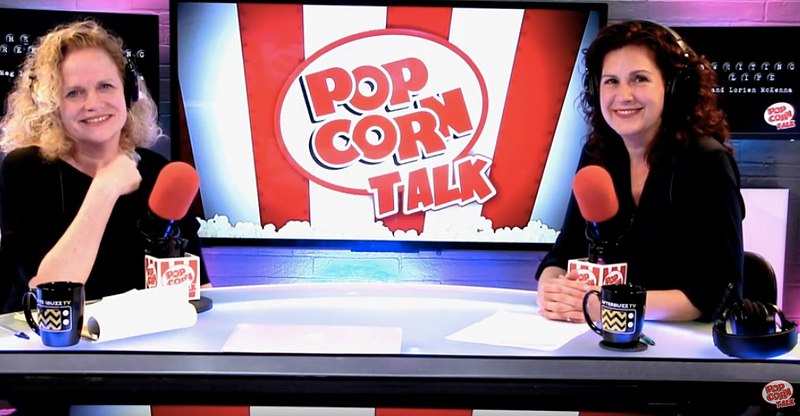
A conversation with the hosts of the new podcast The Screenwriting Life.
In the 11 plus years I have run Go Into The Story, I have always been on the lookout for new resources for those interested in the craft of screenwriting. Thus, when I discovered The Screenwriting Life, a video podcast which had just launched in March, I was excited to reach out to its hosts for an interview.
They are Meg LeFauve whose screenwriting credits include Inside Out and Captain Marvel, and Lorien McKenna who while working at Pixar, was involved in the movies Brave, Ratatouille, The Good Dinosaur, and Inside Out.
We had a wide-ranging conversation about their respective backgrounds and how they worked together and became friends. We also talked about story, the craft of screenwriting, and this latest venture The Screenwriting Life.
Scott Myers: Thanks for taking the time. I am excited to talk to you about your new podcast The Screenwriting Life which airs on the Popcorn Talk Network. Let’s begin by talking about your respective backgrounds as writers beginning with Meg. You’re originally from Ohio?
Meg LeFauve: Yup.
Scott: Could you talk about how you got into the business and segued into screenwriting.
Meg: I was at Syracuse University for screenwriting and English. I first took a detour to New York City working in advertising and then came out to LA. I worked as an executive at Jodie Foster’s production company, Egg Pictures, for 10 years. I always still in my heart wanted to be a writer but wasn’t brave enough to do it.
Then I jumped off the cliff, said I was going to be a writer, and then spent the years it takes of learning the craft to write. As a producer, you can help other people develop, but it’s a very different thing to write yourself. That takes years of work.
Then I got my first gig like everybody else in the world. Got to get your first gig. Then went from there.
Scott: How did you then learn the craft of screenwriting? You’re on one side of the desk as a producer. How did you get on the other side of the desk?
Meg: As a producer, I was taught story by Jodie, which was just an incredible experience. What a great story mentor to have. I approach story the way an actor or director would because that’s who taught me. As a producer, I knew story from an intellectual point of view in terms of assessing and spitballing possible solutions.
It’s different to sit down with the blank page, actually start construction, and be the one who’s pouring yourself and your own vulnerabilities into a script. Then knowing how to do all the layers of craft, it literally just takes doing it over and over and over.
There’s no amount of school or mentors that can teach that to you. The only thing that’s going to truly teach you to be a writer is doing it. It literally is burning different pathways in your brain if you do it. I had to write all the bad scripts everybody has to write and the many different drafts of those bad scripts, just cutting my teeth and learning. Each time you write a new version, you learn something new.
It’s funny because I think sometimes people think they write emails so they can write. But being good at screenwriting without the years of skill building is like handing somebody a glob of wet glass on the end of a stick and saying, “Here. Make me a cup.” [laughs]
Writing is a craft that you have to learn like any art. That involves practical things, it involves artistic things. It involves spiritual. It just takes time and work.
Scott: I tell my students, “At points when you write a film project, you’ve got to wear your screenwriting cap, but you’ve also got to be able to put on your directing cap, your producing cap, your editing cap. I’m assuming the producing cap, you still have that POV when you’re writing?
Meg: Actually, when I first started, I really had a hard time with that because the producing cap kept telling me everything that was wrong or that it wasn’t very good, or that won’t work. That’s a very hard place to write from. You need to be able to write from blue sky.
So when I made the transition from producer to writer, I first wrote in different mediums, because my critical brain didn’t know anything about them, couldn’t shut me down. I took a playwriting class and I took a novel writing class, and did a lot of stuff just to get me going….A friend of mine said, “You’ve got a dry riverbed, you just got to get water in the riverbed.” My “water” was to start with creation and writing, but not in the discipline of screenwriting.
Eventually I came back to it and when my critic or producer part of me got to loud, I’d ask that part of me to take a seat and not get involved. I don’t think the producer can get involved in the act of creation. It needs to just be a free-spirited act, and then later I can come back as the producer and read it and think about it and analyze it. At that point it helps, because I know how films are made. I’ve been on set, and I’ve been in edit rooms, so I understand what’s going to happen with this script and what it needs to be, but from the act of pure creation, it needs to just be creative.

Scott: Let’s jump to you, Lorien. You got an MFA in playwriting, is that right?
Lorien McKenna: I got my MFA at Saint Mary’s College in the Bay Area. We had some really wonderful guest instructors like Cherie Moraga and Octavio Solis. After grad school, I established my own theater company with three of other women playwrights called Guilty Theater.
It was great, but writing and producing plays doesn’t make a lot of money, so I also worked as an Adjunct Professor at Saint Mary’s in the English and Theater departments. Then eventually, I started working at Pixar. I was there for about 10 years. It was really there that I learned structure, the three act structure that we work in screenwriting.
Sitting in the Editorial suite, hammering on the reels with Pete Docter on Up is really where I started to understand how you take all that emotional generative material and put it into a form that is a movie. It was really amazing and powerful.
Scott: You’re doing all this playwriting, then all of a sudden, you are in Pixar. How did that happen?
Lorien: I was teaching at St. Mary’s and writing, producing and acting I thought, “This is it. This is what I’m going to be doing.”
But I was in a play with a friend who worked at Pixar. She said, “There is a temp position available. I think you’d be a good fit, you should apply.” When I got there, I just really loved it. It felt a lot like theater because it was so collaborative. Everyone is so curious and investigating new technologies and new creative approaches to things.

Scott: I teach a class at DePaul University called “Pixar The Craft of Storytelling.” It’s not an animation class, it’s a story class. It’s great to have these students watch these movies that they grew up loving, only now we dig down into them and they begin to really understand the skill the Pixar filmmakers and the Brain Trust bring to their storytelling.
Meg, how did you come to work at Pixar?
Meg: Mary Coleman brought me up to meet Pete as a writer when he was looking for someone to come in and work on Inside Out. It was a collaborative process. I wrote it with Pete and also Josh Cooley, who was the head of story, and Ronnie del Carmen, the codirector. It was the four of us in terms of hammering out that story and what the movie was, all led by Pete and his vision and what he wanted.
When I came in, the story had already had a couple of iterations. There were characters and places, but we had to build a story. I did that led by Pete, but we had to move very, very fast, which was good because it meant I couldn’t overthink, or judge myself, or shut myself down. I just had to move.
I was also very lucky and learned how to “play” from a friend who I wrote with, John Morgan. He was an actor and actors are constantly playing and iterating. When I went to Pixar, that was really essential to be able to approach storytelling and play with it. I realized that these are artists who have been drawing in sketchbooks since they were kids. They are used to iterating. They are used to draw and turn the page, draw and turn the page.
As a writer, I had to get into that mindset — that I was just going to iterate, and iterate, and iterate, and try new things. Play with this. What about this? How about that? Let’s throw all that out and go again.
They’re very brave at Pixar. People always ask me what’s the rules of writing for Pixar, and there really aren’t any rules other than “Is this the best story?”, and “Fail fast.” Push yourself. Try interesting different things, different ways of going at the story. They know that means you’re going to fail, so just go, fail fast.
It was liberating and scary, which is the best writing assignment you can do.
Scott: Lorien, how about you? Up was one of the projects you worked on, right?
Lorien: Yes. On Up, I was the script supervisor, which is sort of a bridge between the creative and production. Basically, I was wherever Pete Docter and Bob Peterson were in story, editorial, recording sessions, and sometimes in other departments tracking the movie as it iterated.
It’s what Meg is talking about. The playfulness, but also the willingness to risk, just to throw things out there to see if it works, and take them out and put them back. It’s massive amount of iteration that happens to get it right, and how brave you have to be, as an artist, to watch things that you’re putting up: ideas, lines of dialogue, story ideas, drawings, and then watch it be taken out over and over.
That was a really powerful lesson I learned about editing and rewriting, and how hard it is for all the artists involved at every level to be that vulnerable. It has to be a really safe environment, which it was.
I was the Story Manager, on Brave, Inside Out and The Good Dinosaur. A big part of that job is about managing artists and helping them through that process, encouraging them to show their work, maybe before they are ready but because we needed it to be seen by the director. It was about creating that safe space for everyone to be able to risk, play, and fail fast.
Scott: What was that experience like working at Pixar, compared to writing a play or a screenplay on your own?
Meg: Pixar is much more collaborative process. It’s closer to television in a way. The director is always leading, but it is a team effort.
LORIEN: As a playwright, I liked to show my work early, get actors and directors involved so I could develop collaboratively… I was inspired by Caryl Churchill’s approach in how she developed her work. That’s always how I try to model my development. That was a lot like Pixar.
Scott: What is it about animated movies like at Pixar which enables them to tap into the so-called Four Quadrants: Adult, Child, Male, Female?
Meg: I think you can do things in animation you can’t do in live action , though live action is getting closer and closer with all the VFX effects,. But there’s something still that taps into your child-like mind, the love of fantasy and world-building.
The best ones like at Pixar, they’re sparking that child mind, while still speaking to the adults — to the deeper human condition. Asking beautiful questions about being a human. They tap in at a very deep level. It’s a pretty special process. That doesn’t mean live-action can’t do the same thing. But to me, there’s something about the wonder of it. The wonder of the animation and bringing you back to the wonder of your childhood….What do you think, Lorien?
Lorien: The themes are so deep and universal and human that it makes it more accessible when you’re watching a man fly his house with balloons, or with “Coco,” going into the underworld, where you’re talking about life and death.
I wonder if there’s a way that it is four quadrant to talk about those darker themes, well, not darker themes. What am I trying to say? Because it’s animated, it gives you a little bit of a way in?
Meg: A psychological distance to it so that you can actually experience it safely.
Lorien: Yeah, that’s what I’m trying to say in fewer words, what Meg just said.
[laughter]
Lorien: But also, animation is magic. Remember when you saw Toy Story the first time? It just felt like magic!
Scott: It seems to me that one of those themes you’re talking about in Pixar stories which we see a lot is separation. In Inside Out, Riley is separated from her home in Minnesota when the family moves to San Francisco. In Up, Carl is separated from Ellie because of her death. In Finding Nemo, Marlin is separated from Nemo when he gets caught and ends up in an acquarium. In Coco, Miguel is separated from his family when he is trapped in the Land of the Dead. Do you have any thoughts on that?
Meg: I’m not sure. I would have to think about if Pixar films or a lot of them, are about separation. I wonder if a lot of stories are about that. It’s funny, my husband was reading a book on fairy tales and many of them come out of ancient human ideas of the fear of abandonment. That’s still working in our stories.
But in terms of Pixar, Inside Out is Pete Docter’s film — there’s a great interview in the DVD extras on the movie, of Pete realizing that maybe what he wanted to talk about was sadness.
He’d originally paired Joy with fear, but realized he didn’t have anything to say about fear and that what he really wanted to talk about was how sadness connects people, which is a beautiful idea.. Pete Docter writes from his deep, human heart. He writes the questions he has about himself. He’s a genius at dropping down into his vulnerability and then making it magical.
That’s what I really enjoyed whenI worked at Pixar, on Inside Out and The Good Dinosaur — the bravery of everybody at Pixar, all those creators and artists, are really digging into their own vulnerability. I call it walking into lava. Everybody’s got their own lava that you have to walk into, and I feel like Pixar does create a safe space for that kind of deep work.
In those rooms, there’s a lot of discussions about your life. For example On Inside Out, there were discussions I could relate to like what it feels like to be a parent of a child, what it felt like to be an 11-year-old girl who was told she needed to be happy for everybody else. And on The Good Dinosaur, I had lost my father and I knew what that felt like. I have a special needs son who couldn’t keep up with everybody and I knew his frustration. All of that gets poured into what we were doing — that’s the artistry — — is to be brave enough to do that.
Scott: Thanks for sharing some thoughts about your experiences working with Pixar. Let’s talk a this podcast The Screenwriting Life on the Popcorn Talk Network. I’ve watched the first two videos and they’re terrific, both fun and informative.What was your inspiration for the podcast?
Lorien: Meg and I are both mentors at CineStory, which is a nonprofit organization for screenwriters.
Meg: It’s a lab where you come up to get your work mentored. They mentor you through your work.
Lorien: At one of the TV retreats, I met Jeff Graham, who is a producer at Popcorn Talk. He invited me and Meg to be interviewed on his show called “The Unproduced Table Read.”
The feedback we got after the show was how reassuring it was to hear us talking about the struggles we have as professional screenwriters. That just because you’re successful, like you sell a movie or a TV show, all that angst, and worry, and stress doesn’t go away.
I think for both me and Meg, the whole “you’re not alone” idea is really powerful and building community is really important. We thought we could have a platform to talk about that stuff more. Popcorn Talk was excited about it and so they are producing our podcast.
Scott: I should mention it’s a video podcast.
Meg: Yeah. We start with our week so that people can just hear what it’s like. What are the struggles, and what are the things that work out well, and how are we thinking about things and strategizing about things. Then we always have a topic for each podcast. Like the last podcast was “Theme,” though we’re going to break that into two or three because that’s a big topic. We also try to always answer a question from our audience if we have time. I talked too much last time on Theme. We didn’t have time for the question.
Lorien: You talked exactly the right amount!
Meg: We always take a question from our audience, and we’ve been getting questions from all over the world. Those questions can be about craft or anything, and we answer them as honestly as we can. It’s really those three sections, right, Lorien?
Lorien: Yeah.
Meg: But it’s all about craft meets the humanity, craft meets living, and I think people are responding to that.
Scott: Were you looking at various resources in the online screenwriting universe, seeing what your niche could be, or was it more like, “Let’s just jump in and do this”?
Meg: It was very much jump in and do this. Popcorn Talk, of course, did their due diligence and homework to make sure they thought that we had something different to offer. I also sometimes give a seminar and I’d just get so many people after with questions and needing contact, just to know they’re not alone out there — that it felt like there was a need for this.
Lorien: It feels like right now, given what’s going on in the world, it feels really important for us to continue to do it. We did last week’s episode from home. That’s how we’ll continue to do it, because we are so isolated right now. Most writers are already fairly isolated, but this is so much more.
Scott: You could argue that now, more than ever, this is when we need storytellers.
Meg: Absolutely, and we need the storytellers to be brave and talk about their experiences and help connect us all.
I think that Lorien and I just, as people, always end up talking about the humanity of it just naturally. The craft part is just one section. For example, last week talking about theme ended up being about vulnerability, how we’re all in a very vulnerable place right now with the Covid-19 virus, and how wonderful, what a gift that your vulnerability is up and walking around — because now is the time to write. It can take so much work to get that vulnerability up and accessible to you. Well, guess what? It’s up. Your themes are up and walking around, so start writing.
What does that mean? What’s a theme? We are talking about craft and theme and what it is, but then we’re immediately relating it back to our lives and what we’re living.
Scott: As I say, I have watched The Screenwriting Life and highly recommend it to screenwriters of all stripes. Maybe a few craft questions for you all. I know a lot of what you write are things on assignment. I also saw in your first podcast episode talking about generating story ideas. How do you do that?
Meg: They’re always coming at me. I think everybody’s brain works different. My brain usually finds a character that I’m interested in, and then I move out from there. I’m jotting down all the time. I have so many little crumbs and pieces of ideas. Then it’s going through them and seeing what’s still relevant to me.
Scott: Do you put them down in a file? How do you keep track of your story ideas?
Meg: I literally email myself, and then I stick it in a folder on my desktop. I’ll email a dump my random ideas, or attach an article I read. I just dump every idea I can think of. I put all of my questions in that email too. “But what’s the world of this? What’s the main relationship?” Then I file it. If it sticks with me, I’m probably going to keep going. If it doesn’t, then it’s just in there percolating.
Lorien: I have something similar. I write draft emails to myself. Something I read, or overheard, random ideas, characters, a line of dialogue. A lot of times I go back and look at those and I have no idea what they are, but there is still something there that maybe I can play with.
Scott: Do you subscribe to the theory that there are story ideas all over the place, it’s just a matter of us being conscious and aware, sensitive to them being out there?
Meg: Absolutely. For sure.
Lorien: Yeah. When I was in a playwriting class, we’d do this exercise, a guided visualization where you imagine opening a door and there’s a scene there. You are a witness of something happening. My job was just to write it down, write down what I saw. I really like that idea because it’s not me struggling to create, or craft, or put words in someone’s mouth. I’m just witnessing what’s happening. I get this gift of watching something, and then I get to write it down. That always felt magical to me.
Scott: Let’s say you do have a story idea, or a character, or a set of characters, that really resonates with you. What’s your prep writing process? How do you go about developing your stories to the point where you feel like this is something I want to work with?
Lorien: You mean after all the crying and eating all the chips?
[laughter]
Scott: Yes, exactly. [laughs]
Lorien: For me it’s just a matter of making my fingers type, making them type anything, just to get started, just to put, like you said Meg, the water in the riverbed.
Meg: I just open a document and start brain dumping anything I can think of, all my questions, all my inspiration, all my ideas. Then I go back and read over it and cull it, and add more questions, more ideas. Eventually, I hopefully find a core. At least I have the pulse of the character we’re going to, “She’s going to start here, and she’s going to end here This is the main relationship. This is the world and some of its rules — as she sees it.” So then I hopefully know, or have some ideas about, the basic engine parts of a story — the pieces that I need to have in act one to propel act two, and emotionally what I think it’s about.
So the next step is I open a new document and do what I call a barf draft. I just puke it all out. I don’t stop. I don’t worry if it’s right or wrong. I don’t worry if, “Oh, god, I just had a new character walk in.” Great, if they just walked in. I just let it come out.
This raw draft is the clay that I’ve pulled up from the riverbed. Now, OK, given all of this, what actually is the story, because suddenly a new character showed up, and the story just completely pivoted over to this direction. That’s much better. Let’s do that story. That’s a completely different plot, but I had to go through the first raw draft to get to that plot.
I am mentoring a young writer through The Academy and I’m putting her through this process. She outlined an idea for a pilot in a show, and then she brain dumped the pilot script as fast as she could. I think she wrote it in like two weeks, and then we went back and asked a million questions. Then I had her outline it again. New document, without opening any other document, outline it again, because it’s a new thing. Dump it again. And it’s shifting really fast into a much more solid story idea.
I think that some people get mixed up because they think that when you get notes, you’re supposed to open the document you had and then address those notes, like a list, but that never works, because that’s just symptoms of a disease.
You have to go down to see what is the core disease — probably in that story engine in act one. Really work on that, and then to re-card it, re-outline it. That’s rewriting to me.
Scott: You know what’s exciting to me about what both of you are talking about, as compared to a bunch of the screenwriting gurus and the how-to books, and like, “Get this on page 25, the break in the act two,” where they’re so focused on plot, as opposed to really leaning into the characters and seeing where their organic nature of their lives, where they take the story, which is just so much more invigorating and vibrant, and surprising.
Meg: Yeah, sure. It’s funny because I will use that as a tool in my toolbox when I’m ready. Once I’ve got the clay up and maybe I’ve done a barf draft, and I’m going back and looking at the pieces again of the engine, I might now start to think, “Well, if that’s my engine, can I get here? Can I get to this moment with her and her goal by this page? “ I do do that page count thing, but I do it on the clay, not as a way to originate.
Lorien: I agree with Meg. I’ve tried using structure rules as a way to start a project but what that is is a lot of gates for me saying “that’s not going to work” instead of getting to play and explore.
I love structure. I love knowing where the midpoint is, and where act three starts, but if I start there, it feels like the rules are telling me “no.” Instead of asking, “Hey, Betty Sue, what would you do?” I’m telling her this is what she has to do. So then it all just shuts down.
Meg: I think for both Lorien and I, character is structure.
Scott: Right, exactly. Let me ask you a final question, if I could. This is something I’m sure you get asked all the time. What advice do you have for people who are trying to break into the business? What things do you tell writers to focus on, in terms of honing their craft and maximizing their opportunities to break into the business?
Meg: You break into the business because you’ve got a script that everybody keeps handing around to each other. You need to surprise them. The way you’re going to do that is because it’s so you, so personal — a distinct voice.
Yes, you absolutely have to have all the craft skills, what goes on what page, and all of that. But really, what’s going to make you stand out is your voice. That comes from your vulnerability, and that comes from your bravery.
For me, when people ask me that question, I ask them how many scripts have they written and how many times have you revised them? Where were you being brave? That’s the work. A lot of people don’t want to put in the intense amount of work that it takes, or they don’t want to get vulnerable. They’re using the writing to move away from what makes them feel vulnerable instead of at it.
To me,, the writers that rise are the ones that can do those two things — sit their butt in a chair and write every day, over and over and over — really learn how. And second are brave enough to push into their emotional vulnerability.
Lorien: Yeah, I agree with Meg. Tell the truth. Like Meg said, that’s your voice, when you’re telling the truth. A script that has a strong voice, a strong point of view, is what connects people to it. It makes people want to read it and share it and believe in you as a writer.
Also, listen to Meg talk. She’s really smart.
[laughter]
Lorien: Honestly, that’s one of the things I love about the podcast, I feel like I get to have a Meg LeFauve seminar every week. I learn something every time I get to hang out with her or do the podcast with her. Find people that you connect to, respect, believe in, and listen to what they have to say. They speak from the voice of experience.
Here are two episodes of The Screenwriting Life.
Although Meg and Lorien are confined to quarters due to California’s stay at home edict in response to the coronavirus epidemic, they continue to tape weekly installments of their podcast with eight total to date. You can find additional episodes of The Screenwriting Life and other Popcorn Talk podcasts here.
Twitter: @Storymeg, @lorienmckenna.
For over 200 Go Into The Story interviews with screenwriters, TV writers, producers, and filmmakers, go here.