Go Into The Story Interview: Matt Manfredi and Phil Hay
My interview with the screenwriters behind the movies Ride Along, The Invitation, and Destroyer.

My interview with the screenwriters behind the movies Ride Along, The Invitation, and Destroyer.
In July 2016, I conducted an in-depth interview with Phil Hay and Matt Manfredi focusing on their just released indie thriller The Invitation. Here is that complete interview.
Scott Myers: You two met in college and had a background in improv comedy.
Matt Manfredi: That is correct.
Phil Hay: We went to Brown University. We were in the improv group there. That’s how we started becoming a team. Matt and I immediately became a duo within that.
Scott: Were you the same year?
Matt: No. I am one year younger than Phil. I was going to say one year behind Phil, but whatever. Look, age is just a number, but it’s a number. My number is lower than Phil’s.
Scott: Did you get involved in sketch writing?
Matt: There was a great exercise while we were there called Once Upon a Weekend.
Phil: Yeah, that’s it.
Matt: A theater professor would post a topic on the door of the theater, and then you would have a night to write a short play. If yours was chosen, you’d then produce it that weekend with limited rehearsal.
Phil and I did a couple of those and had a good time doing that. In addition to performing together, we started writing together there, too, and seemingly enjoying it.
Phil: It was interesting because we didn’t really ever do sketch. It might have seemed like a logical connection, but we were straight improv.
Scott: How did you get into long form and specifically writing movies?
Phil: There’s no future in short form.
[laughter]
Phil: I don’t know. I know for me when I was growing up, I really loved movies and that was my thing. I grew up outside of Akron, Ohio. I didn’t necessarily see any path from where I was to actually making movies. I was reading “Premiere Magazine” and reading “American Film Magazine” and it was just a dream world for me.
When I got to college and Matt and I started working together, there also happened to be a bunch of our good friends who wanted to make things. A lot of them are still making movies. Either directing, or acting, or writing ‑‑ one of them is a composer — it was just how we had fun then, but a lot of us have turned it into our lives.
We did a lot of plays together. You could study film theory at our college, and I studied Semiotics, but there was no way to formally study film production. What there was was a culture of just grabbing friends and making art. We were always making stuff, and somewhere in there Matt and I started thinking about trying to write films. Once Matt graduated and we both were out in Los Angeles, that we’d take a shot at trying to write some scripts together.
Matt: Even once we got out here, we were writing short films. I was at AFI in the screenwriting program. You write a lot of what they call cycle films, which are basically short films. At some point, you need to think about, if this is going to be a career, we need to lengthen these out a little bit.
Scott: As I understand it, you used a spec script to break into the business.
Matt: Yes, a number of them, actually. The first thing we wrote was actually a mock documentary that was not studio fare, but it did get optioned. There was an entertainment lawyer who we knew, it gave him some confidence in us. When we had a proper spec script to go out to the studios, and to find an agent with, we had his confidence.
Phil: He’s still our lawyer to this day.
Matt : The first script we went out with went to maybe 40 buyers. 40 production companies. It didn’t sell, but we met with all those guys, and they passed it to number 41. That was the Henson company, and they had a rewrite job that we were up for, and we got it. That was our start, with the Henson company.
Scott: And what year was that?
Matt: ’97, I think.
Phil: It was ’97, yeah.
Scott: I’d like to touch on three of the movies you’ve written which have gotten produced. They’re an interesting mix of movie types. First was Crazy Beautiful. That was your first produced feature‑length credit, is that right?
Matt: Yes.

Scott: Matt, you’re from southern California, right?
Matt: I am.
Scott: Because the premise of the movie is, “At Pacific Palisades High, a poor Latino falls hard for a troubled girl from the affluent neighborhood.” Was that something that arose from your experience?
Matt: It was a combination of things. We were working with the Uflands, the producers on that, Harry and Mary Jane, on another project which fell apart once the studio changed regimes. They had mentioned that Disney was looking for a wrong‑side‑of‑the‑tracks romance, a serious drama for teens.
It tapped into some stuff that, from my growing up here and remembering about when the busing started in Los Angeles and being from a neighborhood very much like the Palisades, there was a lot to mine.
Phil: There were a lot of things that made that story really personal for us and made it click. It’s also deciding what the “wrong side of the tracks” means and changing that, going deeper into those assumptions, in terms of that movie.
We wanted to talk about just the tracks, basically, [laughs] that everybody’s on. Like Matt, I had some very personal stuff in there, parts of me and parts of people I knew. The broad feelings and the broad emotions and some specifics came really directly from experience.
In another way, it was just our desire to tell a serious story about teenagers and a serious story about how it feels to be in love when you’re that age, when it is apocalyptically important.
Matt: And which, also, no one takes seriously. It was an attempt to take that time of life and that love at that time seriously.
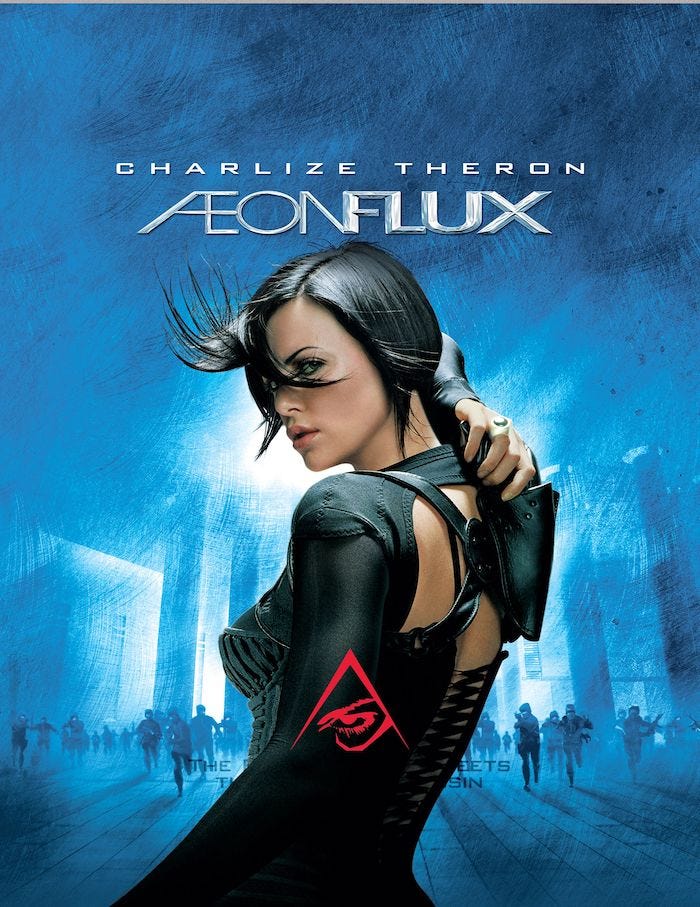
Scott: Let’s jump to another movie. This is a bit later, 2005 ‑‑ Aeon Flux. A complete departure from Crazy Beautiful. How’d you get involved in that project?
Phil: It’s interesting, we had been working on many different things. We’ve always worked in a lot of different genres and styles, which I don’t think is… it’s not necessarily typical. I think a lot of times people choose or are told to really try to focus on one thing or the other.
For better or for worse, we always were interested in so many different types of films. Aeon Flux came about because we were very big fans of the series on MTV. We were really big fans of its weirdness and its unconventional nature.
When we came in to talk about it, first with Gale Ann Hurd, we decided that our angle was that we were the underdogs and had nothing to lose by taking a big swing at the bizarreness and oddity at the heart of it. And Gale, and then the studio, really actually seemed to connect to that.
We were maybe the people with the weirdest idea, and in that case that’s what won out, because I think that they were really searching for what made that project stand out and what made that original material stand out. It went through many, many twists and turns, obviously, but I think we were willing to from the beginning to try to explore the nooks and crannies of the oddity of it.
Scott: Phil, is that where you met Karyn [Kusama]?
Phil: Yeah, that’s where we really got to know each other and became a couple eventually. But we had met years before at Sundance when Karyn had Girlfight there. Our good friend, Teddy Shapiro, who is a composer and who was the composer on “The Invitation,” among many other things, he introduced us. I was there for all her amazing stuff involving Girlfight.
I met her and we thought each other were cool, I guess. [laughs] Then it was years later that she got this script that Matt and I had written for Aeon Flux and was like, “Oh, I know that guy.” Many twists and turns later, [laughs] here we are.
Scott: So I guess you could say The Invitation was like fate that was going to happen at some point, something like that.
Phil: Yeah, maybe.
Matt: Yeah.
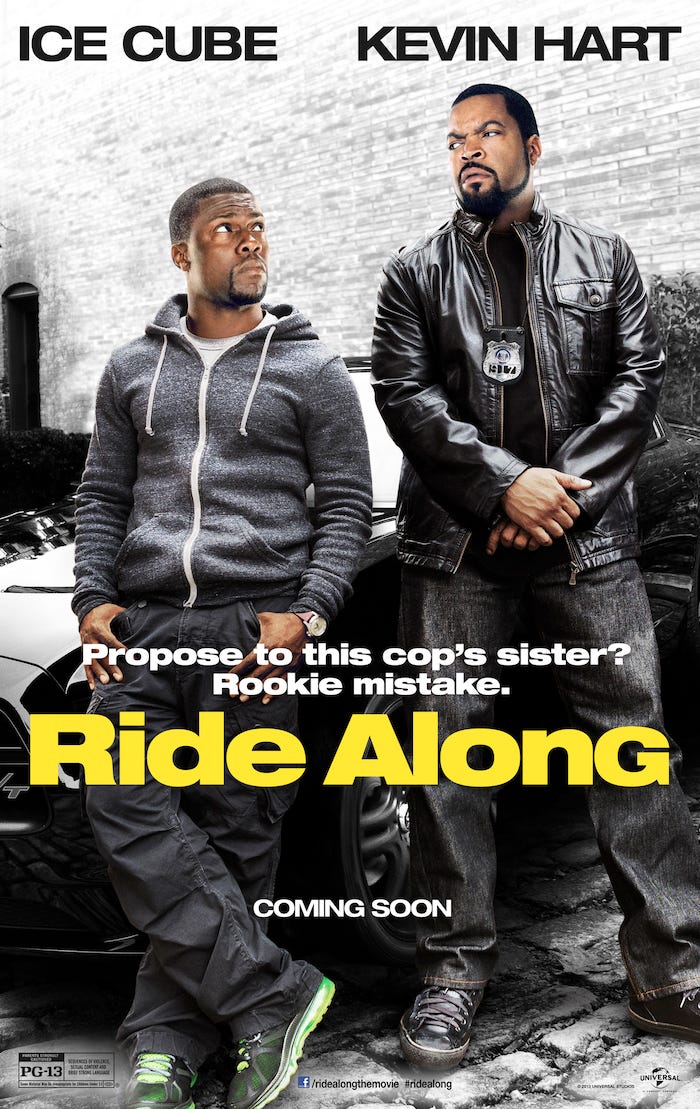
Scott: Let’s talk about Ride Along which was so successful it had a sequel. That’s a comedy. You talk about exploring different genres, how did Ride Along come about?
Matt: Our first couple spec strips were comedies. It’s always where we thought we were going to start at, but, you know, Crazy / Beautiful, Aeon Flux… so we were doing R.I.P.D. at Universal. At the time, it was going very well. The studio was very happy with the script and liked the work we had done on it and we had and still have a very tight relationship with them.
They had just gotten Ride Along from New Line. The executives thought we would be a good fit with Tim Story, and we’d be good to get the script into shape, because they needed…at that point, they had brought on Cube and Kevin.
There was a window that they needed to hit in terms of production, basically just had one shot at it, and so they came to us, and said, “Can you do this? Can you get this into shape in about six weeks?” We did. We got along with everyone really well. It’s the kind of movie we like to write. It’s a character‑based, action comedy, which we love.
Phil: I think of it sometimes in this way: if you’re a screenwriter, it’s what you’re training for years to make yourself to be ready to do. We had to be able to…You have to be ready when that kind of thing happens. It just doesn’t happen that you’re prepared to jump into something with such high stakes and that much pressure.
So we were able to leap in very aggressively, and able to promise them that within a pretty intense time frame, we could get them a movie. Of course, we ended up working on it for a whole lot longer than that.
Once we got to work with Tim, Will, Cube, and Kevin, all of them are really great amazing collaborators. We all melded very quickly. We all were very directed towards the same movie. That was a very invigorating and fun experience, because it was so intense and so impacted. Then we got to make a sequel and continue that experience…
Matt: Also on a movie like that, it’s a different experience in terms of at a $20 million budget, you just get to go. It was exciting from the moment the script was finished. It wasn’t an over‑long development process, or a lot of second guessing, we just went, and it was exciting and fun.
Scott: Just looking at the variety of movies you’ve done, have your agents at UTA ever said, “Hey guys, you’d make our job a lot easier if you’d just do one genre? Put you on one list, and we just brand you for six or seven years.”
Has that ever come up, have you ever thought about doing it, or are you happy to be doing a variety of different stories?
Matt: It hasn’t really come up. No one’s ever really said that to us. We’re grateful for that. In terms of material that comes to us, you do see a trend. I think people do try to categorize you. When we were working on Ride Along, and R.I.P.D., and all that stuff, we were getting a lot of comedies sent our way.
With The Invitation, we’re seeing a different kind of material coming to us, which is fun and exciting. It keeps you invigorated.
Phil: It has been great that our agents have never really… as Matt said, they’ve never really try to herd us one way. I think if there’s something that served us well, it’s that we generally really do follow our gut and our heart. We never ever try to talk ourselves into doing something because it would be “a good idea to do it.” That’s how you get in trouble.
We never take something because we feel we should for external reasons, and we never turn down something good because maybe the circumstance is less than ideal or it looks like it’s going to be a battle if we truly believe in that movie, and the people working on it, and that story. I think there are a lot of screenwriters like us out there. Nobody’s just one thing. We love all different kinds of movies.
We also really crave to be able to explore different genres, and different relationships, and different movie experiences. In many ways, you can’t get things that are more different from each other than something like The Invitation and something like Ride Along, but we deeply care about all of them.
They all reflect some part of us that we are trying to figure out or express.
Scott: The standard advice to aspiring writers is, “Pick one genre, and write the hell out of that so that you’re more likely to get representation, and milk that brand.” There are, obviously, writers with a lot of different interests. It’s great that you been able to carve out a career like that.
Let’s jump to one that you mentioned which we want to focus on, The Invitation. Here’s a plot summary: “While attending a dinner party at his former home, a man thinks his ex‑wife and her new husband have sinister intentions for their guests.”
I read where you said the ending was what came to you first. What was the inspiration for The Invitation?
Matt: In terms of the plot, the ending is what came to us first. It really came out of discussions we were having around theme, about grief, and about the isolating nature of it, and how you can all of a sudden not know someone who you thought you knew, and how suppression of big emotions can be harmful, about denial.
We were talking in and around those things, and talking about Southern California and its uniqueness, how this is a place where there are a lot different approaches to spirituality and coping with things.
Phil: There’s a very deep bed of mythology too, a very dark underpinning of these ideologies and ideas in Los Angeles and in California. Obviously, there are some references within the movie to that. As Matt said, this one came to us a lot through the world of feelings, and ideas, and things we wanted to explore.
Also, we’re interested in the idea of, how do you know someone? It would be emotional horror to feel that you knew someone very well, have them disappear, and when they came back, they were a completely different person. That was like something, as a “what if,” that we kept coming back to.
Matt: Once we knew what we were writing about, we knew it was going to be a dinner party, we knew it should be in the hills. The ending presented itself to us very early, because in a strange way, that is the premise of the movie.
Phil: Once we knew that, that was an organizing principle that we needed.
Matt: That we were working towards.
Phil: It took us many years to write this script, for a couple reasons. It’s a script and a movie that really demands a lot of fine‑tuned turns and a very rigorous, very exacting approach to structure.
That was always there, as something we were always working on, but honestly, it also for myself at least, something that took many years to see into, to let the ideas seep in, and let what it’s about creep up on us. That was the process that also took a long time, and took a lot of emotional energy.
I think one other thing I’d say is, one of the reasons we were drawn to tell the story in the framework of a thriller, or a psychological thriller, or something that eventually becomes a horror movie, is because those genres have produced some of the most, to me, moving and poignant movies that I’ve seen recently.
A lot of the most personal, and the most political, films take place in those genres for me.
Scott: You’ve been doing primarily studio movies. You have this idea, obviously, of a contained environment. That’s a great way to do a lower budget thing. Was this always in mind to do a lower budget film, and have Karyn direct it?
Matt: It was always in mind to do a lower budget film, but we originally thought of directing ourselves, and we weren’t sure at what level it would be done, whether we’d be doing it at some kind of mini major, or independent production company, or whether the traditional foreign financing kind of thing.
As we explored directing it ourselves, we realized that there was a better director that we knew, who is very close. It just seemed like a fantastic fit. Obviously, we love working with her. When she was open to that idea, we just ran with it.
Phil: Once we knew we were going to make it independently, there were then many iterations with different budget levels. We made it for a million dollars ultimately, and what that allowed us to do was to make it without any casting contingencies, and without any sense of having to make a foreign pre‑sale decision about who we were going to cast.
For us, that was really critical, because it allowed us to cast the actors who were the perfect people to play the part, period. When you make a movie for a million dollars, we’ve seen, now having the movie in release, and with a distributor who we absolutely love in Drafthouse Films — who got the movie immediately, and very profoundly — that was the right size for this movie and provided a path to success.
That was the responsible level to make the movie, and we were counting on Karyn’s craft, our craft, all of our collaborators, including the composer and editor, both of whom are our longtime friends, all of whom are doing us favors by working on this movie, because no one is getting paid a lot to do it.
That’s where we realized that we could pour all the resources we had, that we developed over the course of a 16 year career, into this one movie, and make it as big as it can be, for as little initial investment as we can do it. That was helpful. Even though it created a lot of logistical challenges, it was creatively free.
Karyn will tell you over and over again, it’s deceptively hard to shoot one location, and to shoot 12 people in a room. That’s, in fact, in some ways more difficult than shooting a car crash. But keeping it contained did allow us to go as low budget as we did.

Scott: You mentioned that it’s deceptively hard to shoot, but also deceptively hard to write. You’ve got one location, this dinner party, 12 characters, and to build the tension and move the narrative forward, I thought what you do structurally was really strong.
I want to get into that in just a bit, but I’d like to introduce some characters. Let’s start with Will. Here’s how you introduced him in the script. “A young man, 30s, drives in silence. Linger on his face as he concentrates on the road. Behind his placid expression, you see something pulling at him. There’s a haunted quality to his eyes.”
Where would you describe Will as, psychologically, at the beginning of the movie, how would you describe him?
Phil: I would say the first thing that came to mind is that he’s a person who is struggling mightily, and who is emotionally an open wound, but who is committed to trying to keep himself together, as hard as that is. Who is working very hard. That’s the way that we’ve always imagined him, and I think the way Logan Marshall‑Green played him, beautifully.
It’s challenging to write, to direct, and certainly to play a character who is extremely internal, but who has to have a lot of potency within him. The capability of violence was a big part of his character that we always knew had to be there.
We have to question him a lot. We have to wonder if his perspective is the true perspective, or if his perspective is so filtered by his own grief and paranoia that he is at risk of becoming the antagonist.
Matt: That “haunted” was the right word for us, because I think that no matter what happens in the movie, no matter what happens once it gets to the house, or doesn’t happen, the house is haunted for him. It’s so loaded with memories, and people, and images, both past and present. Everything is loaded for him.
Scott: I’ll jump ahead to that, the haunted thing. You have these wonderful bits of business in the script, you call a flash. It’s like a flashback. Of course, that’s the standard so-called screenwriting ‘rule’ about don’t use flashbacks, but I think they’re done beautifully here.
You use these spots in the house Will’s familiar with, he hasn’t seen in two years since this tragedy in his past, to evoke these little flashing memories. How early on in the writing process did you realize, “We need to do that. We need to go inside his mind, and see what he’s remembering.”
Matt: I would say from the beginning, if I remember correctly, because it was a process over a number of years to get into this script. It was kind of a start and stop writing experience. Some of the flashes were written quite early, and as Karyn came on, we added more, in the hope that it wouldn’t be, the intent was never to cut to this sepia toned vision of the past.
It was really to have a seamless transition between reality and those flashes, again, so that we’re never quite sure if his point of view is accurate. Also, there was a need for, in some moments, brightness against the somber mood.
You want to see what has been lost, and what was possible in the past throughout this tragedy, and where they’re coming from. It was a place of joy. You’re beginning to see a little bit of that.
Phil: I think what Matt was saying, that was really important to us, is that there were different functions for these flashbacks — I might call them “intrusions” — and that some of them were about showing what was lost. Also, I’d add that I think that Will, is obviously suffering from some sort of PTSD.
From what I understand, a truth about some who are dealing with that condition is that the traumatic events of the past may feel as though they’re happening right now, in the present moment. They are not “past:” they are continuous. So there’s no place for Will to escape. There’s no ability for him to put the events that happened in the past. They are very live for him, and so they’re triggered by places, or they’re triggered by sounds, or they’re triggered by his own path, his mental path through the house.
As Matt said before, it’s a ghost story. Those things are very alive, and very current, and very present, to the point where they can overcome him, can overcome what is the supposed present of the movie.
Scott: I’ve written in the marginalia of the script about the flashes, One, unreliable narrator. It adds to that quality of, you’re not exactly sure what he’s, where he is in a given moment. Two, that it’s keeping that ghostly specter, and three, that he’s still processing. He’s actively engaged, while his trying to keep it together, the grieving process. He’s still in that. Four, there’s a narrative to them. They stitch together and they tell a little story revealing finally, at the end of the day, the nature of the tragedy. I think they’re quite effective.
Let’s contrast him to his ex‑wife, Eden, who as you describe her as she’s introduced. “We see Eden. She’s intimidatingly beautiful. She walks across the room towards them with a grace that’s almost ethereal. She practically floats across the room.”
She’s dressed in this white gown. It really reinforces that. Is it fair to say that whereas Will is struggling and actively still involved in this, that the touchstone word for her might be “denial?”
Phil: Absolutely.
Matt: I don’t think this is a spoiler, but I think that her trying to do what Will is doing, which is actively cope with this darkness every day and try to hack her way through it, was destroying her. She found something in the Invitation that allowed her, in her mind, to dispel all of it and be free of all of it.
She is in a blissful place and one that is hopefully charismatic. It’s not the kind of thing where you react to her and say, “That’s kind of dumb. I would never do that.” There has to be an appeal to her point of view.
Phil: We always imagined her, and certainly Tammy evoked this…I think that she, in a way, has been center of this group and that she is a form of California royalty, that she has this timeless power. Her struggle is obviously very wrapped up in denial, but as Matt said, between her and David, her new husband, we were trying to present something that really, on its surface, seemed to be working for them to some degree.
Obviously, her role in her performance is all about showing the damage, the woundedness, and the true terror underneath a very placid demeanor or a very…”Placid” is the wrong word. I’d say a very beatific and calm demeanor.
That was the tension in that character, to show her struggle to live the life she’s talking about, her struggle to portray the letting go and the beautiful lack of pain that she’s found. She has to portray it because it’s still there.
Scott: That struggle is manifest in a rather startling moment with Ben in the kitchen, where she just suddenly slaps him. You can tell there’s something going on underneath. Of course, she’s now with another guy, David, who is also part of this group called The Invitation. You describe David this way when you introduce him. “Eden turns and beckons a very fit, very good‑looking man.” That’s all in caps, that last part. “He comes towards them, eyes shining…”
Phil: Michiel deserves that. His looks deserve caps.
Scott: “Eyes shining with powerful life. A strong focus. He wears a distinctive, leather bracelet on his wrist.” What were you going for with this character, David?
Matt: He has to be intimidating in some ways, just the base fact that this is the man now who’s with your wife and he seems better than you. [laughs] He seems better looking.
Phil: His beard is tidier.
Matt: He’s incredibly good‑looking. He seems powerful and confident and sure of himself. That’s not something Will has at this point in the movie. He’s intimidating in his comfort and his confidence. I wouldn’t say you’re setting him up as a villain, but he has to be antagonistic at some point, in some ways.
Scott: Intimidating. That’s a great word, because he’s smart, he’s charming, he’s provocative, but you just know that there’s something going on with this guy.
Phil: He has a good answer for everything, which is important. Every suspicion that Will raises, he has an answer for. In some ways, he plays innocently, and in some ways, it’s obvious that he is a very powerful manipulator as well. I think that, and I say this for all the other characters who are members of The Invitation, the weapon they use against you is to call you distant, closed off, or…Basically, anything that has a decent boundary, they’re against.
David is an extremely good manipulator of people, good at drawing them in. You can see that in the way he’s constantly offering people things to drink, constantly offering it to Will, who refuses for a while and finally takes it. He’s like a great salesman. He just has to get you to say yes to one thing, then maybe he can get you to say yes to other things.
Scott: Let’s talk about the other woman in Will’s life, Kira, who’s his current girlfriend. Here’s how you introduce her character: “Kira, 30s, is capable and watchful. There’s a quiet familiarity between them, a resigned tension.”
Not to go into it too deeply, but one way of looking at the story is that she and Will have to go through what they go through in order to end up in a better place emotionally. Does that seem like a fair assessment, stepping back from a meta view?
Phil: Without delving into the extreme events of the movie, I think ultimately, the story on their end is the willingness of two people to rely on each other and the willingness of two people to share the worst the world has to offer with each other.
That’s the only answer and she articulates it during the movie saying, “We can help each other.” That’s pretty much it. That is something that’s very, very hard for Will to accept at the beginning of this movie. Again, without giving anything away, they are very critical to each other on every level by the end of the movie. Hopefully, that is the truth that the two of them are…
Matt: There’s a line in the move that he says to her — “I don’t think you can help me.” I think that is the key to his attitude toward her. It’s not a malicious one, just a resigned one. It’s been incredibly damaging to the relationship and I think he gets into a different place with that by the very end.
Scott: What I was suggesting was, and again, I’m not trying to give away anything, he’s had a tragedy in his life and she hasn’t had anything of equivalent value. By the end of the movie, they were able to share some experiences that do put them more in an equilibrium?
Phil: I don’t know if I would necessarily look at it that way. I know what you mean, but…I think that for her to be in that relationship in the first place, she has probably overcome and gone through a lot, the way almost any adult… things start happening to us. I know that she’s had a lot of trials that have made her stronger as well.
Still, there’s some part of him that he won’t let her reach, some part that he is unable to let her access. There was once a line the script, where Tommy says that the basic thing is that she’s really worth it. You just can’t put anybody into a situation like this. She does love Will and he does love her.
Even though we meet them at a very strange time and it doesn’t seem like they’re going to make it, there is something really strong between them that is at risk.
Scott: One last character. They’re all interesting, but Pruitt is such a strange dude. “A very large and imposing man with a sweet face, the vibe of a reformed con who’s found religion.” His backstory, how did that all evolve?
Phil: He reveals that backstory in a monologue, and that monologue was in a way the centerpiece of that writing experience for us. Part of me felt like once we figured that out, we figured out something critical about the movie.
In specific terms, we have been friends for a lot of years with John Carroll Lynch, who plays Pruitt. We directed him in our movie “Bug” a long time ago. We wrote this part for him. Part of it was that — and I think John’s performance is so incredible — John portrays such calmness and such sweetness.
Matt: He’s very gentle.
Phil: He’s very gentle, but the menace that’s underneath that character is crucial to the movie because there are people in the world who you encounter that have that combination where there’s some kind of menace in them but there is such a sweetness. John said once when we were making the movie, about Pruitt, “I’ve never played a more calm and comfortable character.”
Matt: “I’m so sure of myself.”
Phil: He’s so sure of what was right and what was wrong.
Matt: There’s no menace.
Phil: That was an interesting take on a character who is instantly bracing to be around…If you’ve ever been in a room where suddenly a new person shows up and there is just something not right about him, that’s an energy that he brings.
Matt: It was the idea to bring in the destabilizing force of him and Sadie throughout this party where all you want to do, especially Will, he just wants to be comfortable. Now you’ve got some people who, just by the fact that you don’t know them, change the dynamic of the group. Also, John himself is just so physically intimidating, even when he’s just standing there. He’s a gentle guy, but he is just intimidating. That was helpful on the suspense level.
Scott: I wanted to talk to you about the structure of the story. It’s a slow burn, but it moves in an interesting way. One of the things I noticed, and I wanted to know whether you are intentionally doing this, it’s like every character’s got their one moment with Will. Was that an intentional thing?
Phil: On some level. It’s hard to know sometimes what was instinct and what was intellect. There are two things that I think about. One is that we wanted to make sure that every character had dignity, had a life, and had what was not just part of the story and was not a function of the story, but had a distinct perspective of history with Will, had their own desires for what his night was going to be, had their own pain to deal with, had their own awkwardness to deal with.
Their own lives were going on when they intersected this story. That was tremendously important to us to do that. I forgot what my second point is. Matt probably has my second point. He likely has it.
Matt: There’s a couple of things. It was a challenge filmmaking‑wise because you didn’t want to be repetitive. We’d keep him going off here, going off there. In the movie, since it’s told from his point of view, this is the way we have to get to know the characters. Like Phil said, it was important to feel something for them because of what happens later, to be invested in that in any kind of sense.
Phil: I now remember what the other thing is. This relates to that. There is a rhythm, like the tide going in, tide going out, of him trying to escape, him trying to be alone. Someone’s always there to come get him and pull him back to the group. Sometimes it’s an angel and sometimes it a devil, but there’s this gravity that keeps pulling him back in to the group.
Scott: I like that idea of the tide coming in and out. He keeps trying to get away and they keep bringing him back. It really ties it all together. Let me ask you. How in the world did this movie get made? There’s four production companies. Gamechanger, I’ve interviewed Mynettte Louie. How did that all happen?
Phil: This is a journey that took many years, even after Karyn decided to do it and we decided to make it together. Gamechanger was…they are really wonderful as you can tell by talking to Mynette. They exist to finance films directed by women. They were people who many people we know spoke very highly of, Mynette specifically as well. They came aboard first. They were really the rock that we built it on. Actually, XYZ came on first, and they were really the kind of…
Matt: We initially had talked about it as a foreign sales model. Then when we met with Gamechanger, and also, at the same time, realizing that the budget we could do it for was lower than we initially expected, it made sense to do it with equity financing at Gamechanger. Gamechanger came on and they were fantastic. The other piece was Lege Artis, which is a newer entity. They were great as well.
Phil: We financed the movie with two equity entities, but also, XYZ was there all the way. They were part of putting that financing package together, as well as producing the movie with us. They stuck with us through thick and thin and they were very deeply involved in the whole process. Every time the movie seemed to fall apart, they were there. We all got it back together and went back up the hill. When we got Gamechanger and Lege Artis, it became real.
Finally, we premiered the movie at South by Southwest in 2015. After that screening, we sold the movie to Drafthouse. We were fortunate that we had several options, but they were immediately so clearly…Their love for the movie and their understanding of how important it was to not, in the marketing, give anything away was profound.
If you meet them or know them, they’re the most passionate, incredible film people. We just felt like we were really at home with them and throughout the entire process, they were so collaborative with us and so talented at what they do, but very much wanting to merge with everything that we thought was important about not just the movie, but how it’s presented.
It was a very serendipitous series of connections and a very simpatico crew, all of them. It takes a long time to find those people. So many times, you almost get a movie together and it falls apart for one reason or another. You’ve got to pick yourself up and head back up the hill again.
Matt: There’s a lot of trust involved and we’re lucky we found such great people to work with because there’s another version of this movie that just goes off the rails at any number of stages before or after production. Drafthouse, for instance. They love movies. We could have easily sold it a company that, even with good intentions at the start, ended up treating it as a programmer or a product. Drafthouse is such a lover of film and they were so collaborative and so wonderful with the release that it just…
Phil: To me, they’re like being on Sub Pop in the ‘80’s or ’90s or something. It’s a label that actually means something.
Scott: Three days of rehearsal, 20‑day shoot. The team’s synergy, you can really feel it. The music and Karyn’s job of directing, I thought, was just terrific. What was the writer‑director relationship like on set? Were you guys there for the entire shoot?
Phil: We were there the entire time. Pre‑production, production, post, everything. I think the three of us became…Obviously, Karyn and I are married, Matt and I are partners and best friends, and Karyn and Matt are extremely close friends.
Obviously, we have a very long relationship, but it was so much fun to get to work together. The three of us are such a nugget as a creative team that…Karyn has said this before. She knew that we were completely in her corner and willing to give it all to support her vision. There’s complete trust there. The thing that is amazing about Karyn as a director, is that she is extremely collaborative, and very open to ideas, and to what’s important to everyone, but she’s also incredibly decisive. She knows exactly the movie she’s making, and she knows what’s in her head. She just has a very good balance of openness and surety that is very…to me that’s the perfect way to be as a director.
As you said, the composer, Teddy, is one of our best friends. The editor, Plummy Tucker, is a good friend of ours. She’s cut all Karyn’s movies. Randy Poster is a friend and a legendary music supervisor who showed up for no money because he wanted to be part of it.
We worked with people on this who became life long friends. The entire cast and crew were so special. We all came together to make the same movie, and I think we all saw an opportunity to really put it all on the line and really do our strongest work. Just put it out there and just hope that people would see what we saw.
That was a very magical experience. Making the film and then being able to travel with it to all these film festivals over the course of a year and then to have the release go so well… I actually can’t separate the experience of it from the movie because I think the movie doesn’t work or happen without, particularly, the actors being extremely tightly knit and feeling those relationships. They really became very, very close. We all became very, very close. I think that is part of the fabric of the movie that you see.
Scott: It resulted in getting an 88 rating among critics on Rotten Tomatoes. That’s not too shabby. I understand you’ve written another script for Karyn to direct. Is it a budget thing, or what’s going on there?
Matt: It’s another independent movie. We’re aiming for a bit higher budget level, but still independent. It’s an LA cop thriller…
Phil: … female led, with sort of a metaphysical underpinning to it.
Matt: So that’s what’s up next. That’s the plan.
Phil: Yeah, we’re almost done with the script. Again, the three of us want to get it going as soon as possible and be able to do it again.
Scott: Karyn got a lot of great press off this movie, and I’m sure you all did too, so it’s good to see. Let’s shift to some craft questions. How do you come up with story ideas?
Phil: Depends on the story, I’d say. I feel like a lot of times one or the other of us is just stewing about something for a while. I would say it’s usually a feeling, or a question, or a relationship nugget or something, and kind of cook it on our own for a while. Then one of us will just be like, “Could it be a movie if…” and we’d say whatever that little thing is.
The thing that’s interesting is that we almost never disagree about…if one of us feels something strongly, the other one is almost always, either immediately or with a little bit of talking, able to see why it has promise and why we should develop it.
For me, it feels like it comes less from high concept, less from something clever or something tricky, and more from some nagging, emotional thing that can’t be resolved, or a interesting relationship that I want to see, something like that.
Matt: Yeah, I agree.
Scott: How about your prep writing process, like brainstorming or character development, or plotting, research, outlining? What aspects of prep do you tend to devote most time to? Do you work to an outline or a treatment before you go to start?
Phil: We do. We talk a lot.
Matt: We talk a lot. That’s by far most of our time. I’d say as we’re talking, Phil and I both have a document open, and we’re just jotting down any notes that occur to us, whether it’s about character, whether it’s about maybe a set piece or a scene, a relationship, what it’s about thematically…
For me, it’s just a big vomit of words in a notes document, and then eventually, once we kind of feel we have enough, we’ll either write a beat sheet, or put cards on the wall. By the time we’re ready to write, we have outlined fairly meticulously, and we’ll go through every scene and say, “Well, let’s make sure.”
We divide up the scenes, and one of us goes off and writes each one, but we say, “OK. Well, remember this about that character, and when you’re writing that scene, just remember this other thing,” or “I have some dialogue I think might go there. I’m going to send it to you.”
So, by the time we’re writing, in some ways it doesn’t matter who writes the scene because we’re pretty far along in the process by that point, and then once we have all the scenes we cobble them together, and then go through it together line by line.
Scott: But you’re working in the same place?
Matt: Yeah.
Phil: Yeah, when Matt says, “Go off to write,” it’s basically, “Go off three feet to the next desk.”
Matt: It’s “Go put on headphones.”
Phil: Yeah, put on headphones. It’s true. We have that outline, so we know where we’re headed, and then we maintain contact, obviously, with every scene throughout, so I know exactly what Matt’s writing. He knows exactly what I’m writing. We’re sending them to each other.
We may read them right away, or we may put them aside and read the other person’s stuff a couple days later. But we are always maintaining contact with where we are because obviously it’s evolving the whole time.
But we’ve sort of settled into a routine where the two of us can never get too far afield from what the other one’s going to be interested in, or think is the right choice because we are always in contact about it. That said, it’s nice to be able to surprise each other on the page.
Scott: I’m guessing, just based on the work that you’ve done in The Invitation that you like working with characters. How do you go about developing characters? Do you have any specific go to tools or techniques that you do, in terms of unearthing who they are?
Matt: It’s a good question. It’s hard to say. It ends up being a lot of conversation. We don’t really often write out backstory. This movie we’re working on now is primarily about one character, and so we keep having more and more discussions and going further and further back about how she got to the place she is now, what happened in the past.
A lot of that stuff will never be in the script, but it’s helped. It informs us, but I don’t think that we have a specific process. I mean, a lot of times it’s the very basic, “What is this character’s journey in this script? What is he or she learning along the way? Where are we trying to get them to?”
That happens kind of in every script, or at least I think it should, but I don’t know that we have any specific tools that we use.
Phil: Yeah, the two things that I’d say that I…and again, this is more trying to put a label on something that we do instinctively, as opposed to something that we usually talk about, but I think that we approach it through their relationships to other characters, and how we try to complicate them or deepen them is to really look at them next to and in conjunction with the other characters. Where they sit in an ecosystem.
Then I think that we also tend to go at them through voice, especially, obviously, in comedy. That is the paramount thing. Once we have a voice for those characters, then the voice becomes — in a weird way, the voice comes from them and they come from the voice. That’s another tool. I think the rhythm of writing dialogue for these characters and hearing them then starts to make us learn more about them.
Not just about characters. At least in my experience, writing scripts is a learning process for us always, and especially with The Invitation. I felt like it was a script that I was constantly learning about while doing it. That’s how we kind of approach a lot of things, as an investigation.
Scott: You’re talking about voice. That’s one of those mysterious things. There’s some writers who think, “Well, you know, a person either has talent to write dialogue or they don’t.”
Do you think a writer can develop their ability to write dialogue and, if so, how to go about doing that?
Phil: That’s a great question. I do think you can develop an ear, and you can… It’s like anything. Some people have to work twice as hard to do something that just comes naturally for another person, but it doesn’t mean that they can’t do it and do it even better. It’s funny. I only have my own experience and Matt’s to rely on.
To me, the main thing that I believe qualifies you to be a writer is that you’re really interested in other people. If you’re interested in other people, I imagine you’re probably interested in hearing people talk who don’t speak the way you do, or you’re interested in observing the way people behave that isn’t exactly the way you behave.
Obviously, every place you go can be an opportunity to learn how people speak and how people relate. Comedy is its own thing… I don’t know that you can, for example, make yourself into a quote “funny person” if you’re not. That just means you may have to choose a different type of writing to do.
Scott: I’ve interviewed a lot of writers and thought about it myself a lot. Dialogue does seem to be one of those things that is a little mysterious. Here’s another one that’s also kind of mysterious, that’s the idea of theme.
I ask a lot of writers, “Well, are you one of those writers who knows themes, like central themes or theme, upfront in the process? Or is it something that emerges over time?” Most tend to think that latter, but here I’ve been talking to you about The Invitation. You had that theme that was like right up front in the process, right?
Phil: It is different for everybody. For us, we need to know the theme before we know that we can write the movie. We have to know what it’s about. That doesn’t mean that we can’t discover what it’s about in a deeper and deeper fashion as we go, because I think that’s what happens.
For us, theme is less a statement than it is a question. It’s not what I’m trying to teach somebody. It’s a question that I want to pose to myself and to the audience. For lack of a better word, it’s the ideas.
As we’ve gotten to play The Invitation at all these festivals and at screenings and do all these Q&A’s and have an opportunity to interact with people, it’s very interesting and very encouraging that what people ultimately want to talk about are the ideas.
That’s very encouraging because that, to me, it is a movie that is about ideas and is about, again, questions and investigations. You know what I mean? In a way it could sound very deterministic to say that we decide what the theme is before we write the movie. I wouldn’t put it that way.
I would say we need to know what we want to explore. We need to know what feelings and emotions and intellectual questions that are wrapped up in this story. Then there’s always something for the characters to talk about whether it’s directly or indirectly. The characters are always scratching at something. For us, that’s how we need to approach it and then we discover things along the way.
Scott: Let’s really bring it down to the basics of screenwriting, which is like scene writing. What do you think about when you’re writing a scene? What are your goals?
Phil: I’d say that number 1… and this is stripping away years of practice and things that you’re taught about scene making…To me, to be absolutely reductive, while it seems very obvious, is that something has to happen. Could be a physical thing, a status shift, something exposed, something learned…
Something has to change. Something has to be illuminated. Ideally, it’s illuminated in a bank shot of some kind. Maybe, and hopefully, the scene doesn’t appear to exist to illuminate exactly that thing. That’s the challenge: to be trying to portray the natural lives of these characters, but allowing the turn that has to happen to happen within that context.
Then always we are really, really concerned with transitions, both in and out. I’d say that we’re obsessed with transitions. In terms of craft, that’s one of the most important bits we are always looking at and working on.
Scott: I’m sure your editors appreciate that. I like to ask this, a fun question. What’s your single best excuse not to write?
[laughter]
Phil: There’s so many.
Matt: Oh , that interested me for a second, I better go explore it for an hour.
Phil: A shiny piece of foil floated across my consciousness for a moment. I need to build a nest out of it.
Matt: The Yahtzee app dying to be played. It’s lonely.
Phil: It is the loneliest of the apps.
Matt: It’s interesting because I feel like the actual process of writing, the physical typing of it…it takes me much longer to know what I’m writing than to actually sit down and get it on the page. It’s the why of it, or what is this about. That takes a long time and a lot of procrastination.
Then when I go to actually write it, that process isn’t that long. There could be an outburst at 4:30 in the afternoon, I could cover the workday.
Phil: Yeah. Which I refer to as the desperate hour. If it’s winter, the sun starts going down and you’re like, “It’s got to happen right now.”
Scott: Conversely, what do you love most about writing?
Matt: You have a lot of freedom. You get to make up stories for a living. The very simplest aspect of it is probably the greatest thing. You get to tell stories for a living and on top of that, it’s a job that allows you at some points a lot of flexibility in your life.
Phil: For me, anyone who does it ‑‑ anyone trustworthy ‑‑ will tell you that it’s really hard to do. No matter where you are in your career or what kind of writer you are, I think it’s a really hard thing to do.
But it’s rewarding and I think to me the thing that’s most fun about it is when something surprises me or there’s something that happens that I know is important in a scene but it’s still also a little bit ineffable to me why it’s happening and you feel like the story’s just happening. Those moments are kind of great.
Then, on a more mundane level, it’s the feeling of solving a problem. It’s torture to be in the state of not having solved the problem. This is where it’s great to have a partner who’s really good at solving problems, is that you sit there and you work on it until you have that moment where the knot gets untied, and that’s very satisfying.
Scott: Finally, I’m sure you get asked this at cocktail parties or whatever. What advice can you offer to aspiring screenwriters about learning the craft and breaking into Hollywood?
Matt: I would say, and I think I’ve said this before, not that anyone was around to hear it, but just write the thing that absolutely best expresses your voice. Don’t worry about getting an agent. Don’t worry about anything like that. Just write what is uniquely yours and make it the best you can, because I think good work does tend to out itself. There are so many people whose jobs it is to find you, in a way.
I know that may sound naive, but I truly believe that if you can write your most distinctive script, it can serve you for your entire career. Write the best script you can. Write every day. Just worry about that. Worry about getting that script before you worry about anything else.
Phil: Yeah, I agree with Matt that I think if there’s one thing that I try to tell everybody who asks, is that who you are is your advantage. What you have to offer, your voice, your concerns, your take, when you’re starting out that’s all you have.
A lot of people make the mistake of running from that and trying to be more like what they see out there in the movie theater or trying to more worry about an exquisitely tuned version of something, of a type of movie. It’s great to be able to create an exquisitely tuned script, but what will make people notice you is your voice poured into a makeable movie mold.
Whether that’s a small independent family drama, or whether that’s a science fiction movie, that shouldn’t change. You can pour your voice into a big science fiction movie and in a way that’s the best idea you could have, is to do that. Just to underline what Matt said, it’s not to run from the specificity of what you and your experience and your life is ‑‑ to run toward that and use that to enliven whatever you’re doing.
Matt: Yeah, the premium in Hollywood is on unique and new voices.
For more Go Into The Story interviews with screenwriters, filmmakers, TV producers, and industry insiders, go here.